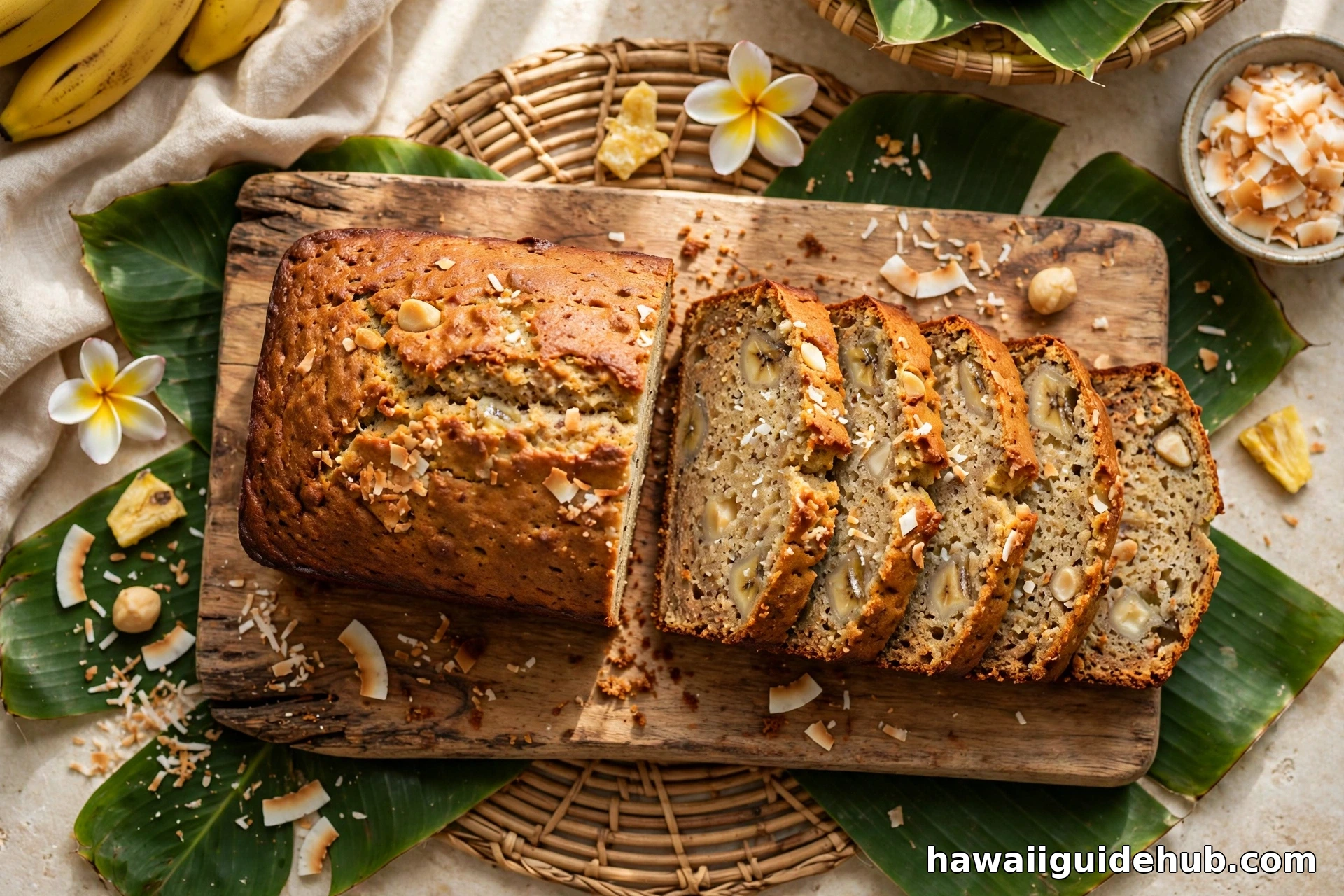
Hawaiian Banana Bread Recipe: The Island Classic with Macadamia Nuts and Pineapple

What Makes Hawaiian Banana Bread Different
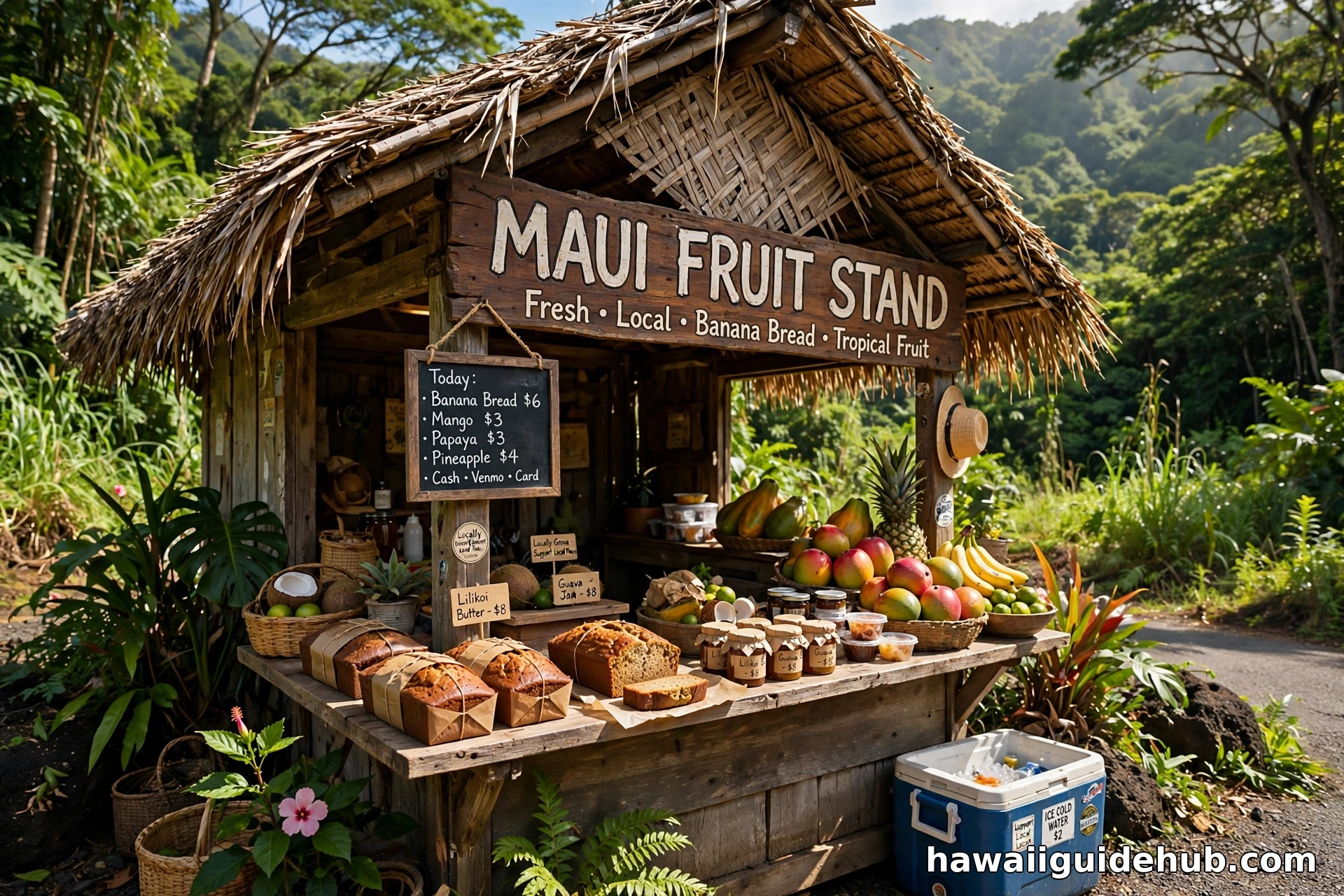
If you have ever driven the Road to Hana on Maui, you know the drill. The road twists through rainforest, waterfalls appear around every bend, and somewhere near the halfway point your stomach starts demanding attention. That is when you see it: a small stand with a thatched roof, a hand-painted sign, and the smell of something warm and sweet drifting through the air. Banana bread. Not just any banana bread, but the kind people drive across an entire island to taste.
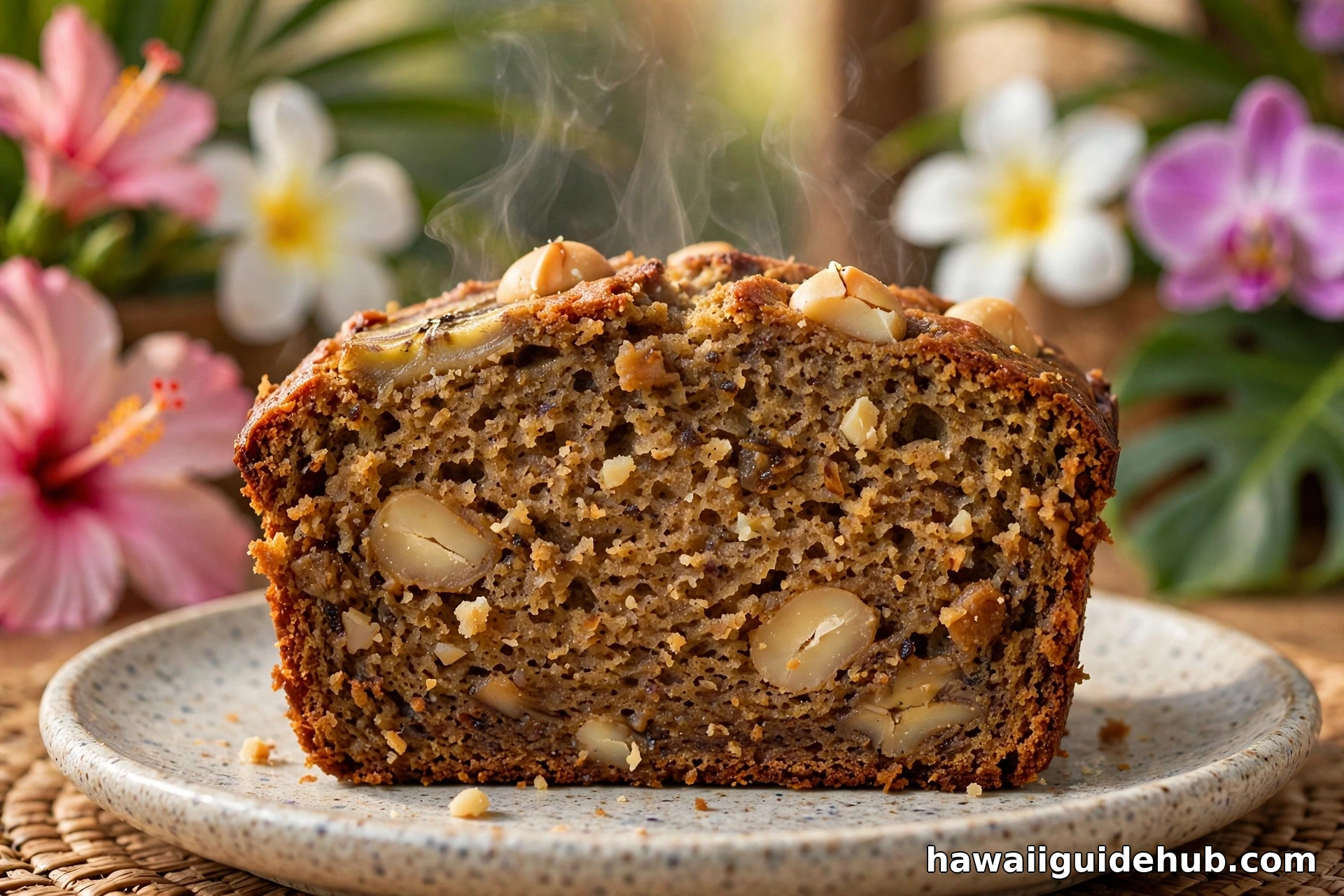
Hawaiian banana bread is not a different species from the banana bread you bake at home. It is the same humble quick bread, but shaped by the islands. The bananas are often apple bananas, smaller and tangier than the Cavendish bananas in mainland grocery stores. Recipes lean on ingredients that grow nearby: macadamia nuts, crushed pineapple, shredded coconut. And the bread carries a story, the story of roadside stands, plantation kitchens, and aunties who have been baking the same loaf for forty years.
This guide covers everything: what makes the Hawaiian version special, the full recipe with exact measurements, the famous stands worth visiting, smart variations, and the tips that separate a good loaf from a great one.
The Story Behind the Loaf
Banana bread became an island staple for a practical reason. Bananas grow everywhere in Hawaii, in backyards, along roadsides, on small farms. When a bunch ripens all at once, you either eat them fast, give them away, or bake. Baking won.
The roadside stand tradition took off along the Hana Highway. The Halfway to Hana Snack Shop, sitting just past mile marker 17 near Keanae, has been serving travelers since 1983. The shop was opened by local residents Doug and Nita Chong on farmland that has been in the Chong family for over 150 years. Nita Chong’s banana bread is baked daily with home-grown apple bananas, and morning visitors often find loaves still warm from the oven. The shop keeps daily hours from 8:30am to 4pm.
A few miles down the road, on the Keanae Peninsula, Aunty Sandy’s Banana Bread has been baking since 1983 as well. Aunty Sandy Hueu started with a homemade recipe and a small stand, and four decades later her warm, buttery loaves are a rite of passage for Road to Hana drivers. Her stand sits just past mile marker 16 on the Keanae turnoff, and the bread sells out fast most days.
These stands did not invent banana bread. They perfected the ritual around it: pull over, buy a warm loaf, eat it looking at the ocean, and keep driving with crumbs on your shirt. If you are planning a Maui trip, our guide to reasons to visit Maui covers more stops worth building into your itinerary.
Banana Varieties You Will Find in Hawaii
Walk through any farmers market in Hawaii and the banana selection puts mainland grocery stores to shame. Understanding the main varieties helps you bake better bread and snack better too.
Apple bananas (manzano): Short, chubby, with a tangy sweetness that hints at apple when firm. The top choice for Hawaiian banana bread. They turn fully sweet with black speckles when ripe.
Cavendish: The standard supermarket banana. Reliable, sweet, and perfectly fine for baking. If this is what you have, use it with confidence.
Hawaiian plantains (mai’a): Starchier and less sweet, these are cooking bananas. They shine fried or baked as a side dish, not in banana bread.
Blue Java (ice cream bananas): A novelty variety with a creamy texture and vanilla notes. Fun to try fresh, but their subtle flavor gets lost in baking.
For banana bread, ripeness matters more than variety. Whatever banana you use, wait until the peel is heavily spotted or mostly brown. Underripe bananas make bland, dry bread no matter how good the recipe is.
Why Apple Bananas Matter
The single biggest difference between Hawaiian banana bread and the mainland version is the banana itself. Apple bananas, also called manzano bananas, are shorter and stubbier than standard Cavendish bananas. They taste subtly of apple when underripe and turn intensely sweet with a tangy edge when fully ripe.
Most home bakers outside Hawaii cannot find apple bananas easily, and that is fine. The recipe below works beautifully with regular ripe bananas. But if you ever see apple bananas at a market, buy them. Use two or three small ones in place of each large banana, and expect a loaf with a slightly brighter, more complex flavor.
The rule for any banana bread holds double in Hawaii: use bananas that look too ripe to eat. Black spots on the peel mean the starches have converted to sugar, which means more flavor and more moisture in the finished loaf.
Hawaiian Banana Bread Recipe
This recipe makes one generous 9×5 inch loaf, about 10 to 12 slices. It follows the classic Hawaiian style: butter-based, lightly spiced, studded with macadamia nuts, with crushed pineapple folded in for extra moisture. Every measurement has been tested for a moist crumb that stays soft for days.
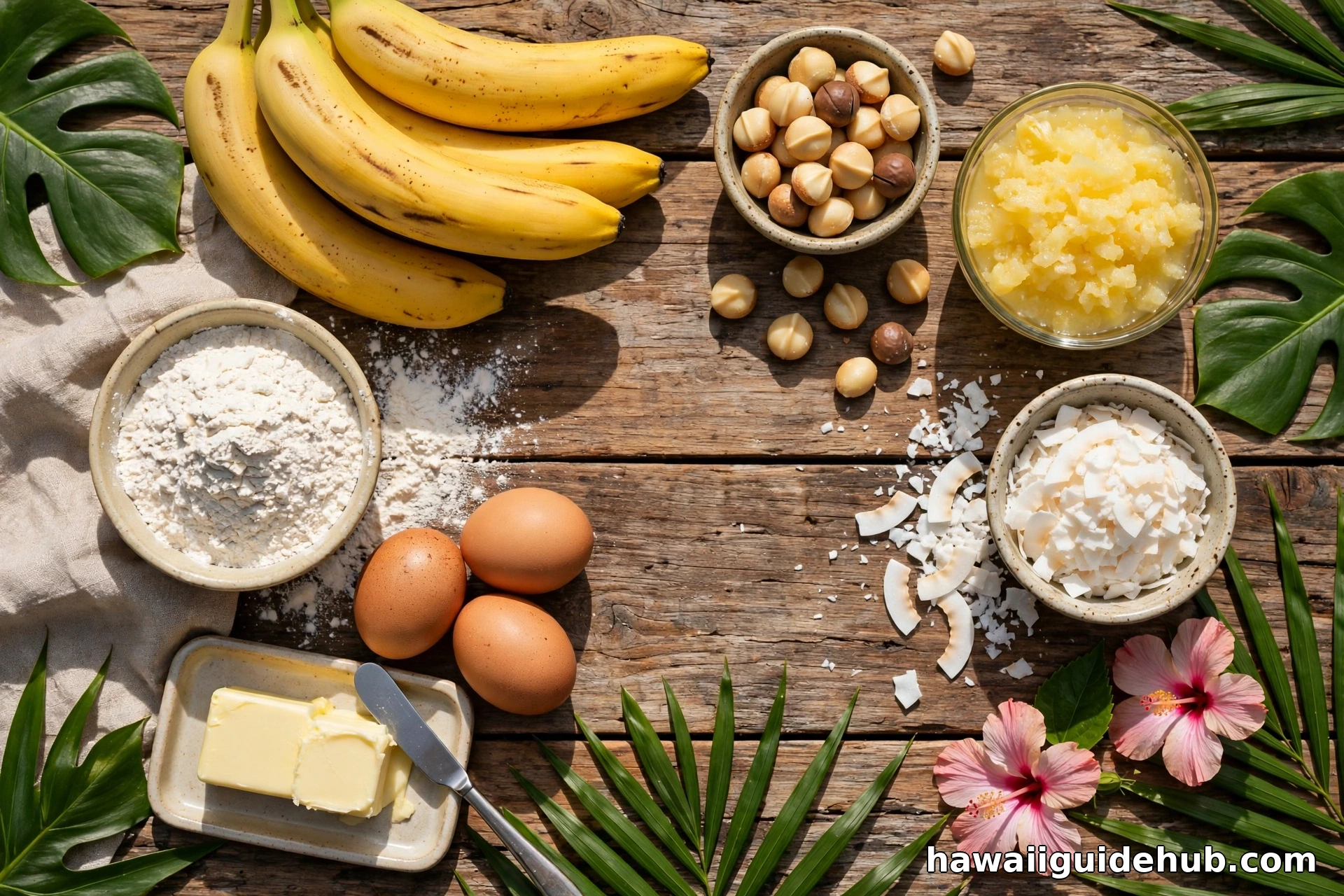
Ingredients
Wet ingredients:
- 1/2 cup (1 stick) unsalted butter, softened
- 1 cup granulated sugar
- 2 large eggs, at room temperature
- 1 1/2 cups mashed ripe banana (about 4 to 5 bananas)
- 1 teaspoon vanilla extract
- 1/2 cup crushed pineapple, well drained
Dry ingredients:
- 2 cups all-purpose flour
- 1 teaspoon baking soda
- 1/2 teaspoon baking powder
- 1/2 teaspoon salt
- 1/2 teaspoon ground cinnamon
Fold-ins:
- 1/2 cup chopped macadamia nuts
- 1/2 cup sweetened shredded coconut (optional but recommended)
Instructions
Step 1: Move the oven rack to the lower third position and preheat to 350°F. Grease a 9×5 inch loaf pan with butter and dust it lightly with flour, tapping out the excess.
Step 2: In a large bowl, whisk together the flour, baking soda, baking powder, salt, and cinnamon until evenly combined. Set aside.
Step 3: In a separate medium bowl, cream the softened butter and sugar with a wooden spoon or hand mixer until light and fluffy, about 2 to 3 minutes. Beat in the eggs one at a time, then stir in the vanilla, mashed banana, and drained crushed pineapple.
Step 4: Pour the wet mixture into the dry ingredients. Fold gently with a spatula just until no flour pockets remain. A few small lumps are fine. Overmixing develops gluten and makes the bread dense and tough.
Step 5: Fold in the macadamia nuts and coconut. Spread the batter evenly into the prepared pan.
Step 6: Bake for 55 to 65 minutes. The loaf is done when a toothpick inserted into the center comes out clean or with just a few moist crumbs. If the top browns too quickly, tent it loosely with foil for the last 15 minutes.
Step 7: Cool in the pan on a wire rack for 15 minutes, then turn the loaf out and cool completely before slicing. The bread slices more cleanly once fully cool, but nobody will blame you for cutting a warm slice.
Baking Tips That Actually Matter
Do not overmix. This is the number one rule of quick breads and the number one mistake home bakers make. Stir until the flour just disappears, then stop. Lumps are fine. A dense, rubbery loaf almost always traces back to overmixing.
Drain the pineapple well. Crushed pineapple adds wonderful moisture, but the juice from the can adds too much liquid. Press it in a fine mesh strainer or squeeze it in a clean kitchen towel before folding it in.
Toast the macadamia nuts. Spread them on a baking sheet and toast at 350°F for 5 to 7 minutes until fragrant and lightly golden. Toasting deepens their buttery flavor and keeps them crunchy in the finished bread.
Check for doneness properly. Ovens vary. Start checking at 55 minutes, but trust the toothpick, not the clock. A few moist crumbs are perfect. Wet batter means more time.
Cool before slicing. The loaf continues to set as it cools. Cutting too early gives you a gummy texture and a loaf that falls apart. Fifteen minutes in the pan, then out onto the rack.
Where to Find the Best Banana Bread in Hawaii
If you would rather buy than bake, Hawaii does not disappoint. Here are the stands worth planning a drive around.
Halfway to Hana Snack Shop, Maui. Just past mile marker 17 on the Hana Highway near Keanae. Open daily 8:30am to 4pm. Nita Chong’s banana bread, baked with home-grown apple bananas, plus shave ice, fresh fruit, and sandwiches. Arrive in the morning for the best chance at a warm loaf.
Aunty Sandy’s Banana Bread, Keanae, Maui. On the Keanae Peninsula just past mile marker 16. Baking since 1983. Small stand, limited loaves, sells out fast. The ocean view from the peninsula is part of the experience.
Hana Farms, Maui. Further along the Hana Highway toward Hana town. A larger farm stand with banana bread among fresh produce, local goods, and wood-fired pizza on some days.
Twin Falls Farm Stand, Maui. Near the start of the Road to Hana outside Paia. A good first stop for banana bread before the winding road begins in earnest.
On other islands, look for banana bread at farmers markets, local bakeries, and grocery store bakeries. Foodland stores across Hawaii carry their own well-regarded version. For more island flavors to seek out, see our guide to must-try local dishes in Hawaii.
Smart Variations Worth Trying
Once you have the classic down, the recipe welcomes experimentation.
Chocolate chip banana bread: Swap the macadamia nuts for 3/4 cup of semi-sweet chocolate chips. The chocolate melts into pockets throughout the loaf.
Lilikoi glaze: Whisk 1/2 cup powdered sugar with 2 tablespoons of lilikoi (passion fruit) juice and drizzle over the cooled loaf. Tart, fragrant, and very Hawaiian.
Banana macadamia muffins: Divide the batter among 12 lined muffin cups and bake at 350°F for 20 to 25 minutes. Perfect for lunchboxes and road trips.
Gluten-free version: Replace the all-purpose flour with a 1-to-1 gluten-free baking blend. Add 1/4 teaspoon of xanthan gum if your blend does not include it. The texture stays remarkably close to the original.
Lower sugar version: Cut the sugar to 3/4 cup and add an extra banana. The loaf will be slightly less sweet and a touch denser, but still delicious. If you enjoy Hawaiian baked treats, malasadas are another island classic worth trying.
Storing and Freezing
Banana bread keeps at room temperature for 2 to 3 days when wrapped tightly in plastic wrap or stored in an airtight container. The flavor actually improves on day two as the crumb settles and the banana flavor deepens.
For longer storage, refrigerate for up to a week or freeze for up to 3 months. To freeze, wrap the cooled loaf (or individual slices) in a double layer of plastic wrap, then place in a freezer bag with the air pressed out. Thaw at room temperature or toast slices straight from frozen.
Toasted banana bread with a smear of butter is one of the great simple pleasures. Thick slices, golden brown, butter melting into the crumb. Try it once and plain slices will feel like a missed opportunity.
Frequently Asked Questions
Can I use frozen bananas? Yes. Thaw them completely and drain off any excess liquid before mashing. Frozen bananas actually break down beautifully and work wonderfully in banana bread.
Why did my banana bread sink in the middle? Usually underbaking or too much leavening. Make sure the toothpick test passes in the very center of the loaf, and measure your baking soda carefully. Opening the oven door repeatedly during baking can also cause sinking.
Can I make this without nuts? Absolutely. Leave them out or replace with an equal amount of chocolate chips, dried coconut, or chopped dried pineapple.
What is the difference between banana bread and banana cake? Mostly richness and texture. Banana cake typically uses more sugar, more fat, and often frosting. Banana bread is denser, less sweet, and sturdy enough to slice and toast.
Watch: Banana Bread Baking in Hawaii
A Loaf Worth the Drive
Hawaiian banana bread is proof that the simplest foods carry the deepest stories. A loaf of mashed bananas, flour, and sugar becomes something more when the bananas grew in a neighbor’s yard, when the recipe came from an aunty, when you eat it warm with salt air on your face halfway down a legendary road.
The stands along the Hana Highway have been baking for over forty years, and they show no signs of slowing down. Each loaf connects back to plantation kitchens, backyard banana patches, and the practical island wisdom of never letting good fruit go to waste. That is a lot of history in a three dollar slice.
Bake this recipe at home and you will get a genuinely excellent banana bread. But if you ever find yourself on the Hana Highway, pull over at one of those stands anyway. Some things are worth the drive.