Hawaii Rainy Day Activities: What to Do When It Rains

Rain in Hawaii is not a ruined day; it is a routing problem. The islands’ microclimates mean rain on one coast usually means sun on the other, and some of Hawaii’s best experiences, waterfalls at full flow, rainforest trails, hot springs of culture, actually improve in the wet. The travelers who lose days to rain are the ones who treat it as a beach-or-nothing proposition. The travelers who win are the ones with a plan.
This is the single complete guide to rainy-day activities in Hawaii. It covers the chase-the-sun strategy, the rain-day decision matrix, the best indoor and covered activities island by island, what genuinely gets better in the rain, safety rules for flash floods, and the art of the backup plan. If you have been searching for anything about what to do in Hawaii when it rains, the answers are all here on this one page.
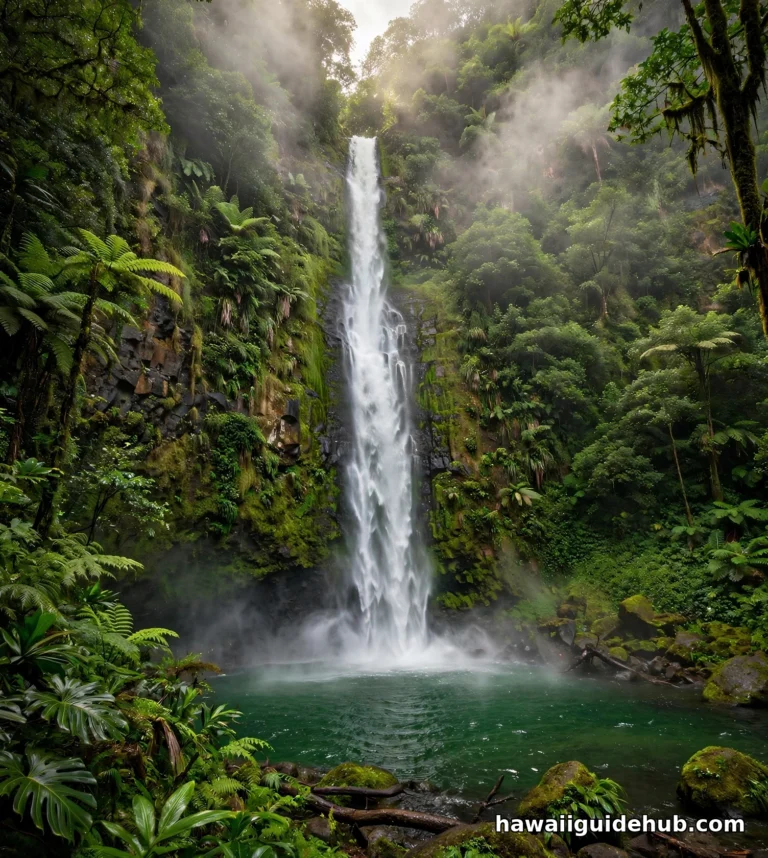
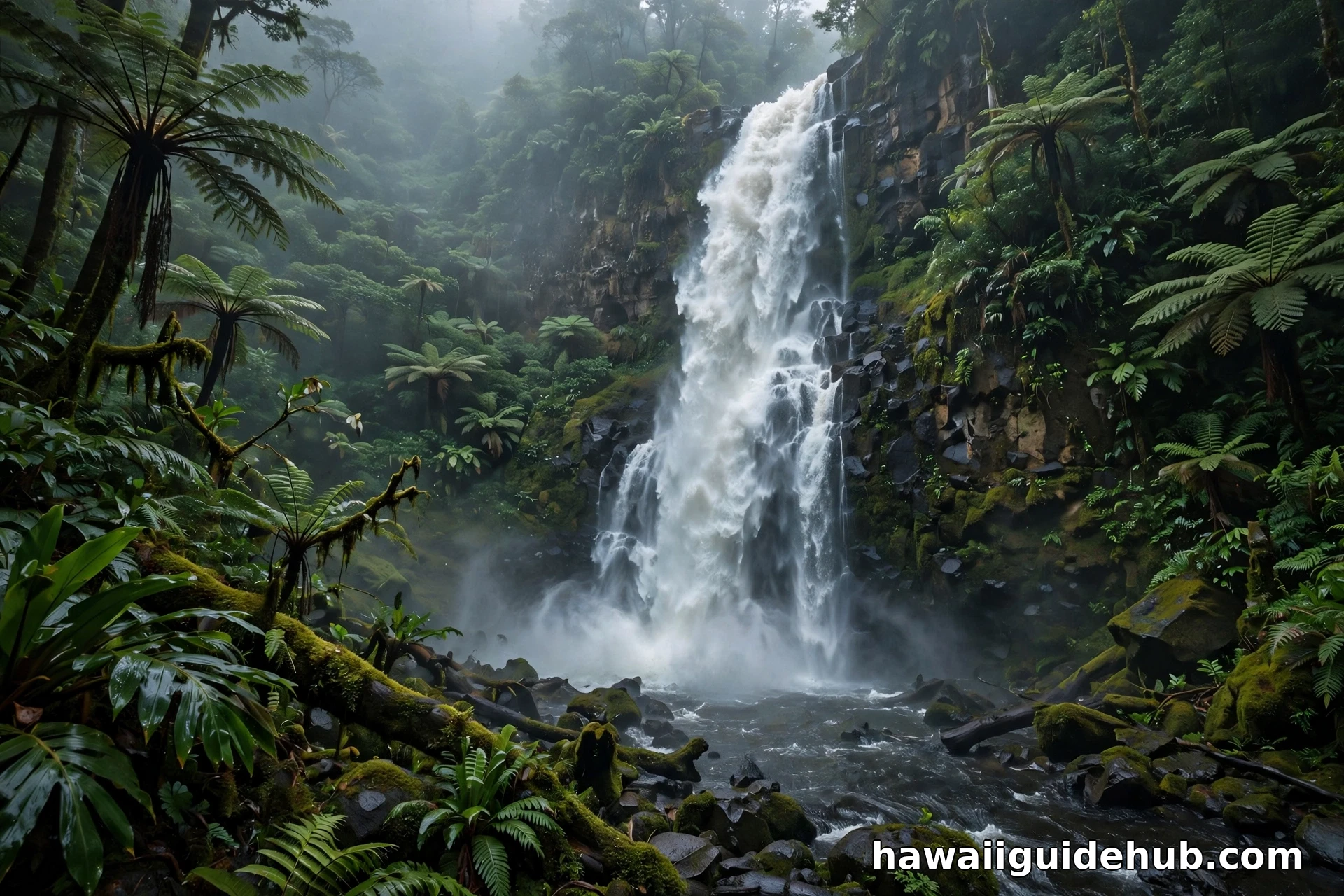
This is what the rain is for: a waterfall at full thunder, the rainforest dripping and steaming, the whole scene more alive than any sunny day could make it. Stand in the mist, feel the power, and thank the weather. The visitors who stayed at the hotel are missing the best show on the island, and you are in the front row getting pleasantly damp.
Understanding Hawaii’s Rain: Microclimates 101
Hawaii’s rain is not random; it follows the trade winds. Moist air hits the mountains, rises, cools, and dumps rain on the windward (northeast) slopes, leaving the leeward (southwest) sides in a rain shadow. This is why Hilo averages over 120 inches of rain a year while Kona, 70 miles away on the same island, averages under 20. The practical lesson: “rainy in Hawaii” almost never means rainy everywhere. Learn which side of your island is which, and you hold the key to every rainy forecast.
Island-by-Island Rainy Day Playbooks
On Oʻahu, a rainy windward morning means driving to the leeward coast: Ko Olina, Waikiki, and the south shore are often dry when Kaneohe pours. If the whole island is wet, the Bishop Museum, the Honolulu Museum of Art, and the covered Aloha Stadium Swap Meet fill the day. On Maui, rain on the Hana side means sun in Kihei and Wailea; the Maui Ocean Center in Maalaea is the all-weather anchor. On the Big Island, Hilo’s rain is Kona’s sunshine and vice versa: the island is big enough that the drive is worth it. On Kauaʻi, the wettest island, embrace it: the waterfalls and Waimea Canyon in mist are the point, and the Kauaʻi Museum in Lihue covers the downpours.
Rainy-Day Food Adventures
Bad weather is a culinary opportunity. Rainy days are for the long lunch, the bakery crawl, the food truck park with covered seating. Hilo’s farmers market runs rain or shine under cover. Honolulu’s Chinatown food scene rewards the unhurried. Coffee farm tours on the Big Island and Maui run in any weather and end with tastings. Chocolate tours, brewery taprooms, and the great plate-lunch institutions all taste better when you have nowhere else to be. Some travelers plan their splurge dinner for the rainiest night: the restaurant is quieter, the service warmer, the meal unhurried.
Wellness and Slow Days
Give yourself permission to do nothing. A rainy day is the universe granting a rest day on a trip that probably needed one. Book the massage, read on the lanai while the rain drums the roof, take the long bath, nap without guilt. Hawaii’s rain has a sound, on leaves, on lava rock, on the ocean, that mainland rain never quite manages; listening to it is an activity, not an absence of one. The travelers who burn out by day five are the ones who never took the slow day the rain offered on day three.
Photography in the Rain
Overcast light is a gift to photographers: no harsh shadows, saturated greens, waterfalls without blown highlights. Mist adds depth to rainforest shots, and rainbows follow the showers. Protect the gear with a rain sleeve or even a plastic bag, wipe the lens constantly, and chase the breaks: the ten minutes after a shower, when the sun returns and everything drips, is the best light in Hawaii. Some of the islands’ most dramatic photographs were taken on the days the beach crowd stayed inside.
The Rain-Day Decision Matrix
Not all activities handle rain equally. Some get better; some get dangerous. The matrix below is the expert’s verdict.
| Activity | Verdict in rain | Why |
| Waterfalls (Akaka, Rainbow) | Better | Full flow; mist and rainbows; fewer crowds |
| Museums & cultural centers | Perfect | Fully indoor; rain makes the choice easy |
| Rainforest hikes | Good, with care | Lush at peak; but trails get slick, streams rise |
| Beach day | Skip | Runoff clouds water; brown-water advisories follow storms |
| Slot canyons & stream hikes | Dangerous | Flash flood risk; never enter during rain |
| Scenic drives | Better | Waterfalls multiply along the road; dramatic skies |
Chase the Sun First
Before defaulting to indoor plans, check the other side. Hawaii’s weather is famously local: it can pour in Hilo while Kona basks, rain on Oʻahu’s windward side while the leeward beaches shine. The islands are small enough that the sunny coast is often 30 to 60 minutes away. Check the radar, not just the forecast, and drive toward the blue. This single habit saves more vacation days than any activity list.
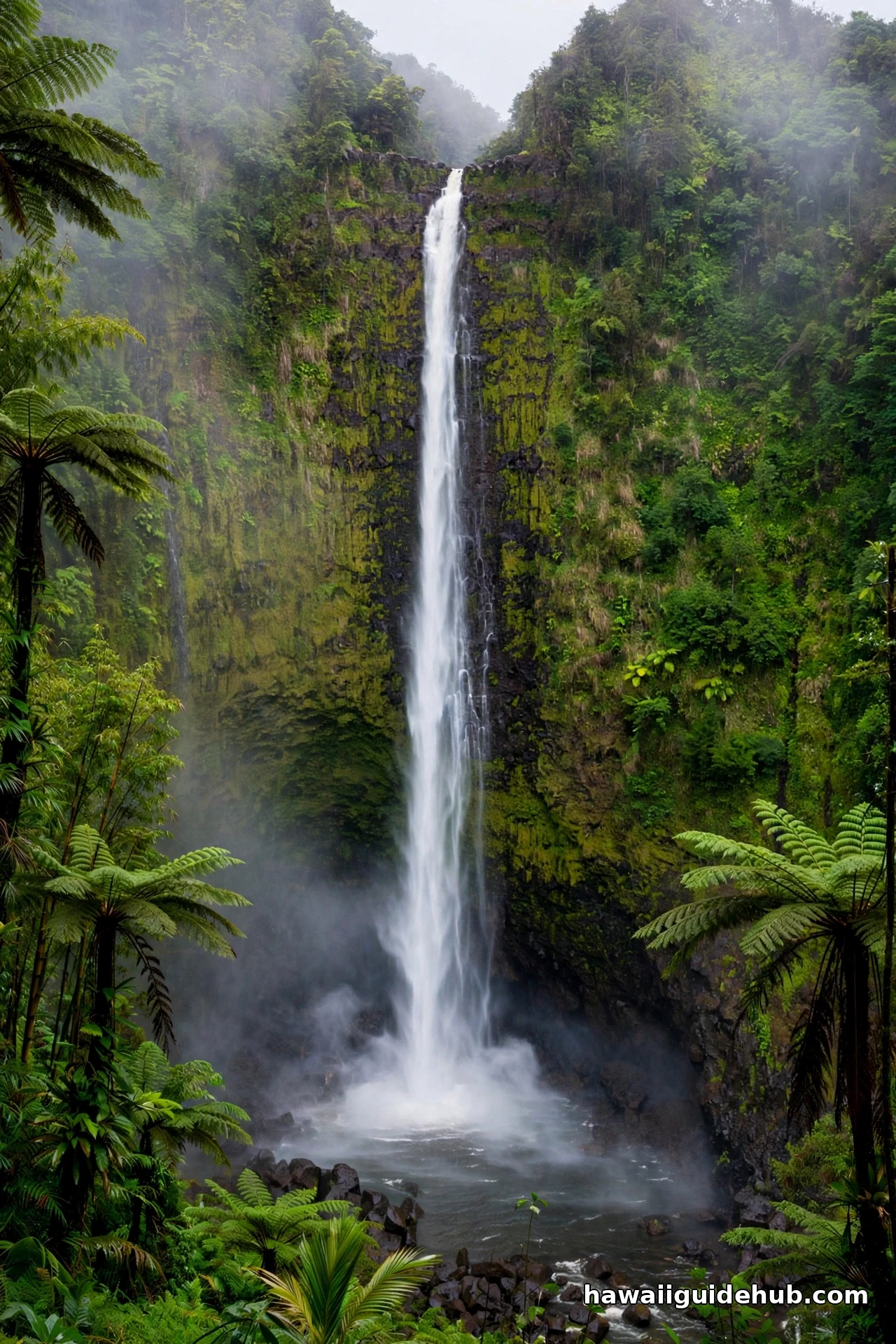
Akaka Falls after rain is the single best rainy-day sight in Hawaii: 442 feet of white water plunging through a gorge so green it looks lit from within. The paved loop walk takes under half an hour, the mist kisses your face, and the crowds that clog the overlook on sunny days have vanished. This is the waterfall the rain built, and seeing it like this is worth every drop.
What Gets Better in the Rain
Waterfalls are the headliners: Akaka Falls, Rainbow Falls, and the Road to Hana’s dozens of cascades all run fullest after rain, and the crowds thin out. Botanical gardens turn electric, every leaf beaded. The Hawaii Tropical Botanical Garden in Onomea, the Garden of Eden on Maui, and Kauaʻi’s Na ʻĀina Kai all reward the damp visitor. Scenic drives become waterfall safaris: the Hana Highway, the Old Māmalahoa Highway, and Waimea Canyon’s overlooks all multiply their drama. Embrace the wet side; it is showing off.
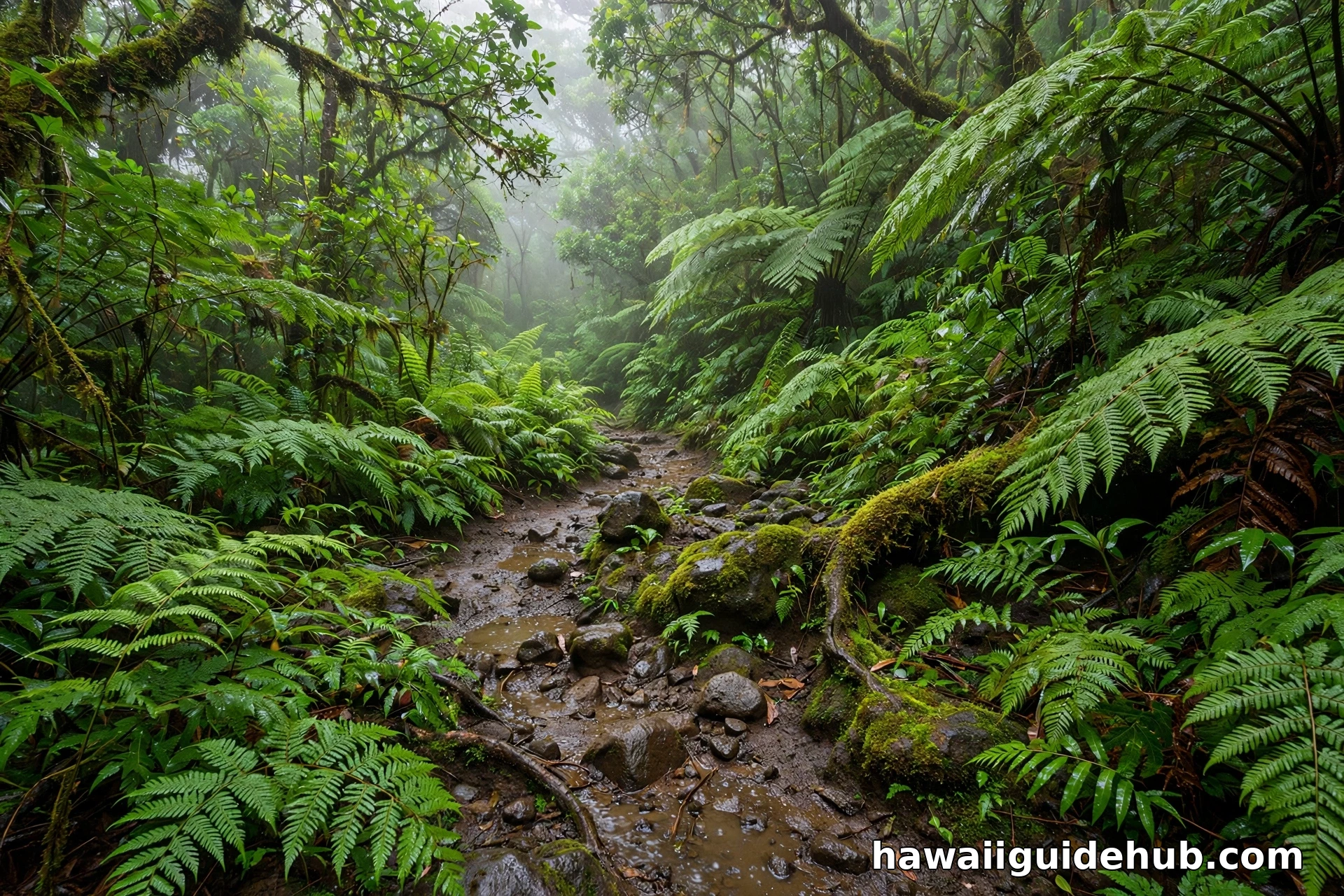
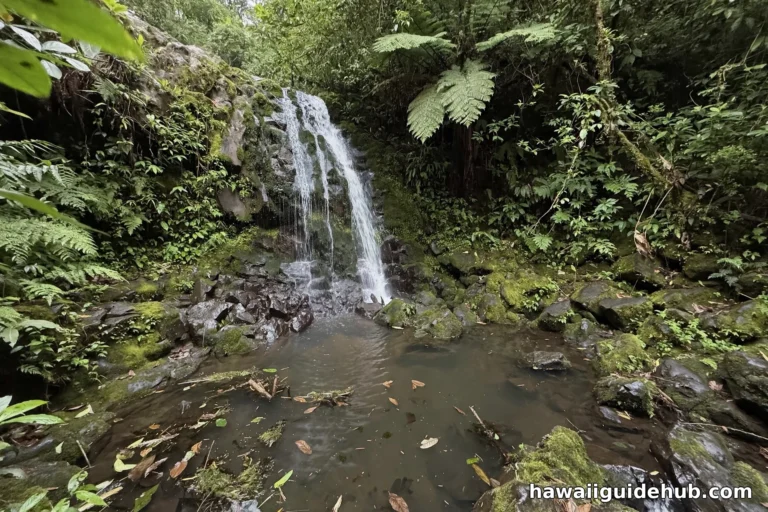
The rainforest trail after rain is Hawaii at its most primordial: ferns unfurling, moss glowing, the path a ribbon of mud and puddles that demands good shoes and rewards every step. Walk slowly, listen to the drips, and watch for the forest birds that come out after the showers. This is the Hawaii the postcards cannot capture, because it only exists when the weather turns.
Best Indoor and Covered Activities
When the rain is the all-day kind, go inside. The Bishop Museum in Honolulu is Hawaii’s premier natural and cultural history museum, worth half a day. The Maui Ocean Center aquarium and its 3D whale show entertain for hours. The ʻImiloa Astronomy Center in Hilo pairs planetarium shows with Hawaiian navigation culture. Coffee farm tours, chocolate factory tastings, and lei-making or hula classes all run rain or shine. Shopping districts, art galleries in Makawao and Hilo, and a long lunch at a local institution round out the civilized options.
One more underrated rainy-day move: the hot spring of local knowledge that is the bookstore. Hawaii’s independent bookstores, from Basically Books in Hilo to the shops in Honolulu’s Chinatown, are treasure houses of island history, natural history, and out-of-print guides. An hour browsing the Hawaii section will teach you more about where you are than a week of beach sitting. Buy the field guide to the birds, the history of the sugar plantations, the memoir of the paniolo. The rain gave you the time; spend it getting smarter about the islands.
Flash Flood Safety: The Non-Negotiable Rules
Hawaii’s beauty has a sharp edge: flash floods kill. Never hike in slot canyons, stream beds, or narrow valleys during rain or when rain is forecast upstream; water can rise in minutes from storms you cannot see. Heed brown-water advisories after heavy rain: runoff carries bacteria, and swimming is unsafe. Do not drive through flooded roads. Check the National Weather Service Honolulu forecast and heed flash flood watches the way you would a fire alarm. The rainforest will still be there tomorrow; make sure you are too.
And when the rain finally breaks, be ready. Keep the swimsuit and the hiking shoes both in the car, because the ten minutes after a Hawaiian shower are the golden window: rainbows arc over the valleys, the waterfalls are still thundering, the air smells of wet earth and plumeria, and the light turns everything to gold. The travelers who packed for both weathers get the best of both worlds. The ones who dressed only for sun spend the golden window toweling off in the parking lot. Pack for the islands as they are, not as the brochure promised.
The Art of the Backup Plan
The best rainy days are planned before the trip. Build a short list of indoor and rain-enhanced options for each island you visit, and rank your outdoor days by weather sensitivity: schedule the flexible beach days early so a rainy forecast can swap with a museum day. Keep a rain jacket in the car, not the hotel; the shower that surprises you at the trailhead is the one you were not dressed for. And remember the local wisdom: if you do not like the weather, drive 20 minutes. It is almost always true.
For more trip planning, the guide to Hawaiian cultural traditions adds the cultural layer, while responsible travel practices and the guide to Hawaii’s natural environments help you travel well.
Watch: Rainy Day on Hawaii’s Big Island
Frequently Asked Questions
What should you do in Hawaii when it rains?
Chase the sun to the other coast first; if rain is island-wide, visit waterfalls, museums, aquariums, coffee farms, galleries, or take a scenic drive.
Is it safe to hike in Hawaii when raining?
Ridge trails in light rain are fine with care, but never hike stream beds, slot canyons, or narrow valleys during rain: flash flood risk is real and deadly.
Which side of Hawaii gets the most rain?
Windward (northeast-facing) coasts get the most rain: Hilo on the Big Island, Kaneohe on Oʻahu, Hanalei on Kauaʻi. Leeward (southwest) coasts are driest.
Can you swim in Hawaii after heavy rain?
Wait for brown-water advisories to lift. Runoff after heavy rain carries bacteria; the Department of Health advises avoiding murky nearshore water.
What is the rainiest month in Hawaii?
Winter months, roughly November through March, bring the most rain, though showers can appear any month on windward coasts.
Rain in Hawaii is not the enemy of the trip; rigidity is. The islands give you microclimates, waterfalls, museums, and rainforests precisely so a gray sky never means a gray day. Pack the jacket, check the radar, drive toward the blue, and when the rain catches you anyway, go look at a waterfall. It has never been better. The old Hawaiian saying has it right: the rain is a blessing, and the islands wear it beautifully. Learn to love the wet days, and Hawaii will never disappoint you, whatever the sky decides to do. Pack the jacket, keep the spirit flexible, and remember that every waterfall you will ever love exists because it rained, gloriously and generously, on exactly the day you happened to be watching, which makes the rain not an interruption of your trip but one of its finest features, the one the sunshine-only travelers never even knew they missed, and the reason you will come back to the islands again and again, chasing waterfalls in the rain like you learned to do on that first gray morning, and every gray morning after, because the rain was never the problem, only the invitation, extended in every single drop.