Hawaii’s Endemic Species Explained: Evolution in Isolation

About 90 percent of Hawaii’s native species exist nowhere else on Earth. A finch blown off course five million years ago became fifty kinds of honeycreeper. A weed from California became the silversword. A single fruit fly became eight hundred. Hawaii is the world’s great laboratory of evolution in isolation, and also its most heartbreaking extinction crisis. This guide explains how the endemics arose, meets the stars, and covers what is being done to save them.
This is the single complete guide to Hawaii’s endemic species. It explains adaptive radiation, the honeycreeper story, the silversword alliance, insects and spiders, marine endemics, the extinction crisis and its causes, the conservation fightback, where to see endemics responsibly, and FAQs. Everything about Hawaii’s endemic species lives on this one page.
Why Islands Make New Species
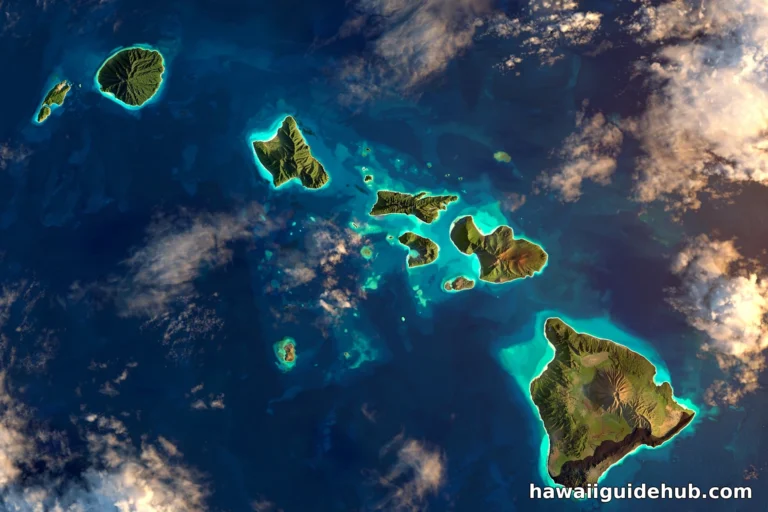
Hawaii is the most isolated archipelago on Earth: 2,500 miles from the nearest continent. Almost nothing gets here, but over millions of years, a few wind-blown seeds, storm-carried birds, and rafted insects made it. Each arrival found empty niches, no competitors, no predators, and a staircase of microclimates from beach to alpine desert. With nothing to stop them, the colonists diversified: one species becoming many, each specialized for a different food, altitude, or island. Biologists call this adaptive radiation, and Hawaii is its world capital.
One Ancestor, Many Species: The Showcase
| Ancestor | Arrived as | Became | Species |
| Rosefinch | One finch-like bird, ~5M years ago | Honeycreepers: nectar, seed, insect, woodpecker specialists | ~56 known; ~15-17 survive |
| California tarweed | One weedy seed | Silversword alliance: silverswords, greenswords, shrubs, vines | ~30 |
| Fruit fly | One fly | Hawaiian Drosophila: 800+ species, the largest radiation of its kind | ~800+ |
| Lobelia | One bellflower relative | Lobelioids: giant rosettes to vines, co-evolved with honeycreepers | ~120+ |
Species counts are commonly cited estimates; taxonomy keeps being revised as DNA work continues. The pattern, though, is undisputed: a handful of colonists became thousands of species found nowhere else.
The Honeycreepers: Darwin’s Finches, Supersized
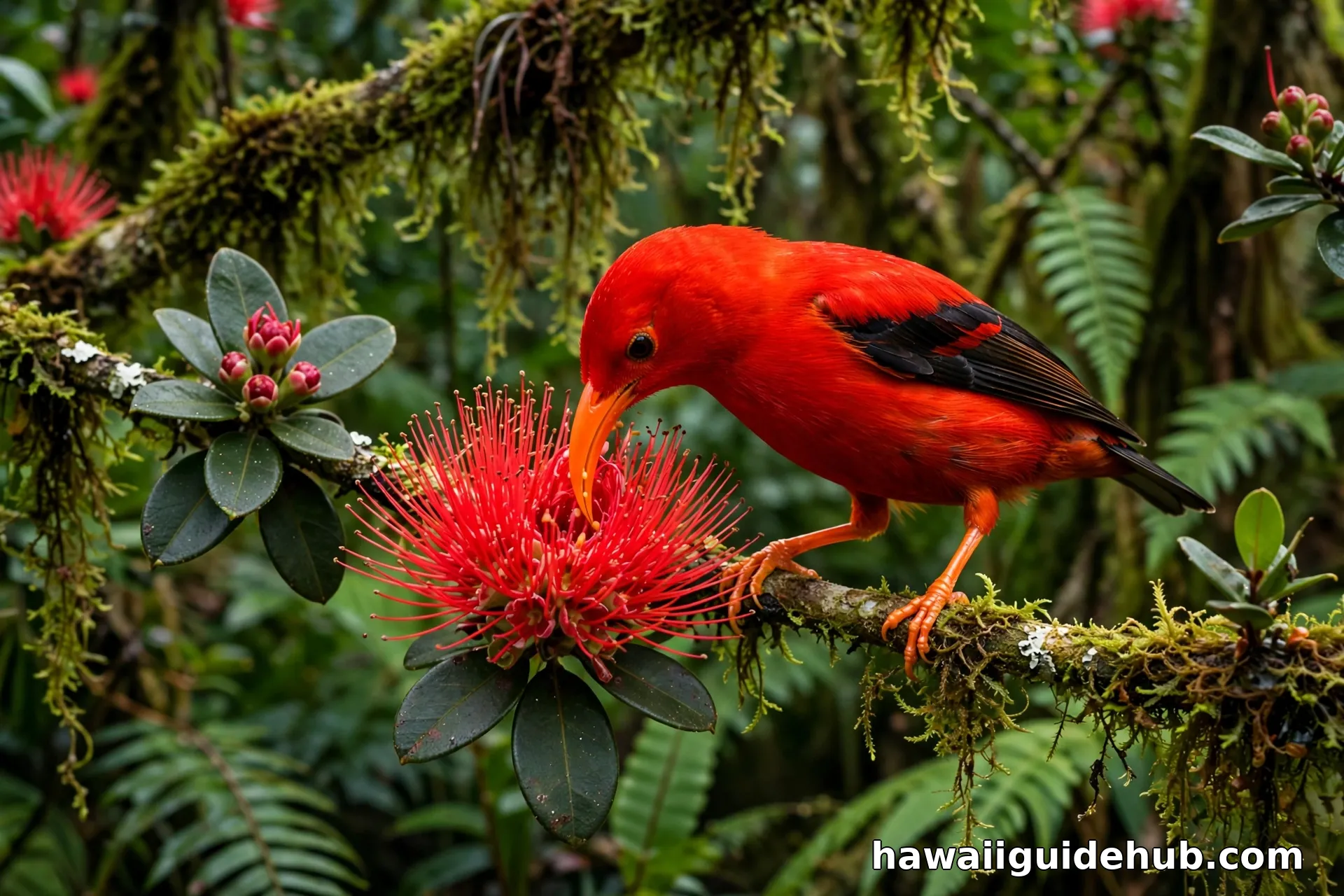
The honeycreepers are the flagship radiation. From that single rosefinch ancestor came birds with sickle beaks for nectar (iiwi), stout beaks for seeds, tweezer beaks for insects, and one, the extinct ou, with a parrot-like bill. The scarlet iiwi and apapane, flashing red against ohia blossoms, are the ones visitors see; the apapane remains the most abundant, its population roughly matching the human population of the islands. At least 56 species are known from fossils and history; only about 15 to 17 survive, and in 2023 the U.S. Fish and Wildlife Service declared eight Hawaiian birds extinct, most of them honeycreepers. The survivors cling to high-elevation forests above the mosquito line, and warming is pushing that line uphill.
The Silversword Alliance: A Weed Becomes a Wonder
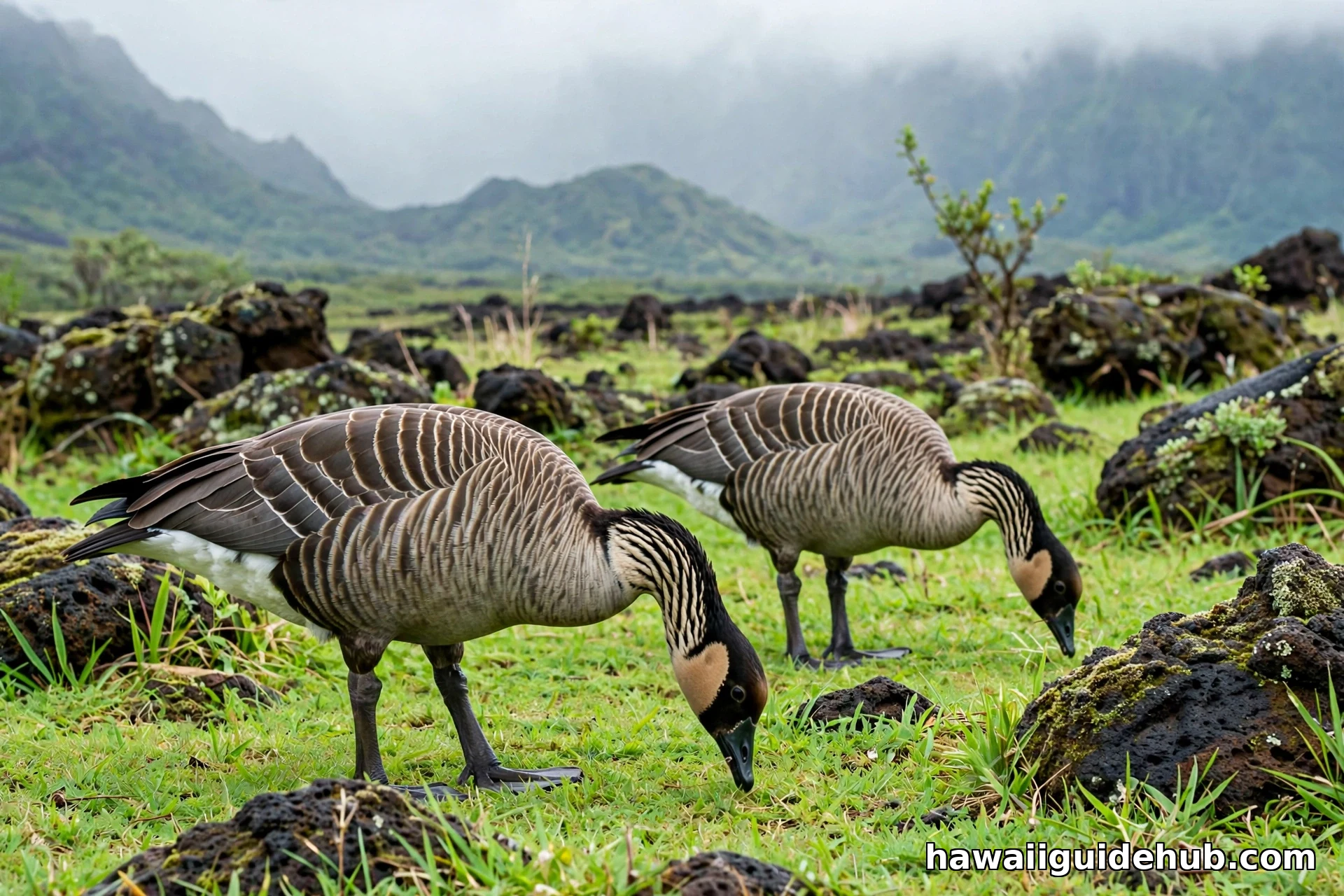
The silversword alliance may be the most improbable radiation of all: a humble California tarweed arrived, and its descendants became the giant silver rosettes of Haleakala, woody shrubs, vines, and trees across the islands. The Haleakala silversword grows for decades as a silver ball, then flowers once in a towering stalk and dies: monocarpic drama at 10,000 feet. It is the botanical emblem of adaptive radiation, a weed that conquered an alpine desert, and it grows nowhere else.
Insects, Spiders, and Snails: The Small Majority
Most of Hawaii’s endemics are small and overlooked. The Hawaiian Drosophila, some 800-plus species from one ancestor, include flies with hammerhead stalks and elaborate courtship dances; they are a cornerstone of evolutionary research. The happy-face spider wears a smile pattern on its abdomen. Carnivorous caterpillars, unique to Hawaii, hunt flies instead of eating leaves. And the tree snails (kahuli), once so abundant their songs filled the forests, have been devastated by introduced predators: the rosy wolf snail, brought to control another pest, ate the natives instead. Of the 750-plus described snail species, most are gone or critically endangered.
The Big Ones: Nene, Monk Seal, and Bat
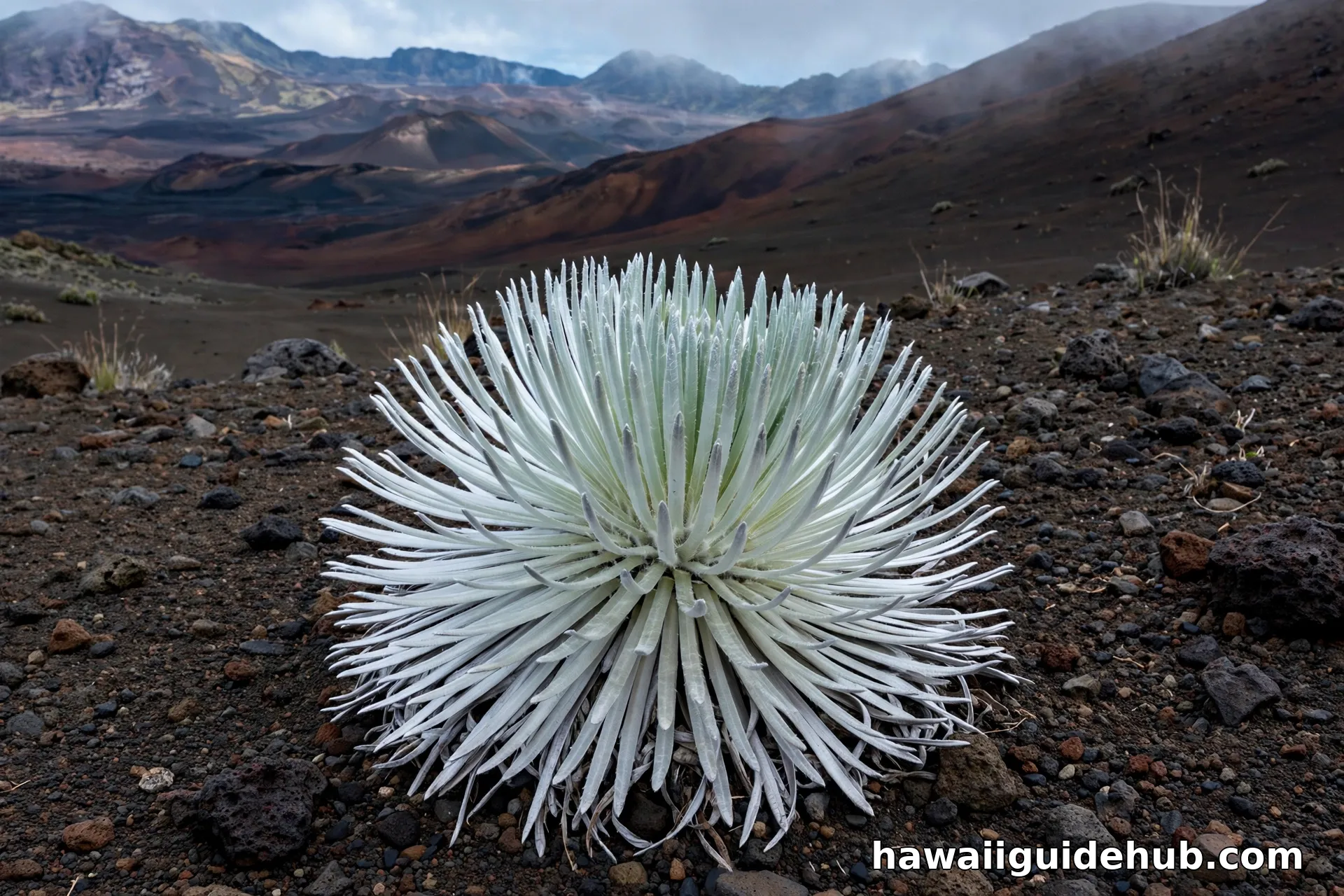
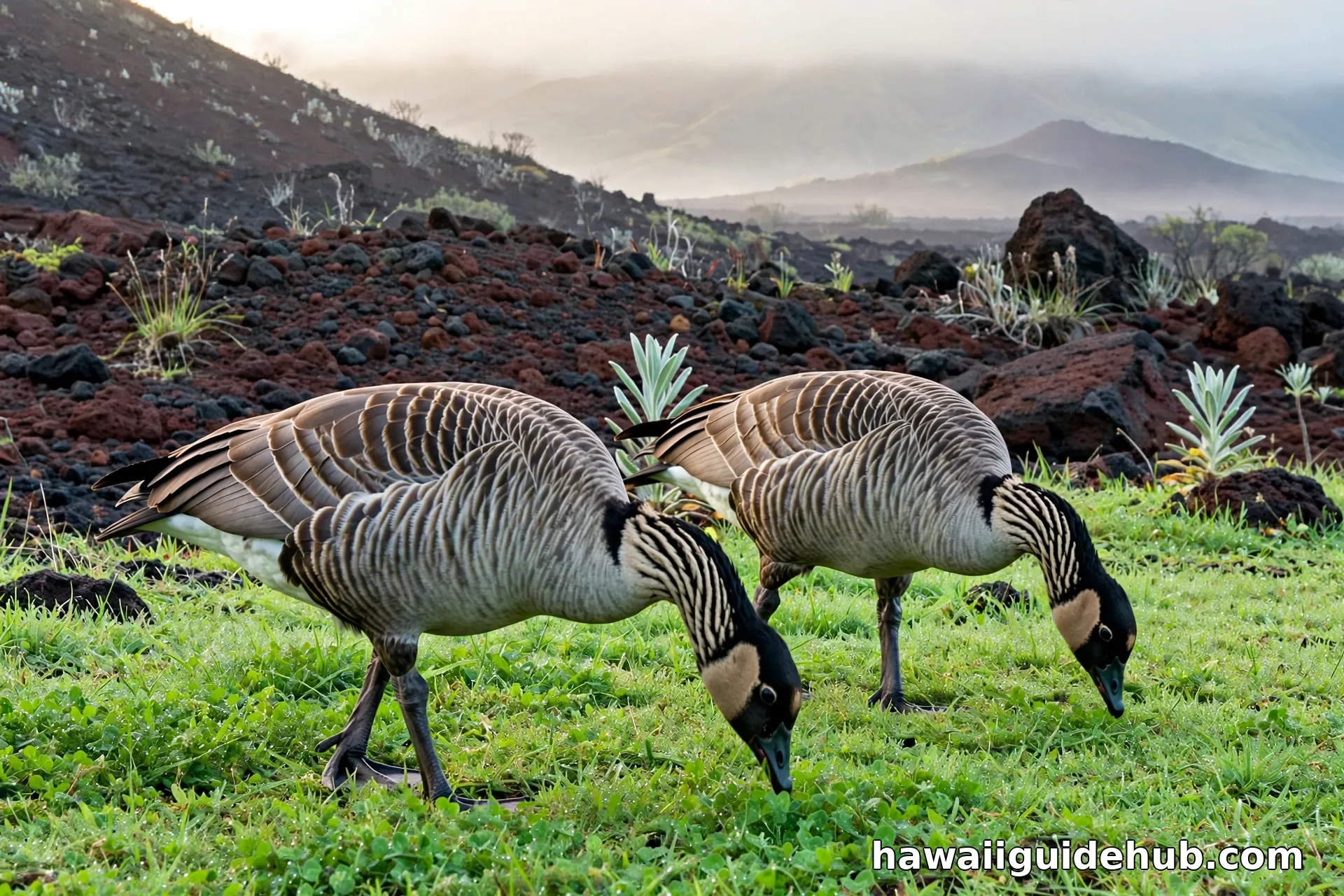
The large endemics are few but beloved. The nene, Hawaii’s state bird, descended from the Canada goose and traded migration for lava fields: it nests on the ground and lost much of its webbing. Down to a few dozen birds in the 1950s, it recovered through captive breeding to a few thousand, and grazes golf courses and parks on Kauai, Maui, and the Big Island. The Hawaiian monk seal, one of the world’s rarest seals, hauls out on beaches statewide: give it 50 feet of space, per NOAA guidelines, and never get between a mother and pup. The Hawaiian hoary bat is the islands’ only native land mammal, a solitary insect-hunter most visitors never see. Our honu guide covers the beloved sea turtle, which is native but not endemic: it ranges across the Pacific.
The Extinction Crisis: What Went Wrong
Hawaii is called the extinction capital of the world, and the causes arrived with people. Mosquitoes, introduced in 1826, brought avian malaria and pox to birds with no resistance; the disease rules the lowlands, which is why the surviving honeycreepers live above 4,000 feet. Rats, cats, and mongoose eat eggs, chicks, and snails. Habitat was cleared for plantations and development. And the very specialization that made the radiations spectacular made them fragile: a bird evolved for one flower has nowhere to go when the flower’s forest is cut. Since human arrival, Hawaii has lost over 90 percent of its lowland dry forest and dozens of bird species; the 2023 federal extinction declarations were the paperwork catching up with losses decades old.
The Fightback: Birds, Not Mosquitoes and Beyond
The conservation response is as innovative as the evolution. The Birds, Not Mosquitoes partnership releases laboratory-raised male mosquitoes carrying a bacterium that makes them incompatible with wild females: the eggs never hatch, and the mosquito population collapses without pesticides. Drones drop the capsules over remote forests on Maui and Kauai. Captive breeding at the Keauhou and Maui bird conservation centers holds insurance populations of the rarest honeycreepers. Fenced exclosures keep pigs and rats out of core habitat. Mosquito control, habitat restoration, and predator control together are the plan, and for the akikiki and kiwikiu, the most endangered birds on Earth, it is a race against the warming that pushes mosquitoes uphill.
Where to See Endemics Responsibly
Hosmer Grove and the Waikamoi Preserve on Maui for honeycreepers; Hakalau Forest National Wildlife Refuge on the Big Island for the densest forest-bird viewing (tours only). Haleakala National Park for silverswords and nene. Hawaii Volcanoes National Park for nene and native forest. Kokee State Park on Kauai for apapane and iiwi. Rules everywhere: stay on trails, never feed wildlife, keep 50 feet from monk seals, and clean boots and gear between islands to avoid spreading Rapid Ohia Death, the fungal disease killing the ohia trees the honeycreepers depend on. For forest hikes, see our Waimea Canyon hiking guide.
Co-evolution: Birds and Flowers Designing Each Other
The most beautiful part of the radiation story is that the birds did not evolve alone: the flowers evolved with them. The long, curved bill of the iiwi fits the curved corolla of the ohia and lobelioid flowers it feeds on; the flowers, in turn, are shaped to dust exactly that bill with pollen. This is co-evolution: two lineages shaping each other over millions of years. When the birds decline, the plants lose their pollinators; when the forests are cut, the birds lose their flowers. Conservationists now speak of saving not species but relationships, because in Hawaii the species were never really separate.
The Snail Crisis: An Extinction in Miniature
No group illustrates the fragility better than the tree snails. Hawaii’s achatinellid snails radiated into over 750 described species, each adapted to a single valley or ridge, some so localized they lived on one hillside. They were abundant enough that Hawaiians wove their shells into lei and said the forests sang with them. Then came the rosy wolf snail, introduced in the 1950s to control the giant African snail: it preferred the native tree snails and ate through them valley by valley. Today the survivors live in predator-proof exclosures and laboratories, some species down to single-digit individuals. It is the extinction crisis in miniature: spectacular radiation, catastrophic collapse, and a rescue effort measured in snails.
What Visitors Can Do: The Endemic-Species Travel Code
Tourism can help or hurt, and the difference is behavior. Stay on marked trails: off-trail footsteps crush seedlings and spread disease. Clean boots, gear, and car undercarriages between islands and trailheads: Rapid Ohia Death spreads in soil on boots, and the ohia is the honeycreepers’ lifeline. Never release plants or animals, and never move firewood. Keep cats indoors: free-roaming cats kill native birds at staggering rates. Donate to or volunteer with the conservation groups doing the work: the Maui Forest Bird Recovery Project, the Kauai Forest Bird Recovery Project, and the American Bird Conservancy’s Hawaii program all take support. And choose the birding tours and Hakalau visits that fund habitat protection: your ticket becomes conservation revenue.
The Ones That Made It: Success Stories
It is not all loss. The nene’s climb from a few dozen to a few thousand is one of conservation’s great comebacks. The Hawaiian goose, the monk seal, and the humpback whale, which rebounded under protection, all show recovery is possible. The alala, the Hawaiian crow, extinct in the wild since 2002, is being reintroduced on Maui after decades of captive breeding. These wins share a formula: remove the threat, protect the habitat, breed the insurance population, and persist for decades. The honeycreepers’ fight is harder, mosquitoes cannot be fenced out, but the nene proves the islands reward the stubborn.
Watch: Jewels of the Forest, Kauai’s Honeycreepers
Hawaii Endemic Species FAQs
What does endemic mean?
Found naturally in one place and nowhere else. About 90 percent of Hawaii’s native species are endemic: they evolved here and exist only here. Native but non-endemic species, like the honu, occur in Hawaii and elsewhere.
What is the most famous endemic species in Hawaii?
The honeycreepers for evolution, the nene for recovery, the silversword for sheer improbability, and the monk seal for charisma. Each represents a different radiation and a different conservation story.
Why are Hawaiian birds going extinct?
Mainly avian malaria spread by introduced mosquitoes, plus habitat loss and predators like rats and cats. The birds evolved without these threats and have no defenses. Warming pushes mosquitoes into the last high-elevation refuges.
Can I see honeycreepers as a tourist?
Yes, with effort. The apapane and iiwi are visible in high-elevation forests on Maui (Hosmer Grove), the Big Island (Hakalau tours), and Kauai (Kokee). Go early, bring binoculars, and hire a local bird guide for the best odds.
What is being done to save the forest birds?
The Birds, Not Mosquitoes project releases incompatible male mosquitoes to crash the mosquito population, plus captive breeding, predator-proof fences, and habitat restoration. It is one of the most ambitious island conservation programs in the world.
Are there snakes in Hawaii?
No native snakes, and it is illegal to possess them: Hawaii’s isolation kept snakes out, and strict biosecurity keeps them out. The brown tree snake, which devastated Guam’s birds, is the nightmare scenario every cargo inspection exists to prevent.
An Ark Worth Keeping Afloat
Hawaii’s endemics are evolution’s boldest experiment: a finch that became fifty birds, a weed that became a silver rosette, a fly that became eight hundred species. The experiment is in danger, not from the isolation that created it but from the connections that followed: mosquitoes, rats, and a warming climate. The fightback, mosquitoes fighting mosquitoes, forests fenced and replanted, birds bred for release, is worthy of the wonder it protects. Go see the iiwi flashing red in the ohia, the silversword holding its decades-long pose, the nene grazing where its ancestors nested. They exist nowhere else. That is the whole point, and the whole responsibility we all carry as visitors to these islands.