Army Bases in Hawaii: Schofield, Fort Shafter & PCS Guide

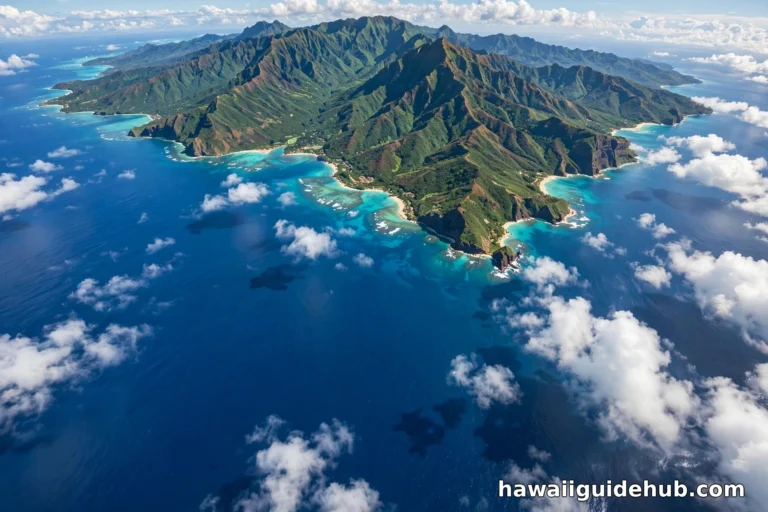
Hawaii hosts one of the largest concentrations of U.S. Army installations in the Pacific, centered on Oʻahu with a major training area on the Big Island. If you have orders to Hawaii, are considering an Army career move, or are simply curious what the military footprint looks like, this guide covers every Army base in Hawaii: Schofield Barracks, Fort Shafter, Tripler Army Medical Center, Wheeler Army Airfield, Fort DeRussy, and Pōhakuloa Training Area, plus the practical realities of a Hawaii PCS.
Army Bases in Hawaii: The Complete List
All of the Army’s major Hawaii installations fall under U.S. Army Garrison Hawaii, headquartered at Wheeler Army Airfield, which supports nearly 100,000 soldiers, civilians, and family members across the islands. Here they are:
Schofield Barracks (Wahiawā, Oʻahu)
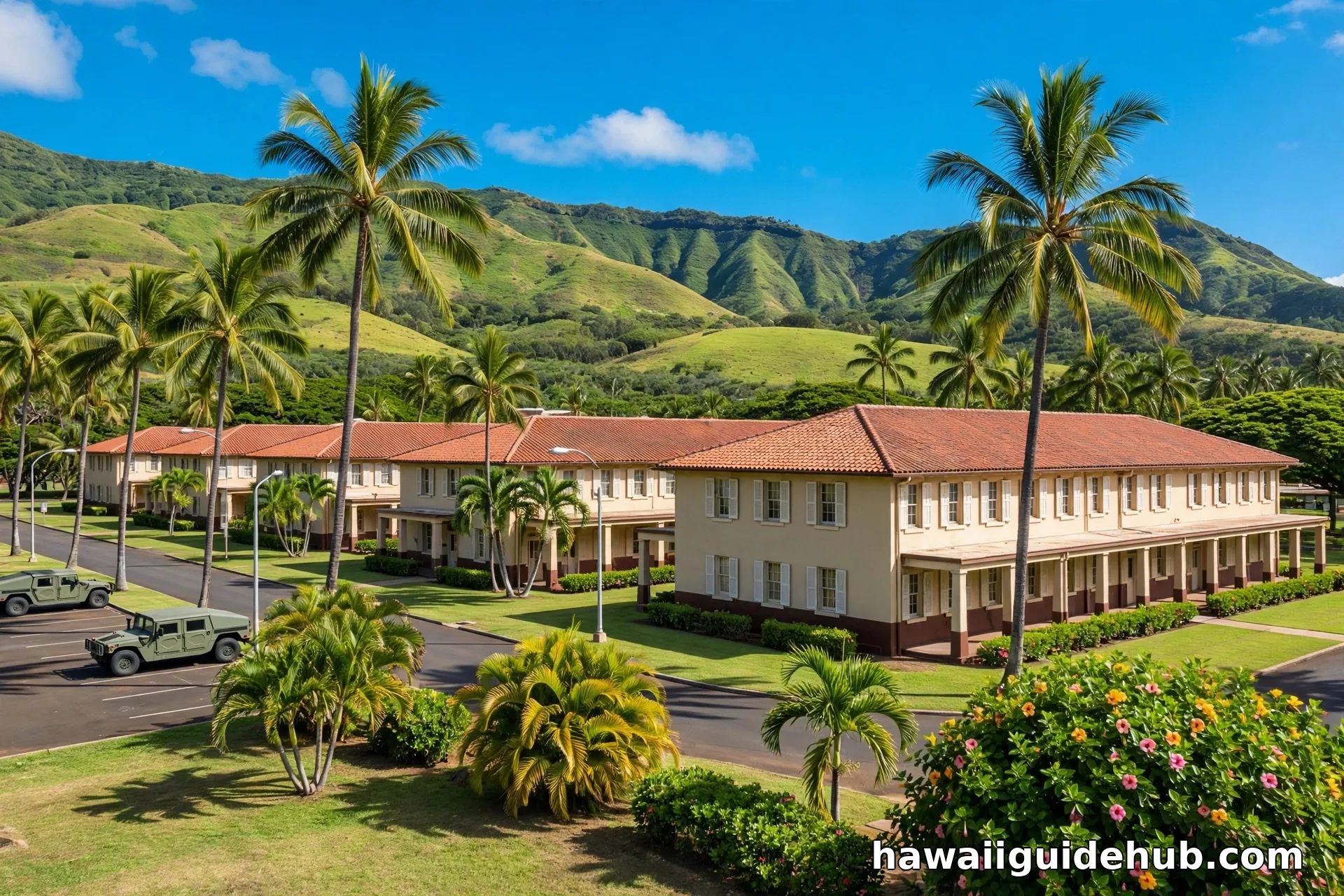
The largest Army post in Hawaii and its operational heart. Established in 1908 and named for Lt. Gen. John M. Schofield, who recognized Oʻahu’s strategic value in 1872, Schofield has been home to the 25th Infantry Division, “Tropic Lightning,” since 1941. The post sits in central Oʻahu between Wahiawā and Mililani, about 20 miles from Honolulu. Its historic quadrangles, built starting in 1909, are among the most beautiful military architecture in the Pacific. This is where most soldiers ordered to Hawaii will serve.
Fort Shafter (Honolulu, Oʻahu)
The oldest military base on Oʻahu, established June 22, 1907, and a National Historic Landmark. Fort Shafter is the headquarters of U.S. Army Pacific (USARPAC), which commands Army forces across the Asia-Pacific. About 5,000 personnel work on its 590 acres along the Honolulu waterfront. Named for Maj. Gen. William Rufus Shafter. Its historic Palm Circle barracks are architectural landmarks.
Tripler Army Medical Center (Honolulu, Oʻahu)
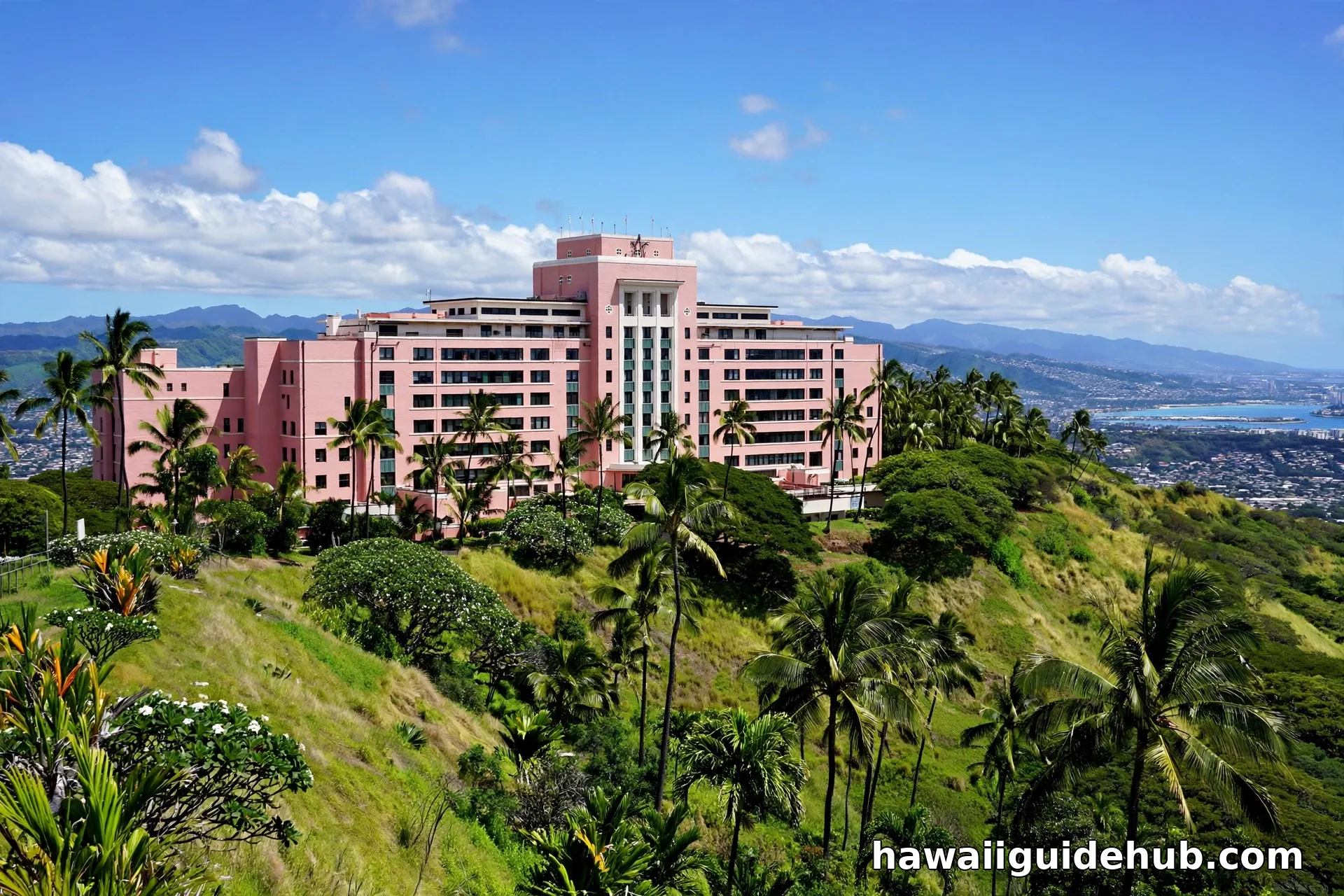
The iconic pink hospital on the hill above Honolulu, visible from across the city. Tripler is the largest Army medical center in the Pacific region, serving active duty, families, retirees, and veterans across the Pacific. If you are stationed in Hawaii, this is your hospital.
Wheeler Army Airfield (Wahiawā, Oʻahu)
Adjacent to Schofield Barracks, Wheeler is the Army’s aviation hub in Hawaii and the headquarters of U.S. Army Garrison Hawaii. Named for Maj. William J. Wheeler, it was attacked on December 7, 1941, alongside Pearl Harbor and Schofield.
Fort DeRussy (Waikīkī, Oʻahu)
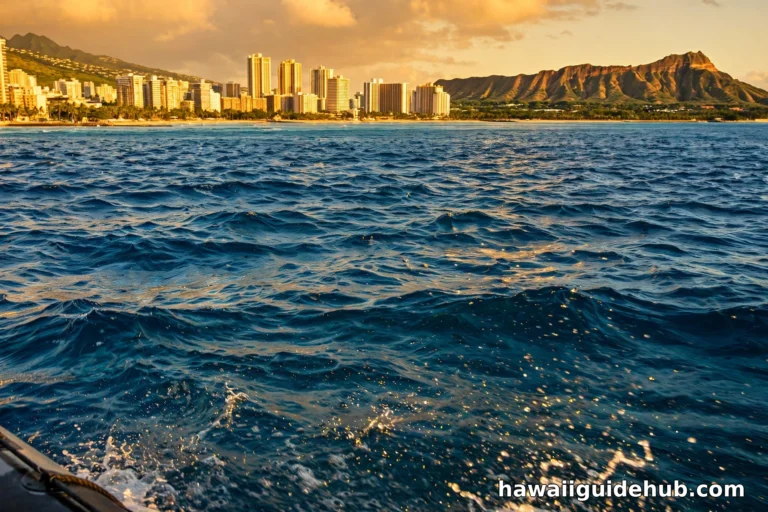
One of four DeRussy installations in the U.S., Fort DeRussy sits on prime Waikīkī beachfront and operates as an Armed Forces Recreation Center. Its Hale Koa Hotel serves active duty, Guard, Reserve, retirees, and DoD civilians at rates far below Waikīkī’s civilian hotels. It is largely open to the public as a park.
Pōhakuloa Training Area (Big Island)
The Army’s largest training area in Hawaii: 108,863 acres on the high plateau between Mauna Loa, Mauna Kea, and Hualālai. Used for live-fire exercises, maneuver training, and the jungle and high-altitude training that makes Hawaii uniquely valuable to the Army. It is an active range, not a visitor site. See things to do on the Big Island and the volcanoes park guide for what surrounds it.
On-Post vs Off-Post Living: The PCS Decision
Army housing on Oʻahu is privatized through Island Palm Communities. Every incoming family faces the same choice:
| Factor | On-post (Island Palm Communities) | Off-post |
| Cost | BAH goes to rent; utilities often included | You keep or stretch BAH; Oʻahu rents are high |
| Wait time | Days to weeks; officers can wait up to 60 days in peak season | Immediate if you find a place |
| Commute | Minutes to Schofield; Fort Shafter families face the H-1 | Mililani, Wahiawā, Kapolei all viable; traffic is real |
| Pets | Two-pet max, breed restrictions, fees | Your call, but Hawaii rentals often restrict pets too |
| Community | Instant military community, youth programs | More local flavor, more independence |
| Schools | DoDEA and Hawaii public options either way | School quality varies sharply by neighborhood |
Report to housing within seven workdays of arrival even if you plan to live off-post. Peak PCS season is June through August; wait times are longest then.
The Realities of a Hawaii Tour
The pros are obvious: year-round training weather, beaches, and a tour your family will remember forever. The cons deserve honesty. Cost of living is the highest of any major duty station; COLA and high BAH help but do not fully close the gap. Everything ships in, so goods cost more and take longer. Isolation is real: visiting family means a 5-plus-hour flight each way, and emergency trips home are expensive. Vehicle shipping is covered for one POV, and Hawaii’s pet quarantine rules require advance planning: start the rabies vaccinations and FAVN blood test process at least 4 months before you move, complete the required waiting periods, and file the paperwork with the Hawaii Department of Agriculture, or your pet faces up to 120 days of quarantine at your expense. The direct airport release program lets compliant pets go home the same day.
What Civilians Can Visit
Most Army installations are restricted, but military history is accessible. The U.S. Army Museum of Hawaii at Fort DeRussy in Waikīkī is open to the public and free. Schofield occasionally opens for public events. Pearl Harbor’s historic sites, while Navy, are the essential military visit: see what not to miss on Oʻahu. For Big Island trips around a Pōhakuloa rotation, see things to do in Kona.
December 7, 1941: The Army Under Attack
The Army in Hawaii was bloodied on the same morning as the Navy. Japanese aircraft strafed Schofield Barracks, Wheeler Army Airfield, Hickam Field, and Fort Shafter, destroying aircraft on the ground at Wheeler and killing soldiers at Schofield. The attacks shaped the installations for decades: the military reservations that ring Oʻahu today, from Makua Valley to Kahuku, were acquired in the war years. The U.S. Army Museum of Hawaii at Fort DeRussy preserves this history, including the story of the 442nd Regimental Combat Team, the Japanese American unit that became the most decorated in U.S. military history.
The 25th Infantry Division: Tropic Lightning
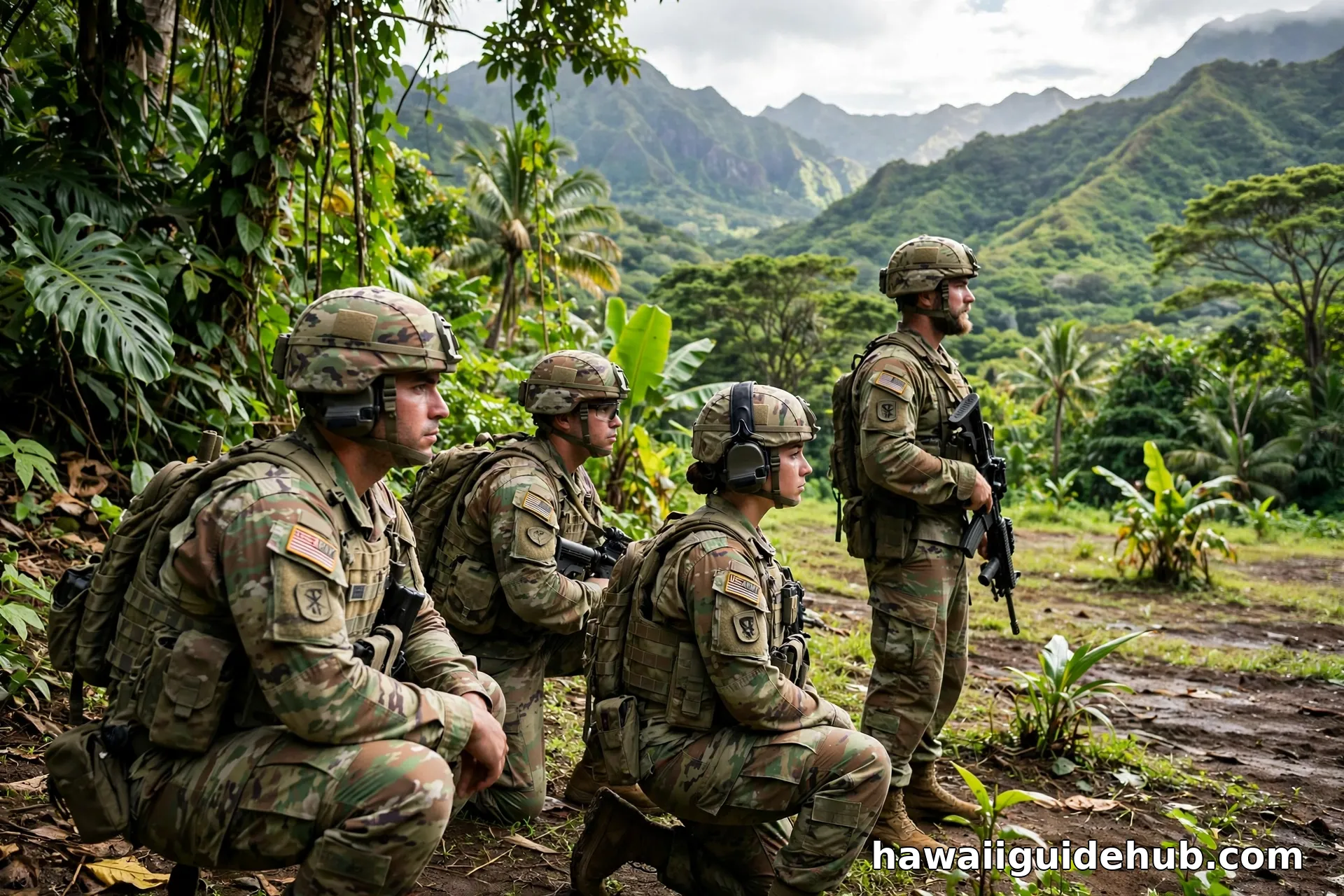
The 25th Infantry Division is the soul of Schofield Barracks. Activated in Hawaii in 1941, it fought across the Pacific in World War II, from Guadalcanal to Luzon, then in Korea and Vietnam, where its jungle expertise made it one of the most deployed divisions of the war. In recent decades its brigades have deployed to Iraq and Afghanistan. The division’s Lightning Academy runs the Jungle Operations Training Course, teaching soldiers to fight in the jungle terrain Hawaii provides year-round. If you see soldiers training on Oʻahu’s trails and ranges, they are almost certainly Tropic Lightning.
Why Hawaii: The Army’s Pacific Platform
Hawaii’s value to the Army is geographic and climatic. Positioned mid-Pacific, it is the staging ground for operations across the Indo-Pacific, home to U.S. Army Pacific headquarters at Fort Shafter and U.S. Indo-Pacific Command at Camp H.M. Smith. The climate allows year-round training no mainland post can match: jungle, mountain, and high-altitude desert within a few hours’ drive. Pōhakuloa’s 108,863 acres offer live-fire maneuver space unavailable anywhere else in the Pacific. Defense spending is Hawaii’s second economic pillar after tourism, pumping billions into the state economy annually.
Neighborhoods Near the Bases
Where you live shapes the tour. Mililani, between Schofield and Honolulu, is the most popular military family town: planned, safe, good schools, 15 minutes to Schofield. Wahiawā, right outside the gate, is cheaper and more local. Kapolei and ʻEwa Beach suit Fort Shafter and Pearl Harbor families on the west side. Kailua and Kāneʻohe draw those who want windward beaches and accept the commute. Honolulu itself works for Fort Shafter and Tripler assignments. Every choice trades commute against cost against lifestyle; there is no perfect answer, only the right one for your family.
Shipping Your Car and Household Goods
The military ships one privately owned vehicle to Hawaii at government expense; book the vehicle processing center appointment as soon as orders drop, because slots fill in PCS season. Household goods ship by sea and take 4 to 8 weeks; pack an unaccompanied baggage shipment with essentials for the gap. Temporary lodging allowance covers up to 60 days in Honolulu’s expensive hotel market, which sounds generous until you see the rates. Start early, label everything, and photograph high-value items.
Hale Koa: The Military’s Waikīkī Deal
The Hale Koa Hotel at Fort DeRussy deserves its own mention. This Armed Forces Recreation Center hotel sits on 72 acres of Waikīkī beachfront and charges eligible guests, active duty, Guard, Reserve, retirees, DoD civilians, and their families, a fraction of civilian Waikīkī rates. It has pools, restaurants, a spa, and luau shows, all priced for military budgets. For a Hawaii vacation on military status, nothing else comes close. Book well ahead; it fills in summer and holidays.
Schools: What Military Families Should Know
Hawaii has no Department of Defense schools; military children attend Hawaii public schools, which vary widely in quality by neighborhood. This is the single biggest reason families research neighborhoods carefully. Mililani’s schools are well regarded; some Honolulu and west-side schools struggle. Many families choose on-post housing partly for the school zones. Charter and private schools are options but add cost. Talk to the School Liaison Officer at your gaining installation before you commit to housing.
Deployments and Training Tempo
Hawaii is not a low-tempo assignment. The 25th Infantry Division maintains a high deployment and rotation tempo across the Pacific, with units regularly rotating to Korea, the Philippines, Thailand, and Australia for exercises. Field time at Pōhakuloa and the Kahuku Training Area is frequent. Families should expect the normal Army rhythm of separations, compressed into an island setting where the soldier cannot drive home on weekends. The family support infrastructure is strong precisely because everyone understands the tempo.
Video: Living on Schofield Barracks, Pros and Cons
On-base vs off-base living at Schofield, from a military family perspective.
Frequently Asked Questions About Army Bases in Hawaii
What Army bases are in Hawaii?
Schofield Barracks, Fort Shafter, Tripler Army Medical Center, Wheeler Army Airfield, and Fort DeRussy on Oʻahu, plus Pōhakuloa Training Area on the Big Island.
Where is Schofield Barracks located?
In central Oʻahu between Wahiawā and Mililani, about 20 miles northwest of Honolulu, adjacent to Wheeler Army Airfield.
What division is stationed at Schofield Barracks?
The 25th Infantry Division, “Tropic Lightning,” has been headquartered there since 1941.
Is Hawaii a good Army duty station?
For quality of life, it is consistently ranked among the best: weather, beaches, and outdoor life are unmatched. For cost of living and isolation from family, it is among the hardest. Most soldiers call it the best tour they ever had.
Do you get COLA in Hawaii?
Yes. Hawaii has one of the highest cost-of-living allowances in the military, plus high BAH rates, though both still lag the true cost of island life.
Can civilians visit Schofield Barracks?
Generally no, it is a restricted installation. The U.S. Army Museum of Hawaii at Fort DeRussy in Waikīkī is the public-facing alternative.
What is the biggest Army base in Hawaii?
Schofield Barracks, home to the 25th Infantry Division. Pōhakuloa Training Area is larger by acreage but is a training range, not a garrison post.
Is there a military hotel in Waikiki?
Yes: the Hale Koa Hotel at Fort DeRussy, an Armed Forces Recreation Center open to eligible military guests at well below civilian Waikīkī rates. Book far ahead.
How long are Army tours in Hawaii?
Typically 3 years for accompanied tours, though extensions are common; Hawaii is one of the most requested extensions in the Army. Unaccompanied tours are shorter.
An Army tour in Hawaii is unlike any other duty station: jungle training in the morning, beach in the afternoon, and a community of soldiers who all know how lucky they are. Understand the housing choice, start the pet paperwork early, and budget honestly, and the islands will take care of the rest. Few soldiers ever regret the tour; most spend the rest of their military careers trying to get orders back to paradise.