Hawaii Islands to Visit: Choosing Your Island

Eight main islands make up the state of Hawaii, but only six of them welcome visitors, and each one feels like a different destination. Oahu has the big city and the famous beach. Maui has the postcard shoreline. Kauai has the wild green cliffs. The Big Island has volcanoes and more climate zones than you would believe possible. Molokai and Lanai offer a quieter, older Hawaii. Picking the right island is the single most important decision of your trip, and this guide exists to make that choice easy.
Hawaii Islands at a Glance
The Hawaiian archipelago stretches about 1,500 miles across the central Pacific, and the state officially recognizes 137 islands in total. Most of those are tiny islets and atolls. The eight main islands, listed from southeast to northwest, are Hawaii Island (the Big Island), Maui, Kahoolawe, Lanai, Molokai, Oahu, Kauai, and Niihau. Six of the eight are open to visitors.
| Island | Nickname | Area | Known for | Go if |
|---|---|---|---|---|
| Hawaiʻi Island | The Big Island | 4,028 sq miles | Active volcanoes, Mauna Kea, coffee country | Volcanoes, stargazing, and driving top your list |
| Maui | The Valley Isle | 727 sq miles | Beaches, Road to Hana, Haleakalā | You want the classic Hawaiʻi mix |
| Oʻahu | The Gathering Place | 597 sq miles | Honolulu, Waikīkī, Pearl Harbor | It is your first trip and you want city plus history |
| Kauaʻi | The Garden Isle | 552 sq miles | Nā Pali Coast, Waimea Canyon, waterfalls | Hiking and waterfalls are the point |
| Molokaʻi | The Friendly Isle | 260 sq miles | Kalaupapa sea cliffs, quiet rural life | You want to disappear for a while |
| Lānaʻi | The Pineapple Isle | 141 sq miles | Seclusion, luxury resorts, day trips from Maui | You want a luxury hideaway or a Maui day trip |
| Niʻihau | The Forbidden Isle | 69.5 sq miles | Privately owned, no public access | You do not; it is off-limits |
| Kahoʻolawe | The Target Isle | 44.6 sq miles | Uninhabited, access restricted | You do not; it is restricted |
The Six Islands You Can Visit
Six islands take visitors: Oahu, Maui, Kauai, Hawaii Island, Molokai, and Lanai. Most first time visitors choose one of the four largest, and that is good advice.
Oahu: The Gathering Place
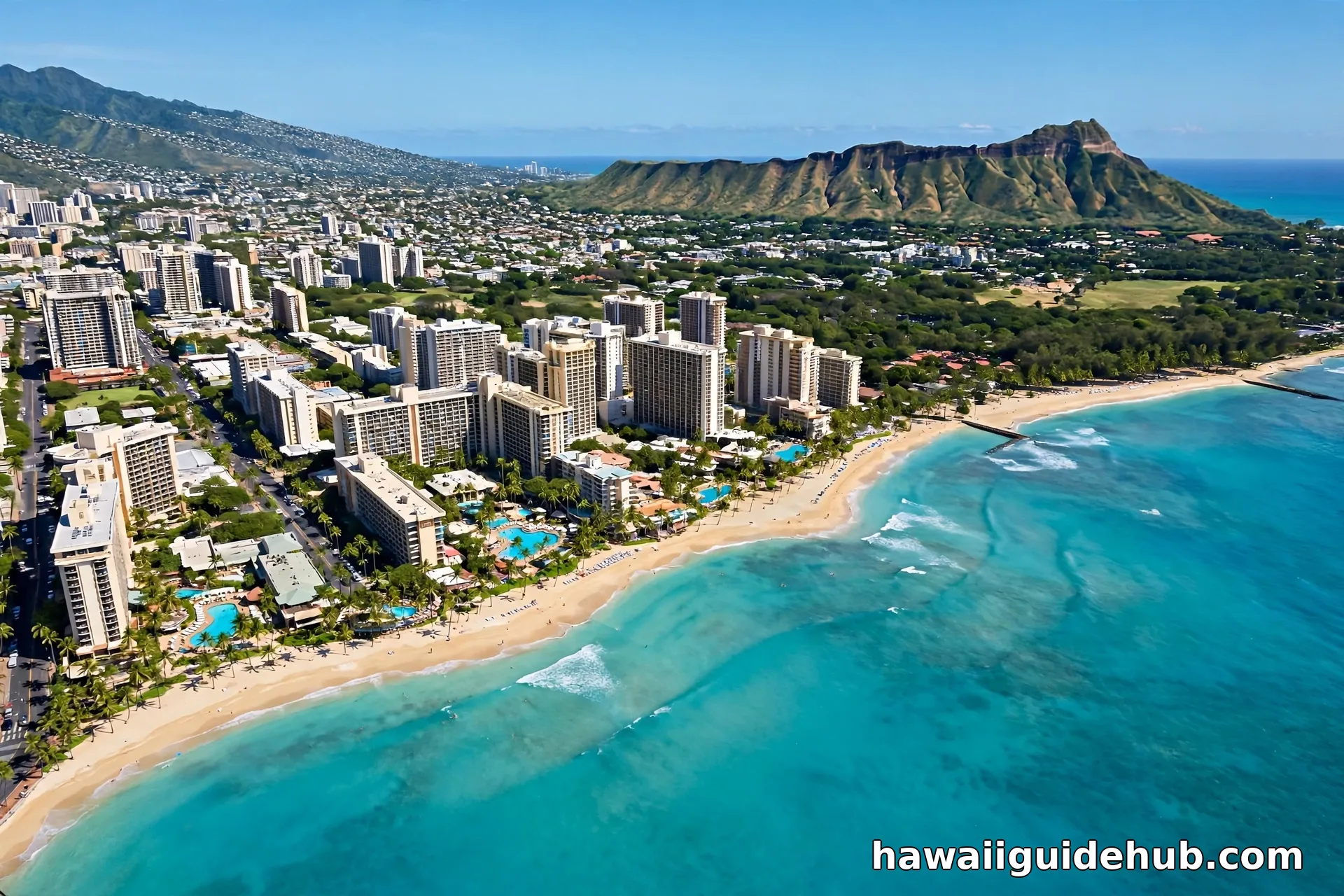
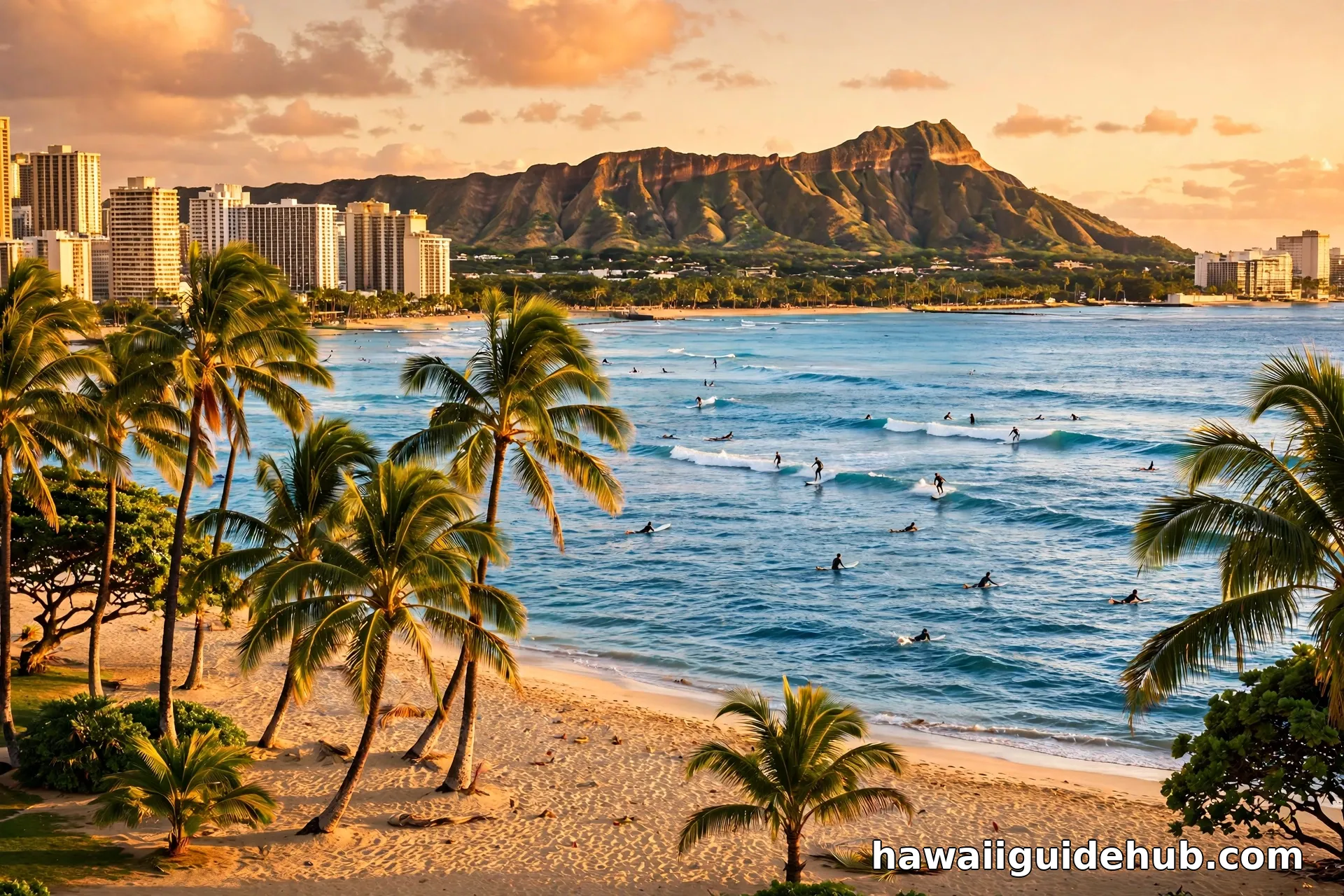
Oahu is the most popular island in Hawaii and home to about one million people, roughly two thirds of the state’s population. Honolulu, the state capital, sits on the south shore, and the Waikiki neighborhood holds the most famous beach in Hawaii along with the densest cluster of hotels, restaurants, and shops in the islands. If you want nightlife, museums, shopping, and dining variety, no other island competes.
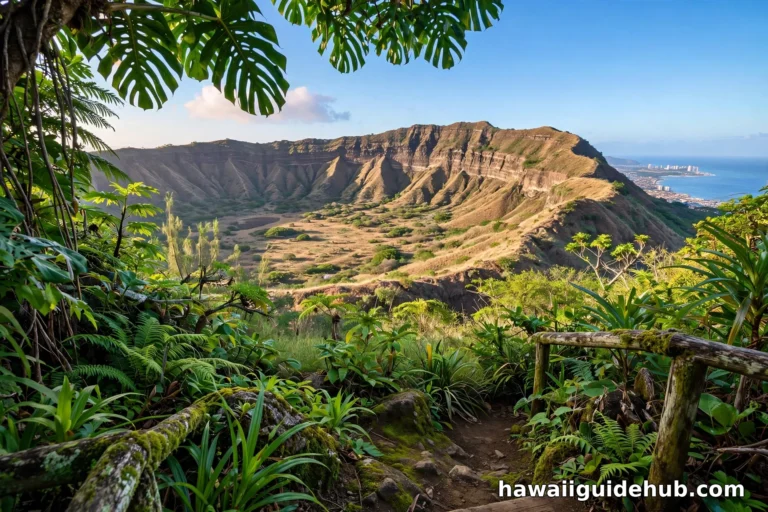
Oahu is also where Hawaii’s history is most visible. Pearl Harbor and the USS Arizona Memorial draw visitors from around the world, and Iolani Palace in downtown Honolulu is the only royal palace on American soil. Beyond the city, the island delivers the North Shore’s legendary winter surf, the calm snorkeling coves of Hanauma Bay, and day trip scenery like Diamond Head. Oahu works best for travelers who want the classic Hawaii vacation with every convenience close by.
Maui: The Valley Isle
Maui is the island many travelers picture when they imagine Hawaii, with some of the best beaches in the state, from Kaanapali to Wailea. The island’s nickname comes from the broad valley between its two volcanic masses, and the 10,023 foot summit of Haleakala dominates the eastern half.
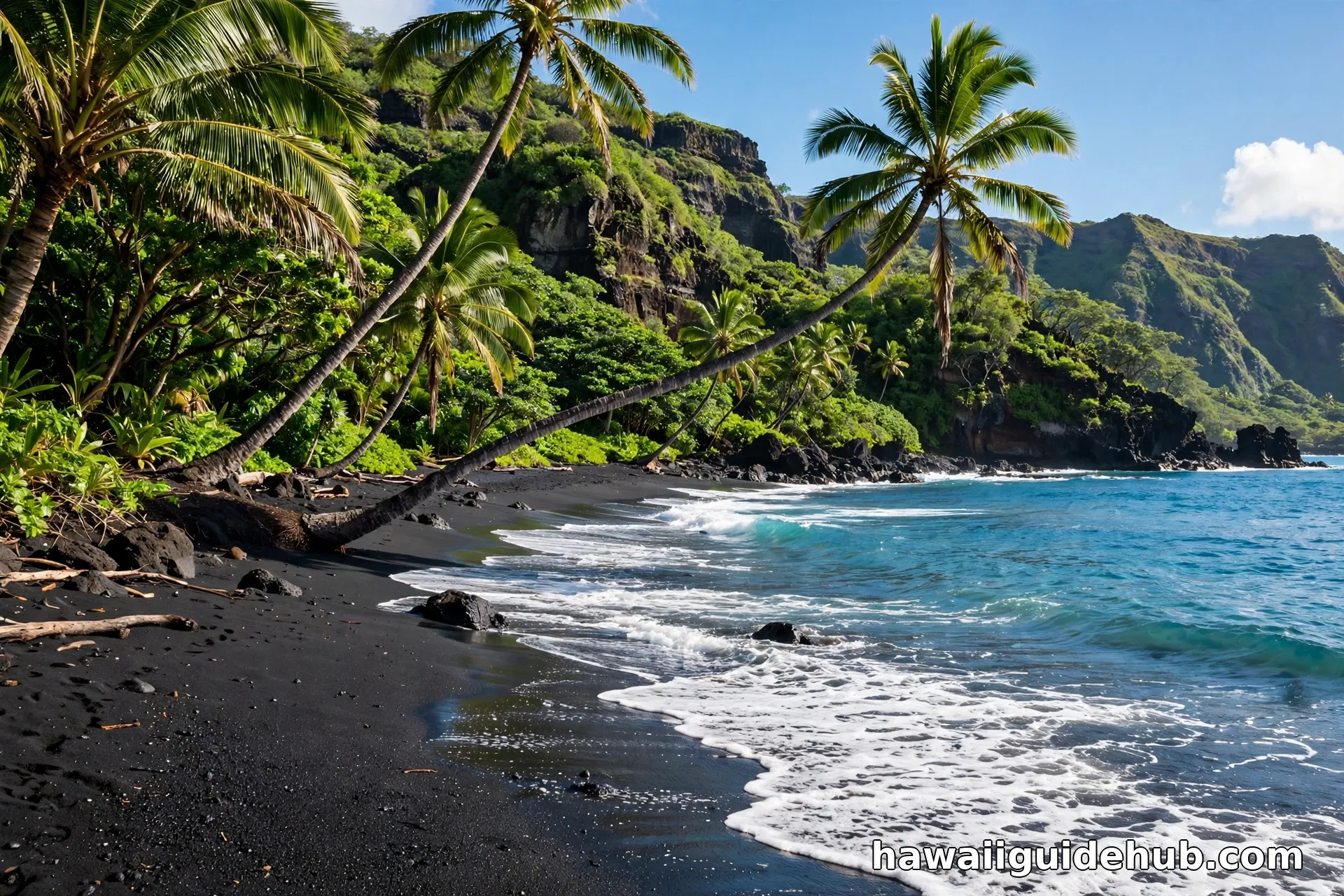
The Road to Hana is Maui’s other great draw, a slow coastal drive past waterfalls, black sand beaches, and bamboo forest that rewards patience. Maui suits couples and beach lovers especially well, and it is a strong pick for the best island to stay on if you want resort comfort with easy day trips.
Kauai: The Garden Isle
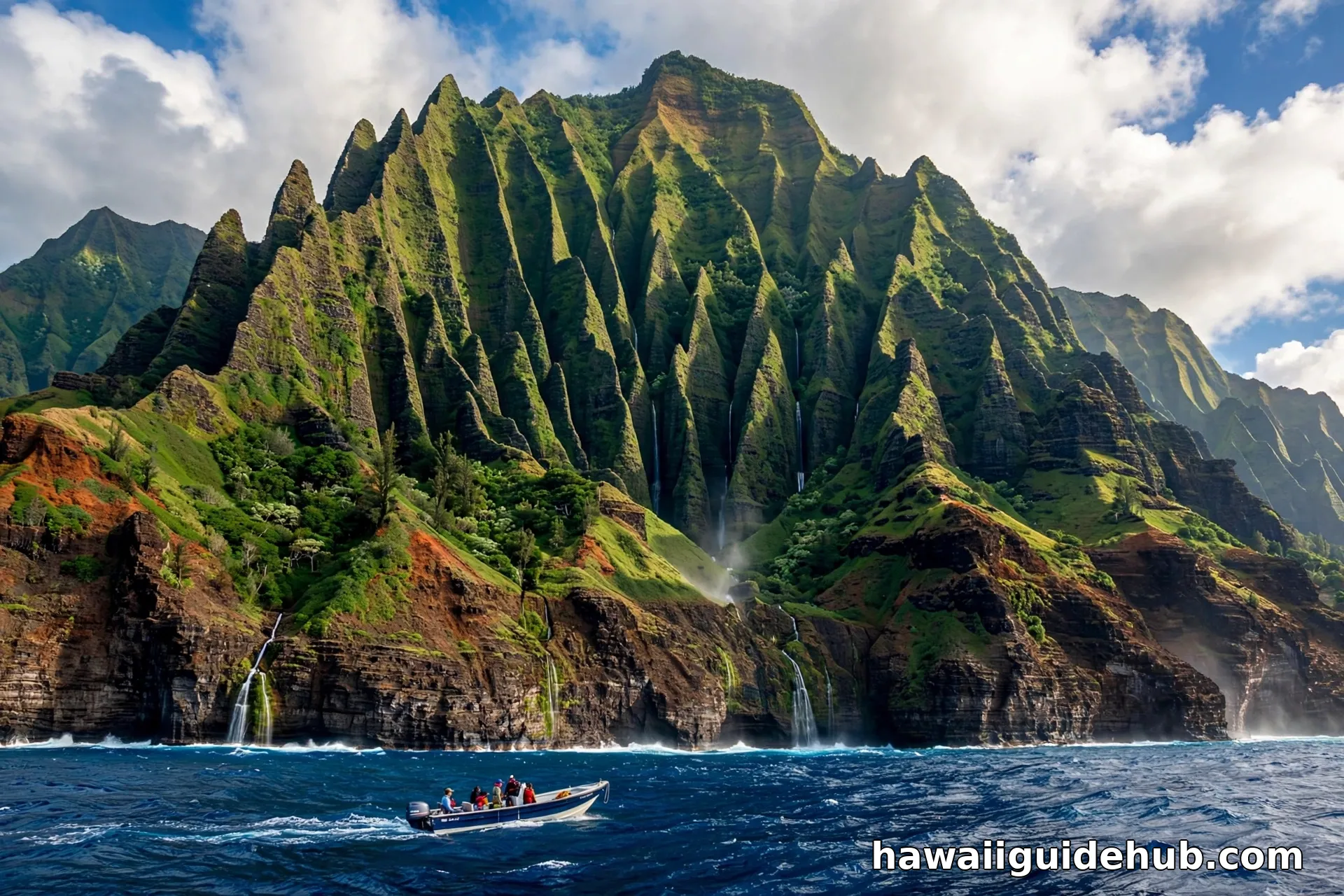
Kauai is the oldest of the main islands at about five million years, and it looks the part. The Na Pali Coast is a line of fluted green sea cliffs that drop straight into the Pacific, reachable only by boat, helicopter, or the Kalalau Trail. Waimea Canyon cuts ten miles long and up to 3,600 feet deep through the island’s west side, and Mount Waialeale near the island’s center ranks among the wettest places on Earth.
Kauai is smaller and quieter than Oahu or Maui, with no building taller than a coconut tree by county rule and a single main highway that does not quite circle the island. That is the appeal. Travelers who want lush scenery, great hiking, and a slower pace consistently name Kauai their favorite. For a closer look at the island’s sunny south shore, see our Poipu, Kauai guide.
Hawaii Island: The Big Island
The island of Hawaii is called the Big Island because it is bigger than all the other main islands combined, at 4,028 square miles. It is also the youngest island and the only one still growing, thanks to its active volcanoes. Hawaii Volcanoes National Park protects Kilauea and Mauna Loa, two of the most studied volcanoes on the planet, and the park is the island’s essential stop.
Size brings variety. The Big Island is commonly credited with eight of the world’s thirteen Koppen climate sub zones, which is why you can stand on a black sand beach in the morning and watch sunset from the 13,796 foot summit of Mauna Kea, sometimes above snow, in a single day. The Kona coast on the west side is dry and sunny with famous coffee farms. Hilo on the east side is lush and rainy with waterfalls nearby.
Molokai: The Friendly Isle
Molokai is Hawaii without the crowds. About 260 square miles with a small population, it has no traffic lights, no large resorts, and a pace of life that feels like a different era. Its north shore holds some of the world’s highest sea cliffs, rising about 3,300 feet above the ocean at Kalaupapa, where Kalaupapa National Historical Park preserves the story of the Hansen’s disease settlement.
Molokai suits travelers who have already seen the main islands and want something deeper and quieter. It is the island for people who want to see how Hawaii lives when the tour buses leave.
Lanai: The Pineapple Isle
Lanai is the smallest visitable island at about 141 square miles, and for decades it was almost entirely a pineapple plantation. Today it is known for seclusion and two luxury resorts near Manele Bay, plus strange and beautiful landscapes like the Garden of the Gods rock formations and Shipwreck Beach.
Most visitors reach Lanai on the passenger ferry from Maui, which makes it an easy day trip or a quiet overnight escape. It is the best Hawaii island to visit for travelers who want to disappear for a while or experience a private feeling Hawaii without a private island budget.
The Two Islands You Cannot Casually Visit
Two of the eight main islands are effectively off limits to regular tourism. Niihau, the Forbidden Isle, is privately owned and has been since 1864. Its small community of Native Hawaiian residents lives largely as it has for generations, and access requires the owners’ permission.
Kahoolawe is uninhabited and access is restricted. The island was used as a military training range for decades, and it is now held in trust for a future Native Hawaiian sovereign entity. For trip planning purposes, treat both islands as places to admire from a distance.
Getting Between the Islands
There is no bridge, tunnel, or statewide ferry system connecting the Hawaiian islands. The practical answer to how you get between islands in Hawaii is that you fly. Interisland flights connect Honolulu, Kahului, Lihue, Kona, and Hilo with flight times of roughly 30 to 45 minutes, operated by Hawaiian Airlines, Southwest Airlines, and Mokulele Airlines.
The one exception is the passenger ferry between Maui and Lanai, operated by Expeditions, which runs between Malaea Harbor on Maui and Manele Bay on Lanai in about 70 minutes. If your itinerary includes more than one island, book open jaw flights when you can, meaning you fly into one island and home from another, so you do not waste a day backtracking.
Plan on losing the better part of half a day to each interisland move once you count packing, the airport, the flight, and settling into the next hotel. That is why most experienced travelers recommend no more than two islands on a one week trip.
Which Hawaii Island Should You Visit
There is no single best island in Hawaii, only the best island for your trip.
First time visitors usually do best on Oahu or Maui. Oahu gives you Waikiki, Pearl Harbor, and the easiest logistics in the state. Maui gives you the classic beach vacation with the Road to Hana and Haleakala as standout day trips. Our guide to the best island in Hawaii for first time visitors breaks the choice down in more detail.
Families tend to love Oahu and Maui: calm beaches, plenty of kid friendly activities, and hotels built for groups. The Big Island also works well for families with curious kids, because the volcano park and the island’s sheer variety keep every day different.
Couples and honeymooners split between Maui and Kauai. Maui has the romantic resorts and sunset sails. Kauai has the scenery that makes every photo look like a movie still. Lanai is the splurge option for couples who want privacy above all.
Adventure travelers should look at Kauai and the Big Island first. Kauai has the Na Pali Coast, Waimea Canyon, and serious hiking. The Big Island has volcanoes, the Mauna Kea summit, and the most varied terrain in the state.
Budget travelers often find Oahu the most affordable, because competition among hotels and the sheer number of flights into Honolulu keep prices lower than on the neighbor islands. Timing matters too, so check the cheapest time of year to visit Hawaii before you book.
Practical Planning: Weather, Time, and What to Pack
Hawaii’s weather is famously mild, with daytime highs generally in the 75 to 85 degree range year round, but each island has wet and dry sides that matter more than the season. The northeast trade winds push moisture against the windward coasts, so the east sides of the islands are lush and rainy while the west and south sides stay sunny and dry. On Oahu, that means Waikiki stays pleasant while the windward side gets the rain. On the Big Island, Kona is reliably sunny while Hilo is one of the rainiest cities in America. Check which side of the island your hotel sits on before you judge the forecast.
Winter, roughly December through March, brings bigger surf to north facing shores and slightly cooler temperatures. Summer brings calmer ocean conditions on the south shores and warmer water everywhere. For most travelers, the practical difference between seasons is smaller than the difference between islands, so choose your island first and your month second.
Pack light layers rather than heavy clothing. Even in winter you will rarely need more than a light jacket, except at elevation. Haleakala at sunrise and the Mauna Kea summit are genuinely cold, with temperatures that can drop near freezing, so bring a warm layer if those are on your itinerary.
Safety Notes for Island Travel
The ocean deserves your respect on every island. Never turn your back on the surf, swim only at lifeguarded beaches when you can, and check daily surf and ocean condition reports before entering the water. Flash floods can turn calm streams into dangerous torrents within minutes on Kauai and the Big Island, so never cross a flooded stream and avoid narrow valleys during heavy rain.
At Hawaii Volcanoes National Park, stay on marked trails and respect all closures. Volcanic gases, unstable ground, and sudden activity changes are real hazards. If you hike, carry more water than you think you need and start early.
Video: Choosing Your Hawaiian Island
A visual walkthrough of each island’s personality to help you decide where to go.
Frequently Asked Questions
What is the most popular island in Hawaii to visit?
Oahu is the most visited island in Hawaii by a wide margin, thanks to Honolulu, Waikiki Beach, and Pearl Harbor. Maui is generally second, followed by the Big Island and Kauai.
What is the best island to stay on in Hawaii?
For most travelers, the best island to stay on is Oahu or Maui. Oahu offers the most choices at the most price points, centered on Waikiki. Maui offers the classic resort beach vacation, especially in Kaanapali and Wailea. Stay on the Big Island if you want variety and volcanoes, Kauai if you want scenery and quiet, and Lanai or Molokai if you want seclusion.
How many days do you need per island?
Plan at least four to five full days per island, not counting travel days. A one week trip works best as a single island stay. A ten day to two week trip can comfortably cover two islands. Trying to see three or more islands in a week means spending too much of your vacation in airports.
What are the best cities in Hawaii to visit?
Honolulu on Oahu is the state’s only true city and the hub for dining, culture, and history. Beyond it, the main visitor towns are Lahaina and Kahului on Maui, Lihue and Hanalei on Kauai, and Kailua Kona and Hilo on the Big Island. Each has a distinct character, from Kona’s sunny waterfront to Hilo’s old Hawaii charm.
Can you visit all the Hawaiian islands in one trip?
Technically yes, but it is not a good idea for most trips. Six islands are open to visitors, and seeing all six would require at least three weeks of constant packing and flying. Two islands in ten to fourteen days is the sweet spot for most travelers.
Is it better to stay on one island or island hop?
Staying on one island is better for trips of a week or less. You settle in, you learn the rhythms of the place, and you waste no vacation days in transit. Island hopping pays off on longer trips of ten days or more, when a second island adds real variety.
Choosing a Hawaii island is really about matching the island to the trip you want. Oahu delivers the full classic Hawaii experience with a city attached. Maui delivers the beach vacation of your screensaver. Kauai delivers scenery that looks unreal until you are standing in it. The Big Island delivers more variety per mile than anywhere else in the state. Molokai and Lanai deliver quiet. Pick the one that sounds like your trip, give it the days it deserves, and Hawaii will take care of the rest.