Hawaii Parking Rules for Visitors: Meters, Towing & Safety

Parking in Hawaii is the least glamorous part of your trip and the easiest way to lose money to tickets, towing, or a smashed window. The rules are different from the mainland in ways that catch visitors out: meters run on their own schedule, “free” street parking comes with tow-away windows, and trailhead break-ins are a known problem statewide. This guide covers Hawaii parking rules for visitors: meter rates and hours, where to park in Waikīkī, how towing works and what it costs, and how to keep your rental car safe.
Hawaii Parking Rules at a Glance
| Situation | The rule | The takeaway |
|---|---|---|
| Honolulu street meters | $1.50/hr (Waikīkī/downtown), $0.75/hr elsewhere; enforced Mon-Sat 7 a.m.-6 p.m. | The cheapest legal option |
| Sundays and state holidays | Meters free | The free window |
| Ala Wai Boulevard free parking | No parking weekdays 8:30-11:30 a.m. (street cleaning; you will be towed) | The trap: free until it is not |
| Hotel parking in Waikīkī | Typically $30-$45 per night; ask before you book | Budget for it in advance |
| Towing (regulated rates) | $65 tow / $75 with dolly + $7.50 per mile + $25/day storage | What one mistake costs |
Honolulu Street Meters: Rates and Hours
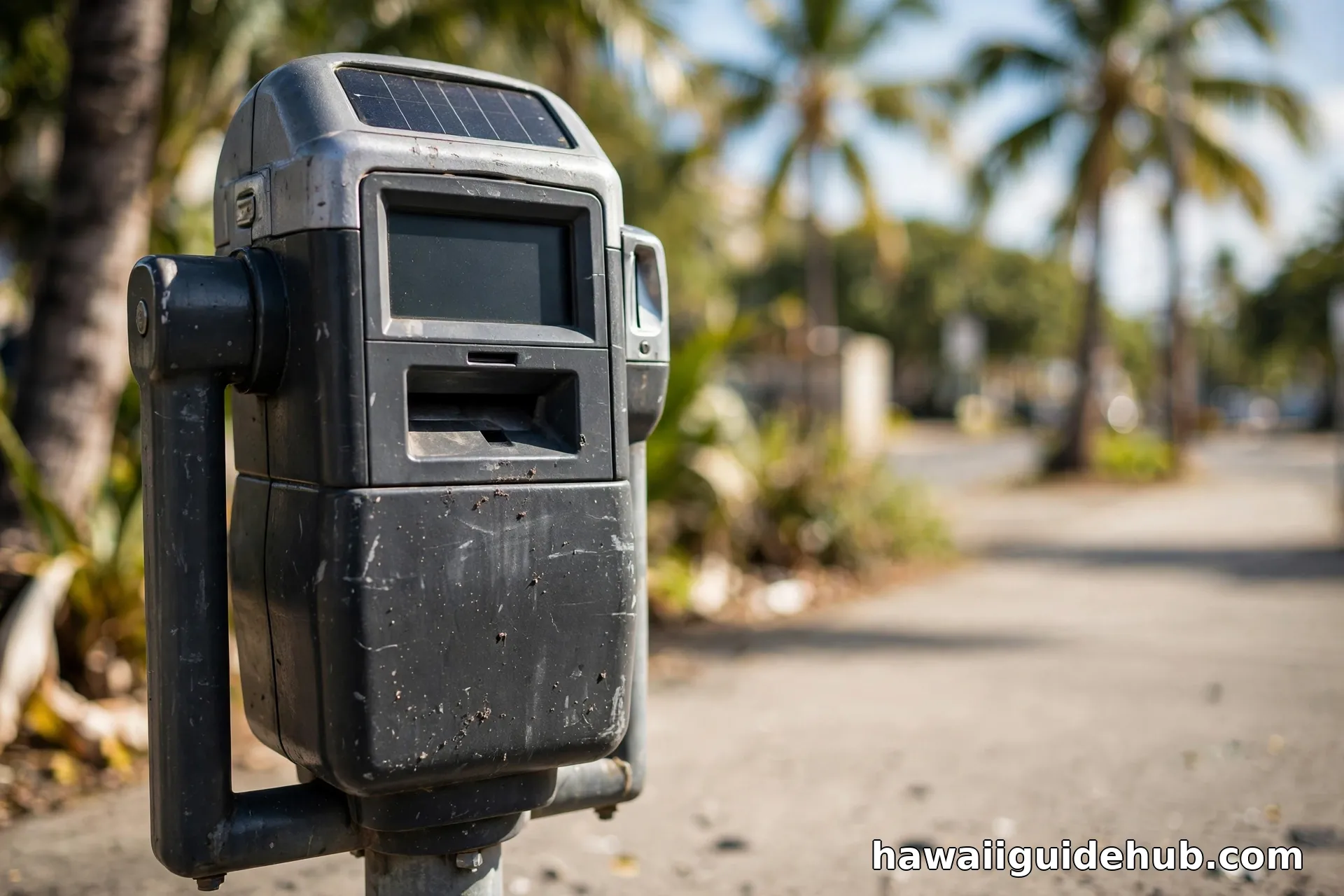
On-street parking in Honolulu is metered and enforced Monday through Saturday from 7 a.m. to 6 p.m. In the Waikīkī, downtown, and civic center zones, meters cost $1.50 per hour; in other areas, $0.75 per hour. On Sundays and state holidays, the meters are free. Most meters accept credit and debit cards as well as coins, and Honolulu’s Park Smarter app lets you pay from your phone, which is worth downloading before your trip. During peak travel seasons, Waikīkī meters are patrolled regularly, and this is not the place to risk an expired meter: even a one-hour shopping stop can end with a ticket.
Two details trip up visitors. First, the meter zones are not marked the way you expect: the $1.50 and $0.75 zones are defined by city ordinance boundaries, not by signs on every block, so when in doubt assume the higher rate in central Honolulu and Waikīkī. Second, many meters have time limits shorter than the enforcement window, commonly two or four hours, which means you cannot simply feed a meter all day. If you need all-day parking, use a garage. And always check the meter’s display or receipt for the exact expiration: “I thought I had more time” is the most common last words before a ticket.
Where to Park in Waikīkī
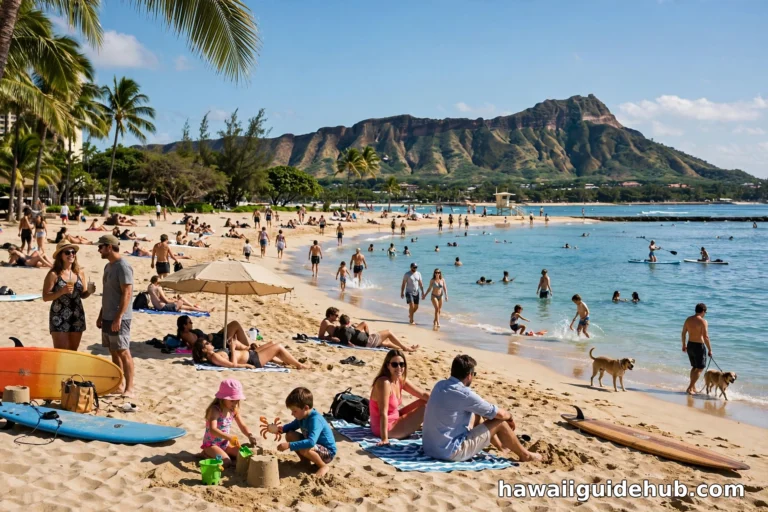
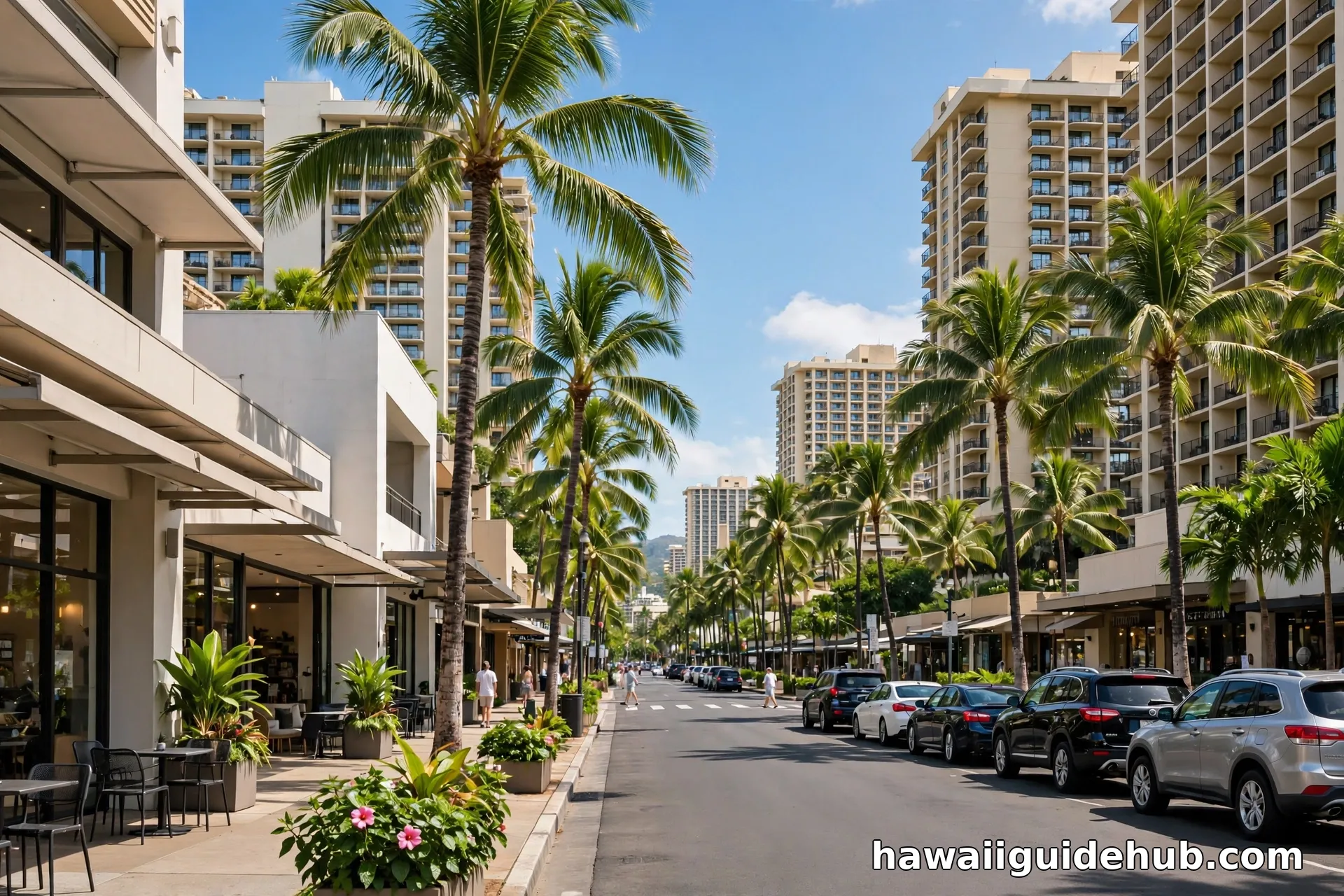
Waikīkī is Hawaii’s toughest parking puzzle. Street meters near the beach are scarce and turn over constantly, so most visitors do better with garages. The Waikīkī Parking Garage on Seaside Avenue and the Royal Hawaiian Center garage both offer validation with store or restaurant purchases, which makes them the most affordable option if you are shopping or dining anyway. The Honolulu Zoo parking lot on Kapahulu Avenue charges $1.50 per hour and puts you a short walk from the eastern end of Waikīkī Beach, while the Waikīkī Shell lot across Monsarrat Avenue has free parking when it is open. Hotel parking is the simplest overnight option but also the priciest: many Waikīkī hotels charge $30 to $45 per night, sometimes plus resort fees, so factor that into your rental car math before you book.
A few Waikīkī strategies from experienced visitors: if you are only coming for the day, the Seaside Avenue garage’s early-bird specials reward arriving before 9 a.m. If you are shopping at the Royal Hawaiian Center or International Market Place anyway, validate your ticket with a minimum purchase and the garage becomes the cheapest beach-adjacent parking in the district. And consider whether you need the car at all for Waikīkī days: the district is walkable, TheBus covers the island cheaply, and some visitors rent a car only for the days they leave town, avoiding several nights of hotel parking fees entirely.
Free Parking and Its Catches
Free parking exists, but every free spot in Honolulu has a catch. The best-known is Ala Wai Boulevard along the canal, about a ten-minute walk from the beach: parking is free, except that it is prohibited on weekdays from 8:30 to 11:30 a.m. for street cleaning, and the city tows promptly. Miss that window and your car is gone. Beach parks like Ala Moana offer free daytime parking, but the lots fill early on weekends and holidays. The pattern to learn is simple: in Hawaii, always read the posted signs before walking away from your car, because the restriction that gets you is never the obvious one.
Street sweeping schedules are the classic trap because they look like ordinary parking. Streets across Honolulu have posted cleaning windows, usually a few hours one morning a week, and the tow trucks follow the sweepers. If you park on an unfamiliar residential street near Waikīkī or downtown, walk to the nearest sign and read both sides: the side facing you governs your spot, and visitors routinely read the wrong one. When a street looks suspiciously empty at 8 a.m. on a weekday, there is usually a reason.
Towing: What It Costs and Your Rights
Hawaii regulates towing charges by law, which protects you if you know the numbers. The regulated rates are $65 for a standard tow or $75 for a tow using a dolly, plus $7.50 per mile and $25 per day for storage. Surcharges of $30 for a difficult hookup and $15 for off-hours towing are allowed. The tow company must accept cash, credit cards, or debit cards: if you are told cash only, that is a violation. And here is the right most visitors do not know: if you reach your car while it is within 50 feet and before the tow truck drives away, the company must release it to you without payment. Take photos of everything.
If you are overcharged or pressured, you can file a consumer complaint with the state’s consumer protection office. Keep the tow receipt, note the company’s name, and photograph the signage where you parked. Most towing disputes come down to unclear signs, so a photo of what you saw when you parked is your best evidence.
What to Do If Your Car Is Towed
First, do not panic: a towed car in Hawaii is an expensive inconvenience, not a disaster. Call the police non-emergency line to find out which company has your car and where the lot is. Before you pay, do the math against the regulated rates so you know immediately if you are being overcharged. Pay by credit card so you have a charge record, get an itemized receipt, and inspect the car for damage before you drive off, photographing anything you find. If the tow happened from a private lot, check whether the signage met the legal requirements for tow-away signs: missing or non-compliant signs are grounds for a complaint. Then tell your rental company, since some agreements require you to report incidents.
Trailhead and Beach Parking Safety
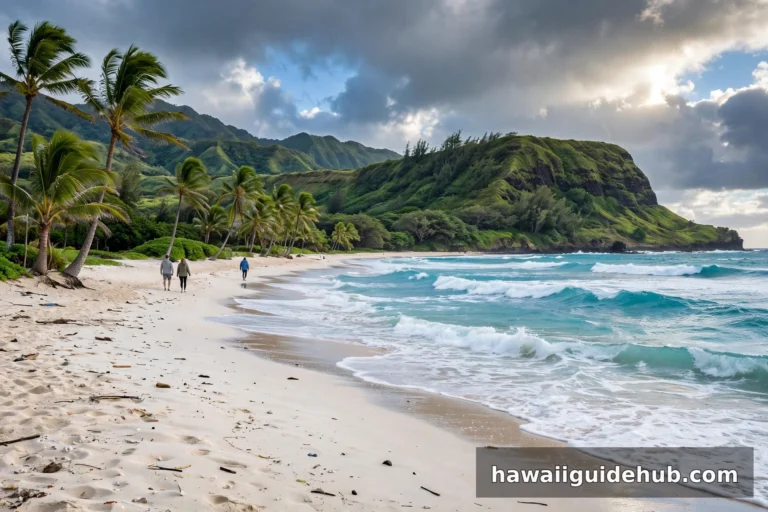
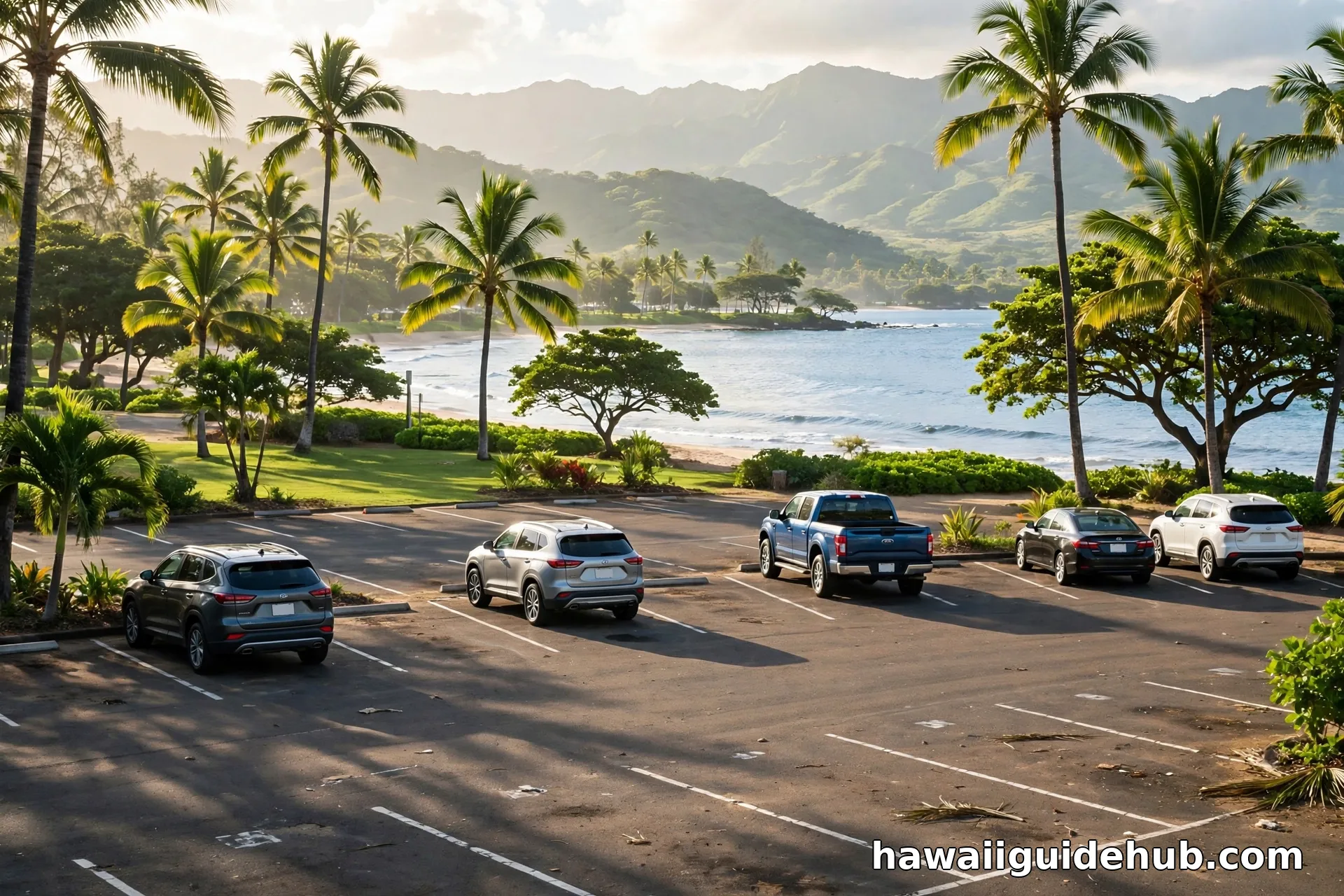
Hawaii’s trailheads and remote beach lots have a well-known break-in problem. Thieves target rental cars, which are easy to spot, and they know hikers will be gone for hours. The defense is simple and non-negotiable: leave nothing visible in the car. Not a bag, not a charging cable, not a cooler, not a phone mount. Take valuables with you or leave them at your hotel. Lock the car, close the windows, and park in the most visible, well-trafficked spot you can find. On the North Shore and at popular trailheads, break-ins are a crime of opportunity, and an empty-looking car is usually passed over.
Never Leave These in a Parked Car
Hawaii’s sun turns parked cars into ovens. Interior temperatures can exceed 130 degrees Fahrenheit within an hour, which destroys food, melts anything plastic left on the dashboard, and can kill children and pets in minutes. Never leave kids or animals in a parked car, not even briefly, not even with the windows cracked. The same heat that ruins your chocolate will ruin medications, sunscreen, and electronics left on the seat. When you park for the beach, take the cooler or leave it in the shade of the trunk, and assume anything you leave in the cabin will bake.
Parking on the Other Islands
Outside Honolulu, parking is calmer but not rule-free. Maui, Kauaʻi, and the Big Island rely mostly on free lots at beaches, parks, and trailheads, which fill on the same early-morning pattern as Oʻahu’s beach parks. Resort areas like Kāʻanapali and Wailea have their own garage systems with validation, similar to Waikīkī. In Hilo, overnight street parking is prohibited and enforced by towing, so do not leave a car on the street overnight there. Wherever you are, the universal rules apply: read the signs, hide your valuables, and never assume a lot that is free during the day allows overnight parking. When in doubt, ask your hotel.
Airport Parking: Picking Up and Dropping Off
Daniel K. Inouye International Airport in Honolulu has cell-phone waiting lots for pickups: wait there until your party is at the curb rather than circling the terminals, where stopping rules are enforced. For rental car returns, follow the airport’s rental car return signs to the consolidated facility and allow extra time: the return process plus the shuttle or walk to departures takes longer than visitors expect, especially with luggage. On the neighbor islands, the airports are smaller but the same principle holds: know whether your rental company wants the car back at the terminal or an off-site lot before your last morning.
Beach days are where most visitors park most often. Charley Young Beach on Maui and the beaches around Poʻipū on Kauaʻi both have lots that reward early arrival.
Parking FAQs
Is street parking free on Sundays in Honolulu?
Yes. Meter enforcement runs Monday through Saturday, 7 a.m. to 6 p.m. Meters are free on Sundays and state holidays.
Can I park overnight on the street in Waikīkī?
Overnight street parking is heavily restricted and risky. Use your hotel’s parking or a 24-hour garage instead.
What should I do if my rental car is towed?
Call the police non-emergency line to locate it, then verify the charges against the regulated rates: $65/$75 plus mileage and storage. The company must accept cards.
Are parking tickets on rental cars my problem?
Yes. Unpaid tickets follow the rental agreement back to you, usually with an added administrative fee from the rental company. Pay tickets promptly.
Is it safe to leave luggage in the car at a trailhead?
No. Trailhead break-ins are common across Hawaii. Take valuables with you or leave them at your hotel, and leave the cabin visibly empty.
Do I need exact change for the meters?
No. Most Honolulu meters accept credit and debit cards, and the Park Smarter app lets you pay and extend from your phone.
Can I sleep in my parked car to save on hotels?
No. Sleeping in cars on streets, in beach parks, or in undesignated areas is prohibited in most jurisdictions and enforced. Book a designated campground instead.
Watch: Parking Hacks in Waikīkī
This Waikīkī guide breaks down car versus moped parking hacks, where each can go, and the traffic realities of getting around Oʻahu.
Parking in Hawaii rewards the same habits as everything else on the islands: read the signs, arrive early, and respect the system. Feed the meter, learn the Ala Wai tow window, hide your valuables at trailheads, and never leave living things in a hot car. Do that, and parking becomes what it should be: the boring part of a great trip. And if you are still deciding whether to rent a car at all, weigh the daily rental plus hotel parking against the days you will actually drive: for a Waikīkī-centered trip with one or two island excursions, renting by the day often wins.