Hawaii Beach Flags: Every Color Explained

Every guarded beach in Hawaii flies colored warning flags that tell you exactly how dangerous the ocean is right now. Most visitors walk past them without a second look, which is a mistake: Hawaii’s ocean is beautiful and genuinely hazardous, and the flag system is the lifeguards’ direct line to you. Learning the flags takes five minutes and pays off on every beach day of your trip. This guide explains every Hawaii beach flag meaning, what to do when you see each one, and how to read the water like a local.
This is the single complete guide to Hawaii beach flag meanings. It covers every flag color, the full quick reference chart, where you will see flags in Hawaii, what to do when conditions change, beach safety tips, and answers to the questions every visitor asks. Everything about beach flag meanings in Hawaii, Hawaii beach warning flags, and what each beach flag color means is gathered on this one page, so you do not need to search anywhere else.
Hawaii Beach Flag Meanings: Quick Reference
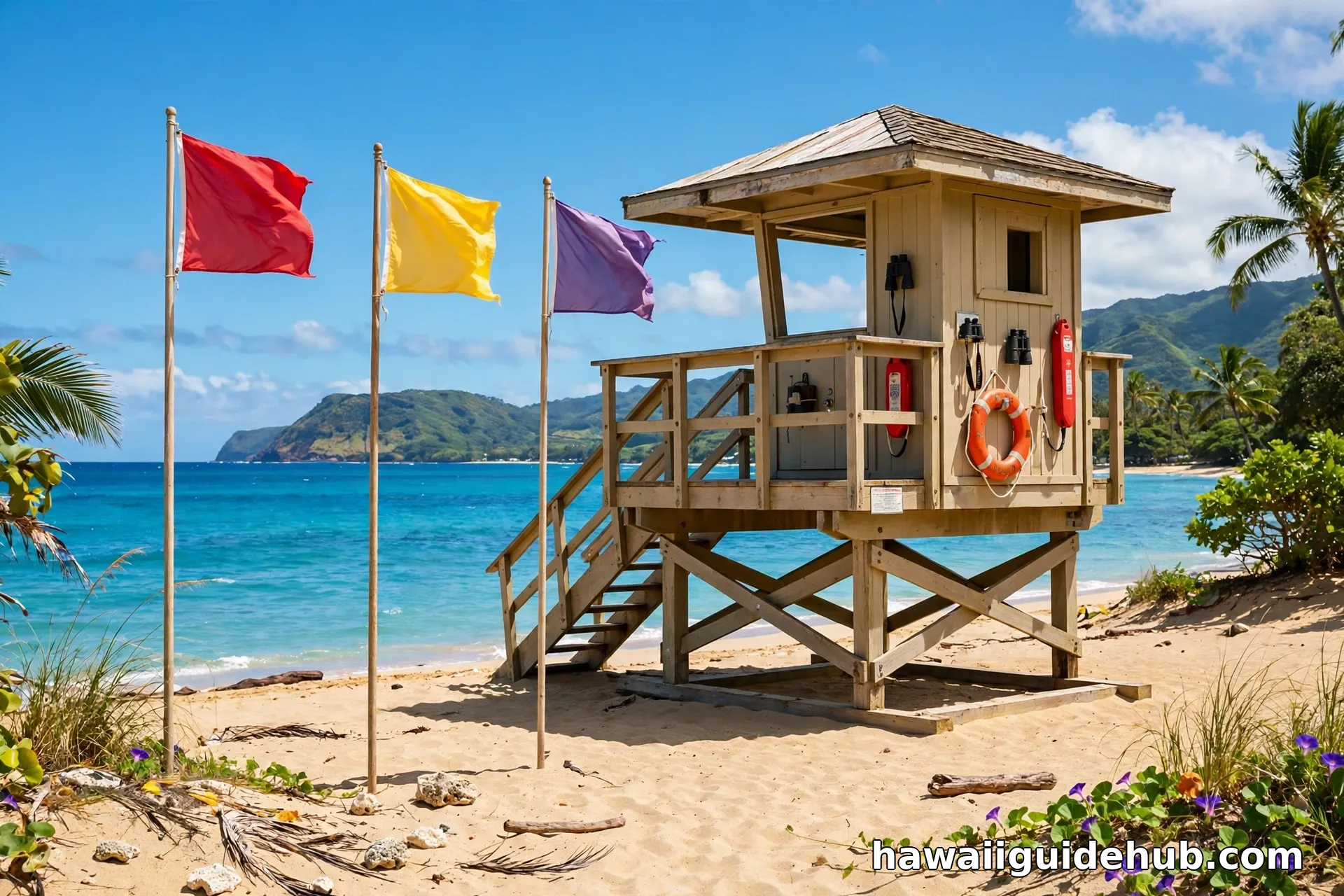
| Flag | What it means | Your move |
|---|---|---|
| Green | Low hazard; calm conditions, still exercise caution | Swim, but stay aware |
| Yellow | Medium hazard; moderate surf and currents, use caution | Weaker swimmers stay shallow |
| Red | High hazard; high surf and strong currents, swimming not recommended | Stay out; watch from the sand |
| Double red | Water closed to the public; do not enter | Closed means closed |
| Purple | Dangerous marine life spotted; swim at your own risk | Ask the lifeguard what was spotted |
| Red over yellow | Designated swimming area with lifeguard supervision | Swim between these flags |
| Black and white checkered | Watercraft area; surfboards and kayaks only, no swimming | Swimmers keep clear |
| Yellow with black ball | No surfboards or non-powered watercraft in this area | Boards out; swimmers in |
| Red and white quartered | Emergency evacuation; leave the water immediately | Get out fast and calmly |
| Orange windsock | Offshore winds; inflatables and rafts stay onshore | Leave the floaties on the beach |
How Hawaii’s Beach Flag System Works
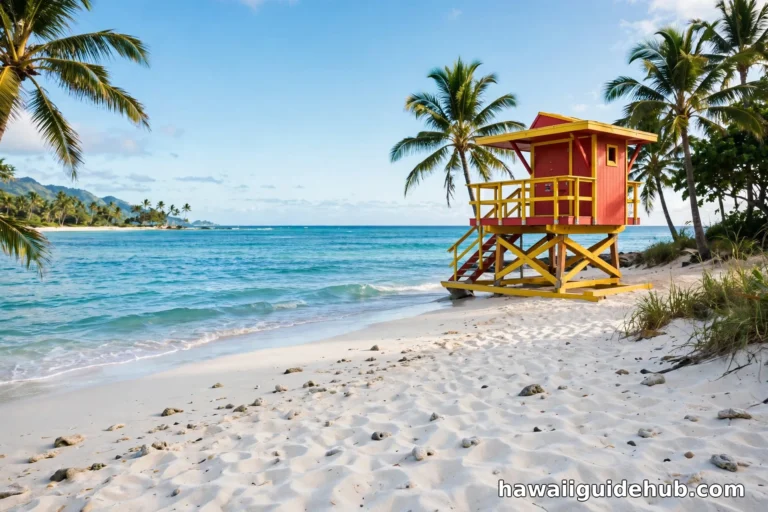
Hawaii uses the international beach flag system managed by the International Life Saving Federation and the United States Lifesaving Association. Lifeguards at guarded beaches raise the flags each morning based on that day’s surf, currents, and marine life sightings, and they change them as conditions shift. The flags fly from the lifeguard tower and from poles at the waterline, so you can read them from anywhere on the sand. There is no app or website substitute for looking up: the flags in front of you are the current conditions.
Not every beach in Hawaii is guarded. The flags only exist where lifeguards are on duty, usually from morning until just before sunset. At unguarded beaches, there are no flags and no one watching, which is exactly why Hawaii’s drowning statistics concentrate at unguarded spots. When you have the choice, always swim where the flags fly. Our top Kauai swimming beaches and Hanalei Bay guide point you to guarded options.
Green Flag: Low Hazard
A green flag means calm conditions and low hazard: small surf, weak currents, and the safest swimming the beach offers. It is the flag you hope to see. But low hazard is not no hazard. Hawaii’s ocean always has some current, and conditions can change with the tide. Keep children within arm’s reach, never turn your back on the surf, and remember that a green flag at a notoriously rough beach is still rougher than a yellow flag at a calm one. Green is also the rarest flag at exposed beaches in winter, so enjoy it while it lasts.
Yellow Flag: Medium Hazard
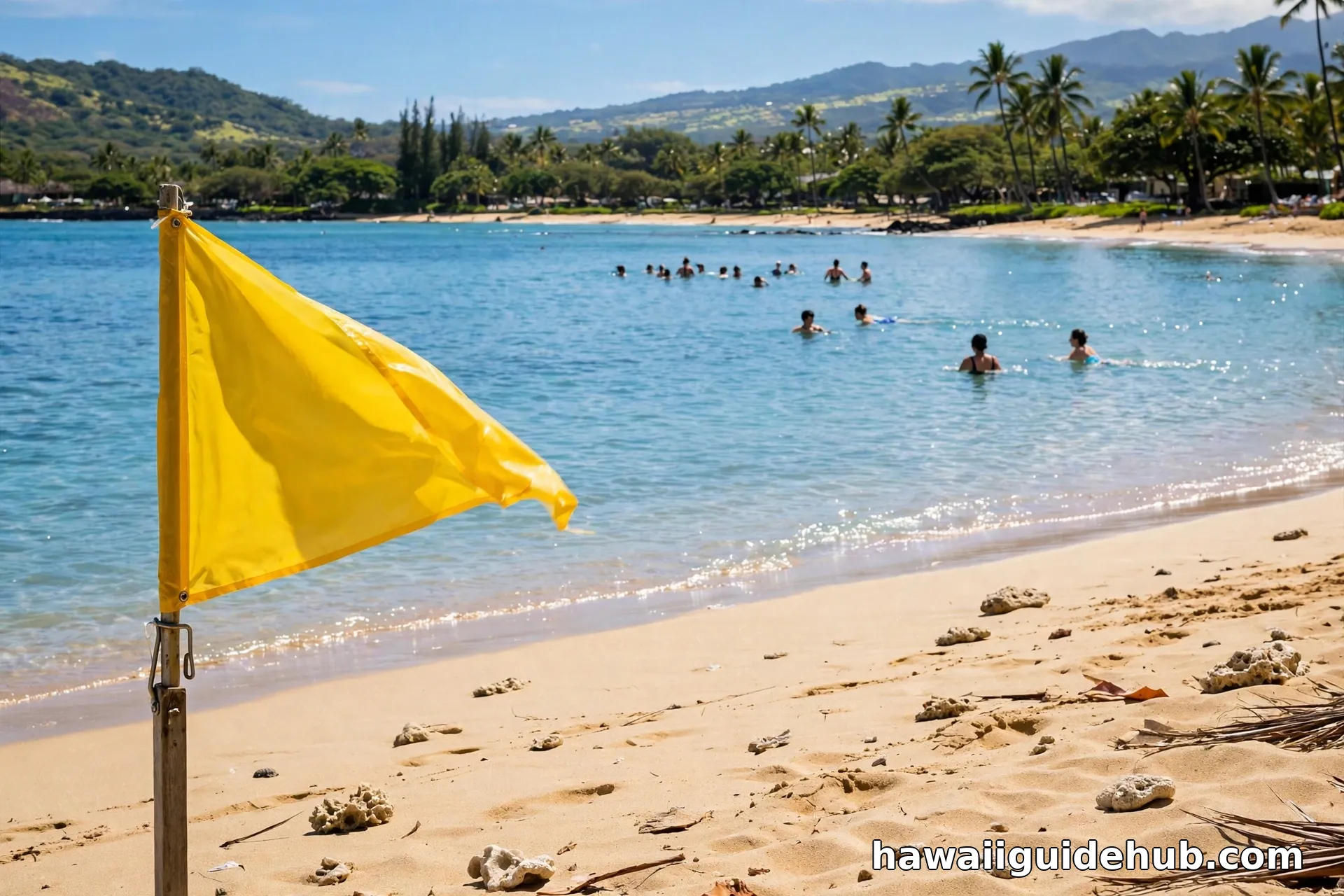
Yellow means medium hazard: moderate surf and currents are present. Weak swimmers should stay out, and everyone else should stay close to shore and close to the lifeguard tower. This is the most common flag at Hawaii’s popular beaches, and it is the one visitors most often underestimate. The water can look inviting while a rip current runs just beyond the break. If you are not a confident ocean swimmer, treat yellow like a red day for yourself and enjoy the sand instead.
Red Flag: High Hazard
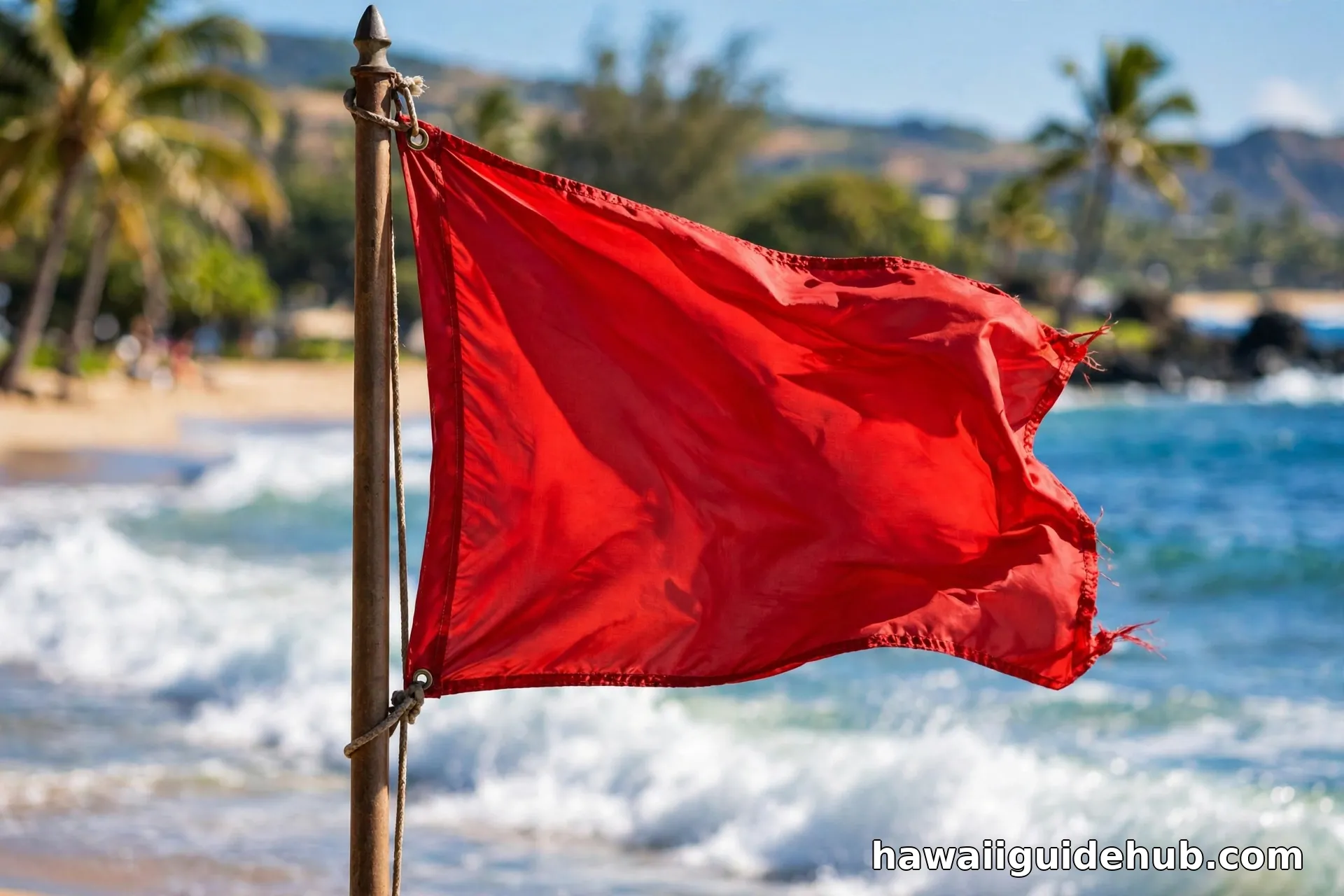
A red flag means high hazard: high surf, strong currents, or both. Lifeguards advise everyone against entering the water; only strong, experienced swimmers should go in, and only with extreme caution. Red flag days are common on Hawaii’s north shores in winter, when swells arrive from North Pacific storms. The smart move is a beach walk, a tide pool visit at a safe distance, or a drive to a sheltered south shore beach that may be flying yellow or green the same day.
Double Red Flags: Water Closed
Two red flags means the water is closed to public use. Conditions are extremely hazardous, and entering the water can result in fines in many jurisdictions. This is not a suggestion. Double red days happen during major swells, storms, and shark incidents. Respect it absolutely: the ocean does not care about your vacation schedule, and lifeguards close the water only when the danger is real. Use the day for a coastal drive, a museum, or a sheltered beach on the opposite shore.
Purple Flag: Dangerous Marine Life
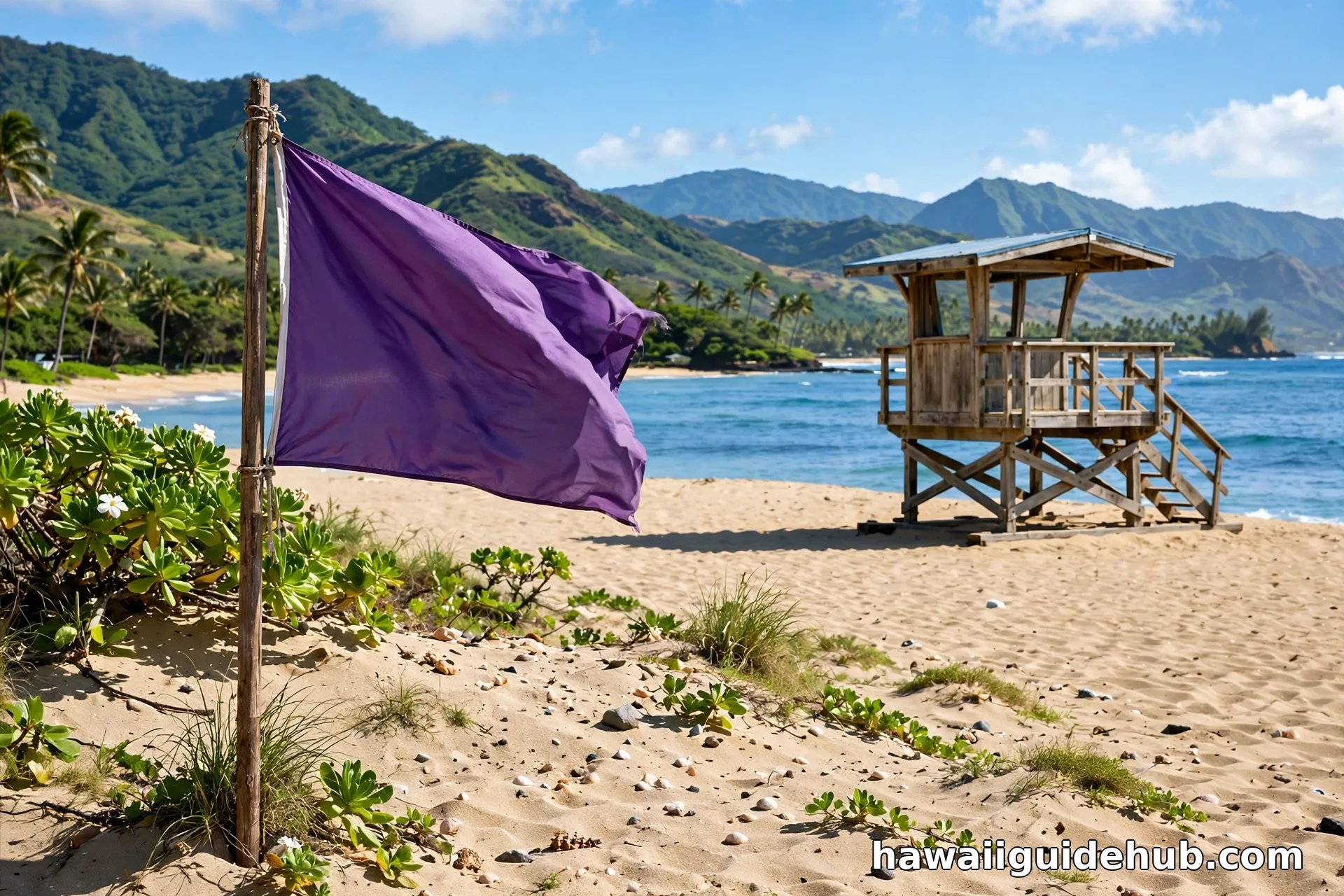
The purple flag is the one that surprises visitors: it warns of dangerous marine life in the water, such as jellyfish, stingrays, or sharks. The beach is not closed, but you swim at your own risk. In Hawaii, purple flags most often fly for box jellyfish, which arrive on some south-facing beaches 8 to 12 days after a full moon, and for Portuguese man-of-war after strong onshore winds. Ask the lifeguard what was spotted and where; they will tell you exactly what is happening and whether the far end of the beach is clearer. If stingrays are the concern, do the stingray shuffle: slide your feet along the sand instead of stepping, which warns buried rays to move away. A rash guard adds a thin layer of protection against jellyfish tentacles.
Red Over Yellow: The Swimming Zone
A red flag flown over a yellow flag marks the designated swimming area under lifeguard supervision. Swim between these flags and the lifeguards are watching you directly. This is the safest place to be in the water at any beach that flies it. If you are unsure where to swim, look for the red-over-yellow pair and stay inside it.
Black and White Checkered: Watercraft Only
The black and white checkered flag marks an area reserved for watercraft: surfboards, kayaks, stand-up paddleboards, and other non-powered craft. Swimming is not allowed inside a checkered-flag zone, because the collision risk with boards is serious. Surfers and paddlers should stay inside it; swimmers should stay out.
Yellow Flag With Black Ball: No Boards
A yellow flag with a black circle, known as the black ball flag, means no surfboards or non-powered watercraft in that area. Lifeguards post it based on crowd size, surf size, and staffing: when the beach is packed, boards and swimmers get separated. If you want to surf, look for the checkered zone or another break.
Red and White Quartered: Evacuate the Water
The red and white quartered flag is the emergency flag: leave the water immediately. It is used for shark sightings close to shore, lightning, and other emergencies. When you see it, or hear the lifeguard’s whistle and announcement, get out calmly and quickly and stay out until the all-clear.
Orange Windsock: Offshore Winds
An orange windsock warns of strong offshore winds. Inflatables, rafts, and pool toys should stay onshore: offshore wind pushes them, and you, away from the beach faster than you can swim back. This flag matters most for families with kids on floaties.
Hawaii-Specific Hazards the Flags Warn About
Hawaii’s flags warn about hazards that mainland visitors rarely meet. Box jellyfish arrive on south-facing shores, especially Oʻahu’s Waikīkī and Ala Moana, about 8 to 12 days after each full moon; lifeguards post warnings and often close the water on peak days. Portuguese man-of-war drifts in after strong onshore winds, and its tentacles sting even when the animal is beached and dead. Shore break, where waves detonate directly on the sand, breaks necks and backs every year at beaches like Sandy Beach and the Big Island’s Hapuna. Rip currents pull swimmers offshore at channel beaches. The flags compress all of this local knowledge into one glance, which is why reading them is the single highest-value habit a Hawaii visitor can build on every single trip.
Where You Will See Flags in Hawaii
Flags fly at Hawaii’s lifeguarded beaches: the big county and state beach parks on every island. On Kauaʻi, that includes Poʻipū, Hanalei, and Salt Pond; our Poʻipū guide and Kauaʻi things to do guide cover the guarded options. On Oʻahu, Waikīkī, Ala Moana, and the major north shore parks are guarded. Maui’s Kāʻanapali, Wailea, and the Kihei beaches have towers, and the Big Island’s Hapuna and the Kona coast parks are guarded. Remote beaches, including most of the famous “secret” spots, have no lifeguards and no flags: swim there only if you are experienced and never alone.
What To Do When Conditions Change
Flags change during the day as conditions shift. A green morning can become a yellow afternoon when the wind picks up or the tide turns. Check the flags every time you arrive and glance up periodically through the day. If the lifeguard changes a flag, announcements usually follow over the tower speaker. When in doubt, ask the lifeguard directly: they would rather answer ten questions than make one rescue, and they know that day’s water better than anyone. For boat-based ocean days, our Nā Pali boat tour guide explains how captains read the same conditions.
Beach Safety Rules That Matter in Hawaii
The flags are the start, not the whole system. Never turn your back on the ocean: sneaker waves and shore break injure more visitors than sharks do. Never swim alone. Do not dive headfirst into unknown water. Watch children constantly; drowning is silent and fast, and it happens to strong swimmers who misread the current. Learn what a rip current looks like (a calm, foamy channel between breaking waves) and if caught in one, swim parallel to shore, not against it. And respect the purple flag’s marine life: box jellyfish stings can be medically serious, and the man-of-war’s tentacles sting even when the animal is beached.
FAQs About Hawaii Beach Flag Meanings
What does a purple flag mean at a Hawaii beach?
Dangerous marine life has been spotted nearby: jellyfish, stingrays, Portuguese man-of-war, or occasionally sharks. The water is not closed, but swim at your own risk and ask the lifeguard what was seen.
Can I swim with a red flag?
Lifeguards advise against it. Red means high surf and strong currents; only strong, experienced swimmers should enter, with extreme caution. Weak swimmers should stay out entirely.
What do double red flags mean?
The water is closed to the public. Do not enter; fines can apply. Double red is flown only when conditions are extremely dangerous.
What does the red and yellow flag mean?
It marks the designated swimming area under lifeguard supervision. Swim between the red-over-yellow flags for the lifeguards’ direct watch.
Do all Hawaii beaches have warning flags?
No. Only lifeguarded beaches fly flags, usually from morning until just before sunset. Unguarded beaches have no flags and no one watching, so swim there only if you are experienced and never alone.
What does the checkered black and white flag mean?
It marks a watercraft zone for surfboards, kayaks, and paddleboards. Swimming is not allowed inside it.
Why is there no flag at my beach?
The beach is unguarded: no lifeguards are on duty, so no flags fly. This is common at remote beaches. Swim only if you are experienced, never alone, and consider moving to a guarded beach instead.
Hawaii’s beach flags are a simple, universal language: green means go with care, yellow means caution, red means stay out, double red means the water is closed, and purple means the marine life is active. Learn them before your first beach day, check the tower every time you arrive, and when in doubt, ask the lifeguard. The flags are there to keep your Hawaii beach days exactly as they should be: fun, safe, memorable, and worth repeating on every island you visit.