Bringing Fruit From Hawaii Rules

Can you bring fruit home from Hawaii? Yes, but only certain fruits, and every single one has to pass a federal inspection before your flight. Leaving Hawaii is the mirror image of arriving: on the way in, the state protects its farms from outside pests, and on the way out, the US Department of Agriculture protects the mainland from Hawaii’s fruit flies and plant diseases. Most fresh fruits and vegetables cannot leave the islands at all.
This is the complete guide to taking fruit home from Hawaii. It covers how the USDA departure inspection works, the short list of fruits that are allowed, which ones need special treatment first, what gets confiscated at the airport, and how to handle leis, flowers, and other souvenirs. Read this before you shop, not at the gate.
Bringing Fruit From Hawaii at a Glance
| Yes: pack it | |
| Fresh pineapple | Yes, after USDA inspection |
| Fresh coconut (husk removed) | Yes, after USDA inspection |
| Cooked, dried, or frozen fruit | Yes |
| Commercially packaged foods | Yes |
| Sometimes: needs paperwork | |
| Papaya, lychee, mango, rambutan and others | Only with USDA-approved treatment, sealed and stamped |
| No: leave it in Hawaiʻi | |
| Most other fresh fruits and vegetables | No |
| Berries of any kind | No |
How the USDA Departure Inspection Works
Every passenger flying from Hawaii to the US mainland must pass through a USDA agriculture inspection. All checked baggage is pre-flight inspected by the Department of Agriculture, with inspection stations located at or in front of the airline check-in counters. Hand-carried items are inspected at the agriculture checkpoint near the boarding gates. Be prepared to open and close your bags during the process.
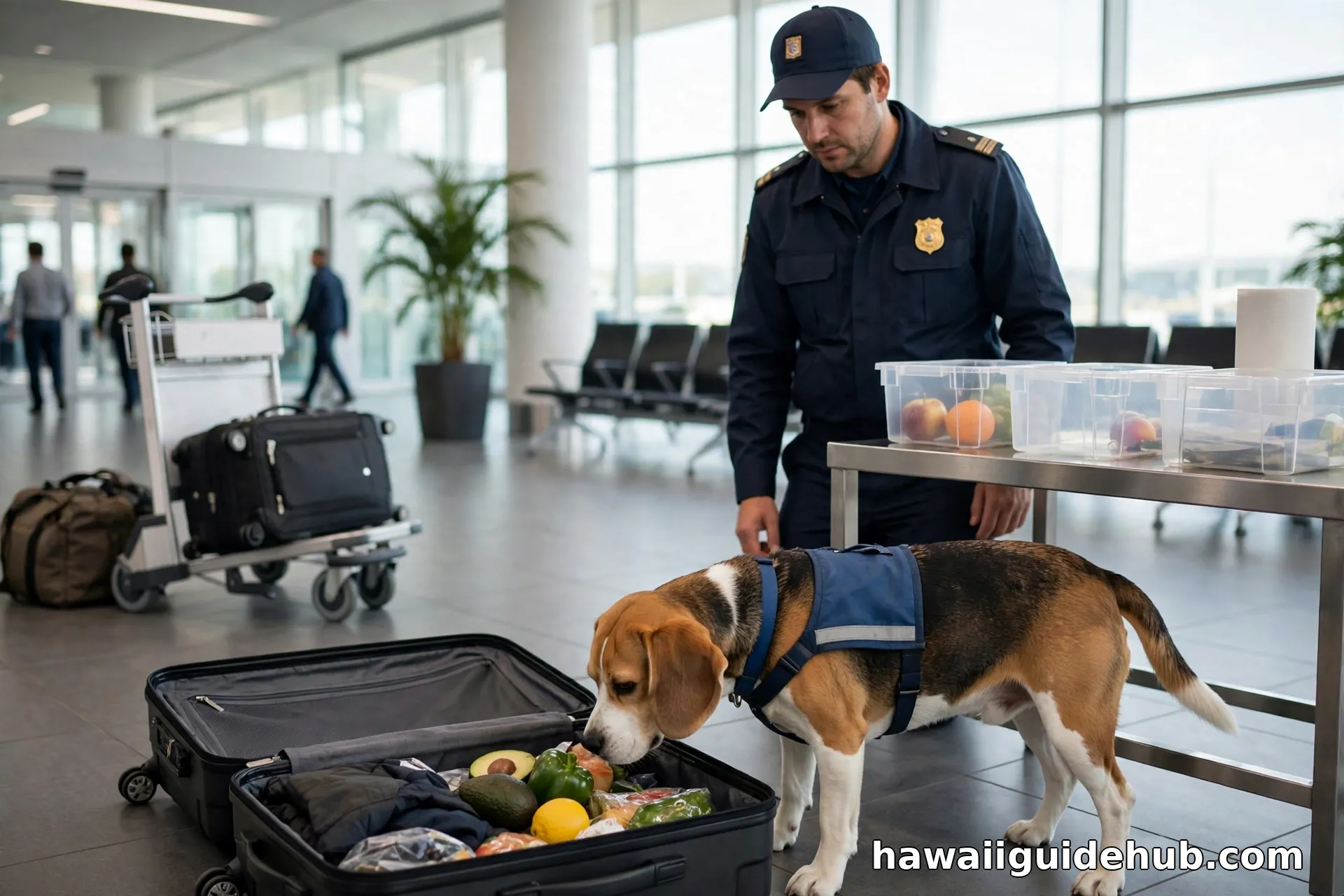
You must report all agricultural items in your possession to the inspectors. This is not optional, and it is not the honor system like the arrival form. Detector dogs from the USDA’s famous beagle brigade patrol the terminals, and they are remarkably good at finding the mango you forgot in your backpack. Anything undeclared that should have been declared can be confiscated, and you can face penalties.
Fruits You Can Take Home: Pineapple and Coconut
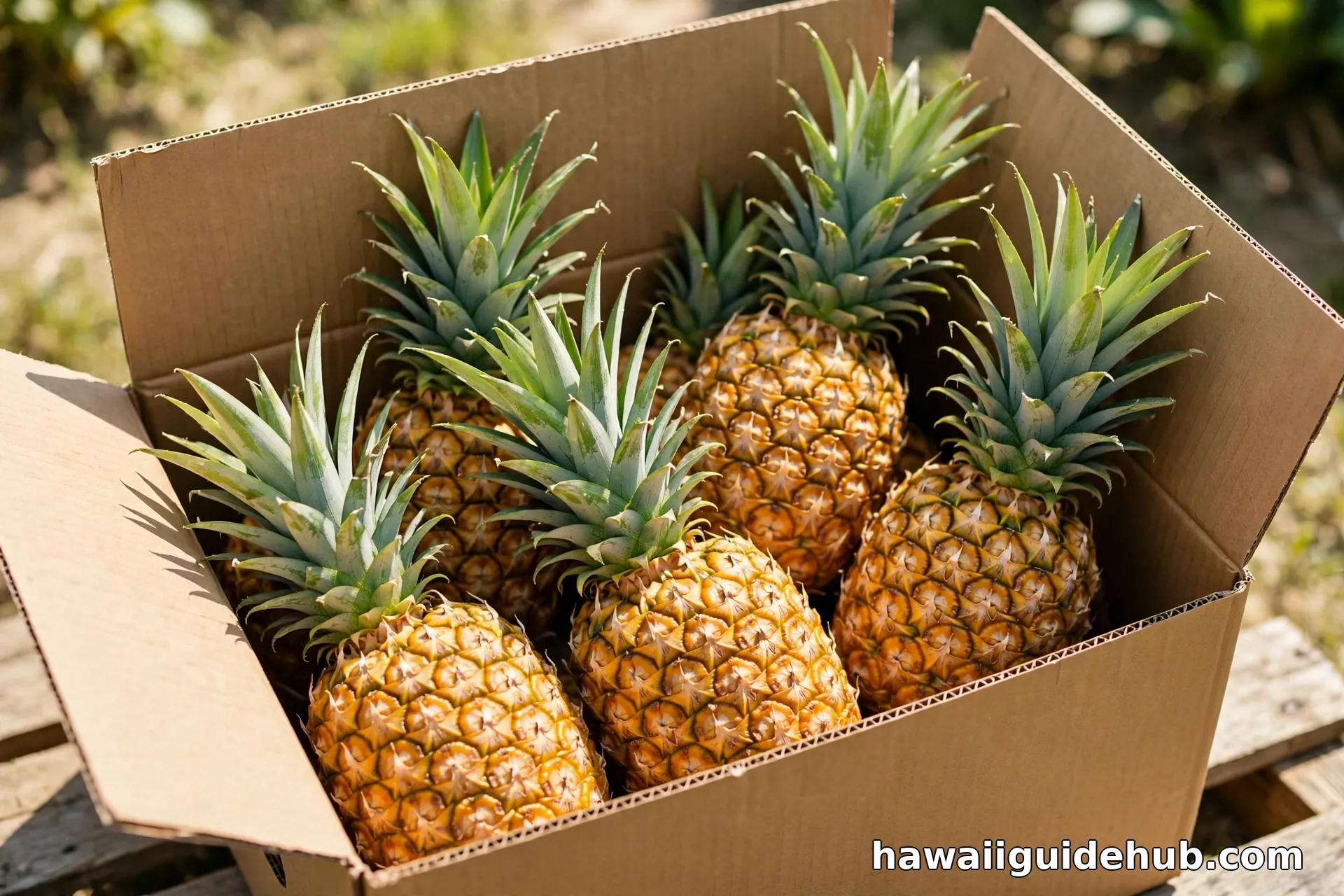
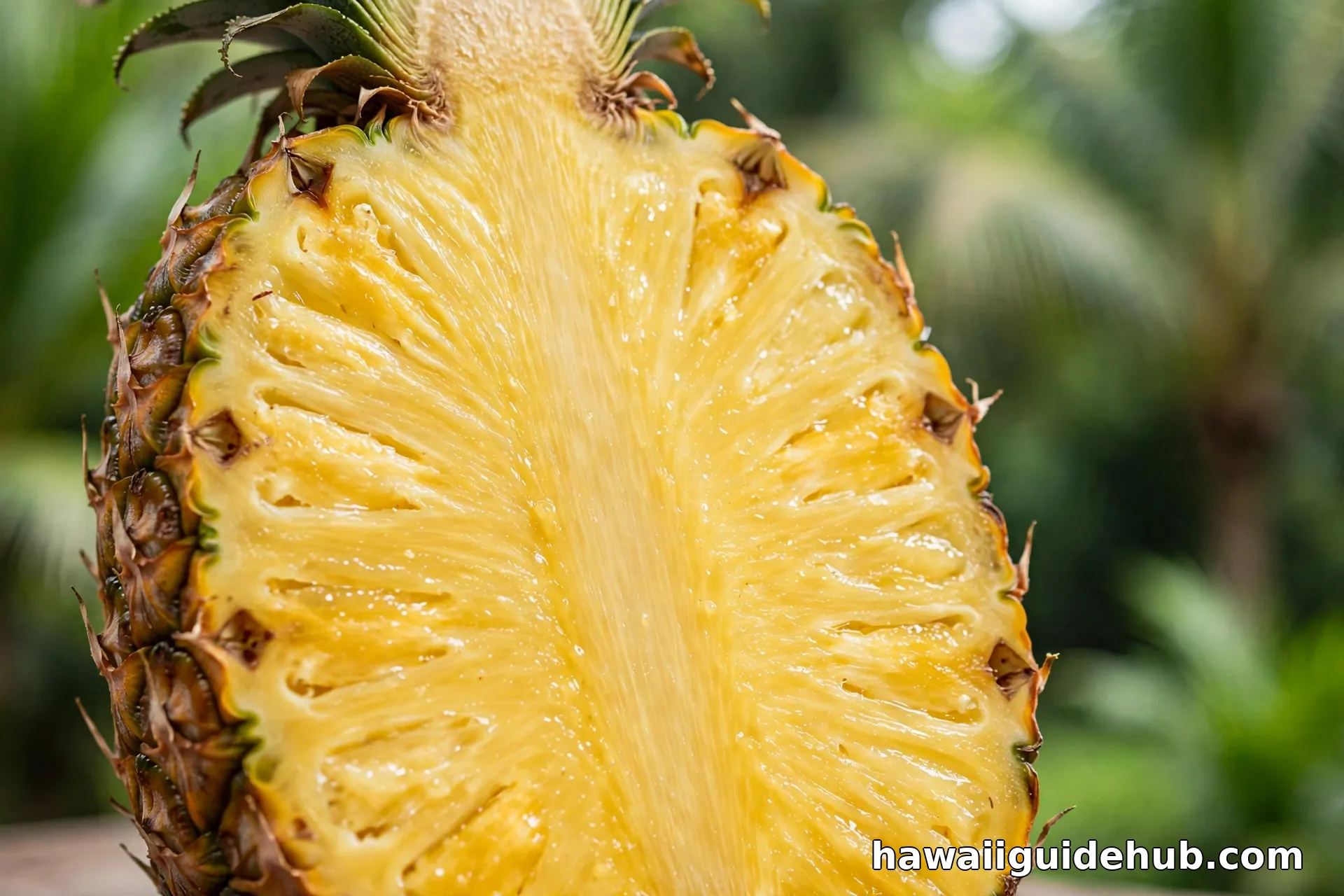
Fresh pineapple and fresh coconut are the two fruits on the USDA’s permitted list that can leave Hawaii after a simple visual inspection. The inspector checks for insects, soft spots, holes, and disease, and if the fruit is clean, you are cleared. Many travelers buy pineapples at the airport or a local market on their last day, present them at the inspection station, and carry them home in their carry-on.
For coconuts, the husk must be removed. The smooth brown coconut you picture is fine; the big green husked one is not. Pineapples should be whole and uncut. Cut fruit is a different category and generally not allowed, so resist the urge to slice into your pineapple before the flight. Buy whole, get inspected, and cut it at home.
Fruits That Need USDA-Approved Treatment
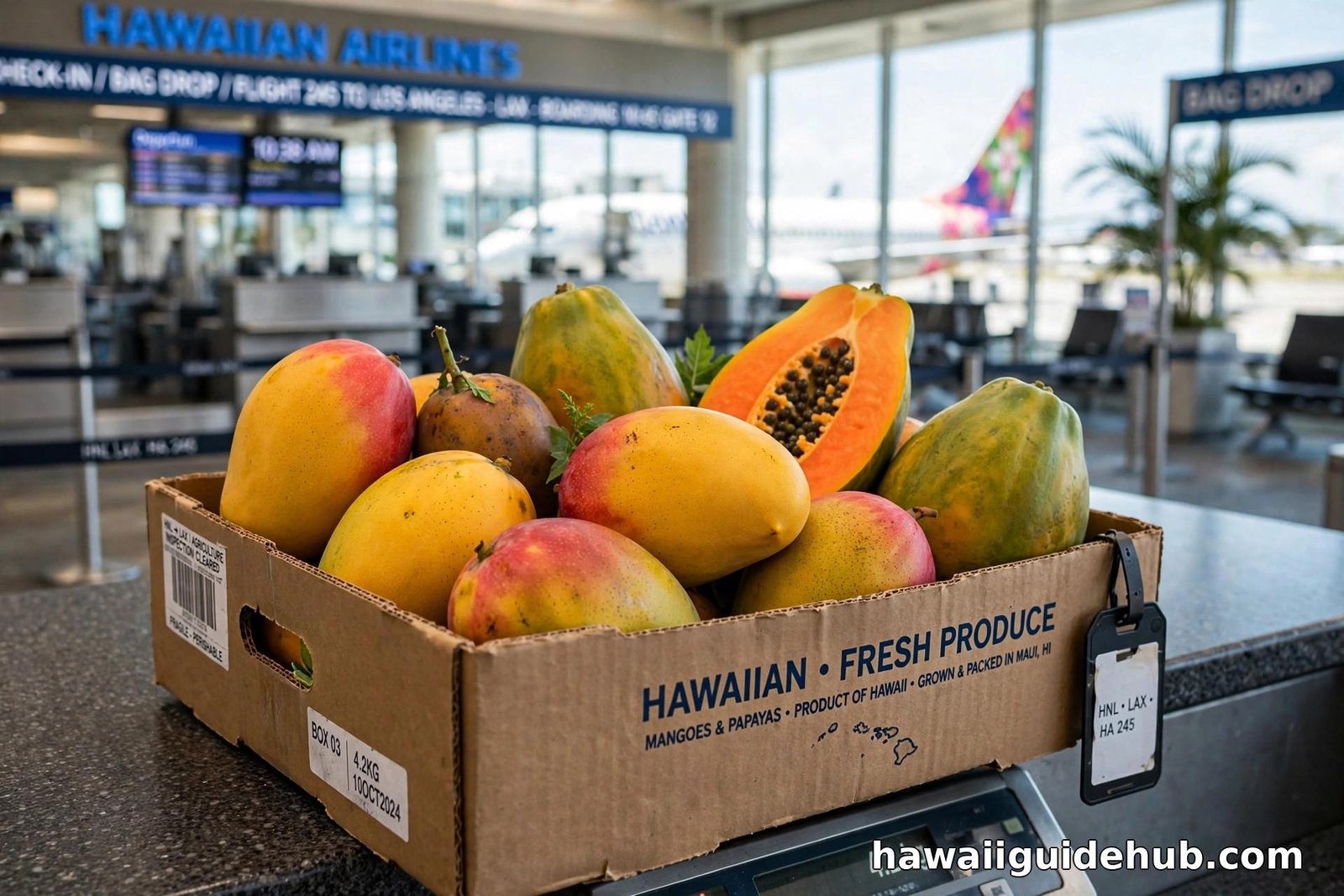
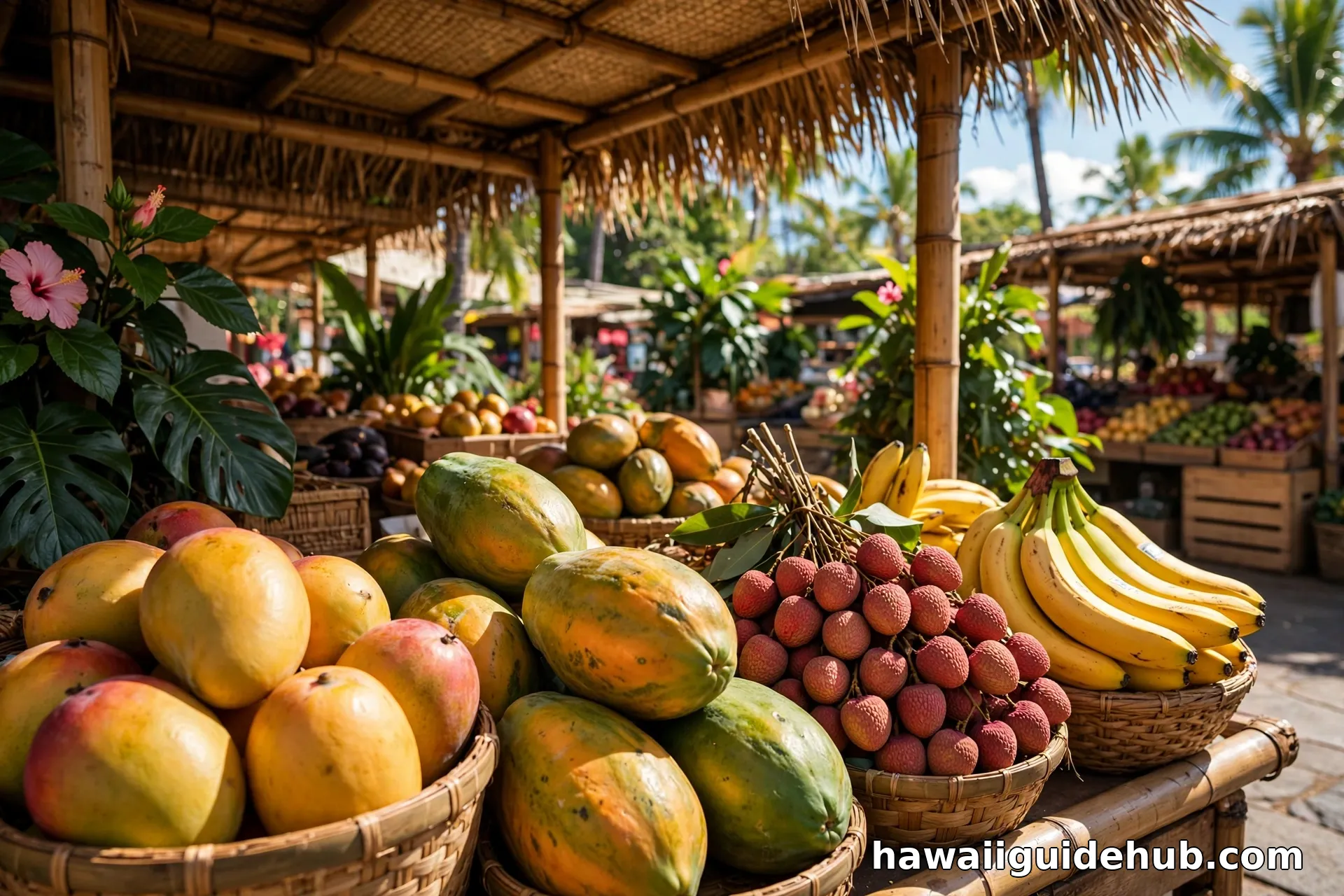
A longer list of fruits can leave Hawaii, but only after treatment at a USDA-approved facility and packing in sealed, properly marked and stamped boxes. This list includes papaya, abiu, atemoya, banana, curry leaf, dragon fruit, longan, lychee, mangosteen, rambutan, starfruit, and sweet potato. The treatment, usually a heat or irradiation process, kills any fruit fly larvae without harming the fruit.
The key point: you cannot treat the fruit yourself. Do not buy a papaya at a roadside stand on the way to the airport and expect to carry it through. Treated fruit must come from an approved facility in the official sealed packaging with the proper stamps. Several Hawaii vendors sell pre-treated, pre-boxed fruit specifically for travelers, and the boxes are designed to pass inspection smoothly. If the fruit is not in a stamped sealed box, it is not going home with you.
What You Cannot Take From Hawaii
Most other fresh fruits and vegetables are prohibited from leaving Hawaii for the mainland. The list of common items that are not allowed includes fresh berries of any kind, including fresh coffee berries and sea grapes, cactus plants and cactus parts, cotton and cotton bolls, and the fresh flowers of jade vine and Mauna Loa. The restrictions exist to prevent the spread of fruit flies and other hazardous plant insects and diseases to mainland agriculture.
The mango rule surprises the most visitors. Hawaii grows some of the best mangoes on earth, and you cannot take a fresh one home. No inspection, no treatment option for travelers, just no. Eat as many as you can while you are here. The same goes for most of the spectacular fruit you will see at markets: if it is not pineapple, coconut, or a treated-and-boxed item, assume it stays in Hawaii.
Meet the Beagle Brigade
The friendliest security force in any American airport works the agriculture lines in Hawaii. The USDA’s detector dog teams, famously staffed by beagles, sniff out undeclared fruits, vegetables, meats, and plants in passenger baggage. Beagles are chosen for the job because they are small enough to work around luggage carousels, have an extraordinary sense of smell, love food rewards, and look so approachable that travelers do not feel intimidated when one sits next to their bag.
When a beagle alerts on your luggage, a handler will ask you to open the bag for a manual inspection. The dogs are not looking for drugs or contraband, only agricultural items, and an alert is not an accusation. It usually means you forgot an apple in a side pocket or packed a banana as a snack. Cooperate cheerfully, hand over the item, and the whole thing takes a few minutes. The dogs find thousands of prohibited items every year that travelers genuinely forgot they packed, which is exactly why the system exists.
What Happens If You Do Not Declare
Departure inspection is stricter than arrival, and the consequences reflect that. If an inspector or a detector dog finds undeclared agricultural items in your luggage, the items will be confiscated and destroyed. That is the minimum outcome. Depending on the circumstances, you can also face civil penalties and fines from the USDA, which increase for repeat violations and for commercial quantities.
The practical advice is the same as on arrival: declaring is always the better choice. There is no penalty for declaring an item that turns out to be prohibited. The inspector simply takes it. The penalties attach to hiding things, not to honest mistakes. Travelers who declare a full bag of market fruit they were not sure about walk away with a quick lesson and no fine. Travelers caught hiding the same fruit do not.
Inter-Island Travel With Fruit
If you are hopping between islands before your mainland flight, be aware that Hawaii has its own internal quarantine rules too. Certain fruits, plants, and soil cannot move freely between islands because pests established on one island have not reached the others. The coffee berry borer and other island-specific pests are the reason. In practice, this mostly affects people moving plants, soil, and unprocessed agricultural products, not the average traveler with a pineapple from a hotel breakfast.
The USDA departure inspection that matters for your fruit souvenirs happens when you board your flight to the mainland, not on inter-island hops. Still, if you buy treated fruit boxes or pineapples early in a multi-island trip, keep them sealed and in their original packaging until you clear the mainland inspection. An opened, half-eaten box of treated fruit loses the whole point of the sealed packaging.
Leis, Flowers, and Other Souvenirs
Want to bring a lei home? You can, but it depends on what it is made of. Leis made of ginger, tuberose, maile, and orchid are fine as long as they pass agricultural inspection at the airport. Leis cannot contain any citrus or citrus-related flowers, leaves, or plant parts. Gardenia, jade vine, and Mauna Loa are not allowed, and some kukui nut leis are rejected because they often have citrus or citrus-related leaves strung in with the nuts.
Beyond food and flowers, remember that taking sand, dead coral, coral rubble, and lava rock is illegal under Hawaii state law. Leave the beach where you found it and buy your souvenirs from shops instead. Commercially packaged foods, roasted Kona coffee beans, macadamia nuts, Hawaiian sea salt, honey, and cookies are all fine to take home with no inspection worries. For food ideas worth bringing back, see our guide to Hawaii’s best eats and huli-huli chicken guide for flavors to remember the trip by.
How to Get Your Fruit Inspected at the Airport
Plan for the inspection in your airport timing. Present all food, plants, and agricultural items to the USDA inspector before you begin your trip to the mainland. For checked baggage, the inspection stations sit at or near the airline check-in counters, so declare your items when you drop your bags. For hand-carried fruit like a pineapple in your carry-on, the inspection happens at the agriculture checkpoint near your gate.
Keep your fruit accessible, not buried under clothes. If your items are generally allowed, the inspector checks them for pests and disease and clears you in minutes. Buy treated fruit boxes from reputable vendors who sell them specifically for travel, and keep the sealed stamped packaging intact. And if you are connecting between islands before your mainland flight, the USDA inspection happens at your departure to the mainland, not on the inter-island leg.
Video: Hawaii Agriculture Inspection
The USDA’s official video on the agriculture inspection process at Hawaii airports: what inspectors check and why the rules protect mainland farms.
Frequently Asked Questions
Can I bring a pineapple home from Hawaii?
Yes. Fresh pineapple is on the USDA’s permitted list. Present it at the agriculture inspection station at the airport, and as long as it is free of insects, soft spots, and holes, you can take it home.
Can I take mangoes home from Hawaii?
No. Fresh mangoes cannot be taken to the US mainland by travelers. Enjoy them in Hawaii. Only fruits on the permitted or treated lists can leave the islands.
Can I bring a coconut home from Hawaii?
Yes, after USDA inspection, as long as the husk has been removed. Show it to the inspector at the airport and you will get a sticker clearing it for travel.
Do I need to declare food when leaving Hawaii?
Yes. You must present all food, plants, and agricultural items to the USDA inspector at the airport before departing for the mainland. Undeclared agricultural items can be confiscated.
Can I mail fruit from Hawaii to the mainland?
Shipping most fresh fruits and vegetables from Hawaii to the mainland is prohibited. Fresh pineapple and coconut are permitted after inspection, and treated fruits in sealed stamped boxes can be shipped. Cooked, dried, or frozen fruits are fine.
Can I take a lei home from Hawaii?
Yes, if it is made of allowed flowers such as ginger, tuberose, maile, or orchid, and it passes agricultural inspection. Leis with citrus parts, gardenia, jade vine, or Mauna Loa are not allowed.
Can I bring dried fruit home from Hawaii?
Yes. Dried, cooked, and frozen fruits are allowed to leave Hawaii without the fresh-fruit restrictions, because processing eliminates the pest risk. Dried mango, dried pineapple, and similar packaged products make excellent souvenirs and pass through inspection with no issues.
Taking fruit home from Hawaii is simple once you know the short list: pineapple and coconut with inspection, treated fruits in sealed stamped boxes, and everything else stays. Buy your pineapple on the last day, keep it whole and accessible, declare it at the USDA station, and you will walk onto your flight with a taste of the islands that is completely legal. When friends back home ask where you found fruit that good, you can tell them the truth: it came from Hawaii, and it earned its boarding pass.