Bringing Food to Hawaii Rules

Can you bring food to Hawaii? For most travelers the answer is yes, with one important exception: anything grown, from fresh fruit to live plants to a bag of soil on your hiking boots, falls under Hawaii’s agricultural protection rules. The state guards its farms and native ecosystems fiercely, and every arriving passenger must declare agricultural items before leaving the airport.
This is the single complete guide to bringing food to Hawaii. It covers the agriculture declaration form every visitor completes, which foods sail through with no problem, which ones need inspection, what is outright prohibited, and what actually happens if you declare something at the airport. Follow these rules and you will clear agriculture inspection without a second thought.
Bringing Food to Hawaii at a Glance
| Food type | Can you bring it? |
| BRING IT | |
| Sealed processed snacks, candy, chips | Yes, no problem |
| Baked goods, bread, pastries | Yes, commercially baked is fine |
| Cooked meats, cheese, dairy (commercial) | Yes, declare if asked |
| Baby formula and baby food | Yes |
| DECLARE IT | |
| Fresh fruits and vegetables | Declare; inspected on arrival |
| Live plants, seeds, cuttings | Declare; many need inspection or permits |
| LEAVE IT | |
| Soil, sand, or earth | No, leave it behind |
The Plants and Animals Declaration Form
Every person arriving in Hawaii must complete the Hawaii Department of Agriculture’s Plants and Animals Declaration Form. The form is now fully digital through Akamai Arrival on all domestic flights to Hawaiʻi, replacing the old paper cards, with one form per family, and it can be filled out online in flight or up to five days before traveling. Since going digital, completion rates have risen sharply, which means inspectors see more declarations and process them faster. The question is simple: are you bringing any plants, plant parts, animals, microorganisms, soil, or related items?
Answer honestly, because the penalties are real. Giving false information or failing to declare restricted articles violates Hawaii law and can be punished as a misdemeanor, with penalties reaching up to $25,000 in fines and up to one year of imprisonment in serious cases. In practice, honest travelers who declare an apple or a lei plant get a quick inspection and go on their way. The people who get in trouble are the ones who hide things.
Completed forms are collected before you leave the aircraft or at the agriculture station, and anything you declared gets inspected by Plant Quarantine inspectors, usually in the baggage claim area. Most inspections take only a few minutes. The inspector checks your items for pests and disease, and either clears them or, if something is prohibited or infested, confiscates it. Confiscation at this stage is routine and not a punishment, as long as you declared the item.
Foods You Can Bring Without Worry
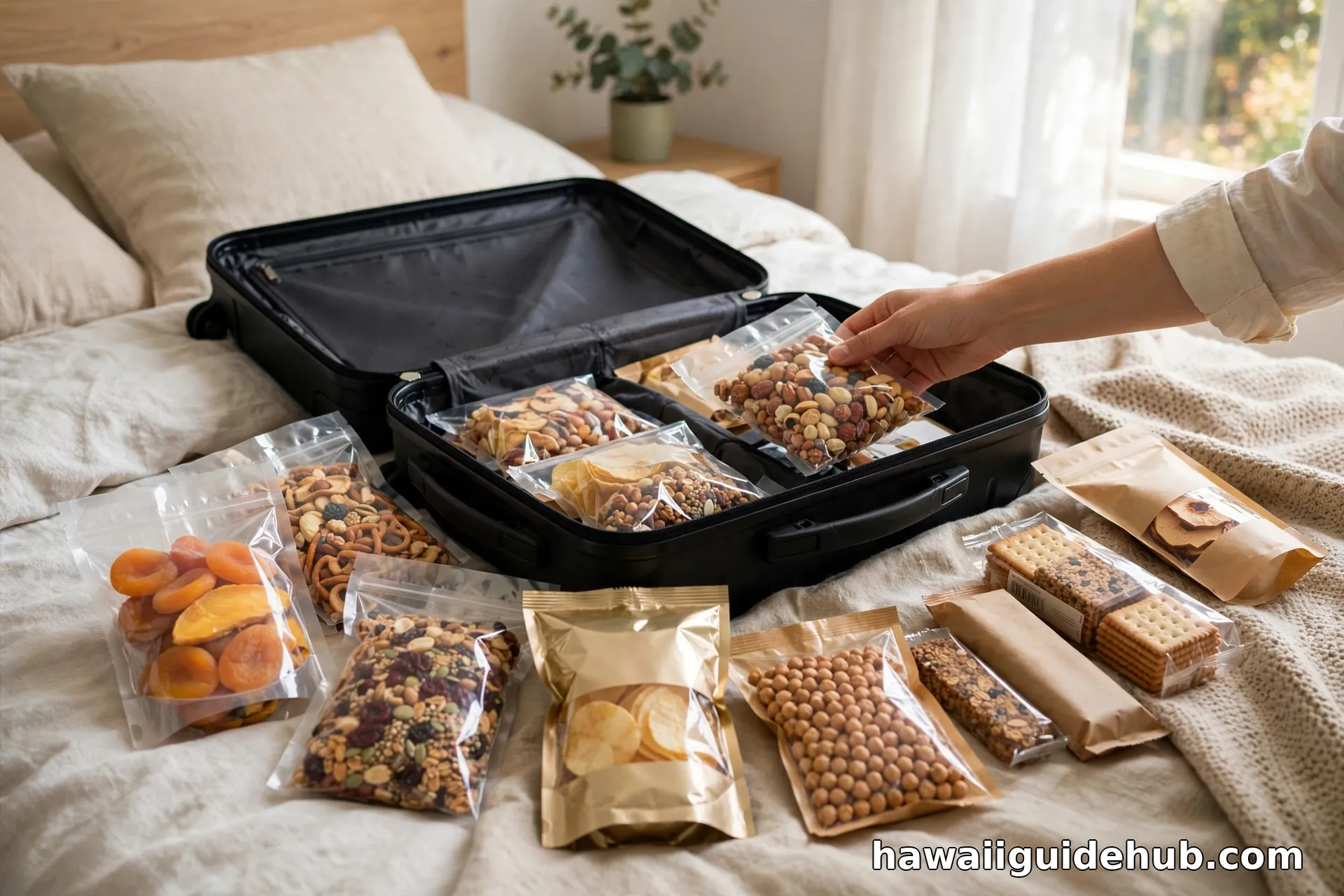
Commercially processed and packaged foods are the easy category. Chips, crackers, candy, cookies, granola bars, dried pasta, rice, canned goods, and sealed coffee and tea all enter Hawaii without any issue. If it came from a factory in a sealed package, agriculture inspectors are not interested in it, because processing eliminates the pest and disease risk the rules are designed to stop.
Baked goods from a bakery, bread, pastries, and similar items are also fine. Cooked meats, cheeses, and other dairy products that are commercially processed and packaged are generally allowed as well. Baby formula and commercial baby food are explicitly fine, so parents traveling with infants do not need to worry. The practical test is simple: the more processed and sealed the food, the less anyone cares about it.
Foods That Need Declaration and Inspection
Fresh fruits, vegetables, and other raw agricultural products must be declared and presented for inspection on arrival. Most are allowed into the state after an inspector confirms they are pest-free, which is why the declaration step matters so much. An apple declared and inspected is no problem. The same apple hidden in a backpack is a violation.
Live plants, cuttings, seeds, and bulbs also require declaration and inspection, and some categories need advance permits or must go through quarantine. Lei flowers and cut flowers are generally allowed after inspection. If you are bringing anything alive or recently alive, declare it and let the inspector decide. They do this all day, and honest declarations are processed quickly.
What You Cannot Bring to Hawaii
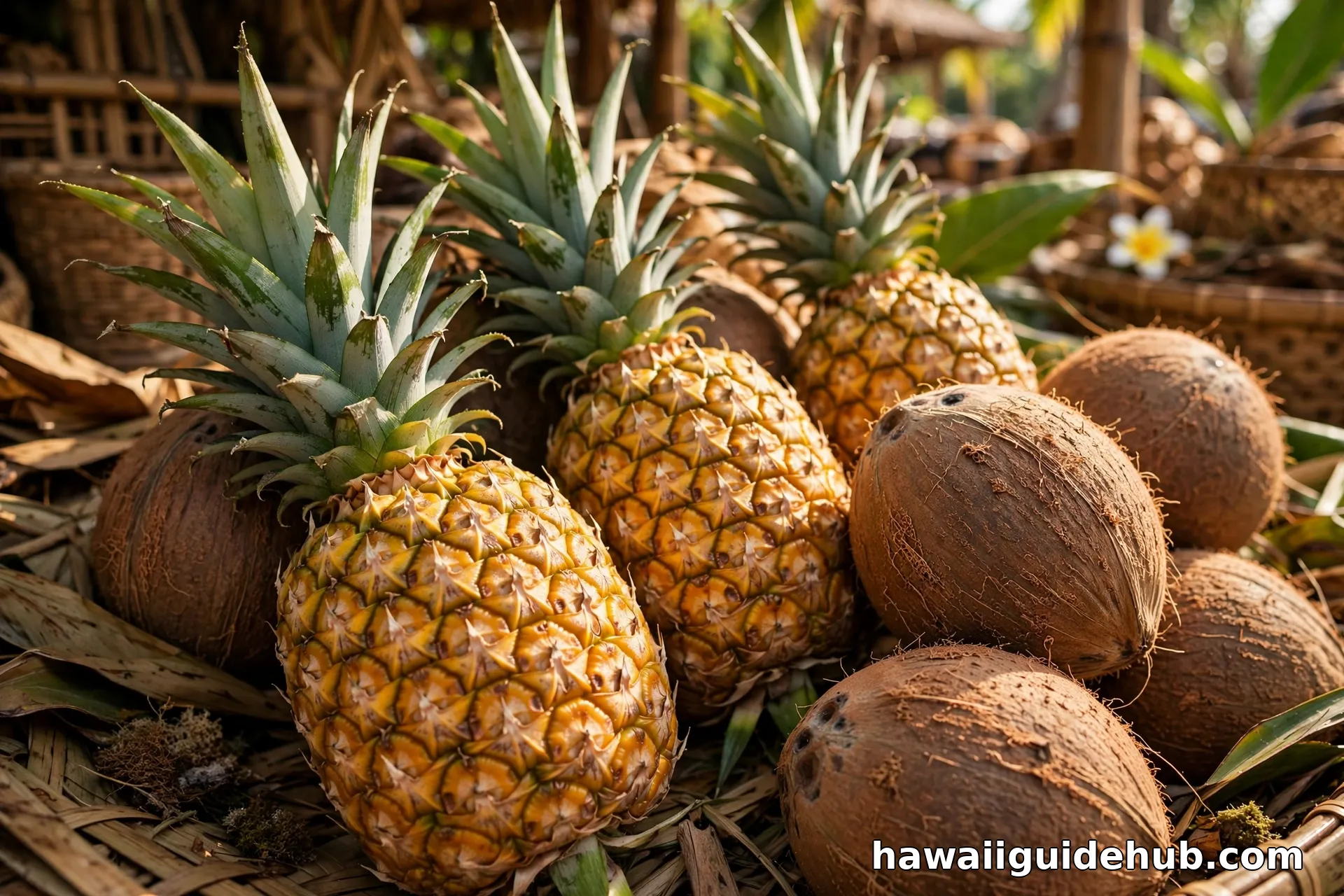
Some items are prohibited or heavily restricted without advance permission, quarantine, or treatment, because they carry pests and diseases that have devastated Hawaiian agriculture before. The restricted list includes sugarcane and grass plants, pineapple and bromeliad plants, coffee plants and seeds, banana plants, passion fruit plants and seeds, pine plants, coconut plants and parts, corn plants, palm plants, and cruciferous root vegetables like raw daikon and turnip. Soil, sand, and earth in any form are not allowed.
The logic behind the list is worth understanding. Hawaii’s ecosystem evolved in isolation for millions of years, which means local crops have no natural defenses against mainland pests. The little fire ant, the coqui frog, and the coffee berry borer all arrived from elsewhere and caused lasting damage. Every item on the restricted list is there because something like it caused real harm. When in doubt about a specific item, check with the Hawaii Department of Agriculture before you fly, not at the inspection station.
Why Hawaii’s Rules Are So Strict
Hawaii’s agricultural protection is among the oldest in the United States, and it exists for reasons written in the islands’ history. In 1888, King Kalākaua outlawed the importation of new coffee plants to protect the islands’ existing coffee crops, an early recognition that one sick plant could wipe out an entire industry. That instinct hardened into law as wave after wave of introduced pests proved the point: the little fire ant, the coqui frog, and the coffee berry borer all arrived from elsewhere and caused lasting, expensive damage.
The stakes go beyond farming. Hawaii’s native birds are among the most endangered on earth, and introduced mosquitoes carrying avian diseases have driven several species found nowhere else to extinction. Keeping new insects and diseases out is quite literally a matter of preventing extinctions. The same inspection system that kept Hawaii free of snakes and rabies, both of which the islands have successfully excluded, is what stands between the islands and the next devastating introduction.
This is why the penalties escalate so sharply for deliberate smuggling. While an honest mistake on the declaration form is a misdemeanor matter, intentionally smuggling a snake or other prohibited article into Hawaiʻi can be charged as a Class C felony, carrying penalties of up to $200,000 in fines and up to five years of imprisonment. The amnesty bins at Hawaii airports exist for a reason: if you realize mid-trip that you packed something prohibited, surrender it. No questions, no penalty.
International Arrivals Face Stricter Rules
Everything above describes arrivals from the US mainland. If you are flying to Hawaii from another country, the rules get significantly stricter, because now two systems apply: Hawaii’s state agriculture rules and the federal inspection run by US Customs and Border Protection and the USDA. Most fresh fruits, vegetables, meats, and plants from abroad are prohibited outright, and what is allowed must be declared to CBP officers on arrival.
International travelers should declare all food items to CBP, even commercially packaged ones, and let the officers decide. Failing to declare agricultural items to federal inspectors carries its own penalties, including fines that start at several hundred dollars for a first offense. The CBP declaration happens separately from Hawaii’s own form, so international visitors complete both. When in doubt, declare everything and keep receipts showing where items were purchased.
What Happens at the Agriculture Inspection
If you declared items, an inspector will examine them in the baggage claim area after you collect your luggage. Have the items easily accessible, not buried at the bottom of a packed suitcase. The inspector looks for insects, signs of disease, and soil contamination. Clean, healthy-looking produce usually passes in minutes.
If an item is prohibited or shows signs of pests, the inspector will confiscate and destroy it. This is not a fine and not a black mark, provided you declared it. Items with soil on them, like unwashed root vegetables or plants with soil on the roots, are the most common confiscations. Washing produce and shaking soil from roots before you pack dramatically improves your odds of keeping everything.
Smart Packing Tips for Food
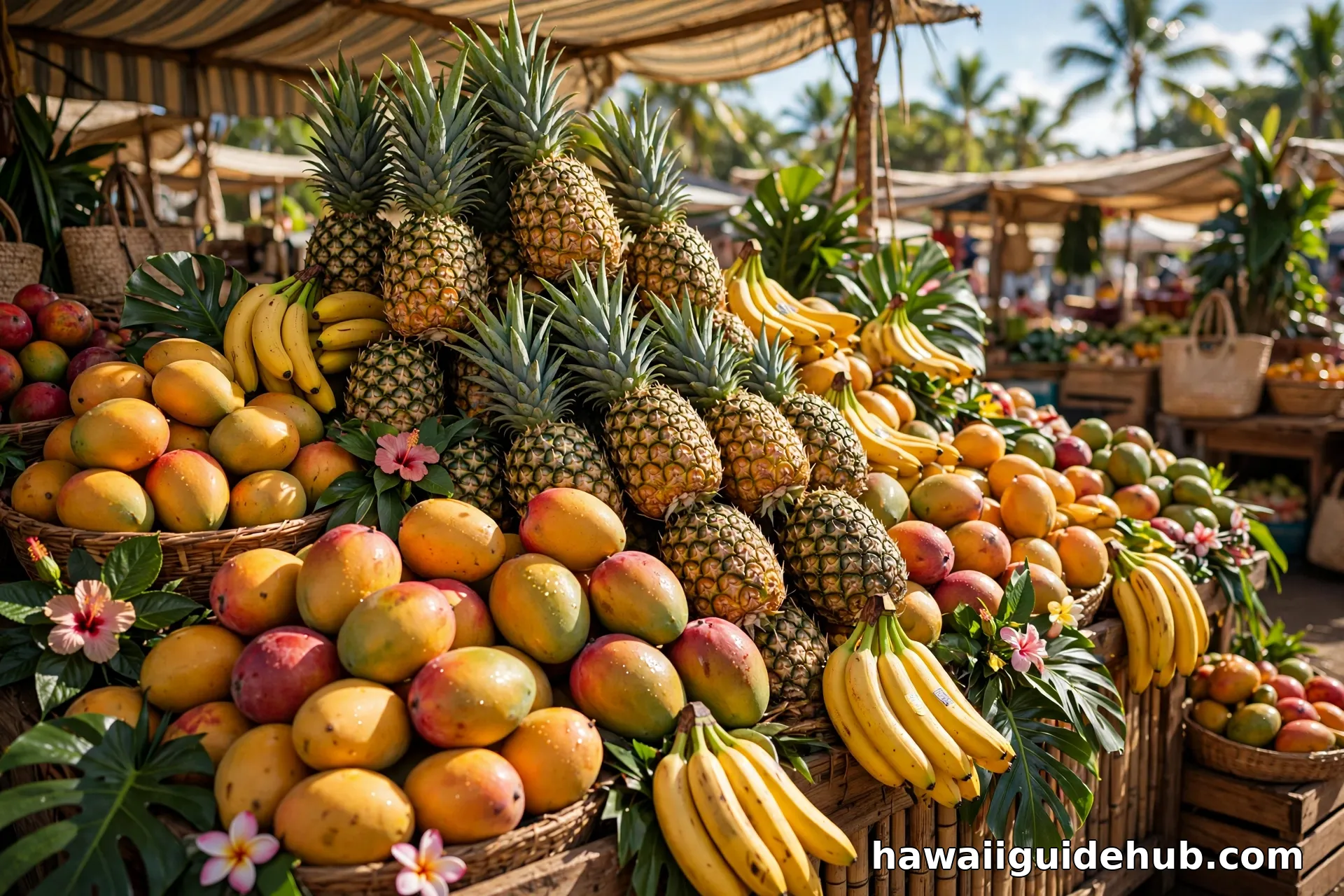
Pack processed snacks freely and skip the fresh produce altogether if you can. Hawaii’s grocery stores, farmers markets, and roadside stands sell spectacular local fruit, often cheaper and fresher than anything you would fly in. Our guide to late-night eats in Hawaii and huli-huli chicken guide will point you toward great local food once you land, and our guide to Hawaiʻi canoe crops explains the traditional foods grown on the islands.
If you do bring fresh items, keep them in a separate, easily opened bag, wash off all soil, and keep your declaration form filled out before landing so you are not scrambling. Travelers with food allergies should bring safe packaged foods without hesitation, since familiar safe foods are exactly what the processed-food allowance is for. And remember that the rules for taking food and fruit back out of Hawaii are stricter and run by the federal government, which is a separate process at departure.
Video: How Hawaii Agriculture Inspection Works
The USDA’s official overview of the agriculture inspection process at Hawaii airports: what inspectors look for and why the rules exist.
Frequently Asked Questions
Can I bring snacks to Hawaii in my carry-on?
Yes. Sealed processed snacks, candy, chips, granola bars, and similar items are completely fine. Standard TSA liquid and carry-on rules apply on the flight, but Hawaii agriculture rules do not restrict processed packaged foods.
Do I have to declare food when arriving in Hawaii?
You must complete the Plants and Animals Declaration Form, declaring any plants, plant parts, fresh produce, animals, or soil. Processed packaged foods do not need to be declared as agricultural items.
Can I bring fresh fruit to Hawaii?
You can bring most fresh fruits if you declare them and present them for inspection on arrival. The inspector will clear pest-free items. Some fruits and plants are restricted, so check the rules for specific items before you fly.
What happens if I do not declare food in Hawaii?
Failing to declare restricted agricultural items violates Hawaii law and can be punished as a misdemeanor with fines up to $25,000 and up to a year of imprisonment in serious cases. Always declare. Honest declarations lead to quick inspections, not punishment.
Can I bring plants to Hawaii as a visitor?
Most plants can enter after declaration and inspection, but many categories need advance permits or quarantine, and some are prohibited. Cut flowers and leis are generally fine after inspection. Check with the Hawaii Department of Agriculture before flying with any live plant.
Is the Hawaii agriculture form still paper?
No. The Akamai Arrival digital form is now live on all domestic flights to Hawaiʻi, and you can complete it online in flight or up to five days before traveling. One adult completes it for the whole family.
Can I bring honey or coffee to Hawaii?
Commercially processed and sealed honey, roasted coffee beans, and similar packaged products are fine. Raw agricultural products and live plants in the same categories need declaration and may be restricted, so keep it sealed and commercial.
Bringing food to Hawaii is easy once you know the one rule that matters: processed foods are free to bring, and anything grown must be declared. Fill out the form honestly, keep fresh items accessible for inspection, and leave soil and restricted plants at home. Hawaii’s markets will more than make up for anything you left behind, with fruit that was picked yesterday instead of packed last week.