Hawaii Prescription Medication Travel Rules

If you take prescription medication, your Hawaii trip needs a medication plan. Running out of pills on a neighbor island on a Sunday, losing a bag with your insulin in it, or getting stopped at security over a liquid prescription can all be avoided with a little preparation. The rules are straightforward, and Hawaii pharmacies can help in most situations, but the islands are the wrong place to improvise.
This is the single complete guide to Hawaii prescription medication travel rules. It covers TSA screening rules for pills, liquids, and medical devices, how to pack medications for the flight, what Hawaii law adds to the picture, how to get refills and emergency fills on the islands, and what to do if something goes wrong. Read it before you pack, and your medications will be the least of your worries.
The Golden Rules of Traveling With Medication
| Situation | What to do |
|---|---|
| Packing | Carry-on only; never put essential medication in checked luggage. Pack more doses than the trip requires. |
| At security | Keep original pharmacy bottles with your name on them. Medically necessary liquids over 3.4 oz are allowed, declared separately. |
| Paperwork | Bring a medication list and your doctor’s contact information. |
| Running low | Refill before you fly; Hawaii pharmacies can help in a pinch. |
TSA Rules for Pills, Liquids, and Medical Devices
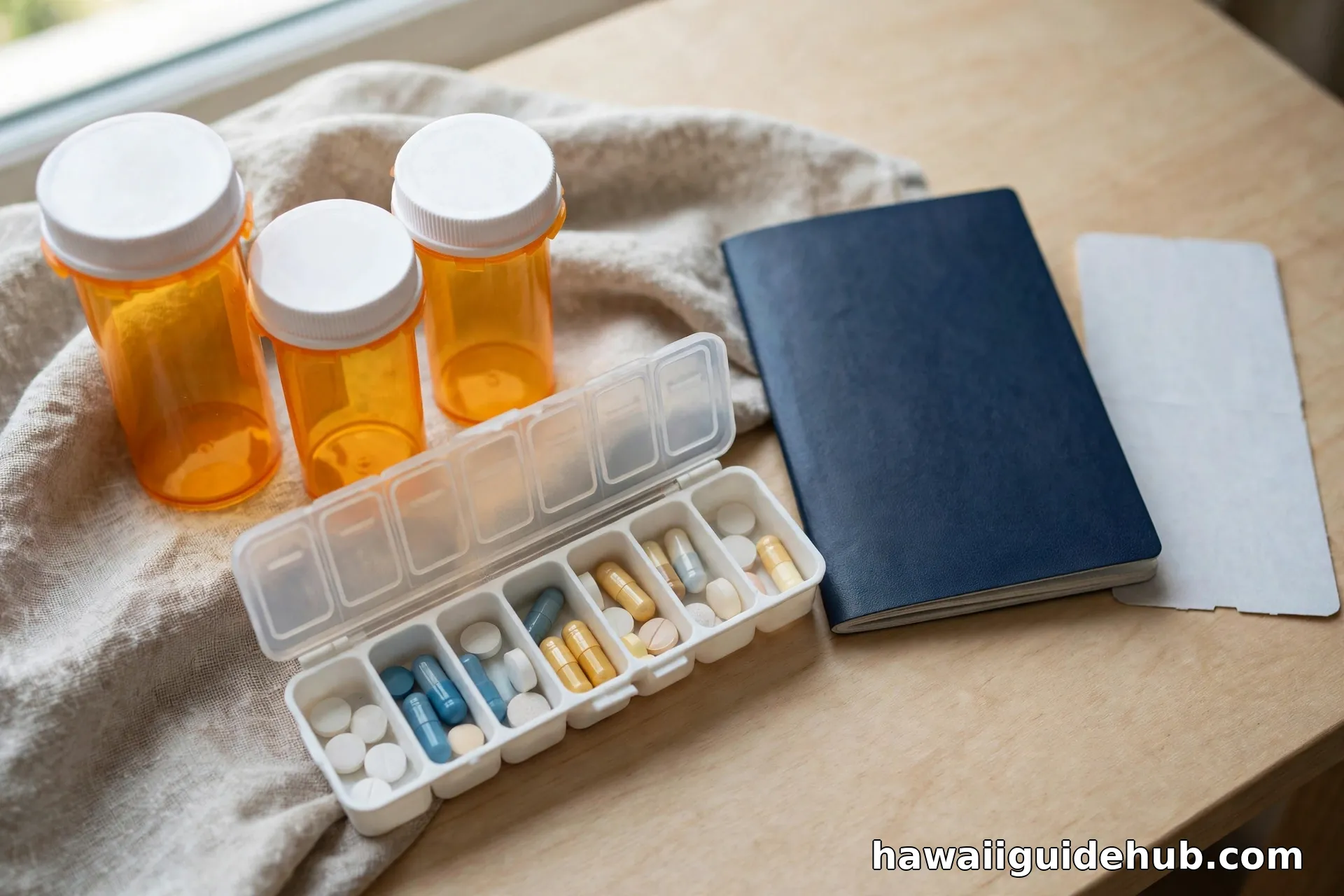
The TSA does not require prescription pills to be in their original bottles, and pill organizers are perfectly fine at the security checkpoint. That said, the agency recommends keeping medications clearly labeled to speed up screening, and original pharmacy bottles with your name on them are the simplest way to do that. You do not need to declare solid medications or pull them out of your bag unless an officer asks.
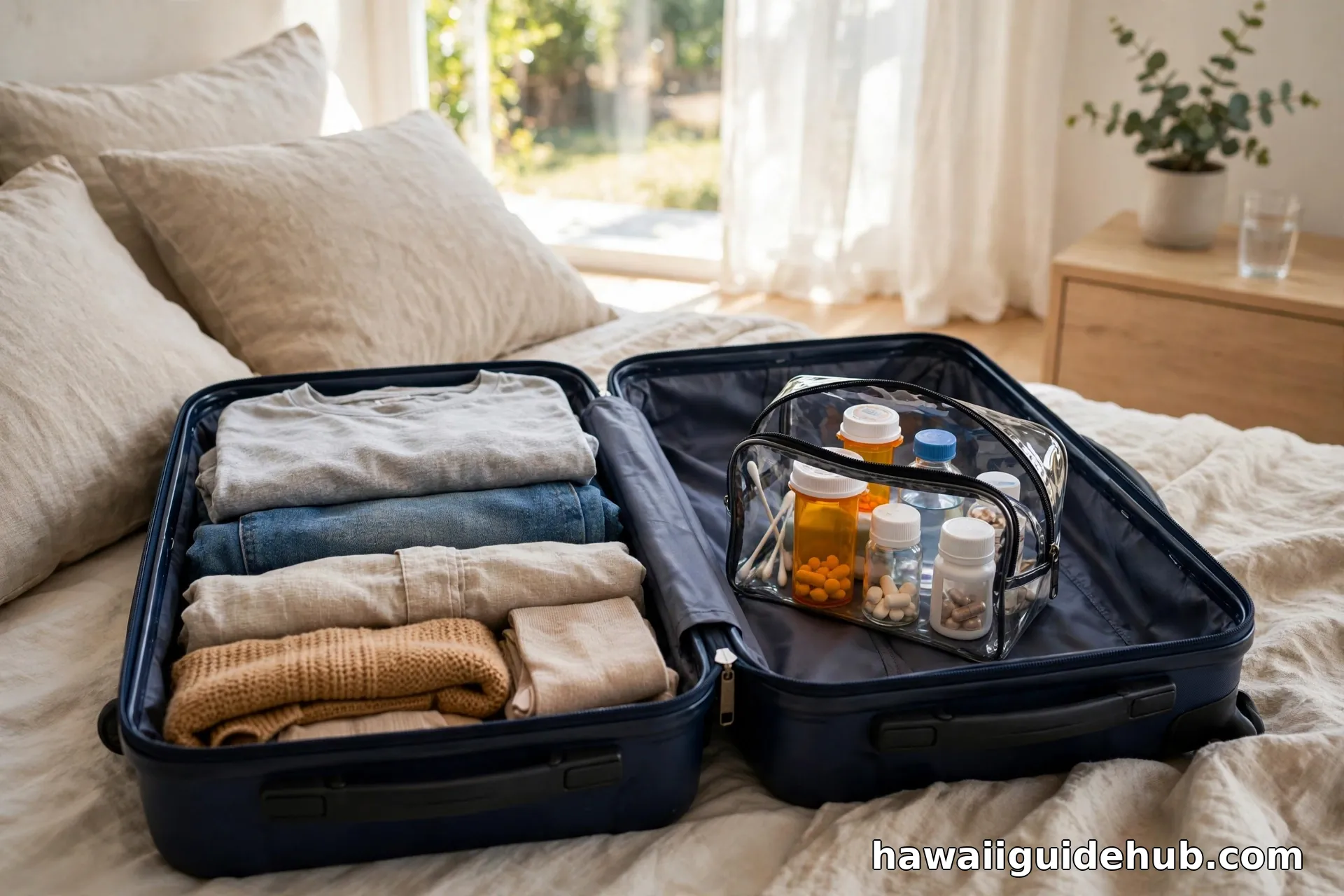
Liquid medications get special treatment. Medically necessary liquids, gels, and creams are allowed in quantities larger than the standard 3.4-ounce limit, but you must declare them to the officer at the start of screening and present them separately from your other belongings. This covers liquid prescriptions, insulin, eye drops, and similar items in reasonable quantities for your trip. Ice packs and freezer bags for refrigerated medications are also allowed, and they do not need to be frozen solid, but declare them as well.
Syringes, insulin pens, and other sharps are permitted when they accompany medication, and wearable medical devices like insulin pumps and continuous glucose monitors can stay on during screening, though you should tell the officer about them. If you prefer, you can request alternative screening for medical devices rather than going through the standard scanner. Travelers with implanted devices should carry their medical device identification card.
How to Pack Medication for a Hawaii Flight
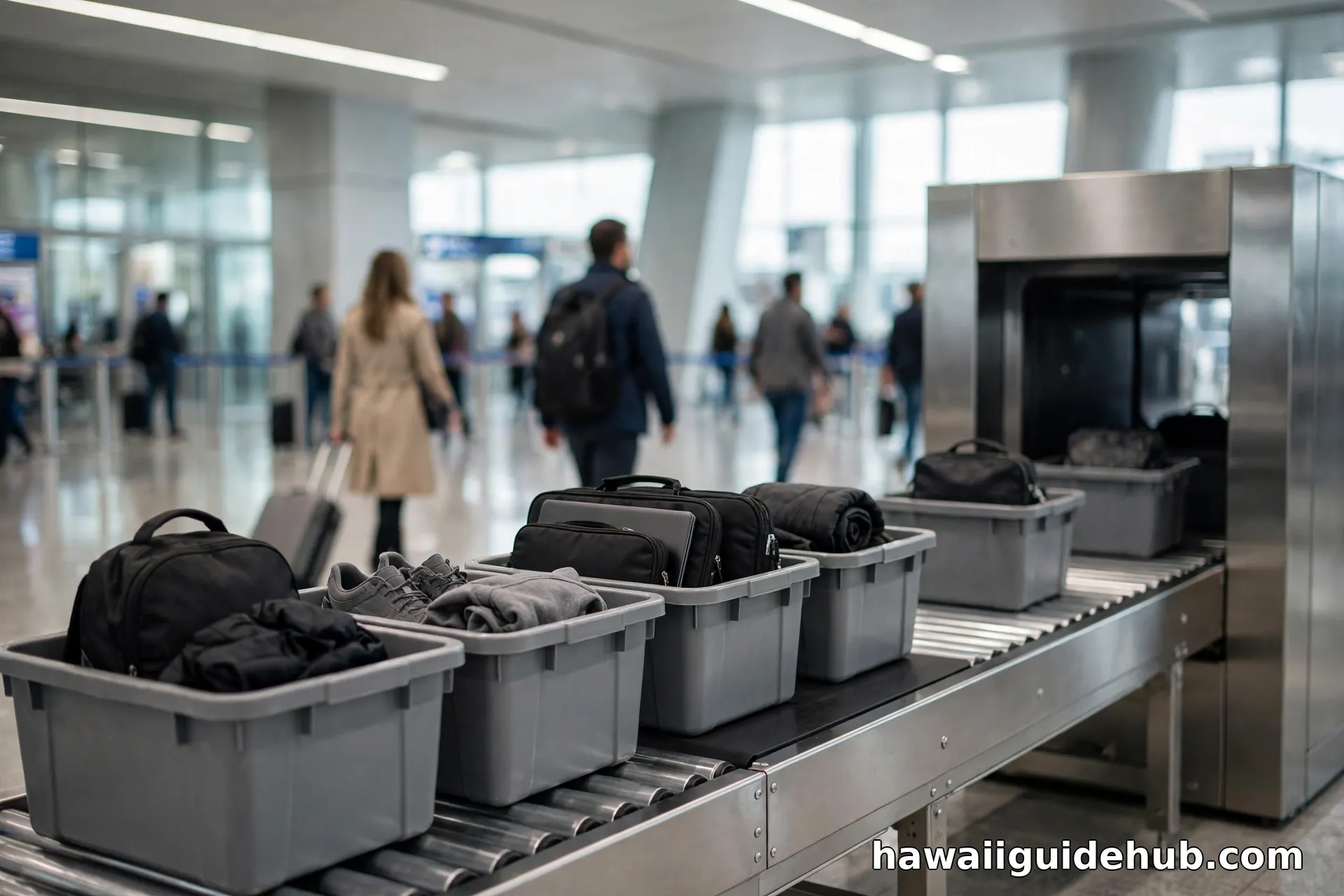
Pack every essential medication in your personal item or carry-on, the bag that stays with you if your checked luggage is delayed or lost. This is the single most important rule on this page. Hawaii is a long flight from anywhere, and a delayed bag without your medication in it becomes a medical problem, not just an inconvenience.
Bring more than you need. Pack enough for the full trip plus several extra days, in case flights are delayed or your stay extends. For critical medications, consider splitting the supply between two bags carried by different travelers, so one lost bag does not take everything. Keep a written list of every medication, the dose, the prescribing doctor, and your home pharmacy’s phone number, stored separately from the medications themselves and photographed on your phone as backup.
For refrigerated medications like insulin, use an insulated cooler bag and confirm before you fly that your hotel room has a refrigerator. Most Hawaii hotels do, but confirmations beat assumptions. For controlled substances such as opioid pain medications or ADHD stimulants, keep them in their original labeled containers and consider carrying a letter from your prescribing doctor. These medications draw the most scrutiny from law enforcement if questions arise.
Hawaii-Specific Rules Worth Knowing
Hawaii follows federal and standard state pharmacy law, so there are no exotic local restrictions on ordinary prescriptions. The practical differences are about access, not law. Neighbor islands have fewer 24-hour pharmacies than Oʻahu, and rural areas may have limited Sunday hours, so a Friday night problem on Molokaʻi is harder to solve than the same problem in Honolulu. Plan refills around this reality.
One firm warning: do not fly with marijuana, even medical marijuana, even between states where it is legal. Cannabis remains illegal under federal law, airports and airplanes are federal jurisdiction, and the TSA refers suspected violations to law enforcement. Hawaii has not legalized recreational cannabis. Leave it at home, without exception.
International visitors should check that their medications are legal in the United States before flying, since a few drugs that are sold over the counter in other countries require prescriptions here, and some substances are controlled differently. Your country’s embassy or a travel medicine clinic can confirm. Bring prescriptions translated into English with the generic drug names, not just brand names, since brands differ between countries.
Getting Refills and Emergency Fills in Hawaii
Hawaii has Longs Drugs (the local CVS brand), Walgreens, Walmart, and Costco pharmacies across the islands. If you run out, a local pharmacist can often arrange an emergency supply by contacting your home pharmacy and prescribing doctor, especially for non-controlled maintenance medications. Bring your labeled bottles and your doctor’s phone number to make this fast. Many insurance plans also allow vacation overrides for early refills if you call before the trip, which is far simpler than solving it on the islands.
For controlled substances, the rules are stricter everywhere, Hawaii included. Emergency fills are limited, and you may need your prescribing doctor to send a new prescription to a Hawaii pharmacy directly. This is why bringing extra doses of these medications is not just advice but essential. If you take something that cannot be skipped safely, talk to your doctor before the trip about a backup plan, including what to do if a dose is missed.
Travelers who need medical attention while visiting will find Hawaii’s clinics and hospitals used to treating visitors. Travelers who need medical attention should also review whether you need a passport to fly to Hawaii and our guide to when it rains in Hawaii for seasonal health planning. If you are still planning the trip itself, our guide to the best island for first-time visitors will help you choose your base.
What to Do If Medication Is Lost or Stolen in Hawaii
Act fast, because every missed dose matters more for some medications than others. First, check whether your travel companion or hotel has the split supply you packed as backup. If the medication is truly gone, call your prescribing doctor’s office immediately, even if it is after hours, because most practices have an on-call line for exactly this situation. Your doctor can often phone a prescription directly to a Hawaii pharmacy, including Longs Drugs or Walgreens locations near your hotel.
Next, call your home pharmacy and ask them to transfer the prescription to the Hawaii location, or ask the Hawaii pharmacist about an emergency supply. For non-controlled maintenance medications like blood pressure or cholesterol drugs, pharmacists can frequently dispense a short emergency supply while the transfer is arranged. For controlled substances, expect a stricter process: your doctor will likely need to send a brand-new prescription, and you may need to be seen by a local urgent care clinic or doctor first. This is the scenario that backup doses are designed to prevent.
If the loss involves theft, file a police report with the non-emergency number for your island, and keep the report number for your travel insurance claim. Many comprehensive travel insurance policies cover the cost of replacing lost or stolen medication, minus any deductible. Photograph every pharmacy receipt and keep the empty bottles or packaging, because insurers want documentation of exactly what was replaced and what it cost.
Heat, Humidity, and Storing Medication in Hawaii
Hawaii’s tropical climate is harder on medications than most visitors realize. Heat and humidity degrade many drugs, and a rental car parked in the Hawaiian sun can reach 130 degrees Fahrenheit or more within an hour. Never leave medications in a parked car, not in the glove box, not in the trunk, not for a quick hike. Bring them with you or leave them in your air-conditioned hotel room.
Humidity is the quieter enemy. It seeps into pill bottles every time they are opened, and it ruins moisture-sensitive medications like some thyroid drugs and dissolvable tablets. Keep bottles tightly closed, store them in their original containers with the desiccant packs, and consider a small dry bag or sealed pouch for beach days. Do not transfer pills into unmarked containers for a day at the beach, because an unlabeled pill bottle found by someone else creates exactly the kind of confusion you have been trying to avoid.
For medications that must stay cool, Hawaii hotel mini-fridges are usually reliable, but verify the temperature with a quick check that items inside feel properly cold. If your room has no fridge, ask the front desk, since most hotels can provide one for medical needs, often free of charge. On travel days between islands, keep refrigerated medications in your insulated cooler bag with ice packs, and remember that TSA allows medically necessary ice packs through security when you declare them.
Traveling With Kids, Seniors, and Medical Devices
Families should pack children’s medications with the same care as adult ones, including fever reducers, allergy medications, and any prescriptions, plus dosing syringes since household spoons are unreliable. Keep a card in your wallet with each child’s allergies, conditions, and pediatrician’s number. Talk to kids old enough to understand about never sharing prescription medication.
Older travelers and anyone with a chronic condition should carry a concise medical summary: diagnoses, medications and doses, allergies, emergency contacts, and their doctor’s information. A printed card in the wallet beats a phone app in an emergency, because first responders can read it without unlocking anything. If you use a CPAP machine, it does not count against your carry-on allowance, and Hawaii’s humidity is actually kinder to CPAP users than dry mainland air, though distilled water is sold in every grocery store.
Video: How to Fly With Medication
A practical walkthrough of packing medications for flights and getting through TSA screening without delays.
Frequently Asked Questions
Can I bring prescription pills in a pill organizer to Hawaii?
Yes. The TSA does not require pills to be in original bottles, and organizers are fine at security. Keeping the original labeled bottles with you as well is still recommended, in case questions arise or you need an emergency refill.
Can I bring liquid medication over 3.4 ounces on the plane?
Yes, if it is medically necessary. Declare it to the TSA officer at the start of screening and present it separately. Bring only a reasonable quantity for your trip, and keep it labeled.
What if I run out of prescription medication in Hawaii?
Visit a local pharmacy such as Longs Drugs or Walgreens with your labeled bottle and your doctor’s contact information. Pharmacists can often arrange an emergency supply or transfer. For controlled substances, your prescribing doctor may need to send a new prescription directly.
Can I fly with medical marijuana to Hawaii?
No. Cannabis is illegal under federal law, airports and airplanes are federal jurisdiction, and Hawaii has not legalized recreational use. Do not fly with it under any circumstances.
Should medication go in checked or carry-on luggage?
Carry-on, always. Checked bags get delayed and lost, and Hawaii is a long way from your home pharmacy. Keep essential medication in the bag that never leaves your side.
Can I bring syringes and insulin on the plane?
Yes. Syringes and insulin pens are allowed when they accompany medication, and ice packs for refrigerated medications are permitted too. Declare them at screening, and tell the officer about wearable devices like insulin pumps.
Medication is one of those travel details that rewards ten minutes of preparation and punishes none at all. Pack it in your carry-on, bring extras, keep the labels, know the liquid rules, and save your pharmacy and doctor numbers in your phone. Do that, and your prescriptions will quietly do their job in the background while you get on with enjoying Hawaii.