Hawaii’s Colored Sand Beaches: Black, Green, Red and White

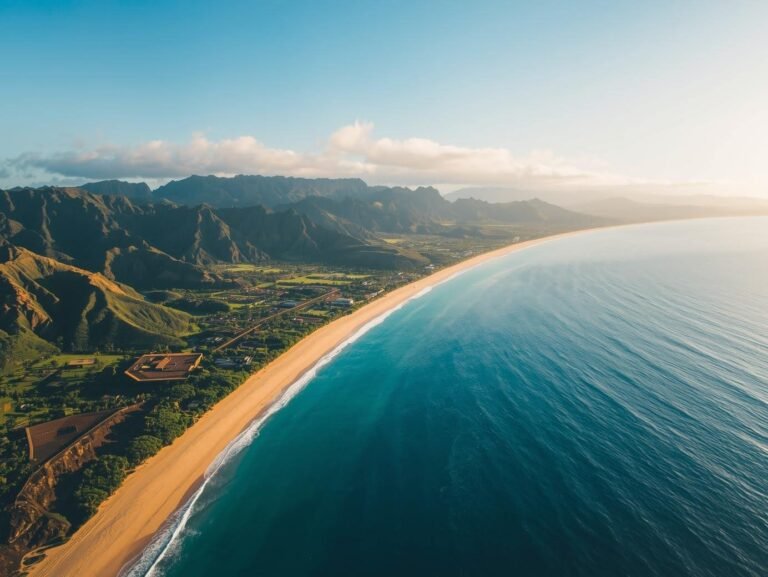
Most Hawaii beaches are white. Some are black. One is green. One is red. Hawaii’s colored sand beaches are among the strangest and most beautiful shorelines on Earth, and they exist because the islands are volcanoes. Every color tells a geological story, and each beach asks something different of you, from an easy roadside stop to a five-mile desert hike.
This guide covers the famous colored sand beaches of Hawaii: Punaluʻu Black Sand Beach on the Big Island, Papakōlea Green Sand Beach near South Point, Kaihalulu Red Sand Beach near Hana on Maui, plus the white sand beaches that make up the rest. If you searched for hawaiian rainbow sand beach or colored sand beaches hawaii, this page has everything in one place: where each beach is, why the sand is that color, how to get there, what it costs, and the safety rules that matter.
Colored Sand Beaches at a Glance
| Beach | Sand color | Getting there | Effort vs payoff |
|---|---|---|---|
| Punaluʻu | Black | Roadside, easy | Zero effort, classic black sand |
| Waiʻānapanapa | Black | Roadside state park | Easy access plus a full park to explore |
| Papakōlea | Green | 2.5-mile hike each way | The hike is the price; the color is the prize |
| Kaihalulu | Red | Short, dangerous, unofficial trail | High risk for a quick look; most should skip |
| White sand beaches | White | Mostly easy | Every island has them; no trek needed |
Why Hawaii’s Sand Comes in Colors
Sand is just rock that has been broken down, and in Hawaii the rocks are volcanic. The color of any beach here depends on what the parent rock was made of and what the ocean did to it. Black sand forms when molten basalt lava hits seawater, cools instantly, and shatters into fine dark grains. Green sand comes from olivine, a green volcanic mineral that survives while lighter ash washes away. Red sand comes from iron-rich cinder that rusts as it erodes. White sand, the most common, is made from coral and shells ground down by waves and parrotfish over thousands of years.
Black Sand: Punaluʻu Beach, Big Island
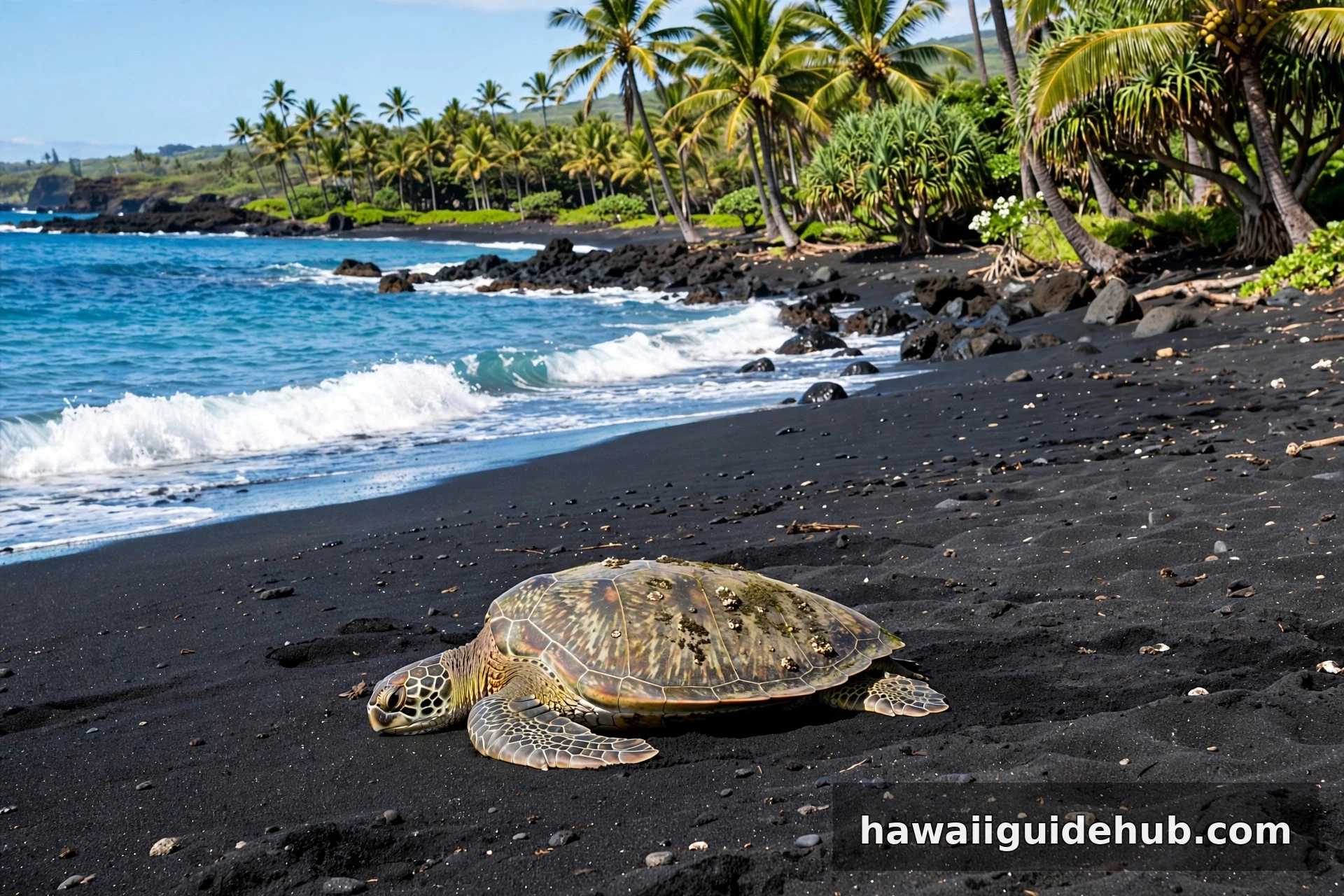
Punaluʻu is the most famous black sand beach in Hawaii, and for good reason. On the southeastern coast of the Big Island, it is a long crescent of jet-black sand framed by palms, with turquoise water that photographs like a dream. The black sand forms from basalt lava fragments created when molten lava cools rapidly on contact with ocean water and breaks into small particles. The name Punaluʻu means “spring diving place,” reflecting the freshwater springs in the area and the beach’s deep cultural history, which includes ancient fishponds and heiau nearby.
The turtles are the other reason people come. Hawaiian green sea turtles, or honu, haul out on Punaluʻu’s black sand regularly to bask, and this is one of the most consistent places in the islands to see them ashore. They choose dark sand deliberately: it absorbs heat more efficiently, which helps them regulate their body temperature. Give them space. Federal and state law prohibit touching sea turtles, and you should stay well back so you do not push a resting turtle back into the water.
Punaluʻu is the easiest colored sand beach to visit. It is right off the highway with a parking area, restrooms, picnic tables, and shade. Swimming and snorkeling are possible when it is calm, especially at the northeastern end where entry is easier, but conditions vary and currents can be strong, so check the water before you commit. There is no lifeguard. Early morning and late afternoon are the best times: cooler sand, softer light, and the turtles are often ashore.
Black Sand on Maui: Waiʻānapanapa State Park
Maui has its own black sand beach at Waiʻānapanapa State Park, just outside Hana at the end of the Road to Hana. It is smaller and wilder than Punaluʻu, with black sand, black lava rocks, sea caves, and blowholes. Like Punaluʻu, it is roadside and easy to reach, though the state park now manages entry and you should check current reservation requirements before you go. The water here is often rough, so most visitors come for the scenery, the coastal trail, and the photographs rather than swimming.
Green Sand: Papakōlea Beach, Big Island
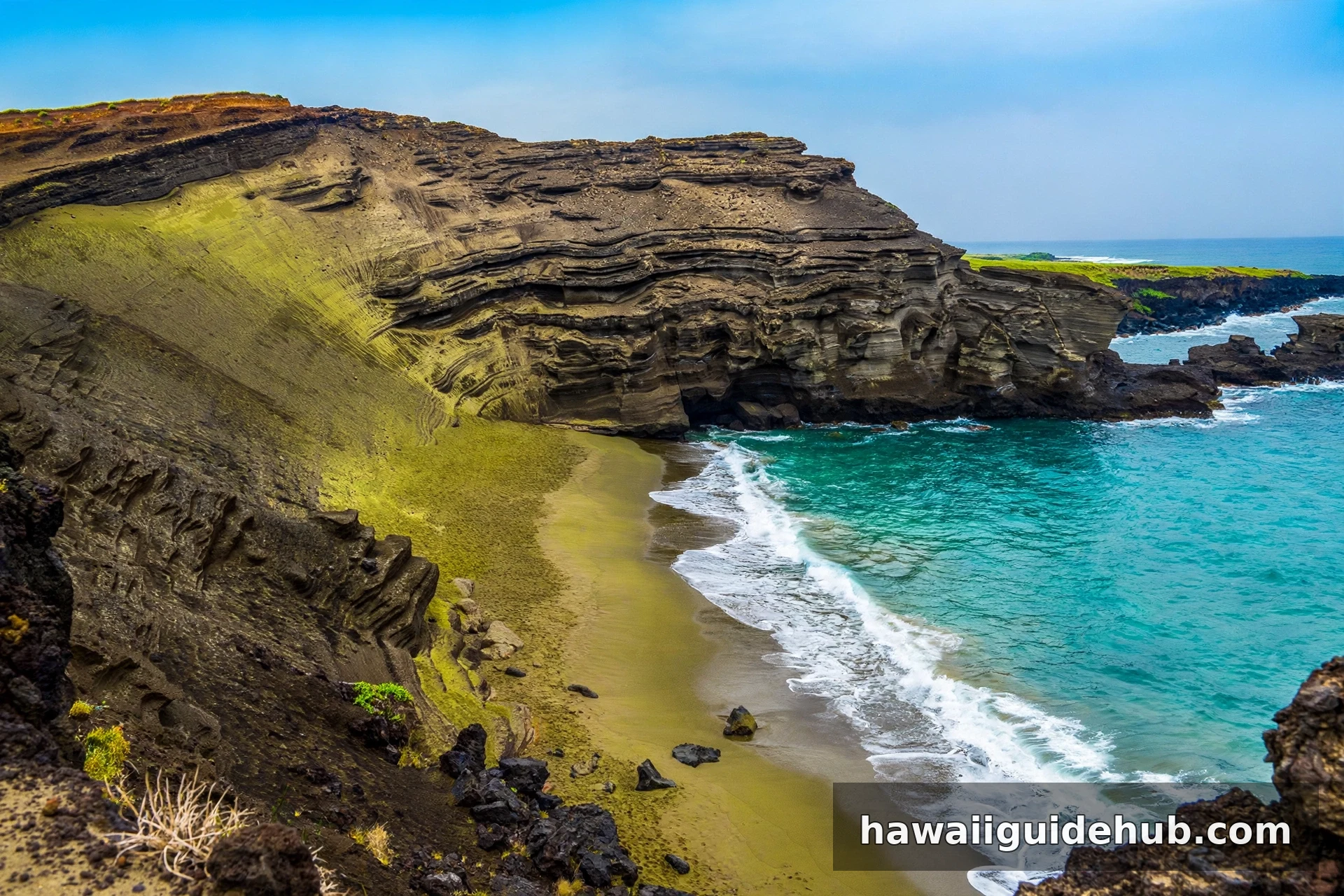
Papakōlea, also called Green Sand Beach or Mahana Beach, is one of only four green sand beaches in the world. The others are in Guam, the Galapagos Islands, and Norway. It sits near South Point, Ka Lae, the southernmost point in the United States, tucked into a collapsed cinder cone called Puʻu Mahana that formed roughly 49,000 years ago.
The green comes from olivine, a semi-precious green mineral rich in iron and magnesium. As the cinder cone erodes, the ocean carries away the lighter ash and leaves the heavier green olivine crystals behind, slowly building a beach that looks like crushed gemstones. In gemstone quality, olivine is known as peridot. The sand here is literally too fine to be gemstone grade, but walking on it feels like walking on jewels.
Getting there is the adventure. From the South Point trailhead, it is about 2.5 miles each way across open, undeveloped land. The walk is long, hot, windy, and exposed, with rough ground, dust, and no shade, so bring plenty of water, sunscreen, a hat, and shoes with grip. Do not drive to the beach and do not accept truck rides across the fragile landscape: vehicles damage the land and are not permitted. Take the established footpath down the low sea cliff slowly, because the ground is loose and slippery.
The water looks inviting but deserves respect. Currents are often hard to spot, there are no lifeguards, and if you get in trouble you are miles from help. Stay close to shore if you swim at all, and stay out entirely when the surf is up. A visit takes much of the day: allow time for the drive to South Point, the hike in, the descent, and the walk back. Leave well before sunset, because the land is undeveloped and the terrain is rough in the dark. No permit is required, and there are no facilities of any kind.
Red Sand: Kaihalulu Beach, Maui
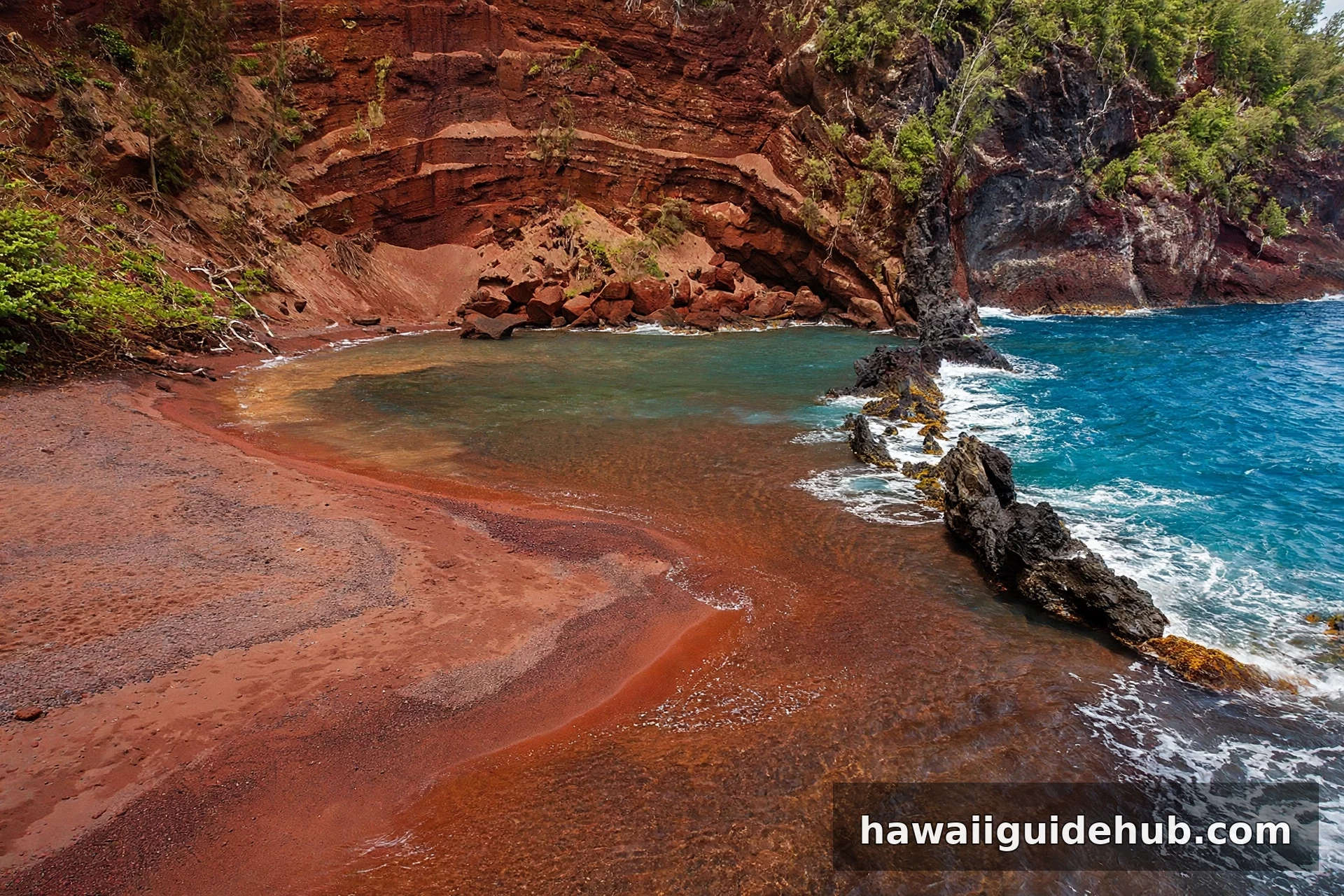
Kaihalulu, the Red Sand Beach, is a small cove cut into Kaʻuiki Head, a cinder cone just south of Hana Bay on Maui’s east coast. The name means “roaring sea,” and on a big swell day you understand why. The sand is a deep red-black, colored by iron-rich volcanic cinder eroding from the cliffs, and it contrasts spectacularly with the blue water, the black lava sea wall, and the green ironwood trees. Kaʻuiki Head was also the site of an ancient fortress and heiau, and the birthplace of Queen Kaʻahumanu, so the ground here is culturally significant as well as geologically rare. It is one of the few red sand beaches in the world.
This is the beach that needs an honest warning. The trail to Kaihalulu is narrow, steep, exposed, and slippery, crossing crumbly cinder with a long drop to sharp lava rock below. Parts of the route cross private property, signs warn against trespassing, and the trail is not officially managed as a beach access route. Local groups have asked visitors to avoid the area because of safety problems, difficult emergency access, and repeated rescues. There are no lifeguards, no restrooms, and no facilities.
Our honest advice: treat Kaihalulu as a look-and-appreciate place, not a casual Road to Hana stop. Do not attempt the trail in poor conditions, do not go if signs say to stay out, and do not swim. The cove has strong water, rocks, and no lifeguards. If you want red sand scenery without the risk, admire the coastline from Hana’s public viewpoints and spend your beach time at Waiʻānapanapa instead. For more on planning active days safely, see our guide to outdoor adventures in Hawaii.
White Sand: The Classic Hawaii Beach
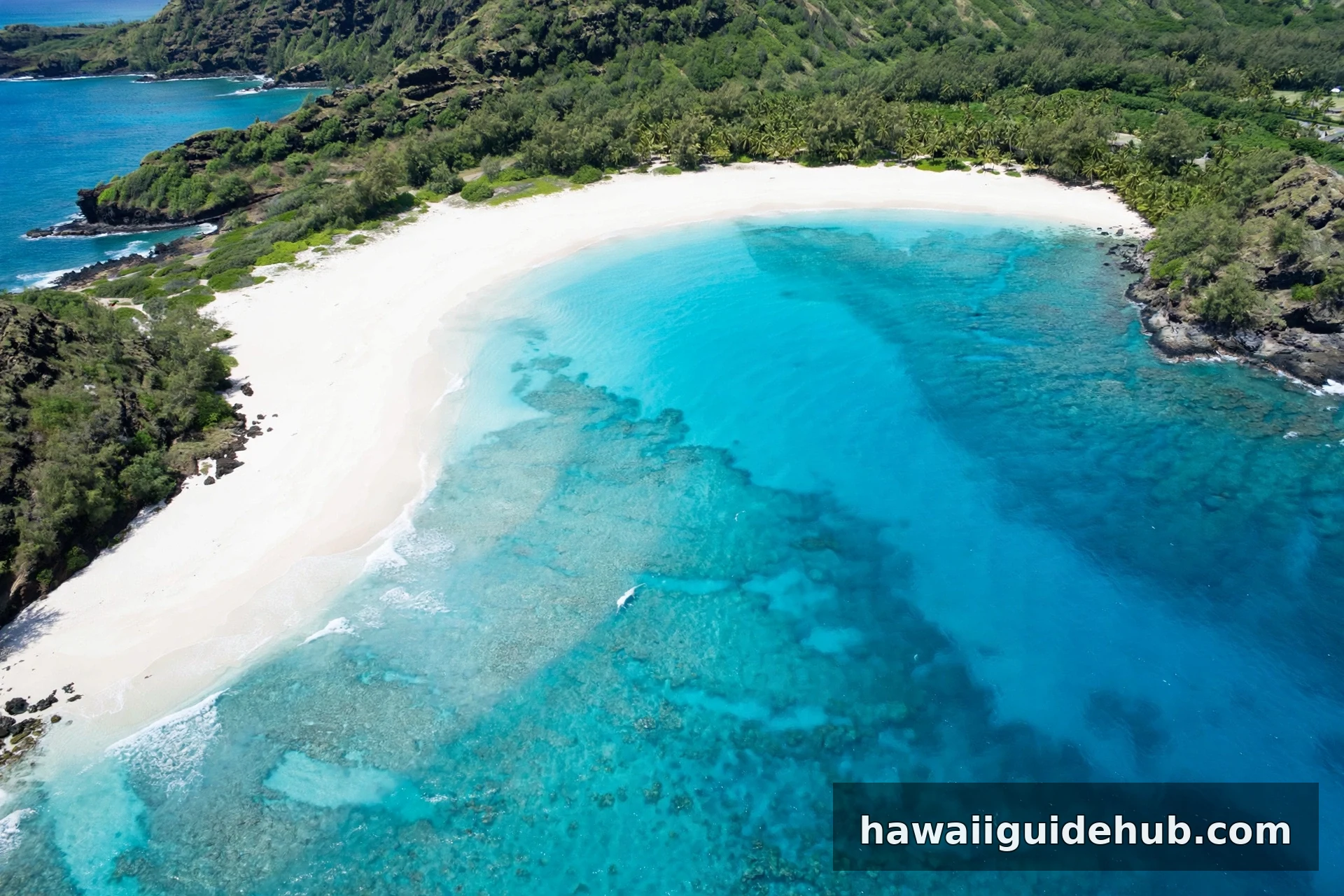
White sand is the most common sand in Hawaii and the one that matches the postcard. It is made from coral and shells ground down by wave action over millennia, with parrotfish doing a surprising share of the work by chewing coral and excreting fine sand. The result is the brilliant white shoreline you see at beaches across all the islands, from the famous resort beaches to quiet coves.
The colored sand beaches get the attention, but white sand is where most visitors will spend most of their beach time, and it is no consolation prize. The same geology that makes the odd-colored beaches possible also makes the white ones: an active volcanic landscape fringed by living reefs. If you are building a beach itinerary, our guide to Hawaii’s hidden gems covers quieter shorelines worth finding.
How to Visit Responsibly
- Never take sand. It is illegal to remove sand, dead coral, or coral rubble from Hawaii beaches under state law. Take photos, not souvenirs.
- Give turtles space. Keep your distance from basking honu and never touch them. They are resting, and disturbing them pushes them back into colder water.
- Stay on established paths. At Papakōlea and Kaihalulu, the landscape is fragile. Shortcutting trails damages it and puts you in danger.
- Pack everything out. Papakōlea and Kaihalulu have no trash service. Bring a bag and carry out everything you carry in.
- Respect closures and signs. If a trail is signed as closed or kapu, stay out. The people who posted it know the land better than a guidebook.
Beach park basics like shade, water, and sun protection apply everywhere. Our guide to planning a Hawaii beach day covers what to bring and what the rules allow at beach parks across the state.
Video: White, Black, and Green Sand Beaches
Watch a tour of the Big Island’s white, black, and green sand beaches in a single day.
Frequently Asked Questions
Where are the colored sand beaches in Hawaii?
Punaluʻu Black Sand Beach is on the Big Island’s southeast coast. Papakōlea Green Sand Beach is near South Point on the Big Island. Kaihalulu Red Sand Beach is near Hana on Maui’s east coast. Waiʻānapanapa Black Sand Beach is also near Hana, in a state park.
Why is the sand green at Papakōlea?
The green color comes from olivine, a green volcanic mineral. As the Puʻu Mahana cinder cone erodes, waves wash away the lighter ash and leave the heavier green olivine crystals, which build up into green sand. It is one of only four green sand beaches in the world.
Can you swim at the black sand beaches?
Sometimes. At Punaluʻu, swimming and snorkeling are possible when it is calm, especially at the northeastern end, but currents can be strong and there is no lifeguard. At Waiʻānapanapa the water is often rough and most visitors stay on shore. Always check conditions before entering.
Is the Red Sand Beach trail safe?
No. The trail to Kaihalulu is narrow, steep, exposed, and slippery, crosses private property in places, and is not officially managed. Local groups have asked visitors to avoid it. Do not treat it as a casual stop.
How long is the hike to Green Sand Beach?
About 2.5 miles each way from the South Point trailhead, typically 1 to 1.5 hours each direction. The trail is hot, windy, and exposed with no shade and no facilities, so bring plenty of water and start early.
Can you take sand from Hawaii beaches?
No. Removing sand, dead coral, or coral rubble from Hawaii beaches is illegal under state law. Leave everything where you found it.
Hawaii’s colored sand beaches are proof that the islands are still being built. Black basalt shattered by the sea, green olivine left behind by the waves, iron-rich cinder rusting into red, coral ground into white: four colors, four geological stories, all on the same island chain. Visit the easy ones with your camera, earn the hard ones with your legs, respect the warnings at the dangerous one, and leave every grain of sand where the ocean put it.