Hukilau Beach: Lāʻie’s Peaceful Windward Shore

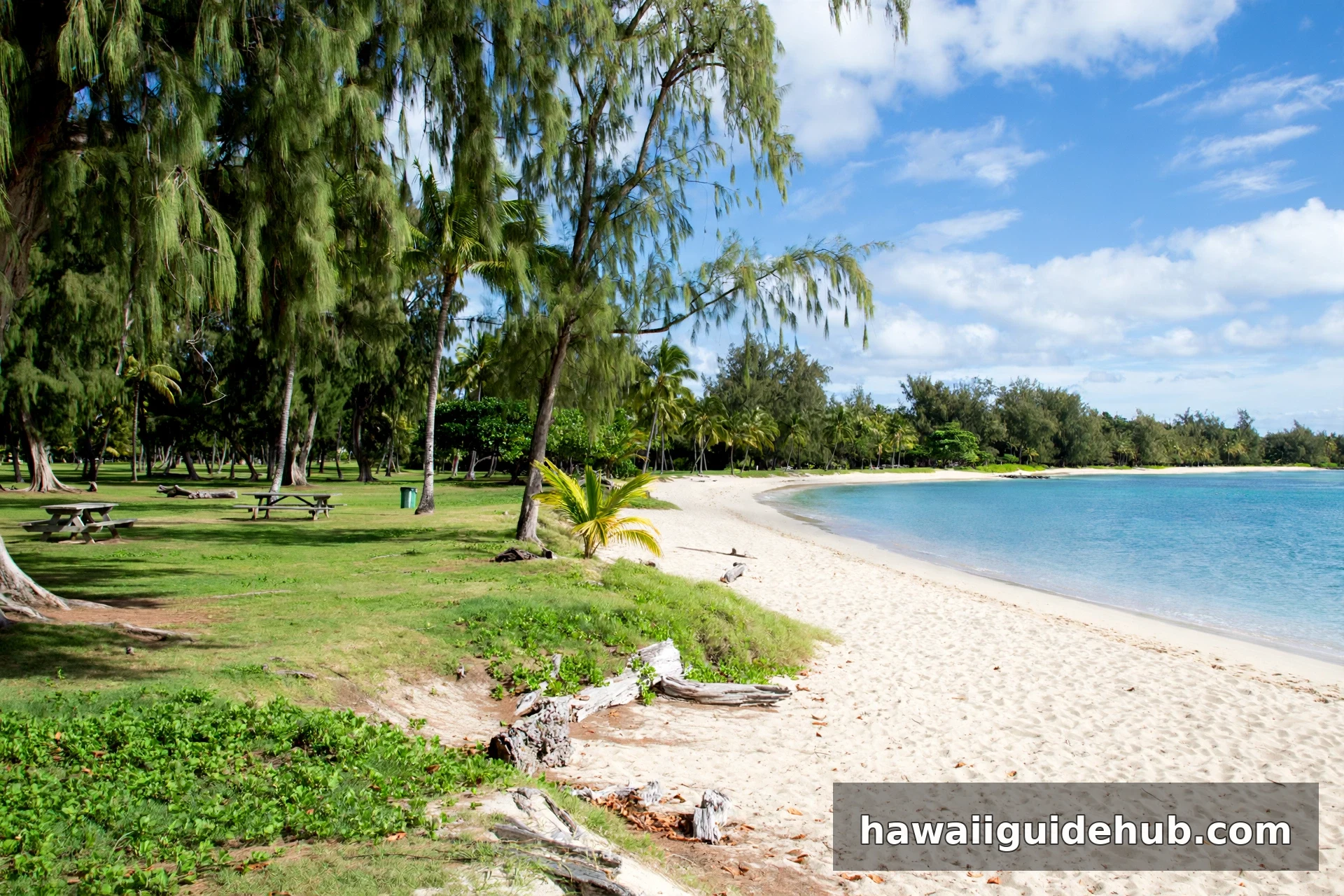
Hukilau Beach is the kind of place you drive past twice before you realize it was there all along. Tucked into the town of Lāʻie on Oʻahu’s northeastern shore, it is a wide, soft-sand beach with turquoise water, a shady grassy park, and a fraction of the crowds you find at Waikīkī. In summer it is one of the island’s most peaceful family beaches. In winter it turns into a proper surf spot. And its name carries one of the great stories in Hawaii beach history.
This is the complete guide to Hukilau Beach Oʻahu. It covers where the beach is, how to park, what the swimming is like in each season, the amenities, the famous Sunday parking rule, the story behind the name, hazards, what to bring, nearby places, and answers to common questions. If you searched for hukilau beach oahu, everything you need is on this one page.
Hukilau Beach at a Glance
| You’ll find | You won’t find |
|---|---|
| Location: Lāʻie, northeastern Oʻahu, off Kamehameha Highway | |
| Wide sandy beach with grassy park | A lifeguard on duty |
| Free parking | Parking on Sundays (the lot is closed; walk in) |
| Outdoor shower and picnic tables | Restrooms |
| Calm summer swimming and good snorkeling | Calm winter water (expect surf and currents) |
| Low, mostly locals, especially on weekdays | Big crowds or an entry fee |
| Best for: Families, picnics, beach walks, summer swimming | |
Where Hukilau Beach Is
Hukilau Beach sits in the town of Lāʻie on Oʻahu’s windward coast, roughly an hour’s drive from Waikīkī along Kamehameha Highway. The beach park address is in the 55-671 Kamehameha Highway area. It is easy to miss from the road, which is part of why it stays quiet. Look for the beach park signs in Lāʻie town, just south of the Polynesian Cultural Center.
The beach itself is a long stretch of soft white sand running between Lāʻie and Kalani Points. Behind the sand sits a proper grassy park with big shade trees and picnic tables, which makes it feel more like a neighborhood gathering place than a tourist beach. That is exactly what it is. On weekdays you will mostly share it with local families.
Getting there is straightforward. From Waikīkī, take the H-1 to the Likelike Highway or the Pali Highway over the Koʻolau mountains, then follow Kamehameha Highway north through Kāneʻohe and Kahuku toward Lāʻie. The drive takes about an hour without traffic and is one of the prettiest on Oʻahu, with the green Koʻolau cliffs on one side and the ocean on the other for much of the way. There is no public transit that gets you there quickly, so a rental car is the practical choice.

Why It Is Called Hukilau
Hukilau is an old Hawaiian method of communal fishing. The word breaks down to huki, to pull, and lau, a long rope strung with ti leaves. A large group of people works together, wading out to encircle fish with the leaf rope and then hauling the whole net of the sea toward shore. It is fishing as a community event, and it was once a regular part of life in coastal towns like Lāʻie.
The beach got its name from a specific event. In 1947, members of the local Church of Jesus Christ of Latter-day Saints congregation held a hukilau fundraiser on this beach after their wooden chapel burned down and needed replacing. The event was so popular that the visitor industry asked the Lāʻie community to keep staging it as an attraction, and for years the hukilau ran as a regular visitor event on this sand. In 1970 the state classified it as a commercial activity subject to tax, the community found it unprofitable, and the event ended. The name stayed. The famous “Hukilau Song,” written in 1948, celebrates the tradition and is still sung at luaus across the islands.
That song is worth knowing about, because it is how most visitors first hear the word. “We’re going to a hukilau, a huki huki huki huki hukilau,” it begins, and it goes on to describe everybody going fishing in the old Hawaiian way. The song turned a Lāʻie community fundraiser into a piece of shared island culture. When you stand on the sand where the actual hukilau nets were hauled in, the place connects to the music in a way no resort beach can match.
Swimming and Snorkeling
Hukilau Beach has two personalities, and the season decides which one you meet. From roughly May through September, the ocean here is calm and the swimming is excellent. The water is clear, the entry is sandy, and it is a genuinely good snorkel spot when conditions are flat. Families with kids do well here in summer, and the beach earns its reputation as a peaceful alternative to the busier south shore beaches.
From roughly November through March, the winter surf arrives and the picture changes. Waves build, currents strengthen, and the same shoreline becomes a surf and bodyboarding spot instead of a swimming beach. Winter water entry can be unsafe for casual swimmers, and with no lifeguard on duty, you are making your own judgment calls. If the surf is up, admire it from the sand. For context on how Oʻahu’s ocean shifts through the year, our guide to outdoor adventures in Hawaii covers seasonal conditions across the islands.
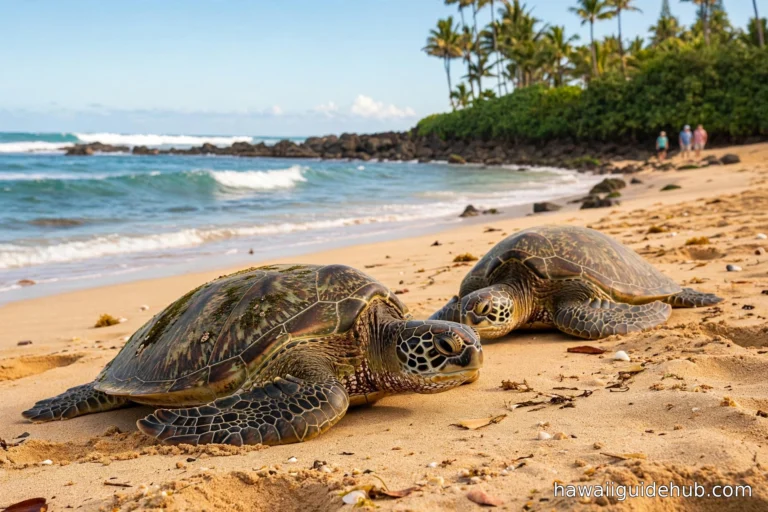
Snorkelers should treat Hukilau as a fair-weather spot. When the summer ocean goes flat, visibility opens up and the sandy bottom with its scattered reef patches holds the usual windward cast: butterflyfish, damselfish, and the occasional turtle cruising by. It is not a coral garden destination, and it does not pretend to be. What it offers instead is easy, uncrowded snorkeling in water you can see straight through, five minutes from your picnic table. Go early in the day, before the trade winds ripple the surface, and stay out of the water entirely when surf is running.

Beach Park Amenities
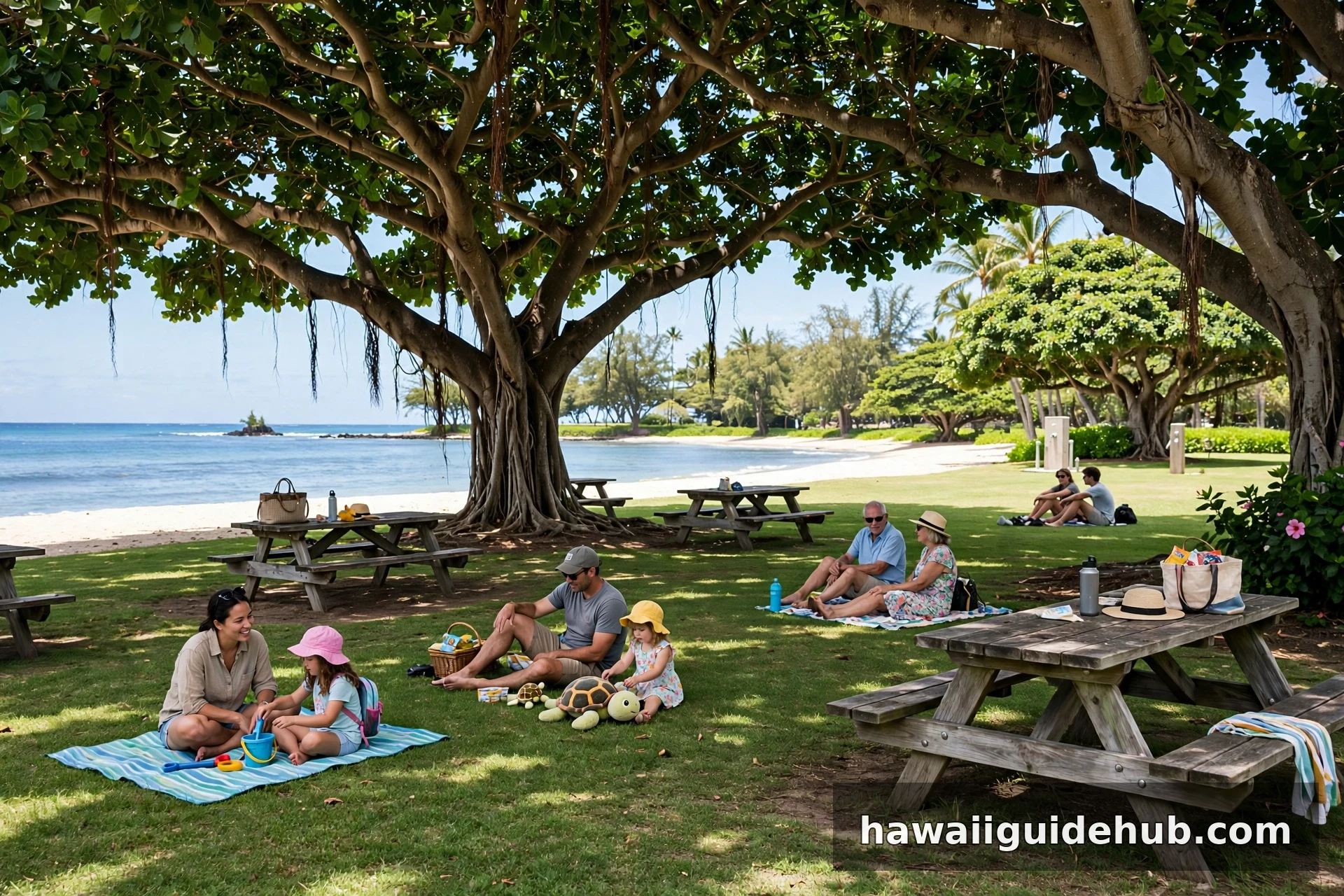
Hukilau Beach Park keeps things simple. There is a free parking lot, an outdoor shower for rinsing off, and picnic tables scattered through the grassy area under the trees. That is the full list. There are no restrooms at the beach park, which surprises some visitors, so plan accordingly. Restaurants and shops in Lāʻie town are a short drive away.
There is no lifeguard on duty at any time. This matters more in winter, when the surf is up, but it is worth knowing year-round. Swim with a buddy, stay within your abilities, and keep an eye on changing conditions. The calm summer water can still have currents on some days.
The Sunday Parking Rule
Here is the quirk every visitor should know: the Hukilau Beach parking lot is closed on Sundays. Lāʻie is largely a Church of Jesus Christ of Latter-day Saints community, and much of the town quiets down on Sundays. The beach itself remains open and you can still walk in, but you cannot drive into the lot. If Sunday is your beach day, park elsewhere in town and walk over, or simply pick another day. Weekdays are quieter anyway.
Best Time to Visit
For swimming, picnics, and the classic peaceful beach day, summer is the season, roughly May through September. Arrive in the morning for the calmest water and the easiest parking. The lot is small and fills up on nice weekends, so early arrival matters even at a quiet beach.
For surf watching and bodyboarding, winter delivers the waves, roughly November through March. Just respect the ocean. This is a no-lifeguard beach with real winter surf, and the currents that come with it deserve caution. When in doubt, stay on the sand and enjoy the show.
What to Bring
- Everything for a full beach day: there are no concessions at the park. Pack food, water, and shade.
- Reef-safe sunscreen: Hawaii restricts sunscreens containing oxybenzone and octinoxate. Bring compliant sunscreen or a rash guard.
- Snorkel gear in summer: the calm months reward a mask and fins.
- Bodyboard in winter: if you ride, winter is your season here.
- A plan for restrooms: there are none at the park. Use facilities in Lāʻie town before or after.
- Cash or card for town stops: the shrimp trucks and shops along the windward coast are worth the detour.
Nearby Places Worth Your Time
Hukilau Beach pairs well with a windward coast day. Pounders Beach, also called Lāʻie Beach Park, sits just up the coast with its famous pounding shorebreak and a calmer swimming cove locals call the bathtub. The Polynesian Cultural Center is minutes away in Lāʻie town. Lāʻie Point State Wayside offers one of Oʻahu’s most photographed coastal views, a short drive north. And if you are heading onward, the North Shore’s famous surf towns are an easy cruise up Kamehameha Highway.
Food is part of the plan on this coast. Lāʻie town has local plate lunch spots and the well-known Hukilau Cafe, which movie fans will recognize from its connection to the film 50 First Dates. The cafe leans into the name more than the actual filming location, but it is a fun, affordable stop. Farther north, the Kahuku shrimp trucks are a windward institution. Since the beach park has no concessions, most visitors build the day around a town lunch and a beach afternoon, which is exactly how the locals do it.
If you are building a full beach itinerary, our guide to the best island in Hawaii for first time visitors helps put Oʻahu’s regions in order, and Hawaii beach park rules and planning covers what you can and cannot do at beach parks across the state.
Video: The Hukilau Tradition
Watch the story of Lāʻie’s celebrated hukilau tradition, the communal fishing method this beach is named for.
Frequently Asked Questions
Where is Hukilau Beach?
Hukilau Beach is in Lāʻie on Oʻahu’s northeastern shore, off Kamehameha Highway, roughly an hour’s drive from Waikīkī. The beach park is just south of the Polynesian Cultural Center.
Is Hukilau Beach good for swimming?
In summer, yes. From about May through September the water is typically calm and clear, good for swimming and snorkeling. In winter, surf and currents make swimming unsafe for casual swimmers.
Is there a lifeguard at Hukilau Beach?
No. There is no lifeguard on duty at Hukilau Beach Park. Swim with a buddy and stay within your abilities, especially in winter.
Are there restrooms at Hukilau Beach?
No. The park has parking, an outdoor shower, and picnic tables, but no restrooms. Plan to use facilities in Lāʻie town.
Why is the parking lot closed on Sundays?
Lāʻie is largely a Church of Jesus Christ of Latter-day Saints community, and the parking lot closes on Sundays in keeping with the town’s quiet Sabbath. The beach stays open for walk-in visitors.
What does hukilau mean?
Hukilau is a traditional Hawaiian communal fishing method. Huki means to pull, and lau refers to a long rope strung with ti leaves. A group works together to encircle fish and haul them ashore. The beach is named for the famous 1947 hukilau fundraiser held here.
Is Hukilau Beach crowded?
Usually not. It is a locals’ beach that stays quiet, especially on weekdays. The parking lot is small, so it can feel full on a nice weekend, but the sand itself rarely feels busy.
Can you fish at Hukilau Beach?
Yes. Fishing is still a popular activity here, in the modern rod-and-reel style rather than the communal hukilau nets of the past. The rocky points at either end of the beach are favorite casting spots for local anglers. A Hawaii fishing license is not required for recreational shore fishing, but standard state fishing rules apply.
Hukilau Beach does not try to impress you, and that is its charm. It is a soft-sand, shade-tree, picnic-table beach with a real name and a real story, calm enough for kids in summer and wild enough for surfers in winter. Pack your food, note the Sunday parking rule, pick your season, and you will find the peaceful side of Oʻahu that the big resort beaches cannot offer.