Driving in Hawaii: Rules, Rental Tips & Island-by-Island Guide

Driving in Hawaii is one of the great pleasures of visiting the islands. The roads wind past black sand beaches, climb through misty rainforests, and open onto some of the most dramatic coastal views in America. But driving here is not like driving on the mainland. Speed limits are lower, some roads are narrower than you expect, parking can cost more than your lunch, and a few famous routes demand real respect behind the wheel.
This guide covers what you need to know: the traffic laws that catch visitors off guard, how renting a car works, what gas and parking really cost, how driving differs by island, and the mistakes first-timers make most often.
Driving in Hawaii at a Glance
| Topic | What to know | Why it matters |
|---|---|---|
| Side of the road | Right side, same as the US mainland | No adjustment needed for US drivers |
| Speed limits | 25 mph in towns, 35 to 45 mph on most highways, up to 60 mph on O’ahu freeways | Slow by mainland standards; build in extra time |
| Right turn on red | Legal after a full stop, unless a sign prohibits it | Same rule as most US states |
| Seatbelts | Required for every occupant, front and back seats | No exceptions, front or back |
| Cell phones | Handheld use while driving is banned statewide | Use hands-free or pull over |
| DUI limit | 0.08 percent for drivers 21 and over, 0.02 percent under 21 | The same limits as the mainland |
| Toll roads | None anywhere in Hawaii | One driving cost you never pay here |
| Rental minimum age | Usually 21, with a daily surcharge for drivers under 25 | Young drivers pay extra every day |
The Basics: Which Side, Speed Limits, and Right on Red
If you hold a US license, the fundamentals will feel familiar. Hawaii drives on the right side of the road, speed limits are posted in miles per hour, and road signs follow the same national standards you see on the mainland. But the pace is different, and that is the first thing to absorb.
Speed limits are lower than many visitors expect: 25 mph in towns, 35 to 45 mph on most highways, and up to 60 mph on Oahu’s freeways. Police do enforce them, and fines double in school and construction zones.
Turning right on red is legal after a full stop, unless a sign prohibits it. Yield to pedestrians and cross traffic. And one less thing to worry about: Hawaii has no toll roads on any island.
Hawaii Traffic Laws Every Visitor Must Know
A handful of Hawaii traffic laws surprise visitors every year. Knowing them before you drive saves you from tickets and keeps everyone safer.
Seatbelts are required in every seat
Hawaii law requires every occupant of a moving vehicle to wear a seatbelt, including passengers in the back seat. Officers can pull you over for a seatbelt violation alone. Child passenger rules are strict: children under four must ride in a federally approved child safety seat, and children between four and eight must ride in a booster seat unless they are at least four feet nine inches tall. Traveling with small children? Arrange car seats with your rental company in advance or bring your own.
Handheld phones are banned while driving
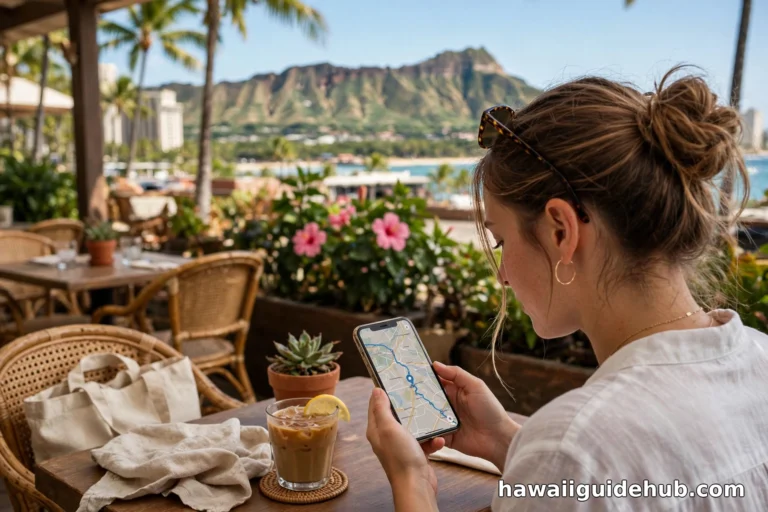
Using a handheld mobile device while operating a vehicle is prohibited statewide. That includes holding your phone to talk, texting, or scrolling at a red light. Hands-free use through Bluetooth or a mounted phone is allowed for adult drivers. If you need to check directions or answer a message, pull over somewhere safe first. Fines start around one hundred dollars and climb for repeat offenses.
DUI enforcement is strict
The legal blood alcohol limit is 0.08 percent for drivers 21 and older, and just 0.02 percent for drivers under 21, which is effectively zero tolerance. Hawaii police run regular sobriety checkpoints, especially on weekends and holidays. Penalties for a first offense can include license suspension, fines, and mandatory education programs. The islands may feel relaxed, but the roads are no place to take chances. Plan your evenings so the driver stays sober.
Move over for emergency vehicles
When an emergency vehicle is stopped on the shoulder with its lights flashing, you are required to move over a lane if it is safe to do so, or slow down significantly if you cannot change lanes. This applies on every island and is actively enforced.
Renting a Car in Hawaii: How It Really Works
Most visitors need a rental car to see Hawaii properly. Public transit exists on Oahu but is limited elsewhere, and the best beaches, trailheads, and viewpoints are spread out. Here is what the rental process actually involves.
License requirements
A valid US driver’s license is all you need to rent and drive in Hawaii. International visitors should carry both their home country license and an International Driving Permit, since many rental companies ask for the permit and police accept it as an official translation. The permit is inexpensive and easy to obtain from your national automobile association before you travel, so there is no reason to skip it.
Age rules and young driver fees
The minimum rental age in Hawaii is generally 21, though some vehicle classes require you to be 25. Drivers under 25 almost always pay a young driver surcharge of roughly twenty to thirty-five dollars per day, which can add several hundred dollars to a week-long rental. Factor that into your budget before you book rather than discovering it at the counter.
Booking tips that save money
Rental demand runs hot during holidays, winter, and spring break, and the islands have run short of cars in peak periods. Book early, and recheck prices a few weeks out since rates sometimes drop.
Compare the total cost, not just the daily rate, since taxes and fees add a meaningful chunk. Also check your hotel’s parking charges before deciding how many days you need the car. In Waikiki, overnight parking commonly runs thirty to fifty dollars a night.
Insurance and the fine print
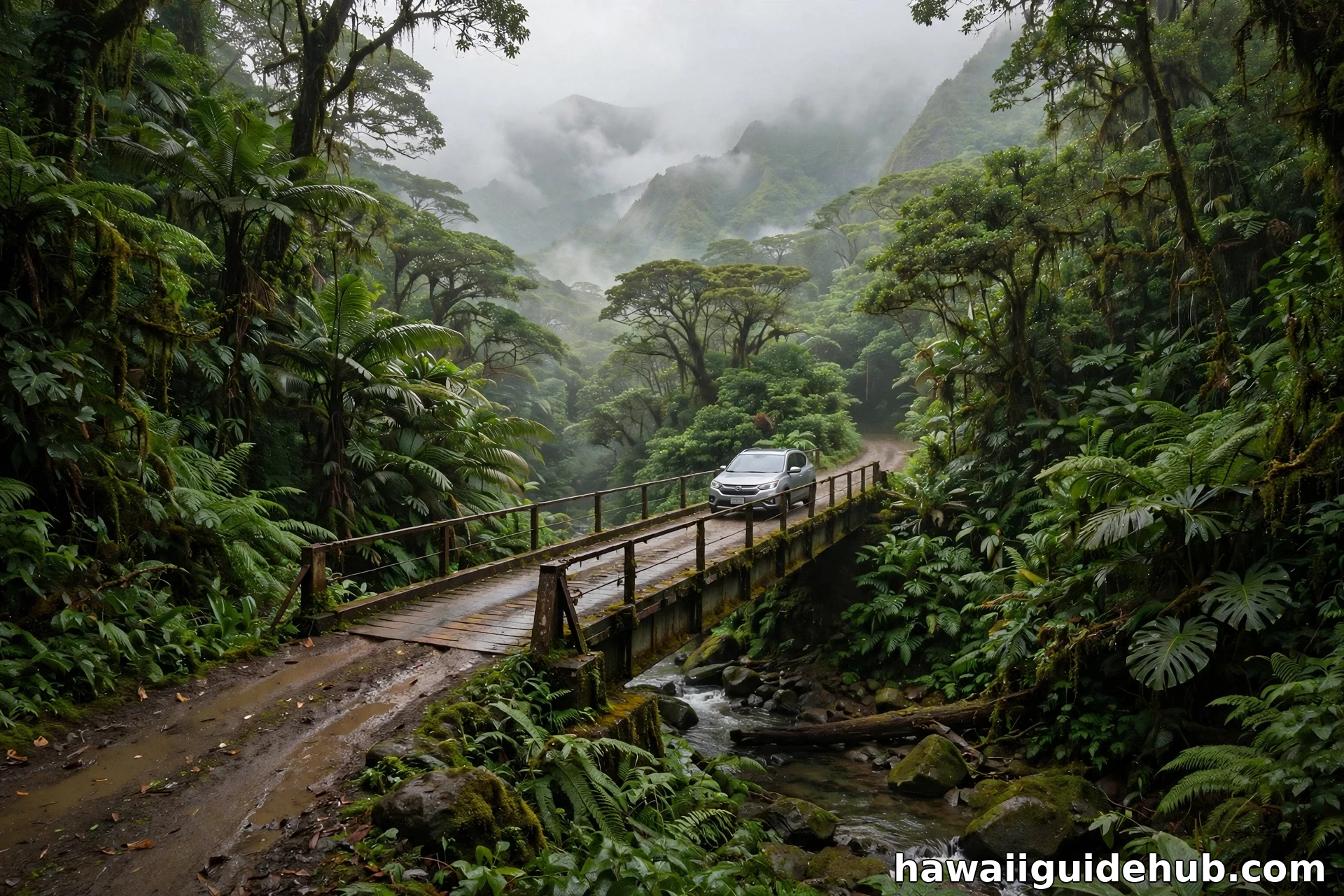
Read the rental agreement’s restrictions on where you can drive. Many contracts exclude unpaved roads, and driving on them can void your coverage. This matters on the Big Island and Maui, where tempting dirt roads lead to remote beaches and valleys. Check whether your personal auto policy or credit card covers rental cars in Hawaii, and photograph the car from every angle at pickup and drop-off so there is no dispute about pre-existing damage.
Gas, Tolls, and Parking: The Real Costs
Driving in Hawaii costs more than driving on the mainland, and the difference comes from fuel and parking rather than tolls, since there are none.
Gasoline in Hawaii is consistently among the most expensive in the nation, often one to two dollars more per gallon than the mainland average. The standard rental policy is full-to-full, so fill up at warehouse clubs or stations away from tourist corridors, and never start a remote Big Island or Maui drive on less than half a tank.
Parking blindsides most visitors. Waikiki hotels routinely charge thirty to fifty dollars a night, and Maui and Big Island resorts are similar. Budget parking as a real line item, and consider renting only for the days you will actually drive.
Island-by-Island Driving Differences
Each island drives differently. Here is what changes as you island-hop.
Oahu: traffic is the challenge
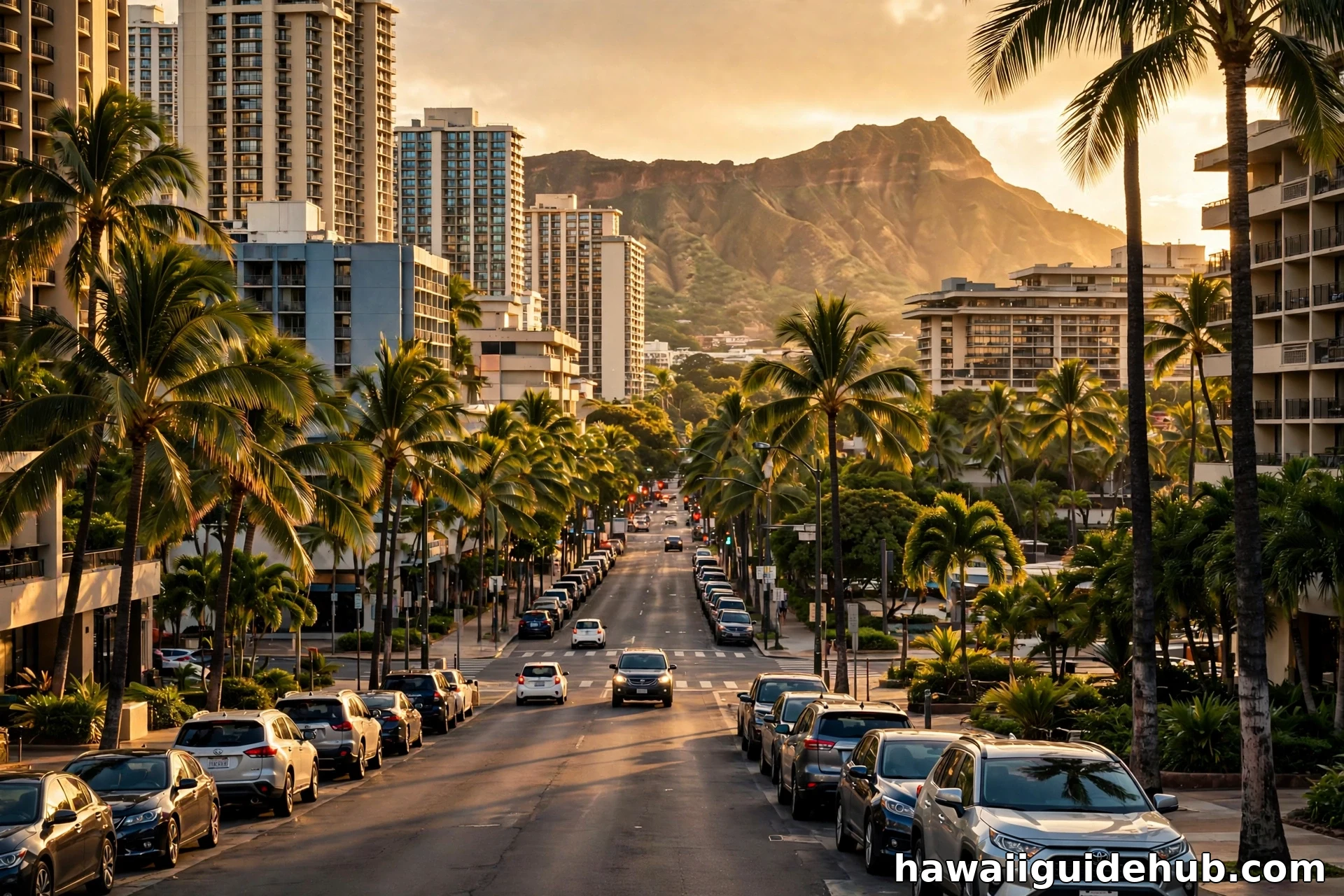
Oahu has the only real freeways and the only real rush hours. The H-1 through Honolulu clogs from seven to nine in the morning and four to six in the evening, so plan around those windows. Outside the city, the coastal loop past some of the best first-visit sights is easy and well signed.
Maui: one famous road dominates
Maui’s reputation rests on the Road to Hana: six hundred twenty curves and fifty-nine bridges, covered in detail below. The rest of the island is relaxed, though sudden windward showers can slick the roads fast. Our guide to the reasons to visit Maui can help you decide if the island fits your trip.
Big Island: everything is farther than it looks
The Big Island is larger than all the others combined, and drive times surprise people: Kona to Hilo takes ninety minutes or more. Fill the tank before crossing the island, carry water, and download offline maps since cell coverage drops in remote stretches.
Kauai: slow down and yield
Kauai is the slowest driving in the state: two-lane highways, one-lane bridges on the north shore, and limits rarely above fifty. Yield at the narrow bridges, use pullouts for locals behind you, and build in buffer time. Rain can arrive any month, so use headlights in downpours.
Molokai and Lanai: minimal driving, maximum simplicity
These islands see far fewer visitors and far fewer cars. Rental options are limited and should be reserved well ahead. Roads are simple, traffic is nearly nonexistent, and the main skill required is slowing down enough to enjoy it.
Roads That Demand Respect
A few Hawaii roads have earned their reputations. None of them are off-limits to careful drivers, but each one punishes overconfidence.
Saddle Road on the Big Island
Highway 200, known as Saddle Road, crosses between Mauna Loa and Mauna Kea connecting the Kona and Hilo sides. It is fully paved and far better than its old reputation, but it is still narrow and winding in places, shared with military convoys, and subject to fog and sudden weather changes at elevation. Drive it in daylight the first time, keep your speed down, and never stop in the travel lane for photos.
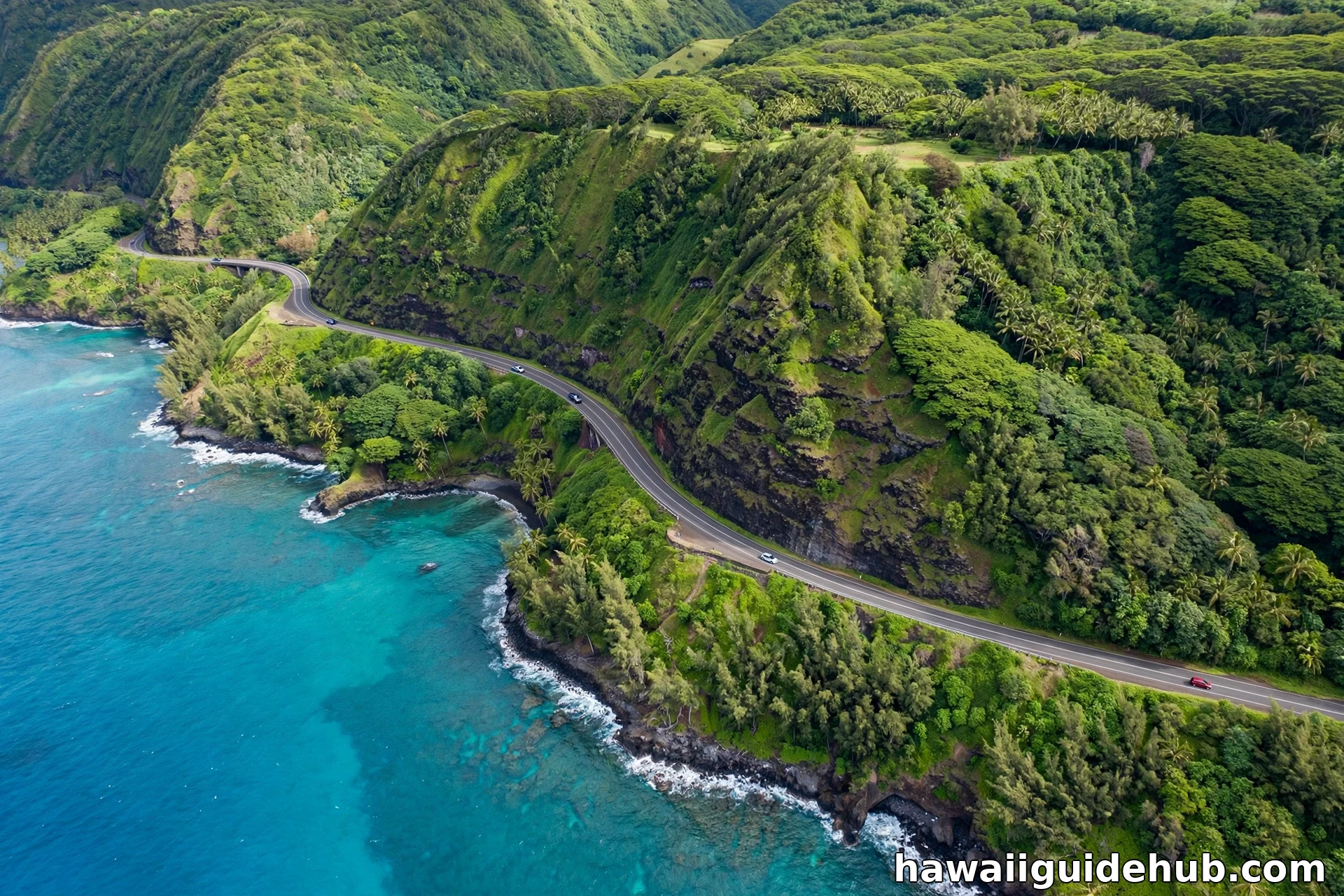
The Road to Hana on Maui
The Hana Highway is the most famous drive in Hawaii and the most misunderstood. Sixty-four miles, hundreds of curves, dozens of one-lane bridges: a full day if you do it right. Start before eight in the morning to get ahead of the crowds. Pull fully off the road at stops, never in the lane. Yield to locals and let faster drivers pass at pullouts. Fill up in Kahului or Paia, bring food and water, and download offline maps. The back road past Hana is rough and many rental agreements forbid it, so check your contract.
One-lane bridges
You will meet one-lane bridges on Kauai’s north shore, along the Road to Hana, and on the Hamakua Coast of the Big Island. The etiquette is simple: whoever reaches the bridge first generally goes, but when in doubt, yield. A quick flash of your hazard lights is the local way to say thanks. Never try to squeeze past an oncoming car on a bridge.
Chain of Craters Road
This road in Hawaii Volcanoes National Park descends from the summit to the coast through old lava fields. It is paved but remote, with no services and spotty cell coverage. Check for closures with the park before you go, since volcanic activity and weather can shut sections without much notice.
Common Mistakes Visitors Make
After years of watching visitors learn the hard way, these are the errors that come up again and again.
Underestimating drive times. Map apps show drive time without stops, traffic, or the photo pullout every half mile. Add at least fifty percent to any estimate for a scenic route, and double it for the Road to Hana.
Leaving valuables visible in the car. Break-ins at trailheads and beach parking lots are the most common crime affecting tourists in Hawaii. Take everything valuable with you or lock it in the trunk before you arrive, not after you park where people can watch.
Parking illegally at viewpoints. When a scenic pullout is full, keep going to the next one. Parking half in the travel lane or on soft shoulders blocks traffic and risks a ticket or a tow, and soft shoulders can swallow a tire.
Driving where the contract forbids. Unpaved roads void many rental agreements, and damage there can leave you liable for the full repair cost.
Skipping the parking math. A week of Waikiki hotel parking can cost more than the rental itself. Price it out before you book.
Getting Around Without a Car
You do not always need a car. On Oahu, the bus reaches most major sights and Waikiki is walkable, so many visitors skip the rental for their Honolulu days. Ride-shares work in tourist areas but thin out in remote spots.
Guided tours are worth considering for the trickiest drives. Road to Hana tours let everyone look at the scenery, and for hiking and snorkeling excursions, many operators include pickup, which removes the parking puzzle entirely.
See the Drive: Oahu in One Day
Watch how one local driver tackles an Oahu loop in a single day, with route tips you can use on any island.
Frequently Asked Questions
Can I drive in Hawaii with my US license?
Yes. A valid US driver’s license is all you need. International visitors should also carry an International Driving Permit, which many rental companies request.
What is the speed limit in Hawaii?
Typically 25 mph in residential areas and towns, 35 to 45 mph on highways, and up to 60 mph on Oahu’s freeways. Limits are strictly enforced, especially in school and construction zones.
Is it hard to drive in Hawaii?
Not generally. The roads are well signed and traffic is light outside Honolulu rush hours. The challenge comes from specific routes like the Road to Hana or Saddle Road, plus narrow rural roads and one-lane bridges that reward patience.
Do I need a 4WD vehicle in Hawaii?
For most visitors, no. All the main sights on every island are reachable by regular car on paved roads. You only need high clearance or four-wheel drive if you plan to drive unpaved roads, and many rental contracts forbid those roads anyway.
How much does gas cost in Hawaii?
Hawaii has the highest gas prices in the nation, often one to two dollars above the mainland average. Budget accordingly, and fill up at warehouse clubs or stations away from tourist areas for the best prices.
Is there Uber or Lyft in Hawaii?
Yes, in the main tourist areas on every major island. Coverage thins out in remote areas and late at night, so do not count on a ride-share for a midnight return from a far-flung beach.
The Bottom Line
Driving in Hawaii rewards the prepared and punishes the rushed. Learn the key laws, book the car early, do the parking math, and give every scenic road more time than the map suggests. If you are still deciding where to go, start with our guide to choosing the right island for a first visit and our roundup of must-try local dishes.