Hawaiian Butterfish: What It Is, How to Cook It, and Where to Try It

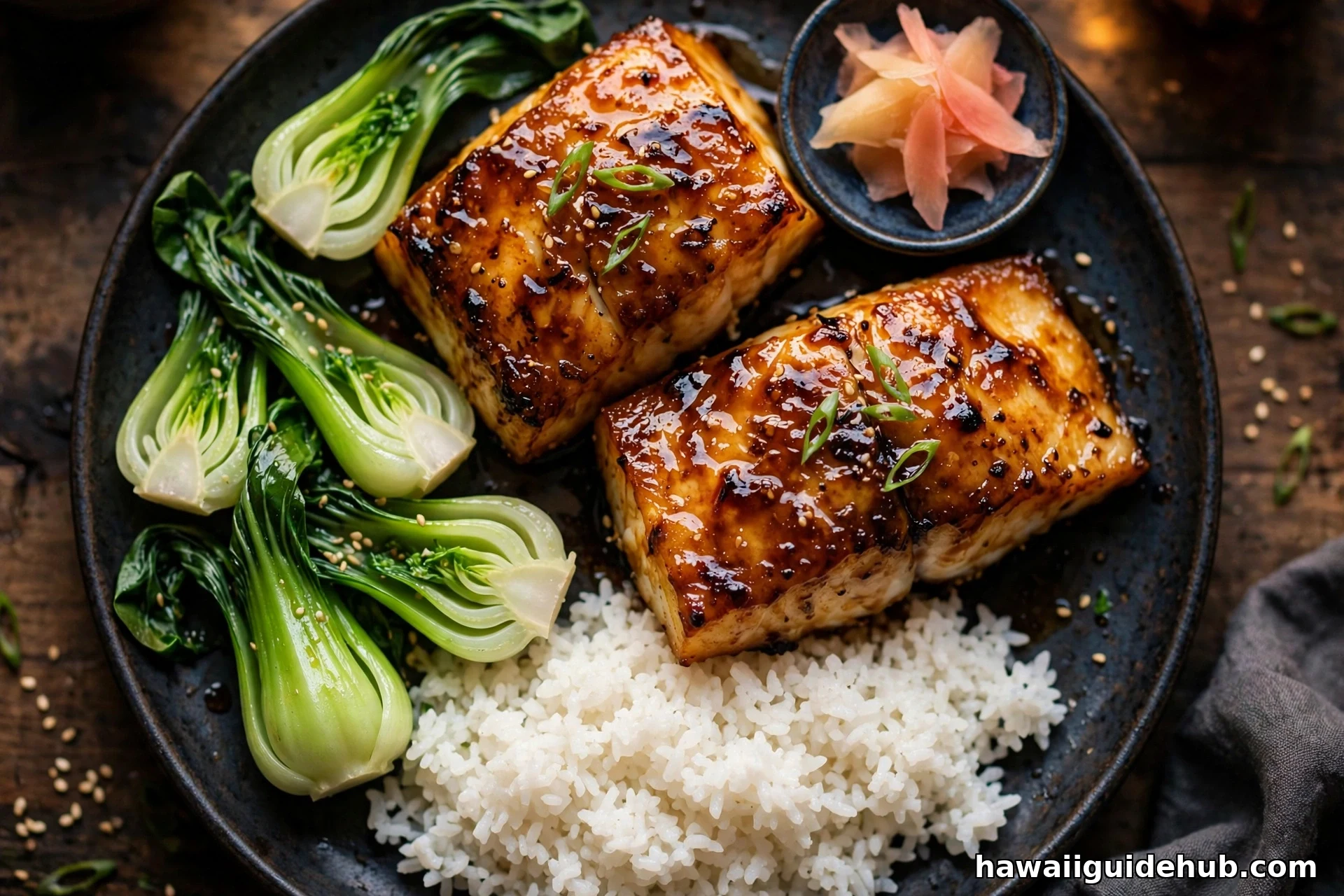
Order a dish called butterfish in Hawaii and you will get one of the most luxurious bites of fish on the islands: rich, silky, and sweet, with flesh that flakes into moist layers. But the name hides a surprise. Hawaiian butterfish is not actually a butterfish at all. It is sablefish, a deep-water fish also sold as black cod, and it became a Hawaii restaurant staple through one famous preparation: misoyaki, fish marinated in sweet white miso and broiled until the glaze caramelizes. This guide covers what Hawaiian butterfish really is, what it tastes like, how to cook it at home, and where to try it on your visit.
Hawaiian Butterfish at a Glance
| What you hear | What’s actually true |
|---|---|
| “Butterfish” on the menu | It’s sablefish (Anoplopoma fimbria), also sold as black cod |
| “Cod” in the name | Not related to Atlantic or Pacific cod, despite the name |
| The signature dish | Misoyaki butterfish: miso-marinated, then broiled or grilled |
| The flavor | Rich, buttery, mildly sweet, with a silky texture |
| Cooking it | Broil, grill, or roast; the high fat content forgives overcooking |
| Sustainability | Alaska and British Columbia sablefish rated a Best Choice by Seafood Watch |
What Hawaiian Butterfish Actually Is
The fish on your plate when you order butterfish in Hawaii is sablefish, a species that lives in the deep, cold waters of the North Pacific, from the Bering Sea down to California. Fish markets also label it black cod, and both names describe the same animal. It is not a member of the cod family at all. The “black cod” name comes from its dark skin, while “butterfish” describes what matters most on the plate: flesh so rich in healthy omega-3 oils that it eats like butter.
Sablefish has one of the highest natural oil contents of any white fish. Those oils are what give it a moist, succulent texture and a flavor that stays rich even when the fish is cooked simply. The same richness makes it unusually forgiving in the kitchen. Lean fish turns dry and chalky within a minute of overcooking. Sablefish stays silky across a wider window, which is one reason restaurant chefs love it and home cooks should too.
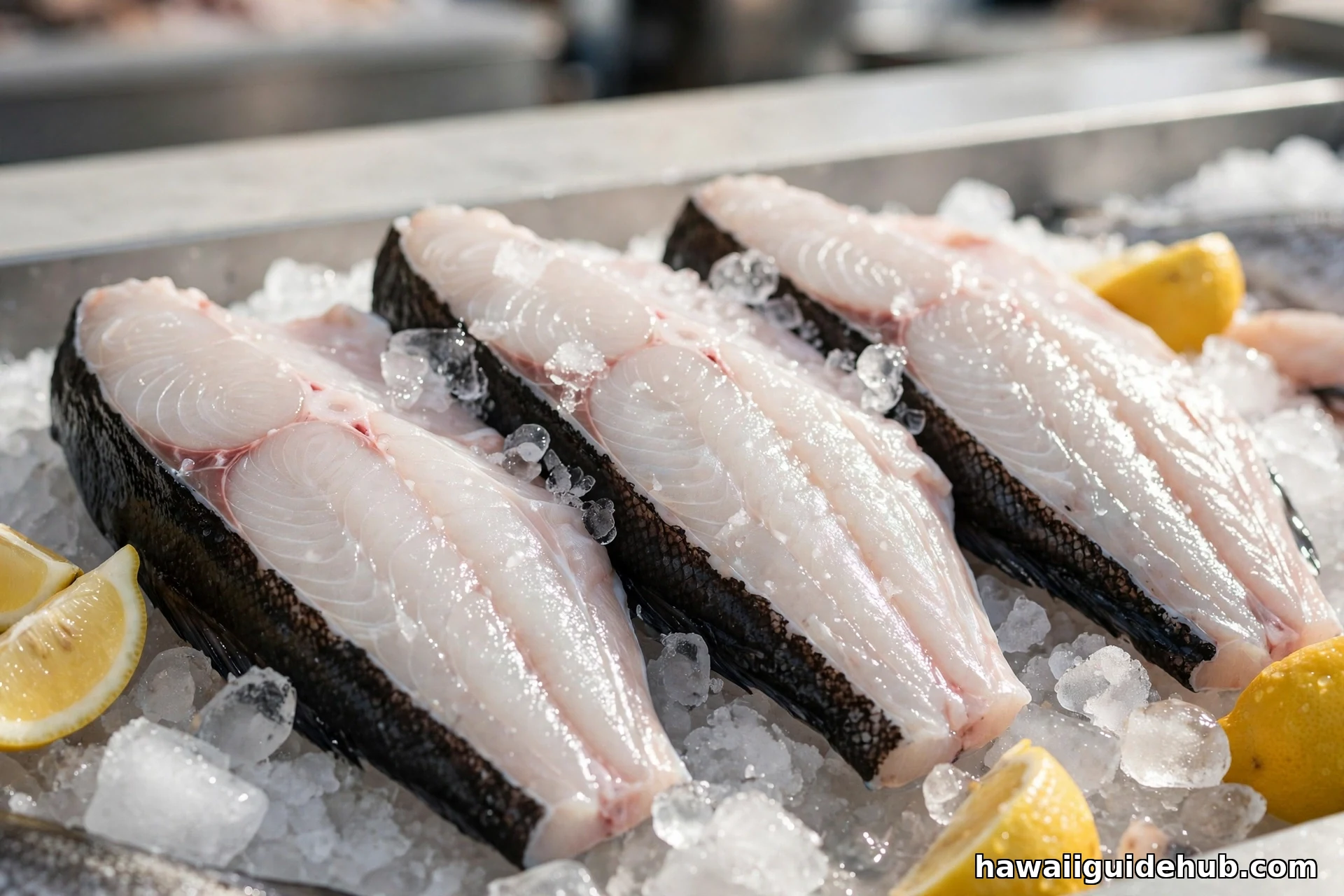
When you buy it, look for fillets that are firm and pearly white with a clean ocean smell. The skin is dark, nearly black, which is why the “black cod” name stuck. Fresh sablefish should look moist and glossy, never dull or dried at the edges.
What Butterfish Tastes Like
Butterfish tastes the way its name promises. The flesh is mild and faintly sweet, with none of the strong “fishy” flavor that turns some people away from seafood. The texture is the real story: large, soft flakes that separate easily and feel almost creamy. Because the fish is so oily, each bite coats the mouth the way good olive oil does, which is why even a simple preparation with salt and lemon tastes complete.
The flavor is delicate enough that heavy sauces overwhelm it. That is why the classic preparations are simple: a miso glaze, a light shoyu-based sauce, or just salt, pepper, and a hot grill. The fish brings the richness. The cook just needs to frame it.
The Misoyaki Story: How Butterfish Became Famous
The dish most visitors associate with Hawaiian butterfish is misoyaki: fillets marinated in a sweet-savory blend of white miso, sake, mirin, and sugar, then broiled until the marinade caramelizes into a golden crust. The preparation has deep roots. It is a Hawaii local take on gindara saikyo-yaki, a traditional Japanese method of grilling sablefish marinated in sweet Kyoto-style miso.
The dish went global through chef Nobu Matsuhisa, who first served miso-marinated black cod in the late 1980s at Matsuhisa, his original restaurant in Southern California. When the recipe appeared in Nobu: The Cookbook in 2001, home cooks adopted it and restaurant chefs put their own versions on menus everywhere. In Hawaii, where Japanese culinary influence runs deep, misoyaki butterfish became a fixture: the kind of dish that appears on nice restaurant menus, at wedding buffets, and in the prepared-foods case at local markets.
What makes the marinade work is time. The fish typically sits in the miso mixture for at least 24 hours, and many chefs prefer two to three days. The miso seasons the flesh all the way through while the sugar in the marinade sets up the caramelized crust under the broiler. The result eats like two dishes at once: sweet and savory on the outside, pure buttery fish within.
How to Cook Butterfish: The Classic Misoyaki Method
This is the canonical home preparation, adapted from the Nobu-style method. It serves four.
Misoyaki Butterfish Ingredients
| Ingredient | Amount |
|---|---|
| Butterfish (black cod) fillets, skin on | 4 pieces, about 6 ounces each |
| White or yellow miso paste | 1 cup |
| Sugar | 1 cup |
| Sake | 1/2 cup |
| Mirin | 1/2 cup |
Method
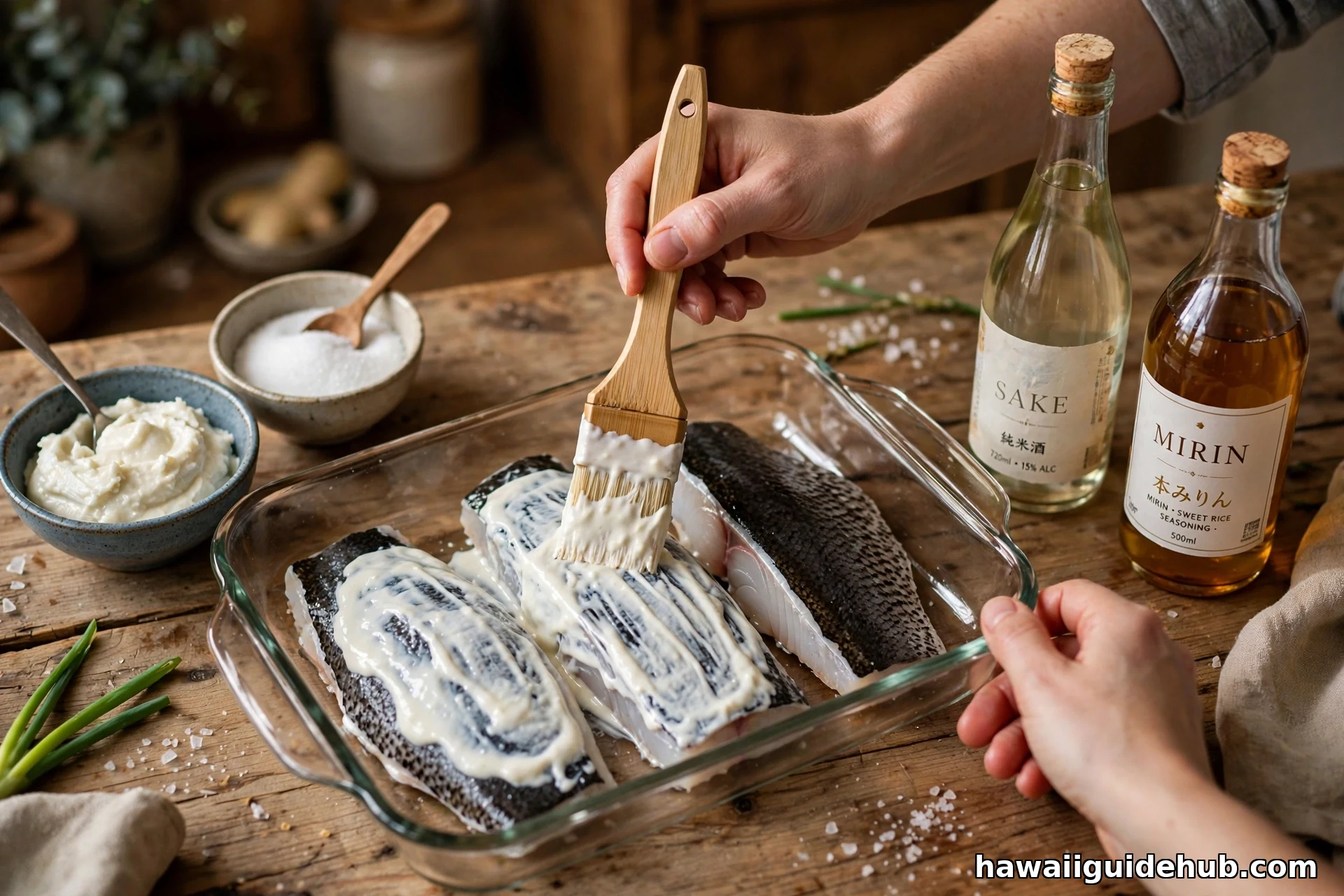
1. Make the marinade. Combine the sake and mirin in a small saucepan and bring just to a boil to cook off the harshest alcohol edge. Reduce the heat, whisk in the miso and sugar until smooth, and simmer gently until the mixture turns a light caramel color. Let it cool completely.
2. Marinate the fish. Coat the fillets thickly on all sides and refrigerate for at least 24 hours. Two to three days gives a deeper flavor. Seal them in a zip-top bag with the air pressed out so the marinade stays in contact with the fish.
3. Wipe, do not rinse. Before cooking, wipe off the excess marinade with your fingers or a paper towel. This step matters: the sugar in the marinade burns easily, and a thick coating will char before the fish cooks through.
4. Broil gently. Place the fillets skin-side down on a foil-lined sheet and broil 10 to 12 minutes, until the top is golden and the flesh flakes easily with a fork. Watch it in the final minutes because the sugars go from caramelized to burnt quickly.
5. Serve simply. Steamed rice and something green, like bok choy or spinach with a drop of sesame oil, is all it needs. The fish is the whole event.
Other Ways to Cook Butterfish
Misoyaki gets the glory, but sablefish takes well to almost any high-heat method. A simple salt, pepper, and olive oil treatment under the broiler lets the natural richness carry the dish. It grills beautifully, skin-side down first so the skin crisps. It roasts well at high heat, and its fat content makes it a candidate for slow confit in olive oil, a technique that turns the texture almost custardy.
Smoked sablefish is another local favorite, showing up in dips and spreads. And because the flesh is so forgiving, it is an excellent fish for cooks who worry about timing. A minute or two past ideal still eats well, which is more than can be said for most white fish.
A Note on the Name: Butterfish Versus Escolar
One honest complication: the word “butterfish” has been used for more than one fish. Outside Hawaii, a different species called escolar has sometimes been sold under names including butterfish. Escolar contains high levels of indigestible wax esters that can cause unpleasant digestive effects in some people, and Japan has restricted it for decades. This is a labeling problem elsewhere, not a Hawaii problem. The butterfish served in Hawaii restaurants and sold in Hawaii fish markets is sablefish, black cod, the fish described in this guide. When in doubt anywhere, ask the fishmonger for the species name. Sablefish (Anoplopoma fimbria) is the one you want.
Sustainability and Buying
Sablefish is a well-managed fishery. The Monterey Bay Aquarium Seafood Watch program rates wild-caught sablefish from Alaska and British Columbia as a “Best Choice,” citing healthy stocks and fishing methods, pots and longlines, that limit bycatch. Fish from California, Oregon, and Washington earns a “Good Alternative” rating. In practice, most sablefish sold in the United States comes from Alaska, so the fish you buy is usually the sustainable choice. Buying it supports one of the better-managed fisheries in the Pacific.
At the market, sablefish is priced like the premium fish it is, often comparable to halibut or wild salmon. Because it is so rich, a little goes a long way. A six-ounce fillet eats like a much larger piece of leaner fish, so plan portions accordingly.
Where Visitors Encounter Butterfish in Hawaii
Misoyaki butterfish appears on menus across the islands, most often at Japanese restaurants and at Hawaii regional cuisine spots where it sits comfortably next to poke and macadamia-crusted mahi. You will find it as an entree at sit-down restaurants, as a bento-box centerpiece, and in the prepared foods section of local grocery stores, where a small slab of misoyaki butterfish with rice makes an excellent takeout lunch. Foodland, Hawaii’s hometown grocery chain, even publishes its own misoyaki butterfish recipe, which tells you how deeply the dish has settled into local food culture.
If you want to taste it at its best, order it where Japanese cooking is the specialty rather than an afterthought. The marinade balance, sweet against savory, and the broiling, caramelized but not burnt, are the whole dish, and experienced hands show.
Butterfish also plays well with the rest of the local table. A rich fillet alongside lighter island fare makes a balanced plate, so consider rounding out the meal the way locals do. Start with something from our guide to Hawaiian fruits for a bright contrast, and save room for malasadas, Hawaii’s Portuguese doughnuts, if dessert is on the agenda.
For a broader taste of the islands on a plate, our guide to must-try local dishes in Hawaii puts butterfish in context alongside poke, malasadas, and the rest of the local canon.
Good Substitutions
If you cannot find sablefish, the misoyaki marinade works on other rich fish. Salmon is the closest widely available substitute and takes the sweet miso glaze beautifully. Sea bass and halibut also work, though both are leaner, so watch the cooking time more carefully. What you want is a fish with enough fat to stand up to the bold marinade. Delicate thin fillets like sole or tilapia will be overwhelmed.
Watch: Misoyaki Butterfish in Action
See the dish made step by step, including the truth about what butterfish really is:
Video: “Misoyaki Butterfish” by SushiDay, walking through the recipe from the Aloha Kitchen Cookbook.
Frequently Asked Questions
What is Hawaiian butterfish?
Hawaiian butterfish is sablefish, also sold as black cod (Anoplopoma fimbria). It is a deep-water North Pacific fish prized for flesh so rich in omega-3 oils that it eats like butter. It is not a true cod despite the “black cod” name.
How do you cook butterfish?
The classic method is misoyaki: marinate fillets in a mixture of white miso, sugar, sake, and mirin for 24 hours to 3 days, wipe off the excess, and broil 10 to 12 minutes until golden. It also grills, roasts, and smokes well.
What does butterfish taste like?
Mild, faintly sweet, and exceptionally rich. The texture is silky with large soft flakes that feel almost creamy. It has none of the strong fishy flavor some seafood carries.
Is butterfish the same as black cod?
Yes. Butterfish, black cod, and sablefish are all market names for the same species, Anoplopoma fimbria. In Hawaii, “butterfish” on a menu means this fish.
Is Hawaiian butterfish sustainable?
Generally yes. Monterey Bay Aquarium Seafood Watch rates Alaska and British Columbia sablefish a “Best Choice” because stocks are healthy and the pot and longline fisheries limit bycatch. Most sablefish sold in the US comes from Alaska.
Where can I try misoyaki butterfish in Hawaii?
Japanese restaurants across the islands serve it, as do many Hawaii regional cuisine restaurants. You will also find it in bento boxes and in the prepared-foods cases of local grocery stores.
The Bottom Line
Hawaiian butterfish earns its name with every bite: sablefish so rich it needs little more than a miso glaze and a hot broiler to become memorable. Whether you order misoyaki at a restaurant in Honolulu or make it at home with a three-day marinade, you are tasting a dish where Japanese technique and Hawaii local culture meet. Buy the real fish, give the marinade its time, and wipe off the excess before it hits the heat. The rest takes care of itself.