Lawai Beach Snorkeling: A Guide to Kauaʻi’s South Shore Reef

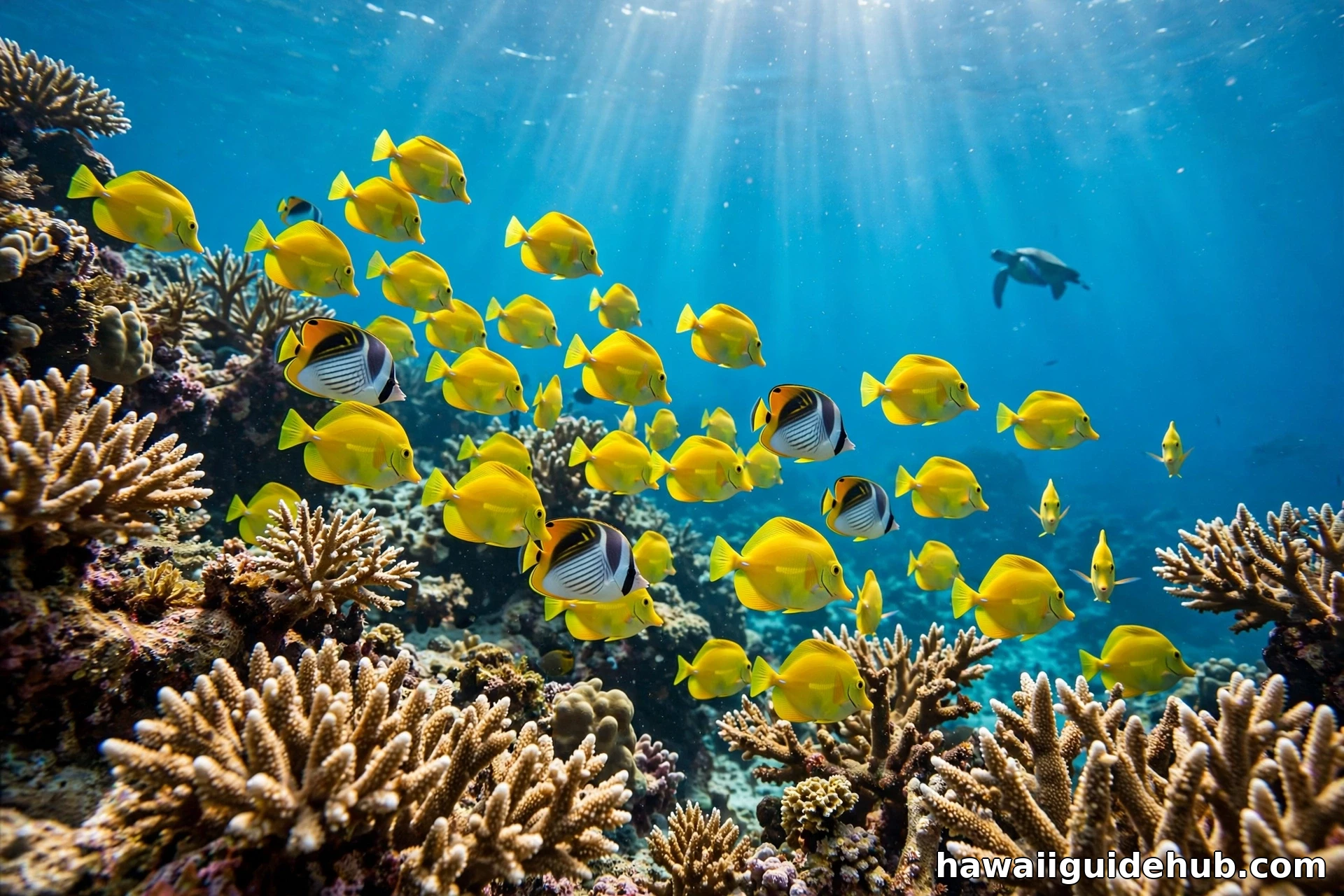
Lawai Beach sits on Kauaʻi’s sunny south shore, a small cove that most visitors drive past on their way to Poʻipū without realizing what waits underwater. The strip of sand is narrow, the parking is just a pull-off on Lawai Road, and there is no lifeguard stand or concession shack. What Lawai Beach does have is one of the most rewarding shore snorkels on Kauaʻi: a protected coral reef loaded with yellow tang, butterflyfish, and Hawaiian green sea turtles, all within an easy swim of the sand.
This guide covers everything you need for a Lawai Beach snorkeling trip: where the beach is, what the reef holds, when conditions are best, how to enter the water safely, and the honest warnings about currents that every snorkeler should read before going in.
Where Lawai Beach Is
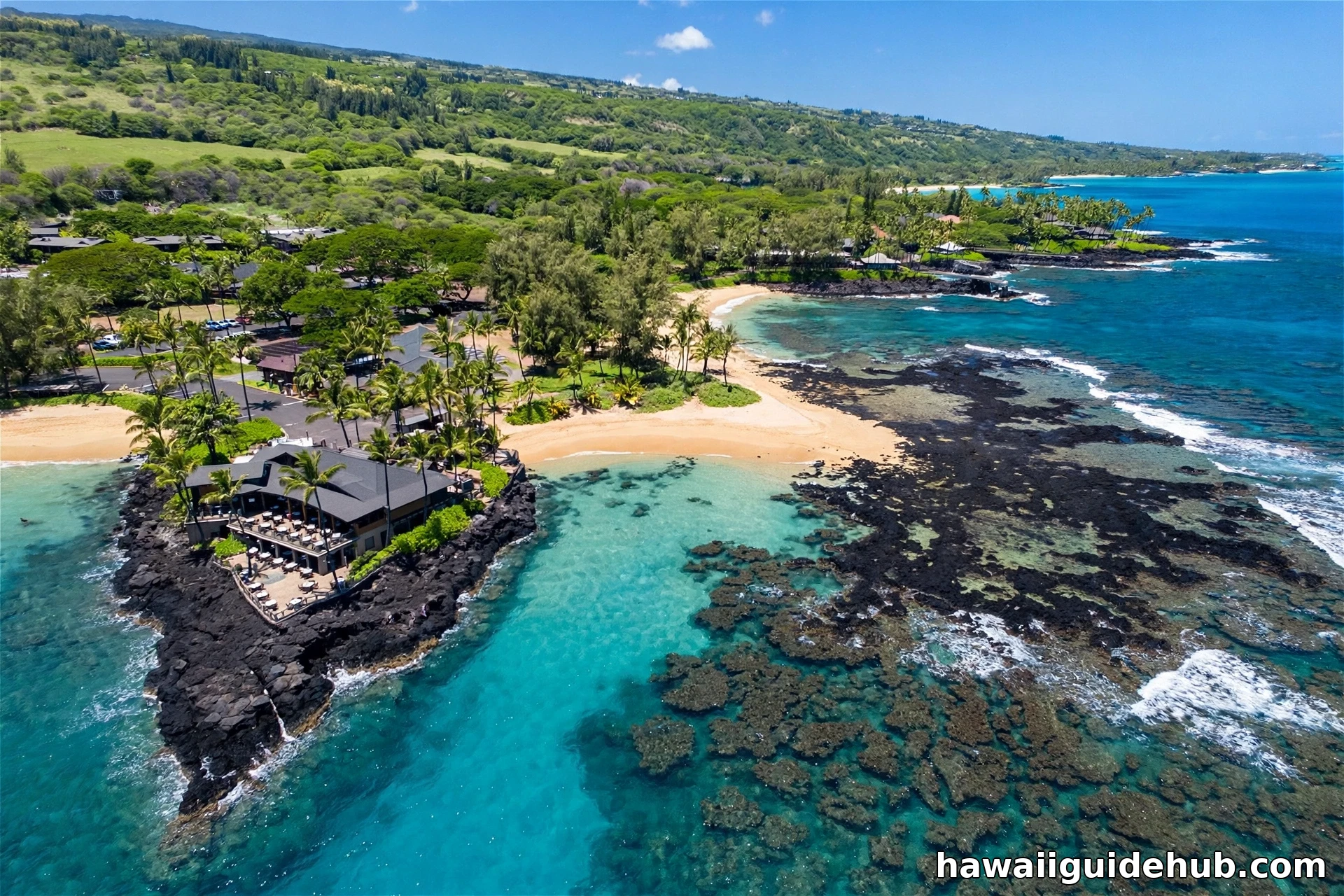
Lawai Beach is on the south shore of Kauaʻi near the resort community of Poʻipū, about a 25-minute drive from Līhuʻe. From Kōloa town, head south on Poʻipū Road (Highway 520) to the roundabout at the entrance to Poʻipū, then follow the signs for Spouting Horn onto Lawai Road. Drive about two miles and you will see the Beach House Restaurant on your left, perched on a low lava rock point. Lawai Beach is the small cove just past the restaurant, in front of the Lawai Beach Resort across the street.
The beach is sometimes called Beach House Beach after the restaurant, and you may also see it linked with Prince Kūhiō Park, the small park across Lawai Road that marks the birthplace of Prince Jonah Kūhiō Kalanianaʻole. Do not confuse Lawai Beach with Lāwaʻi Kai, a separate and much harder to reach beach farther west near Allerton Garden. This guide is about the snorkeling cove by the Beach House, the one with easy road access.
Lawai Beach at a Glance
| Detail | What to know | Plan around it |
|---|---|---|
| Entry | Free, no reservations or permits | Just show up; nothing to book |
| Parking | Free roadside on Lawai Road plus a small lot | The small lot fills first; roadside is the overflow |
| Facilities | Restrooms and showers across Lawai Road | Rinse off after your snorkel; the showers are across the street |
| Lifeguard | No lifeguard on duty | For confident swimmers; beginners should pick a guarded beach |
| Known for | Shore snorkeling, sea turtles, sunset views | Snorkeling, turtles, and sunset in one small beach |
| Best for | Confident snorkelers, turtle spotting, sunset | Time it for late afternoon: turtles first, sunset after |
| Location | South shore Kauaʻi, on Lawai Road near Poʻipū | Easy to pair with a Poʻipū beach day |
Why Snorkel at Lawai Beach
Lawai Beach earns its reputation the honest way: the snorkeling is genuinely good, not just good for a small beach. A fringing coral reef sits just offshore, close enough that you can float over it within a minute of leaving the sand. The reef creates a semi-protected zone where the water stays calmer than the open coast, and the coral heads host a dense population of reef fish.
The lava rock point where the Beach House Restaurant sits acts as a natural breakwater for one side of the cove. The water on the sheltered side, toward the restaurant point, tends to be the calmest and clearest. This is where less experienced snorkelers should stay. The reef here slopes gently, and in about 10 to 15 feet of water you will find the best fish viewing without needing to swim far from shore.
What sets Lawai Beach apart from other Kauaʻi snorkel spots is the combination of easy access and real marine life density. You do not need a boat, a tour, or a hike. You park on Lawai Road, walk across the street, and you are floating over yellow tang within minutes. For a beach that costs nothing and asks nothing of you, that is a remarkable return.
What You Will See Underwater
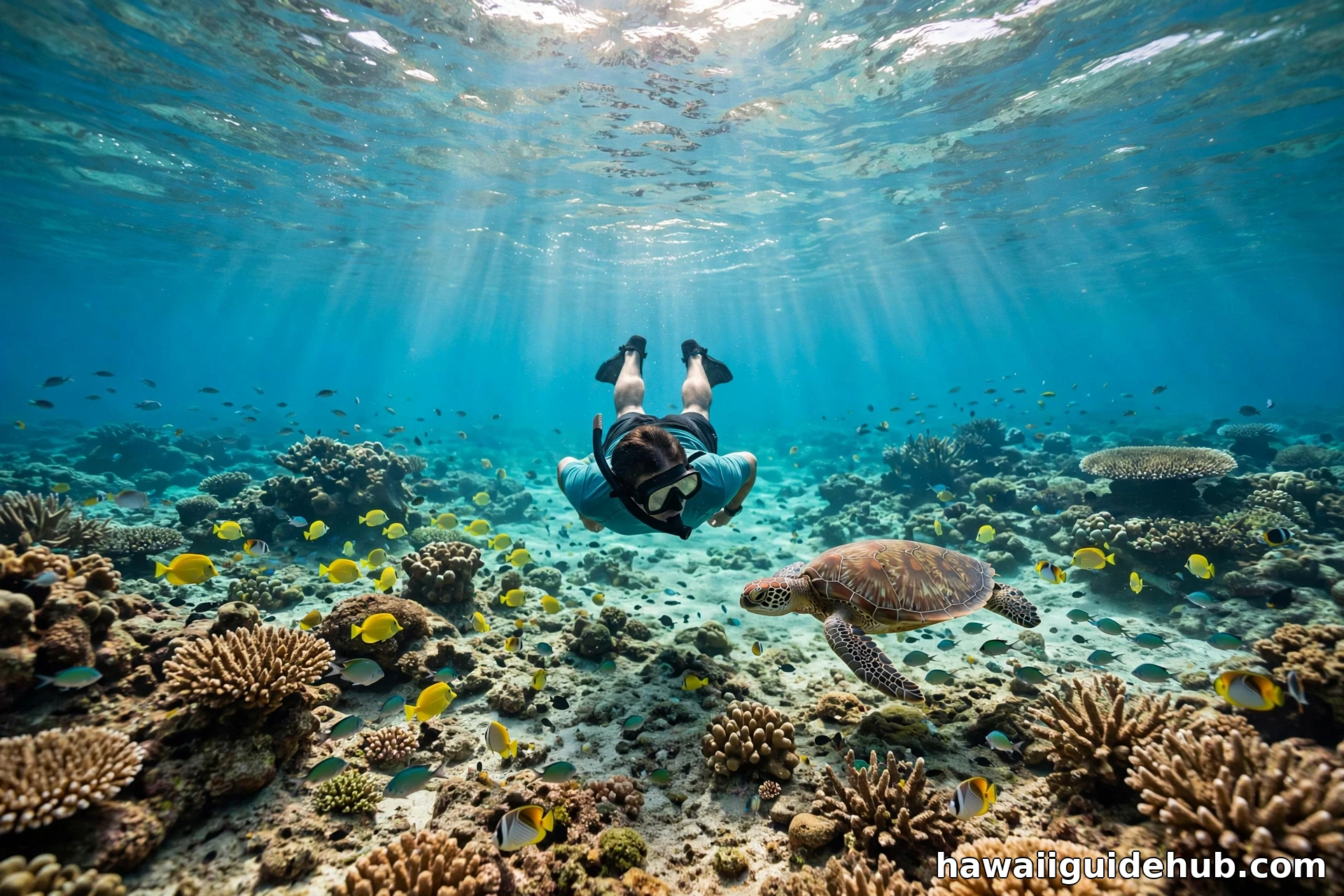
The reef at Lawai Beach supports the classic cast of Hawaiian reef fish, and in numbers that surprise first-time visitors. Large schools of yellow tang move across the coral in shimmering clouds. Convict tang, with their black vertical bars, graze alongside them. Threadfin and fourspot butterflyfish pick at the coral, and the occasional Moorish idol drifts by with its long dorsal fin trailing.
Parrotfish crunch audibly on coral heads, and you may spot the quick flash of a reef triggerfish or the bold patterns of a raccoon butterflyfish. Moray eels tuck into reef crevices if you look closely, though they keep well out of the way. The coral itself is a mix of branching and boulder formations, healthy enough to support this crowd.
The stars of the show, though, are the honu, the Hawaiian green sea turtles. Lawai Beach is one of the more reliable turtle spots on Kauaʻi’s south shore. They cruise the reef feeding on algae, and they rest on the sandy patches between coral heads. Federal and state law requires you to give sea turtles at least 10 feet of space in the water. Do not chase them, do not touch them, and never block their path to the surface. Our guide to sea turtle etiquette and conservation explains the rules every snorkeler in Hawaiʻi should know.
Snorkeling Conditions by Season
Kauaʻi’s south shore follows the opposite seasonal pattern from the north shore. When winter surf pounds Hanalei and Tunnels from October through March, the south shore around Poʻipū and Lawai is typically at its calmest. This makes Lawai Beach a genuine winter snorkeling option, which is unusual in Hawaiʻi and one of the beach’s biggest advantages.
Summer brings the reverse: south swells generated by southern hemisphere storms can reach Kauaʻi’s south shore from roughly May through September. On big south swell days, waves break over the reef at Lawai Beach and the water turns rough and murky. The rocky entry becomes hazardous, and snorkeling is not advisable. Always check the surf forecast before driving over.
| Season | Ocean conditions | Snorkeling | How to plan it |
|---|---|---|---|
| Winter (Nov-Mar) | Usually calm on the south shore | Best season, clearest water | Book it; this is the window locals wait for |
| Spring (Apr-May) | Transition, mostly calm | Very good, fewer crowds | Near-winter quality with fewer people around |
| Summer (Jun-Sep) | South swells possible | Check surf forecast first | Check the surf report the morning of |
| Fall (Oct) | Calming down | Good as winter sets in | A quiet shoulder-season pick |
Regardless of season, mornings are the best time to snorkel. Trade winds typically pick up by midday, chopping the surface and reducing visibility. An early start also means you get the calmest water, the clearest views, and the beach mostly to yourself.
Getting In and Out of the Water
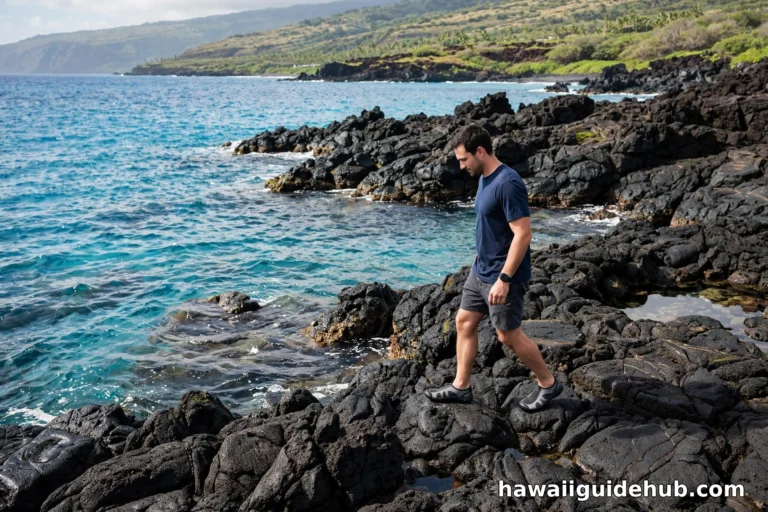
The entry at Lawai Beach is the trickiest part of the visit, and it deserves honest attention. The shoreline is a mix of sand and volcanic rock, and the rocks extend into the shallow water. At low tide there is a usable sandy entry, but at high tide the sand narrows and you will be stepping over rock. Water shoes are strongly recommended. Bare feet on this entry is a good way to cut yourself or lose your balance.
Enter slowly, watching for urchins in the rock crevices. Once past the first 20 or 30 feet, the bottom turns to sand and coral and finning becomes easy. Exit at the same spot you entered, and give yourself plenty of time. Do not try to climb out on the lava rock point by the restaurant; the surge makes it dangerous and the rocks are sharp.
Snorkelers should stay on the sheltered side of the cove, toward the Beach House point. The far side of the beach, away from the restaurant, is known for a current that pulls to the right, especially when the wind picks up or surf is up. Multiple visitors have reported being swept down the coast there. Stay left, stay close to shore, and if you feel a pull, swim across it rather than fighting it directly.
Safety: Read This Before You Swim
Lawai Beach has no lifeguard, and that fact shapes everything about how you should approach the water here. The snorkeling is excellent on calm days, but conditions can change, and there is nobody on the sand watching the water for you.
The current on the eastern side of the cove is the main hazard. On windy days or when surf is running, a lateral current can carry snorkelers and swimmers to the right, away from the beach and toward rocky shoreline where exiting the water is difficult and dangerous. If you are not a strong swimmer, wear a flotation vest, stay with a buddy, and stay in the sheltered water near the restaurant point.
General ocean rules apply with extra weight here: never snorkel alone, never turn your back on the ocean when entering or exiting, and get out immediately if the water starts feeling pushy or the visibility drops. If you want a lifeguarded alternative nearby, Poʻipū Beach Park is about two miles east and has guards, restrooms, and a more sheltered swimming area. Our complete guide to Poʻipū covers it in detail.
A note on Kaua’i storm recovery: Hurricane Lowell hit Kaua’i’s south shore in September 2026, and county beach park facilities were still being repaired through the fall. Check the current status of Po’ipū Beach Park facilities before you go.
Parking, Facilities, and What to Bring
Parking at Lawai Beach is free and simple: roadside spaces along Lawai Road across from the beach, plus a small lot nearby. It fills up by mid-morning on nice days, so arrive early if you want a close spot. There is no parking fee and no time limit to worry about.
Facilities are basic but present. Public restrooms and outdoor showers sit across Lawai Road from the beach. There are no snorkel rentals, no food stands, and no beach chairs at the beach itself, so bring everything you need. The Beach House Restaurant next door serves dinner with a famous sunset view, and there are casual food options a short drive away in Poʻipū.
Pack reef-safe sunscreen (Hawaiʻi bans oxybenzone and octinoxate statewide), water shoes for the rocky entry, your own mask and fins, a rash guard for sun protection, and drinking water. A small dry bag for your keys and phone is useful since there are no lockers. If anyone in your group is a weaker swimmer, bring a flotation vest.
Best Time of Day
Morning is the clear winner at Lawai Beach. Arrive before 9 AM and you will likely find calm water, the best visibility of the day, easy parking, and a nearly empty beach. The reef fish are active, the turtles are out feeding, and the light penetrating the shallow water is at its best for spotting color.
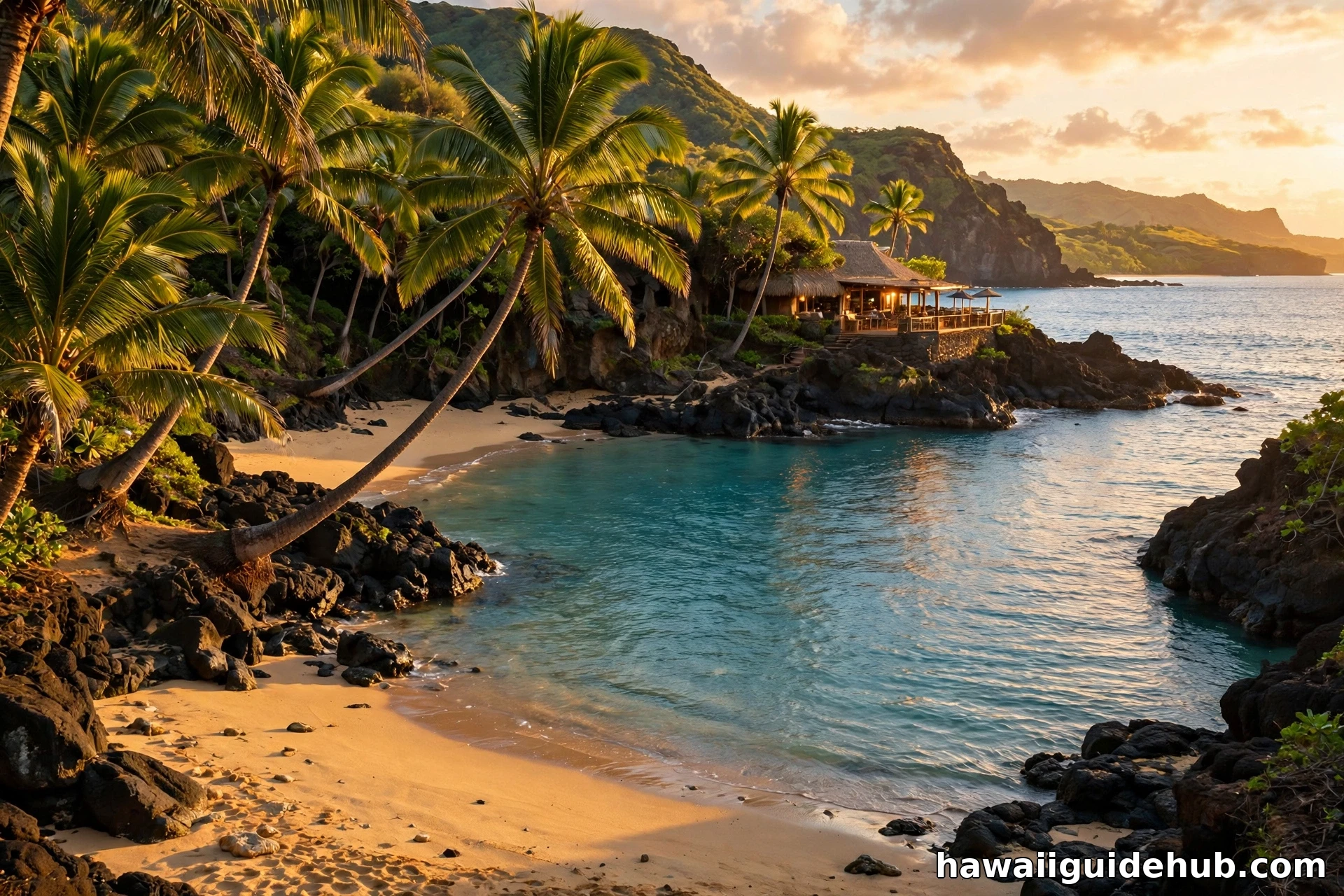
By afternoon, the trade winds often ripple the surface and stir up the shallows. Snorkeling is still possible, but the experience is not as good. Late afternoon brings a different reward: Lawai Beach faces west, and the sunset over the water is genuinely beautiful. Many visitors plan a morning snorkel, leave for lunch and sightseeing, then return to the grassy area by the Beach House for sunset.
What to Do Nearby
Lawai Beach makes an easy half-day anchor for exploring Kauaʻi’s south shore. Spouting Horn, the natural blowhole where waves shoot seawater skyward, is about a mile west on Lawai Road and worth the short drive. The National Tropical Botanical Garden’s Allerton and McBryde Gardens sit in Lāwaʻi Valley nearby; the Allerton Garden requires a guided tour booked in advance.
Poʻipū Beach Park, with its lifeguarded swimming areas and broader sand, is about two miles east and pairs naturally with Lawai Beach if your group has mixed swimming abilities. See our roundup of the best Kauaʻi beaches for swimming and relaxation for more options. Old Kōloa Town, with its shops and restaurants, is a few minutes north, and the broader guide to things to do on Kauaʻi covers the island’s highlights.
See Lawai Beach Snorkeling on Video
Watch GoPro footage of Kauai snorkeling, including the Poʻipū area reefs, to see the kind of marine life waiting at Lawai Beach.
Lawai Beach Snorkeling FAQs
Is Lawai Beach good for snorkeling?
Yes. Lawai Beach is one of the best shore snorkeling spots on Kauaʻi’s south shore, with a protected coral reef, abundant reef fish, and frequent Hawaiian green sea turtle sightings, all accessible directly from the beach.
Are there lifeguards at Lawai Beach?
No. Lawai Beach has no lifeguard on duty. Snorkel with a buddy, stay in the sheltered part of the cove, and consider nearby Poʻipū Beach Park if you want a lifeguarded beach.
Is there a current at Lawai Beach?
Yes, a lateral current can run to the right side of the cove, especially on windy days or when surf is up. Stay on the sheltered side near the Beach House Restaurant point and avoid the far eastern side of the beach.
Where do you park for Lawai Beach?
Park for free along Lawai Road across from the beach or in the small nearby lot. Spaces fill by mid-morning on good weather days, so arrive early.
Is Lawai Beach free?
Yes. There is no entry fee, no parking fee, and no reservation or permit required. The beach is open to the public.
Can beginners snorkel at Lawai Beach?
Confident beginners can snorkel the sheltered side near the restaurant point on calm mornings, ideally with a flotation vest and an experienced buddy. The rocky entry and lack of a lifeguard make it less ideal for nervous first-timers than lifeguarded Poʻipū Beach Park. Learn more about Hawaiʻi’s marine species before you go.
Lawai Beach is the kind of place that rewards travelers who look past the famous names. It will never have the crowds of Poʻipū or the fame of the north shore, but for a quiet morning float over a living reef with turtles for company, few beaches on Kauaʻi give you this much for nothing more than the drive over.