Lava Rock in Hawaii: Pahoehoe, Aa, Pele’s Curse and Where to See It

You can walk across it, trip over it, and cut your hands on it, but you cannot really avoid it. Lava rock is the ground beneath your feet almost everywhere in Hawaii. It forms the black sand beaches, the jagged coastlines, the sea cliffs, the hiking trails, and the very islands themselves. Every Hawaiian island is a pile of cooled lava, stacked flow upon flow over millions of years, and the newest rock on the planet is still being born on the Big Island today.
Visitors tend to notice lava rock in two ways. First as scenery: the ropy black rivers of stone frozen mid-flow, the jumble of sharp blocks, the smooth tubes you can walk through. Then as a question: what am I looking at, can I take a piece home, and what is this curse everyone keeps mentioning? This guide answers all of it, from the two great lava types the ancient Hawaiians named to the legend of Pele’s curse, the law on taking rocks, and the best places to see lava rock in Hawaii.
What Lava Rock Actually Is
Strip away the romance and lava rock is basalt, the dark volcanic rock that makes up the ocean floor and most of the Hawaiian Islands. Hawaii sits over a hotspot, a plume of hot mantle rising from deep inside the Earth. Magma from that plume is unusually fluid, low in silica, which is why Hawaiian eruptions tend to produce flowing rivers of lava rather than explosive blasts. When that molten rock reaches the surface it is called lava. When it cools and hardens, it becomes the black rock under your sandals.
The USGS describes olivine basalt as by far the most abundant Hawaiian lava: dense, dark rock rich in iron and magnesium. Fresh lava erupts at around 2,000 degrees Fahrenheit. How it cools, how fast it moves, and how steep the ground is decide what the finished rock looks like, and that is where the two famous Hawaiian lava types come in.
Pahoehoe: The Smooth, Ropy Lava
Pahoehoe (pronounced pah-hoy-hoy) is the smooth one. Its surface cools into wrinkles, folds, and coils that look like rope or braided hair. Walk across a pahoehoe field and the ground billows gently under your feet like a frozen black sea, sometimes bulging into low domes or cracking open to reveal hollow lava tubes beneath.
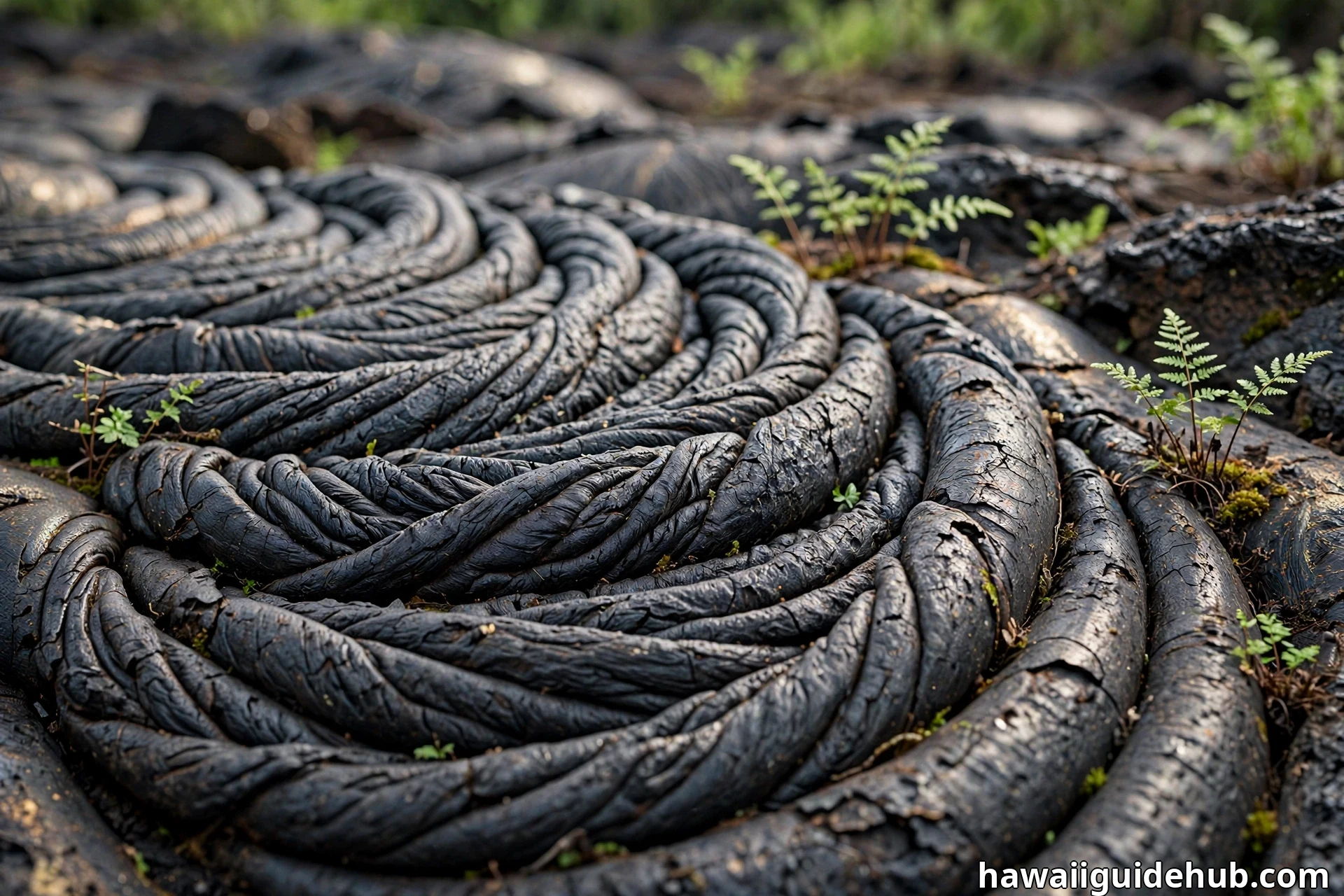
Pahoehoe forms when lava is hot, fluid, and moving at a moderate pace. A thin skin hardens on the surface while molten rock keeps flowing underneath, wrinkling the skin as the flow pushes forward. Nearly all Hawaiian basaltic lava erupts as pahoehoe, according to USGS research.
Pahoehoe is the friendlier of the two lava types underfoot. Its surface is relatively smooth, and old flows make for fascinating walking, like the ropey expanses along Chain of Craters Road. But “smooth” is relative. Even pahoehoe has sharp edges, hidden cracks, and thin crusts over hollow tubes, so sturdy shoes and attention to the ground are still required.
Aa: The Rough, Rubbly Lava
ʻAʻā (pronounced ah-ah) is the other one, and it is exactly as fun to walk on as it sounds. Its surface is a jagged jumble of sharp, clinkery blocks, from gravel size to chunks as big as cars. An old Hawaiian joke says ʻaʻā is named for the sound you make walking on it barefoot. This rock will shred shoes and slice skin.
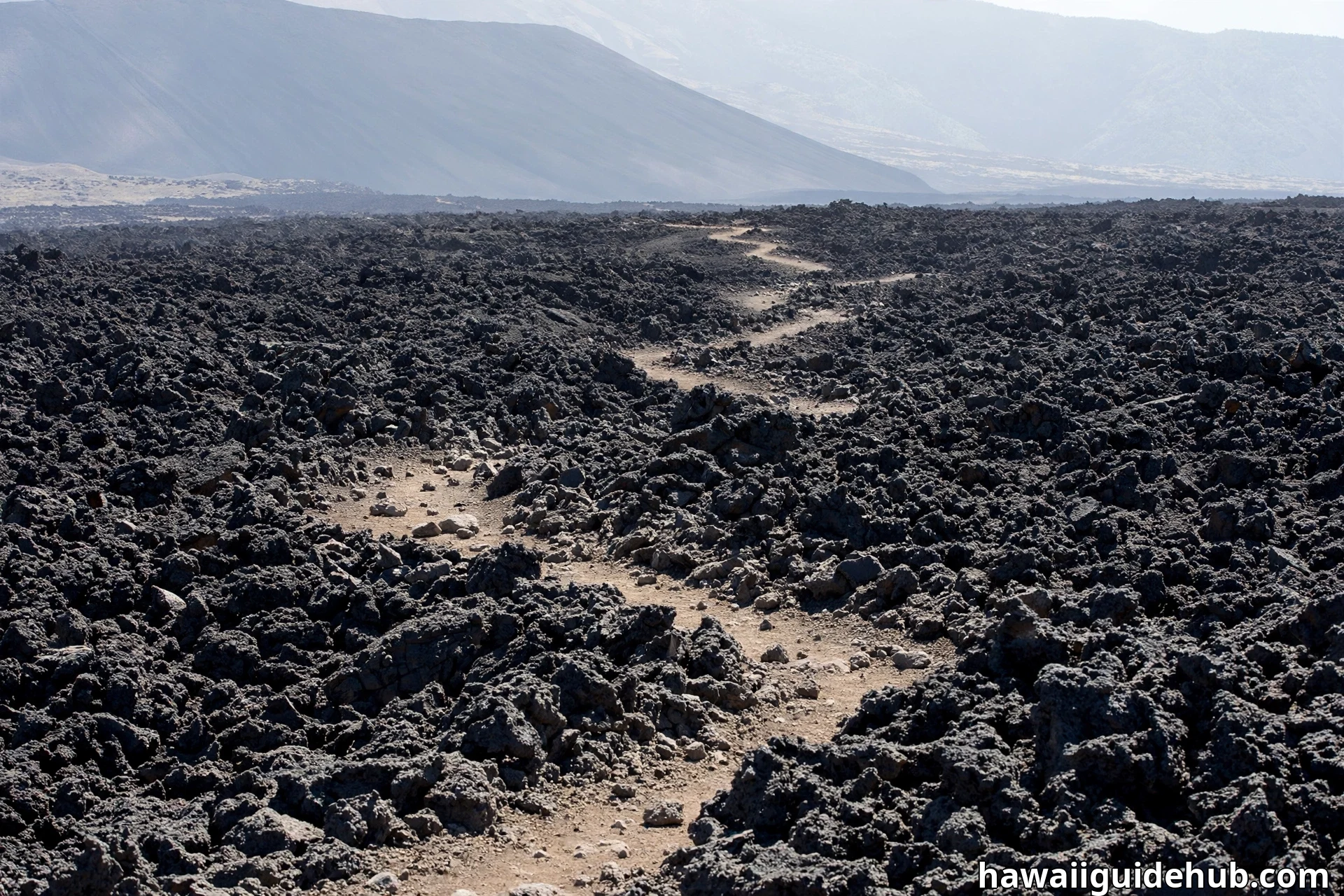
ʻAʻā forms when lava is thicker, cooler, or moving in a way that tears its own cooling crust apart. The USGS describes how a flow advances like a tractor tread, with a jumbled mass steepening at the front until chunks tumble forward. Under the skin the lava is still red hot, bulldozing everything in its path in slow motion. You can usually outwalk an ʻaʻā flow, which is small comfort when you are staring at a wall of it.
Geologists borrowed both words from Hawaiian because English had no equivalents. The ancient Hawaiians distinguished the two lava types long before volcanology existed as a science, and the terms are now used worldwide. Two of the most basic words in volcano science come from the Hawaiian language, a reminder that the people who lived with these volcanoes understood them intimately.
How One Lava Flow Turns Into the Other
Here is the part that surprises most visitors. Pahoehoe and ʻaʻā are not two different kinds of lava. They are two moods of the same lava. A single flow can start as smooth pahoehoe near the vent and turn into jagged ʻaʻā farther downhill, or even switch back and forth.
USGS research on Kilauea found that the switch depends on a tug of war between viscosity and movement. If the lava slows and cools before critical conditions are reached, it stays pahoehoe. But if the flow keeps moving after it has become thick and sticky, the crust tears and grinds into ʻaʻā. Slope, flow rate, gas content, and cooling all play a part.
Pele’s Hair, Pele’s Tears and Pillow Lava
Beyond the big two, Hawaiian eruptions produce stranger forms. Pele’s hair is long, thin strands of volcanic glass, sometimes six feet long, formed when wind stretches molten lava into filaments that cool instantly. It gathers in glittering drifts around vents. Beautiful and genuinely hazardous: the fibers are glass, sharp enough to irritate skin, eyes, and lungs, so admire it without handling it.
Pele’s tears are the droplets to Pele’s hair’s strands: blobs of lava that surface tension pulls into shiny black teardrops, cooling into glass mid-flight. You will find them scattered like dark beads near old fountain sites. Pillow lava forms when lava erupts underwater, chilling instantly into rounded bulging pillows. Ancient pillow basalts are exposed in sea cliffs on the older islands, some of the oldest rocks in Hawaii.
Where to See Lava Rock in Hawaii
You do not have to look hard, but some places show off lava rock far better than others.
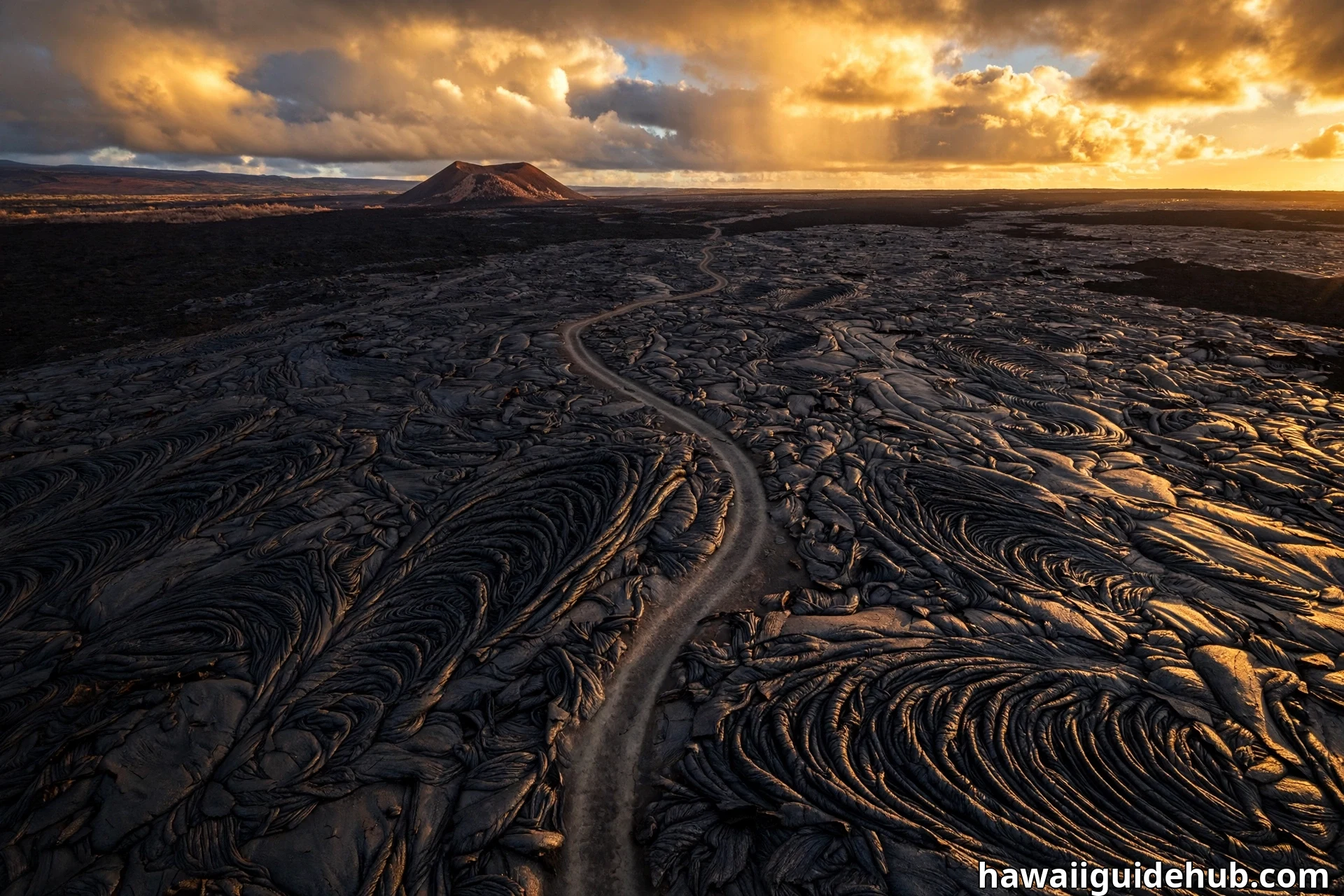
Hawai’i Volcanoes National Park is the obvious and correct answer. On the Big Island, the park contains the full greatest-hits collection: ropey pahoehoe fields, tortured ʻaʻā flows, lava tubes, craters, and cinder cones. Chain of Craters Road descends from the summit to the sea across layer upon layer of young lava, and the overlooks along the way read like a timeline of eruptions. The park’s Kilauea Iki Overlook and the trails around it cross a crater floor of solidified lava from the 1959 eruption. For help planning a visit, see our guide to Hawaii Volcanoes National Park and our list of the best things to do on the Big Island.
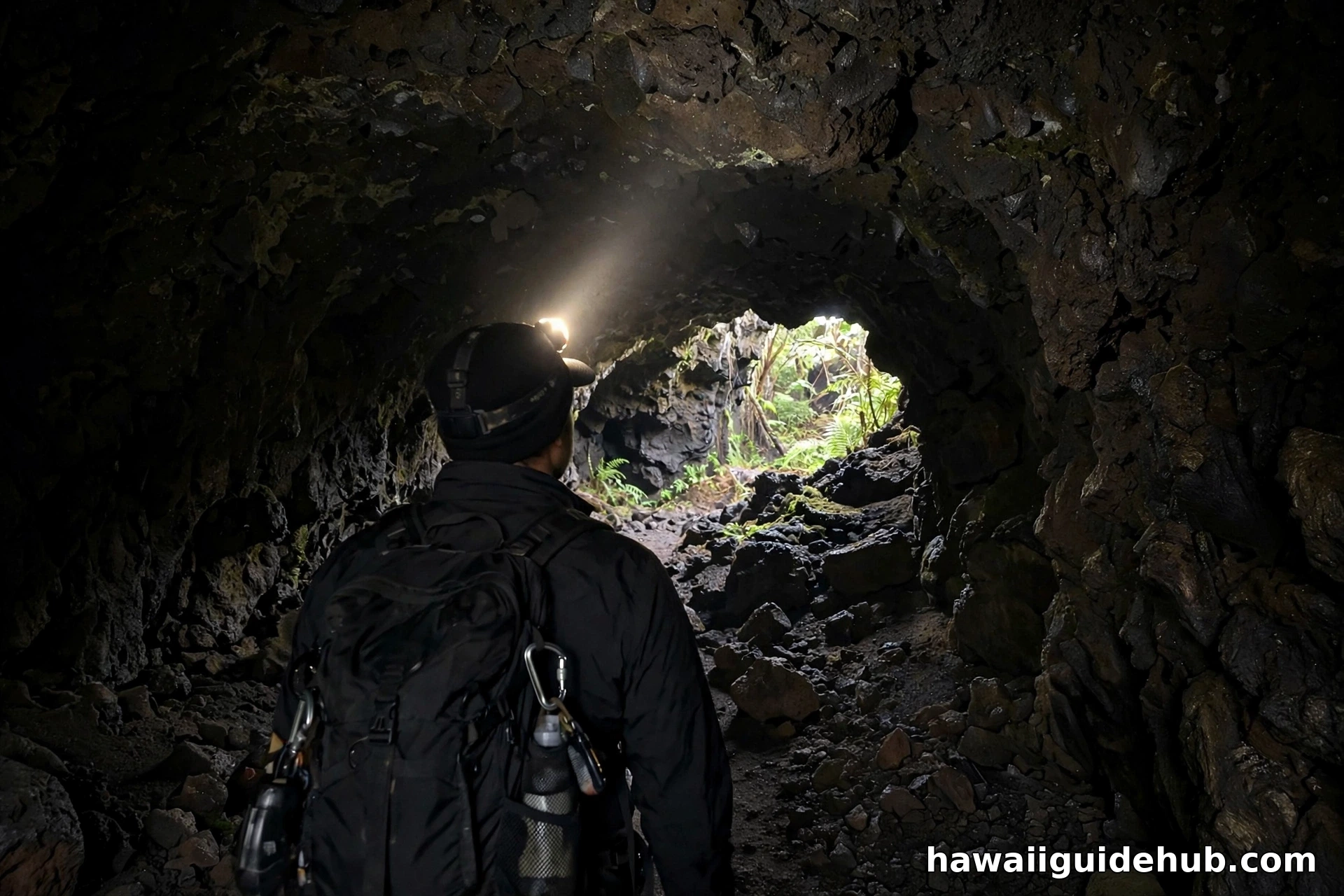
Thurston Lava Tube (Nahuku) sits inside the national park and is the easiest lava tube most visitors will ever walk through. A short trail through native rainforest leads to a cave mouth, and inside, the tube’s walls curve like the inside of a pipe because that is literally what it was: a conduit where the outer lava hardened while the molten center drained away. The tube is lit, the walk is easy, and it gives you the strange sensation of standing inside a volcano’s plumbing.
Kalapana and the 2018 flows. On the Puna coast, the 2018 Kilauea eruption buried entire neighborhoods under tens of feet of lava and added hundreds of acres of brand new land to the island. Parts of the flow field are accessible, and standing on rock that did not exist a few years ago is one of the most humbling experiences in Hawaii. Check current access before going, since conditions and closures change.
Mauna Ulu and the Pu’u Huluhulu trail. This cinder cone and its surrounding flows from the 1969 to 1974 eruption offer a walk across some of the most varied young lava terrain anywhere, with pahoehoe, ʻaʻā, tree molds, and lava channels all within a short hike. Tree molds deserve a special mention: when lava flowed through a forest, it chilled around the trunks, and the trees later burned away, leaving perfect hollow molds of the trees standing in the rock.
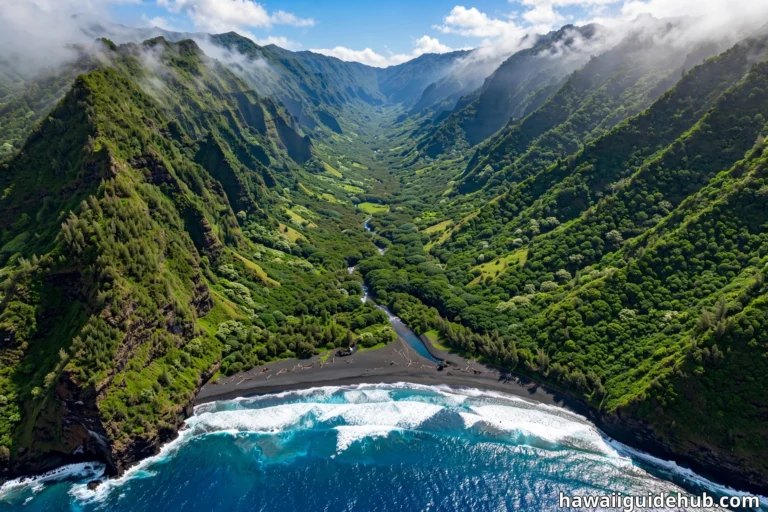
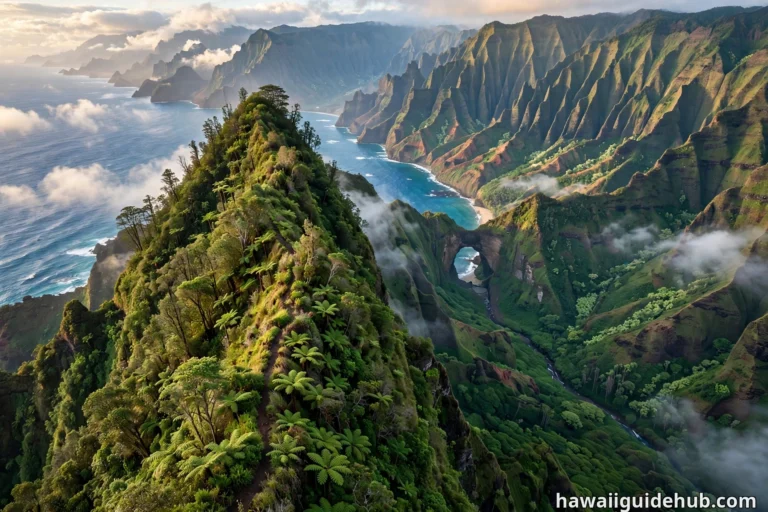
Beyond the Big Island. Every island has its lava credentials. Haleakala’s summit on Maui is a moonscape of cinder cones in rust red, black, and silver. Diamond Head on Oahu is a tuff cone of cemented volcanic ash. The Napali Coast sea cliffs are layer upon layer of ancient flows. If you are island hopping, our reasons to visit Maui and our guide to outdoor adventures in Hawaii will help you plan.
The Legend of Pele’s Curse
Now the part everyone asks about. Pele’s curse is the belief that taking lava rock, sand, or any natural object from Hawaii brings bad luck. The story goes that Pele, the goddess of fire and volcanoes, considers the rocks her children and punishes thieves with misfortune. Every year, the story continues, visitors mail rocks back to Hawaii with apology letters describing the terrible luck that followed them home.
The returned rocks are real. Rangers really do receive boxes of mailed-back lava rocks, sometimes with notes describing the bad luck senders blame on the curse. What is less certain is the legend’s age. Researchers believe the curse as tourists know it is probably a twentieth-century invention: one version credits a disgruntled park ranger tired of visitors pocketing rocks, another credits tour bus drivers tired of the dirt tracked aboard. Either way, the story caught on and is now told as if it were ancient tradition.
However the legend started, taking rocks from Hawaii is genuinely frowned upon by Native Hawaiians, for whom the land carries deep spiritual significance. The respectful move is the same whether or not you believe in curses: look, photograph, and leave everything where you found it.
Is It Illegal to Take Lava Rocks From Hawaii?
Yes, in the places that matter most. It is illegal to remove minerals, rocks, or any natural object from within a U.S. national park, and that includes Hawai’i Volcanoes National Park. Violators can face fines of up to $5,000. The state of Hawaii also prohibits removing sand, coral, and rocks from beaches and shorelines under state law. Rangers and agricultural inspectors take this seriously, and confiscations at airports do happen.
Outside protected areas the picture is murkier, but the cultural answer is unambiguous. To Native Hawaiians, lava rock is part of a living landscape with spiritual meaning, and pocketing pieces of it is considered disrespectful. The thousands of rocks mailed back every year suggest plenty of visitors come to agree.
A practical note: the lava rock jewelry, garden stone, and landscaping rock sold in Hawaii shops is quarried and sold legally through commercial suppliers. Buying a lava rock bracelet from a local artisan is completely different from prying a chunk off a flow in the national park.
Lava Rock Safety: What Visitors Get Wrong
Lava rock injures more visitors than almost any other natural feature in Hawaii, and almost all of it is avoidable.
ʻAʻā will cut you. Treat it like broken glass. Wear closed, sturdy shoes with thick soles, never sandals. A fall on ʻaʻā can mean deep cuts and a ruined hike.
Thin crusts hide hollows. Pahoehoe flows often contain tubes and voids under thin shells of rock. Stay on marked trails and never walk on crust that looks thin or sounds hollow.
New rock can be hot. Lava cools from the outside in, and flows can stay dangerously hot inside for months. Never walk on fresh flows, and heed every closure sign.
Do not move the rocks. In the national park, rangers stack rocks into cairns as trail markers across featureless lava fields. Moving them can genuinely disorient hikers in dangerous terrain. Leave every rock exactly where it is.
Ocean + lava = danger. Where lava meets the sea, cliffs are undercut, waves are unpredictable, and new land can collapse without warning. Spectacular from a safe distance, lethal up close.
See the Lava Up Close on Video
Lava Rock Hawaii: Frequently Asked Questions
What are the two types of lava rock in Hawaii?
Pahoehoe and ʻaʻā. Pahoehoe is smooth and ropy, formed from hot fluid lava. ʻAʻā is rough and rubbly, formed when thicker or more disturbed lava tears its own crust apart. Both are basalt, and one flow can change from one type to the other. The terms come from the Hawaiian language and are used by geologists worldwide.
Can you take lava rocks home from Hawaii?
Not from national parks or protected areas, where removing any natural object is illegal and can bring fines of up to $5,000. State law also protects beaches and shorelines. Beyond the law, taking lava rock is considered disrespectful in Hawaiian culture, and the Pele’s curse legend warns of bad luck. Buy legally quarried lava rock products from local shops instead.
What is Pele’s curse?
The belief that taking lava rocks, sand, or other natural objects from Hawaii brings bad luck, because Pele, the goddess of fire and volcanoes, considers them her children. Park rangers really do receive mailed-back rocks with apology letters every year. Researchers believe the legend itself is probably a twentieth-century invention, but the cultural disapproval of taking rocks is genuine.
Where is the best place to see lava rock in Hawaii?
Hawai’i Volcanoes National Park on the Big Island: Chain of Craters Road, the Thurston Lava Tube, and the Kilauea Iki trail cross spectacular young lava fields. The 2018 flows near Kalapana show rock younger than most visitors. Haleakala on Maui and Kauai’s Napali Coast show older lava landscapes.
Is pahoehoe or aa sharper?
ʻAʻā is far sharper: a jumble of jagged blocks that will cut skin and shred shoes. Pahoehoe is smoother but still has sharp edges and thin crusts over hollow tubes, so sturdy footwear is needed on both.
What is Pele’s hair?
Long, thin strands of volcanic glass formed when wind stretches molten lava into filaments that cool instantly. The fibers can reach several feet long and gather in drifts near vents. They are beautiful and hazardous: the strands are glass, sharp enough to irritate skin, eyes, and lungs, so look but do not touch.
Lava rock is the reason Hawaii exists at all. Every beach, cliff, valley, and mountain in the islands began as molten rock that cooled into the black stone you can still walk across today. Understanding pahoehoe and ʻaʻā, knowing the story behind Pele’s curse, and respecting the law and culture around these rocks turns a casual stop into something richer: a direct encounter with the youngest land on Earth. Walk the flows, peer into the tubes, take all the photographs you want, and leave every rock exactly where Pele put it.