Farm to Table Hawaii: The Movement, Best Restaurants and Markets by Island

Hawaii did not invent farm-to-table dining, but the islands may have perfected the reason for it. When your state sits 2,500 miles from the nearest continent, every tomato flown in from the mainland arrives tired, expensive, and a little sad. The chefs who changed Hawaiian cooking in the 1990s understood this before farm-to-table was a slogan. They looked at what grew around them, taro and ulu and just-caught ahi, and built a cuisine on it. This guide explains the farm-to-table movement in Hawaii, the ingredients that define it, where to taste it on each island, and how to eat well and locally on your visit.
What Farm-to-Table Means in Hawaii
In most places, farm-to-table is a restaurant trend. In Hawaii, it is closer to a survival strategy turned philosophy. Roughly 85 to 90 percent of the food eaten in Hawaii is imported, which makes locally grown food precious, and the chefs who champion it something like local heroes.
The movement has a clear starting point. In August 1991, twelve Hawaii chefs, including Sam Choy, Roy Yamaguchi, Alan Wong, Peter Merriman, Beverly Gannon, and Jean-Marie Josselin, announced the creation of Hawai‘i Regional Cuisine. Their complaint was simple: island restaurants were serving continental hotel food made from shipped-in ingredients, copying mainland recipes that had little to do with Hawaii. Their answer was to link ranchers, fishermen, and farmers directly with kitchens, and to cook the islands’ multicultural food traditions with the best local products available. The group published The New Cuisine of Hawaii in 1994, and the idea spread from fine dining into everyday island eating. The movement reshaped how the islands cook, and its influence shows in the must-try local dishes in Hawaii you will find on menus today.
Peter Merriman, one of the twelve, became the movement’s most visible farmer-chef. His restaurants built menus around what nearby farms and boats delivered that day, with roughly 90 percent of ingredients sourced in Hawaii. That number became a kind of benchmark other island chefs aimed for.
Why Hawaii Grows Food Worth Traveling For
Hawaii’s growing season never really ends. While mainland farms go dormant in winter, island farms harvest twelve months a year, which means a restaurant’s menu can follow the actual seasons of the place instead of a distributor’s catalog.
The volcanic soil helps too. Rich, mineral-dense earth grows produce with concentrated flavor, from sweet Kula onions on Maui to the famous Kona coffee grown on the slopes of Hualalai. And the surrounding ocean is one of the world’s great fisheries, delivering ahi, opah, mahi-mahi, and opakapaka to Honolulu’s fish auction and island docks daily.
There is also the cultural layer. Hawaii’s food is a blend of Native Hawaiian, Japanese, Chinese, Filipino, Portuguese, Korean, and Southeast Asian traditions, all of them adapted to local ingredients over generations. Farm-to-table here does not mean one cuisine. It means all of them, cooked with what the islands provide.
The Ingredients That Define the Table
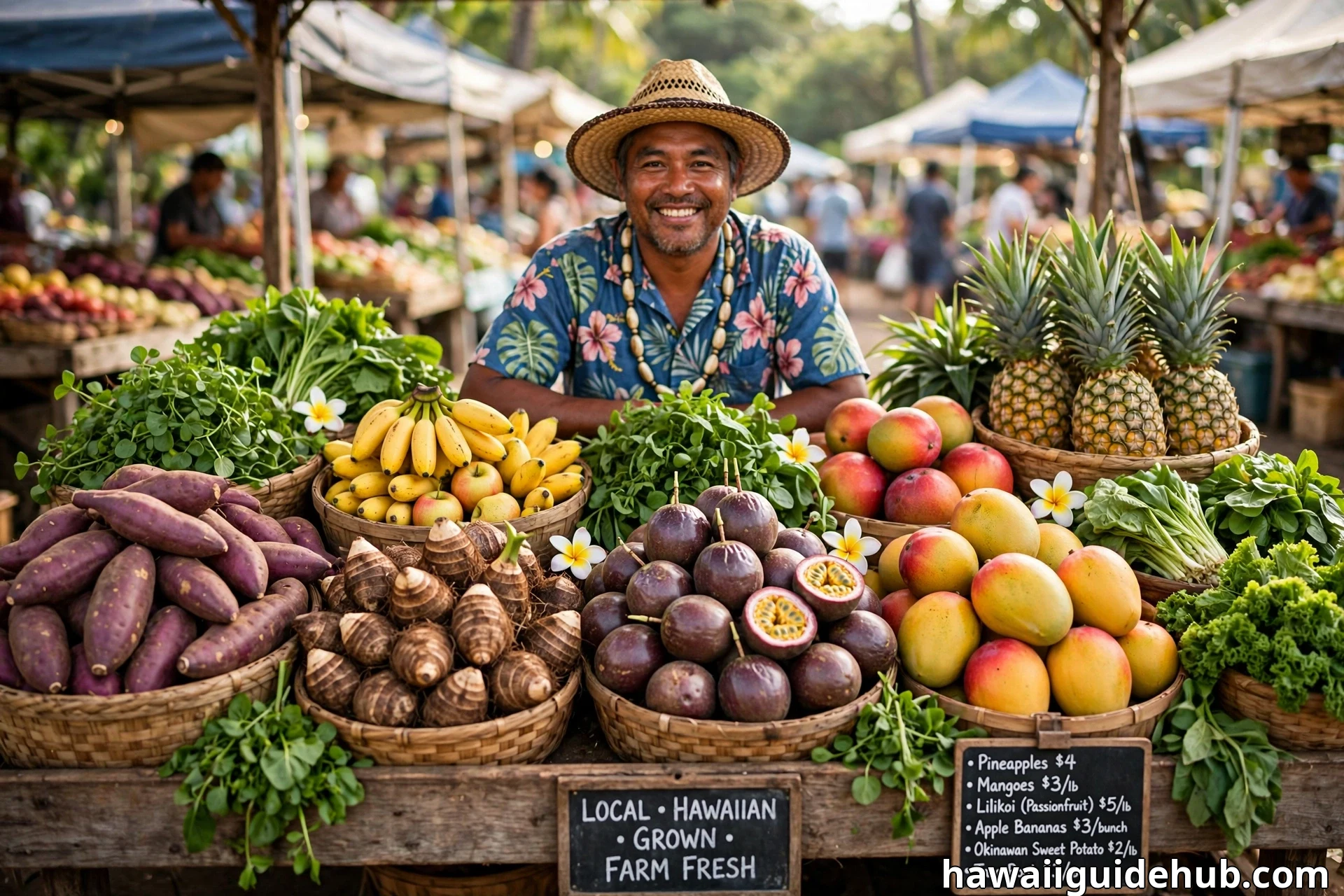
A few staples show up again and again on farm-to-table menus across the islands. Knowing them makes every menu easier to read.
Kalo (Taro)
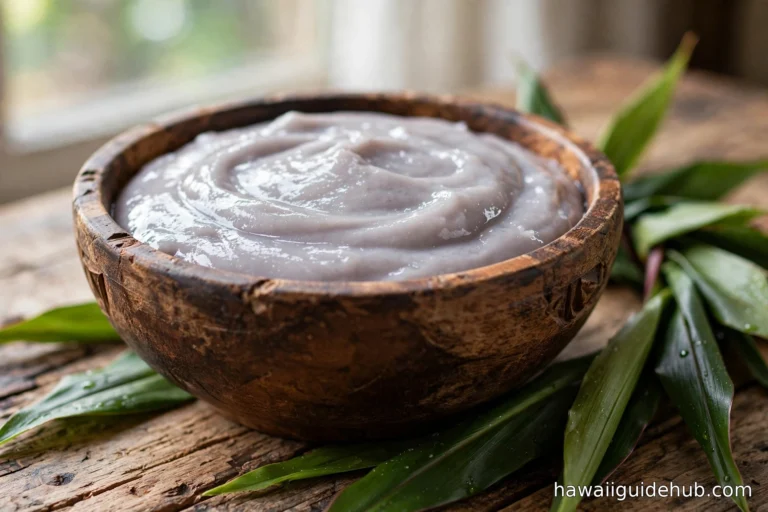
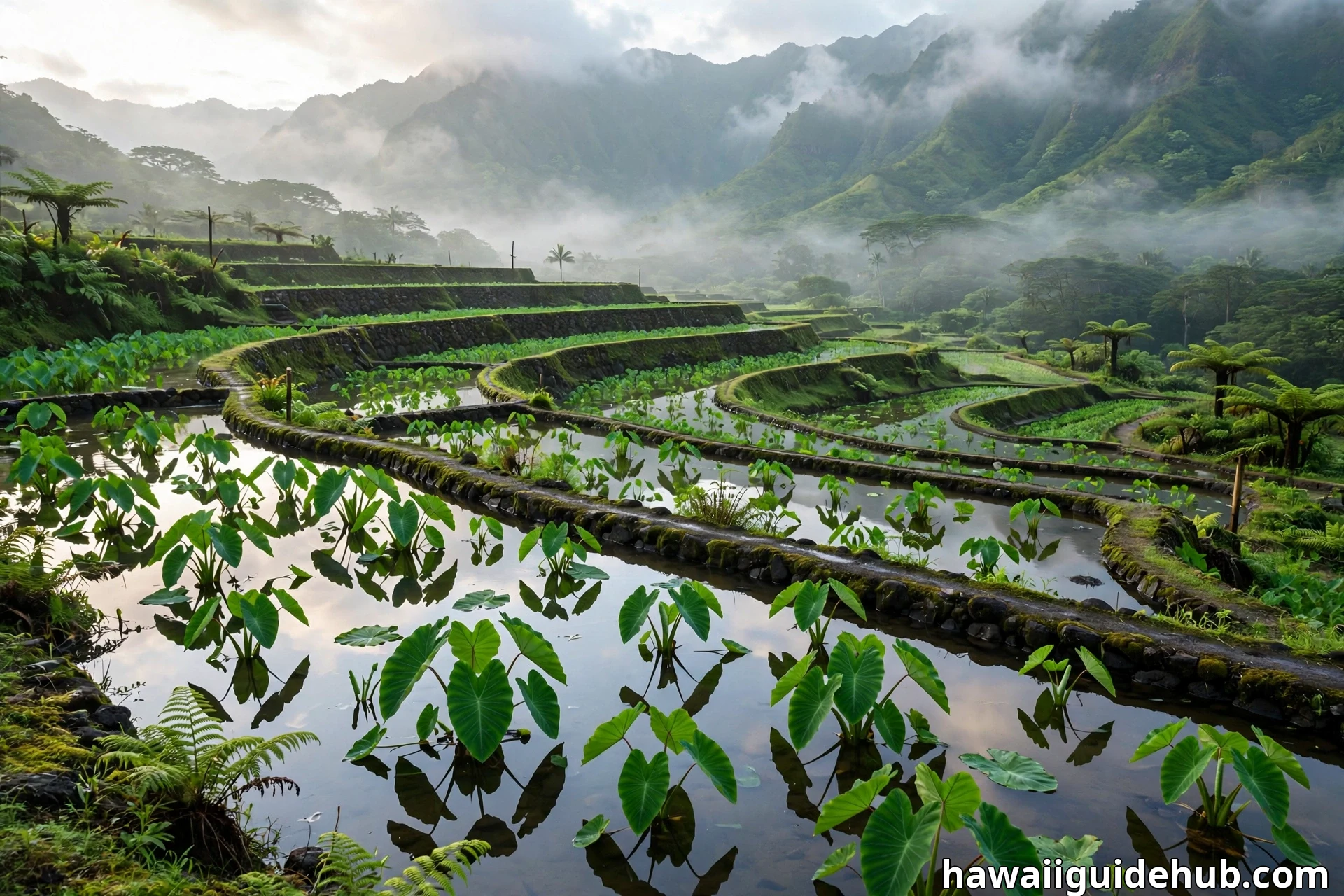
Taro is the most culturally significant food plant in Hawaii, the ancestor of poi, and it still anchors the local food system. You will find it as poi, as taro chips, in laulau, and increasingly as taro gnocchi or taro hummus on creative menus. Lo‘i kalo, the flooded taro patches, are some of the oldest continuously farmed fields in the islands.
‘Ulu (Breadfruit)
Breadfruit was a canoe crop brought by the first Polynesian settlers, and it is having a modern comeback as a sustainable staple. Roasted ‘ulu has a creamy, potato-like texture, and chefs use it in everything from fries to pizza crust to desserts.
Sweet Potatoes and Okinawan Sweet Potatoes
Hawaii grows several sweet potato varieties, including the purple-fleshed Okinawan type that colors desserts and side dishes a striking violet. They appear roasted, mashed, and in baked goods across the islands.
Tropical Fruit
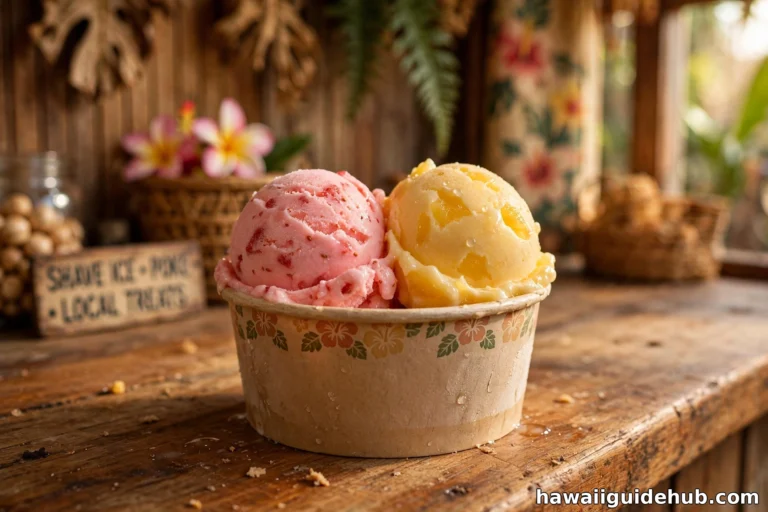
Lilikoi (passion fruit), guava, pineapple, mango, rambutan, and apple bananas show up in drinks, desserts, sauces, and ceviches. Farmers markets are the best place to taste varieties you will never see on the mainland. Our guide to native Hawaiian fruits covers what to look for and when each fruit is in season.
Kona Coffee and Cacao
The Kona coast’s coffee is world famous, and Hawaii is the only US state that grows coffee commercially. A newer crop, cacao, now supports a small but serious Hawaiian chocolate industry, with bean-to-bar makers on several islands.
Fresh Fish
Ahi (yellowfin tuna), opah (moonfish), mahi-mahi, ono (wahoo), and monchong arrive daily. On the best menus, the fish section changes with the boats, and servers can tell you where your fish was caught.
Where to Eat Farm-to-Table on O‘ahu
O‘ahu has the deepest bench of farm-to-table restaurants in the state, from white-tablecloth dining rooms to neighborhood cafes.
Merriman’s Honolulu
Peter Merriman’s flagship concept reached Honolulu with the same roughly-90-percent-local sourcing rule that made the original Waimea restaurant famous. Expect island fish, Waipoli greens, and desserts built on local fruit. Reservations are smart, especially on weekends.
The Pig and the Lady
This Chinatown favorite blends Vietnamese flavors with Hawaii farm products, pho with local beef, farmers market vegetables in bright, modern preparations. It is a good example of how farm-to-table in Hawaii crosses cultural lines.
Mud Hen Water
Also in Chinatown, Mud Hen Water serves modern Hawaiian food with a strong local-sourcing ethos, house-made charcuterie, creative small plates, and a menu that shifts with the market.
KCC Farmers Market (the eating, not just the shopping)
The Saturday market at Kapi‘olani Community College is half grocery run, half food festival. Go hungry. Vendors sell everything from fresh poke bowls to lilikoi malasadas, and it is one of the best single places to taste what O‘ahu farms produce. Arrive before 9 AM for the best selection and the shortest lines.
Where to Eat Farm-to-Table on Maui
Maui’s upcountry farms and coastal fisheries give the Valley Isle a strong farm-to-table scene concentrated in a few standout spots.
Merriman’s Kapalua
Perched above Kapalua Bay, this is Merriman’s Maui outpost and one of the island’s most committed local-sourcing restaurants. The menu names its farms and fishermen, and the setting, open air over the Pacific, is unforgettable at sunset.
Mama’s Fish House
A North Shore legend in Kuau, Mama’s has served reef fish caught by local fishermen for decades, and the menu still credits the angler who caught your dinner. It is expensive and books out far ahead, so reserve early. The setting, a coconut grove on the sand, is pure old Hawaii.
Upcountry Farmers Market
The Saturday market in Kula gathers upcountry growers in one place. Kula produce, strawberries, greens, flowers, and prepared foods, is some of the island’s best, and the market is a scenic stop on any Upcountry day.
Where to Eat Farm-to-Table on the Big Island
The Big Island grows more of Hawaii’s food than any other island, and its farm-to-table scene clusters around Waimea’s ranch country and the Kona coast.
Merriman’s Waimea
The original, opened by Peter Merriman in 1988 in ranch country, remains the spiritual home of Hawaii farm-to-table dining. The menu reads like a map of the island: Waimea tomatoes, Hamakua mushrooms, Kona lobster when in season. This is the reservation to make if you make one food reservation on the Big Island.
Hilo Farmers Market
Open daily in downtown Hilo, this is one of the state’s largest and most affordable markets. Tropical fruit, taro, fresh fish, and prepared foods at local prices. It is also the best place to buy apple bananas and rambutan when they are in season.
Kona Coffee Farm Tours
Several working coffee farms along the Kona coast offer tours that end with tastings, a direct look at Hawaii’s most famous crop. Many also grow cacao, macadamia, and tropical fruit, so one visit covers several island specialties.
Where to Eat Farm-to-Table on Kaua‘i
Kaua‘i’s Garden Isle nickname is earned, and its farm-to-table options range from fine dining to literal farm dinners.
Merriman’s Kaua‘i
In Poipu’s Kukui‘ula resort, Merriman’s Kaua‘i brings the group’s local-sourcing philosophy to the Garden Isle, with island fish, Kaua‘i-raised meats, and produce from nearby farms. The lilikoi-foam Mai Tai is a signature worth trying.
Common Ground Kaua‘i
This regenerative farm on the North Shore hosts guided farm tours followed by multi-course farm-to-table dinners built entirely from what the land produces. It is the most literal farm-to-table experience in the state: walk the food forest, then eat from it. Book ahead, as dinners run on set schedules.
Kaua‘i Culinary Market
The Wednesday market at Kukui‘ula pairs local farmers and food makers with live music, an easy evening way to taste the island’s produce and prepared foods in one stop.
Farmers Markets Worth Planning Around
If restaurant reservations do not fit your trip, farmers markets are the most accessible way to eat farm-to-table in Hawaii. A few standouts:
- KCC Farmers Market, O‘ahu: Saturday mornings at Kapi‘olani Community College. The state’s most famous market, equal parts grocery and food festival.
- Hilo Farmers Market, Big Island: Open daily in downtown Hilo. Huge selection, local prices, best tropical fruit.
- Upcountry Farmers Market, Maui: Saturday mornings in Kula. Upcountry produce at its peak.
- Kaua‘i Culinary Market, Kaua‘i: Wednesday evenings at Kukui‘ula in Poipu. Farmers, food makers, and music.
- Kona Farmers Markets, Big Island: Several weekly markets along the Kona coast, including the long-running Kona Farmers Market at Ali‘i Drive.
Market tips: bring cash (some vendors take cards, not all), bring your own bag, go early for the best produce, and eat breakfast there. Ask vendors how to prepare anything unfamiliar; they love to tell you.
Tips for Eating Local on Your Visit
Read the Menu Like a Local
The best farm-to-table menus name their sources. Look for farm names, fisherman names, and island-specific ingredients. A menu that says “island fish” without saying which island or which fish is not really farm-to-table.
Ask About the Catch
In Hawaii, asking where your fish came from is normal and welcome. Good servers know the answer. If the menu lists opakapaka or onaga, you are eating fish that was likely swimming the day before.
Eat Seasonally
Mango peaks in summer, rambutan in late summer and fall, citrus in winter. Menus shift with the harvest, which is the whole point. If you visit twice in different seasons, you will eat differently.
Budget for at Least One Splurge
True farm-to-table dining in Hawaii is not cheap; local sourcing costs more than container-shipped food. One well-chosen dinner, at a Merriman’s or a farm dinner like Common Ground, gives you the full experience. Balance it with farmers markets and plate-lunch spots the rest of the trip.
Try the Plate Lunch, Too
Farm-to-table is not the whole story. The humble plate lunch, two scoops rice, mac salad, and a protein, is Hawaii’s everyday food culture. Many plate-lunch shops now source locally as well. Try huli huli chicken from a roadside stand, and a great poke bowl from a market vendor can outshine a fancy dinner.
See Farm-to-Table Hawaii on Video
Frequently Asked Questions
What is Hawai‘i Regional Cuisine?
Hawai‘i Regional Cuisine is the culinary movement founded in August 1991 by twelve island chefs who committed to cooking with local ingredients instead of imported continental food. It is the foundation of Hawaii’s farm-to-table scene.
Is farm-to-table expensive in Hawaii?
At restaurants, yes, it tends to cost more than average, because local ingredients cost more than shipped ones. Farmers markets are the affordable way to eat local, with produce and prepared foods at much lower prices than restaurant plates.
What is the best island for food lovers?
O‘ahu has the most restaurants and the deepest variety. The Big Island grows the most food and has the strongest farm connection. Maui and Kaua‘i each have standout destination restaurants. You will eat well on any island.
Do I need reservations at farm-to-table restaurants?
For dinner at popular spots like Merriman’s or Mama’s Fish House, yes, book days or weeks ahead, especially in high season. Lunch and farmers markets rarely need planning.
What local ingredients should I try?
Start with ‘ulu (breadfruit), taro in its many forms, lilikoi, apple bananas, Kona coffee, and whatever local fish is on the menu. If a server recommends the catch, say yes.
Are farm tours worth it?
Yes. Coffee farm tours in Kona, the farm dinner at Common Ground Kaua‘i, and working farm visits on any island give you context no restaurant can. You will taste things at the source that never make it to a menu.
The Table Is the Islands
Hawaii’s farm-to-table movement started with twelve chefs who decided the islands deserved better than imported food, and it grew into the way the best of Hawaii eats. From a Saturday market breakfast to a sunset dinner naming the farm on your plate, eating local here connects you to the land, the ocean, and the cultures that shaped them. Come hungry, ask questions, and let the islands feed you.