Kailua Beach Oahu: Swimming, Kayaking to the Mokes and the Windward Coast’s Best Shore

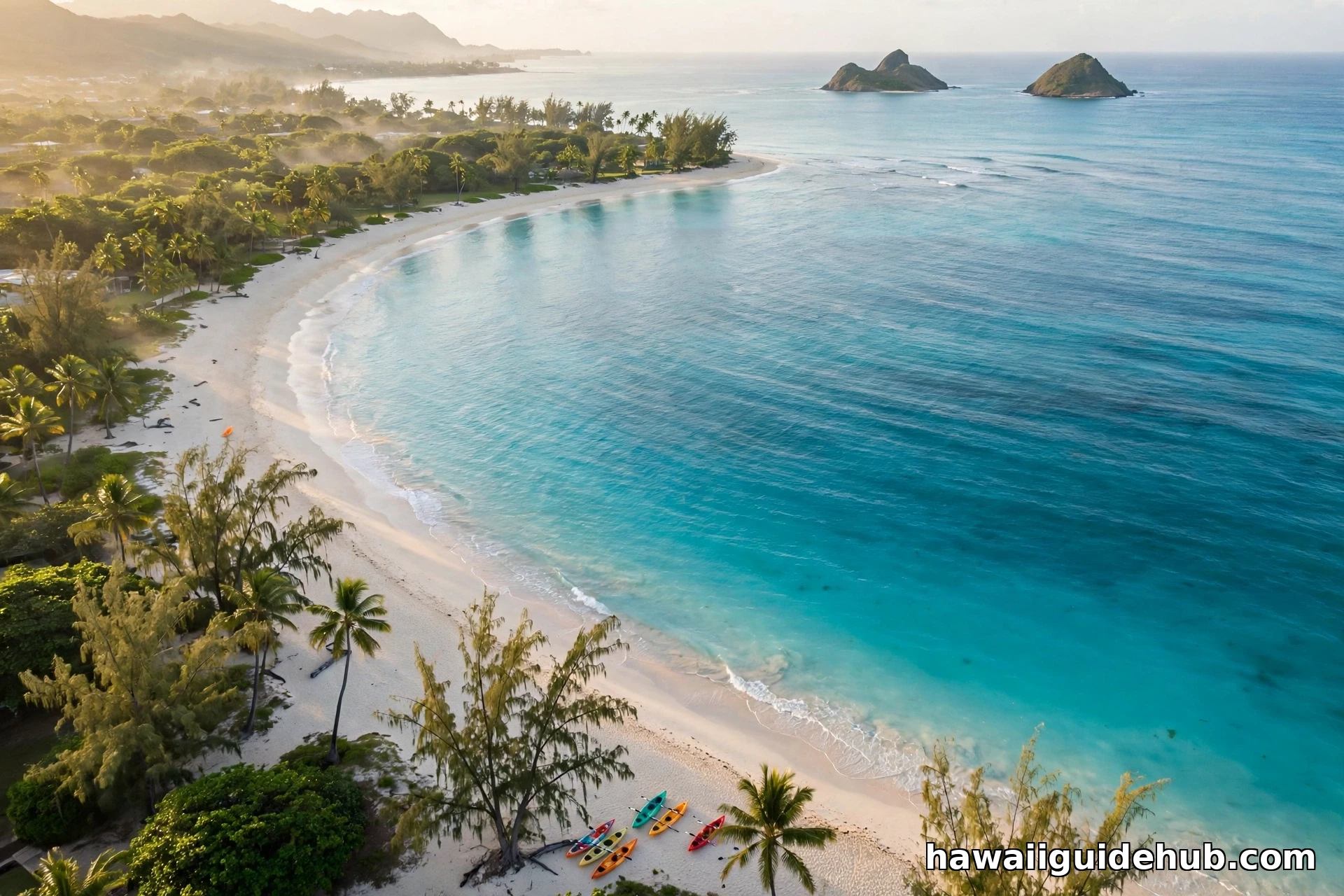
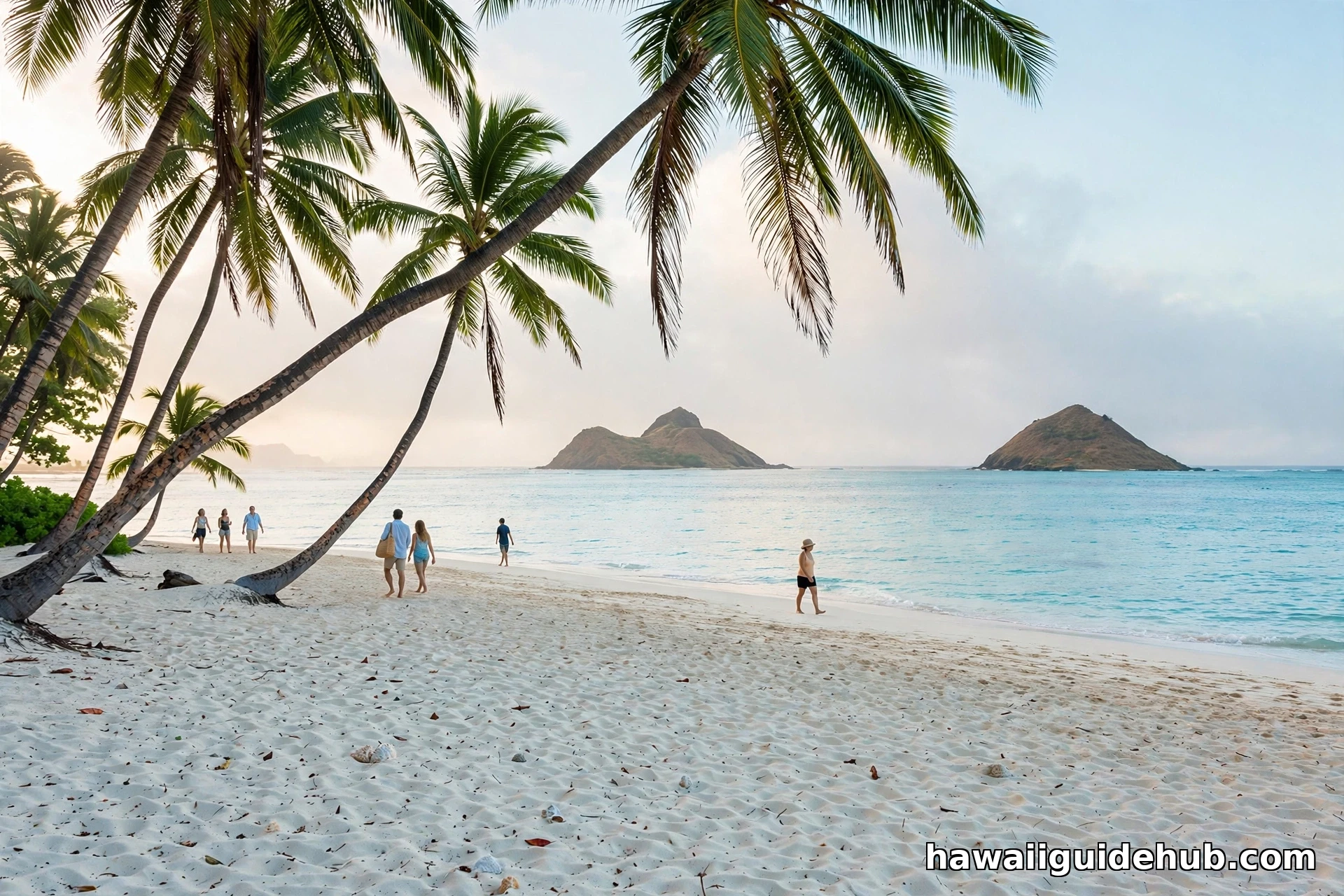
Kailua Beach does not shout for attention. There are no high rise hotels crowding the sand, no beach clubs blasting music, no vendors hawking sunscreen as you walk in. What you get instead is two and a half miles of powdery white sand, water that shifts from pale aqua to deep blue, and the twin humps of the Mokulua Islands sitting on the horizon like a postcard that never got old. It is the kind of beach that makes people who live on Oahu quietly protective of it, and the kind that makes visitors wonder why they ever spent a whole vacation in Waikiki.
This is the windward side at its best. Kailua Beach Park anchors the shoreline with a big grassy park, real facilities, and lifeguards, while the bay itself serves up some of the most beginner friendly ocean conditions on the island. It is also the launch point for one of Oahu’s classic adventures: paddling a kayak out to the Mokes, the two small islands you can see from almost anywhere on the sand. Here is everything worth knowing before you go.
Where Kailua Beach Is and How to Get There
Kailua Beach sits on the windward (eastern) side of Oahu, in the town of Kailua, roughly 12 miles northeast of Waikiki. The drive takes about 25 to 35 minutes without traffic, though morning rush hour heading back toward Honolulu can stretch that considerably.
The simplest route from Waikiki is the Pali Highway (Route 61) over the Koolau mountains, which is a scenic drive in its own right. Once you drop into Kailua town, turn right onto Kalaheo Avenue and follow it about a mile to the beach park entrance on your left. The official address listed by the City and County of Honolulu is 2 Palione Place, Kailua, which will get your navigation app to the main parking lot.
You can reach Kailua by bus, but it takes well over an hour from Waikiki and involves transfers, so a rental car is strongly recommended. Parking at the main lot is free but fills up on weekends and holidays. Arriving before 9 a.m. on a weekend is the difference between parking easily and circling for twenty minutes.
The Beach Itself: What Makes It Special
Kailua Beach Park covers about 35 acres, with a wide crescent of sand stretching more than two miles along Kailua Bay. The sand here is notably fine and pale, almost white, and the ocean floor slopes gently, which keeps the nearshore water calm and shallow for a good distance out.
The City and County of Honolulu describes Kailua Bay as blessed with deep azure waters, and the description holds up. On a clear morning the water is glassy and turquoise near shore, darkening to blue further out. Four small islets sit offshore, with the Mokuluas being the most prominent.
This beach has earned national recognition, including being named among America’s best beaches by Dr. Stephen Leatherman, the coastal scientist known as Dr. Beach. Scenes from television shows like Lost and Hawaii Five-0 were filmed here, though you would never guess it from how low key the place feels.
One honest note: Kailua is not the best snorkeling beach on Oahu. The water can get a bit cloudy, especially after rain, because of runoff from the streams that feed the bay. If snorkeling is your priority, the outdoor adventures in Hawaii guide points to clearer options. But for swimming, paddling, and simply being on a beautiful beach, Kailua is hard to beat.
Swimming: Calm Water for Just About Everyone
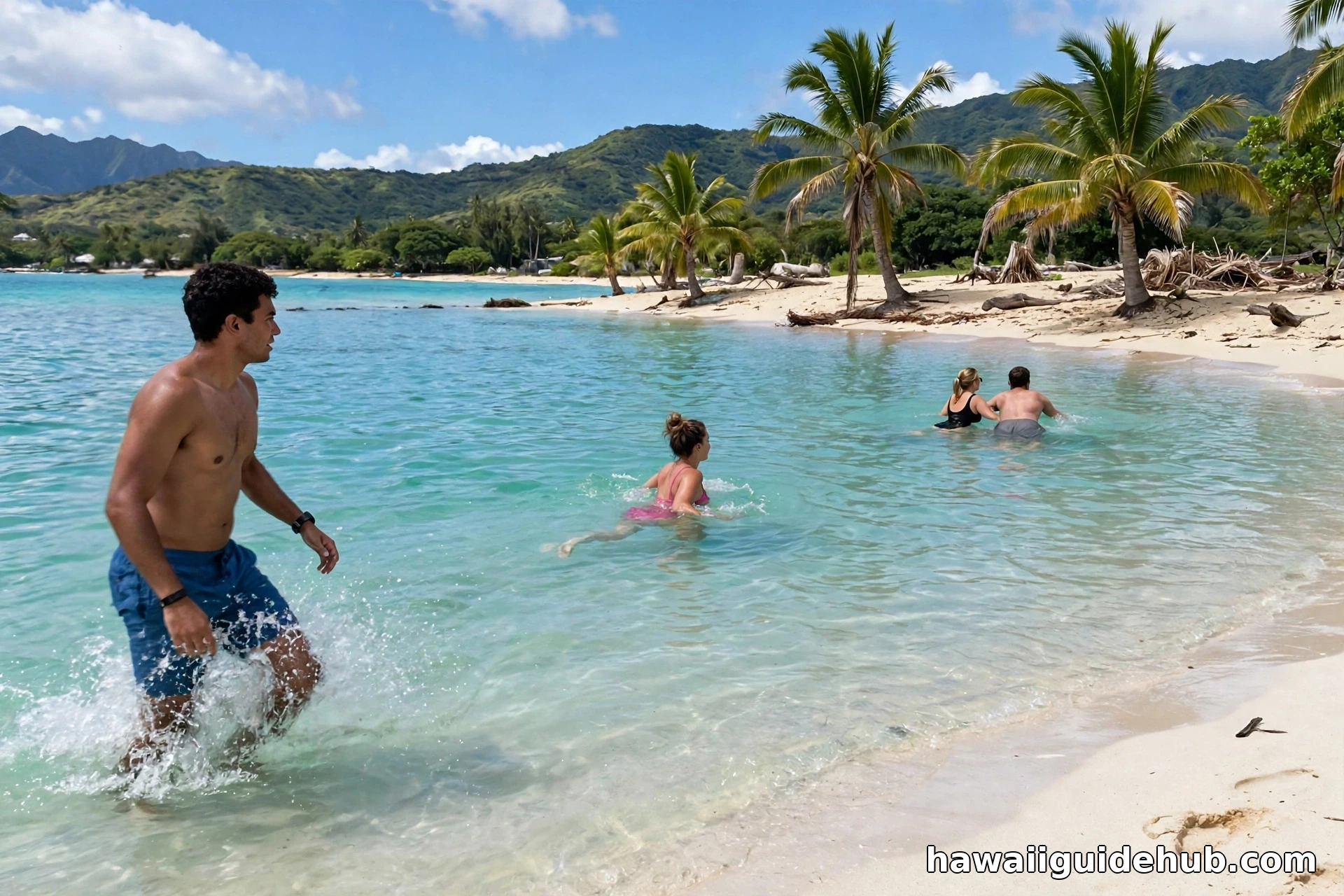
Swimming is what Kailua Beach does best. The gently sloping bottom and the protection of the bay keep waves small most of the year, and lifeguards are stationed at the park. Small children love the shallow area near the mouth of Kaelepulu Stream at the south end of the beach, where the water stays ankle to knee deep.
During the winter months, when the North Shore is getting pounded by huge swells, Kailua often stays reasonable. The windward side faces the trade winds rather than the big northwest swells, so while the North Shore is for watching, Kailua is for swimming.
The main swimming caveat is the Portuguese man-of-war. These bluish purple jellyfish-like creatures with long trailing tentacles sometimes wash in during the summer after several days of strong trade winds. Their sting is painful and can end a beach day quickly. If you see them on the sand, stay out of the water or move to a different section of beach. Lifeguards post warnings when they are around, so check the signs at the tower.
Kayaking to the Mokulua Islands: The Classic Adventure
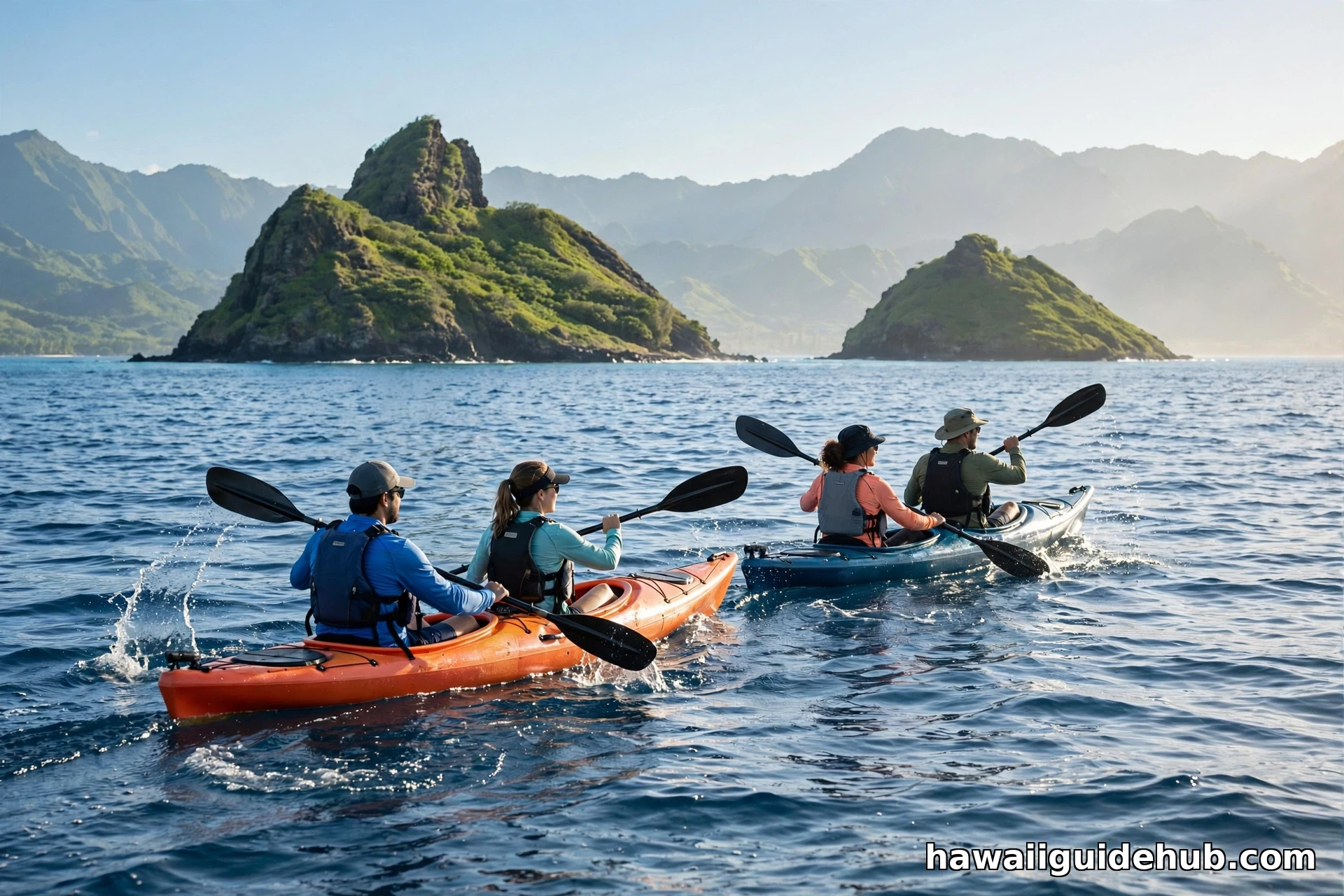
The two islands on the horizon have a name: Na Mokulua, usually shortened to the Mokes. They sit about a mile offshore, and paddling out to them is one of the most popular ocean adventures on Oahu. Kayak rental shops cluster near the beach park and in Kailua town, and many offer guided tours as well as simple rentals.
Here is what you need to know. The larger island on the left, Moku Nui, allows landings on its beach. The smaller one on the right, Moku Iki, is kapu, completely off limits. Both islands are part of the Hawaii State Seabird Sanctuary, and even on Moku Nui you should stay on the shoreline and not hike inland, where birds nest. Monk seals haul out on these beaches too, so give any wildlife plenty of space.
This trip is for experienced paddlers only. A mile of open ocean each way sounds short until the trade winds pick up or a swell rolls through. The islands look much closer than they actually are, and conditions can change fast. Go early in the morning for the calmest water, wear a life jacket, bring a buddy, and check the marine forecast before you launch. If the surf is up, save it for another day. The beach is wonderful enough on its own.
Lanikai: The Famous Neighbor
Walk south along the sand and you will eventually reach Lanikai, Kailua’s even more famous neighbor. Lanikai is regularly listed among the most beautiful beaches in the world, with impossibly soft sand and that same view of the Mokes. The two beaches essentially share one long shoreline.
The practical difference is facilities. Lanikai has no parking lot, no restrooms, and no lifeguards. It is accessed through narrow public beach access paths between expensive homes, and parking in the neighborhood is extremely limited. Kailua Beach Park, by contrast, has a big lot, restrooms, showers, and lifeguards. Many visitors park at Kailua Beach Park and walk the shoreline down to Lanikai, which gives you the best of both.
Windsurfing, Kitesurfing, and the North End
While the middle of the beach belongs to swimmers, the north end belongs to the wind. Kailua is one of Oahu’s top spots for windsurfing and kitesurfing, thanks to the steady trade winds that blow across the bay. The City and County of Honolulu specifically notes that the north end of the beach is designated for wind crafts and is not ideal for swimmers or small children.
If you have never tried these sports, this is a fine place to watch and a better place to take a lesson than to teach yourself. Several schools operate in the area. If you are a swimmer with kids, simply set up your towels toward the middle or south end of the beach and you will have no issues.
Parking, Facilities, and Practical Details
Kailua Beach Park is well equipped for a full beach day. Facilities listed by the city include restrooms, outdoor showers, picnic tables, a public boat ramp, a large parking lot, an open air cafe, and a volleyball court. Lifeguards are on duty.
The park is open daily, but note that the beach park itself is closed nightly from midnight to 4 a.m., a rule the city made permanent after a pilot program. You can always walk through to reach the ocean, but you cannot camp or linger in the park during those hours.
For food, the open air cafe at the park covers the basics, but Kailua town is a five minute drive away and has excellent options, from the famous Kalapawai Market to breakfast spots and shave ice. There are no vendors on the sand itself, so bring what you need or plan a town run.
What to Bring
Pack for a full day because once you settle in, you will not want to leave. Reef safe sunscreen is essential and is required by Hawaii state law, which bans sunscreens containing oxybenzone and octinoxate. Bring more water than you think you need, plus snacks or a cooler, since the nearest real food beyond the park cafe is in town.
A few things people forget: a hat and rash guard for sun protection, since there is limited shade on the sand. Water shoes are useful if you plan to explore the rocky areas near the stream mouth. And if you are kayaking, a dry bag for your phone and keys is non negotiable.
Safety: What to Watch For
Kailua Beach is one of the safer ocean swimming spots on Oahu, but the ocean always deserves respect. Beyond the Portuguese man-of-war mentioned above, keep an eye on water quality after heavy rains. Runoff can turn the bay brownish near the stream mouths, and the state posts water quality advisories when bacteria levels rise. If the water looks murky brown, swim elsewhere that day.
Sunburn is the most common injury here. The windward breeze makes it feel cooler than it is, and people burn badly without realizing it. Reapply sunscreen every couple of hours, especially after swimming.
For kayakers heading to the Mokes, the safety bar is higher. This is open ocean. Check conditions, go with a partner, wear your life jacket, secure your kayak well on the island beach so it does not drift away, and pack out everything you bring. Rescue crews regularly assist paddlers who underestimated the crossing.
When to Visit Kailua Beach
Kailua Beach is a year round beach, but conditions shift with the seasons. Summer brings the calmest, clearest water and the warmest temperatures, along with the occasional Portuguese man-of-war. Winter brings slightly bigger surf and more wind, but Kailua stays swimmable when the North Shore is blown out.
Mornings are almost always better than afternoons. The trade winds typically build through the day, so the water is glassiest before 10 a.m. Weekdays are noticeably quieter than weekends, when local families fill the park. If you are visiting on a weekend, arrive early for parking and a good spot on the sand.
For first-time visitors to Oahu, Kailua makes an ideal windward day trip paired with a drive up the coast or a stop in Kailua town for lunch. It shows a completely different side of the island from Waikiki, greener, quieter, and more local.
Exploring Beyond the Beach
Kailua town itself is worth an hour or two. It is windward Oahu’s largest town, with a walkable center full of local shops, cafes, and restaurants. The Oahu island guide covers more windward stops you can combine with a beach day, including the scenic drive up to the North Shore or over to Kaneohe.
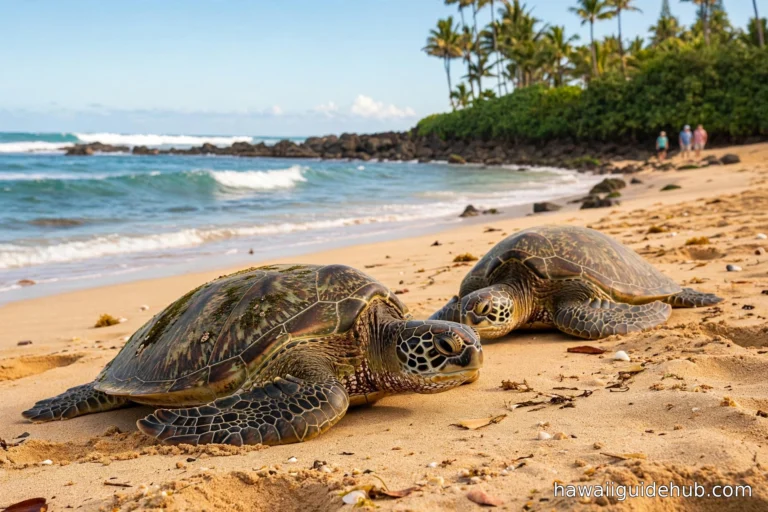
If you spot honu (Hawaiian green sea turtles) while you are at the beach, enjoy watching from a distance. Federal and state law requires staying at least 10 feet away, and the sea turtle etiquette guide explains exactly how to share the water responsibly.
See Kailua Beach on Video
The Honest Bottom Line
Kailua Beach earns its reputation. The sand is soft, the water is calm, the view of the Mokes never gets old, and the park has everything a family needs for a full day. It is not a snorkeling destination, parking takes planning on weekends, and the summer man-of-war deserve respect. But as an all around beach day, especially for swimmers, families, and kayakers, it is the best the windward side has to offer. Go early, stay late, and stop in Kailua town on the way home.