Sunrise in Honolulu: Times, Best Spots & Tips

There is a particular kind of quiet in Honolulu before the sun comes up. The traffic on the H-1 has not started yet, the beach parks sit empty, and the only people awake seem to be fishermen, surfers checking the swell, and the occasional rooster with strong opinions. Then the sky over the Koʻolau mountains starts to change, and within about twenty minutes the whole city is washed in gold. If you only set one early alarm during your trip, make it for this.
Honolulu sits on the southeast shore of Oʻahu, which means the sunrise here is not an abstract idea. It is a daily event with real timing, real geography, and a short list of places where it looks extraordinary. This guide covers exactly when the sun rises through the year, the best spots to watch it, how sunset compares, and how to do it safely and comfortably.
What Time Is Sunrise in Honolulu?
Honolulu sunrise times shift with the seasons, but far less than they do on the mainland. Here is what to expect, based on U.S. Naval Observatory data published in the State of Hawaii Data Book:
| Time of year | Sunrise | Sunset | Hours of daylight | What it means for sunrise plans |
|---|---|---|---|---|
| Late March (spring equinox) | 6:36 AM | 6:42 PM | 12 hr 6 min | Near-12-hour days; sunrise times barely move week to week |
| Late June (summer solstice) | 5:50 AM | 7:16 PM | 13 hr 26 min | Earliest sunrises of the year; set the alarm before 5:30 AM |
| Late September (fall equinox) | 6:20 AM | 6:27 PM | 12 hr 7 min | Balanced daylight again as summer fades |
| Late December (winter solstice) | 7:05 AM | 5:55 PM | 10 hr 50 min | Latest sunrises and earliest sunsets; the short-day season |
All times are Hawaii Standard Time. In practical terms, plan on sunrise falling between 5:50 AM and 7:05 AM depending on the month. The earliest sunrises of the year arrive in June, when you will want to be in position by about 5:30 AM. The latest come in late December and early January, when a 6:45 AM arrival still gets you there ahead of first light.
Sunset follows the same gentle curve. Evening light lingers latest in June, with the sun dropping around 7:16 PM, and earliest in December at about 5:55 PM. For most of the year, the sun sets within a half hour of 6:30 PM.
Why Honolulu Sunrise Times Barely Change
Two things keep Hawaii’s sunrise times steady. First, the islands sit at about 21 degrees north latitude, deep in the tropics. The sun’s path across the sky stays relatively consistent all year, so the gap between the longest and shortest days is under three hours. Compare that to Seattle or New York, where day length swings by six hours or more, and you start to appreciate the tropical advantage.
Second, Hawaii does not observe daylight saving time. The clocks never spring forward or fall back, so a 6:20 AM sunrise in September means exactly what it says. Once you learn the rough timing for your travel month, it holds for your whole trip.
One more quirk worth knowing: because Honolulu is on the western edge of its time zone, the sun rises a few minutes later here than it does in Hilo on the Big Island, even on the same date. If you are island hopping and chasing sunrises, expect Oʻahu’s to run slightly later than the Big Island’s.
Best Sunrise Spots in Honolulu and on Oʻahu
Not every scenic spot faces the right direction at dawn. The sun rises in the east, so you want an unobstructed eastern horizon. These are the places that deliver it best, roughly ordered from most iconic to most local.
Diamond Head (Lēʻahi)
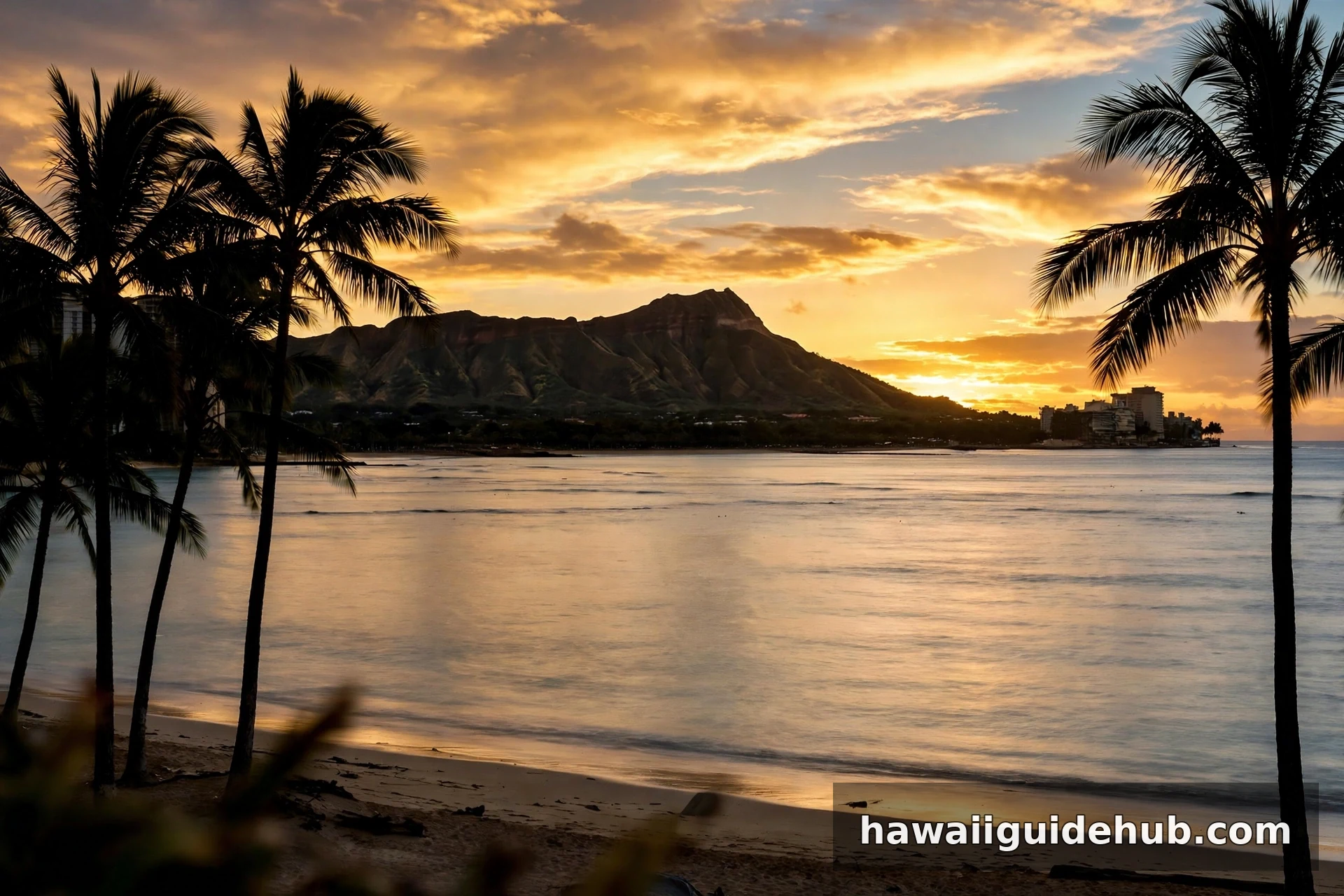
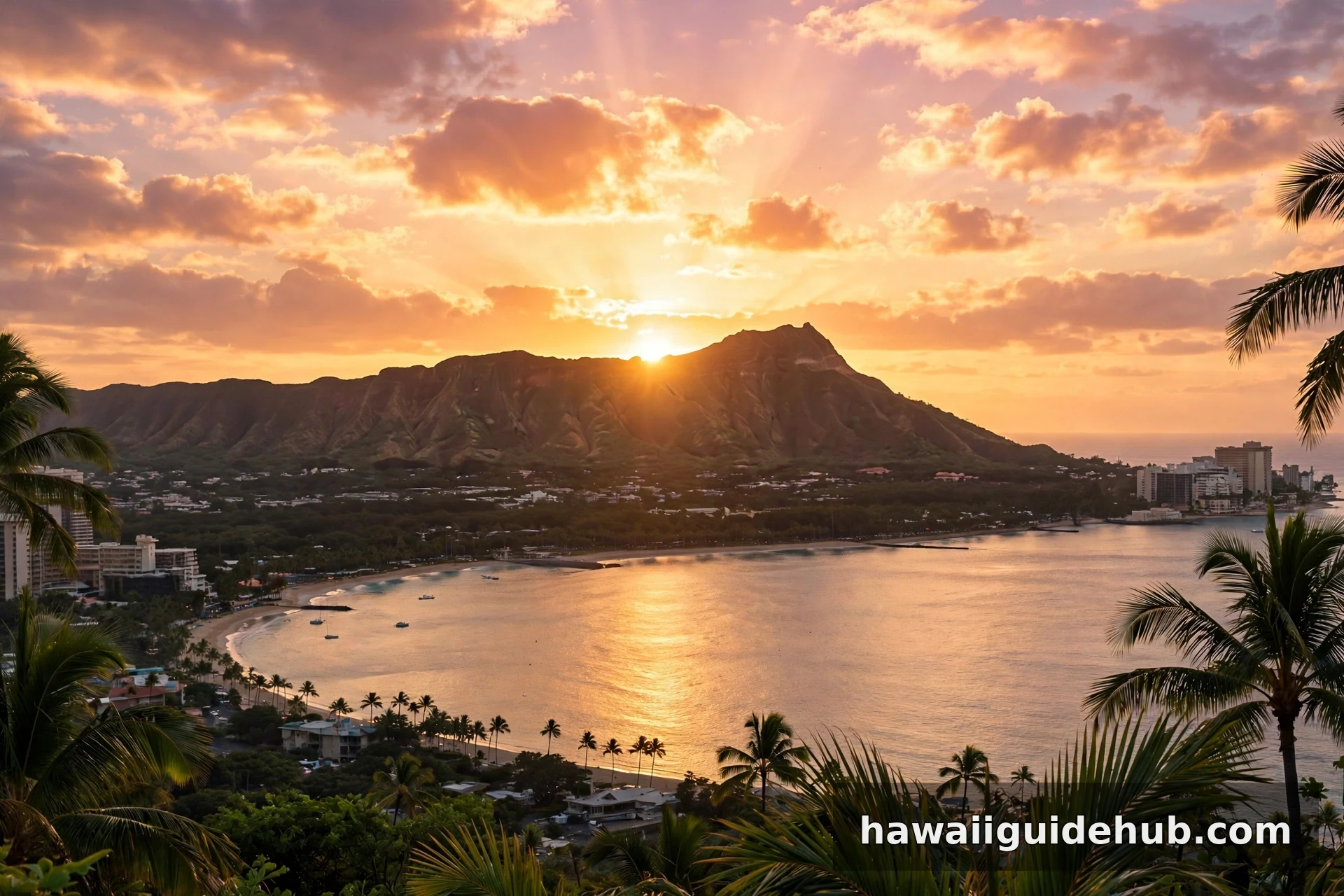
Watching the sun come up from the summit of Diamond Head is the classic Honolulu sunrise experience. The 1.6-mile round-trip trail climbs through the crater to a lookout with sweeping views of Waikīkī, the Pacific, and the sunrise breaking over the southeastern coast. Arrive early enough to be near the top at first light, because the color show starts well before the sun itself appears.
A few practical notes. Diamond Head State Monument now requires advance reservations for non-residents, and entry is timed, so book the earliest available slot if sunrise is your goal. Bring a headlamp or use your phone light for the darker stretches of trail, wear shoes with real grip for the steep sections and the narrow staircase near the top, and carry water. The gates and trail have set hours, so confirm the current opening time when you reserve.
Makapuʻu Point Lighthouse Trail
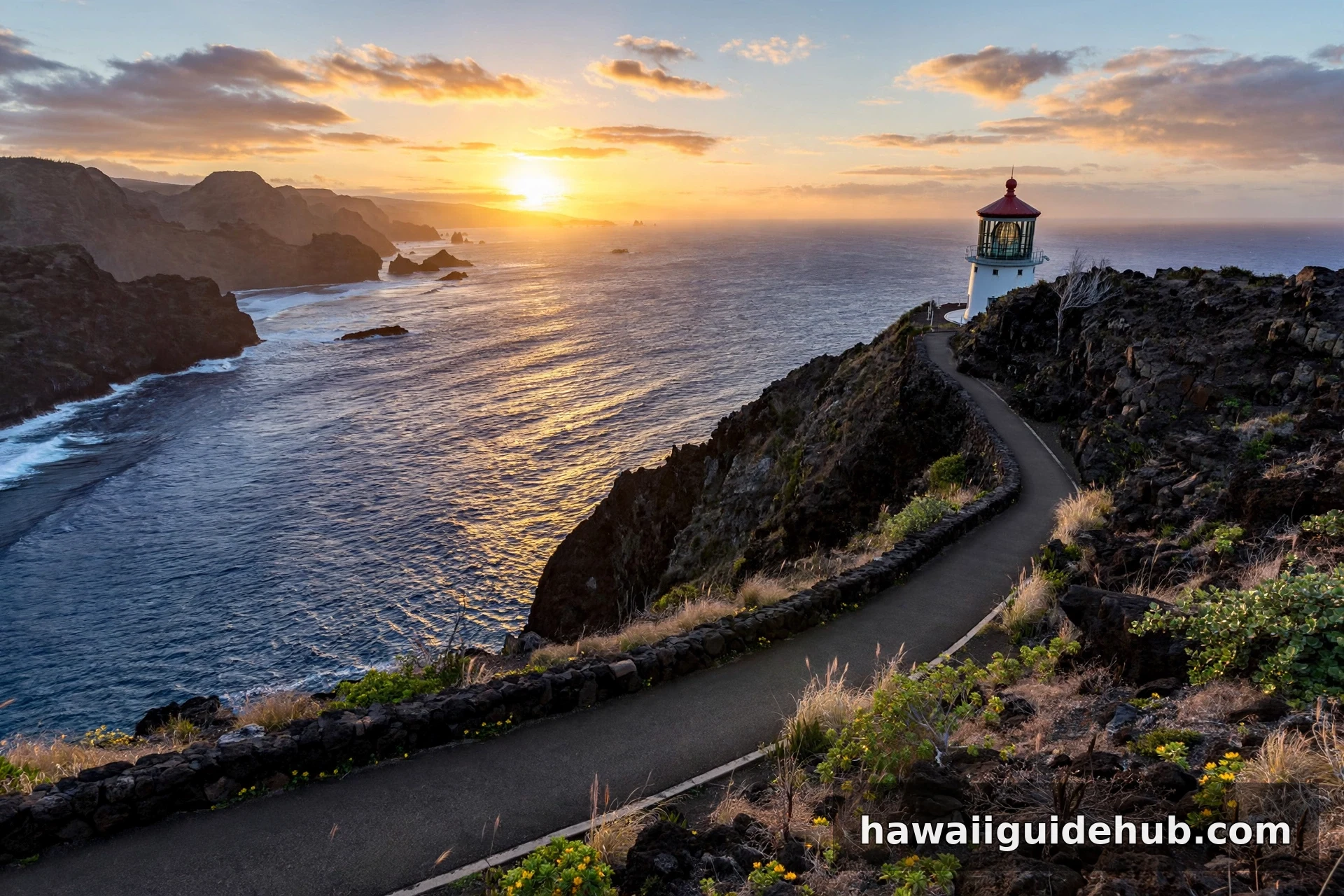
Ask locals where the best sunrise on Oʻahu is and many will name Makapuʻu without hesitating. This paved, two-mile round-trip trail on the island’s southeastern tip is easy enough for most fitness levels and ends at a historic lighthouse overlooking some of the most dramatic coastline in Hawaii. At dawn, the sun rises directly out of the ocean in front of you, lighting up the sea cliffs and the offshore islets.
The paved path makes this one of the most accessible sunrise hikes on the island, and between December and April it doubles as a whale-watching spot as humpback whales pass offshore. Parking fills up early on weekends, so aim to arrive at least 45 minutes before sunrise. There are no water fountains on the trail, so bring your own.
Lanikai Beach and the Lanikai Pillbox Trail
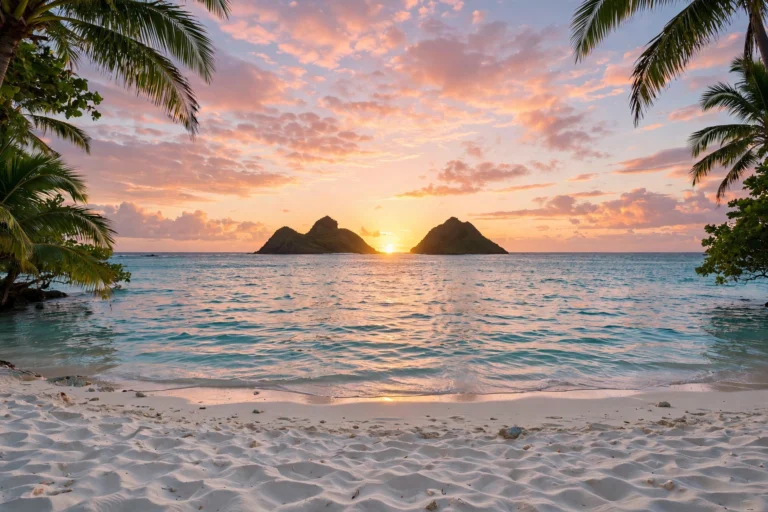
On the windward side of Oʻahu, Lanikai Beach faces due east toward the twin Mokulua Islands. On a clear morning the sun rises directly between the two islets, a composition photographers dream about. The beach itself is the easy option: spread a towel on the sand about 20 minutes before sunrise and watch it happen.
For a higher vantage point, the Lanikai Pillbox Trail climbs about 1.5 miles round trip to old military bunkers with panoramic views over the beach and the islands. It is a moderate hike with some steep, eroded sections, so it is best attempted with sturdy shoes and a light for the pre-dawn ascent. Go on a weekday if you can. This trail has become popular, and sunrise crowds are real.
Kakaʻako Waterfront Park and Magic Island
If you would rather not hike in the dark, the Kakaʻako waterfront delivers a proper Honolulu sunrise with zero effort. From the park and the man-made peninsula of Magic Island at Ala Moana, you get open eastern views across the harbor with Diamond Head framing the scene. It is flat, paved, well lit, and an easy drive or rideshare from Waikīkī. Bring coffee and a jacket; the waterfront breeze before sunrise can be cool.
Tantalus Lookout (Puʻu ʻUalakaʻa State Wayside)
High above the city in the hills of Tantalus, Puʻu ʻUalakaʻa State Wayside offers a completely different sunrise: the sun climbing over the Koʻolau range while Honolulu spreads out below you, Diamond Head prominent on the right. It is one of the few spots where you can watch both the sunrise and the city waking up at once. The park opens at 7:00 AM, so in summer months you will catch the tail end of dawn rather than first light, but from fall through spring the timing lines up beautifully. Parking for non-resident vehicles is $7.
What About Sunset in Honolulu?
Honolulu faces south and west toward the open Pacific, which makes it a genuinely great sunset city too. The sun drops into the ocean for much of the year, and the afterglow over the water can last 30 minutes or more.
The best sunset viewing runs along the west-facing shoreline: Ala Moana Beach Park and Magic Island, Kakaʻako Waterfront Park, and the lagoons at Ko Olina further west. On the North Shore, Sunset Beach lives up to its name in the winter months, and Kaʻena Point at the island’s western tip offers the last light of the day with almost no one around.
Sunset timing follows the table above in reverse. In June you have daylight until after 7:00 PM, which makes for long, relaxed evenings. In December the sun is down by about 5:55 PM, so plan dinner or evening activities accordingly. If you are deciding between the two, know that sunsets draw bigger crowds and sunrises reward you with solitude.
Sunrise or Sunset: Which Should You Choose?
Honestly, both are worth your time, but they offer different experiences. Sunrise in Honolulu tends to be quieter, cooler, and more colorful in the eastern sky, with the added payoff of having the whole day ahead of you. Trails like Makapuʻu and Diamond Head are far less crowded at dawn than at midday, and parking is easier.
Sunset is the social event. Beaches fill up, the light is warmer on the western horizon, and it pairs naturally with dinner afterward. If you only have the energy for one early-or-late outing, pick sunrise for adventure and sunset for relaxation. Travelers who do both in one day, a Makapuʻu dawn and a Magic Island dusk, consistently call it one of their best days on Oʻahu.
For a completely different take on the same drama, watching the sunset from Haleakalā on Maui is one of Hawaii’s most famous evening spectacles, with the sun sinking into a sea of clouds above 10,000 feet.
Photography Tips for Honolulu Sunrises
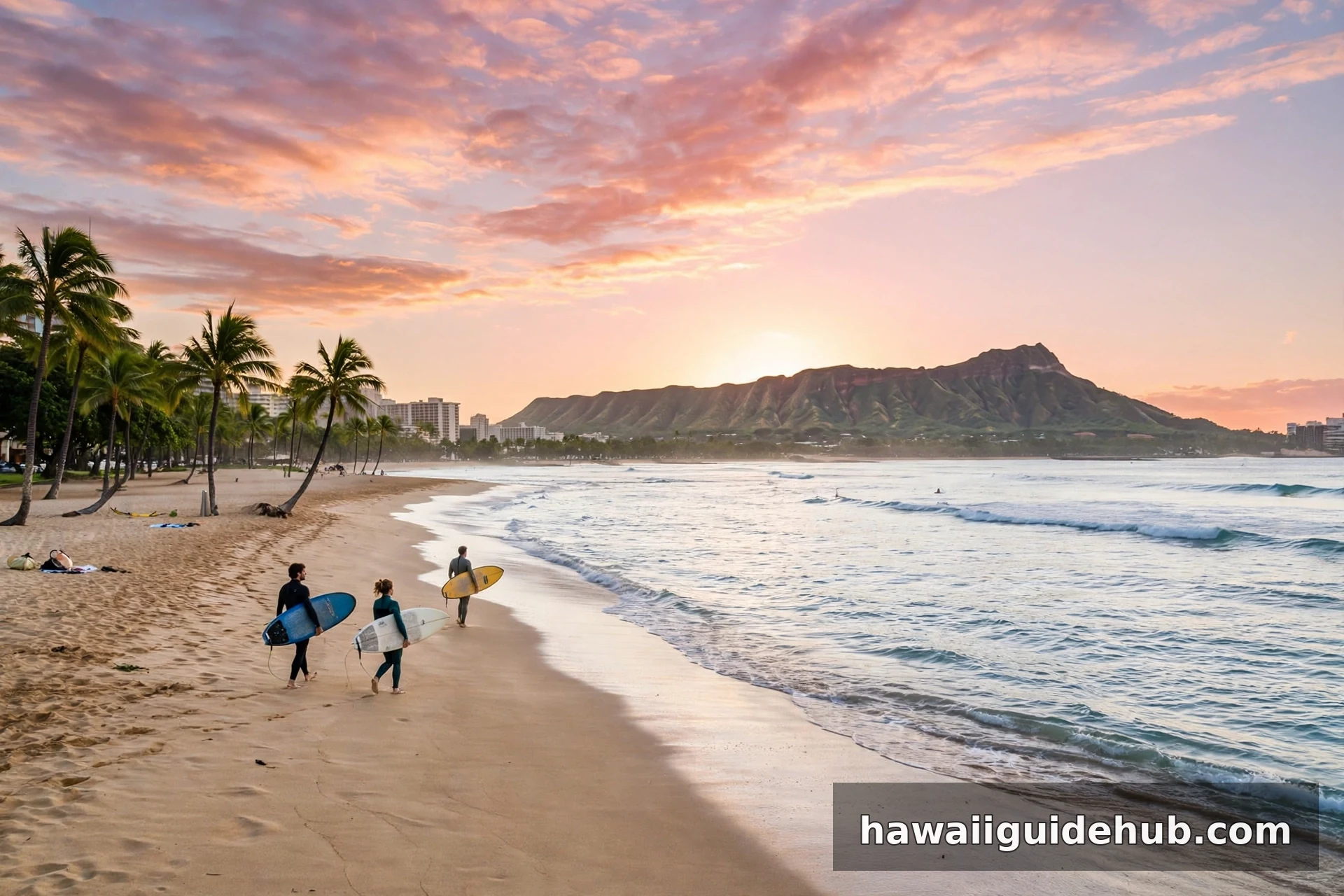
You do not need professional gear to capture a great Hawaiian sunrise, but a few techniques help a lot. Arrive 30 to 45 minutes before the published sunrise time. The most dramatic color usually appears in the 20 minutes before the sun breaks the horizon, during what photographers call the blue hour and the golden first light. Many visitors arrive right at sunrise and miss the best part.
Use a tripod or brace your phone against something solid for the low-light minutes. If your camera or phone has an HDR mode, turn it on; it handles the extreme contrast between bright sky and dark foreground far better than a single exposure. Include foreground interest, a palm silhouette, the lighthouse, the Mokulua Islands, to give the image depth. And resist the urge to watch the whole thing through a screen. Take your shots, then put the camera down for at least part of it.
One Hawaii-specific tip: the air is often clearest just after a trade-wind night, which is most mornings. But a few high clouds actually improve sunrise photos by catching pink and orange light. A completely cloudless sky can look flat by comparison, so do not despair at a little cloud cover.
What to Bring for a Sunrise Outing
A Honolulu sunrise outing does not require much, but the right small kit makes it far more comfortable. Bring a light jacket or long-sleeve layer; pre-dawn temperatures in the upper 60s to low 70s Fahrenheit can feel chilly when you are standing still, especially with the breeze at exposed viewpoints. A headlamp or flashlight is essential for any trail before first light. Your phone light works in a pinch but leaves you one-handed on uneven ground.
Pack water even for short outings, reef-safe sunscreen for after the sun is up, and a small towel or dry bag if you are heading to a beach. For Diamond Head and the pillbox trails, wear closed shoes with grip rather than flip-flops; the terrain is rocky and the pre-dawn light hides loose footing. A fully charged phone covers navigation, photos, and the flashlight backup.
Staying Safe on Early-Morning Hikes
Hiking before dawn adds a layer of risk to even easy trails, so treat it with respect. Stick to well-maintained, well-known trails like Makapuʻu and Diamond Head rather than exploring unfamiliar routes in the dark. Tell someone where you are going and when you expect to be back. Stay on marked paths; cliff edges at Makapuʻu and the crater rim at Diamond Head are unforgiving, and it is easy to misjudge distances before the light improves.
Check the weather the night before. Heavy rain can make trails slippery and is occasionally accompanied by flash-flood advisories in windward areas. If conditions look rough, swap a hike for a beachfront sunrise at Kakaʻako or Lanikai instead. For more on preparing for the islands’ trails generally, see our guide to hiking adventures across Hawaii.
Finally, be a good neighbor. Many trailheads sit in residential areas. Keep voices down in the pre-dawn hours, park only in designated areas, and pack out everything you bring in.
Sunrise in Honolulu: Frequently Asked Questions
What time is sunrise in Hawaii?
In Honolulu, sunrise ranges from about 5:50 AM in late June to about 7:05 AM in late December. For most of the year it falls between 6:00 and 6:40 AM. Hawaii does not observe daylight saving time, so times stay consistent within each season.
Where is the best place to watch the sunrise on Oʻahu?
Makapuʻu Point Lighthouse Trail is the local favorite for a true ocean sunrise, Diamond Head offers the iconic summit view over Waikīkī, and Lanikai Beach frames the sun between the Mokulua Islands. For a no-hike option, Kakaʻako Waterfront Park and Magic Island work beautifully.
Can you see the sunset from Waikīkī?
Yes, for much of the year the sun sets over the ocean to the west of Waikīkī, visible from the beach. In the winter months the sunset shifts far enough south that buildings can block the view from some spots; Magic Island and Ala Moana Beach Park are more reliable west-facing alternatives.
Do you need reservations for a Diamond Head sunrise?
Non-residents need advance reservations for Diamond Head State Monument, with timed entry slots. Book the earliest available slot for a sunrise visit, and confirm current opening hours when you reserve, since they can change seasonally.
The Bottom Line on Honolulu Sunrises
A Honolulu sunrise asks very little of you: one early alarm, a short drive, and a willingness to stand still for twenty minutes. What it gives back is disproportionate. The light, the quiet, the empty trails, and the feeling of having the island to yourself before the day begins. Pair it with a evening lūʻau or cultural experience after sunset and you have bookended your day with two of the best free shows in Hawaii. Set the alarm. You will not regret it.