
Big Island Waterfalls
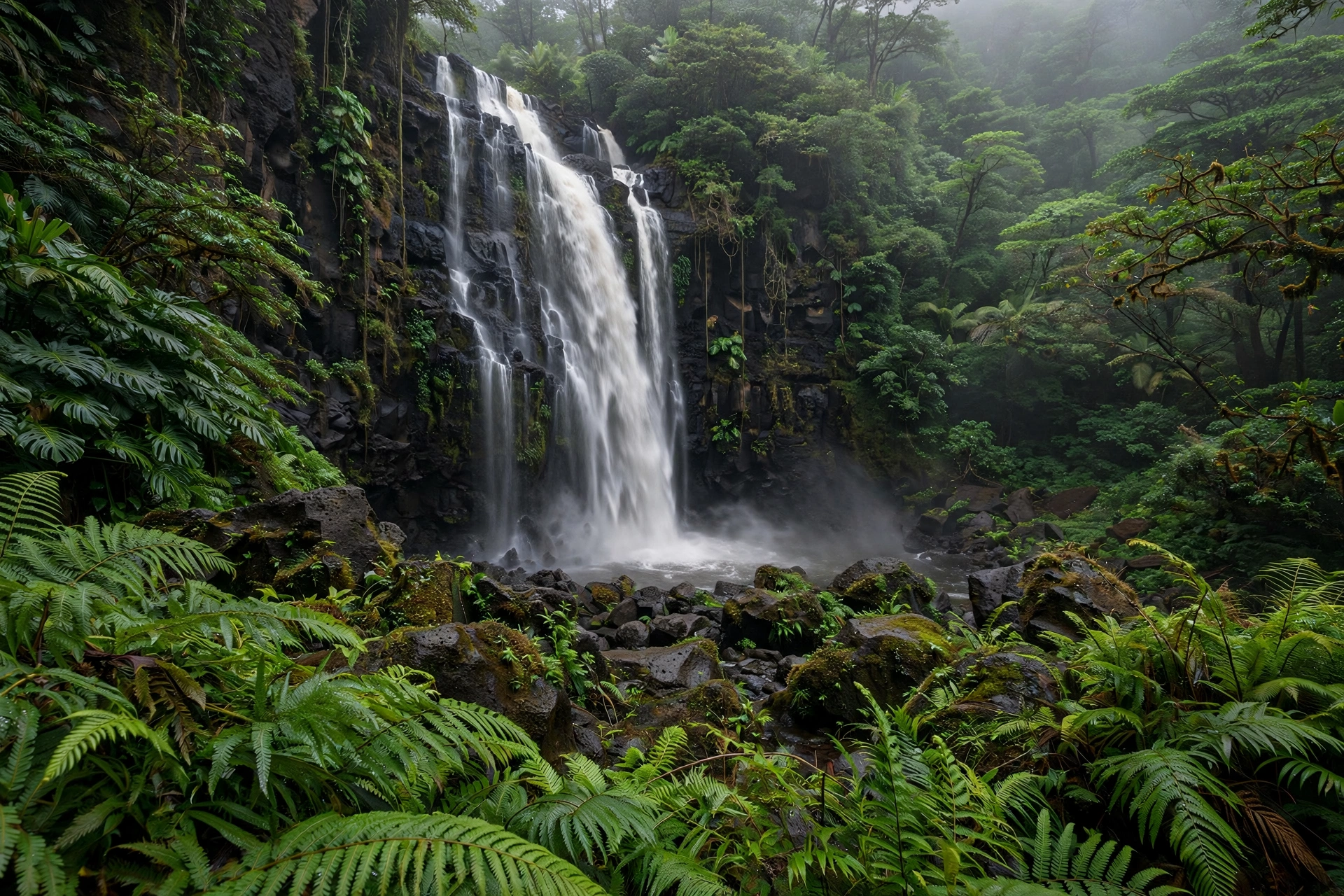
The Island of Hawaiʻi, the Big Island, has more waterfalls than any other island in the state, and it is not close. Young volcanic slopes on the windward side catch the trade winds, wring out some of the heaviest rainfall in the United States, and send hundreds of streams racing from cloud forest to sea. The result is a landscape where waterfalls are everywhere: roadside cascades on the Hāmākua Coast, the famous 442-foot plunge of ʻAkaka Falls, the wide curtain of Rainbow Falls above Hilo, and the great 1,450-foot ribbon of Hiʻilawe Falls deep in Waipiʻo Valley.
Big Island waterfalls come in every style. Some are effortless, like Rainbow Falls, which sits steps from a parking lot in Hilo. Some require a short rainforest walk, like ʻAkaka Falls. And some, like Hiʻilawe, are rewards for people who plan carefully and respect access rules, because parts of the island’s wildest country are closed or restricted. This guide covers the falls you can actually see, explains which ones you cannot, and keeps safety honest: flash floods and leptospirosis are real risks at Big Island streams, and swimming under waterfalls is often prohibited for good reason.
Big Island Waterfalls at a Glance
The Big Island’s waterfalls exist because of rain. The northeastern side of the island, from Hilo up through Honomū, Hakalau, and the Hāmākua Coast, sits directly in the path of the northeast trade winds. Moist ocean air rises against Mauna Kea and the Kohala Mountains, cools, and falls as rain, often more than 100 inches a year in the wettest valleys. That rain feeds the short, steep streams that drop off the island’s young volcanic slopes, and every one of those streams has at least one waterfall.
Geology shapes what these waterfalls look like. The Big Island is the youngest of the main Hawaiian Islands, and its windward valleys are still sharp and narrow, carved by water rather than worn down by time. That youth produces tall, sheer drops like ʻAkaka and Hiʻilawe, where streams pour off hard basalt ledges into deep gorges. On older islands the valleys have softened and the falls have retreated; on the Big Island they are still dramatic, still vertical, and still growing more dramatic with every rainy season.
The west side of the island, the Kona and Kohala coasts, is in the rain shadow and has almost no permanent waterfalls. This east-west split is the single most important thing to understand when planning a waterfall trip: nearly every notable fall on the Big Island is between Hilo and Waipiʻo Valley, along the windward coast.
Here is how the island’s best-known falls compare:
| Waterfall | Height | Location | Access |
|---|---|---|---|
| ʻAkaka Falls | 442 ft | ʻAkaka Falls State Park, Honomū | State park, 0.4-mile loop trail |
| Rainbow Falls (Waiānuenue) | 80 ft | Wailuku River State Park, Hilo | Steps from the parking area |
| Hiʻilawe Falls | 1,450 ft | Waipiʻo Valley | Restricted; licensed, county-permitted tour operators only |
| Umauma Falls | About 300 ft (three tiers) | Hakalau, Hāmākua Coast | Private land via Umauma Experience |
| Onomea Falls | Three-tiered cascade | Hawaiʻi Tropical Bioreserve & Garden, Papaikou | Botanical garden admission |
| Kulaniapia Falls | 120 ft | Inn at Kulaniapia Falls, near Hilo | Private; inn guests or day pass |
| Peʻepeʻe Falls | Series of cascades | Wailuku River, above Hilo | Wailuku River State Park overlooks |
| Boiling Pots | Terraced pools | Wailuku River, above Hilo | Wailuku River State Park overlook |
The Famous Falls
ʻAkaka Falls: The Island’s Signature Waterfall
ʻAkaka Falls is the waterfall most visitors picture when they think of the Big Island, and it earns the reputation. The falls drop 442 feet off a sheer cliff into a deep, fern-draped gorge on Kolekole Stream, about 11 miles north of Hilo near the town of Honomū. The name honors a chief of Hawaiian legend, and the falls sit at the center of ʻAkaka Falls State Park, one of the most visited state parks on the island.
What makes ʻAkaka special is how accessible it is. A paved 0.4-mile loop trail winds through bamboo groves, wild orchids, and hanging ferns to a series of gorge-rim overlooks. The walk takes most people under an hour at a relaxed pace, though there are stairs and the footing can be slick after rain. Along the same loop you will also see Kahūnā Falls, a much smaller cascade across a side ravine, partly hidden by foliage.
State park rules matter here. There is an entry and parking fee for nonresidents, pets are not allowed, and swimming at the falls is prohibited. Arrive early on weekdays for the quietest experience; tour buses tend to cluster around midday. After heavy rain the falls thunder; in drier spells they narrow to a silver thread, but the gorge and rainforest make the walk worthwhile either way.
Kahūnā Falls: The Quiet Neighbor
Most visitors walk straight past Kahūnā Falls without realizing it, which is a shame. This smaller cascade appears first along the ʻAkaka Falls State Park loop trail, dropping across a side ravine partly veiled by foliage. It does not have ʻAkaka’s height or drama, but it has something its famous neighbor lacks: quiet. While crowds gather at the main overlooks, the Kahūnā viewpoint often sits empty, and the sound of water moving through the ravine is easier to hear there than anywhere else in the park. Sources differ on its exact height, so treat published numbers with skepticism and enjoy it for what it is: a lovely, overlooked cascade on one of the island’s best short walks.
Rainbow Falls (Waiānuenue): Hilo’s Roadside Wonder
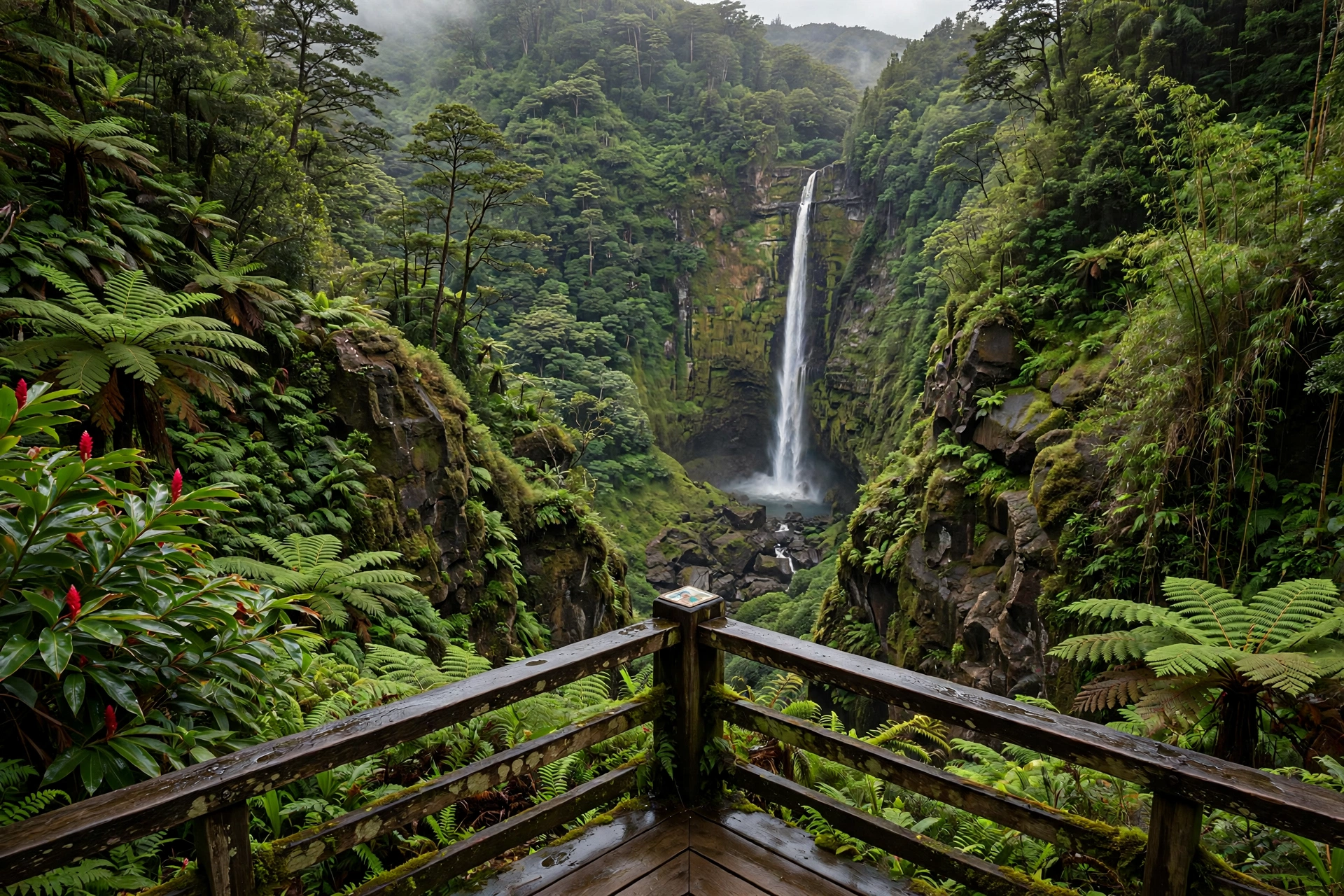
Rainbow Falls, known in Hawaiian as Waiānuenue (literally “rainbow water”), is the easiest great waterfall in Hawaiʻi to see. The Wailuku River drops 80 feet over a basalt ledge into a wide, turquoise pool, and the falls sit about a mile and a half from downtown Hilo inside Wailuku River State Park. The viewing platform is steps from the parking area, and a short paved ramp makes part of the park wheelchair accessible.
The falls earn their name on sunny mornings, when light hitting the mist often paints rainbows in the spray, usually around mid-morning. According to Hawaiian tradition, the lava cave behind the falls was the home of Hina, mother of the demigod Māui, which gives the site cultural depth beyond its scenery. A massive ancient banyan tree shades the walkway that climbs to the top of the falls, where you can look down into the plunge pool and watch the Wailuku River continue downstream.
Do not swim here. There are no lifeguards, the currents are dangerous, and swimming in the pool below Rainbow Falls is prohibited. Enjoy the view, climb the steps to the top overlook if you are able, and keep a firm grip on children near the edges.
Boiling Pots: The Wailuku River’s Natural Cauldrons
A short drive upstream from Rainbow Falls, still within Wailuku River State Park, the river squeezes through old lava rock and drops through a series of terraced pools known as Boiling Pots. The churning water bubbles and rolls as if boiling, and hexagonal basalt columns formed by slowly cooling lava line the banks. Five convulsing spouts just above the pots are known as Peʻepeʻe Falls, which feed the whole system.
Boiling Pots is a lookout stop, not a swimming hole. The currents here are genuinely dangerous, the rocks are slick, and people have been swept away in the Wailuku River. Stay at the overlooks, keep back from the edges, and never enter the water.
Hiʻilawe Falls: The Great Falls of Waipiʻo, Seen Honestly
Hiʻilawe Falls is one of the tallest waterfalls in all of Hawaiʻi, dropping about 1,450 feet in two tiers into the back of Waipiʻo Valley on Lalakea Stream. On paper it is the most spectacular waterfall on the Big Island. In practice, it is the hardest to see, and honesty matters more than hype.
Two facts shape any visit. First, Lalakea Stream above the falls has been diverted for irrigation, so Hiʻilawe can run thin or even dry, even in wetter months. The falls are at their fullest after sustained heavy rain, and there is no schedule for that. Second, the road into Waipiʻo Valley has been closed to visitors under a county emergency rule since 2022, with the closure renewed repeatedly. Pedestrians, ATVs, and horseback riders are prohibited on the valley road, and the valley floor is reached only through authorized, permitted shuttle tours. Do not trust older guidebooks that describe hiking down on your own; that access no longer exists.
From the Waipiʻo Valley Lookout at the end of Highway 240, you get a sweeping view of the valley’s green floor, black sand beach, and sea cliffs, but Hiʻilawe itself sits deep in the valley’s back wall and is not clearly visible from the lookout. The realistic ways to see the falls are from the air on a helicopter flight over the Kohala valleys, or from an authorized valley tour when one is operating. If Hiʻilawe is on your list, plan around that reality rather than hoping for a roadside view that does not exist.
Waterfalls of the Hāmākua Coast
The Hāmākua Coast, the green stretch of Highway 19 between Hilo and Honokaʻa, is waterfall country. Old sugar plantation flumes once carried water across these gulches, and today the same wet valleys hold some of the island’s prettiest falls. Several sit on private land, which is normal here; the honest approach is to visit through the property that manages them.
Umauma Falls
About 16 miles north of Hilo near Hakalau, Umauma Falls drops in three visible tiers through a narrow green valley, with a cumulative height reported around 300 feet. The falls once sat within the World Botanical Gardens, but the lookout and surrounding acreage were sold, and the falls are now accessed through the Umauma Experience property on the Old Māmalahoa Highway. Access requires entry through the property, which also operates ziplines and garden walks.
The three-tiered shape makes Umauma one of the most photographed waterfalls on the island. Flow and color change quickly with rain, and the viewing areas can be wet after showers, so wear shoes with traction.
Onomea Falls
Inside the Hawaiʻi Tropical Bioreserve & Garden near Papaikou, Onomea Falls is a three-tiered cascade discovered on the property years after the garden’s founders began clearing the land by hand. The garden spans 17 acres of Onomea Valley with more than 2,000 tropical plant species, boardwalks over ravines, and ocean vistas, and the falls are its crown jewel. The garden charges admission, operates daily, and the trails involve some slopes and stairs, so allow one to two hours.
Kulaniapia Falls
About 15 minutes from downtown Hilo, the 120-foot Kulaniapia Falls sits on the private grounds of the Inn at Kulaniapia Falls, on the Waiau River. The inn generates its power from the falls’ hydroelectric system, and the property includes bamboo gardens and hiking trails. Non-guests can visit through a day pass when available; swimming in the pool is allowed only when the inn deems conditions safe. Because this is private property with controlled access, check current day-pass availability before driving out.
Driving the Waterfall Coast
The scenic drive itself is part of the experience. Between Hilo and Honokaʻa, Highway 19 and the Old Māmalahoa Highway cross one gulch after another, and after rain you will spot unnamed cascades pouring off the cliffs between the named falls. The Hawaiʻi Tropical Bioreserve, Umauma, and ʻAkaka Falls State Park all sit within a half-hour stretch, which makes a Hilo-based day trip the efficient way to see the Hāmākua falls. Pair the drive with a stop in Honokaʻa, the old plantation town at the coast’s northern end, for a full day.
Honokaʻa makes a natural bookend for the waterfall coast. After a morning of falls, the town’s Māmane Street offers a slow, shady main street with wooden storefronts, local food, and the historic People’s Theatre. It is also the gateway town for the Waipiʻo Valley Lookout, so a single day can combine Hāmākua waterfalls in the morning, Honokaʻa at midday, and the valley lookout in the afternoon light. That triangle, Hilo to Honokaʻa to Waipiʻo, is the classic Big Island waterfall day, and it needs no hiking beyond short paved walks.
Hilo and the Wailuku River
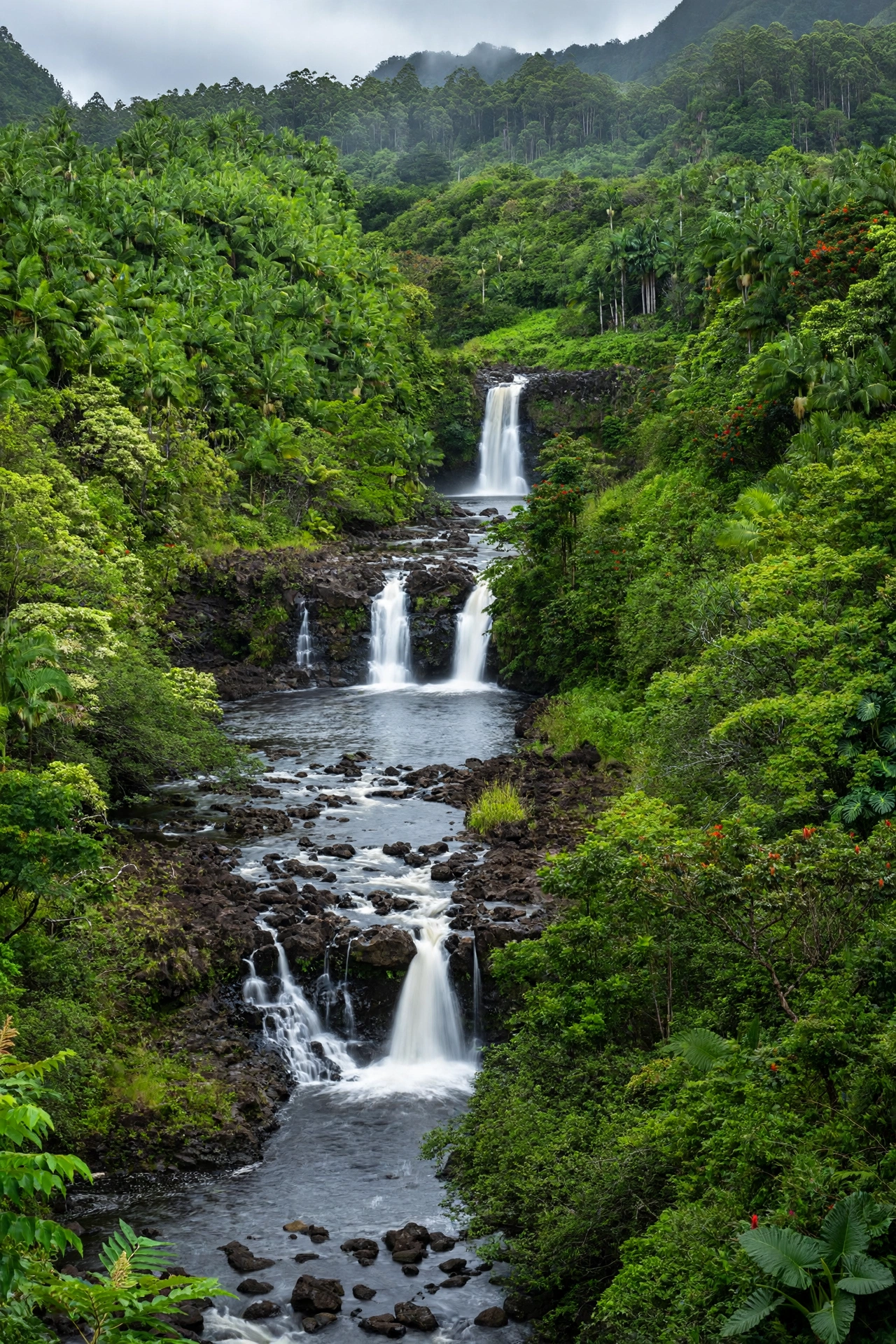
Hilo is the best base for Big Island waterfalls, and the Wailuku River is why. The river runs from the slopes of Mauna Kea straight through town to Hilo Bay, and its short course packs in Rainbow Falls, Peʻepeʻe Falls, and Boiling Pots within a few miles. You can see all three in a single morning without any real hiking.
Start at Rainbow Falls in Wailuku River State Park for the classic view and the morning rainbows, then drive upstream to the Boiling Pots overlook to watch Peʻepeʻe Falls feed the churning pools. The whole route is paved and close to town, which makes it ideal for travelers with limited mobility, families with small children, or anyone short on time. From Hilo, ʻAkaka Falls State Park is about 25 to 30 minutes north, and Kulaniapia Falls is about 15 minutes away, so the full set of east-side falls fits comfortably into two days.
The Wailuku River’s name means “water of destruction” in Hawaiian, and it earned it. This river floods with terrifying speed during heavy rain, which is why every waterfall along it comes with the same rule: admire from the overlooks, never enter the water, and leave immediately if rain starts falling hard upstream.
Waterfall Safety on the Big Island
Big Island waterfalls are beautiful and genuinely hazardous. Treat this section as the most important part of the page.
Flash Floods
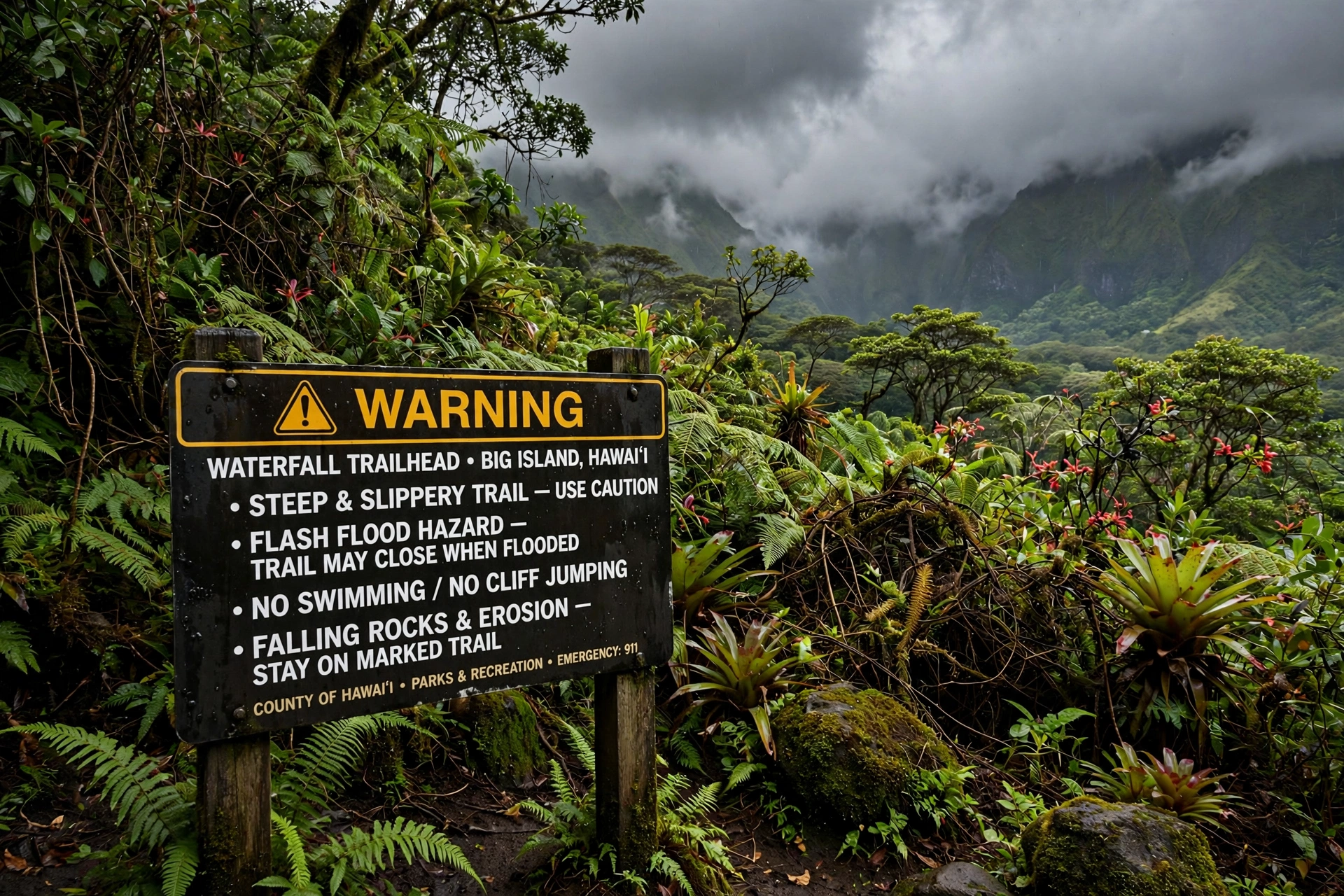
Most Big Island waterfalls sit in steep valleys that catch sudden, intense rain. A stream that looks calm can become a raging torrent within minutes when rain falls on the slopes above, even if the sky above you is blue. Never cross a swollen stream, never stand in a streambed during rain, and if water starts rising or turning brown, move to high ground immediately. The Wailuku River, which feeds Rainbow Falls and Boiling Pots, is notorious for flash flooding.
Leptospirosis
The Hawaiʻi Department of Health advises that freshwater streams statewide can carry leptospirosis, a bacterial disease spread through the urine of infected animals. Do not drink untreated stream water, avoid swimming or wading in freshwater with open cuts, and keep your head above water if you do enter freshwater anywhere on the island. This is one more reason waterfall pools that look inviting are often off limits.
No Swimming Means No Swimming
Swimming is prohibited at ʻAkaka Falls and Rainbow Falls, and the currents at Boiling Pots and Peʻepeʻe Falls make the water deadly even where no sign is posted. Rocks around waterfalls are slick with algae, and underwater currents near plunge pools can trap even strong swimmers. If you want a waterfall swim on the Big Island, Kulaniapia Falls allows it when the inn judges conditions safe, which is the exception that proves the rule.
Private Land and Permits
Many Big Island waterfalls sit on private land. Umauma Falls and Kulaniapia Falls are accessed through the properties that manage them; Onomea Falls is inside a botanical garden. Do not trespass to reach a waterfall you saw on social media. Beyond the legal risk, many of these valleys are culturally significant, and unpermitted access disrespects the communities connected to them.
Sacred Places Deserve Respect
Waterfalls and the valleys around them are woven into Hawaiian spiritual tradition. Hiʻilawe’s legend, Hina’s cave behind Rainbow Falls, and the Valley of the Kings at Waipiʻo all remind visitors that these are not just photo stops. Stay on marked trails, do not move or stack rocks, keep noise down, and leave every site cleaner than you found it.
Best Time to See the Falls
Big Island waterfalls flow year round, but they are fullest during the rainy season, roughly November through March, when the trade winds are strongest and storms are most frequent. This is also when flash flood risk is highest, so the most dramatic flows come with the greatest need for caution.
The drier months, roughly April through October, bring slimmer but still lovely falls, easier trail conditions, and better odds of the sunny mornings that produce rainbows at Rainbow Falls. Morning visits are best for photography everywhere: the light is softer, the mist shows rainbows, and the crowds are thinner. ʻAkaka Falls State Park opens daily in the morning and gates close in the late afternoon, so plan Hāmākua Coast stops for the first half of the day.
For photographers, a few practical notes help. Overcast days are actually excellent for waterfall photography because the even light prevents harsh highlights on white water and deep shadows in the gorge. If you shoot on a bright morning at Rainbow Falls, position yourself so the sun is behind you to catch the rainbow in the mist. A polarizing filter cuts glare on wet foliage and deepens the green of the rainforest, and it is worth bringing even if you shoot on a phone with a clip-on. After rain, everything is more vivid, but trails are slicker, so footwear with real traction matters more than camera gear.
Frequently Asked Questions
What is the most famous waterfall on the Big Island?
ʻAkaka Falls, a 442-foot plunge in ʻAkaka Falls State Park about 11 miles north of Hilo. It is the most photographed waterfall on the island and the easiest major fall to reach, via a paved 0.4-mile loop trail.
Can you swim at Big Island waterfalls?
Generally no. Swimming is prohibited at ʻAkaka Falls and Rainbow Falls, and the currents at Boiling Pots and Peʻepeʻe Falls are dangerous. Kulaniapia Falls, on private inn property, allows swimming when the inn judges conditions safe. Freshwater streams statewide also carry a risk of leptospirosis.
Can you still visit Hiʻilawe Falls in Waipiʻo Valley?
The valley road has been closed to visitors under a county emergency rule since 2022, and the valley floor is reached only through authorized, permitted tours. The free Waipiʻo Valley Lookout remains open. Note also that the stream above the falls has been diverted for irrigation, so the falls can run low even in wet months.
Which Big Island waterfall is easiest to see?
Rainbow Falls in Hilo. The viewing platform in Wailuku River State Park is steps from the parking area, and part of the park is wheelchair accessible. ʻAkaka Falls requires only a short, easy loop walk.
Where is Umauma Falls and how do you visit?
Umauma Falls is near Hakalau on the Hāmākua Coast, about 16 miles north of Hilo, on private land managed by the Umauma Experience. Visit through the property, which offers garden walks, ziplines, and waterfall viewing.
Are there waterfalls on the Kona side of the Big Island?
Almost none. The Kona and Kohala coasts sit in the island’s rain shadow and are far too dry for permanent waterfalls. Plan waterfall sightseeing on the windward east side, between Hilo and Waipiʻo Valley.
Do Big Island waterfalls flow year round?
The major named falls flow year round, but volume varies enormously with rainfall. The rainy season from November through March brings the fullest flows and the highest flash flood risk; the drier months bring slimmer falls and easier conditions.
Is there an entry fee for ʻAkaka Falls State Park?
Nonresidents pay a per-person entry fee plus a parking fee, with Hawaiʻi residents admitted free with valid ID. Pets are not allowed, and the park opens daily in the morning with gates closing in the late afternoon. Check the Division of State Parks for current fees and hours before you go.
Related Guides
- Hawaiʻi Waterfalls: waterfalls across all the islands
- Where Is the Big Island in Hawaiʻi: Complete Guide: island location and regions
- Puna, Hawaiʻi: the island’s wild east side
- Honokaʻa, Hawaiʻi: Hāmākua Coast plantation town
- Big Island Hawaiʻi Weather: rainfall patterns by region
- Best Time to Visit Hawaiʻi: planning around the seasons
- Hawaiʻi Map: finding every region
A Final Note
Big Island waterfalls reward travelers who match their plans to the island’s realities: go east for the falls, go early for the light, and go prepared for rain. The famous falls, ʻAkaka and Rainbow, deliver world-class scenery with minimal effort, while the Hāmākua Coast’s garden and private-land falls reward a slower day of driving and walking. And the island’s greatest waterfall, Hiʻilawe, remains what it has always been: a wild place at the back of a sacred valley, best appreciated with patience, respect, and honest expectations.