
Kauaʻi Transportation
Getting around Kauaʻi takes a little planning. The Garden Isle has no road circling the island, public transit runs on island time, and the best trailheads and beaches sit far from the towns. This guide covers every way to move around Kauaʻi: rental cars, The Kauaʻi Bus, taxis and rideshares, walking and biking, interisland flights, driving tips for the island’s trickiest roads, and accessibility options.
On This Page
Getting Around Kauaʻi: The Big Picture
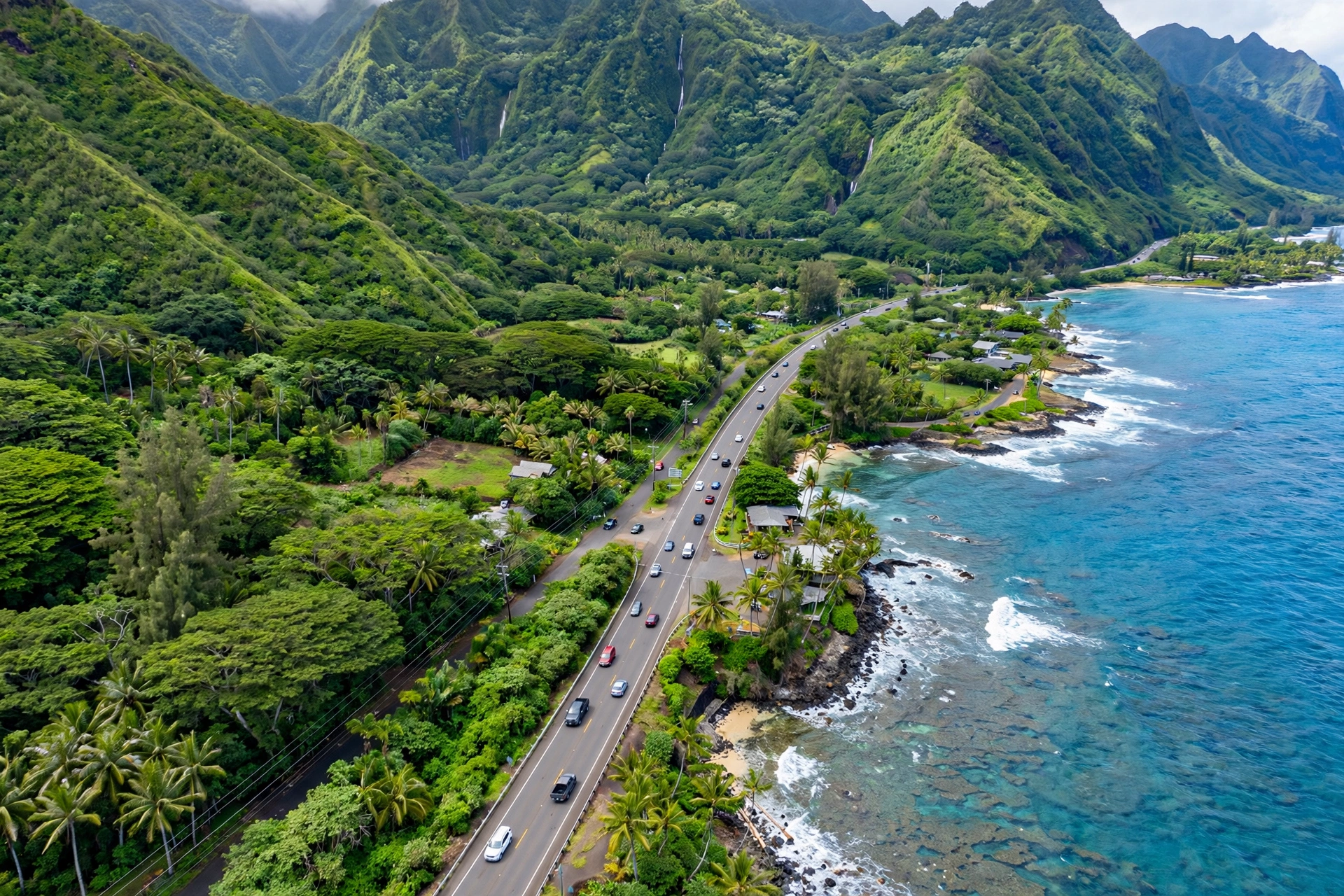
Kauaʻi is small, but it is not compact in the way visitors expect. The island is about 25 miles across, yet the road network covers only part of it. The Nāpali Coast on the northwest side is roadless wilderness, which means there is no ring road. Kūhiō Highway runs up the east and north shores from Līhuʻe to Hāʻena, where it dead-ends. Kaumualiʻi Highway runs south and west from Līhuʻe to Kekaha, continuing as a rough road to Polihale. To travel from the north shore to the west side, you must drive back through Līhuʻe, a trip of roughly two hours each way.
Līhuʻe sits near the island’s southeast corner and works as the natural hub. The airport, the main harbor, the county offices, and the island’s largest shopping areas are all here. Most visitors land at Līhuʻe Airport, pick up a rental car, and head to their base: Poʻipū on the south shore, the Kapaʻa to Wailua corridor on the east side, or Hanalei and Princeville on the north shore. Each base puts different day trips within easy reach and different ones at a long drive.
A rental car is the practical answer for nearly every visitor. Kauaʻi’s public bus reaches the main towns but does not serve trailheads, Waimea Canyon, Hāʻena State Park, or most beaches beyond the town centers. Rideshares exist but thin out away from Līhuʻe and Poʻipū. Taxis are available but expensive for the long distances between regions. If your plans include the Kalalau Trail, Waimea Canyon, or the north shore, a car is close to essential.
The exception is the traveler who stays put. If you base yourself in Poʻipū or Kapaʻa and plan to spend your days on the nearby beach, walking to meals, and joining one or two boat tours that include hotel pickup, you can manage without a car. Even then, the freedom of a rental car usually pays for itself in the first day. Kauaʻi rewards the driver who can chase the sun from one coast to the other.
Rental Cars on Kauaʻi
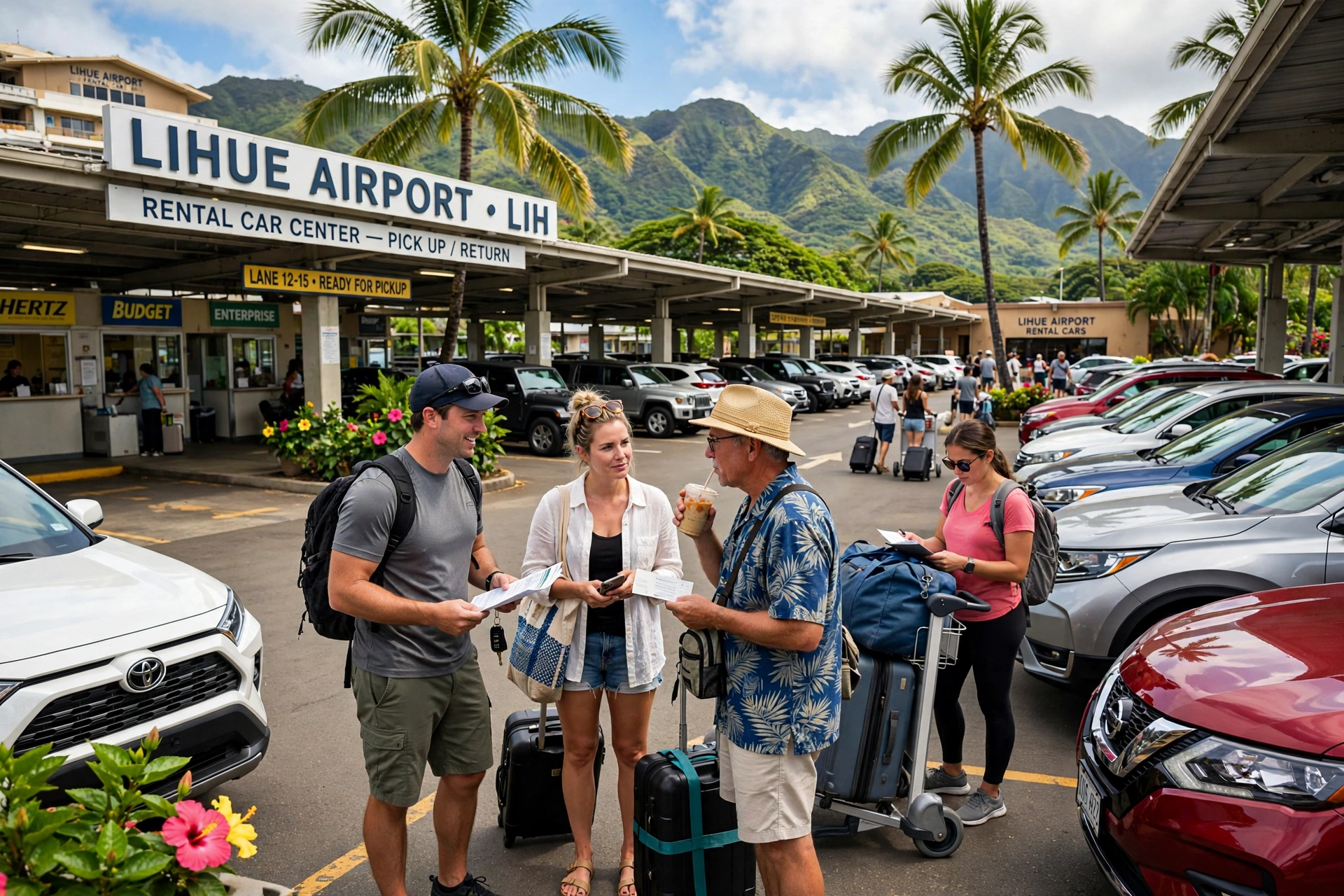
Līhuʻe Airport (LIH) has an on-airport consolidated rental car facility, so you pick up your car steps from baggage claim. The major national brands all operate here. During peak periods, which include midwinter, spring break, and summer, the island’s rental fleet sells out. Booking weeks or months ahead is the norm for Kauaʻi, and walk-up availability in high season is unreliable.
A standard sedan handles every paved road on the island. You do not need four-wheel drive for the public road network, including Waimea Canyon Drive and the north shore highway. Some visitors prefer a Jeep or SUV for the extra clearance on rough driveways and the road to Polihale, but no major sight requires it. Convertibles are popular for the scenery, though the island’s sudden rain showers keep the top up more often than visitors expect.
Read your rental agreement before heading to Polihale State Park. The last few miles of road from Kekaha to Polihale are unpaved, and most rental contracts prohibit driving on it. The road is rough but usually passable in a regular car; the issue is the contract, not the terrain. If the beach at Polihale is on your list, confirm the policy with your rental company or visit it another way.
Parking deserves the same attention as the car itself. Hotel and resort parking on Kauaʻi commonly carries a nightly fee, often in the $30 to $50 range at larger resorts, so factor it into your lodging budget. Street parking in Hanalei, Kapaʻa, and Poʻipū is free but competitive in the middle of the day. Trailhead and beach parking lots fill early: Hāʻena State Park requires advance reservations for everyone, and popular spots like Tunnels and Keʻe have small lots that fill by midmorning.
Theft from rental cars is the most common crime affecting visitors. Never leave valuables visible in a parked car, and never leave luggage in the car at a trailhead or beach. Break-ins happen most at remote trailheads and unguarded beach lots. Take your valuables with you or lock them in the trunk before you arrive, not after you park, since thieves watch parking lots.
Gas stations cluster in the towns: Līhuʻe, Kapaʻa, Poʻipū, Kōloa, Waimea, Kekaha, Hanalei, and Princeville. There are no stations in Kōkeʻe or Waimea Canyon, none past Hanalei toward Hāʻena, and none on the road to Polihale. Fill up before heading into the canyon or up the north shore. Prices run higher than the US mainland average, as on all the islands.
The Kauaʻi Bus
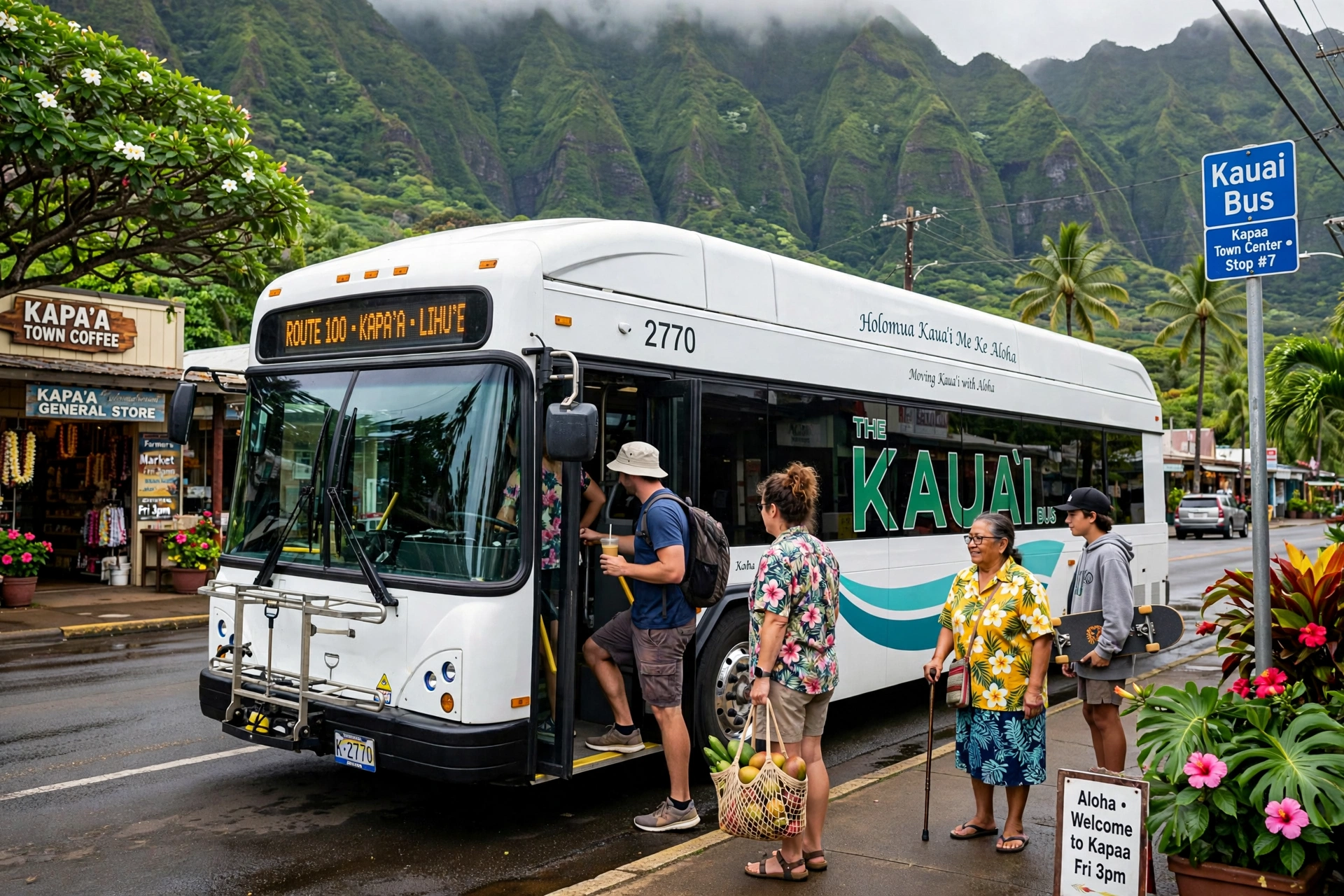
The Kauaʻi Bus is the county-run public transit system, and it is the most affordable way to travel between towns. The main route runs the length of the island’s road network, from Kekaha on the west side through Waimea, Hanapēpē, Kalaheo, and Līhuʻe, then up the east side through Kapaʻa and Wailua to Princeville and Hanalei on the north shore. Buses run roughly hourly on the main route during the day, with reduced service in the evening and on Sundays and holidays.
Fares are inexpensive: a single adult ride costs a few dollars, and day passes are available for unlimited rides. Exact fares change over time, so check the County of Kauaʻi Transportation Agency for current prices before you ride. Buses accept cash on boarding, and drivers can make change only in limited amounts, so carry small bills. The buses have bike racks on the front, which makes combining a bus ride with a bike trip practical.
All buses in the fleet are wheelchair accessible with lifts, and drivers are trained to assist passengers with disabilities. Service animals ride free. The bus is a genuine option for travelers with mobility needs who want to move between towns without a car.
For visitors, the honest assessment is that The Kauaʻi Bus works for town-to-town travel but not for sightseeing. It does not go to Waimea Canyon or Kōkeʻe, does not serve Hāʻena State Park or Keʻe Beach, and does not reach Polihale. Frequencies are commuter-oriented, so a missed bus can mean an hour’s wait. If you are staying in Kapaʻa and want to spend a day in Hanalei or Līhuʻe, the bus is perfectly fine. If you want to hike the Kalalau Trail or watch sunset at Waimea Canyon, it is not.
One more limitation to plan around: the bus does not run late. Evening service ends well before dinner finishes at most restaurants, so a bus-based day trip needs to end in the afternoon. Check the current schedule on the county website, because routes and times are adjusted periodically.
Taxis, Rideshares, and Shuttles
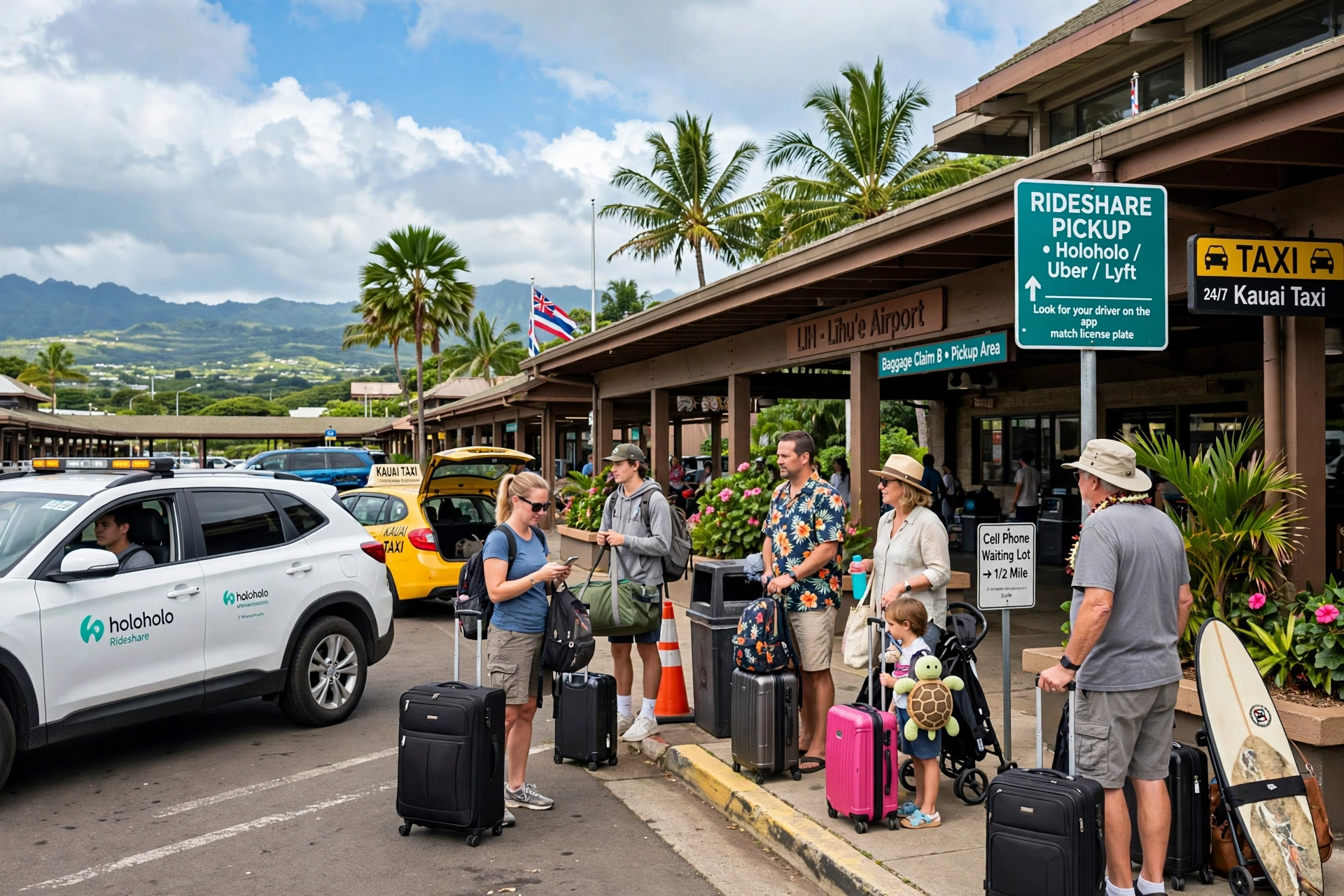
Taxis meet arriving flights at Līhuʻe Airport, and taxi stands operate in the main visitor areas. A taxi is the simplest option for the short hop from the airport to a Līhuʻe or Nāwiliwili hotel. For longer trips, such as Līhuʻe to Poʻipū or Princeville, agree on the fare or confirm the meter before you leave, because the island’s distances make these rides expensive.
Uber and Lyft both operate on Kauaʻi, but availability is the catch. In Līhuʻe, Kapaʻa, and Poʻipū during the day and early evening, you can usually get a ride within a reasonable wait. On the north shore, in Waimea, and anywhere late at night, drivers are scarce and wait times stretch. Do not count on a rideshare for a 5 a.m. airport run or a late return from a north shore dinner. Pre-arranged airport transfers are more reliable for early and late flights.
Shared and private airport shuttles serve the main resort areas. Several companies run scheduled shared shuttles between Līhuʻe Airport and Poʻipū, Kapaʻa, and Princeville, and private transfer companies offer door-to-door service for groups. These cost more than a taxi for a couple but can be economical for a family with luggage. Book at least a day ahead in high season.
Many boat tour, helicopter, and activity operators include hotel pickup in their pricing, which solves the transport problem for that day’s outing. If you are staying without a car, choosing activities that pick you up is the practical way to see the Nāpali Coast or take a helicopter flight. Confirm the pickup zone when you book, because operators define their pickup areas narrowly and may charge extra outside them.
The Hāʻena shuttle deserves special mention. Because Hāʻena State Park and Keʻe Beach require advance reservations and parking is extremely limited, the state runs a shuttle from Waipā, near Hanalei, to the park. Reservations for the shuttle are made through the same system as park entry. The shuttle solves the north shore’s worst parking problem, and for visitors staying in Hanalei or Princeville it is often easier than driving in.
Walking and Biking
Kauaʻi is not a walking island between towns, but several areas reward travelers on foot. Poʻipū’s resort district has sidewalks connecting beaches, shops, and restaurants. Kapaʻa’s old town is walkable, and the coastal path extends the stroll for miles. Hanalei town is compact enough to park once and walk everywhere. Līhuʻe’s civic and shopping areas are walkable in the daytime, though distances between them add up.
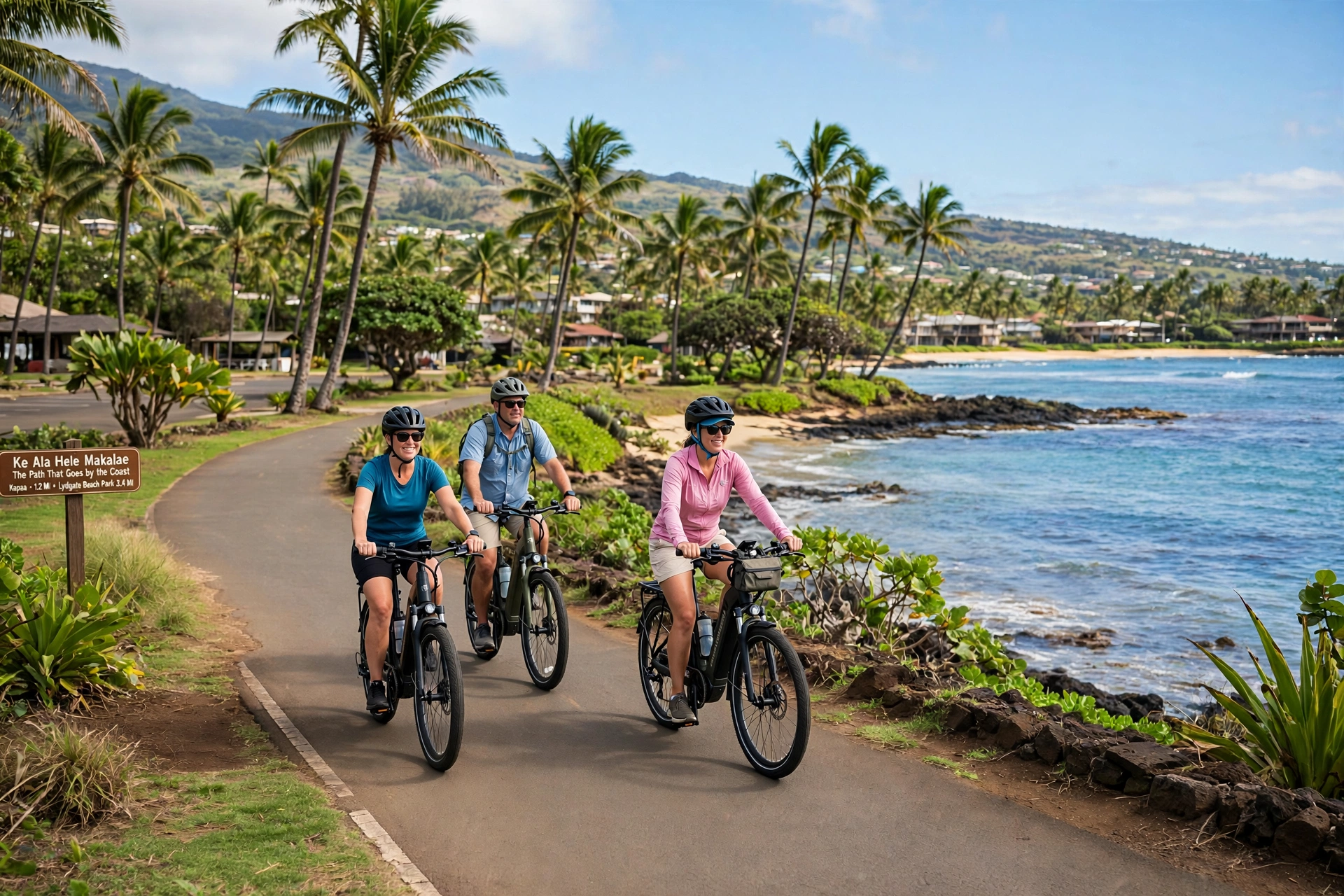
The standout is Ke Ala Hele Makalae, the coastal path on the east side. This paved multi-use path runs about eight miles from Lydgate Park through Kapaʻa to Ahihi Point, following the shoreline nearly the whole way. It is flat, scenic, and separated from traffic, which makes it the best bike ride and the best long walk on the island. Morning is the sweet spot, before the trade winds pick up and the heat builds.
Bike rentals are available in Kapaʻa, Poʻipū, and Hanalei, including e-bikes that flatten the island’s hills. E-bikes have changed the equation for Kauaʻi cycling, making the coastal path and the ride between Kapaʻa and Lydgate easy for any fitness level. Standard bikes work fine on the path itself. There is no island-wide bikeshare system, so plan on a rental shop.
Riding on the highways is a different matter. Kūhiō Highway and Kaumualiʻi Highway have narrow shoulders in many sections, fast traffic, and limited sight lines around curves. Confident cyclists ride them, but visitors on rental bikes should stick to the coastal path, resort areas, and quiet neighborhood streets. If you ride on a highway, use lights, ride single file, and avoid the busiest hours.
Walking the highways is not recommended anywhere outside town centers. There are no sidewalks on most of the island’s roads, and the speed of traffic makes roadside walking genuinely dangerous. Treat the highways as driving routes and save your walking for the paths, beaches, and towns.
Interisland Travel From Kauaʻi
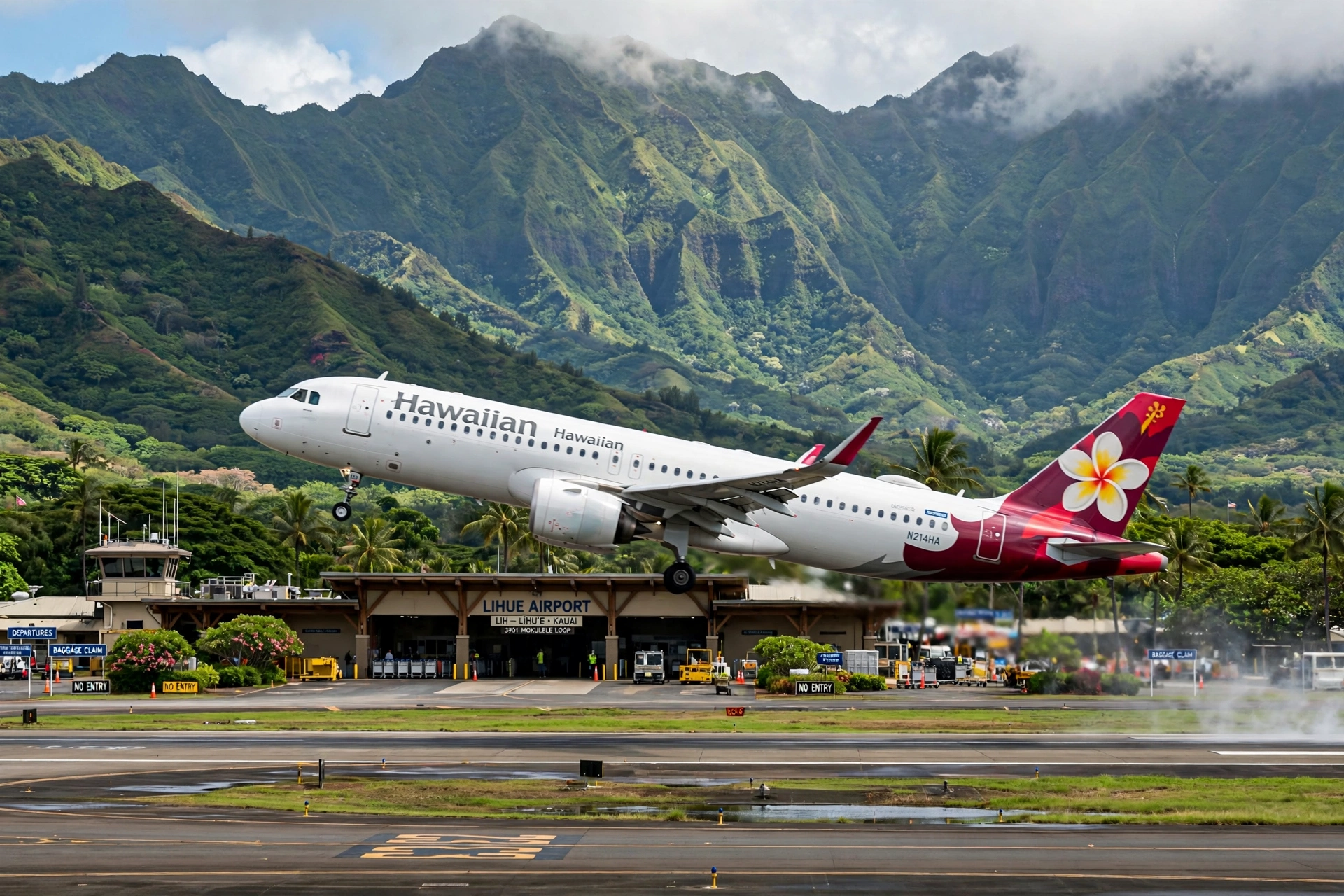
Every interisland trip from Kauaʻi starts at Līhuʻe Airport. Hawaiian Airlines and Southwest fly nonstop between Līhuʻe and Honolulu multiple times a day, and both offer service to Kahului on Maui and to Kona and Hilo on the Big Island, though some routings connect through Honolulu. Flight time to Honolulu is about 35 minutes.
Book interisland flights as separate tickets from your mainland flights unless you are on a single itinerary. Separate tickets mean separate baggage rules and no protection if a delay makes you miss a connection, so leave generous buffers. Morning flights are the most reliable, since the island’s weather and the airlines’ schedules both deteriorate through the afternoon.
There is no scheduled passenger ferry between Kauaʻi and any other island. The interisland ferry that once ran has been gone for years, and no replacement exists. Anyone selling you a “ferry to Kauaʻi” is describing a boat tour or a private charter, not public transport. Plan on flying.
Cruise ships call at Nāwiliwili Harbor in Līhuʻe, which is the island’s deep-draft harbor. The weekly interisland cruises that circle the islands include Kauaʻi as a port of call, usually with a full day in port. If you arrive by cruise ship, the harbor is a short drive from Līhuʻe town, and shore excursions and rental cars cover the island’s sights. Taxis and shuttles meet the ships.
Niʻihau, the Forbidden Island, lies 17 miles off Kauaʻi’s west coast and is privately owned. There is no public transport to Niʻihau. Limited helicopter and boat tours visit with the owners’ permission, and these are specialized excursions rather than transport options.
Driving Tips for Kauaʻi Roads
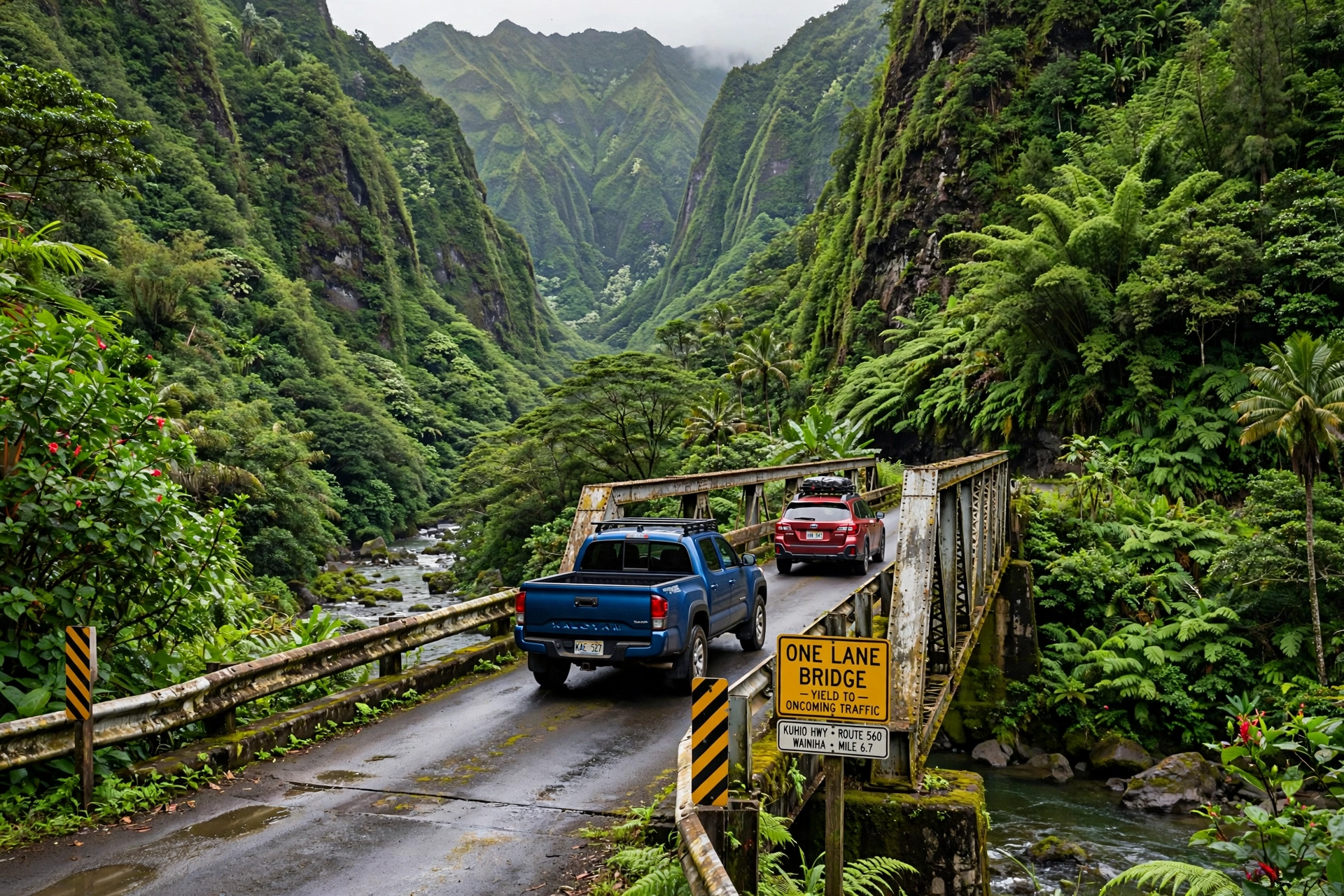
Kauaʻi’s roads are generally good, but a few features surprise first-time visitors. The north shore section of Kūhiō Highway, between Princeville and Hāʻena, crosses a series of one-lane bridges over the streams that drain the Nāpali valleys. The rule is simple: the vehicle that arrives first crosses first, and if you arrive at the same time, the car on the wider approach usually yields to let the other pass. Drive slowly, watch for the yield signs, and never assume you have the right of way.
Waimea Canyon Drive (Highway 550) climbs from Waimea town to Kōkeʻe State Park in about 45 minutes of steady switchbacks. The road is paved and well maintained, but it is narrow, with sheer drop-offs in places and slow traffic when tour vans stack up. Start early to get a parking spot at the main lookouts, and check the weather before you go: the canyon creates its own clouds, and the lookouts can be fogged in by midday. There are no gas stations and limited food past Waimea, so fuel up and pack water.
On the north shore, the road ends at Hāʻena State Park. Everyone visiting the park, whether for Keʻe Beach or the Kalalau Trail, needs an advance reservation made through the state park reservation system, for either a parking slot or a seat on the shuttle from Waipā. Reservations open well in advance and sell out, especially for parking. Do not drive to Hāʻena without one; you will be turned around at the checkpoint.
Drive times between regions are longer than the map suggests. Plan roughly 25 to 30 minutes from Līhuʻe to Poʻipū, 45 minutes to an hour from Līhuʻe to Hanalei depending on traffic, and 35 to 45 minutes from Līhuʻe to Waimea. The road to Waimea Canyon’s lookouts adds another 45 minutes beyond Waimea town. Add time in the rainy season, when slow traffic and ponding water are common on the north and east sides.
Rush hour on Kauaʻi is real but short, concentrated on Kūhiō Highway through Kapaʻa and into Līhuʻe on weekday mornings and afternoons. The Kapaʻa crawl is the island’s famous bottleneck: a two-lane highway carrying commuter traffic through a string of stoplights. If you are staying in Kapaʻa and day-tripping, leave before 7 a.m. or after 9 a.m. to miss the worst of it.
Night driving calls for extra care. The highways outside town are dark, with no streetlights on long stretches, and rain can arrive in minutes. Slow down, use high beams when no one is coming, and watch for the island’s free-roaming chickens near the roadside in the morning. After heavy rain, check for road closure notices before heading to the north shore or Waimea Canyon, since both areas see occasional washouts.
Accessibility
The Kauaʻi Bus fleet is fully wheelchair accessible, with lifts and securement areas on every bus, and drivers assist with boarding. The county also operates a paratransit service for riders who cannot use the fixed-route bus; it requires advance registration and reservations, so set it up before your trip through the County of Kauaʻi Transportation Agency.
At Līhuʻe Airport, accessible parking, curb ramps, and assistance services are standard. Rental car companies at the airport offer hand-controlled vehicles, but these are limited in number and must be reserved well ahead. If you need one, book directly with the rental company and confirm a few days before arrival.
Many of Kauaʻi’s headline sights are viewable without hiking. The Waimea Canyon lookouts, Kīlauea Lighthouse viewpoint, ʻOpaekaʻa Falls overlook, and Wailua Falls overlook are all reachable by car with short paved paths. Ke Ala Hele Makalae is paved and relatively flat, and several beach parks have accessible restrooms and reserved parking. Call ahead to confirm conditions, since rain and maintenance can change path surfaces.
Frequently Asked Questions
Do I need a rental car on Kauaʻi?
For most visitors, yes. Kauaʻi’s sights are spread across regions that the bus does not reach, including Waimea Canyon, Hāʻena State Park, and the island’s best trailheads. The bus covers town-to-town travel, and rideshares work in the main visitor areas, but a rental car is the only practical way to see the whole island on your own schedule.
Can I drive all the way around Kauaʻi?
No. The Nāpali Coast has no road, so the highway system is a horseshoe, not a loop. Kūhiō Highway ends at Hāʻena on the north shore, and the west side road ends at Polihale. Traveling between the north shore and the west side means driving back through Līhuʻe, about two hours each way.
How do I get from Līhuʻe Airport to Poʻipū or Princeville?
A rental car is the most common choice and the drive takes about 25 to 30 minutes to Poʻipū and about 45 minutes to an hour to Princeville. Taxis are available at the terminal, rideshares usually are during the day, and shared shuttles run to the main resort areas. For early or late flights, pre-book a shuttle or taxi rather than relying on a rideshare.
Is there a ferry from Kauaʻi to Oʻahu or Maui?
No. There is no scheduled passenger ferry between Kauaʻi and any other island. Interisland travel is by air from Līhuʻe Airport, with frequent flights to Honolulu and service to Maui and the Big Island. Anyone offering a “ferry” is selling a boat tour or private charter.
How do I get to Hāʻena State Park and Keʻe Beach?
Every visitor needs an advance reservation through the state park reservation system, either for a parking slot or a seat on the shuttle from Waipā near Hanalei. The Kauaʻi Bus does not go to the park. Book as early as the system allows, because parking reservations sell out and the shuttle is the backup.
Does the Kauaʻi Bus go to Waimea Canyon?
No. The bus serves the towns along the highways but does not go up Waimea Canyon Drive to the lookouts or Kōkeʻe State Park. Reaching the canyon requires a rental car, a taxi or tour, or a private transfer.
Is Uber available on Kauaʻi?
Uber and Lyft operate on Kauaʻi, but coverage is uneven. Expect reasonable availability in Līhuʻe, Kapaʻa, and Poʻipū during the day and evening. On the north shore, the west side, and late at night, drivers are few and waits are long. Do not depend on rideshares for early airport departures.
What is the hardest drive on Kauaʻi?
Visitors most often name two: the north shore highway past Princeville, with its one-lane bridges and blind curves, and Waimea Canyon Drive, with its switchbacks and drop-offs. Both are paved and safe when driven slowly. The unpaved road to Polihale is the roughest drive, and most rental agreements prohibit it.
Related Guides
- Kauaʻi Map: the island-wide orientation guide
- Līhuʻe Map: the airport and county seat area
- Map Līhuʻe Hawaiʻi: getting oriented in the hub town
- Hanalei Map: the north shore’s main town
- Kauaʻi Hikes: trailheads and how to reach them
- Kauaʻi Towns: where to base your stay
- Kauaʻi Weather: seasons and driving conditions
- Maui Transportation: getting around the Valley Isle
- Oʻahu Transportation: getting around Oʻahu
- Hawaiʻi Map: the statewide overview
A Final Note
Kauaʻi’s transport picture is simpler than it looks once you accept the island’s shape. One highway runs up each side of the horseshoe, Līhuʻe sits at the bend, and a rental car connects everything worth seeing. The bus fills the gaps between towns, the coastal path covers the east side on foot or by bike, and the air links at Līhuʻe handle everything beyond the island. Plan around the two long drives, the north shore and Waimea Canyon, reserve Hāʻena ahead of time, and the island’s distances become part of the trip rather than an obstacle in it.