
Līhuʻe Map
In This Guide
- Līhuʻe Overview: Kauaʻi’s Gateway Town
- Līhuʻe Area Map: Layout and Landmarks
- Līhuʻe Airport (LIH) Guide
- Things to Do in Līhuʻe
- Nearby Beaches and Attractions
- Līhuʻe’s Plantation Heritage
- Līhuʻe Weather and Best Time to Visit
- Where to Stay and Eat in Līhuʻe
- Driving Distances from Līhuʻe
- Līhuʻe Map FAQ
- Related Kauaʻi Guides
Līhuʻe Overview: Kauaʻi’s Gateway Town
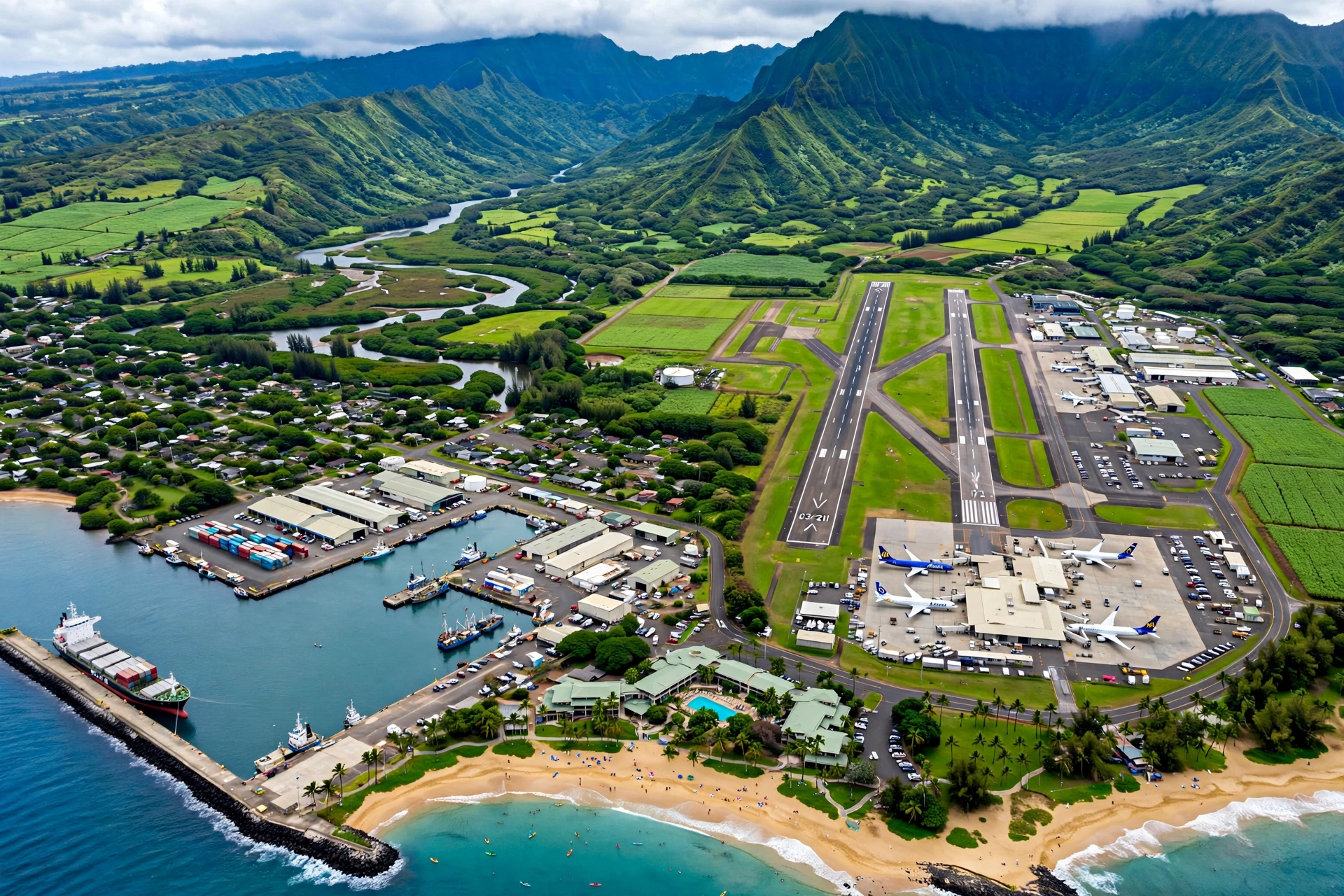
Līhuʻe sits on the southeast coast of Kauaʻi and serves as the island’s county seat and main commercial center. Most visitors pass through Līhuʻe within minutes of landing, because the island’s primary airport sits just a few minutes east of downtown. Yet many travelers never look closely at the town itself, treating it as a drive-through stop on the way to Poʻipū or Princeville. That is a mistake. Līhuʻe rewards a slower look: it holds the island’s best museum, its most storied plantation, and a harbor-front district that tells the story of how Kauaʻi grew from a sugar town into the Garden Isle.
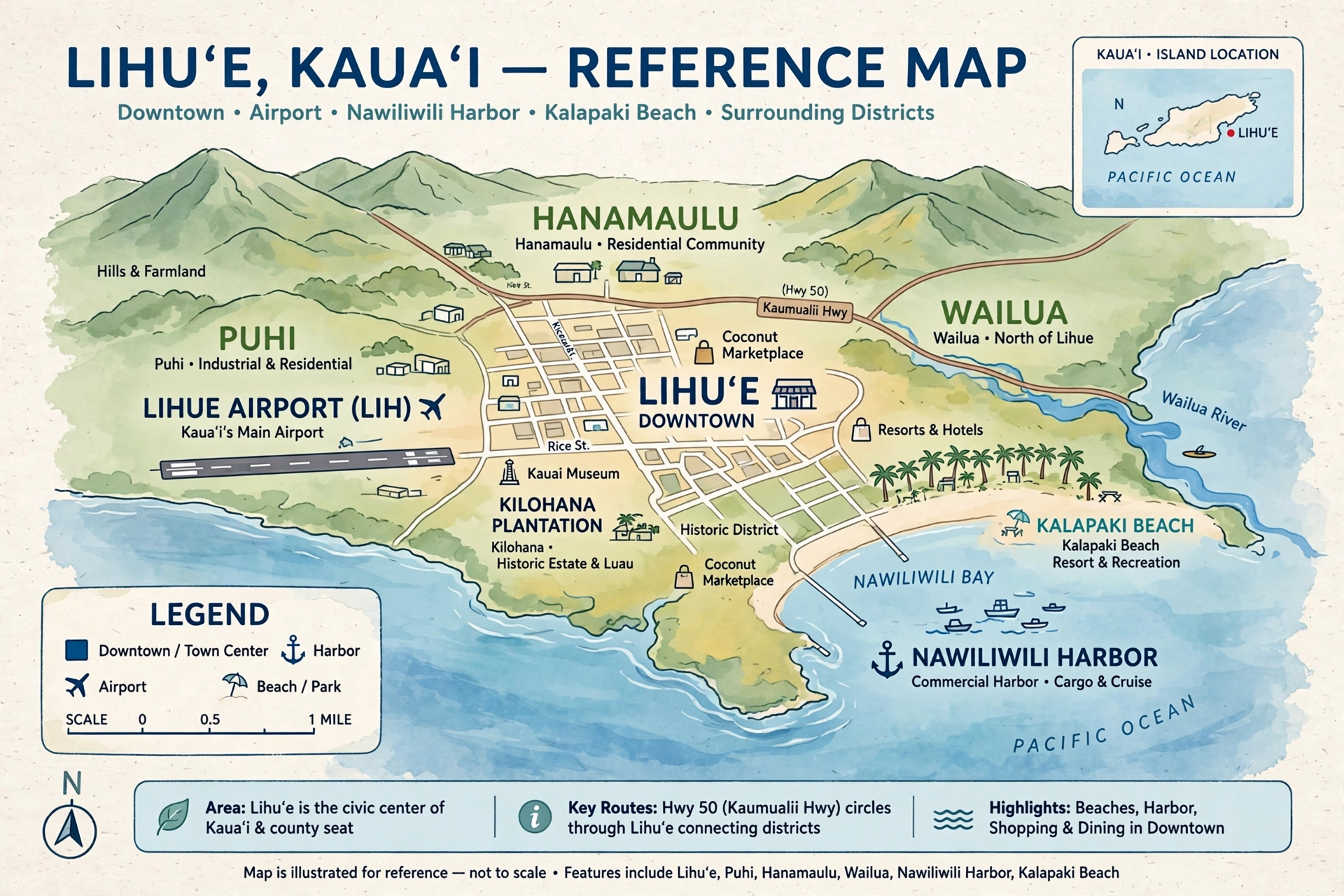
The town wraps around Nāwiliwili Bay on the southeast shore. To the east lies the airport. To the south sit the harbor and the resort cluster around Kalapakī Beach. The commercial heart runs along Rice Street and the Kūhiō Highway, with big-box stores and local businesses spread between downtown and the airport corridor. Inland, the land rises toward the ridgeline where the 1,241-foot Sleeping Giant (Nounou Mountain) profiles the horizon to the north, and Hāʻupu mountain stands to the south.
Līhuʻe’s history is plantation history. The Līhuʻe Plantation was one of Kauaʻi’s great sugar operations, and the town that grew beside its mill was the island’s economic engine for more than a century. Grove Farm, the plantation homestead of George Wilcox, preserves that era in remarkable detail. The sugar mill closed in 2000, but its footprint is everywhere: in the plantation-era architecture on Rice Street, in the Grove Farm museum, and in the Kilohana Plantation estate that now serves as a heritage attraction.
For trip planning, think of Līhuʻe as your logistics hub. It is the best place on the island to stock up at large grocery stores, rent a car, pick up supplies, and get oriented before heading to the resort areas. The town itself deserves at least a half day: the Kauaʻi Museum alone is worth the visit, and the Wailua River area a few minutes north holds some of the island’s most famous sights.
Līhuʻe Area Map: Layout and Landmarks
Līhuʻe is compact, and its landmarks cluster along three corridors. Understanding this layout makes navigation simple.
Downtown Līhuʻe and Rice Street
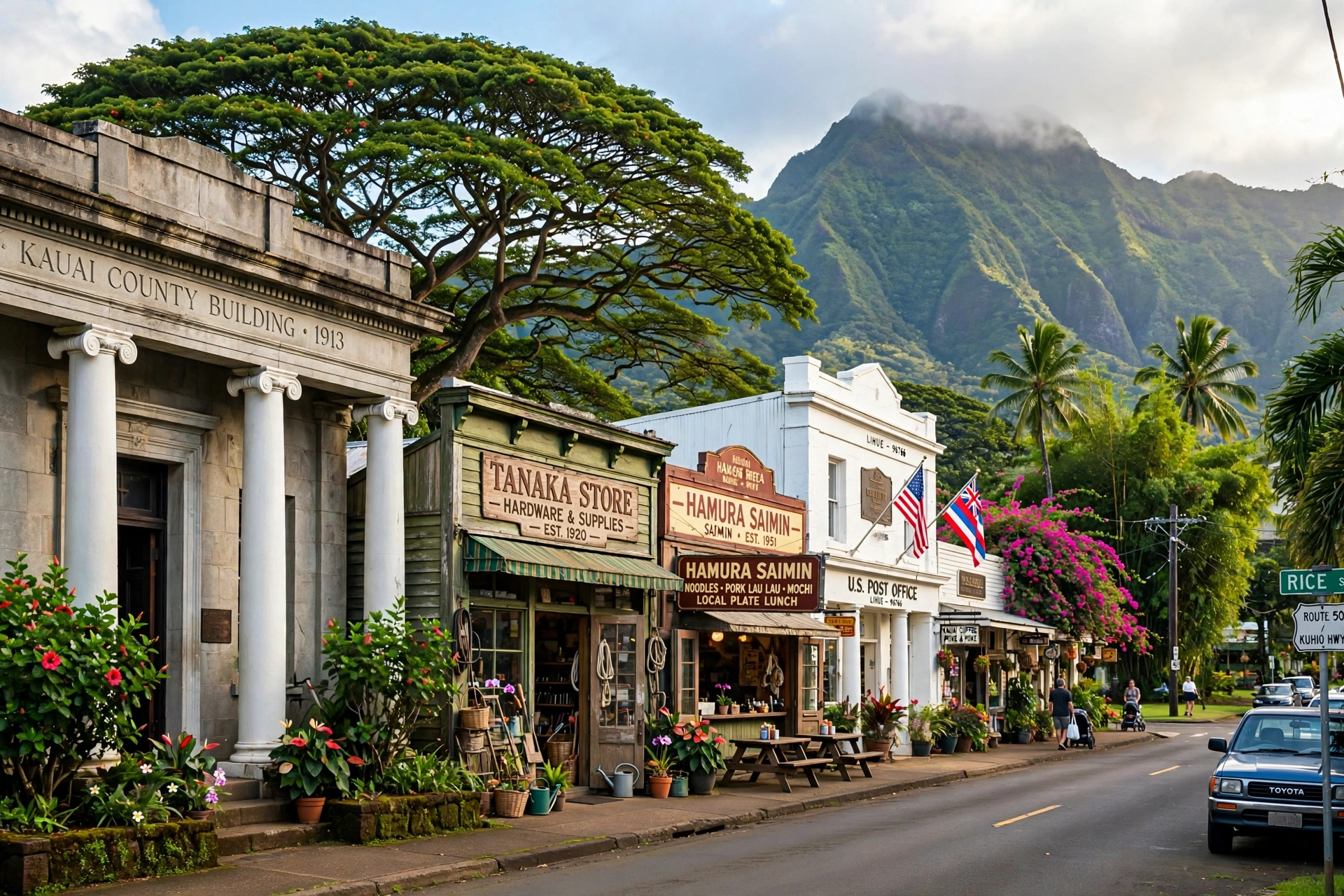
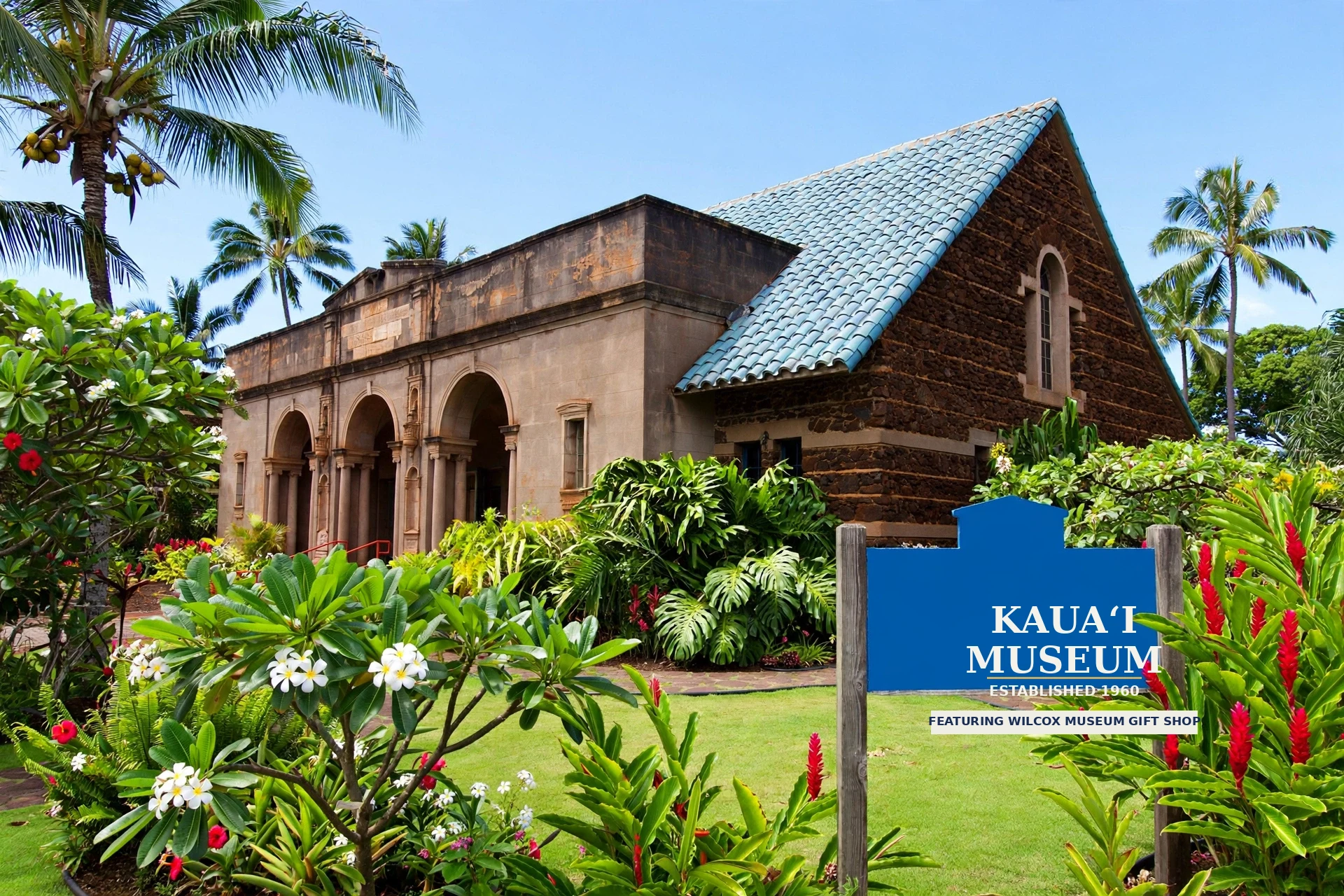
The historic core sits along Rice Street between the Kūhiō Highway and the county buildings. Here you will find the Kauaʻi Museum at 4428 Rice Street, housed in a distinctive lava-rock building, along with local shops, restaurants, and county offices. The Kauaʻi War Memorial Convention Hall and the historic county building anchor the civic district just mauka (toward the mountains) of Rice Street.
The Airport Corridor
Līhuʻe Airport (LIH) sits on Mokulele Loop just east of the Kūhiō Highway, about two miles from downtown. The corridor between the airport and town holds car rental offices, the Kauaʻi Lagoons area, and the Wailua Golf Course, one of the island’s most popular public courses.
Nāwiliwili Harbor and Kalapakī
South of downtown, the road descends to Nāwiliwili Harbor, Kauaʻi’s deep-water commercial port and the departure point for harbor cruises. Just east of the harbor lies Kalapakī Beach, the town’s main swimming beach, fronted by a large resort and popular with bodyboarders and beginner surfers. The Nāwiliwili waterfront also holds harbor-front dining and the start of the coastal path.
The Kilohana Area
West of downtown along Kaumualiʻi Highway sits Kilohana Plantation, the restored 1930s estate of plantation manager Gaylord Wilcox, and the Grove Farm homestead museum nearby. This inland corridor is Līhuʻe’s heritage district.
Līhuʻe Airport (LIH) Guide
Līhuʻe Airport is the main gateway to Kauaʻi and the only airport on the island with scheduled service from the continental United States. The airport code LIH comes from the town name. Inter-island flights connect to Honolulu, Kahului, Kona, and Hilo, and direct mainland flights arrive from the West Coast.
Terminal Layout
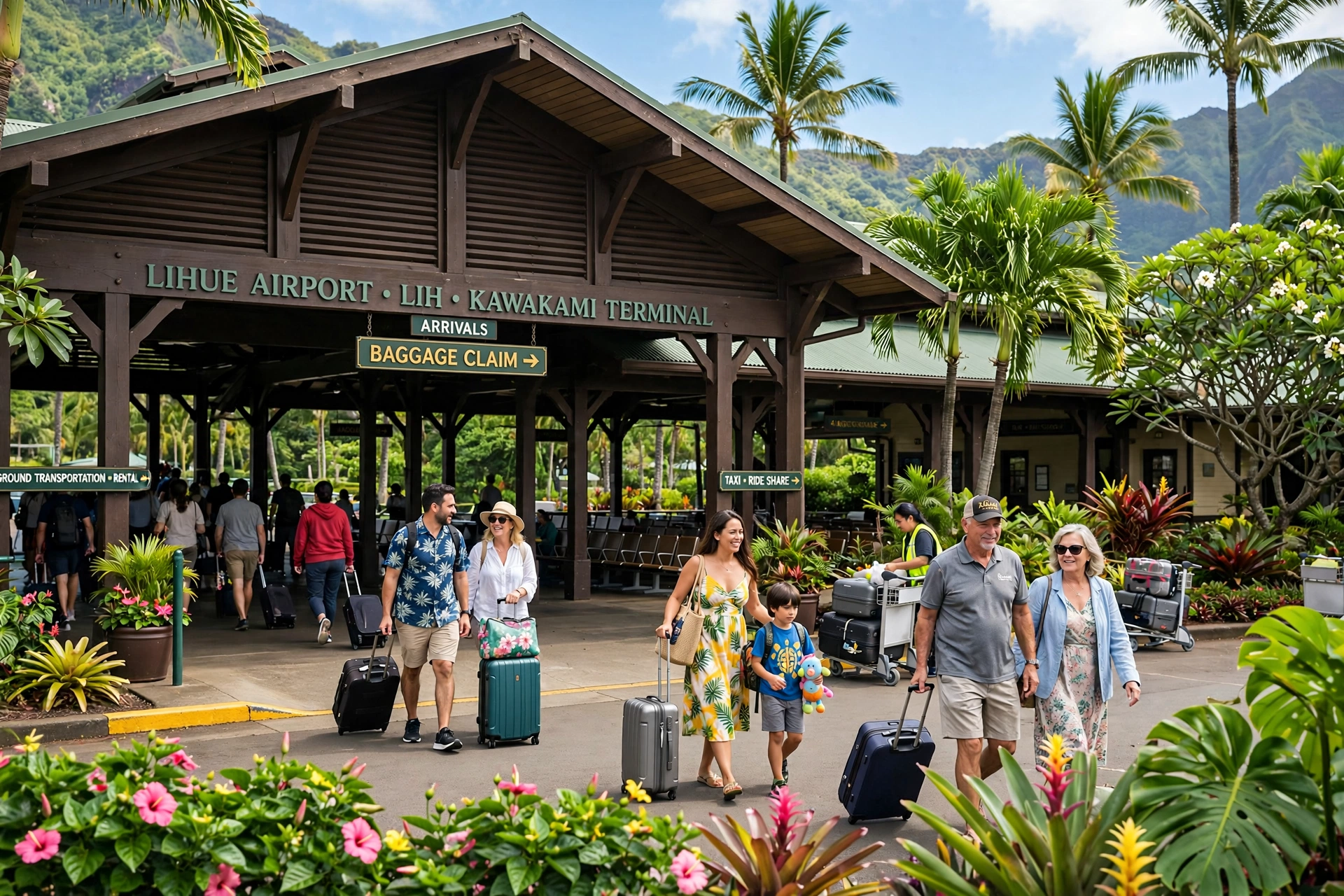
The airport is a single, compact terminal building with open-air corridors, a signature of older Hawaiian airports. After deplaning, you walk along covered outdoor walkways to baggage claim on the ground level. The departures level sits above. The terminal holds a handful of restaurants, snack shops, a newsstand, gift shops with island-made goods, and lei vendors near the arrivals area. Free WiFi and ATMs are available. Because the building is small, allow extra time during peak departure banks when lines for security can grow long.
Rental Cars
Rental car counters for the major companies sit directly across the street from the terminal on Hoʻolimalima Place. After collecting your keys at the counter, a company shuttle takes you a short ride to the vehicle lot. Book your rental car well in advance, especially for holiday periods and summer, when island-wide shortages have occurred. Return vehicles with a full tank and allow generous time before your flight, since security lines peak when several mainland departures cluster together.
Ground Transportation
Taxis and hotel shuttles serve the airport from the curb outside baggage claim. The Kauaʻi Bus public transit system also stops at the airport, though routes and schedules are limited and best suited to patient travelers rather than tight itineraries. Most visitors find a rental car essential for exploring Kauaʻi, since the island’s sights are spread along a single main highway with limited public transit.
Arrival and Departure Tips
On arrival, expect to walk outdoors between the jet bridge and the terminal, so have a light layer handy if you chill easily in trade-wind breezes. Hawaiʻi’s agricultural inspection requires all arriving passengers to complete a declaration form distributed on the flight; declare any fruits, vegetables, plants, or animals. Lei greeters typically meet passengers in the arrivals area.
On departure, arrive at least two hours before mainland flights and ninety minutes before inter-island flights. The security checkpoint serves all gates, and lines lengthen when multiple mainland departures cluster in the morning and midday. Rental car return lots sit across the street from the terminal; budget time for the shuttle and for the agricultural inspection of checked luggage, which happens before you reach the ticket counter.
Things to Do in Līhuʻe
Kauaʻi Museum
The island’s most important cultural institution stands at 4428 Rice Street. The museum’s lava-rock building holds exhibits tracing Kauaʻi and Niʻihau history from ancient Hawaiian settlement through the plantation era to the present. The collection includes Hawaiian artifacts, quilts, plantation memorabilia, and natural history displays. Plan one to two hours. It is the single best indoor activity on the island and the fastest way to give context to everything else you will see.
Kilohana Plantation
The 1935 plantation manor of Gaylord Wilcox now operates as a heritage attraction with a restaurant, shops, and a narrow-gauge train ride through the surrounding orchards and farm fields. The estate grounds include gardens, a rum tasting room, and galleries of local artisans. The train ride is a gentle, family-friendly way to see working agricultural land.
Grove Farm
The Wilcox family homestead preserves the plantation era in extraordinary detail: the original 1864 homestead house, outbuildings, gardens, and farm equipment, all maintained much as they were. Tours are offered on a limited schedule, so check ahead before visiting.
Wailua River Area
A few minutes north of Līhuʻe, the Wailua River corridor holds several of Kauaʻi’s signature sights. The Fern Grotto, a lava-rock grotto draped in ferns, is reachable by river boat tours that depart from the Wailua River marina. Nearby, the Wailua Falls viewpoint and the ʻŌpaekaʻa Falls lookout sit just off the highway. The Sleeping Giant (Nounou Mountain) trailhead, one of the island’s most popular hikes, starts in the Wailua Homesteads area.
Shopping and Local Crafts
Līhuʻe holds the island’s widest range of shopping, from the big-box stores along the Kūhiō Highway to local boutiques downtown. The shops at Kilohana Plantation gather island artisans in one place, with galleries selling paintings, jewelry, woodwork, and ceramics. Downtown Rice Street has locally owned stores worth browsing for books, island apparel, and gifts made on Kauaʻi. For practical provisioning, the supermarkets and warehouse club near the highway intersection make Līhuʻe the natural first stop after landing.
Golf
The Wailua Golf Course, a municipal course minutes from the airport, is one of Hawaiʻi’s best-regarded public layouts and a favorite of residents and visitors alike. Its oceanside holes and affordable greens fees make it a standout value. The Kauaʻi Lagoons golf area near the airport offers additional resort golf with coastal views.
Nearby Beaches and Attractions
Kalapakī Beach
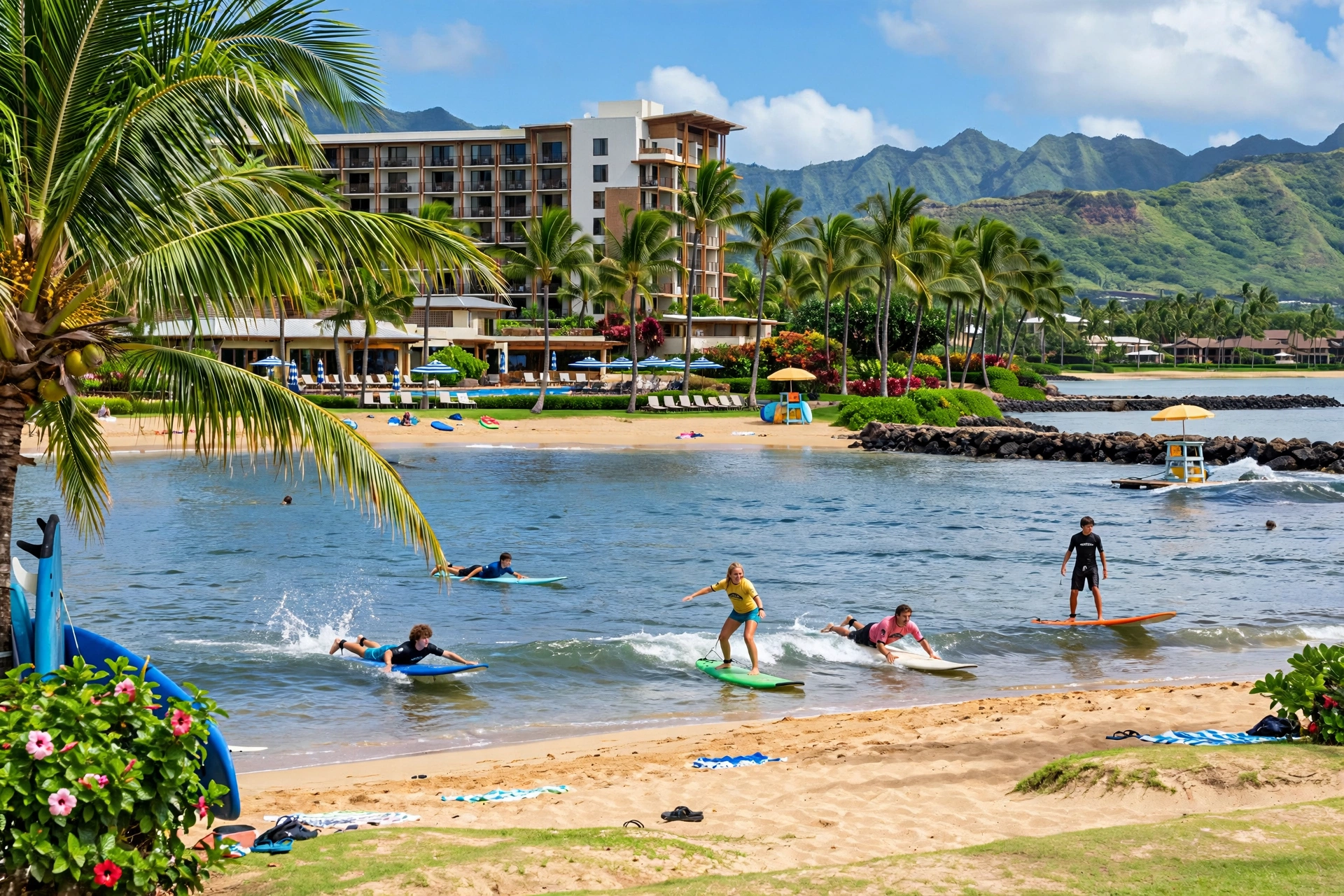
Līhuʻe’s home beach fronts the resort at Nāwiliwili Bay. The protected bay makes it one of the island’s more beginner-friendly surf and bodyboarding spots, and the sandy bottom near shore is good for swimming in calm conditions. Lifeguards are stationed here. The beach park has parking, restrooms, and showers.
Nāwiliwili Harbor
The harbor is the island’s working port and the departure point for harbor cruises along the south shore. The waterfront area around the harbor holds restaurants and the small Nāwiliwili Beach Park.
Menehune Fishpond (Alekoko)
Just south of Līhuʻe along Hulemalū Road sits Alekoko, the Menehune Fishpond, a 900-year-old Hawaiian fishpond enclosed by a stone wall nearly a thousand yards long. According to legend, the menehune (the small people of Hawaiian tradition) built it in a single night. An overlook off the highway provides the best view. It is a quick, worthwhile stop that connects you to ancient Hawaiian aquaculture.
Ninini Point and the Coast
East of the airport, Ninini Point Lighthouse stands on a bluff above the ocean. The area around the point offers dramatic coastal views and a sense of the wild shoreline just minutes from town.
Līhuʻe’s Plantation Heritage
To read Līhuʻe on a map, it helps to understand what built the town. Sugar cane dominated the Līhuʻe landscape for well over a century, and the town’s street pattern, architecture, and landmarks still reflect the plantation era. The Līhuʻe Plantation mill, which once processed cane from thousands of acres, stood near the center of town; its closure in 2000 marked the end of an era that had defined Kauaʻi’s economy since the 1800s.
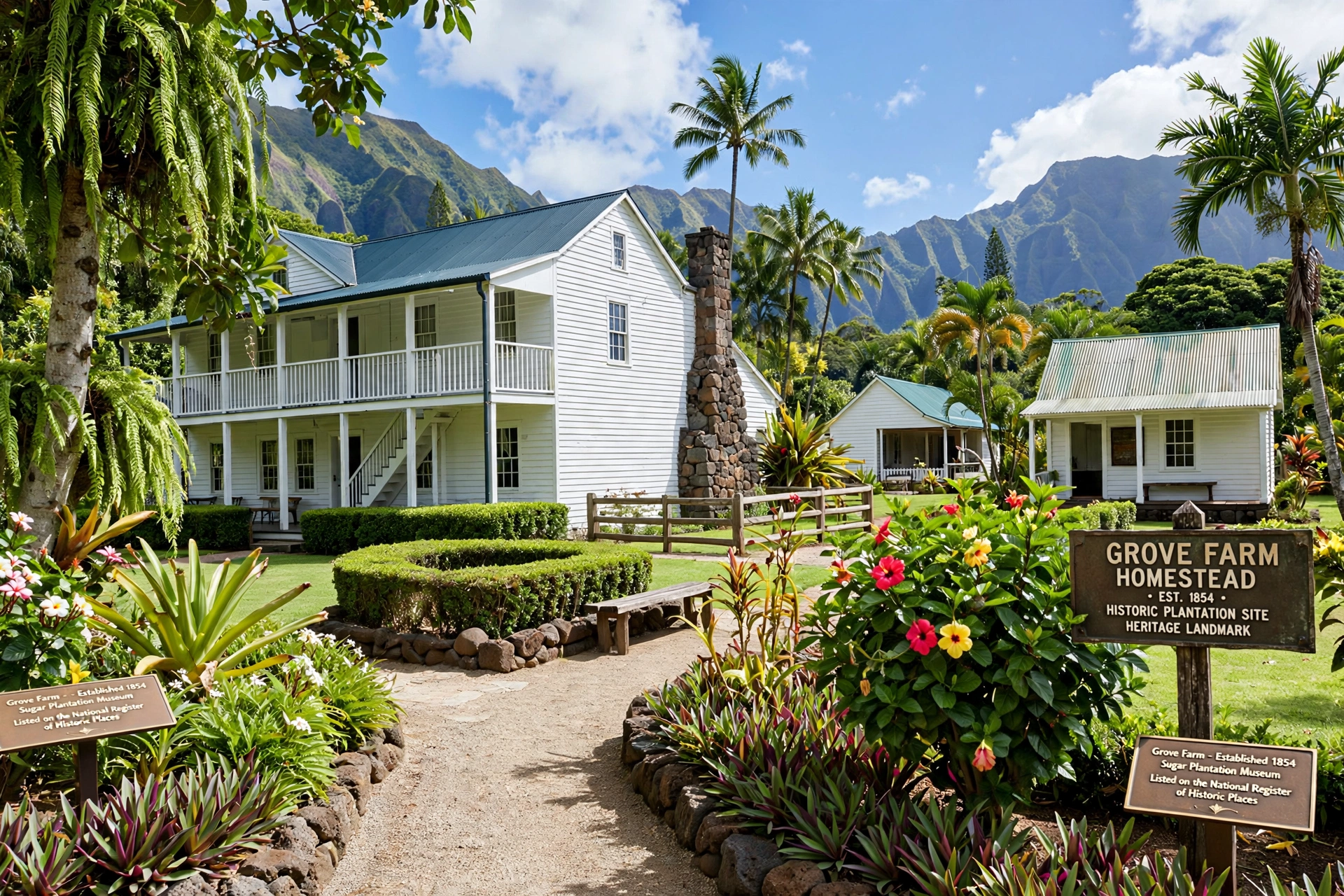
Grove Farm, the homestead of George Wilcox, offers the most complete window into that world. Wilcox leased the land in 1864 and built one of the island’s most successful plantations. The homestead preserves the original house, workers’ quarters, and farm buildings, along with gardens that have been maintained for more than 150 years. Kilohana Plantation, the 1935 manor house of Gaylord Wilcox, shows the plantation elite’s domestic life at its peak, with its Tudor-style architecture, manicured grounds, and the narrow-gauge train that now carries visitors through former cane fields replanted with orchards and diversified crops.
The plantation legacy also explains Līhuʻe’s multicultural character. Workers arrived from China, Japan, Portugal, the Philippines, and elsewhere to labor in the cane fields, and their descendants shaped the town’s food, festivals, and neighborhoods. That history is visible in the Kauaʻi Museum’s exhibits and in the town’s restaurants, where plate lunches and noodle dishes reflect generations of plantation-era cooking.
Līhuʻe Weather and Best Time to Visit
Līhuʻe sits on Kauaʻi’s drier southeast side, but “dry” is relative on the Garden Isle. The town receives trade-wind showers year round, with the wettest months running from November through March. Daytime highs typically range from the upper 70s to mid 80s Fahrenheit, with nighttime lows in the 60s and low 70s. The nearby summit of Waiʻaleʻale, one of the wettest places on earth, wrings moisture from the trade winds before they reach the east side, which is why Līhuʻe stays greener and wetter than Poʻipū but drier than Princeville.
For visitors, the practical takeaway is simple: carry a light rain jacket no matter the season, plan outdoor activities for the morning when showers are least likely, and treat passing rain as part of the island’s beauty rather than a ruined day. The waterfalls near Līhuʻe, including Wailua Falls, run fullest after rainy periods. Whale season, from December through April, adds breaching humpbacks visible from south and east shore lookouts. Summer brings the calmest ocean conditions for the south and east shore beaches.
Where to Stay and Eat in Līhuʻe
Līhuʻe offers a practical middle ground between the resort zones. The Kalapakī area holds the town’s main resort property, while downtown and the airport corridor have smaller hotels, inns, and vacation rentals at prices that typically run lower than Poʻipū or Princeville. Staying in Līhuʻe puts you within 30 minutes of most of the island’s major sights and minutes from the airport on departure day.
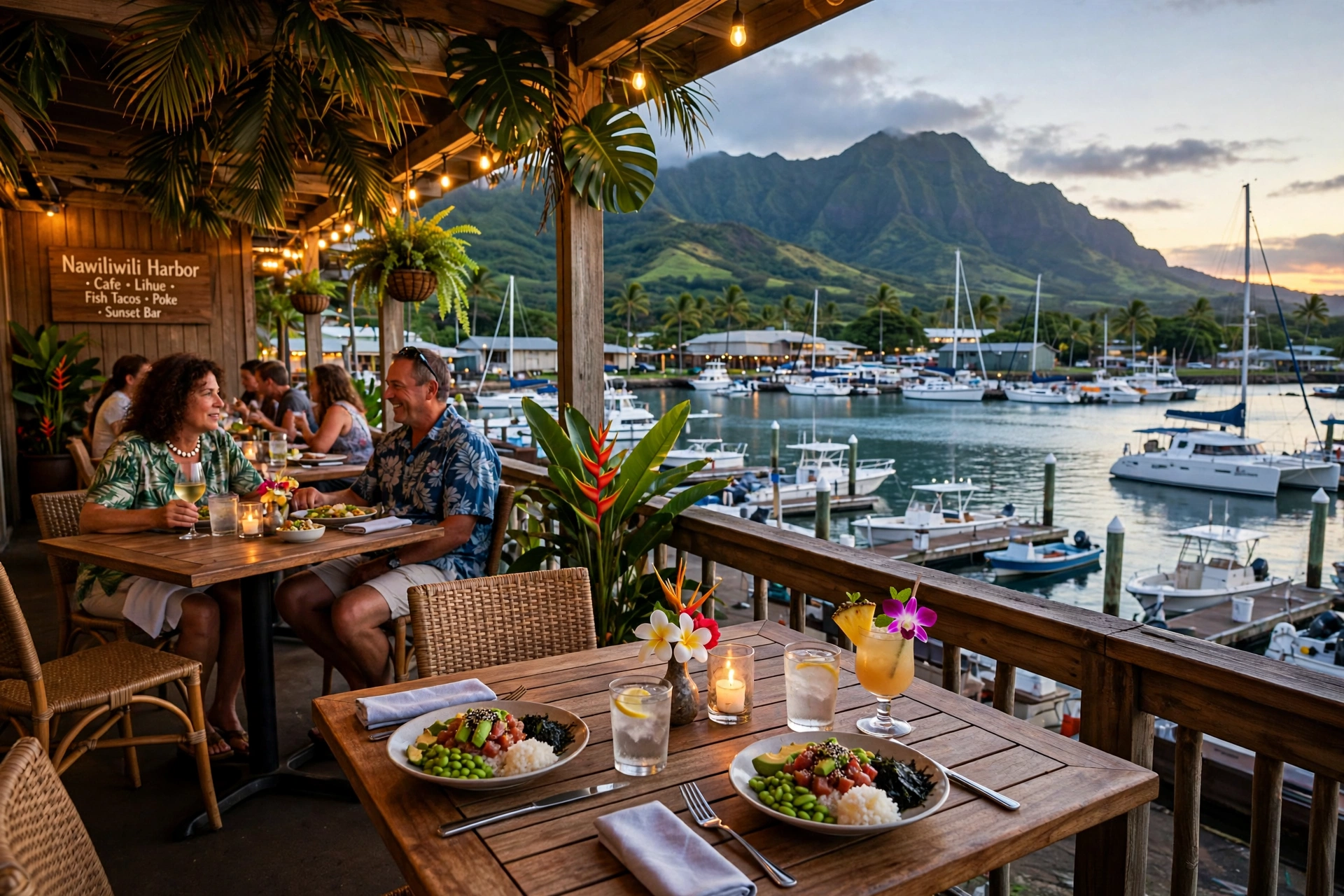
For food, Līhuʻe is one of the island’s best eating towns. Rice Street and the surrounding blocks hold local plate-lunch spots, poke shops, bakeries, and sit-down restaurants spanning Hawaiian, Japanese, Filipino, and American cuisines. The harbor area adds waterfront dining with sunset views over Nāwiliwili Bay. Grocery stores, including large supermarkets and a warehouse club, cluster along the Kūhiō Highway, making Līhuʻe the natural provisioning stop at the start of a trip.
Driving Distances from Līhuʻe
Līhuʻe’s central location makes it the island’s natural measuring point. Approximate driving times under normal conditions:
| Destination | Approximate Drive Time |
|---|---|
| Poʻipū and the South Shore | 25 to 35 minutes |
| Kōloa | 25 minutes |
| Wailua and Kapaʻa | 15 to 20 minutes |
| Princeville | 40 to 50 minutes |
| Hanalei | 55 to 70 minutes |
| Kēʻē Beach (end of the road) | 1 hour 15 minutes |
| Waimea (west side) | 45 to 55 minutes |
| Waimea Canyon lookout | 1 hour 15 minutes |
| Kalalau lookout at Kōkeʻe | 1 hour 30 minutes |
| Hāʻena State Park | 1 hour 20 minutes |
All of Kauaʻi’s main sights sit along the Kūhiō Highway (Route 56/560) to the north and Kaumualiʻi Highway (Route 50) to the west. There is no road connecting the north and west shores; the Nāpali Coast wilderness blocks the way, so plan around the island’s single main highway loop.
Līhuʻe Map FAQ
Where is Līhuʻe on the map of Kauaʻi?
Līhuʻe sits on the southeast coast of Kauaʻi, roughly at the island’s midpoint between the south shore resort area of Poʻipū and the Coconut Coast towns of Wailua and Kapaʻa. It wraps around Nāwiliwili Bay, with the airport to the east and downtown along Rice Street just inland from the harbor.
Is Līhuʻe the capital of Kauaʻi?
Līhuʻe is the county seat of Kauaʻi County, which means it serves as the island’s administrative center. The state capital of Hawaiʻi is Honolulu, on Oʻahu. Līhuʻe holds the county offices, courts, and the island’s main commercial district.
Which airport do you fly into for Kauaʻi?
Līhuʻe Airport (LIH) is the airport nearly all visitors use. It sits about two miles east of downtown Līhuʻe and handles both inter-island flights and direct flights from the continental United States. The much smaller Port Allen Airport on the west side serves only helicopter and small charter operations.
How far is Līhuʻe Airport from the main resort areas?
The airport is roughly 25 to 35 minutes from Poʻipū on the south shore and 40 to 50 minutes from Princeville on the north shore. Both drives follow the Kūhiō Highway, the island’s single main road.
Is Līhuʻe worth visiting, or should I just drive through?
Līhuʻe deserves at least a half day. The Kauaʻi Museum is the island’s best cultural stop, Kilohana Plantation and Grove Farm preserve the plantation era, and the Menehune Fishpond is a quick ancient-Hawaiian landmark. It is also the island’s best provisioning stop for groceries and supplies.
What is the main beach in Līhuʻe?
Kalapakī Beach, on Nāwiliwili Bay just south of downtown, is Līhuʻe’s main beach. Its protected bay offers swimming, bodyboarding, and beginner surfing, with lifeguards, restrooms, and parking at the beach park.
Can you walk around Līhuʻe?
Downtown Līhuʻe around Rice Street is walkable, and the harbor area is pleasant on foot. However, the town’s sights are spread out: the airport, Kilohana, and the Menehune Fishpond each require a car. Like the rest of Kauaʻi, Līhuʻe is best explored with a rental vehicle.
What does Līhuʻe mean in Hawaiian?
Līhuʻe is traditionally interpreted as “cold chill,” a reference to the cool upland breezes of the area. The name uses the ʻokina (glottal stop) between the final two syllables, written Līhuʻe.
Is there a cruise port in Līhuʻe?
Yes. Nāwiliwili Harbor serves as Kauaʻi’s cruise ship port, and many Hawaiʻi itineraries include a Līhuʻe port day. Cruise passengers can reach downtown, the Kauaʻi Museum, and Kalapakī Beach within minutes of the pier, and tour operators meet ships for island excursions.
Do I need a car if I stay in Līhuʻe?
For most visitors, yes. While downtown Līhuʻe and the harbor area are walkable, the island’s beaches, canyons, and north shore sights are spread along the main highway with limited public transit. A rental car picked up at LIH gives you the freedom to explore the whole island from this central base.
Related Kauaʻi Guides
- Hanalei Bay Map: Complete Reference Map and Area Guide : the north shore’s most famous bay, 55 to 70 minutes north of Līhuʻe.
- Hawaii Map: Complete Reference Map and Area Guide : the statewide map hub for orientation across all islands.
- Hawaii Beaches : the statewide beaches hub, including Kauaʻi’s Poʻipū, Hanalei Bay, and Kēʻē.
- Hawaii Hikes : the statewide hiking hub, including the Sleeping Giant trail near Līhuʻe.
- Maui Map: Complete Reference Map and Area Guide : the Valley Isle map hub for inter-island trip planning.
Reading Līhuʻe Like a Local
Līhuʻe works best as both a base and a beginning. Arrive, pick up your rental car, and spend your first afternoon at the Kauaʻi Museum before the jet lag sets in. Stock the cooler at the big supermarkets along the highway. Catch the Menehune Fishpond at golden hour on your way back from a south shore day. Most visitors remember Kauaʻi for the Nāpali Coast and Waimea Canyon, but the island’s story starts in Līhuʻe: in the lava-rock walls of its museum, the plantation manor at Kilohana, and the harbor where the island has greeted travelers for generations. Give the gateway town its due, and the rest of the island makes more sense.