
Kauaʻi Weather
Planning a trip to the Garden Isle starts with understanding its weather. Kauaʻi packs more climate variety into its 562 square miles than most islands twice its size, from the sun-drenched beaches of Poʻipū to the rain-soaked summit of Mount Waiʻaleʻale, one of the wettest places on Earth. This guide breaks down Kauaʻi weather by season, region, and activity so you can pick the right time and the right side of the island for your trip.
In This Guide
Kauaʻi Weather at a Glance
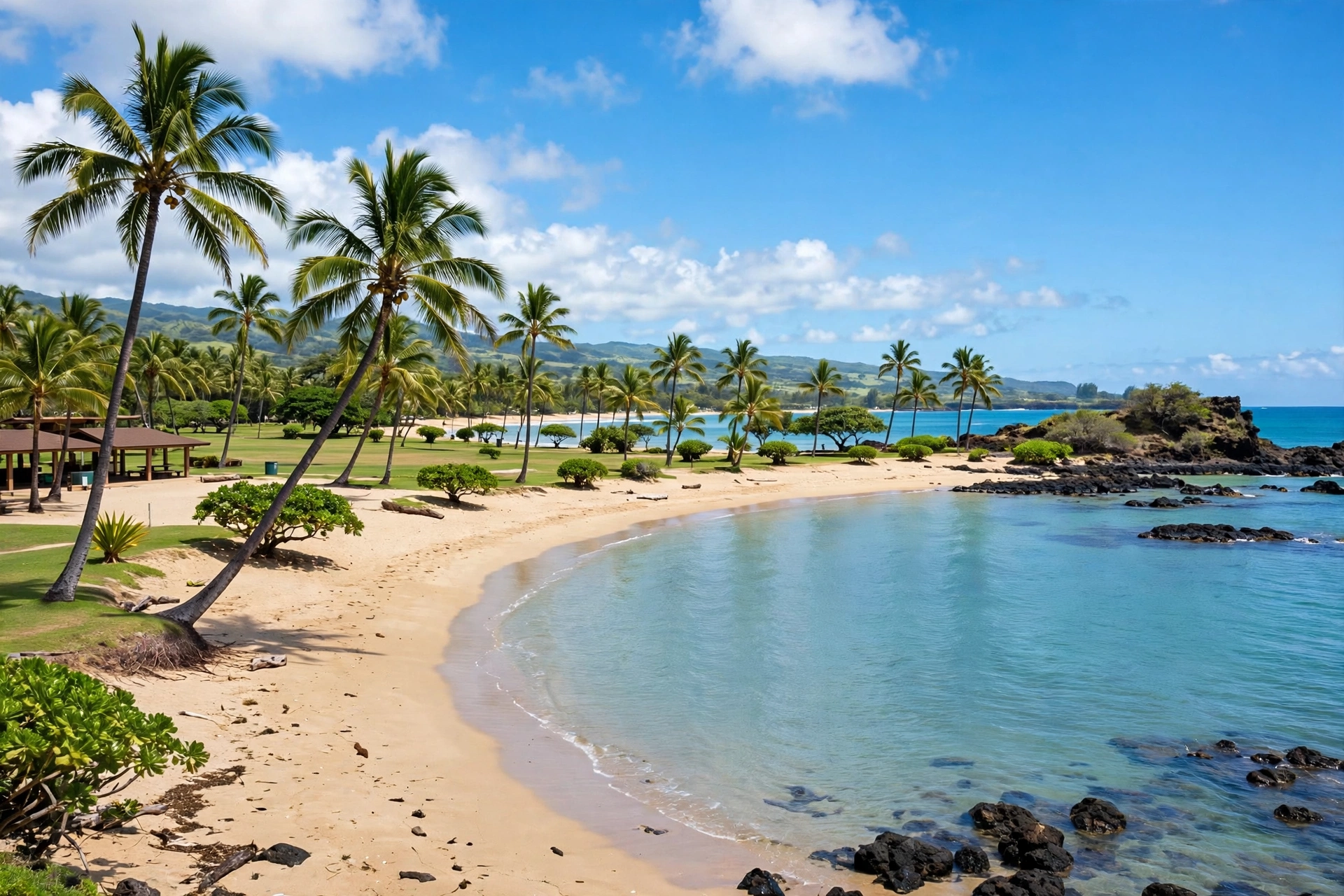
Kauaʻi sits at about 22 degrees north latitude in the path of the northeast trade winds, which shape almost everything about its climate. These steady winds push moist air against the island’s volcanic ridges, where it rises, cools, and falls as rain on the windward north and east shores. The leeward south and west shores sit in the mountains’ rain shadow and stay far drier and sunnier. The result is a patchwork of microclimates: you can drive from a sunbaked beach in Waimea to a misty mountain forest in Kōkeʻe in under an hour.
Temperatures are famously stable. Daytime highs hover between 78 and 85 degrees Fahrenheit most of the year, and nighttime lows rarely drop below the mid-60s at sea level. Ocean temperatures range from about 75 degrees in winter to 82 degrees in late summer, comfortable for swimming year-round. Humidity is moderate, and the trade winds keep the air moving, which is why even an 85-degree afternoon in Poʻipū usually feels pleasant rather than oppressive.
The headline number for Kauaʻi weather is rainfall. Mount Waiʻaleʻale, the island’s second-highest peak at 5,148 feet, averages roughly 450 inches of rain per year, making its summit plateau one of the wettest spots on the planet. Almost none of that rain reaches visitors directly, since the summit is inaccessible, but the same weather system drenches the north shore and the Alakaʻi Plateau while leaving Poʻipū and Waimea in comparative sunshine. Annual rainfall ranges from under 20 inches on the driest west-side coast to over 100 inches in parts of the north shore, a tenfold difference across an island you can cross by car in about two hours.
Rain on Kauaʻi behaves differently than mainland rain. Showers are often brief, localized, and followed by sunshine, especially on the east side, where passing trade-wind showers are part of the daily rhythm. The north shore gets steadier, longer-lasting rain in winter. The key planning takeaway is simple: pick your side of the island based on the season, check the National Weather Service Honolulu forecast before hiking or driving the north shore, and carry a light rain jacket even on sunny days.
Weather by Season
Winter: November Through March
Winter is Kauaʻi’s wettest and coolest season, though “cool” is relative. Highs average 78 to 80 degrees, and lows dip into the mid-60s. This is when the trade winds weaken and shift, allowing cold fronts and Kona storms to reach the islands from the northwest and south. Kona winds, which blow from the south or southwest opposite the usual trades, bring humid, still air and sometimes vog from the Big Island’s volcanoes. These episodes usually last a few days before the trades return.
Winter rain concentrates on the north and east shores. Hanalei and Princeville can see 10 or more inches in a single wet month, and multi-day rainy spells are common from December through February. The south shore stays noticeably drier, which is why winter visitors chasing sunshine tend to base themselves in Poʻipū. Ocean conditions follow the same pattern: large north swells generated by North Pacific storms pound the north shore from October through March, creating spectacular surf at spots like Hanalei Bay while making many north-shore beaches unsafe for swimming. The south shore, meanwhile, turns calm and glassy, with its best snorkeling of the year.
Spring: April and May
Spring is one of the sweetest windows on Kauaʻi. Rainfall eases, temperatures climb back into the low 80s, and the trade winds settle into their reliable summer pattern. North-shore surf begins to fade in April, opening up beaches like Tunnels and Keʻe for calmer swimming by May, though early-season swells can still arrive. Wildflowers bloom along the roadsides, waterfalls run full from winter rains, and visitor numbers sit between the winter peak and the summer rush. Late April and May combine some of the year’s best weather with relatively moderate crowds.
Summer: June Through September
Summer brings Kauaʻi’s most consistent weather. Highs reach 84 to 86 degrees, the trades blow steadily, and rain becomes a minor factor on most of the island. The south and west shores are at their driest, and even the north shore sees its lowest rainfall totals of the year. This is also hurricane season, which runs June through November, but direct hits are rare, and most summers pass without any tropical cyclone threat.
Ocean conditions flip from the winter pattern. South swells generated by Southern Hemisphere storms arrive from June through September, giving the south shore its best surf of the year at spots like Poʻipū and PKs. The north shore goes flat and calm, making summer the prime season for Nāpali Coast boat trips, north-shore snorkeling at Tunnels, and swimming at Keʻe Beach. Humidity peaks in late summer, especially during trade-wind lulls, but ocean breezes keep coastal areas comfortable.
Fall: October and November
Fall is a transitional season with a split personality. October often feels like an extension of summer, with warm temperatures and calm seas, while November ushers in the first real winter storms. Early fall can bring some of the year’s best beach weather, with warm water, light crowds, and lower accommodation prices. By late November, north-shore surf season begins in earnest, and the rainy season takes hold on the windward coasts. Travelers visiting in fall should watch forecasts more closely than summer visitors, but the shoulder-season rewards in value and elbow room are real.
Trade winds vs. Kona winds: The northeast trade winds are Kauaʻi’s default weather, bringing cooling breezes and passing showers to windward areas. Kona winds reverse the pattern, blowing warm, humid air from the south. Kona conditions feel muggier, can carry vog, and often precede stormy weather. When locals say “Kona winds today,” expect still air and possible rain.
Weather by Region
South Shore: Poʻipū and Kōloa
The south shore is Kauaʻi’s sun belt. Sheltered from the trade winds by the island’s interior ridges, Poʻipū averages roughly 30 to 40 inches of rain per year, a fraction of the north shore’s totals, and enjoys the island’s most consistent sunshine. Summer highs reach the mid-80s, winter highs stay near 80, and the ocean stays calmest here in winter, when the rest of the island’s surf is up. This reliability is why the south shore holds the island’s densest concentration of resorts. The trade-off is heat: on still summer afternoons, Poʻipū can feel warmer than anywhere else on the island, and the landscape is drier and browner than the lush north.
North Shore: Hanalei, Princeville, and Haʻena
The north shore is Kauaʻi at its most dramatic and its wettest. Hanalei receives around 75 inches of rain a year, and totals climb past 100 inches toward Haʻena and the Nāpali Coast. Winter brings the heaviest rain and the biggest surf; summer brings the calmest seas and the driest weather this coast ever sees. Temperatures run a degree or two cooler than the south shore, and mornings often start with low clouds that burn off by midday. The north shore rewards flexible travelers: when the sun is out, Hanalei Bay and Tunnels Beach are among the most beautiful places in Hawaiʻi, but winter visitors should plan backup activities for rainy days and never enter the ocean during high-surf advisories.
East Side: Līhuʻe and Kapaʻa
The east side, anchored by Līhuʻe and its airport, sits in the middle of Kauaʻi’s climate spectrum. Līhuʻe averages about 40 inches of rain per year, with a pattern of brief trade-wind showers, many overnight or in the early morning, followed by sunny afternoons. This is the island’s most “average” weather: warm, breezy, and green without the north shore’s downpours or the south shore’s dry heat. Kapaʻa runs slightly wetter than Līhuʻe. Because the airport sits here, the Līhuʻe forecast is the one most visitors see first, but it tells you little about conditions in Hanalei or Waimea, so always check the zone forecast for where you are headed.
West Side: Waimea and Kekaha
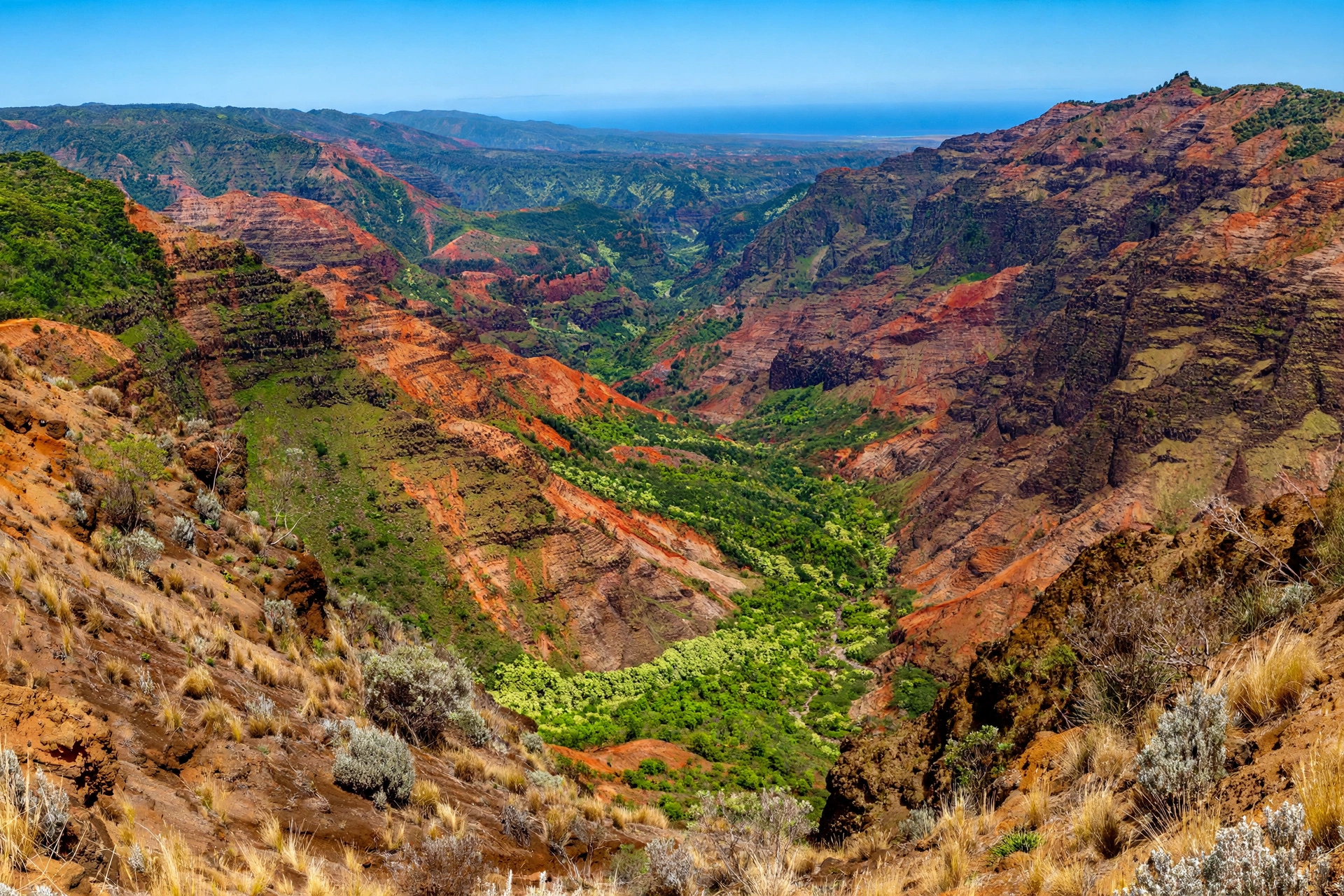
The west side is Kauaʻi’s desert. In the full rain shadow of the island’s high interior, Waimea town receives roughly 20 inches of rain per year, and Kekaha is similarly dry. Summers are hot and sunny, with temperatures occasionally pushing toward 90 degrees, and the landscape turns golden brown. Winters are mild and remain the driest on the island. The dry climate makes the west side a reliable winter-sun alternative to Poʻipū, and Waimea Canyon’s overlooks are often clear when the rest of the island is cloudy. Note that the canyon itself creates its own weather: mornings are usually clearest, and clouds often build over the canyon by afternoon.
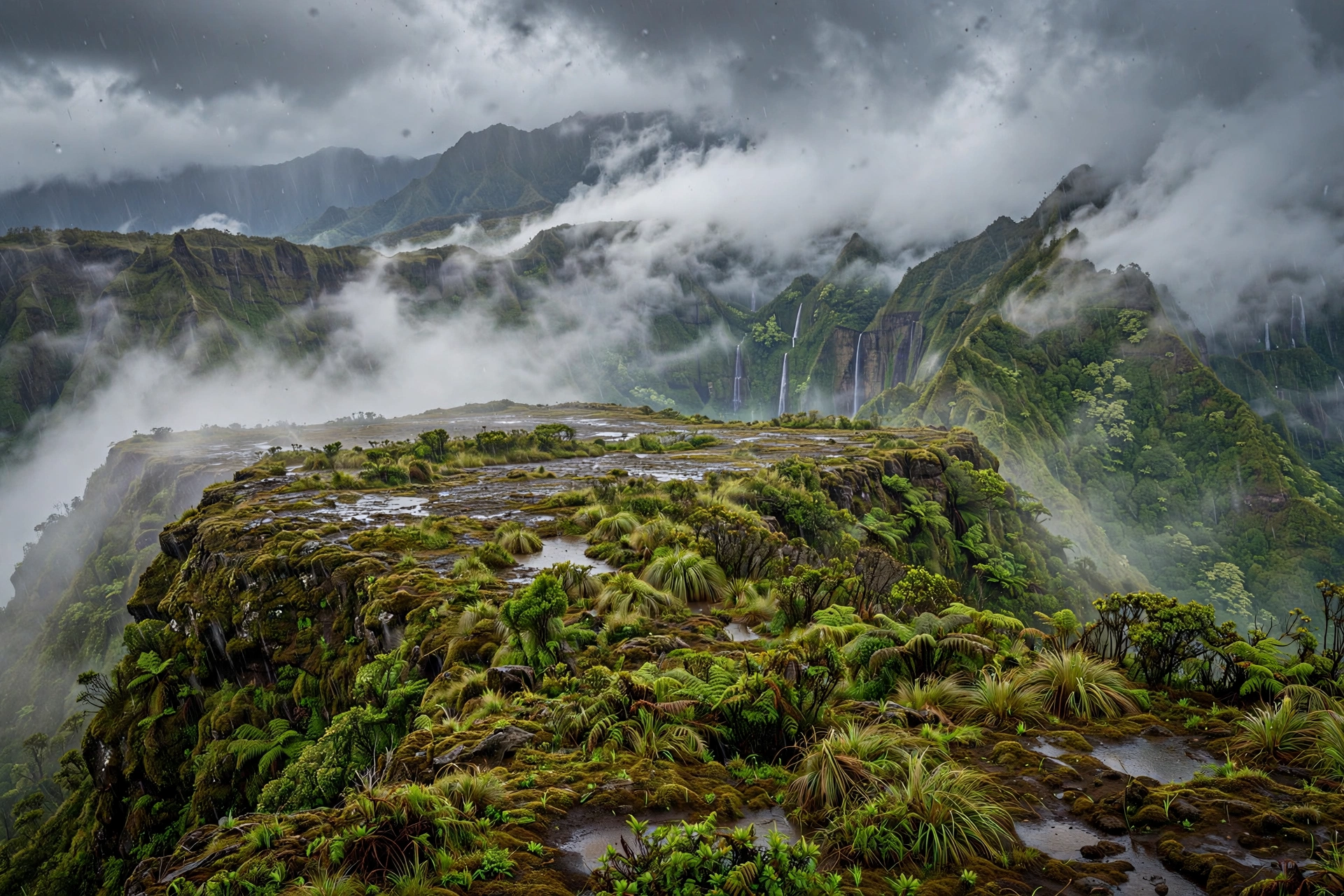
The Mountains: Kōkeʻe and the Alakaʻi
Elevation changes everything. Kōkeʻe State Park, sitting between 3,200 and 4,200 feet, runs 10 to 15 degrees cooler than sea level, with winter nighttime lows occasionally dipping into the 40s. Rain, mist, and fog are frequent year-round, and the famous Kalalau Lookout is clouded over as often as it is clear, which is why early morning visits give the best odds. The Alakaʻi Plateau beyond is one of the wettest high-elevation bogs in the world. Hikers heading up Waimea Canyon Road should bring a jacket and rain shell no matter what the beach forecast says, and should expect temperatures in the 60s even on warm coastal days.

Temperatures and Rainfall
The tables below show long-term average highs, lows, and rainfall for three representative locations: Līhuʻe on the east side, Poʻipū on the south shore, and Hanalei on the north shore. Figures are rounded from National Weather Service and Western Regional Climate Center normals.
Average Temperatures (Fahrenheit)
| Month | Līhuʻe High | Līhuʻe Low | Poʻipū High | Poʻipū Low | Hanalei High | Hanalei Low |
|---|---|---|---|---|---|---|
| January | 78 | 65 | 78 | 64 | 76 | 62 |
| February | 78 | 65 | 78 | 64 | 76 | 62 |
| March | 79 | 66 | 79 | 65 | 77 | 63 |
| April | 81 | 68 | 81 | 67 | 79 | 65 |
| May | 83 | 70 | 83 | 69 | 81 | 67 |
| June | 85 | 72 | 85 | 71 | 83 | 69 |
| July | 86 | 73 | 86 | 72 | 84 | 70 |
| August | 86 | 74 | 87 | 73 | 84 | 71 |
| September | 86 | 73 | 87 | 72 | 84 | 70 |
| October | 84 | 72 | 85 | 71 | 82 | 69 |
| November | 81 | 69 | 82 | 68 | 79 | 66 |
| December | 79 | 66 | 79 | 65 | 77 | 63 |
Average Rainfall (Inches)
| Month | Līhuʻe | Poʻipū | Hanalei | Waimea |
|---|---|---|---|---|
| January | 4.4 | 3.1 | 9.8 | 2.2 |
| February | 3.5 | 2.6 | 8.4 | 1.9 |
| March | 3.9 | 2.4 | 9.1 | 1.7 |
| April | 2.6 | 1.5 | 6.2 | 1.1 |
| May | 2.1 | 1.1 | 4.3 | 0.8 |
| June | 1.6 | 0.7 | 3.2 | 0.4 |
| July | 1.9 | 0.8 | 3.8 | 0.5 |
| August | 2.1 | 0.9 | 4.1 | 0.6 |
| September | 2.2 | 1.2 | 4.6 | 0.8 |
| October | 3.4 | 2.3 | 6.8 | 1.4 |
| November | 4.6 | 3.2 | 9.2 | 2.3 |
| December | 4.8 | 3.4 | 10.4 | 2.4 |
| Annual | 37 | 23 | 80 | 16 |
The rainfall table tells Kauaʻi’s climate story in one glance. Hanalei gets more than three times the rain of Poʻipū and five times the rain of Waimea. Winter months dominate everywhere, but the seasonal swing is gentlest on the south and west shores, which is exactly why they are the safest bets for winter sun.
Ocean Conditions
Kauaʻi’s ocean follows a two-season rhythm that mirrors the island’s surf culture. From roughly October through March, North Pacific winter storms send powerful swells to the north and east shores. Famous surf spots like Hanalei Bay come alive, and wave faces at exposed north-shore reefs can exceed 20 feet during the biggest swells. For swimmers and snorkelers, this means the north shore is largely off-limits in winter: shorebreak, strong currents, and poor visibility make even normally gentle beaches hazardous. Always check the National Weather Service surf forecast and heed lifeguard warnings, which are posted at guarded beaches.
From April through September, the pattern reverses. South swells arrive from Southern Hemisphere storms, bringing surf to the south shore while the north shore goes calm. Summer is the prime season for north-shore snorkeling at Tunnels and Keʻe, for Nāpali Coast boat tours, and for swimming at Hanalei Bay. The south shore gets its surf season instead, with Poʻipū and nearby breaks offering consistent waves. The east side around Līhuʻe and Kapaʻa stays comparatively moderate year-round but can be choppy when the trades blow hard.
Water temperature varies less than air temperature but still follows the seasons, from about 75 degrees in February and March to about 82 degrees in August and September. Most swimmers are comfortable without a wetsuit year-round, though a thin rash guard helps with sun protection and warmth during long winter snorkel sessions. Box jellyfish occasionally arrive on Kauaʻi’s south and west shores roughly 8 to 10 days after a full moon; lifeguard stations post warnings when they are present.
Hurricanes and Storms
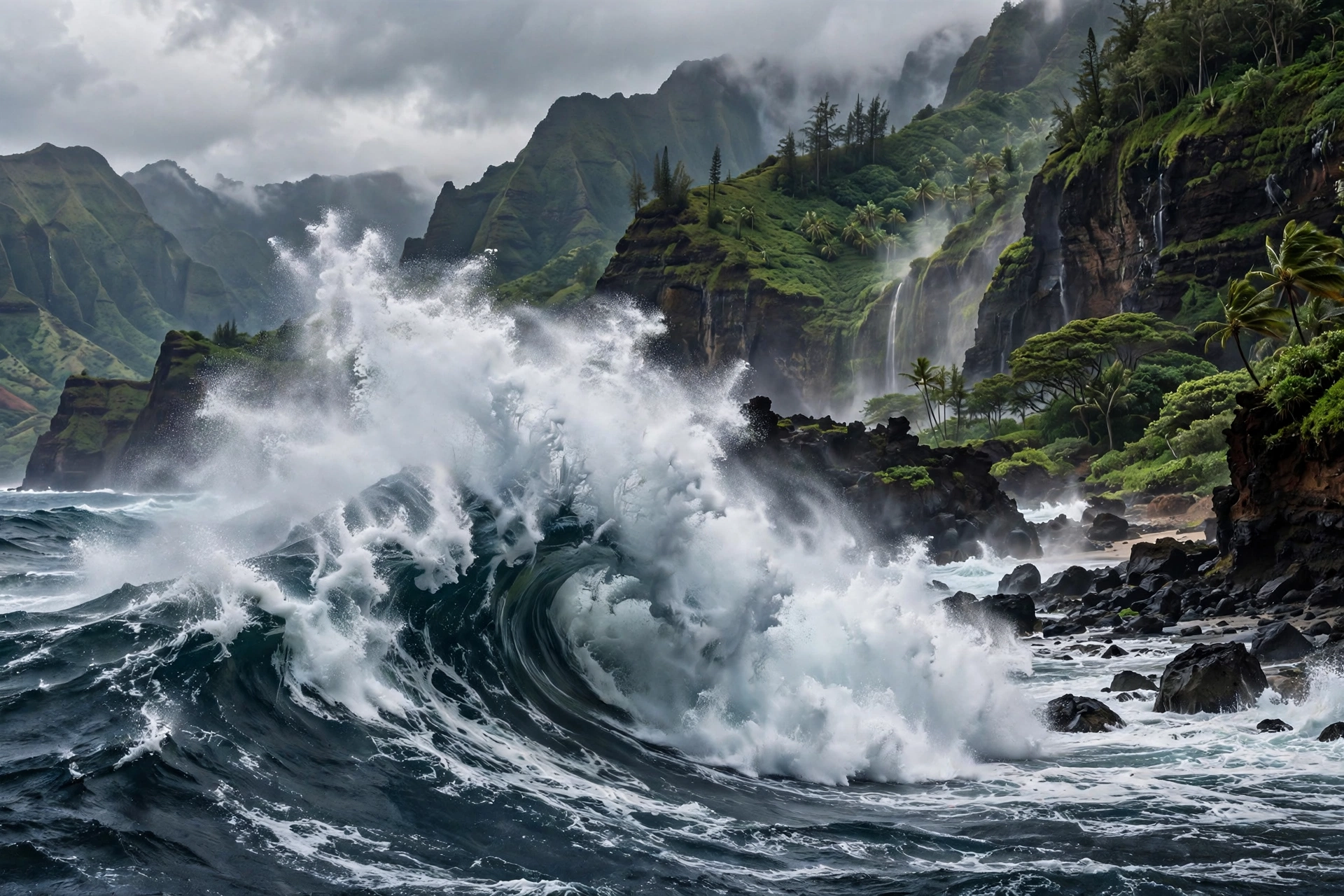
The central Pacific hurricane season runs from June through November, with peak activity typically in August and September. Direct hurricane strikes on Kauaʻi are uncommon, but the island’s history includes two of Hawaiʻi’s most destructive storms. Hurricane ʻIwa struck in November 1982, and Hurricane ʻIniki, a Category 4 storm, made a direct hit on September 11, 1992, devastating the island with 145 mph sustained winds. ʻIniki remains the most powerful hurricane to hit Hawaiʻi in recorded history and reshaped Kauaʻi’s buildings, forests, and building codes.
For travelers, the practical risk is low but not zero. Modern forecasting gives several days of warning before any tropical cyclone threat, and the National Weather Service Honolulu office issues watches and warnings with wide margins. If a storm approaches during your visit, follow official guidance, stay away from the ocean and streams, and expect flight disruptions. Travel insurance that covers weather interruptions is worth considering for fall trips. Much more common than hurricanes are Kona storms, low-pressure systems that bring heavy rain and gusty southwest winds in winter, occasionally causing flash flooding and road closures, particularly on the north shore.
Flash flooding deserves special attention on Kauaʻi. The island’s steep valleys concentrate rainfall into streams that can rise with terrifying speed, and most hiking deaths and rescues on the island involve water. Never cross a flooded stream, never hike in a valley during heavy rain, and check the National Weather Service flood watches before setting out on trails like the Kalalau Trail or any waterfall hike.
What to Pack by Season
Year-Round Essentials
- Light rain jacket or shell: Useful in every season, essential on the north shore and in the mountains.
- Reef-safe sunscreen: Hawaiʻi law bans sunscreens containing oxybenzone and octinoxate. Mineral formulas with zinc oxide are the safe choice.
- Swimwear and rash guard: The ocean is swimmable year-round; a rash guard adds sun protection.
- Sturdy walking shoes plus reef-safe sandals: For trails, rocky beaches, and stream crossings.
- Light layers: A fleece or light sweater for Kōkeʻe, Waimea Canyon mornings, and air-conditioned spaces.
Winter Additions (November to March)
- A warmer rain shell rather than a light windbreaker, since winter rain is steadier.
- Long pants and closed shoes for muddy trails.
- A compact umbrella for town days on the north and east shores.
- Flexibility in your itinerary: plan indoor or south-shore alternatives for stormy days.
Summer Additions (June to September)
- Extra sun protection: wide-brim hat, UV shirts, and more sunscreen than you think you need.
- Light, breathable clothing; humidity peaks in late summer.
- Insect repellent for evenings, especially near standing water and in valleys.
- A light sweater still earns its place for high-elevation mornings at Kōkeʻe.
Best Time to Visit Kauaʻi
There is no bad month on Kauaʻi, only trade-offs. For the best combination of weather, crowds, and value, many experienced visitors point to the shoulder seasons: mid-April through May and September through mid-October. In these windows, rainfall is moderate, the ocean is usually cooperative on at least one shore, temperatures are warm, and accommodation prices sit below peak-season levels.
Winter, from mid-December through March, offers the warmest escape from mainland cold, plus humpback whale season, which peaks from January through March. The cost is higher prices, bigger crowds, and the wettest weather of the year, concentrated on the north and east shores. Winter visitors who base in Poʻipū and plan flexible itineraries do best.
Summer, from June through August, delivers the most reliable weather island-wide, the calmest north-shore ocean of the year, and ideal conditions for Nāpali Coast adventures. It also brings peak family-travel crowds, the highest accommodation rates, and the warmest, most humid air. Booking lodging and rental cars well ahead is essential for summer trips.
If your priority is a specific activity, let it choose your season. Whale watching means winter. Nāpali Coast boat tours and north-shore snorkeling favor summer. Waterfall viewing is best in late winter and spring, when flows are full. Hiking the Kalalau Trail is most pleasant in the drier months from April through September. And if you simply want sunshine with the fewest fellow travelers, late April, May, and October are hard to beat.
Kauaʻi Weather FAQ
Does it rain every day on Kauaʻi?
Not everywhere and not all day. The north shore and mountains see rain most days in winter, but much of it falls overnight or in brief showers. The south and west shores can go weeks without meaningful rain in summer. Even on the wet windward coasts, mornings are often clear with showers building in the afternoon.
What is the rainiest month on Kauaʻi?
December and January are typically the wettest months across the island, with November and February close behind. March can also be very wet on the north shore. June through August are the driest months island-wide.
Which side of Kauaʻi has the best weather?
The south shore around Poʻipū has the most consistently sunny and dry weather year-round, making it the safest choice for sun-seekers, especially in winter. The north shore is lusher and more dramatic but wetter, particularly from November through March. The east side splits the difference.
How cold does it get on Kauaʻi?
At sea level, nighttime lows rarely drop below the low 60s, even in winter. Up in Kōkeʻe State Park at 3,200 to 4,200 feet, winter nights can dip into the 40s, and daytime highs may stay in the 60s. Bring a jacket for any mountain visit.
Can you swim in the ocean on Kauaʻi in winter?
Yes, on the right shore. In winter, the south and west shores are generally calm and swimmable, while the north shore often has dangerous surf. In summer the pattern reverses. Always check the surf forecast and swim at lifeguarded beaches.
What are Kona winds?
Kona winds blow from the south or southwest, opposite the usual northeast trade winds. They bring warm, humid, still air and sometimes vog, and often precede stormy weather. Kona wind episodes typically last a few days before the trades return.
Should I worry about hurricanes when visiting Kauaʻi?
The risk to any single trip is low. Hurricane season runs June through November, but direct hits are rare, and modern forecasts provide days of warning. Consider travel insurance for fall trips and follow National Weather Service guidance if a storm threatens.
Where can I get an accurate Kauaʻi weather forecast?
The National Weather Service Honolulu office (weather.gov/hawaii) is the authoritative source, with zone forecasts for each part of the island plus surf, wind, and flood products. It is far more useful than a single generic “Kauaʻi weather” number, because conditions vary so much by region.
Related Kauaʻi Guides
- Kauaʻi Map : island orientation, regions, and driving routes
- Kauaʻi Hikes : trails for every season and fitness level
- Kauaʻi Waterfalls : when falls run fullest and how to see them
- Kauaʻi Snorkeling : seasonal shore-by-shore snorkel conditions
- Hawaiʻi Beaches: Complete Guide : statewide beach safety and seasonal picks
- Hawaiʻi Map: Complete Guide : the full island chain at a glance
A Final Note
Kauaʻi’s weather is not an obstacle to plan around but the very engine of what makes the island extraordinary. The same rains that occasionally interrupt a beach day carve the Nāpali valleys, feed the waterfalls, and keep the Garden Isle green. Travelers who understand the island’s microclimates, respect its ocean seasons, and keep their plans flexible are rewarded with one of the most climatically diverse and beautiful small islands on Earth, in any month of the year.