
Where Is Tunnels Beach, Kauaʻi
Tunnels Beach is one of the most famous beaches on Kauaʻi, and finding it is part of the adventure. Tucked along the island’s north shore near the very end of the coastal highway, this golden crescent of sand is better known to locals by its Hawaiian name, Mākua Beach. Its nickname comes from the maze of underwater lava tubes, caverns, and arches hidden in the offshore reef, which make it one of the finest snorkeling spots in Hawaiʻi during the calm summer months. This guide answers exactly where Tunnel Beach is, how the area is laid out, how to get there, and when it is safe to swim.
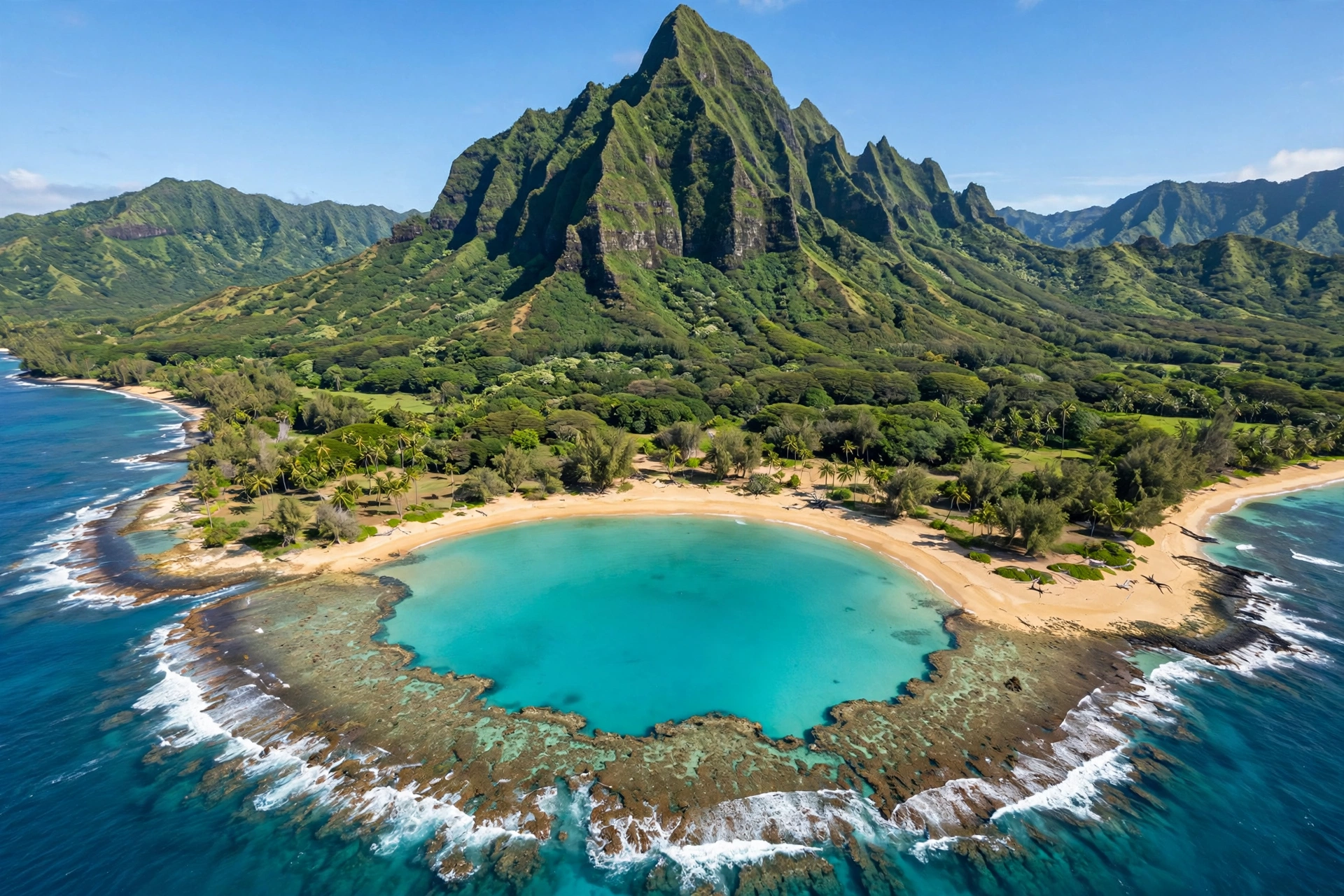
Where Tunnels Beach Is Located
Tunnels Beach sits on the north shore of Kauaʻi, the northernmost and oldest of the main Hawaiian Islands. The beach lies at Haʻena Point on Maniniholo Bay, roughly 5 miles west of the town of Hanalei and about 17 miles west of Princeville. In Hawaiian, the beach is called Mākua Beach, and the two names are used interchangeably by residents and visitors.
The beach is positioned almost at the end of the road. Kūhiō Highway (Route 56) becomes Route 560 as it winds west from Princeville through Hanalei and into Haʻena. The highway ends at Hāʻena State Park and Keʻe Beach, just a short distance past Tunnels. This far-west location is what gives the beach its remote, end-of-the-world feeling, with the towering cliffs of the Nāpali Coast rising immediately to the west and Mount Makana, the pyramid-shaped peak made famous as “Bali Hai” in the film South Pacific, dominating the view inland.
Because it sits on the north shore, Tunnels Beach faces the open Pacific with no sheltering headlands to the north. That exposure is the reason the ocean here changes so dramatically with the seasons. In summer the water is often glassy and calm, while in winter the same shoreline can see powerful surf. Understanding that geography is the key to planning a safe visit.
Most visitors reach Tunnels as part of a north shore day that starts in Hanalei town. Hanalei is the natural gateway: it has the last concentration of restaurants, shops, and services before the road narrows into the Haʻena stretch, and it sits at the head of Hanalei Bay, whose own crescent of sand is worth a stop on the way. From Hanalei, the drive to Tunnels takes about 15 to 20 minutes along a winding two-lane road that crosses one-lane bridges and passes taro fields, so build in extra time and drive with patience. The Hanalei Valley Lookout, just west of Princeville on the way in, offers a sweeping view of the valley’s patchwork taro loʻi and is an easy roadside stop that puts the whole north shore landscape in context before you arrive.
If you are searching for “Tunnel Beach” (singular), you will most often land on this Kauaʻi beach. There is also a Mākua Beach on the west side of Oʻahu, near Kaʻena Point, which is sometimes called Tunnels Beach as well. The Oʻahu beach is a different place entirely, and the famous snorkeling reef described in this guide is the Kauaʻi one at Haʻena.
Map: The Tunnels Beach Area
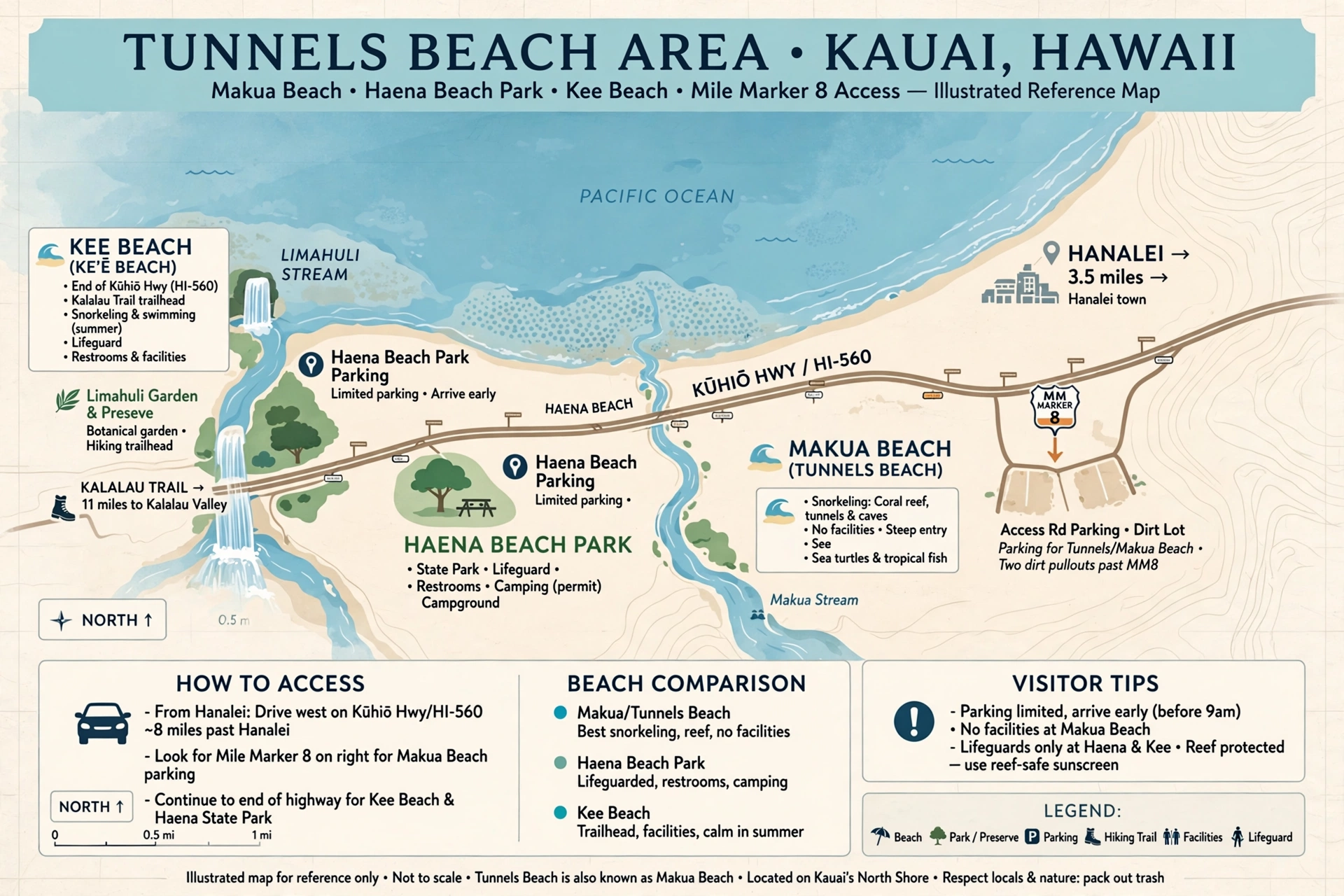
Reading the Tunnels Beach area on a map helps the visit make sense. The beach stretches along Maniniholo Bay in a long golden arc, with Haʻena Beach Park at its eastern end and the beach curving west toward Kepuhi Point. The famous reef sits offshore in the middle section, forming a broad horseshoe shape that encloses a shallow lagoon.
Beach access comes from small roads off the main highway near mile marker 8. There are two commonly used public access points, roughly 0.4 and 0.6 miles past the marker, marked with “Beach Access” signs. Both lead through residential lanes to narrow beach entry paths, and both have very limited parking. Because the lots are tiny, many visitors park at Hāʻena Beach Park, which sits just east of Tunnels along the same shoreline, and walk west along the sand for about half a mile to reach the reef area. The walk takes 10 to 15 minutes and follows flat, easy sand.
To the east of Tunnels, the shoreline continues past Hāʻena Beach Park toward Hanalei Bay. To the west, the highway continues a short distance to its end at Hāʻena State Park, home to Keʻe Beach and the trailhead for the Kalalau Trail. Inland, the road passes the Limahuli Garden and Preserve, one of the area’s notable botanical attractions. Everything on this stretch of coast is strung along the single two-lane highway, so the map of the area is simple: one road, one shoreline, and the mountains rising steeply behind both.
One landmark worth fixing in your mind is Mount Makana, the steep pyramid-shaped peak that rises directly behind the beach. It is the visual anchor of the whole area and appears in countless photographs of Tunnels. Because the peak is so distinctive, it also works as a rough compass: when you are on the sand facing the ocean, the mountain sits behind you to the south, the Nāpali cliffs run off to your right (west), and Hanalei Bay curves away to your left (east). Once you have that orientation, the layout of the north shore becomes intuitive.
The Beach and the Reef
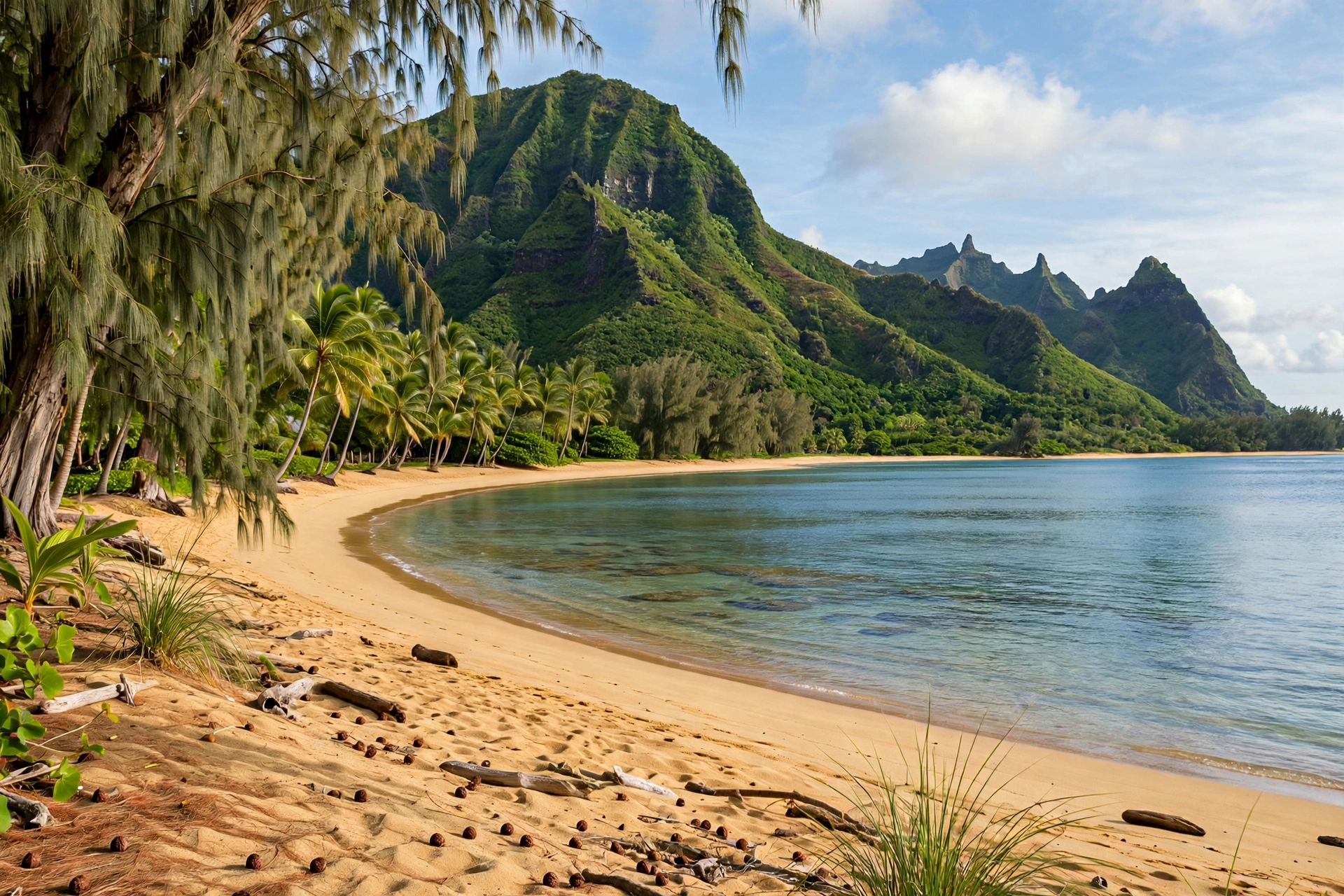
The beach itself is a wide, golden-sand crescent fringed with ironwood and palm trees. It is an undeveloped beach with no buildings, concessions, restrooms, or showers on the sand itself. The nearest restrooms and showers are at adjoining Hāʻena Beach Park. What the beach lacks in facilities, it makes up for in setting: the emerald ridges of the Nāpali Coast to the west and Mount Makana rising directly behind the shoreline.
Offshore, the reef is what makes Tunnels legendary. It is a large horseshoe-shaped reef that protects a lagoon-like inner area, and it is much bigger than it looks from shore. Within the reef system runs a labyrinth of underwater lava tubes, tunnels, caverns, and arches, formed when ancient lava flows met the sea. These formations give the beach its nickname and create an underwater landscape unlike anywhere else in the islands.
The reef supports big, healthy coral formations and an impressive range of marine life. Snorkelers and divers regularly see schools of reef fish, green sea turtles (honu), moray eels, trumpetfish, wrasse, goatfish, and filefish. On lucky days, a Hawaiian monk seal may haul out on the sand, and during whale season, humpback whales can be spotted offshore.
One important detail for visitors: a specific inner reef area known as the Mākua Lagoon is a designated marine refuge and is closed to snorkeling and entry as a fish nursery and recovery area, managed under the Hāʻena community-based subsistence fishing area rules. Respect the posted boundaries and stay in the open snorkeling areas. The closed section is clearly marked, and honoring it helps the reef stay healthy for future visits.
The reef’s structure rewards slow exploration. The inner lagoon is relatively shallow, with sandy patches between coral heads that make for relaxed swimming and easy wildlife spotting. Farther out, the reef rises into larger formations, and the channels and caverns of the lava tubes create swim-throughs that divers love. Because the reef is so large, it never feels crowded underwater even on busy beach days; snorkelers spread out across a wide area rather than clustering in one spot. Take your time working along the reef rather than swimming straight out, and you will see far more marine life. Morning light penetrates the water at the best angle for viewing coral colors, which is another reason early arrival pays off.
Snorkeling at Tunnels
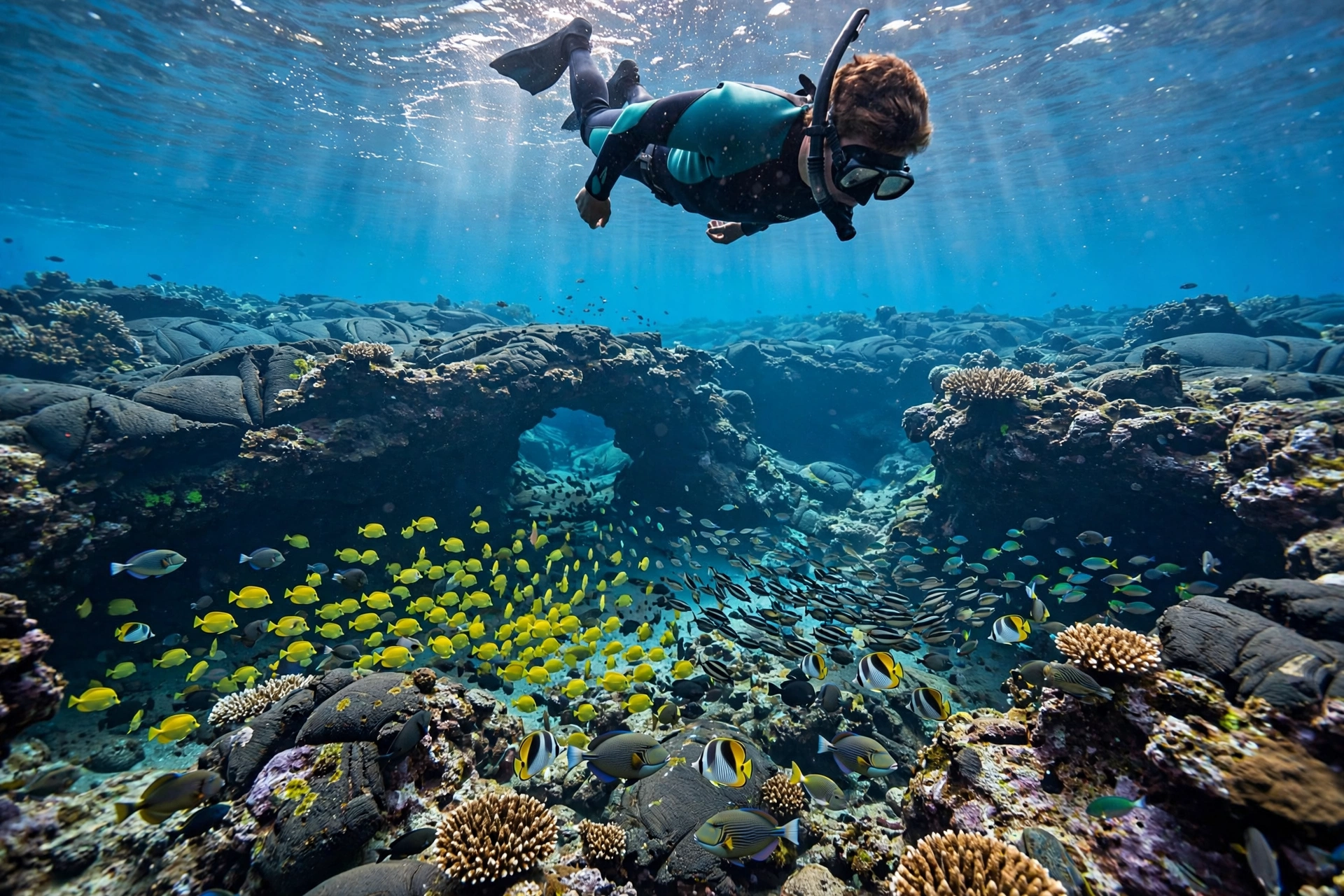
Tunnels is widely considered one of the best snorkeling spots in Hawaiʻi, and on calm summer days it is easy to see why. The inner reef offers shallow, clear water over coral heads, while the outer reef rewards strong swimmers with bigger coral formations, channels, and the lava-tube caverns that give the site its name. Visibility is often excellent when the ocean is calm.
Snorkeling here is seasonal and skill-dependent. In summer, typically May through September, the inner lagoon is usually calm enough for confident snorkelers of moderate ability. The outer reef, where currents can run strong even on calm-looking days, is better suited to experienced snorkelers. In winter, roughly October through April, north swells make the water dangerous, and snorkeling is generally not advisable.
There is no lifeguard on duty at Tunnels Beach. Enter the water only when conditions are calm, never snorkel alone, and watch the ocean before entering: if whitecaps are breaking on the outer reef or the water looks murky, stay on the sand. Currents here can be strong at any time of year, and the reef is deceptively large, so it is easy to swim farther from shore than intended. Beginners who are unsure should consider a guided snorkel outing or choose a more protected beach for their first sessions.
Scuba divers prize Tunnels as the north shore’s premier shore-diving site, with the underwater tunnels and arches offering an immersive dive. Divers should go with local knowledge of entry points and conditions, as the same seasonal rules apply.
A few practical snorkeling habits will make the day better. Use reef-safe sunscreen, which is required by Hawaiʻi law, and apply it well before entering the water. Wear a rash guard for sun protection and to avoid scrapes on coral. Never stand on coral or touch marine life; even light contact damages the reef, and some animals can sting or bite when harassed. Keep a respectful distance from sea turtles and monk seals, giving seals at least 50 yards of space as recommended by wildlife officials. If you see a monk seal resting on the beach, admire it from afar and keep dogs and children away. Finally, rinse your gear and check the forecast the night before: a calm morning can turn choppy by afternoon when the trade winds pick up, so plan your longest swim for the early hours.
Getting There: Directions and Parking
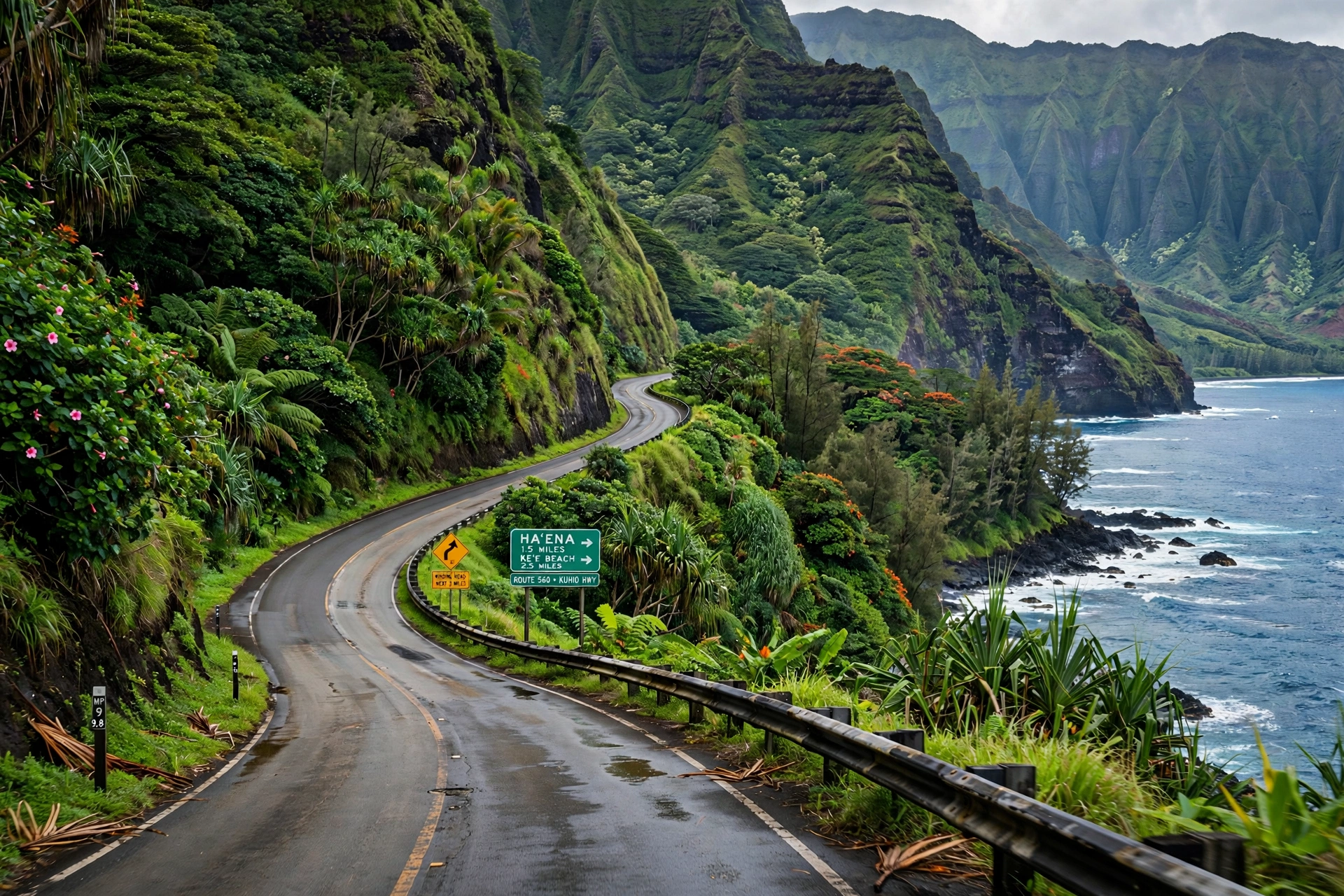
From Līhuʻe Airport, allow about an hour for the drive to Tunnels Beach, depending on traffic. Take Kūhiō Highway (Route 56) north through Kapaʻa and Princeville, where it becomes Route 560 and winds west through Hanalei and into Haʻena. Watch for mile marker 8; the two small beach access roads sit just past it on the ocean side of the highway. Look for the “Beach Access” signs, and drive slowly through the residential area.
Parking is the main challenge. The beach access lots hold only a handful of cars, roughly eight spots at the main lot, and they fill very early in the morning, often before 8 a.m. during busy periods. Arriving early is the single best strategy. If the access lots are full, the reliable backup is Hāʻena Beach Park, which has a larger lot with restrooms and showers, located just east along the same shoreline. From there, walk west along the sand about half a mile to reach the Tunnels reef area. Do not park illegally on the highway shoulders or block residential driveways; illegally parked cars are ticketed.
Access to Tunnels Beach itself is free, and no reservation is required for the beach or for parking at Hāʻena Beach Park. This is an important distinction: neighboring Hāʻena State Park, which includes Keʻe Beach and the Kalalau Trail trailhead, does require advance reservations for entry, parking, or the shuttle, booked through the state’s official reservation system, and entry and parking fees apply there. If your plans include Keʻe Beach or the Kalalau Trail on the same day, arrange those reservations well ahead of time, since they sell out. The Kauaʻi North Shore Shuttle also serves Hāʻena Beach Park, which can be a useful option when parking is tight.
Bring everything you need, since the beach has no amenities: water, snacks, sun protection, reef-safe sunscreen, and your own snorkel gear. The nearest food and supplies are back in Hanalei town.
Timing your arrival matters as much as your route. The access lots often fill before 8 a.m. in peak season, and Hāʻena Beach Park fills not long after. An early start also gives you the calmest water and the softest light for photographs of the reef and the mountains. If you arrive midday to find everything full, consider shifting your beach time to late afternoon, when some morning visitors leave, though the water is usually less glassy by then. The Kauaʻi North Shore Shuttle, which runs between Hanalei and Hāʻena with a stop at the beach park, removes the parking stress entirely and is worth considering on busy days.
Nearby: Keʻe Beach and the Kalalau Trail
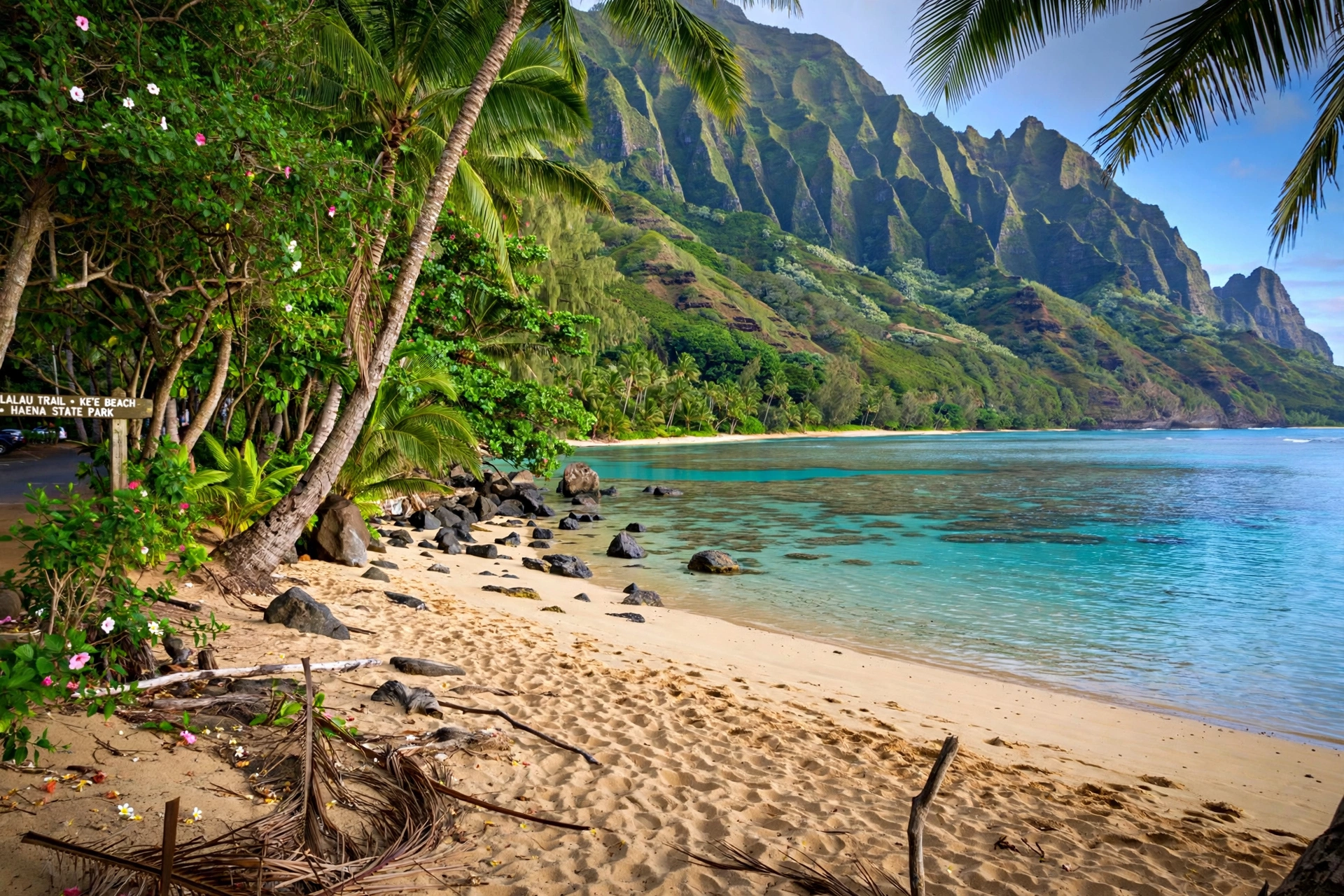
Just past Tunnels at the literal end of the highway, Hāʻena State Park holds Keʻe Beach, a beautiful reef-protected beach framed by the Nāpali cliffs. Keʻe is one of the island’s most photographed beaches, and its lagoon is a popular summer snorkeling spot. Remember that Keʻe requires an advance reservation through the state system, unlike Tunnels.
The park is also the trailhead for the Kalalau Trail, the famous 11-mile coastal trail along the Nāpali Coast. Day hikers can walk the first two miles to Hanakāpīʻai Beach with a park reservation; going farther requires a camping permit. Even if you do not hike, the trailhead area offers stunning views where the road meets the cliffs.
Other nearby stops include the Limahuli Garden and Preserve, a botanical garden in a lush valley just inland from the highway, and the Hāʻena area’s sea caves and small coves. Hanalei town, about 15 minutes east, has the closest restaurants, shops, and services.
Limahuli deserves a special mention because it pairs so naturally with a Tunnels morning. The garden sits in a valley that has been cultivated for centuries, and its trails wind past taro terraces, native forest, and archaeological sites, with ocean views opening at the upper levels. It requires an admission fee and a reservation, so book ahead if you want to combine it with your beach day. A common itinerary is an early snorkel at Tunnels, lunch in Hanalei, and an afternoon at the garden, which makes full use of the north shore’s best hours.
Best Time to Visit Tunnels Beach
Summer, roughly May through September, is the season for Tunnels Beach. Trade winds ease, north swells fade, and the lagoon turns calm and clear, creating the classic conditions the beach is famous for. Mornings are typically the calmest, with the best visibility for snorkeling before afternoon winds ripple the surface. Arriving early also solves the parking problem, so a morning visit in summer is the ideal formula.
Winter, roughly October through April, transforms the beach. Large north swells bring powerful surf, strong currents, and dangerous shorebreak. Swimming and snorkeling are usually unsafe, and visitors should stay well back from the waterline. Winter visits are still worthwhile for the scenery: watching expert surfers ride the outer reef breaks and seeing the Nāpali cliffs under dramatic skies is spectacular from the sand.
The shoulder months of April, May, September, and October can go either way, so always check the surf forecast before heading out. The National Weather Service Honolulu office publishes surf and marine forecasts for Kauaʻi’s north shore, and a quick check the morning of your visit is a smart habit in any season.
Whale season adds another dimension to winter and spring visits. From roughly December through April, humpback whales migrate through Hawaiian waters, and the north shore’s elevated viewpoints and open horizons make for excellent whale watching from land. You will not be swimming at Tunnels during most of this window, but scanning the horizon from the sand with binoculars can be just as memorable. Sea turtles and the occasional monk seal can appear on the beach in any season, which is all the more reason to give wildlife plenty of space year-round.
Frequently Asked Questions
Where exactly is Tunnels Beach?
Tunnels Beach, also called Mākua Beach, is on the north shore of Kauaʻi at Haʻena Point on Maniniholo Bay, about 5 miles west of Hanalei and just before the end of Kūhiō Highway (Route 560) at Hāʻena State Park.
Why is it called Tunnels Beach?
The nickname comes from the extensive system of underwater lava tubes, caverns, and arches in the offshore reef. Divers and snorkelers named it for these tunnel-like formations, not for any tunnels on land.
Is Tunnels Beach the same as Mākua Beach?
Yes. Mākua Beach is the Hawaiian name for the same beach. Note that there is a separate Mākua Beach on Oʻahu’s west coast; the famous snorkeling reef is the Kauaʻi one.
Do I need a reservation to visit Tunnels Beach?
No. Tunnels Beach itself requires no reservation, and parking at Hāʻena Beach Park is free and first-come, first-served. Neighboring Hāʻena State Park (Keʻe Beach and the Kalalau Trail) does require advance reservations.
Is it safe to swim at Tunnels Beach?
In summer the inner lagoon is usually calm and suitable for confident swimmers and snorkelers. In winter, high surf and strong currents make it dangerous. There is no lifeguard, so always assess conditions before entering.
Can beginners snorkel at Tunnels?
The shallow inner reef can work for reasonably confident beginners on calm summer days, but the outer reef and its currents are for experienced snorkelers only. If you are new to snorkeling, consider going with a guide or choosing a calmer beach first.
Where do I park for Tunnels Beach?
Use the two small beach access roads just past mile marker 8 on Route 560, arriving early, or park at Hāʻena Beach Park and walk about half a mile west along the sand.
Are there restrooms or food at Tunnels Beach?
No. The beach has no facilities. The nearest restrooms and showers are at Hāʻena Beach Park, and the nearest food is in Hanalei town, so bring water, snacks, and supplies.
Can I visit Tunnels Beach in winter?
Yes, for the scenery, but not for swimming or snorkeling. Winter surf makes the water dangerous, so stay well back from the waterline and enjoy the views, the sunsets, and the sight of expert surfers on the outer reef.
Is Tunnels Beach good for kids?
In calm summer conditions, the shallow inner lagoon can be enjoyable for children who are comfortable in the ocean, with close adult supervision. There is no lifeguard and no shade structures, so bring sun protection and keep kids away from the reef edges and channels where currents run.
What should I do if I see a monk seal on the beach?
Stay at least 50 yards away, keep dogs leashed and children close, and do not disturb it. Monk seals are an endangered native species, and resting seals need quiet to recover between foraging trips.
Related Guides
Finding Your Way to the Tunnels
Tunnels Beach rewards visitors who plan around its geography. It sits at the far end of Kauaʻi’s north shore road, where the highway gives way to the Nāpali cliffs, and its famous reef lies just offshore in the middle of a long golden bay. Go in summer, arrive early, park legally, respect the closed refuge area, and read the ocean before you swim. Do that, and you will understand why this remote stretch of sand at Haʻena is considered one of the finest snorkeling beaches in Hawaiʻi.