
Hawaiʻi Hikes
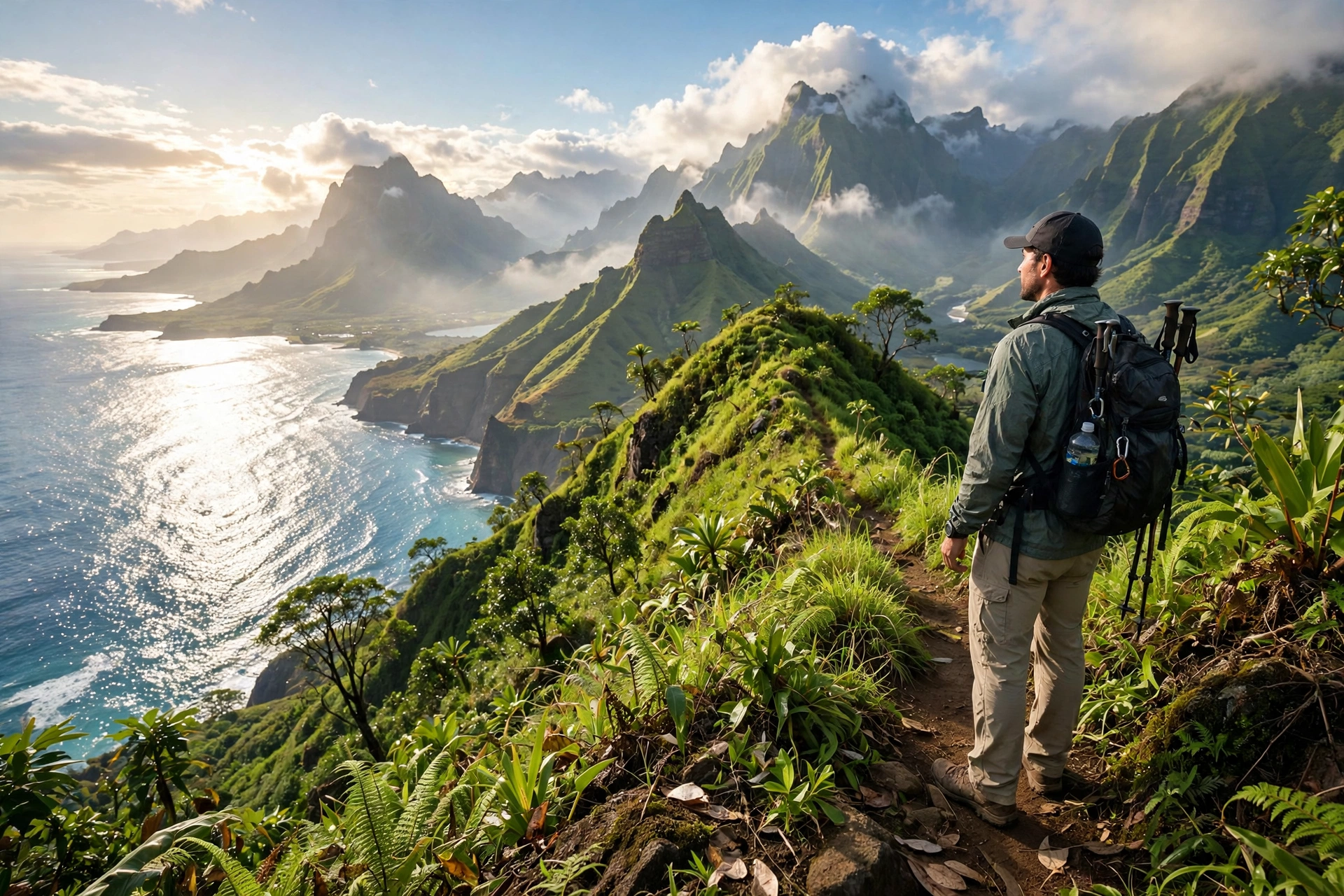
Few places on earth pack as much hiking variety into so little land as Hawaiʻi. In a single trip you can walk across a steaming volcanic crater floor, climb through a bamboo forest to a 400-foot waterfall, traverse knife-edge ridges above the clouds, and finish the day with your feet in the sand on a coastal trail. This guide covers Hawaii hiking statewide: how the trail systems work, the standout hikes on each island, the permits and reservations you need, what to pack, how to stay safe, and when to go.
In This Guide
- Hawaii Hiking at a Glance
- Best Hawaii Hikes by Island
- Hawaii Hikes by Difficulty Level
- Planning Essentials: Permits and Reservations
- What to Pack for Hiking in Hawaii
- Trail Safety in Hawaiʻi
- Best Time of Year to Hike in Hawaii
- Trail Etiquette and Leave No Trace
- Hawaii Hiking FAQ
- Related Hiking Guides
Hawaii Hiking at a Glance
Hawaii hiking is unlike hiking anywhere else in the United States, because the islands compress an extraordinary range of environments into very small areas. Elevation changes fast, rainfall changes faster, and a trail can pass through four or five distinct climate zones in a few miles. On the Big Island, the Humuʻula Trail climbs from dry grassland to the 13,803-foot summit of Mauna Kea, where the air is thin and the landscape looks more like Mars than the tropics. On Kauaʻi, the Kalalau Trail hugs sea cliffs along the Nāpali Coast, crossing valleys that receive some of the heaviest rainfall on the planet. On Maui, the Pipiwai Trail walks you through a towering bamboo forest before delivering you to the base of 400-foot Waimoku Falls. And on Oʻahu, the Diamond Head Summit Trail climbs a 300,000-year-old volcanic tuff cone right in the middle of Honolulu.
The backbone of Hawaii hiking is the Nā Ala Hele Trail and Access System, managed by the Hawaiʻi Department of Land and Natural Resources (DLNR) Division of Forestry and Wildlife. Nā Ala Hele maintains hundreds of miles of public trails across the islands, from short nature walks to long backcountry routes. Many of the islands’ most famous hikes sit on state land, which means they are free or nearly free to access, though a growing number of high-traffic trailheads now require advance reservations to control crowding. In addition to state trails, the National Park Service manages trails in Haleakalā National Park on Maui and Hawaiʻi Volcanoes National Park on the Big Island, and county parks add hundreds more miles of paths, especially along coastlines.
What surprises first-time visitors most is how vertical Hawaii hiking can be. Island trails were often built along old Hawaiian footpaths, plantation roads, or ranch routes, not engineered for recreational comfort. Grades are steep, ridgelines are narrow, and stream crossings are common. A trail listed as “moderate” in Hawaiʻi might feel strenuous to someone used to mainland hiking. Heat and humidity add another layer: low-elevation trails on the leeward (dry) sides of the islands can be brutally hot by mid-morning, while windward trails can turn muddy within minutes of a passing shower. The payoff for all of this is scenery that simply does not exist anywhere else in the country.
Hiking in Hawaiʻi also carries a cultural dimension that mainland hiking does not. Trails cross land that has been significant to Native Hawaiians for centuries. You will see heiau (temples and sacred sites), ancient agricultural terraces, and burial areas near some trails. Many are marked kapu, meaning entry is forbidden. Respecting these boundaries is not optional etiquette; it is a legal and moral obligation. The concept of mālama ʻāina, caring for the land, runs through every part of responsible Hawaii hiking, from staying on marked trails to cleaning your boots so you do not spread Rapid ʻŌhiʻa Death, a fungal disease killing native ʻōhiʻa lehua trees.
This page is the statewide hub for Hawaii hiking. It covers the topics every hiker needs regardless of island: how to plan, what to bring, how to stay safe, and when to go. For deep, trail-by-trail coverage of a single island, use the island guides linked at the end of this page.
Best Hawaii Hikes by Island
Every Hawaiian island has its own hiking personality, shaped by geology, rainfall, and land management. Here are the standout trails on each island, with the key stats you need to choose the right one.
Oʻahu
Oʻahu has the most hikers and the most crowded trailheads in the state, but also some of its most rewarding short hikes. Diamond Head Summit Trail is the island’s signature walk: 1.6 miles round trip with about 560 feet of elevation gain, climbing through tunnels and up staircases inside the famous Lēʻahi crater to a panoramic summit overlooking Waikīkī and the south shore. Non-residents must book a reservation in advance through the state park system, and the $5 per person entry fee plus $10 parking fee are paid online. Go early in the morning to beat the heat and the crowds.
Mānoa Falls Trail is Oʻahu’s classic rainforest hike: an easy 1.6-mile round trip through bamboo groves and native forest to a 150-foot waterfall. The trail is often muddy, which is part of its charm, but wear shoes with grip and skip it during or right after heavy rain when the stream runs high. Koko Crater Railway Trail is the island’s most famous workout: 1,048 old military railroad ties climb straight up the crater in about a mile, gaining over 1,000 feet. There is no shade, so start at sunrise and bring more water than you think you need.
Maui
Maui’s trails split neatly between the lush east side and the volcanic summit. Pipiwai Trail in Haleakalā National Park’s Kīpahulu District is many visitors’ favorite hike in all of Hawaiʻi: 4 miles round trip past banyan trees, through a towering bamboo forest on a boardwalk, to the base of 400-foot Waimoku Falls. The park charges an entrance fee, and the drive to the trailhead follows the winding Road to Hāna, so make a full day of it.
Waiheʻe Ridge Trail on the windward side of the West Maui Mountains delivers the island’s best ridge views for moderate effort: about 4.5 miles round trip with roughly 1,500 feet of climbing, ending at a lookout over Waiheʻe Valley with the ocean beyond. Clouds often roll in by late morning, so start early. For a genuine challenge, Sliding Sands (Keoneheʻeheʻe) Trail descends from the 10,000-foot summit of Haleakalā into the crater itself, a silent world of cinder cones and volcanic ash where the Hawaiian goose, or nēnē, sometimes wanders across the trail.
Hawaiʻi Island (Big Island)
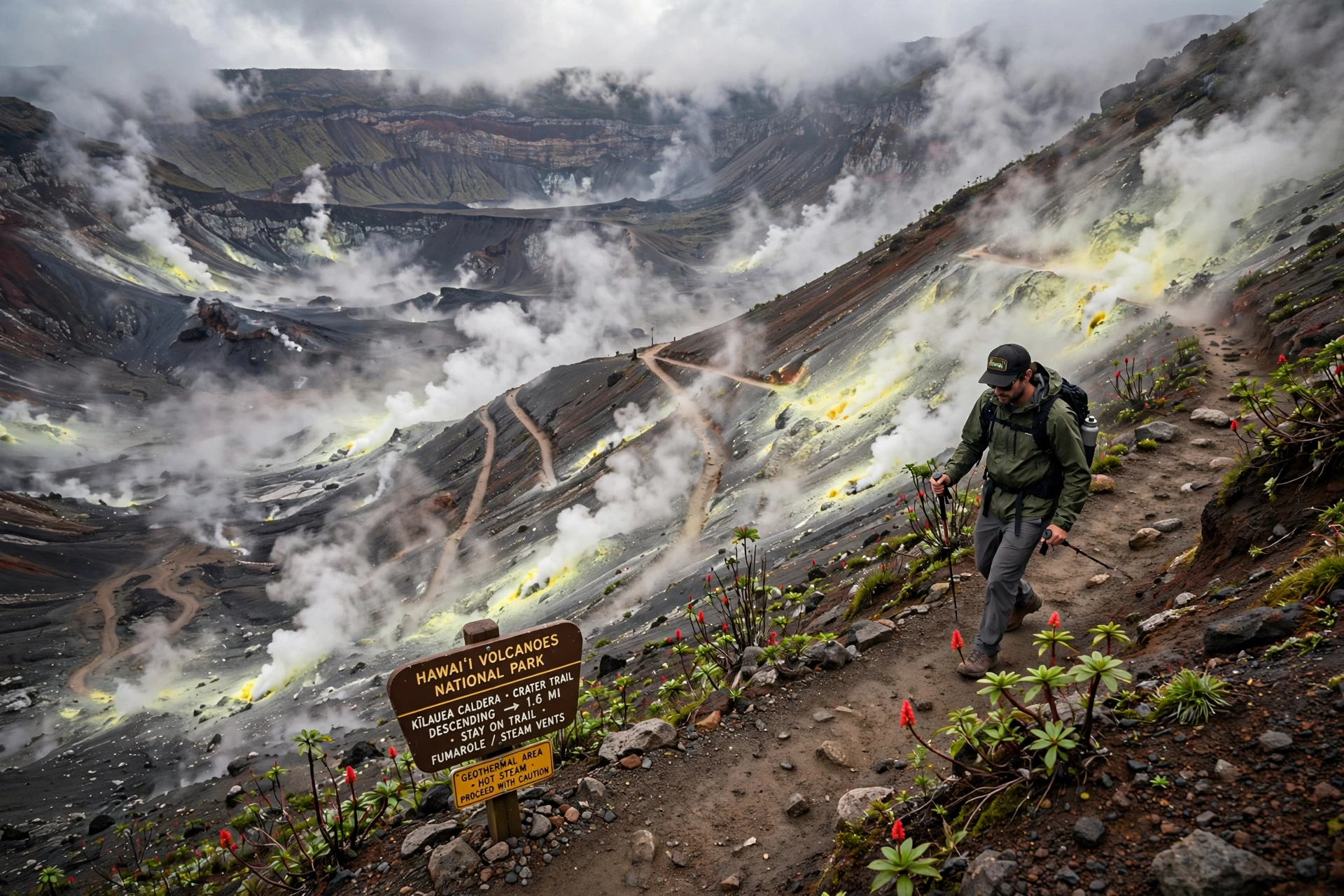
The Big Island’s hiking is defined by volcanoes. Kīlauea Iki Overlook and Trail in Hawaiʻi Volcanoes National Park is the essential Big Island hike: a roughly 3-mile loop that descends through rainforest onto the floor of a crater that erupted in 1959, crossing still-steaming vents and lava formations. Check current volcanic activity and park alerts before you go, because conditions and closures change with eruptions.
Pololū Valley Trail on the North Kohala coast drops steeply from a dramatic overlook down to a black-sand beach framed by cliffs: less than a mile round trip but steep and often slippery. At the other end of the difficulty spectrum, the Humuʻula (Mauna Kea) Summit Trail climbs about 6 miles round trip from the visitor station at 9,200 feet to the 13,803-foot summit, the highest point in Hawaiʻi. Altitude sickness is a real risk; acclimate at the visitor station for at least 30 minutes and descend immediately if you feel ill.
Kauaʻi
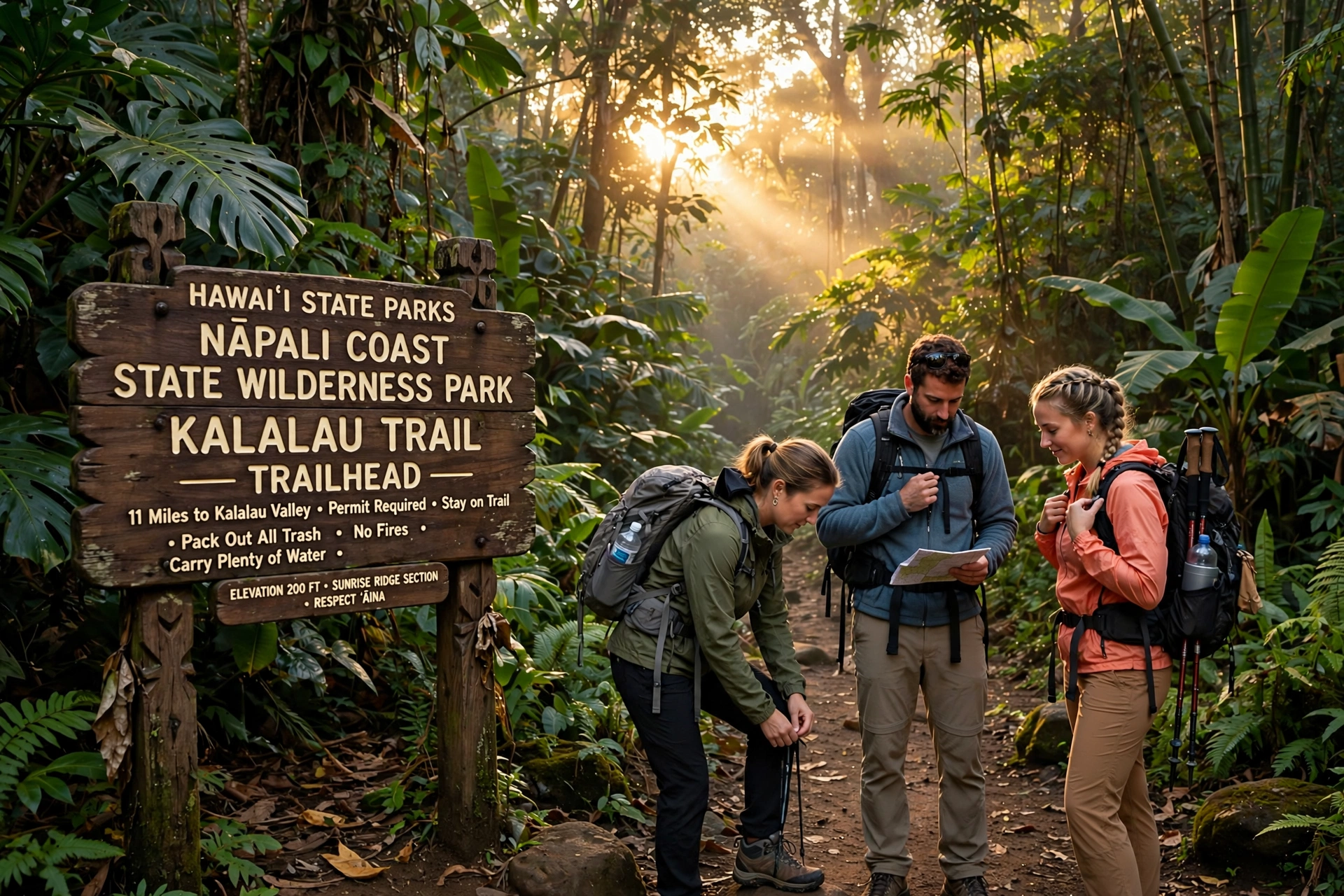
Kauaʻi is Hawaiʻi’s hiking crown jewel and also its most permit-intensive island. The Kalalau Trail along the Nāpali Coast is 11 miles one way from Kēʻē Beach to Kalalau Beach, crossing five valleys on narrow cliffside ledges including the infamous Crawler’s Ledge. Day hikers may go as far as Hanakāpīʻai Valley (8 miles round trip to the falls) with a Hāʻena State Park entry or parking reservation; hiking past Hanakāpīʻai requires a Nāpali Coast State Wilderness Park camping permit. This is a serious backcountry route with no water, no cell service, and stream crossings that can become deadly in rain. It is not a casual day hike.
Inland, Kōkeʻe State Park and Waimea Canyon offer a network of day hikes with canyon and ocean views. The Awaʻawapuhi Trail (about 3.2 miles round trip) ends at a jaw-dropping overlook 2,500 feet above the Nāpali Coast, while the longer Nuʻalolo Trail (about 7.5 miles round trip) continues along the canyon rim. Always check DLNR park alerts before heading to Kauaʻi’s state parks, since storms periodically close roads and trails with little notice.
Molokaʻi
Molokaʻi’s hiking is quieter and less developed than on the main tourist islands, which is part of its appeal. The island is home to some of the tallest sea cliffs in the world, dropping nearly 3,000 feet to the Kalaupapa Peninsula. Access to Kalaupapa National Historical Park is restricted: visitors must arrive by small plane or with an authorized tour operator, and independent hiking into the settlement is not permitted. Respect these rules; Kalaupapa is a sacred place with a profound history. Elsewhere on the island, trails like the Kamakou Preserve boardwalk walk through rare native cloud forest. Check locally for current access, since some Molokaʻi trails cross private land with managed entry.
Lānaʻi
Lānaʻi offers a completely different hiking experience: cool, quiet, and uncrowded. The Munro Trail runs about 12.8 miles one way along the island’s central ridge, passing through Cook pine forest planted in the early 1900s and offering views of five islands on clear days. Most hikers walk a shorter out-and-back section rather than the full traverse. Koloiki Ridge Trail (about 5 miles round trip) winds through native forest to overlooks of the north shore. Lānaʻi’s high elevation keeps temperatures pleasant, but the island is remote: carry everything you need and tell someone your plans.
Hawaii Hikes by Difficulty Level
Not sure where to start? This quick reference groups well-known Hawaiian trails by the effort and experience they demand. Use it to match a trail to your fitness, your schedule, and your comfort with exposure and navigation.
Easy: paved paths, beach walks, and short nature trails
These hikes need no special fitness and suit almost everyone, including families with children and travelers who just want a taste of the islands on foot. The Wailea Beach Path on Maui is a paved 3-mile round-trip stroll past resort beaches with ocean views the whole way. The Kapalua Coastal Trail (3.5 miles round trip) adds lava rock formations and tide pools to a similarly gentle walk. On Oʻahu, the Makapuʻu Point Lighthouse Trail is a paved 2-mile round trip with whale watching in winter and some of the island’s best coastal scenery for minimal effort. On the Big Island, the Kīlauea Iki Overlook and the Sulphur Banks boardwalk in Hawaiʻi Volcanoes National Park deliver volcanic drama on accessible paths. Even easy trails deserve sun protection, water, and sturdy shoes: “easy” in Hawaiʻi still means tropical sun and uneven ground.
Moderate: real hikes with real elevation gain
Moderate Hawaiian trails are full-day-worthy outings that reward reasonable fitness with extraordinary scenery. Diamond Head (1.6 miles round trip, 560 feet of gain) is the classic introduction: steep in places, with stairs and a tunnel, but over in about two hours. Mānoa Falls (1.6 miles round trip) trades elevation for mud and rainforest atmosphere. Pipiwai Trail (4 miles round trip) is longer but never brutally steep, making it the best effort-to-reward ratio on Maui. Waiheʻe Ridge (4.5 miles round trip, 1,500 feet of gain) is the step up: a genuine climb with ridge exposure near the top. On Kauaʻi, the Awaʻawapuhi Trail (3.2 miles round trip) is short but drops and climbs relentlessly. Train on stairs before your trip, start early, and carry at least 2 liters of water per person.
Challenging: long days and serious terrain
Challenging hikes in Hawaiʻi demand fitness, preparation, and good judgment. The Kalalau Trail (22 miles round trip) is the state’s most famous expedition: cliffside ledges, stream crossings, and full self-sufficiency. Sliding Sands at Haleakalā (11 miles round trip through the crater, or longer with connecting trails) punishes with altitude and sun rather than technical terrain. The Humuʻula Summit Trail on Mauna Kea (about 12 miles round trip from the visitor station area, depending on route) adds altitude sickness to the equation at nearly 14,000 feet. Oʻahu’s Olomana Three Peaks is short but extremely exposed, with rock scrambling and fatal fall potential. Attempt these only with proper gear, permits where required, an early start, and a willingness to turn back.
Planning Essentials: Permits and Reservations
Hawaiʻi has moved decisively toward reservation and permit systems at its most popular trailheads. Planning ahead is no longer optional for the marquee hikes. Here is what you need to know, island by island.
Advance reservations required
Diamond Head (Oʻahu). All non-residents need an entry reservation booked through the state park reservation system, available up to 30 days ahead. Entry is $5 per person and parking is $10 per vehicle, paid online. Hawaiʻi residents with a state ID or driver’s license enter free without a reservation. The monument is open 6:00 a.m. to 6:00 p.m. daily, closed Christmas and New Year’s Day, and last entry is in the mid-afternoon.
Hāʻena State Park and the Kalalau Trail (Kauaʻi). Non-residents need either a park entry reservation or a parking reservation (which covers the driver and passengers) to enter Hāʻena State Park, the trailhead for the Kalalau Trail. Reservations open 30 days in advance and sell out quickly, especially for morning time slots. With an entry reservation you may day-hike the Kalalau Trail as far as Hanakāpīʻai Valley, 8 miles round trip to the falls. To hike past Hanakāpīʻai toward Kalalau Beach, you need an overnight camping permit for Nāpali Coast State Wilderness Park. There are no exceptions, and rangers do check.
Haleakalā sunrise (Maui). Watching sunrise from the summit of Haleakalā requires a vehicle reservation made through recreation.gov, in addition to the park entrance fee. Reservations open 60 days ahead and the remaining slots release two days before. Sunset and daytime visits do not require a sunrise reservation, though the park entrance fee still applies.
Hawaiʻi Volcanoes National Park (Big Island). No advance reservation is needed, but the park charges an entrance fee per vehicle (check nps.gov for the current rate). Backcountry overnight trips require a separate permit from the park’s backcountry office.
How to plan around the systems
Book the moment your dates are firm. The 30-day windows for Diamond Head and Hāʻena open at a fixed time and the most popular slots disappear within hours. If you miss out, keep checking: cancellations do appear. Build your island itinerary around your confirmed reservation times rather than the other way around. Morning slots are almost always the best choice in Hawaiʻi. Trails are cooler, parking lots are emptier, and on ridge trails the clouds often arrive by late morning and erase the views.
Always check official sources the day before your hike. The DLNR Division of State Parks posts closure notices for storm damage, flooding, and trail work, and the National Park Service posts alerts for volcanic activity, road closures, and weather at Haleakalā and Hawaiʻi Volcanoes. Conditions in Hawaiʻi change fast: a trail that was perfect yesterday can be closed today after a night of heavy rain.
Trailheads without reservations
The majority of Hawaiʻi’s trails still require no reservation at all. Most Nā Ala Hele state trails, county beach parks, and forest reserve roads are open access with free parking, though lots at popular trailheads fill early. On these trails, the planning essentials are simpler: arrive early, bring cash for any donation boxes or parking meters, and download offline maps before you leave your hotel, because cell service disappears quickly once you leave the main roads.
What to Pack for Hiking in Hawaii
Hawaiʻi’s trails demand a different packing list than mainland hikes. The sun is stronger, the rain is sudden, the mud is legendary, and help can be hours away on remote routes. Pack for all of it.
Footwear
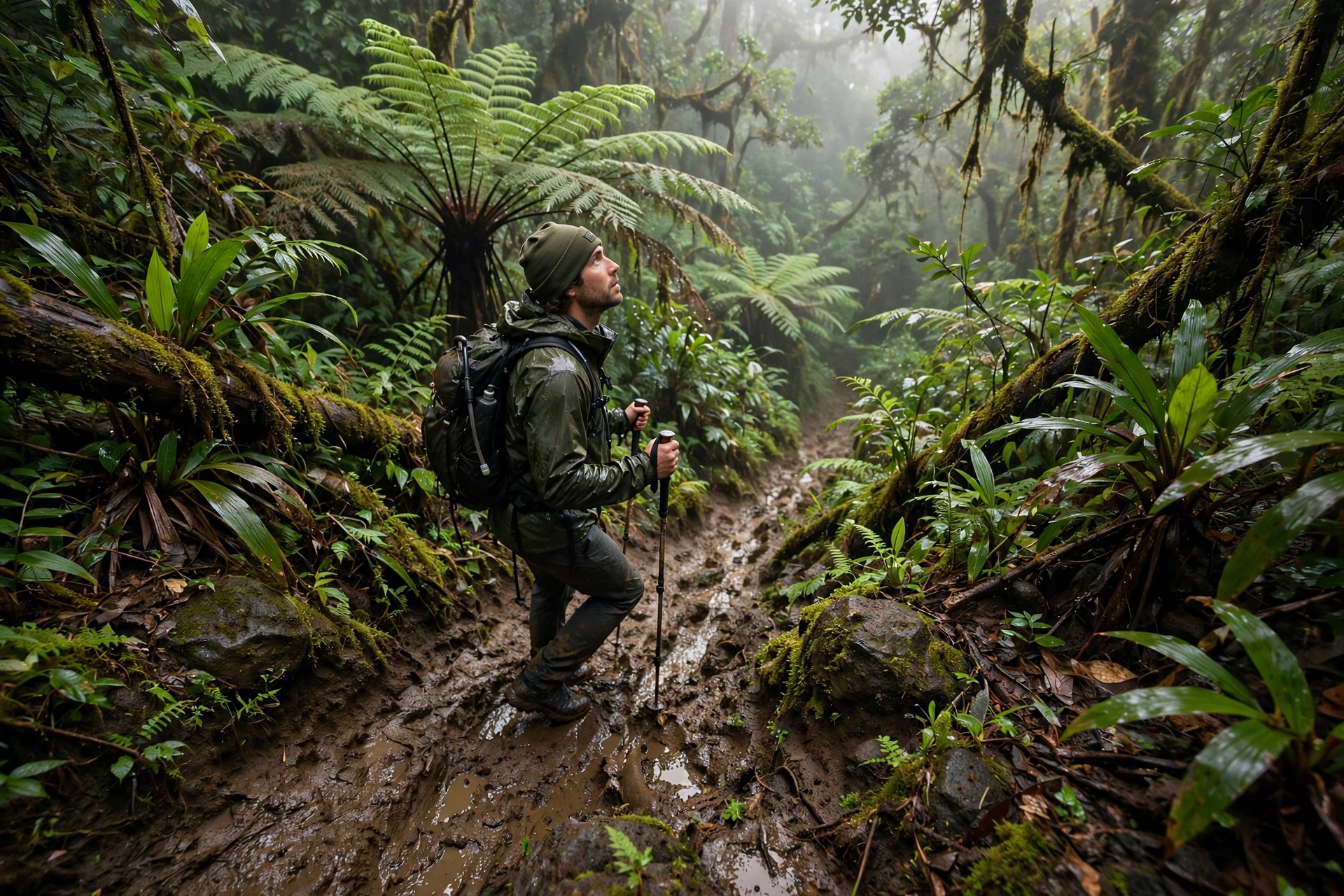
Trail shoes or hiking shoes with aggressive tread are the single most important item. Hawaiian trails are famously muddy, especially on the windward sides of the islands and after rain, and smooth-soled sneakers become skis on red clay. Many experienced local hikers wear tabis or dedicated mud shoes. Whatever you choose, make sure it is broken in before your trip. Waterproof boots sound appealing but stay wet and heavy once soaked; quick-draining trail shoes are usually the better call.
Water and food
Carry more water than you think you need. A common guideline is at least 2 liters per person for a half-day hike and 3 to 4 liters for a full day, more on hot leeward trails. There is no safe drinking water on the trail, and stream water in Hawaiʻi can carry leptospirosis, a bacterial illness, so do not drink untreated stream water no matter how clear it looks. Bring salty snacks and real food: the combination of heat, humidity, and elevation gain burns through energy faster than most visitors expect.
Sun and rain protection
Hawaiʻi sits near the equator, and UV exposure is intense even on cloudy days. Wear a hat, sunglasses, and reef-safe sunscreen. Hawaiʻi law prohibits the sale of sunscreens containing oxybenzone and octinoxate, so buy compliant sunscreen or bring your own mineral formula. At the same time, pack a lightweight rain jacket or poncho on every hike. Passing showers are normal on windward and upland trails, and getting soaked at elevation with wind can chill you fast.
Navigation and safety gear
Download offline maps before you leave Wi-Fi. Cell service is unreliable or nonexistent on many trails, including large sections of the Kalalau Trail, the interior of Haleakalā crater, and the back of Waimea Canyon. A fully charged phone in airplane mode with downloaded maps, plus a portable charger, covers most day hikes. For remote multi-day routes, consider a satellite messenger. A small first-aid kit, a headlamp (even for day hikes, in case you are delayed), and a whistle round out the essentials. Trekking poles are worth their weight on steep, muddy descents like Pololū Valley and the Kalalau Trail’s early miles.
Protecting native ecosystems
Pack a brush or use trailhead boot-cleaning stations to remove mud and seeds from your footwear before and after hikes. This slows the spread of Rapid ʻŌhiʻa Death, a fungal disease devastating Hawaiʻi’s native ʻōhiʻa lehua forests, and of invasive plant seeds. Never transport plants, fruits, or soil between islands or trailheads.
Trail Safety in Hawaiʻi
Hawaiʻi’s trails injure and kill visitors every year, almost always for preventable reasons: flash floods, falls from ridges and cliffs, heat illness, and ocean accidents at coastal trail destinations. Understanding the specific hazards is the most important part of planning a Hawaii hiking trip.
Flash floods
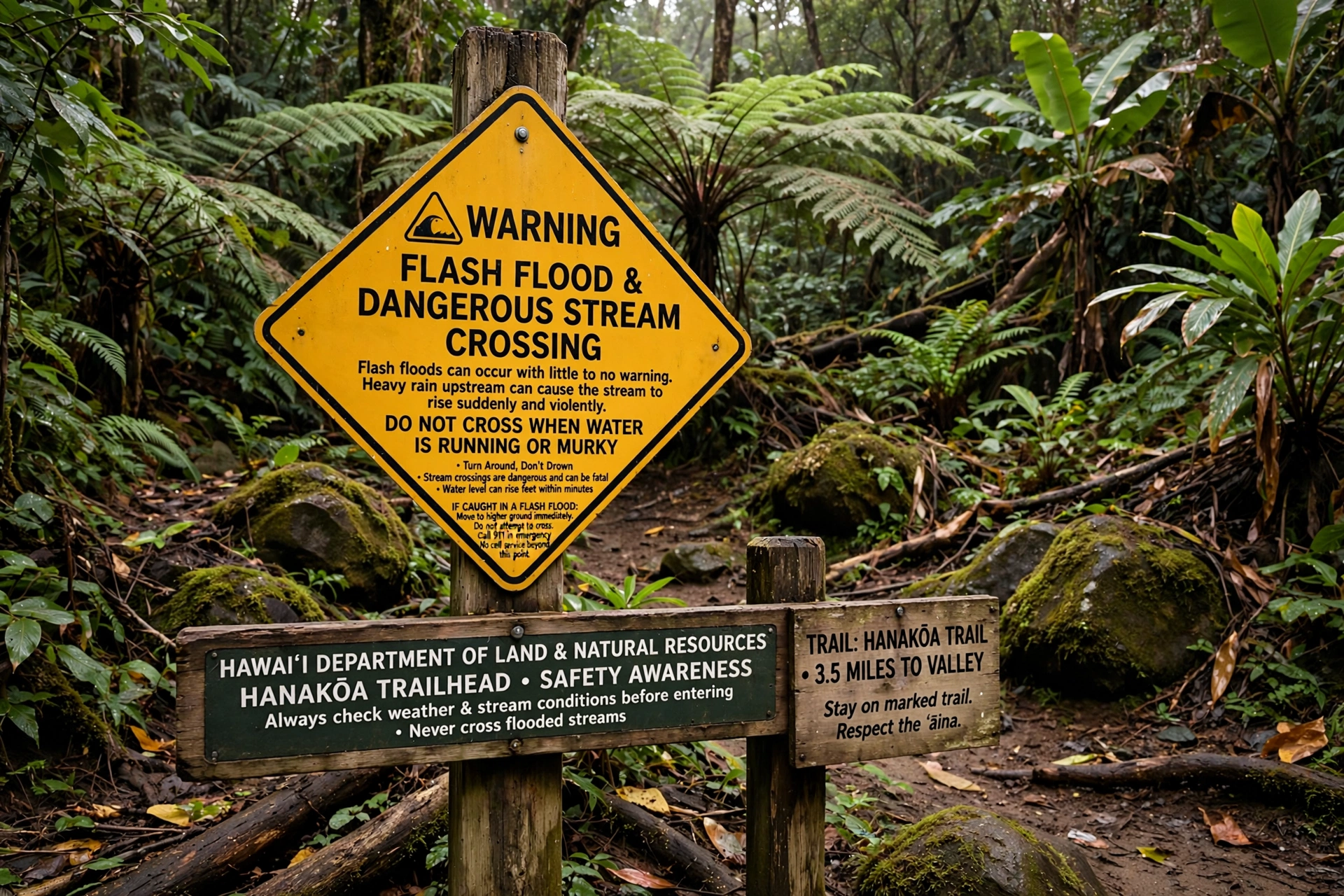
Flash flooding is the number one killer of hikers in Hawaiʻi. Narrow valleys on the windward sides of the islands can flood with terrifying speed when rain falls on the mountains above, even when the sky above you is blue. Never cross a stream that is rising, muddy, or flowing fast. If water reaches your knees, turn back. Classic danger spots include the stream crossings on the Kalalau Trail (especially Hanakāpīʻai Stream, where hikers have died), the waterfalls along the Road to Hāna, and canyon trails on Kauaʻi. Check the National Weather Service Honolulu forecast and heed flash flood watches: if one is issued for your area, choose a different hike.
Falls from ridges and cliffs
Ridge trails like Olomana’s Three Peaks on Oʻahu and sections of the Kalalau Trail feature narrow paths with sheer drops on one or both sides. These trails have claimed lives. Stay on the marked route, keep at least a body length from cliff edges, and turn back if a section feels beyond your ability. Wet rock and mud make everything harder: a ridge that felt manageable in dry conditions can become genuinely dangerous after rain. Do not let a summit photo override your judgment.
Heat, humidity, and dehydration
Low-elevation leeward trails can exceed 90°F with brutal sun exposure. Trails like Koko Crater, Makapuʻu Point, and the Kaʻena Point coastline offer little to no shade. Start before 8 a.m., carry more water than your mainland instincts suggest, and watch for the early signs of heat illness: headache, dizziness, nausea, and unusually heavy or absent sweating. Dark urine at the trailhead means you started dehydrated. Rest in shade, cool down, and drink.
Leptospirosis
Leptospirosis is a bacterial disease present in freshwater streams and mud in Hawaiʻi, spread through the urine of infected animals. It enters through cuts, scrapes, or mucous membranes. The Hawaiʻi Department of Health advises against swimming in freshwater streams and waterfalls, especially with open wounds, and recommends covering cuts with waterproof bandages while hiking. Symptoms can resemble the flu and appear days to weeks after exposure; seek medical care promptly if you develop fever, headache, or muscle aches after freshwater contact.
Ocean hazards at trail destinations
Many of Hawaiʻi’s best hikes end at the ocean: hidden beaches, tide pools, and coastal overlooks. Treat the ocean with the same caution as the trail. Never turn your back on the surf, never swim at beaches without lifeguards unless you are certain of conditions, and stay well back from blowholes and cliff edges where waves can sweep you off the rocks. Winter surf on north-facing shores is powerful enough to be lethal even to strong swimmers.
Wildlife and plants
Hawaiʻi has no snakes, no bears, and no large predators, which surprises many visitors. The wildlife concerns are smaller: centipedes with a painful bite, mosquitoes (which can carry disease), and feral animals in remote areas. Give the nēnē (Hawaiian goose) space if you encounter one at Haleakalā; it is an endangered species and feeding or harassing it is illegal. Some native plants have sharp spines, and introduced species like the California grass can cut skin. Long pants are worth considering on overgrown trails.
When things go wrong
Tell someone your exact plan: trail name, start time, and expected return. Sign trailhead registers where they exist. If you are lost or injured, stay put, stay visible, and call 911 if you have service. Helicopter rescues in Hawaiʻi are real and frequent, and they are dangerous for everyone involved. The best rescue is the one that never has to happen.
Best Time of Year to Hike in Hawaii
Hawaiʻi’s hiking seasons are defined less by temperature than by rainfall. Daytime highs at sea level range from the mid-70s to mid-80s Fahrenheit year-round, and upland trails are cooler in every month. The meaningful divide is between the drier summer months (roughly May through September) and the wetter winter months (roughly October through April).
Summer (May to September) is generally the best hiking season statewide. Trails are drier, stream crossings are lower, and ridge views are clearer. The trade-off is heat: leeward trails are at their hottest, and you should start early and carry extra water. Summer is also peak visitor season, so reservation-required trailheads sell out fastest.
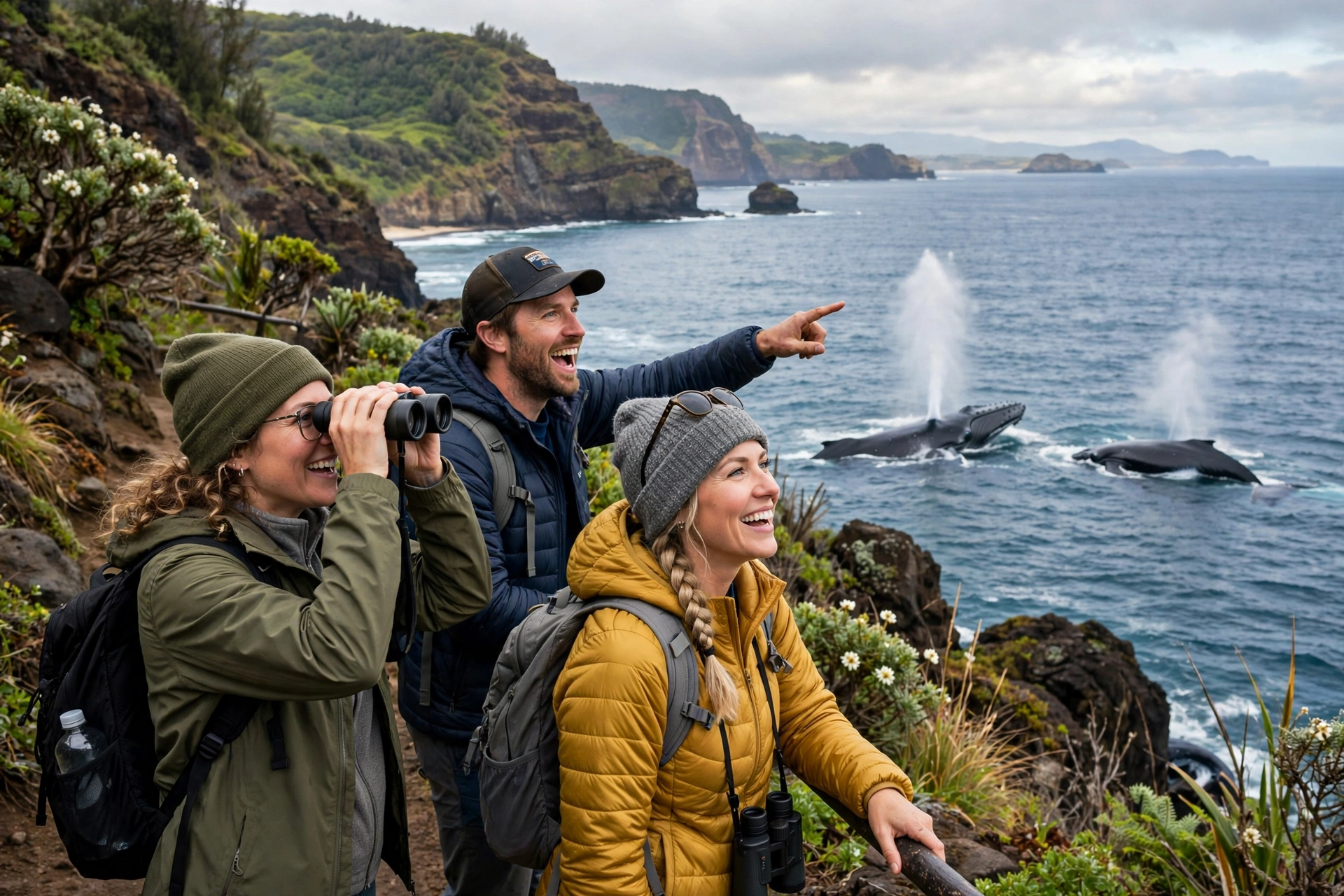
Winter (October to April) brings more rain, especially on windward trails and in mountain areas. Waterfalls are at their most dramatic, and the islands are lush and green, but mud is deeper, streams run higher, and flash flood risk increases. This is also whale season (roughly December through April), which makes coastal trails on Maui, Kauaʻi, and the Big Island doubly rewarding: you can watch humpback whales breaching offshore while you walk.
Within any season, time of day matters more than month. Start early. Morning air is cooler, trade winds are calmer, parking is available, and on ridge trails you will often get clear views before the clouds build. On the summits of Haleakalā and Mauna Kea, temperatures can drop into the 30s and 40s Fahrenheit at dawn even in summer, so bring warm layers for high-elevation hikes. Check the forecast the night before and the morning of your hike, and be willing to swap a windward waterfall hike for a leeward coastal walk if the weather turns.
Trail Etiquette and Leave No Trace
Hiking in Hawaiʻi comes with responsibilities that go beyond the standard Leave No Trace principles, though those apply fully: pack out everything you pack in, stay on marked trails, leave rocks and plants where you found them, and respect wildlife.
Respect kapu areas and cultural sites. If you see a sign marking an area kapu, do not enter. Do not climb on heiau (temple platforms), move stones, or take “souvenirs” from cultural or natural sites. Many trails pass through places of deep significance to Native Hawaiians. Treat them the way you would want your own sacred places treated.
Stay on the trail. Cutting switchbacks and widening trails accelerates erosion on fragile volcanic soils and damages native plants that may exist nowhere else on earth. Hawaiʻi’s native ecosystems evolved in isolation for millions of years; a single footstep off trail can crush plants that took decades to grow. If a trail is muddy, walk through the mud, not around it.
Keep it quiet and keep it clean. Sound carries in valleys and craters. Keep voices and music down so other hikers and wildlife can enjoy the quiet. Pick up litter when you see it, even if it is not yours. Many Hawaiian trail communities organize volunteer cleanups; leaving a trail cleaner than you found it is the local way.
Do not trespass for social media. The most notorious example is the Haʻikū Stairs (“Stairway to Heaven”) on Oʻahu: closed to the public since 1987, with trespassers facing fines of up to $1,000 and arrest, and the structure itself under removal. Every year, visitors are injured or cited chasing photos on closed trails and ridges. If a trail is closed, fenced, or marked kapu, it is closed for reasons that include your safety. Choose one of the hundreds of legal trails instead.
Share the trail. Yield to uphill hikers, step aside on narrow ridges, and leash dogs where they are allowed (many Hawaiian trails prohibit dogs to protect native birds). A little courtesy goes a long way on crowded weekend trails.
Hawaii Hiking FAQ
Do I need a permit to hike in Hawaii?
Most trails require no permit, but the most popular trailheads do require advance reservations. Non-residents need reservations for Diamond Head on Oʻahu and Hāʻena State Park (the Kalalau Trail trailhead) on Kauaʻi, a vehicle reservation for Haleakalā sunrise on Maui, and camping permits for overnight trips like the full Kalalau Trail. Check the official DLNR and National Park Service sites for the trails you plan to hike.
What is the best island in Hawaii for hiking?
It depends on what you want. Kauaʻi has the most dramatic and challenging hiking, led by the Kalalau Trail and the Kōkeʻe/Waimea Canyon network. The Big Island offers unique volcanic hiking in Hawaiʻi Volcanoes National Park and the Mauna Kea summit. Maui combines rainforest waterfall hikes like Pipiwai with high-altitude crater hiking at Haleakalā. Oʻahu has the best selection of short, accessible hikes near a major city. Molokaʻi and Lānaʻi are best for quiet, uncrowded trails.
How difficult is hiking in Hawaii compared to the mainland?
Generally harder than the mileage suggests. Hawaiian trails are steep, often muddy, and exposed to strong sun or sudden rain. A trail rated “moderate” in Hawaiʻi can feel strenuous if you are used to graded mainland paths. Heat and humidity add significant difficulty at low elevations, while high-elevation hikes bring altitude and cold. Start with an easier trail than you think you need and build up.
Can you hike the Stairway to Heaven (Haʻikū Stairs)?
No. The Haʻikū Stairs on Oʻahu have been closed to the public since 1987. Trespassers face fines of up to $1,000 and arrest, and the stairs are being removed. Do not attempt to access them. Oʻahu has many legal ridge hikes with spectacular views, including the Lanikai Pillbox Trail and the Kuliʻouʻou Ridge Trail.
Is it safe to drink water from Hawaiian streams?
No. Stream water in Hawaiʻi can carry leptospirosis and other pathogens even when it looks clean. Always carry all the water you need or bring a filter or purification method, and avoid submerging open cuts in freshwater. The Hawaiʻi Department of Health advises against swimming in freshwater streams and ponds.
What should I do if it starts raining on the trail?
Put on your rain layer and assess. A light passing shower is normal and safe on most trails. But if you are in a narrow valley or near a stream and the rain is heavy or sustained, turn back immediately: flash floods can develop in minutes. Never attempt to cross a stream that is rising. When in doubt, retreat is always the right call.
Are there snakes or dangerous animals on Hawaiian trails?
Hawaiʻi has no native snakes and no large predators. The main animal concerns are centipede bites, mosquitoes, and feral pigs or goats in remote areas. Give the endangered nēnē (Hawaiian goose) plenty of space and never feed it. The ocean at the end of coastal trails deserves more caution than anything on land.
How far in advance should I book hiking reservations?
Book the day your window opens. Diamond Head and Hāʻena State Park reservations open 30 days ahead, and Haleakalā sunrise reservations open 60 days ahead (with a small additional release two days before). Morning slots sell out first. If your dates are flexible, weekdays are easier than weekends.
Can I hike in Hawaii in winter?
Yes, winter is a fine hiking season with some trade-offs. Expect more rain and mud, especially on windward trails, and higher flash flood risk. Waterfalls are at their best. Leeward coastal trails are often perfect in winter. Whale season (roughly December through April) makes winter coastal hikes on Maui and Kauaʻi especially memorable.
Do I need hiking boots for Hawaii?
Sturdy trail shoes with good tread are more important than heavy boots. Most Hawaiian trails are better hiked in quick-draining trail runners or hiking shoes than in waterproof boots, which stay wet and heavy. Whatever you wear, make sure it grips well in mud: smooth soles are the most common cause of slips and falls.
Is the Kalalau Trail safe for beginners?
The full Kalalau Trail is not a beginner hike. It is 22 miles round trip over rugged cliffside terrain with serious exposure, stream crossings, and no services. Even the first 2 miles to Hanakāpīʻai Beach are strenuous and can be dangerous in wet conditions. Beginners should build experience on shorter Kauaʻi trails first and only attempt Kalalau with proper preparation, permits, and respect for the conditions.
What is Rapid ʻŌhiʻa Death and how do hikers help stop it?
Rapid ʻŌhiʻa Death is a fungal disease killing ʻōhiʻa lehua, Hawaiʻi’s most important native tree. It spreads through soil on boots, gear, and tools. Hikers help by cleaning all mud from footwear and gear before and after hikes, using boot-brush stations at trailheads, staying on marked trails, and never moving ʻōhiʻa wood. These small actions genuinely protect the forests you came to see.
Related Hiking Guides
Ready to go deeper on a single island? These guides cover each island’s trails in full detail, from easy walks to expert routes.
- Oʻahu Hikes: The Complete Guide: Diamond Head, Mānoa Falls, Koko Crater, ridge trails, and the island’s best walks
- Maui Hikes: The Complete Guide: Pipiwai, Waiheʻe Ridge, Haleakalā crater trails, and coastal paths
- Big Island Hikes: The Complete Guide: volcano trails, summit hikes, and Kohala coast walks
- Kauaʻi Hikes: The Complete Guide: the Kalalau Trail, Kōkeʻe, Waimea Canyon, and waterfall hikes
- Molokaʻi Hikes: The Complete Guide: quiet trails and cloud forest walks
- Lānaʻi Hikes: The Complete Guide: the Munro Trail and uncrowded ridge routes
Planning Your Hawaii Hiking Days
Hawaiʻi rewards hikers who plan around the islands rather than against them. Reserve the marquee trailheads early, start your hikes at sunrise, carry more water than feels necessary, and let the weather choose your trail for the day: waterfalls when it rains on the windward side, ridgelines when the trades keep the summits clear, and coastline when you want an easy day with whales on the horizon. The islands’ trails cross volcanic craters, cloud forests, bamboo groves, and sea cliffs that exist nowhere else in the United States, and they are maintained by public agencies that ask only that you come prepared, stay on the path, and leave the land as you found it. Do that, and a week of Hawaii hiking will give you a deeper experience of the islands than a month of beach days.