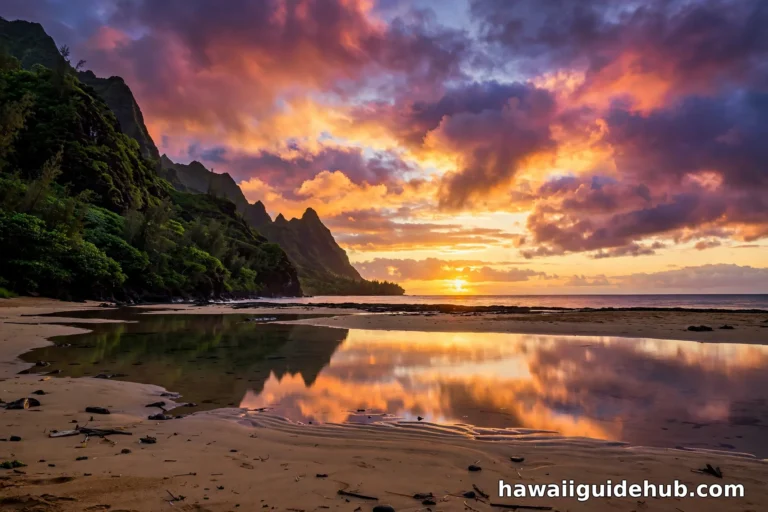
End of the World in Hawaii: Konaʻs Wild Lava Cliffs

At the southern end of Aliʻi Drive in Keauhou, the houses thin out, the resorts fall behind, and the road simply runs out of island. What is left is a raw field of black lava, a line of sea cliffs, and the full force of the Pacific arriving without anything to slow it down. Locals call this stretch of the Kona coast the End of the World, and the name earns itself within about thirty seconds of standing there.
This is the complete guide to the End of the World in Hawaii. It explains where the spot actually is, how the short walk to the cliffs works, the 1819 battle that makes this ground sacred, the hazards that have injured and killed people here, and the respectful way to visit. If you have seen the name on a map or in a video and wondered what it really is, this page answers it in one place.
End of the World at a Glance
| Location | Southern end of Aliʻi Drive, Keauhou, Kailua-Kona, Hawaiʻi Island |
| Setting | Lava field and sea cliffs beside the Lekeleke Burial Grounds |
| Walk | About 0.3 mile each way over rough lava and a gravel track |
| Cliff height | Roughly 30 to 40 feet above the water in the main cove area |
| Difficulty | Easy distance, uneven and sharp footing throughout |
| Facilities | No restrooms, no drinking water, no lifeguard at the cliffs |
| Best visit | Morning for calmer conditions, late afternoon for light and sunset |
| Key rule | Treat the burial grounds with respect and stay off the stone cairns |
Where the End of the World Actually Is
The End of the World is not a town, a park with a sign, or a developed attraction. It is a local name for the wild coastline at the end of Aliʻi Drive, south of Kailua-Kona in the Keauhou area of Hawaiʻi Island. Aliʻi Drive is the coast road that runs south from the Kailua Pier through the Kona resort strip. Keep following it past Keauhou Bay and the pavement narrows, the development stops, and a short side road leads toward the shore at the Kuamoʻo battlefield area.
The cliffs sit beside one of the most historically important pieces of ground in Hawaii: the Lekeleke Burial Grounds and the Kuamoʻo Battlefield. That pairing is what makes this place different from every other lava viewpoint on the Kona coast. You are not just looking at scenery. You are standing where a battle in 1819 decided the future of the Hawaiian Kingdom, and the men who died there are still buried in the lava around you.
The Battle of Kuamoʻo: Why This Ground Is Sacred
In 1819, Kamehameha the Great died, and his son Liholiho became king as Kamehameha II. Within months, Liholiho took a step that shattered centuries of tradition: he sat down and ate with women, publicly breaking the ʻai kapu, the sacred eating restrictions at the heart of the old kapu system of law and religion. It was a deliberate act, supported by powerful figures including his mother Keōpūolani and the queen regent Kaʻahumanu, and it effectively ended the kapu system overnight.
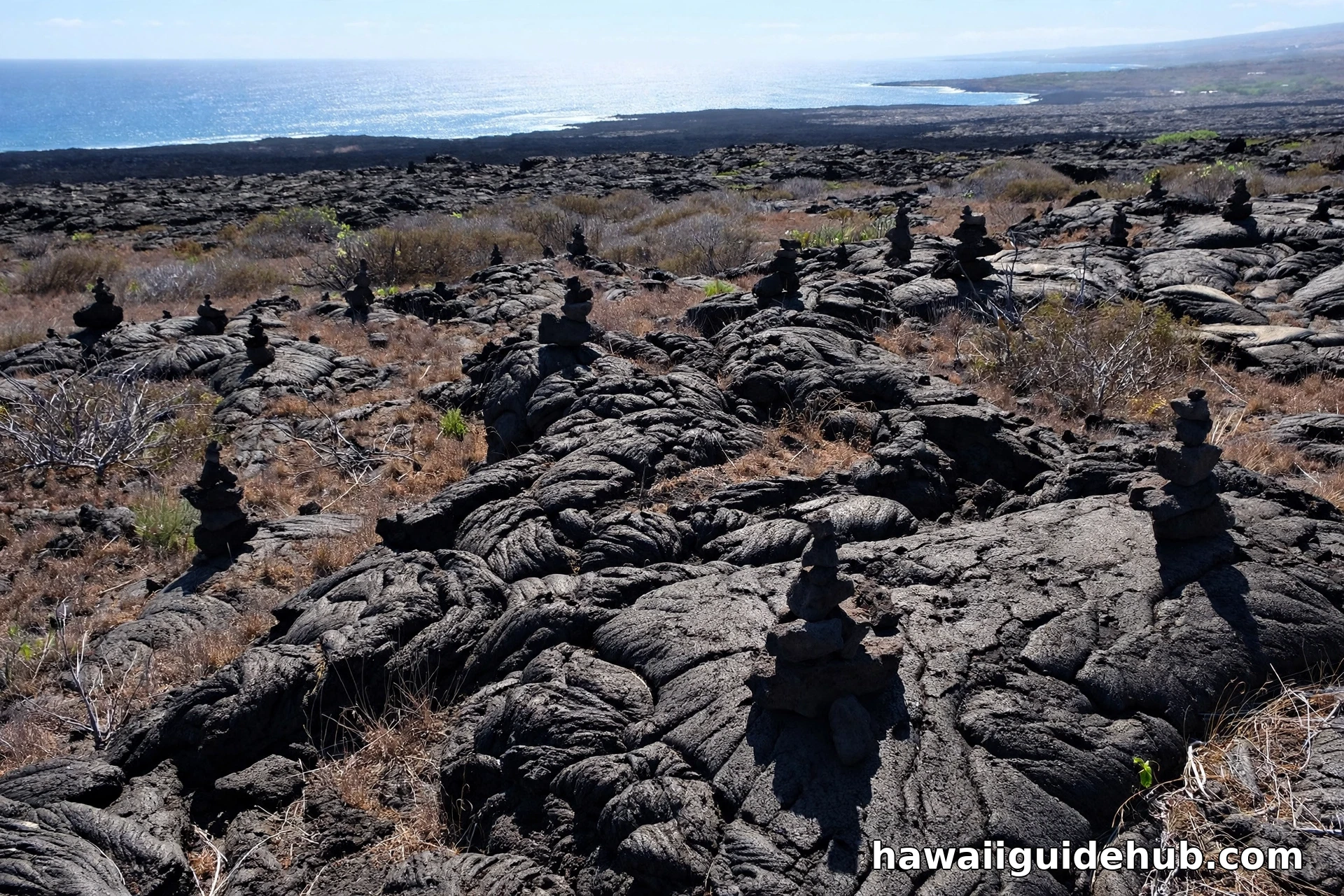
Not everyone accepted it. Liholihoʻs cousin Kekuaokalani, who had been entrusted with the war god Kūkāʻilimoku, held to the old religion and raised an army in Kaʻawaloa. The two forces met here at Kuamoʻo in late 1819. The traditionalist side lost. Roughly 300 warriors were killed, including Kekuaokalani and his wife Manono, who fought beside him. The dead were buried where they fell, under cairns of lava rock across the battlefield, and those burials are the Lekeleke Burial Grounds you walk beside today.
Historians treat Kuamoʻo as one of the turning points of Hawaiian history. It was the last armed defense of the old religious order, and its outcome confirmed the end of the kapu system months before the first American missionaries arrived in 1820. When you visit, that history is the main event. The cliff views are spectacular, but the ground itself is the reason to come, and it deserves the same care you would give any cemetery, because that is what it is.
How to Get There and the Short Walk to the Cliffs
Drive south on Aliʻi Drive from Kailua-Kona through Keauhou. Near the end of the road, a short side street branches toward the ocean south of Kaleiopapa Street. Parking is limited roadside parking near the end of that street, and a gate blocks vehicle access beyond it. From there, the visit is on foot. Arrive with a full water bottle and sun protection, because there is no shade, no water, and no facility of any kind once you leave the car.
The walk is short, roughly 0.3 mile each way, but it is not a sidewalk stroll. A gravel track crosses the lava field, and the final approach to the cliff edge is over rough, sharp ʻaʻā lava with no marked trail. Closed shoes with real tread are essential. Thin sandals can be cut by the rock, and a turned ankle out here turns a one hour outing into a rescue call. Walk slowly, watch every step, and keep well back from edges that are undercut or wet.
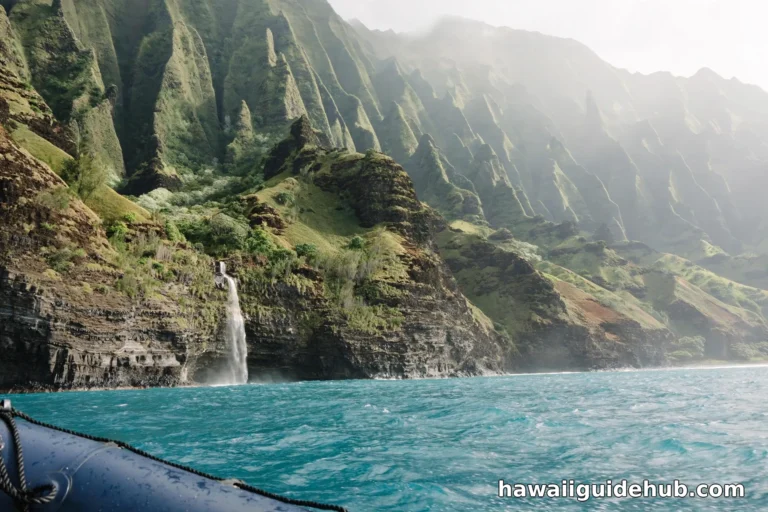
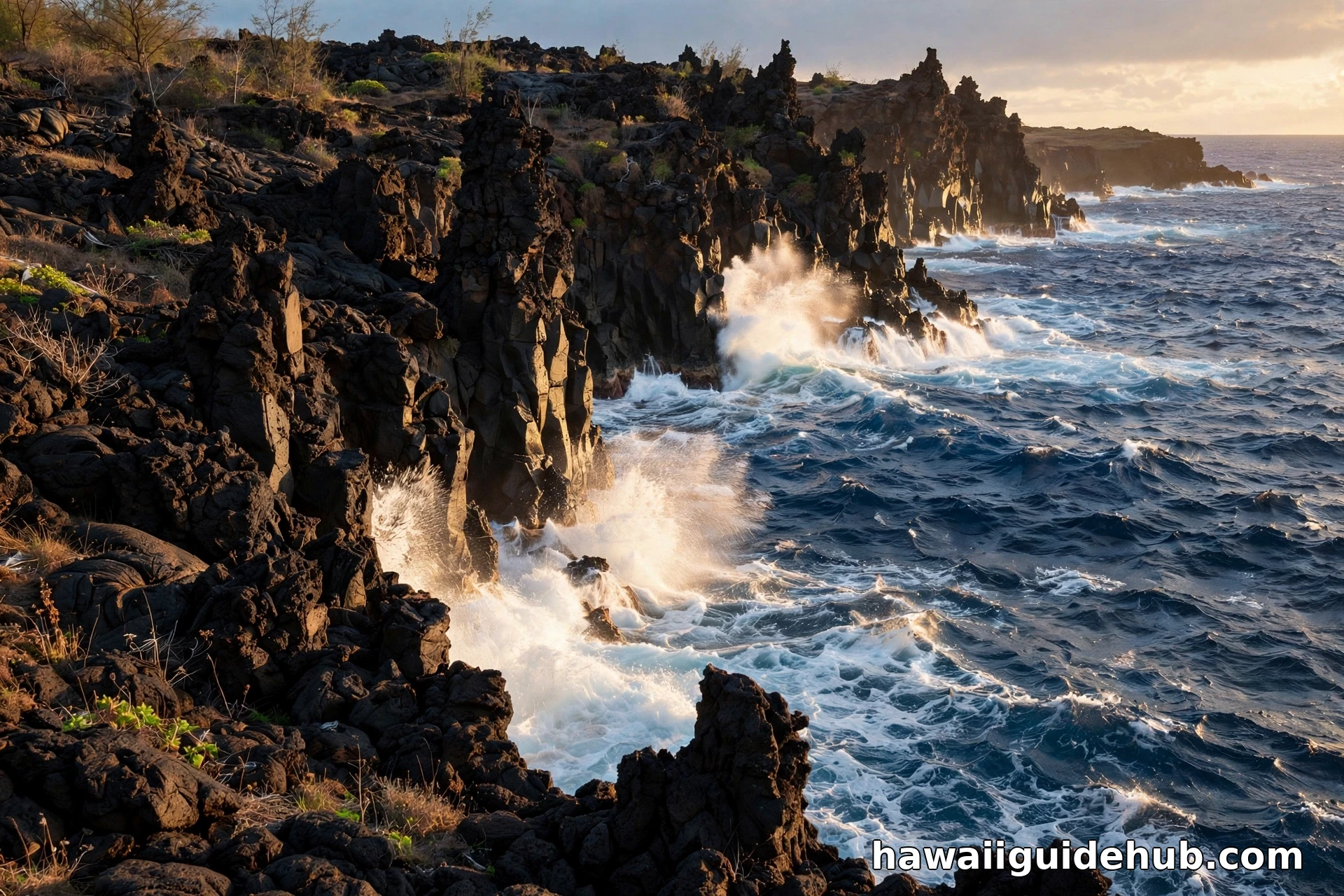
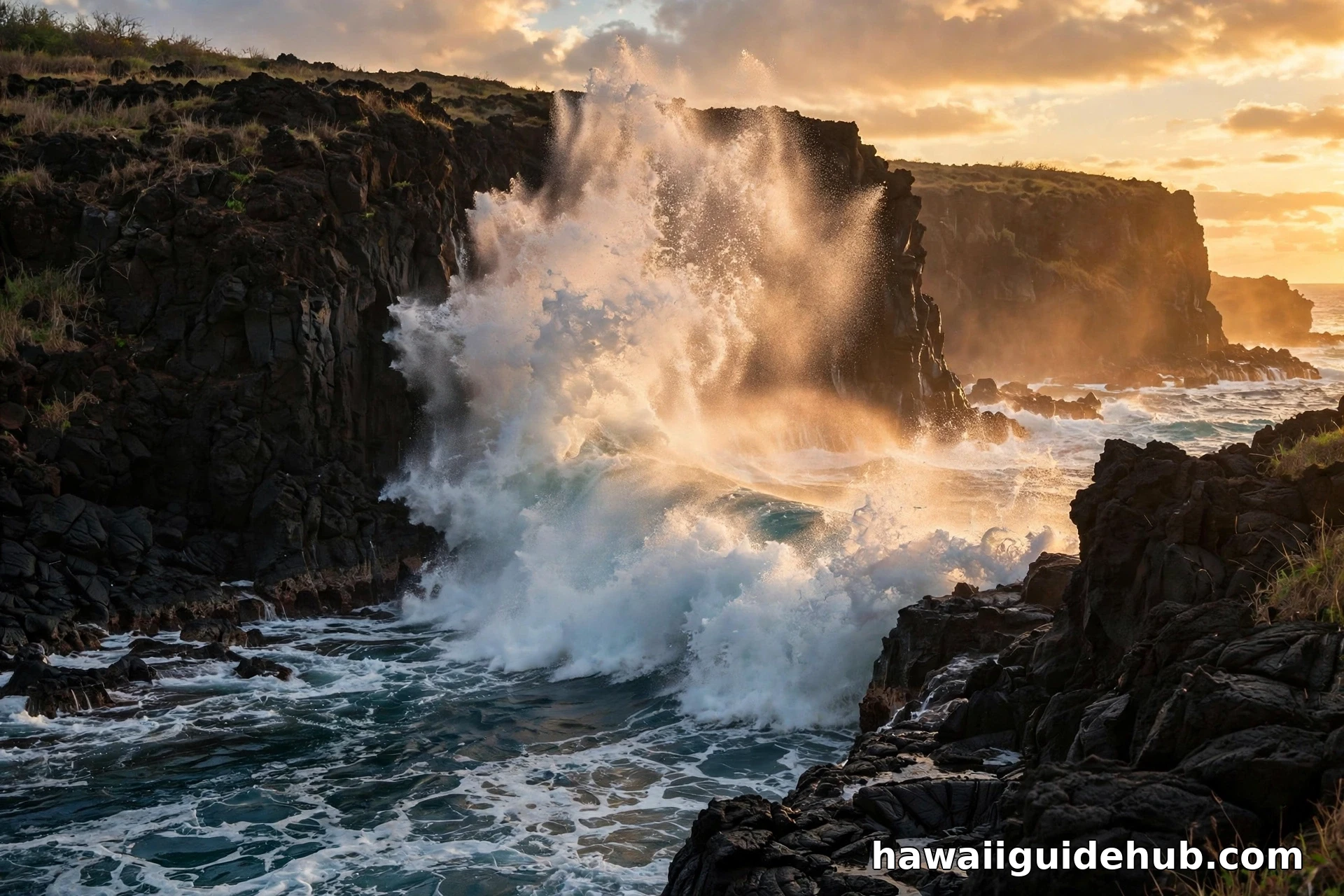
Partway along, the track splits along the coast. One direction leads along the cliffs by the burial grounds, the other toward the cove where the cliffs form a natural amphitheater above deep blue water. That cove is the classic End of the World view: black rock, white spray, and water so deep in color it looks dyed. On a big swell day, waves detonate against the cliffs and throw spray higher than the cliff tops, a sight people describe as thunder you can feel in your chest.
Cliff Jumping: The Honest Safety Picture
Many visitors arrive because they have seen videos of people jumping from these cliffs, from heights of roughly 30 to 40 feet, into the cove. This guide will not dress that up as a recommended activity. The End of the World has no lifeguard, no ladder, and no easy exit from the water. Getting in is a single step. Getting out means timing the surge and climbing sharp, barnacled rock while waves push and pull at you, and the conditions that look calm from above can change within a single set of waves.
Injuries and deaths have happened here, including a fatal cliff jumping incident at Lekeleke Bay reported in 2026. Strong currents run along this coast, submerged rocks sit below the surface, and a jumper who misjudges either one has no margin. Local emergency responders have repeatedly urged visitors to treat this coastline as a viewing spot, not a swim spot. The wisest way to enjoy the End of the World is the way most Kona residents do: walk out, watch the surf, take your photographs, and stay dry.
Before you go: check the surf forecast, wear closed shoes, carry water, and tell someone where you are going. If the surf is up, the spray show from a safe distance is the best seat on the Kona coast, and it costs you nothing but the walk.
Best Time to Visit
The Kona coast is leeward and dry for most of the year, so rain is rarely the issue here. Conditions at the cliffs are driven by ocean swell instead. Winter months can bring large northwest swells that wrap onto this coast and make the surf show spectacular and the cliff edges genuinely dangerous. Summer usually brings smaller surf on this side, along with calmer mornings. In every season, mornings tend to be calmer and less windy, while afternoons build texture on the water.
For photography and pure atmosphere, late afternoon is hard to beat. The sun drops over the ocean directly offshore, the lava glows warm, and sunset from the cliff top is one of the quiet great experiences on this side of the island, far from the crowds of the town beaches. Just time your walk back so you are off the lava before dark, because the footing that was merely rough in daylight becomes a real problem without light. If you are building a Kona day around it, pair the visit with the other highlights in our guide to the best things to do in Kona.
What to Bring
Bring more discipline than gear. Sturdy closed shoes are the single most important item. Add a hat, reef safe sunscreen, sunglasses, and at least a liter of water per person, because the black lava radiates heat and there is no shade anywhere on the field. A phone with a charged battery matters for photographs and for emergencies, since help is a drive away. Leave valuables out of sight in the car, as you would at any remote roadside stop, and carry out everything you carry in. The burial grounds and the coastline both suffer when visitors treat them casually.
Respecting Lekeleke: Simple Rules That Matter
The stone cairns scattered across the lava are graves, not trail markers or photo props. Do not climb on them, move stones, add stones of your own, or take any rock from the field. Stay on the worn paths where they exist, keep voices low near the burials, and do not cross fences or enter the private ranch land that borders the public access. These are small asks, and they are the difference between being a guest at a historic site and being part of the wear that slowly damages it. For a wider sense of how place and family history intertwine in Hawaiian culture, our article on the significance of ʻohana in Hawaiian society is a thoughtful companion read.
Nearby Places to Round Out the Day
Keauhou Bay, just north of the cliffs, is a calm, historic bay where Kamehameha III was born and where manta rays are often seen after dark from the shore lighting. Kahaluʻu Beach Park, a few minutes farther north, is one of the most accessible snorkeling spots on the Kona coast, with shallow reef, frequent turtle sightings, and facilities the cliffs do not have. Farther afield, the sunny Kohala Coast makes an easy second day, and the islandʻs famous green sand beach rewards travelers willing to make the long trip south. Together they show how much variety a single Kona base can hold, a theme we return to in our guide to the best island in Hawaii for first time visitors.
Video: Surf at the End of the World
High surf pounding the lava rocks at the End of the World gives a clear sense of the power that makes this coast a place to watch, not to enter.
Frequently Asked Questions
Why is it called the End of the World in Hawaii?
The name describes the feeling of the place. Aliʻi Drive ends, the development ends, and beyond the lava field there is nothing but cliff and open Pacific. It feels like the edge of the map, and the local name simply says so.
Where exactly is the End of the World on the Big Island?
It is at the southern end of Aliʻi Drive in Keauhou, Kailua-Kona, beside the Lekeleke Burial Grounds and the Kuamoʻo Battlefield. A short side road near the end of Aliʻi Drive provides roadside parking, and the cliffs are about a 0.3 mile walk from there.
Is the End of the World safe to visit?
As a viewpoint, yes, with ordinary care: closed shoes, water, sun protection, and distance from wet or undercut cliff edges. The danger begins when visitors climb down, swim, or jump. There is no lifeguard and no easy exit from the water, and injuries and deaths have occurred here.
Can you cliff jump at the End of the World?
People do jump from the roughly 30 to 40 foot cliffs into the cove, but it is not a managed or recommended activity. Surge, currents, submerged rock, and a difficult climb out make it hazardous even on calm looking days. Watching the surf from above is the safer and, frankly, spectacular choice.
Is there an entry fee or permit for the End of the World?
There is no developed entrance, ticket booth, or reservation system for this coastline. Access is on foot from the roadside parking area. What the site asks of you is not money but respect: stay off the burial cairns, stay on worn paths, and pack out all trash.
How much time do you need at the End of the World?
Most visitors spend 45 minutes to an hour and a half, including the walk in, time at the cliffs, and a slow look across the battlefield. Sunset visits run longer, and anyone interested in Hawaiian history can happily spend more time reading the landscape of Kuamoʻo.
The End of the World endures because it refuses to be tamed. There is no rail, no signboard forest, no gift shop, just lava, graves, and an ocean that reminds you exactly how small a person is. Come for the cliffs if you like, but stay for the history under your feet, walk gently, and leave the place exactly as raw as you found it.