Sunset at Kēʻē Beach, Kauaʻi

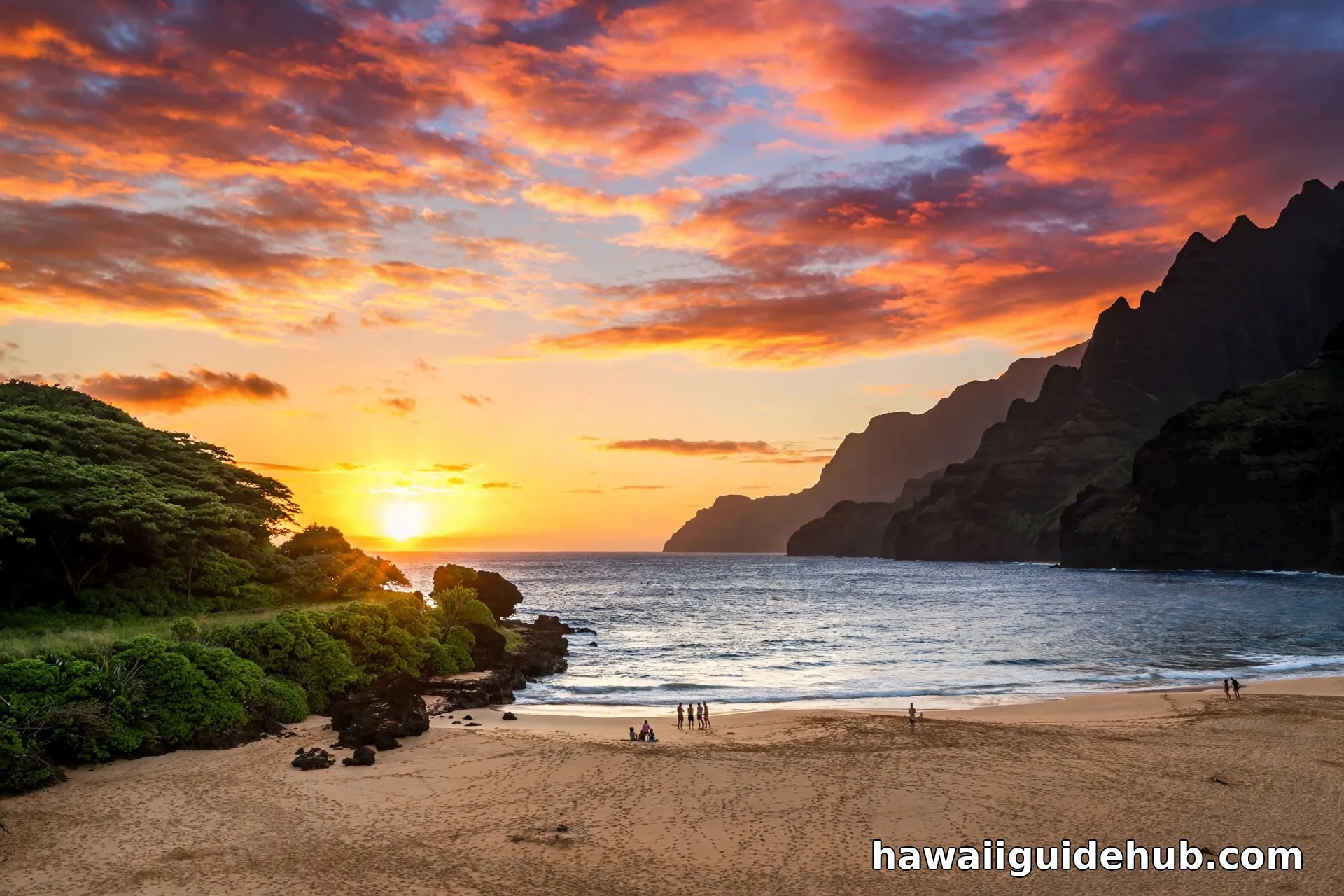
There is a point on Kauaʻi where the road simply ends, and the sun sinks toward the horizon to the northwest. Kēʻē Beach (pronounced keh-AY) sits at the very end of the highway on the island’s north shore, the farthest you can drive before the Nā Pali Coast begins. The beach faces north with a wide-open view toward the setting sun, and when the sky catches fire at dusk, with the green cliffs of the Nā Pali Coast silhouetted to the west, it is one of the great sunset views in all of Hawaiʻi.
This is the single complete guide to sunset at Kēʻē Beach. It covers where the beach is and how the park entry system works, why the sunset here is special, what time to arrive, swimming and snorkeling conditions by season, facilities, safety, the best time of year for sunset viewing, nearby alternatives, and answers to the questions visitors ask most. Everything about Kēʻē Beach sunset is right here on this one page.
Kēʻē Beach Sunset at a Glance
| Step | What to sort out | The detail |
|---|---|---|
| 1. Reserve | Advance reservation required for all nonresidents: vehicle, walk-in, or shuttle | Book up to 30 days ahead, no later than the day before your visit |
| 2. Time it | Late spring through early fall for calm water and clearer skies | Summer swimming is calm and reef-protected; winter surf is dangerous |
| 3. Watch | Unobstructed ocean horizon with Nā Pali cliffs to the west | Lifeguards stationed at the beach; end of Kuhio Highway (Hwy 560), inside Hāʻena State Park |
| 4. Pack for it | Restrooms and showers, but no food vendors and no cell reception | Screenshot your reservation and download offline maps before you go |
| 5. Pay | Park entry or parking reservation fee for nonresidents | Sunset is free; the reservation is the price of admission |
Where Kēʻē Beach Is
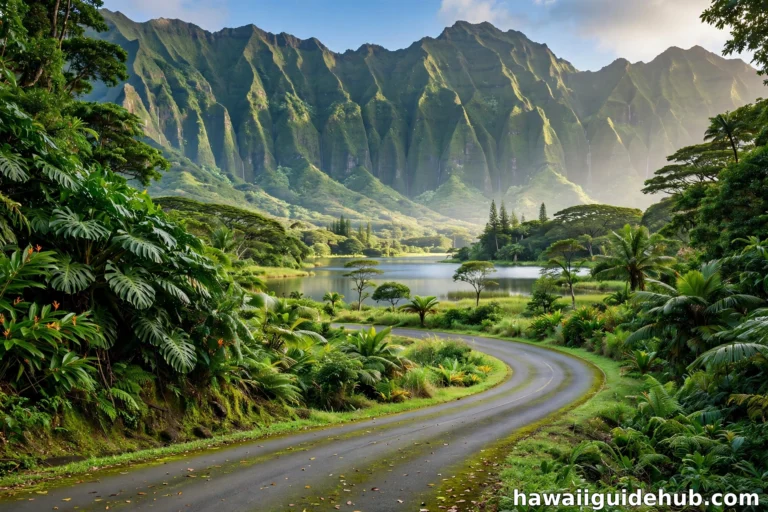
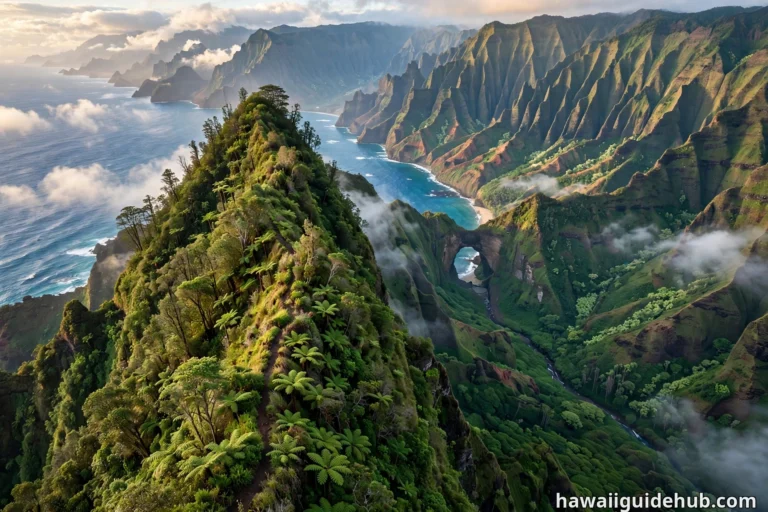
Kēʻē Beach is part of Hāʻena State Park, at the end of the road on Kauaʻi’s north shore. Drive west from Hanalei past the taro fields and the road narrows, winds along the cliffs, and finally stops. That is Kēʻē. It is the trailhead for the famous Kalalau Trail, which begins here and runs eleven miles along the Nā Pali Coast, and it is the last beach before one of the most dramatic coastlines on earth.
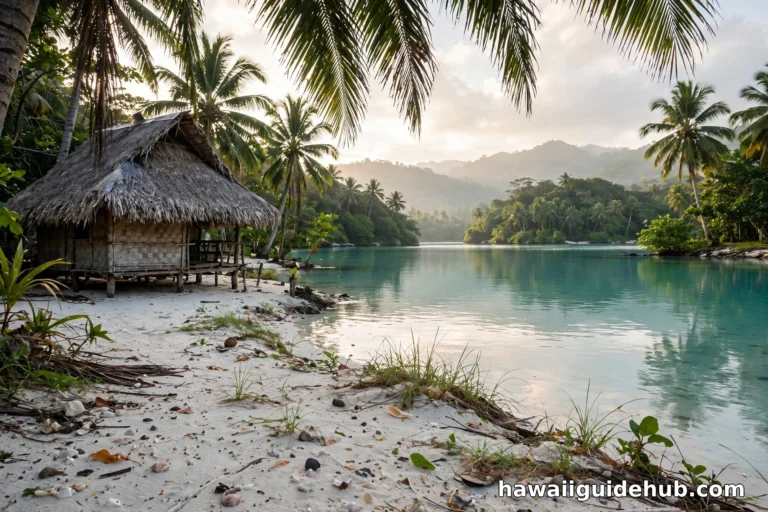
The beach itself is a crescent of sand protected by an offshore reef. In summer the water inside the reef can be as calm and clear as a swimming pool, which is why Kēʻē doubles as one of the north shore’s beloved snorkeling spots. The reef is also what makes the sunset view work: gentle water in the foreground, open horizon beyond, and the dark wall of the Nā Pali cliffs catching the last light to the west.
Reservations: Read This Before You Go
You cannot simply drive to Kēʻē Beach anymore. Hāʻena State Park requires advance reservations for everyone who is not a Hawaiʻi resident, whether you arrive by car, on foot, or by shuttle. Reservations can be made up to 30 days in advance and no later than the day before your visit, through the park’s official reservation system. Parking inside the park is limited to 100 stalls, with a portion held for residents, so the parking reservations in particular go fast.
For sunset specifically, this creates a planning puzzle. Your reservation covers a time window, and you must leave before it expires. If you want to watch the sun go down, book a late-afternoon entry slot that extends past sunset, and confirm the exit time when you reserve. The shuttle is the fallback when parking sells out; it includes park entry and runs from off-site lots. Either way, sort this out days ahead, not on the afternoon of.
One more practical note: there is no cell phone reception at the park, so download or screenshot your reservation confirmation before you drive out. The winding road past Hanalei has dead zones all the way to the end.
Why Sunset at Kēʻē Is Special
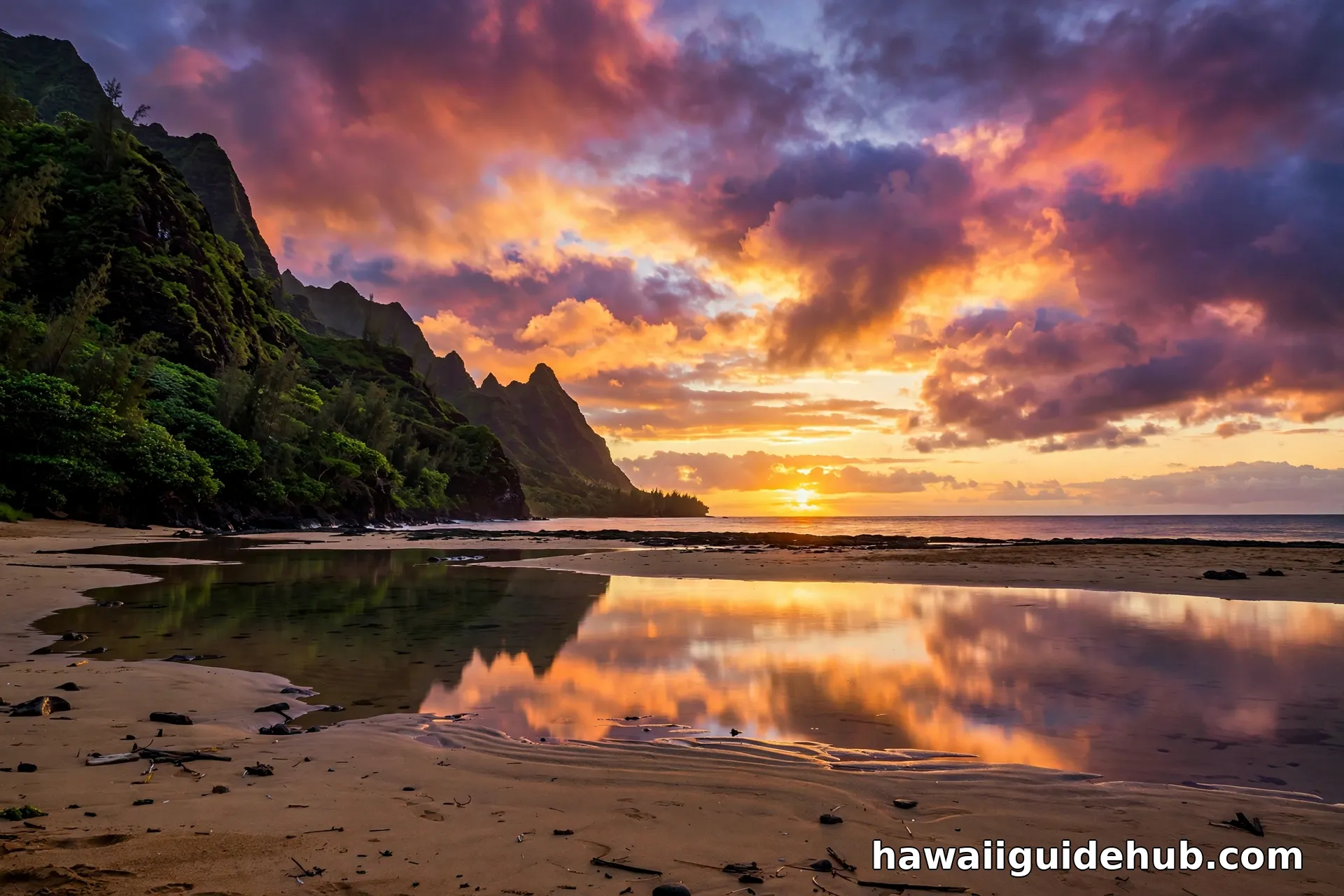
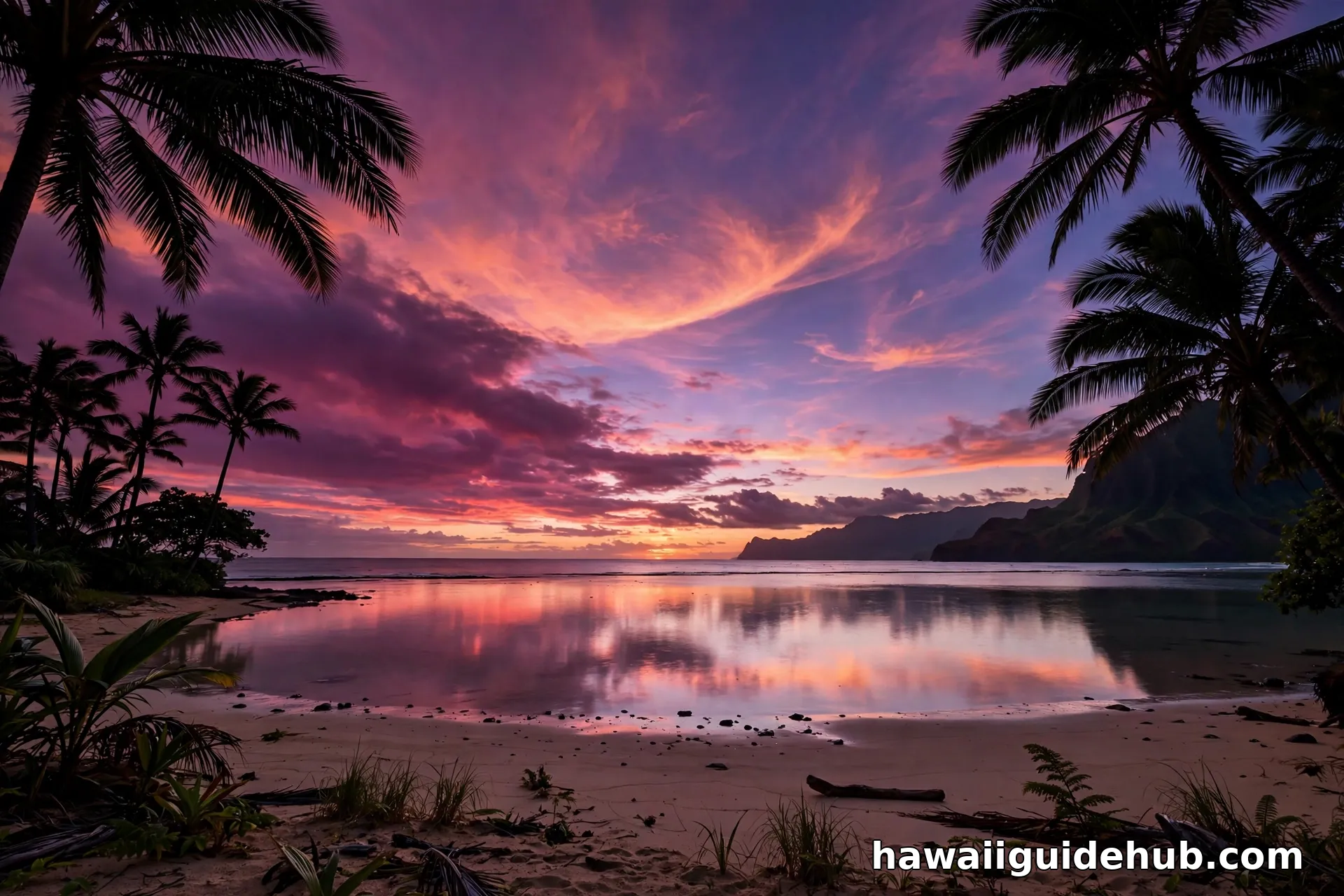
Plenty of Hawaiʻi beaches face the sunset, but Kēʻē has three things working together. First, the beach faces north with a wide, open view toward the northwest, where the sun goes down in summer; there are no offshore islands blocking the light. Second, the Nā Pali cliffs rise immediately to the west, so the sunset comes with a jagged green silhouette that turns gold, then purple, then black as the light fades. In winter the sun sets farther southwest, dropping closer to and partly behind the cliffs, which trades the over-water view for dramatic side-light on the rock formations. Third, the reef keeps the foreground water calm on good evenings, which doubles the sky in reflection.
The show changes with the seasons, and the twenty minutes after the sun drops are often the best part, when the whole western sky glows.
What Time to Arrive for Sunset
Plan to be on the sand at least 45 minutes before sunset. That gives you time to settle in, watch the light build, and enjoy the full color progression. In winter, sunset comes around 6 PM; in summer, closer to 7 PM or a little later. Check the day’s sunset time that morning and work backward, remembering that your park reservation window has to cover your whole visit.
Do not plan to hike the Kalalau Trail at sunset. The trail is slippery and exposed, and starting a hike in fading light is how rescues happen. Watch the sunset from the beach, then head out. Bring a light layer; the breeze off the water turns cool quickly once the sun is down, and the drive back to Hanalei is dark and winding.
Swimming and Snorkeling by Season
Kēʻē is a tale of two seasons. From late spring through early fall, the reef does its job beautifully: the water inside is calm, clear, and swimmable, with good snorkeling over the reef and around the rocky points. This is when Kēʻē earns its reputation as a family-friendly north shore beach, and lifeguards are stationed at the beach during operating hours.
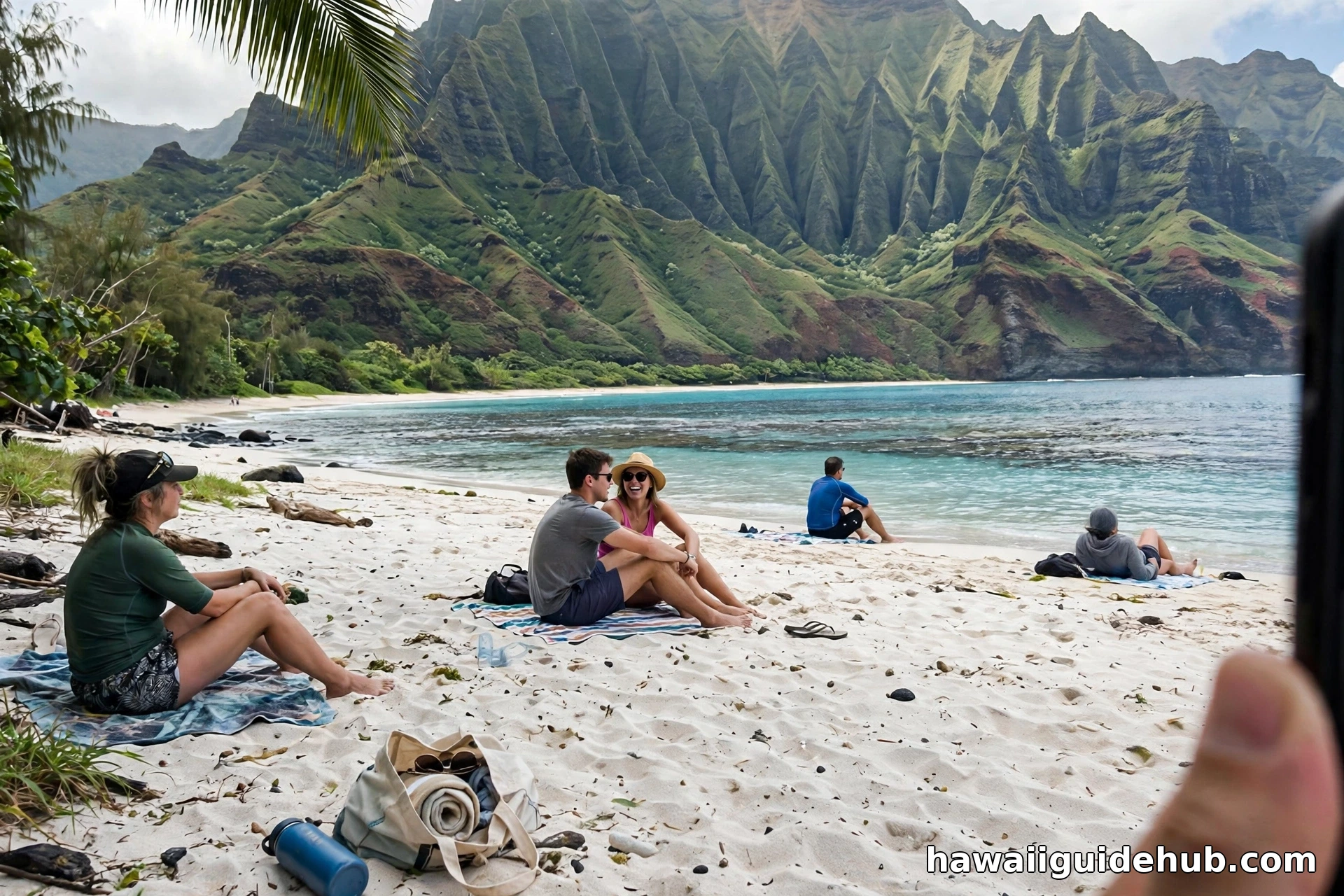
In winter, the story flips. North swells bring high surf and strong currents, and swimming can be prohibited outright; lifeguards will close the water when conditions turn. Even on a clear, sunny winter day, the surf can be dangerously high. If you visit between November and March, come for the sunset and the scenery, and assume you will not be swimming. The south shore is the safer swimming bet in winter.
Facilities and What to Bring
The park provides restrooms and showers, and that is about it. There are no food vendors, no beach rentals, and no cell reception (there is a payphone). Bring everything you need: water, snacks, reef-safe sunscreen, a towel, and that light layer for after sunset. If you plan to snorkel earlier in the day, bring your own gear.
Mosquitoes can be enthusiastic at dusk in the park’s shady areas, so insect repellent earns its place in the bag. And pack out everything you bring in; this is a protected natural and cultural landscape, with restored taro fields and ancient sea caves under the park’s care.
Best Time of Year for Kēʻē Sunset
Late spring through early fall is the prime window: calmer ocean, less rain on the north shore, clearer skies, and a later sunset that is easier to fit after a full beach day. May through September is the sweet spot. Winter sunsets can be spectacular when the sky is clear, but the north shore is at its rainiest and the surf at its roughest, so you are gambling on both weather and swimming conditions.
Whatever the season, check the weather and surf forecasts on the day. The park can close in hazardous conditions, and Kēʻē’s swimming is entirely surf-dependent. A flexible attitude beats a fixed plan on the north shore.
Nearby Alternatives for Sunset
If Hāʻena reservations are sold out, you still have excellent north shore sunset options that do not require park entry. Tunnels Beach (Makua), just east of Hāʻena, faces the sunset with the Bali Hai cliffs behind you, though its parking is extremely limited and winter surf is dangerous there too. Hanalei Bay offers a wide, easy sunset with mountain views and no reservation needed. Hāʻena Beach Park itself, just before the state park entrance, is another low-key choice. Each has its own angle on the same sinking sun.
Video: Kauaʻi Island Tour Including Kēʻē Beach
This island tour visits Kēʻē Beach (at the 26:19 mark) along with Hāʻena State Park and other north shore stops.
More Than a Sunset: Hāʻena State Park
If you arrive earlier in the day, Hāʻena State Park rewards you beyond the beach. The park protects restored loʻi kalo (taro fields) that have been cultivated in this valley for centuries, along with ancient sea caves and archaeological sites that speak to how long Hawaiians have lived at Hāʻena. Interpretive signs explain what you are looking at, and the walk between the parking area and the beach passes some of it. Take the time; the sunset is the finale, not the whole show.
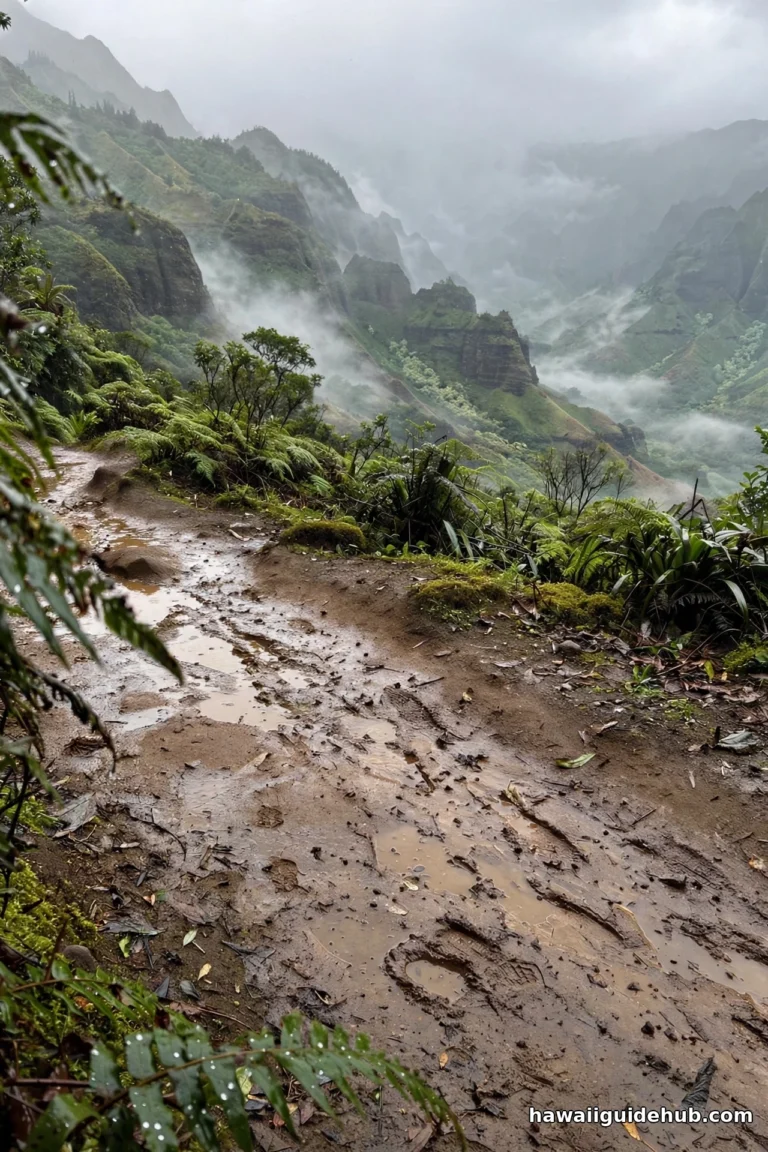
The park is also the gateway to the Kalalau Trail, and you do not need to hike the full eleven miles to taste it. The first half mile climbs through coastal forest to a viewpoint over Kēʻē Beach and the Nā Pali cliffs, and the two-mile mark reaches Hanakāpīʻai Beach and the turnoff for Hanakāpīʻai Falls. Your park entry reservation covers day hiking, but start early, carry water, and be off the trail well before dark. The trail is famously slippery after rain, which is frequent on the north shore.
Photography Tips for Kēʻē Sunset
Kēʻē is forgiving for phone photographers and rewarding for anyone with a real camera. The classic composition puts the Nā Pali cliffs on the left or right third of the frame with the sun sinking toward the open water. Get low near the wet sand at the water’s edge for reflections that double the color. As the sun nears the horizon, expose for the sky rather than the foreground; the cliffs are supposed to go dark and dramatic. And keep shooting after the sun disappears. The afterglow, when the clouds hold pink and purple light for twenty minutes, often beats the sunset itself.
One caution: salt spray and sand are hard on gear, so wipe your lens before the show starts and keep the camera bag zipped when you are not shooting. A small tripod helps for the blue-hour shots after sunset, when the light gets thin but the colors get strange and beautiful.
Frequently Asked Questions
Do I need a reservation to watch sunset at Kēʻē Beach?
Yes, if you are not a Hawaiʻi resident. Hāʻena State Park requires advance reservations for all entry, including sunset visits. Book up to 30 days ahead and no later than the day before, and make sure your time slot extends past sunset.
What time is sunset at Kēʻē Beach?
It varies by season: around 6 PM in winter and around 7 PM in summer. Arrive at least 45 minutes early, and stay for the afterglow.
Can you swim at Kēʻē Beach?
In summer, yes; the reef keeps the water calm and clear, and lifeguards are on duty. In winter, high surf often makes swimming dangerous or prohibited. Always check conditions and obey the lifeguards.
Is Kēʻē Beach the end of the road?
Yes. Kēʻē is the farthest you can drive on Kauaʻi’s north shore; the highway ends at Hāʻena State Park, where the Kalalau Trail begins.
Are there lifeguards at Kēʻē Beach?
Yes, lifeguards are stationed at Kēʻē Beach. They may prohibit swimming when surf conditions are dangerous, especially in winter.
Why Kēʻē Sunset Is Worth the Planning
Sunsets are free everywhere, but this one asks a little of you: a reservation made weeks ahead, a winding drive to the end of the road, a beach with no vendors and no cell signal. What you get in return is Hawaiʻi at its most elemental, the sun dropping into an empty ocean while the Nā Pali cliffs burn gold beside you. Do the planning, arrive early, and stay for the afterglow. It is the north shore’s finest evening on Kauaʻi, and it never repeats itself the same way twice.