Hawaiian Elepaio

If a small brown bird hops onto a low branch in a Hawaiian forest, cocks its tail, and leans in to inspect you, you have probably met an ʻelepaio. The Hawaiian ʻelepaio is the islands’ friendly forest flycatcher: bold, curious, and woven into Native Hawaiian tradition as the guardian bird of canoe builders. It is also three birds, not one, and telling them apart starts with knowing which island you are standing on.
This page is the single complete guide to the Hawaiian ʻelepaio. It covers the three species on Hawaiʻi Island, Oʻahu, and Kauaʻi, how to identify each one, where they live, how they hunt insects, how pairs raise their young, why two of the three are now rare, and the famous cultural role this little bird played in choosing koa trees for voyaging canoes.
Hawaiian ʻElepaio at a Glance
| Group | Three species in the genus Chasiempis, family Monarchidae |
| Hawaiʻi ʻelepaio | Chasiempis sandwichensis, Hawaiʻi Island, IUCN Vulnerable |
| Oʻahu ʻelepaio | Chasiempis ibidis, Oʻahu, federally listed as endangered |
| Kauaʻi ʻelepaio | Chasiempis sclateri, Kauaʻi, IUCN Vulnerable |
| Size | About 5.5 inches long, weighing roughly half an ounce |
| Food | Insects and other arthropods, caught in the air and gleaned from bark and leaves |
| Signature pose | Long tail cocked up at an angle, white tips showing |
| Cultural role | Form of the goddess Lea, guide and guardian of canoe builders |
Three Islands, Three Species
The Hawaiʻi Division of Forestry and Wildlife treats the ʻelepaio as three island species. The Hawaiʻi ʻelepaio is endemic to Hawaiʻi Island, where some scientists recognize three subspecies across its volcano slopes. The Oʻahu ʻelepaio is endemic to Oʻahu and is the rarest of the three, federally listed as endangered. The Kauaʻi ʻelepaio is endemic to Kauaʻi and is most at home on the high Alakaʻi Plateau. Uniquely among Hawaiian forest birds, no ʻelepaio ever settled the Maui Nui islands, so there is no Maui, Molokaʻi, or Lānaʻi form.
Each species evolved in isolation, and each now faces its own conservation story. A birder who learns all three has effectively learned a small lesson in island evolution, the same pattern that produced the separate ʻamakihi species described in our guide to the trails above Kauaʻi’s north shore, where Kauaʻi ʻelepaio share the wet forest with other endemics.
How to Identify an ʻElepaio
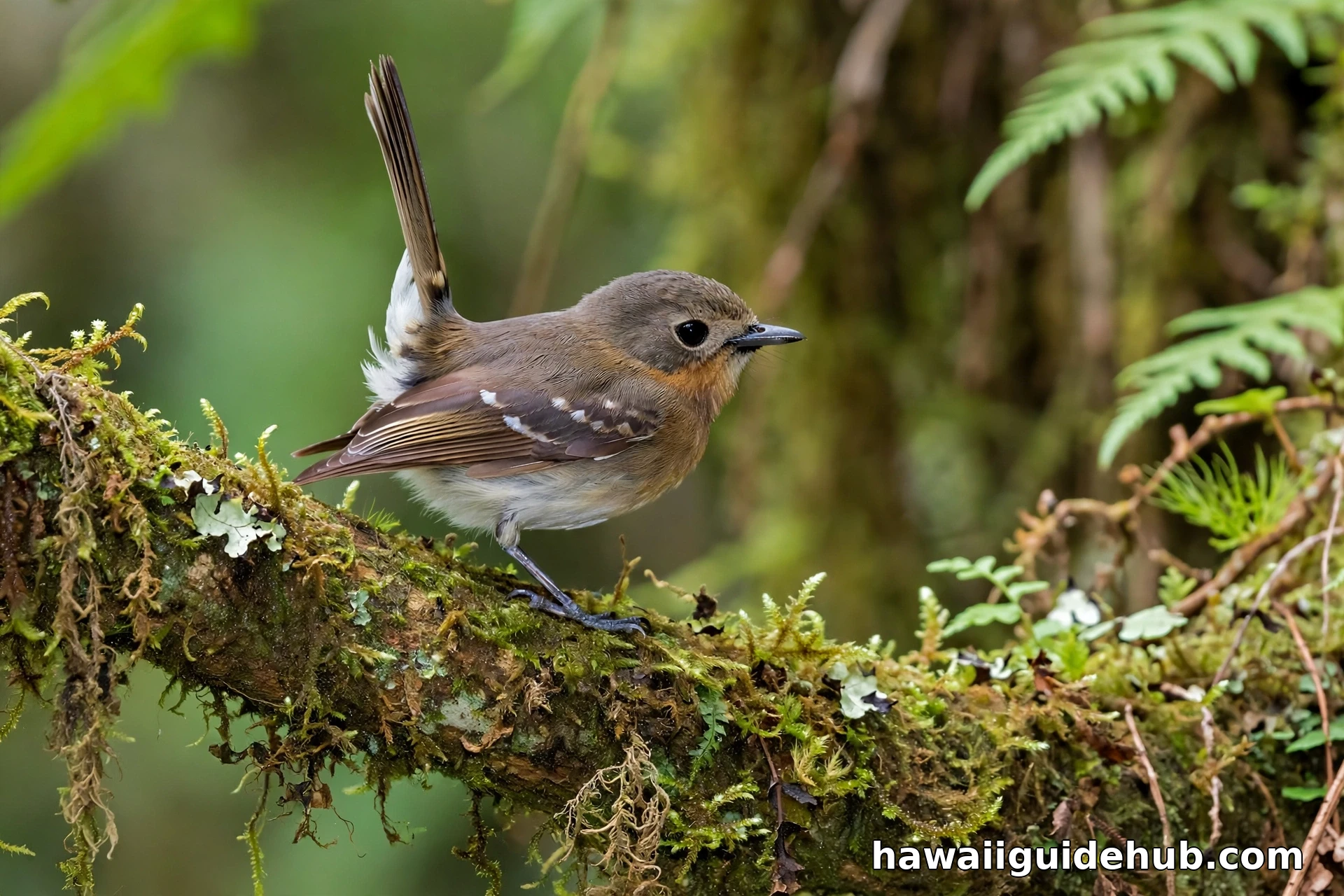
Start with shape and manners. An ʻelepaio is a small monarch flycatcher, dark brown above and white below, with white wing bars, white tips on the tail feathers, and a long tail it habitually cocks upward like a tiny wren. State wildlife accounts describe males and females as broadly similar, with males tending to show stronger dark markings on the throat. The Hawaiʻi species shows variable brown streaking on the breast, the Oʻahu species shows its own pattern of streaks, and the Kauaʻi species carries a rusty wash across the upper breast with a grayer brown crown.
Behavior clinches the identification. Honeycreepers sip and glean in the canopy, but an ʻelepaio works every level of the forest, sallying into the air after flying insects, gleaning prey from trunks and logs, and even hunting on the ground and in rock crevices. It is famously tame. A bird that approaches you, scolding softly and fanning its tail, is almost certainly an ʻelepaio checking on the large creature walking through its territory.
Voice: The Name in the Song
The bird’s name comes from its song, a shrill, pleasant whistle that sounds like e-le-PAI-o, given by the male. ʻElepaio are often the first native birds to sing at dawn and the last to fall quiet at night, so their whistles frame the forest day. Contact calls and chattering alarm notes fill in the spaces between songs, and a pair keeps in near constant vocal touch as they move through the understory.
Habitat and Distribution
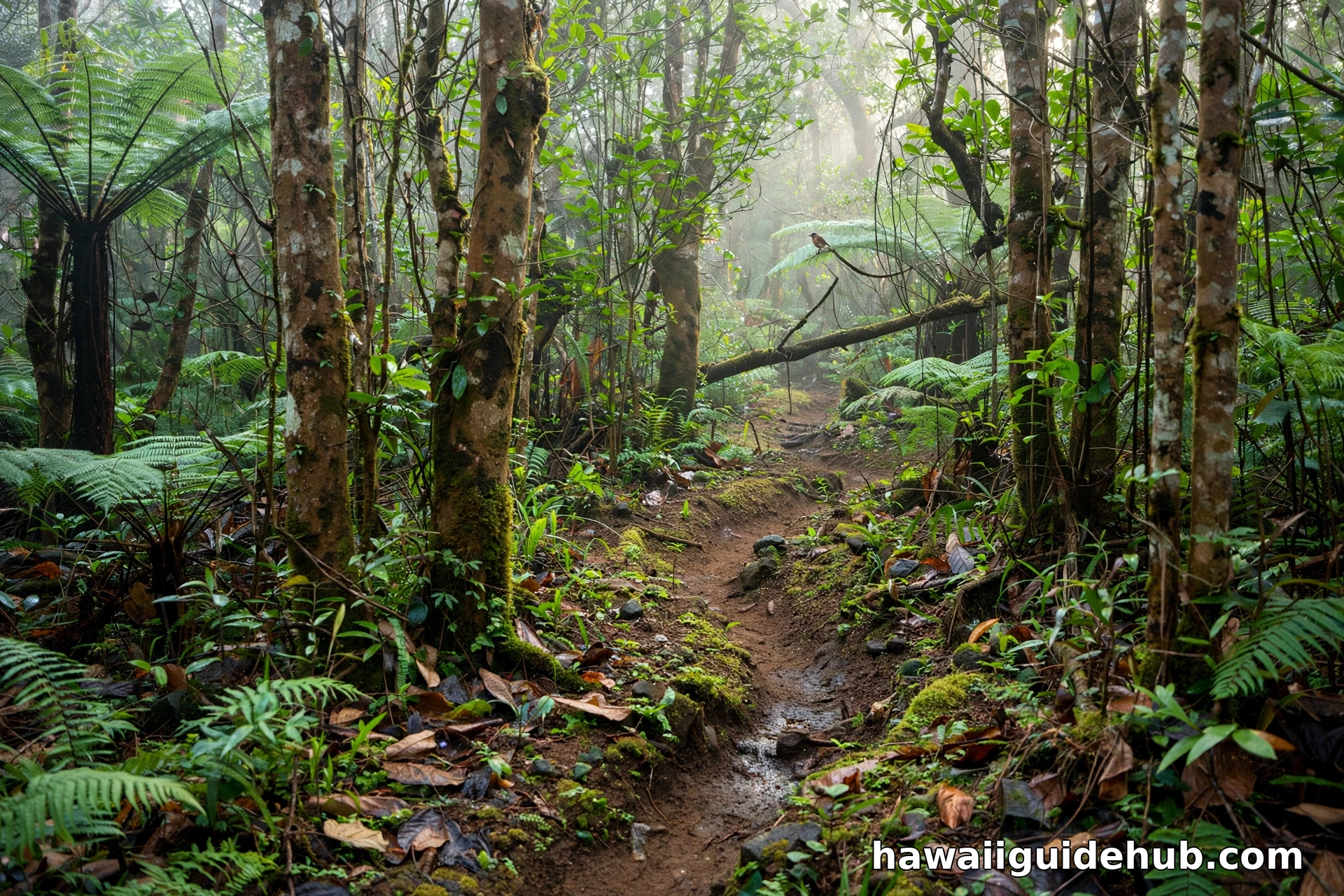
ʻElepaio are adaptable birds of native and mixed forest. On Hawaiʻi Island they occur in most forested areas above about 2,000 feet, with isolated populations in Kohala and on the western slope of Mauna Kea. On Kauaʻi they are widely distributed above 2,000 feet and most common above about 3,600 feet on the Alakaʻi Plateau. On Oʻahu the endangered species survives in mountain forest, favoring valleys with tall streamside vegetation, continuous canopy, and dense understory.
Unlike many honeycreepers, ʻelepaio have persisted in some lower, wetter forests where introduced plants mix with native trees, and that flexibility is part of why the group still survives on three islands. Forest hikes such as those in our Kauaʻi hiking guide cross exactly the kind of high, wet forest where Kauaʻi ʻelepaio remain most numerous, and a slow pace with frequent listening stops is the way to meet one.
How ʻElepaio Hunt
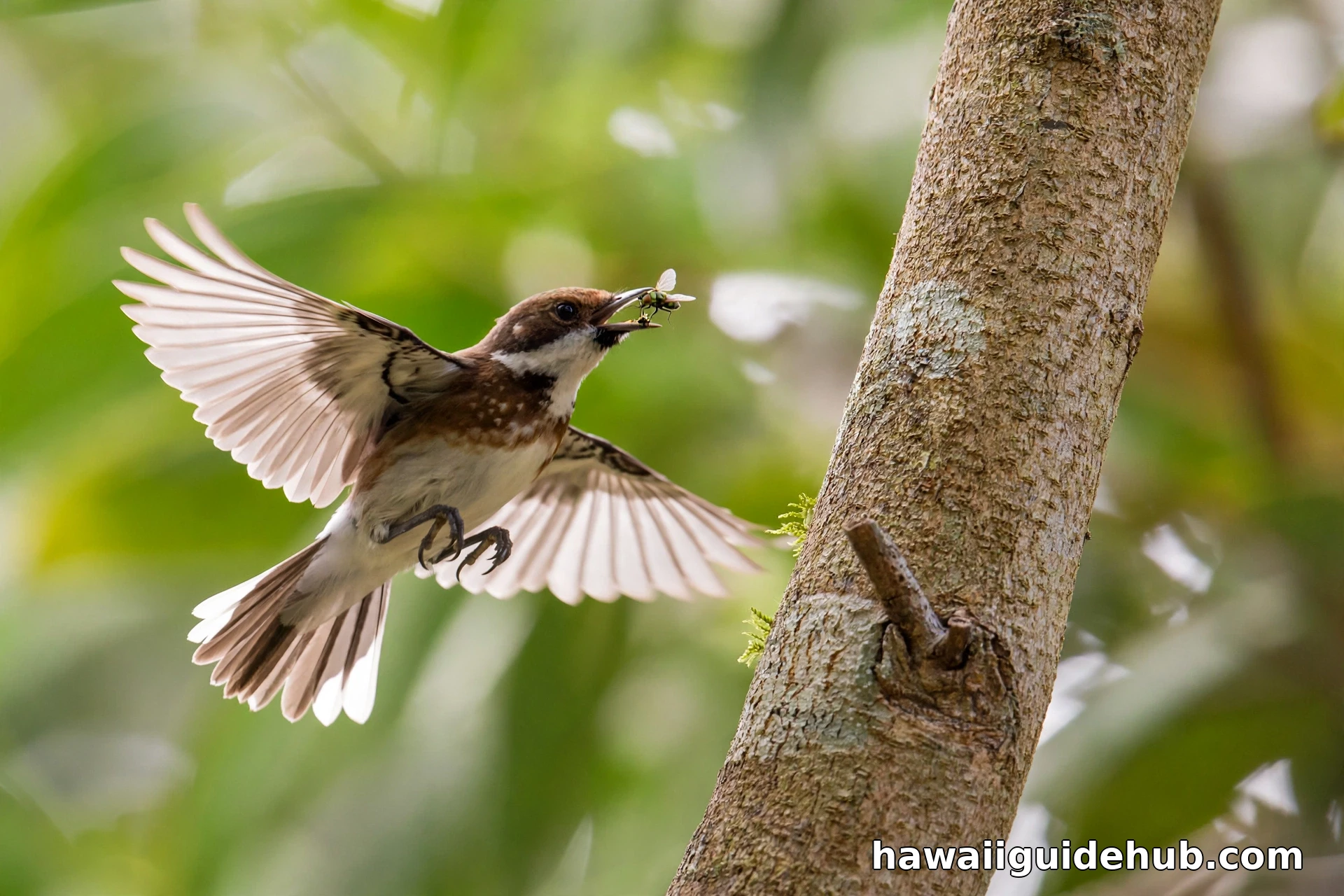
An ʻelepaio eats almost entirely insects and other arthropods, and it uses nearly every hunting trick a small bird can manage. It flycatches, darting from a perch to snap prey from the air. It gleans, picking insects from leaves and bark while perched or hovering. It pursues prey directly along branches, and it works the ground, fallen logs, snags, and rock crevices. State biologists note that foraging style shifts with the plant species and habitat, and that ʻōhiʻa is a favored foraging tree on Hawaiʻi Island.
That generalist hunting matters for the forest. A pair of ʻelepaio patrols a territory year round, steadily removing caterpillars, moths, spiders, and beetles from the understory. Farmers in old Hawaiʻi recognized the same habit from the other side: they regarded the insect eating bird as a form of Hina-pukuʻai, a patron of agriculture, because a bird that eats crop pests protects the fields.
Pairs, Nests, and Young
ʻElepaio form long term pair bonds and stay together throughout the year. One documented Hawaiʻi pair remained together for 11 years. Unlike Hawaiian honeycreepers, where the female does most of the work, male and female ʻelepaio share nesting duties almost equally. They build a finely woven cup nest in ʻōhiʻa or other trees, usually lay two eggs, and may start a second nest after a failure, sometimes while fledglings from the first nest are still being fed.
Young birds are fed by their parents for at least a month after leaving the nest and may stay on their parents’ territory for up to ten months, a long apprenticeship that likely lets them master the many hunting techniques the species uses. Breeding seasons differ by island: roughly January through July on Oʻahu and March through August on Hawaiʻi Island, timed to the flush of insect food.
The ʻElepaio in Hawaiian Culture: Guardian of Canoe Builders
No Hawaiian bird carries a richer cultural role. In Native Hawaiian tradition, the ʻelepaio was the bird form of Lea, patron goddess of canoe builders, and an ʻaumakua, a family guardian, for the craftsmen who shaped great koa logs into voyaging canoes. When a koa tree was felled, builders watched the bird. If an ʻelepaio ran along the fallen trunk without pecking, the wood was sound and the canoe could proceed. If the bird pecked at the trunk, it was hunting insects inside rotten wood, a sign the log was flawed and should be abandoned.
That tradition is practical knowledge dressed as story. A bird that makes its living finding insects in bark is the perfect inspector for hidden rot, and generations of builders trusted its verdict before committing months of labor. The ʻelepaio’s sister association with Hina-pukuʻai extended its protection to farmers. Few birds anywhere in the world hold a comparable job description, and the story is retold today wherever Hawaiian voyaging culture is taught, alongside the wider history in our Hawaii facts collection.
Threats and Conservation
The same forces that emptied Hawaiian forests of other birds press on ʻelepaio. Introduced rats climb to nests and eat eggs and incubating females, which is why rat control around nesting areas has produced some of the clearest recoveries for the Oʻahu species. Mosquito borne avian malaria limits where birds can live, mongooses and feral cats take ground foraging birds, and habitat loss fragments the mountain forest that remains. The Oʻahu ʻelepaio’s endangered listing brought federal protection and focused predator control, while the Hawaiʻi and Kauaʻi species are ranked Vulnerable by the IUCN.
There is genuine room for hope. ʻElepaio respond quickly when rats are controlled, they use a wide range of forest, and their tameness makes them easy to monitor. Visitors can help by staying on trail, never feeding wildlife, and keeping food scraps packed away so predators are not drawn into nesting forest. Encounters on islands covered in our guide to Big Island activities are most likely in protected forest where that predator control is actively under way.
A final identification trap deserves a mention, because ʻelepaio share their forests with introduced birds that beginners often confuse with them. The Japanese white-eye is smaller, olive green, and travels in flocks. The red-billed leiothrix is more colorful and keeps to dense cover. Neither cocks a long white tipped tail, neither whistles its own name at dawn, and neither will hop out to study you. Once you have watched a true ʻelepaio work a territory for ten minutes, its combination of shape, pattern, voice, and confidence becomes unmistakable, and later sightings take only a glance to confirm.
Where Visitors Can See ʻElepaio
On Hawaiʻi Island, try the forests of Hawaiʻi Volcanoes National Park and high elevation trails where ʻōhiʻa forest remains intact. On Kauaʻi, the Alakaʻi Plateau trails are the stronghold. On Oʻahu, numbers are small and locations sensitive, so join the bird to your list patiently on mountain trails and consider any sighting a privilege. In all cases, walk slowly, stop often, and listen for the whistle that gives the bird its name. An ʻelepaio will frequently do the rest, emerging from the understory to inspect you from a few feet away.
Video: Hawaii’s Birds and the Fight to Save Them
This short film outlines the predator and habitat pressures facing Hawaiian forest birds, the same challenges conservation teams work against to protect ʻelepaio.
Frequently Asked Questions
How many ʻelepaio species are there?
Three: the Hawaiʻi ʻelepaio, the Oʻahu ʻelepaio, and the Kauaʻi ʻelepaio, each confined to its own island. They were once treated as one species and are now recognized as separate species in the genus Chasiempis.
Is the Hawaiian ʻelepaio endangered?
The Oʻahu ʻelepaio is federally listed as endangered. The Hawaiʻi and Kauaʻi species are ranked Vulnerable by the IUCN. All three have declined from their historic ranges, mainly because of nest predators, disease, and habitat loss.
Why is the ʻelepaio important in Hawaiian culture?
It was regarded as the bird form of Lea, guardian of canoe builders. Its behavior on a felled koa log told builders whether the wood was sound or rotten inside, so the bird guided one of the most important crafts in old Hawaiʻi.
What do ʻelepaio eat?
Almost entirely insects and other arthropods, caught by flycatching in the air, gleaning from leaves and bark, and hunting along the ground, logs, and rock crevices within a pair’s year round territory.
How can you tell an ʻelepaio from a honeycreeper?
Look for the flycatcher shape, the brown and white pattern with white wing bars, and the long tail cocked upward. Honeycreepers have finch or nectar bills and do not hunt insects in the air or inspect visitors at close range the way ʻelepaio do.
The ʻelepaio asks very little of the people who share its forest: a slow pace, a listening ear, and a trail kept clean. In return it offers one of the most personal wildlife encounters in Hawaiʻi, a wild bird that chooses to come and look at you. That two way curiosity is ancient, older than the canoes it once approved, and protecting the mountain forests of three islands is what will keep it alive for the next generation of walkers.