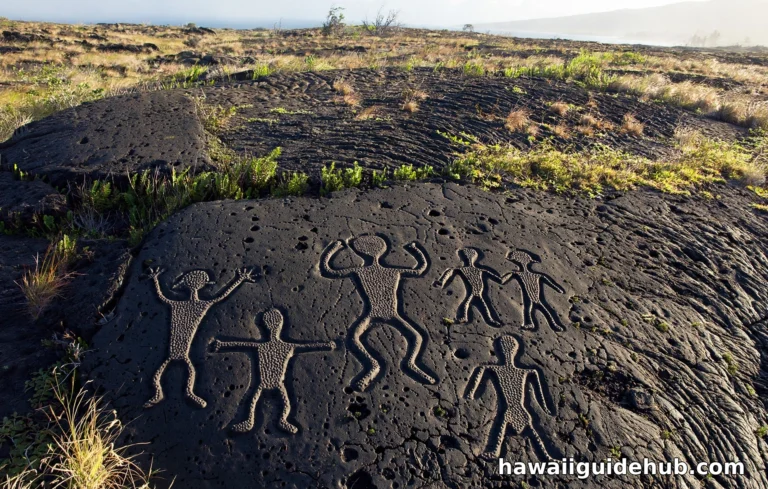
Ancient Hawaiian Society: Classes, Kapu, and the Ahupuaʻa System

Before Hawaiʻi had kings of a united kingdom, written laws, or a single written word, it had something just as powerful: a complete society. Ancient Hawaiian society organized hundreds of thousands of people across an island chain, fed them from carefully managed valleys and reefs, and held together through a shared system of rank, duty, faith, and law. Understanding how that society worked is the key to understanding almost everything else about old Hawaiʻi, from its temples and fishponds to its famous kapu restrictions.
This guide explains ancient Hawaiian society in one place: the social classes from aliʻi to kauwā, the kapu system and the separate laws called kānāwai, the ahupuaʻa land divisions that ran from mountain summit to outer reef, how farming and fishing actually fed the islands, the role of heiau temples and the gods, daily life and family, the misconceptions visitors often carry, and how this heritage is honored today.
A Society Built on Rank and Reciprocity
Ancient Hawaiʻi was, in the words of the National Park Service, a highly stratified society with strictly maintained classes. At the top stood the aliʻi, the chiefs, whose rank was measured by genealogy. The highest chiefs, the aliʻi nui, were believed to descend from the gods, and their mana, or spiritual power, set them apart from everyone below. Great chiefs ruled whole islands or districts, while lesser chiefs managed smaller lands under them. Rank was not decoration. It decided who controlled land, who received tributes of food and goods, and whose word settled disputes.
Below the chiefs came the kahuna, the experts and priests. Some kahuna were religious specialists who conducted ceremonies at heiau and advised chiefs on matters of the gods. Others were master craftspeople: canoe builders, healers and herbal medicine experts, carvers, and navigators. Kahuna knowledge was deep, guarded, and essential. A society crossing oceans and farming volcanic islands ran on expertise, and the kahuna class was where that expertise lived.
| Class | Role in ancient Hawaiian society |
| Aliʻi | Chiefs of ranked genealogies who ruled land, received tribute, and led in war and ceremony |
| Kahuna | Priests and expert specialists: ritual, healing, canoe building, navigation, carving |
| Makaʻāinana | The common people who farmed, fished, built, and paid taxes in food and goods to the chiefs |
| Kauwā | The lowest class, outcasts who lived apart and held the most restricted place in society |
| Konohiki | Land managers appointed by chiefs to oversee an ahupuaʻa, its water, and its harvests |
The great majority of people were makaʻāinana, the commoners. They farmed the loʻi kalo, fished the reefs, built houses, walls, and fishponds, and paid taxes to the chiefs above them in produce and labor. In return, the system promised protection, access to land and water, and chiefs who were expected to care for the people. At the bottom were the kauwā, an outcast class kept separate from the rest of society. The structure was rigid, and movement between classes was rare, but it was also reciprocal: a chief who abused his people could lose them, because families could relocate to the lands of a better chief.
Kapu and Kānāwai: The Laws That Held It Together
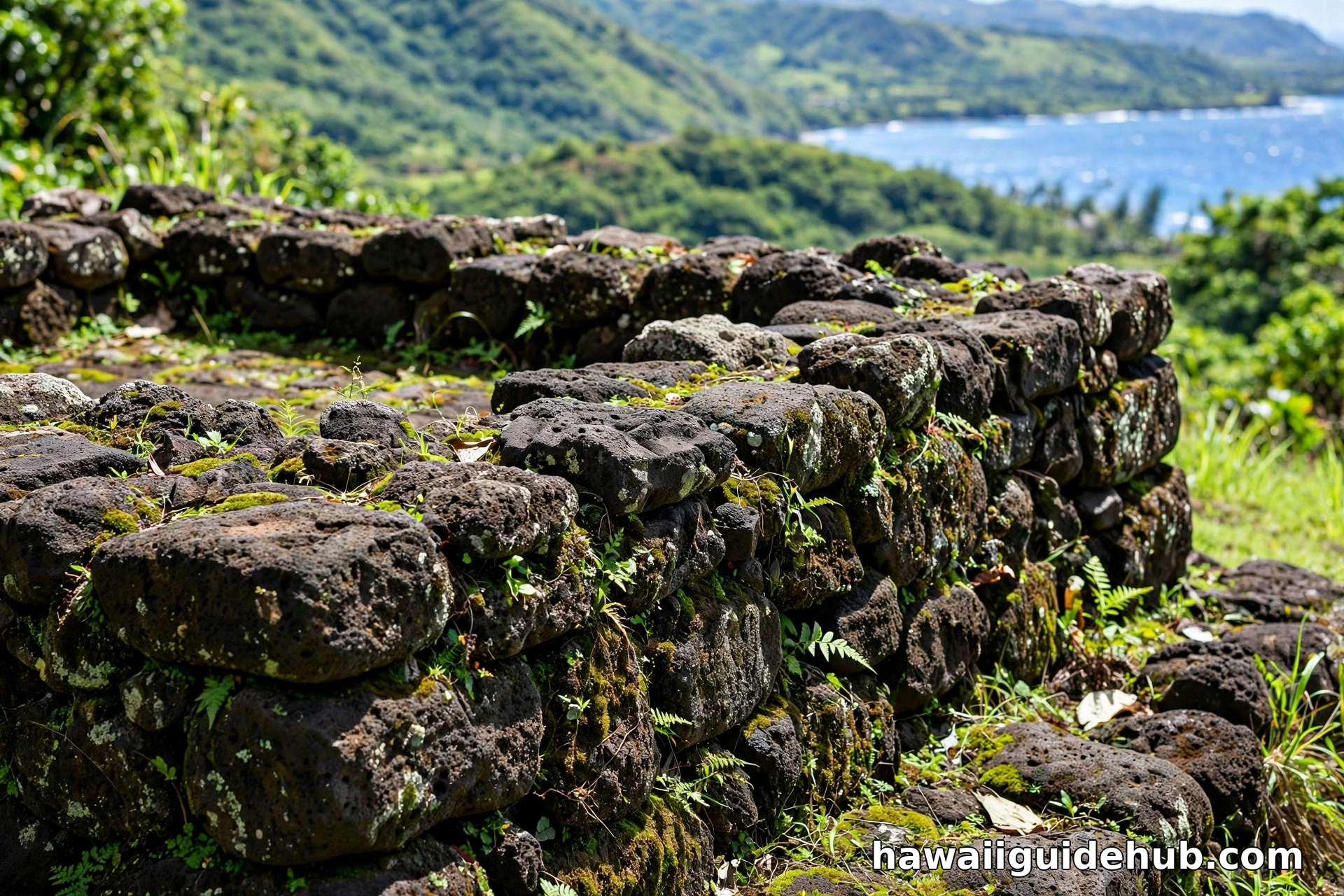
Two related systems kept order. Kānāwai were the laws and edicts that enforced the social structure, the rules chiefs proclaimed for daily governance. Kapu was deeper and more sacred. Certain people, places, things, and times were kapu: sacred and therefore forbidden or restricted. The boundary between the sacred and the ordinary, called noa, shaped everything from how a chief was approached to which reef could be fished in a given season.
The most famous kapu governed eating. Under the ʻai kapu, men and women ate separately, and women were forbidden certain foods associated with male gods, including pork, coconuts, bananas, and particular fish. Kapu also protected resources in ways that read today like conservation law: chiefs and konohiki placed kapu on fisheries and crops during spawning or growing periods, closing them until stocks recovered. Breaking kapu was believed to disturb the balance of the whole society, and the punishment was often death. The system endured for centuries, until it was formally overturned in 1819, shortly after the death of Kamehameha I, in the event remembered as the ʻAi Noa, the free eating. For readers who want the wider arc that followed, our account of Hawaiʻi’s history before statehood picks up the story, and Hawaii facts gathers the shorter version of many of these points.
The Ahupuaʻa: Land From Mountain to Reef
If kapu was the law of ancient Hawaiian society, the ahupuaʻa was its geography. Chiefs first divided each large island into districts called moku. Each moku was divided again into ahupuaʻa, wedge shaped land sections typically bounded by ridgelines and running from the mountain summit down through valley and plain to the outer reef. The National Park Service notes that this shape was deliberate: a well drawn ahupuaʻa contained nearly all the resources its people required for survival, from upland forest timber and birds, through irrigated valley floors, to the fish and seaweed of the reef.
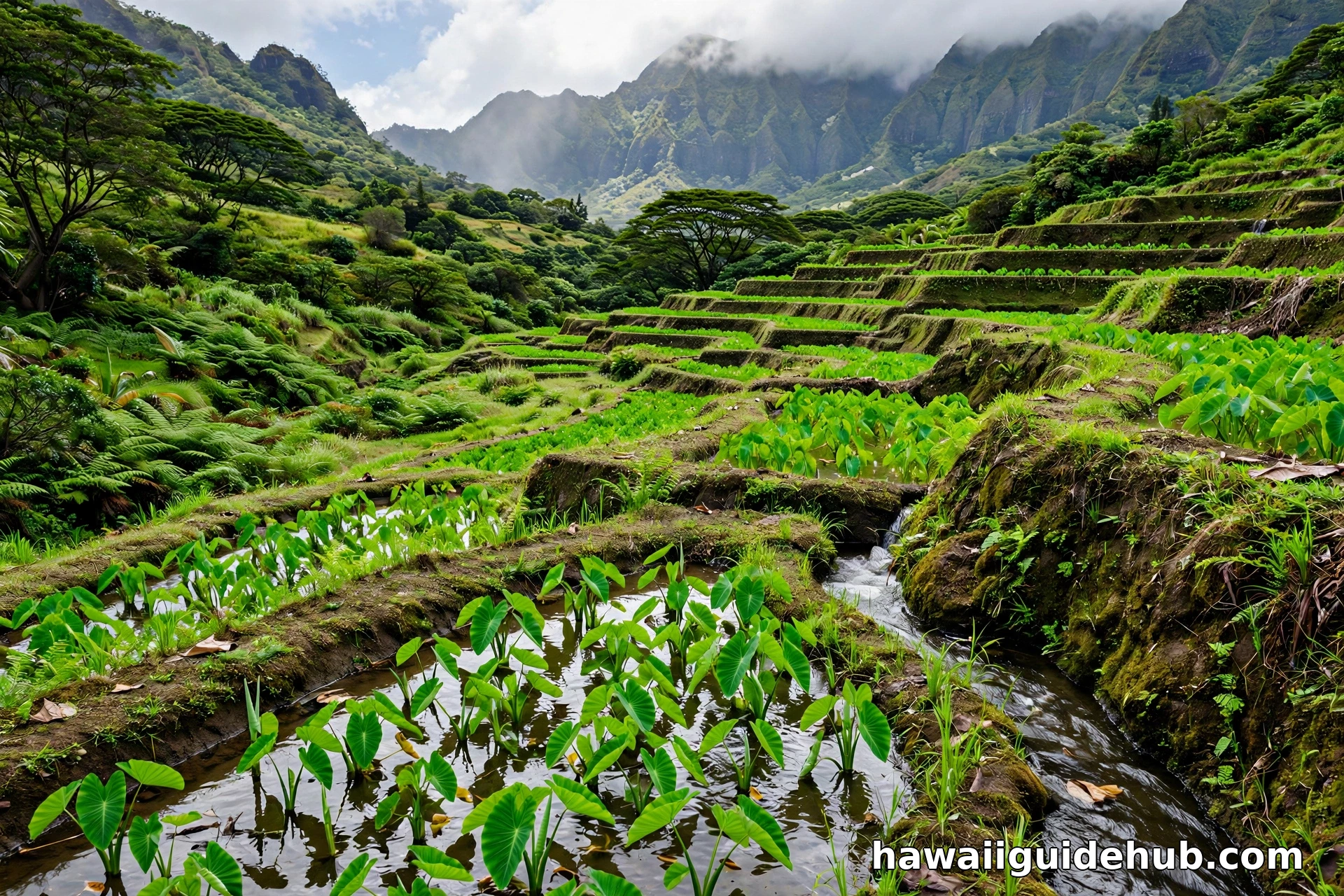
Each ahupuaʻa was overseen by a konohiki, a manager appointed by the chief, who directed planting, water use, and harvests and collected the taxes owed upward. Water was wealth. Streams were diverted through engineered channels called ʻauwai to feed terraced loʻi kalo, and the same water, carefully shared, returned to the stream for the ahupuaʻa below. Rights and responsibilities followed the water downhill, which bound upland and lowland families into one working community. It is telling that the Hawaiian word for wealth, waiwai, repeats wai, the word for fresh water.
How Ancient Hawaiʻi Fed Itself
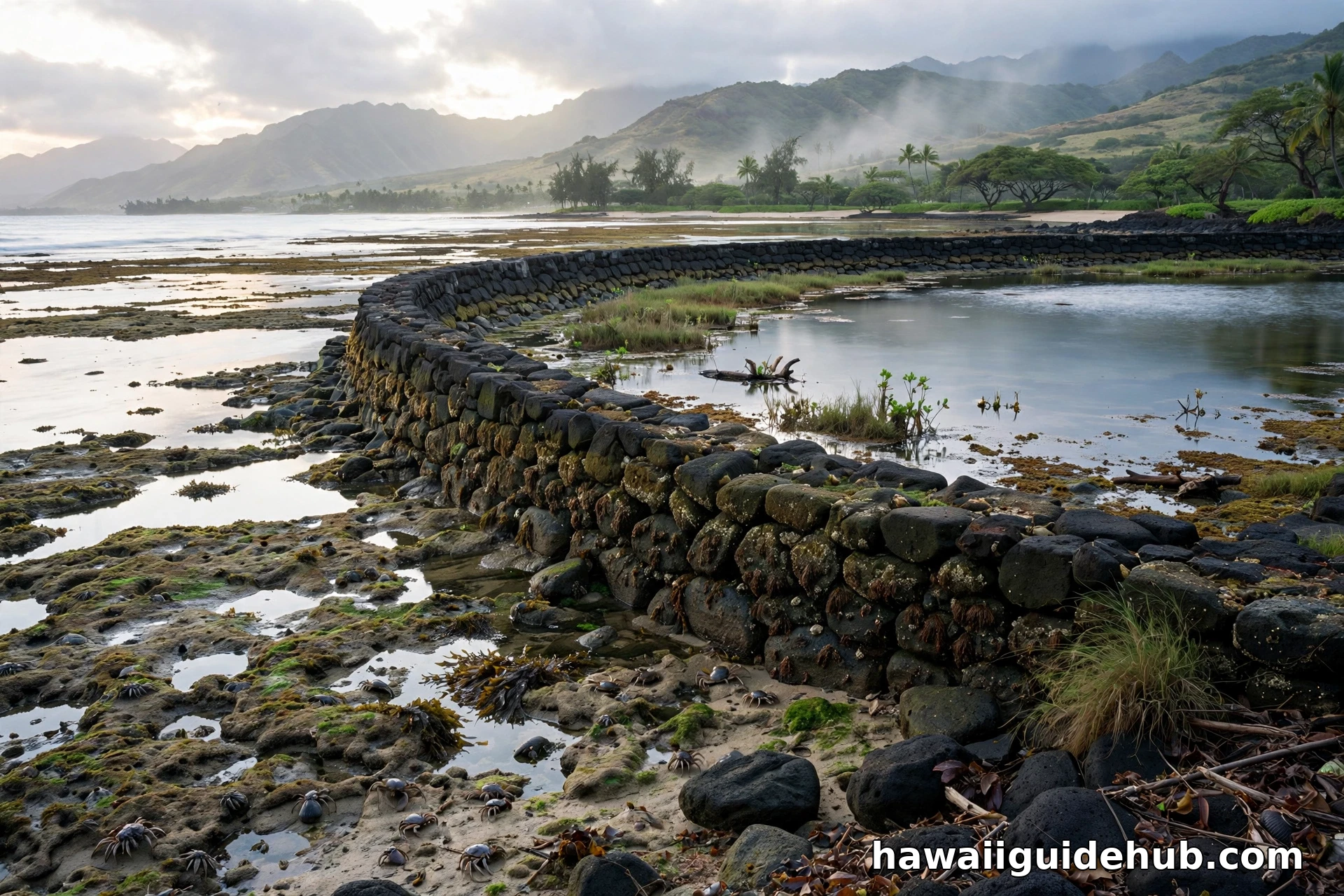
The food system built on the ahupuaʻa was remarkably productive. Kalo, taro, stood at its center, grown in flooded terraces and pounded into poi, and honored in tradition as an elder sibling of the Hawaiian people. Around it grew ʻuala (sweet potato) in dryland field systems, ʻulu (breadfruit), maiʻa (banana), kō (sugarcane), and coconut. From the sea came fish, shellfish, limu (seaweed), and salt, and Hawaiian engineering added an innovation found almost nowhere else at this scale: the loko iʻa, the fishpond. Stone walled ponds along the shore trapped and raised fish such as mullet, turning the coastline itself into managed farmland.
Protein, storage, and ceremony all connected. Chiefs maintained stores that could feed their people and their retinues, feasts redistributed food on a grand scale, and the Makahiki season, dedicated to the god Lono, suspended war for months of tribute collection, sport, ritual, and rest for the land. Food was never just food in this society. It was tax, offering, kinship, and calendar at once.
Gods, Heiau, and Daily Faith
Religion was not a separate department of life. The great gods, including Kū, Kāne, Lono, and Kanaloa, stood behind war, fresh water and creation, agriculture and peace, and the ocean. ʻAumakua, family guardian spirits often taking animal form, connected households to the spiritual world in daily life. Heiau, the temples, ranged from small fishing shrines marked by a single stone to massive terraced platforms built for the highest state ceremonies, accessible only to priests and the chiefly classes. Ritual marked planting and harvest, the start of fishing seasons, the birth of high chiefs, and the decisions of war.
Family and Daily Life
Within this ranked order, daily life ran on the ʻohana, the extended family, often spanning the full height of an ahupuaʻa so relatives could exchange upland and lowland goods. Children were raised by the wider family, and hānai, the custom of a child being given to grandparents or close kin to raise, was an honor rather than a loss. Work was shared by skill and season: farming, fishing, kapa cloth making, feather work, and canoe building each carried their own experts and pride. Feather capes and helmets made from thousands of bird feathers ranked among the most prestigious objects in the islands, reserved for the highest aliʻi. For a look at how these threads run into the voyaging tradition, see our Oʻahu guide for the island where many of these sites survive.
Craft, Exchange, and the Wider World
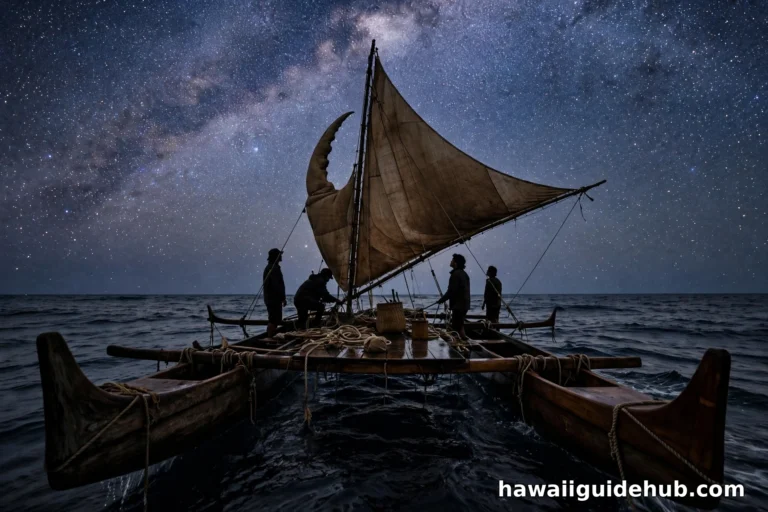
No ahupuaʻa held everything in equal measure, so exchange bound the districts together. Upland families traded forest products, olonā fiber, and birds for the fish, salt, and seaweed of the shore, and famous products traveled between islands: fine kapa cloth, polished stone adzes, feather work, and the prized salt of certain coasts. Voyaging canoes kept older connections alive for as long as the long routes were sailed, carrying people, plants, and news between Hawaiʻi and the wider Polynesian world. Even after regular long distance voyaging faded, interisland travel by canoe remained part of life, and chiefs maintained fleets that could move people and goods quickly in peace and war. Craft specialization reached remarkable heights inside this exchange economy. Master carvers shaped kiʻi images and canoes from single great logs, weavers produced mats of extraordinary fineness, and feather workers assembled cloaks that took years and the catch of thousands of birds, released alive by catchers who understood that the forests had to keep producing. Skill, like land, was a form of wealth this society knew how to grow.
Common Misconceptions
The most common misconception is that ancient Hawaiʻi was a simple or primitive place. A society that divided whole islands into self sufficient resource districts, engineered irrigation and fishponds, and crossed the Pacific by star navigation was anything but simple. A second misconception is that kapu was only about punishment. Its resource closures protected fisheries and crops in ways modern managers would recognize, and violating them threatened everyone’s food, not only the gods’ favor. A third is that the aliʻi were distant tyrants. The ideal chief was pono, righteous and caring toward the land and people, and the culture judged chiefs by that standard, sometimes harshly.
Respecting This Heritage as a Visitor
Ancient Hawaiian society is not a ruin to gawk at. Its descendants are a living people, and its sites are sacred places, not photo props. Never climb on heiau walls or move stones, stay on marked paths at cultural sites, and do not take rocks, sand, or artifacts. When a place is marked kapu today, treat that sign with the seriousness the word has always carried. Learning the structure of this society, its classes, land divisions, and laws, changes how the whole landscape reads: every terraced valley and fishpond wall becomes evidence of a civilization that managed an island world with sophistication for centuries. Planning a route that gives these sites time is easier with our Hawaii itinerary guide.
Video: The Ahupuaʻa System Explained
A short classroom friendly walk through the ahupuaʻa, from the uplands (uka) through the plains (kula) to the sea (kai).
Frequently Asked Questions
What were the social classes in ancient Hawaiian society?
Four main classes structured society: the aliʻi (chiefs), the kahuna (priests and expert specialists), the makaʻāinana (commoners who farmed and fished), and the kauwā (outcasts). Konohiki were appointed land managers who ran each ahupuaʻa for the chiefs.
What was the kapu system?
Kapu marked people, places, things, and times as sacred and restricted. It governed eating, ceremony, and access, and it also conserved resources through seasonal closures on fishing and harvesting. Breaking kapu could be punished by death. The system was overturned in 1819.
What is an ahupuaʻa?
An ahupuaʻa is a wedge shaped land division running from the mountain summit to the outer reef, typically bounded by ridgelines. The design gave one community access to nearly every resource it needed, from upland forest to irrigated fields to the reef fishery.
What did ancient Hawaiians eat?
The staple was kalo, pounded into poi, supported by sweet potato, breadfruit, banana, coconut, and sugarcane. From the sea and the fishponds came fish, shellfish, and limu. Feasts and the Makahiki season redistributed food across society.
When did ancient Hawaiian society change?
Change accelerated after 1778 with sustained Western contact. The kapu system ended in 1819, the monarchy united the islands under Kamehameha I by 1810, and land tenure was transformed by the Māhele of 1848, which introduced private land ownership.
Ancient Hawaiian society deserves to be remembered on its own terms: a ranked, lawful, deeply engineered civilization that fed a large population from small islands without metal, wheels, or written language, and organized itself around the flow of water from cloud to reef. Its classes and kapu can seem distant, but its central insight, that land, sea, and people form one system that must be cared for together, still shapes how Hawaiʻi thinks about itself today.