Mac Salad: Hawaii’s Beloved Plate Lunch Staple

Every plate lunch in Hawaii comes with two scoops of rice, an entrée, and a scoop of something creamy, pale, and utterly essential: mac salad. Visitors sometimes overlook it as filler. Locals know better. Hawaiian macaroni salad is a dish with its own rules, its own history, and a flavor that no mainland deli version can match. It is the quiet backbone of Hawaii’s most iconic meal.
This is the single complete guide to mac salad in Hawaii. It covers what Hawaiian mac salad is, the theories behind its origins, how it differs from mainland macaroni salad, the rules that make it authentic, its role in the plate lunch, popular variations, where visitors eat it, and how to make it at home. If you have been searching for anything about mac salad, the answers are all here on this one page.
Mac Salad at a Glance
| What it is | Creamy elbow macaroni salad, the standard side of the Hawaiian plate lunch |
| Core ingredients | Elbow macaroni, real mayonnaise, milk, vinegar, grated carrot and onion |
| Signature texture | Soft, almost overcooked pasta in a smooth, generous dressing |
| Key technique | Cook pasta past al dente; toss hot noodles with vinegar so they absorb it |
| Mayo rule | Real mayonnaise only, Best Foods or Hellmann’s is the island standard; never Miracle Whip |
| Origin | No single proven story; likely adapted from European-style salads in plantation-era Hawaii |
| Role | Mild, creamy counterpoint to bold plate lunch entrées; soaks up gravy and sauces |
| Formula | Two scoops rice, one scoop mac salad, one hearty entrée |
| Variations | Tuna mac, potato mac, and countless family versions |
What Hawaiian Mac Salad Tastes Like
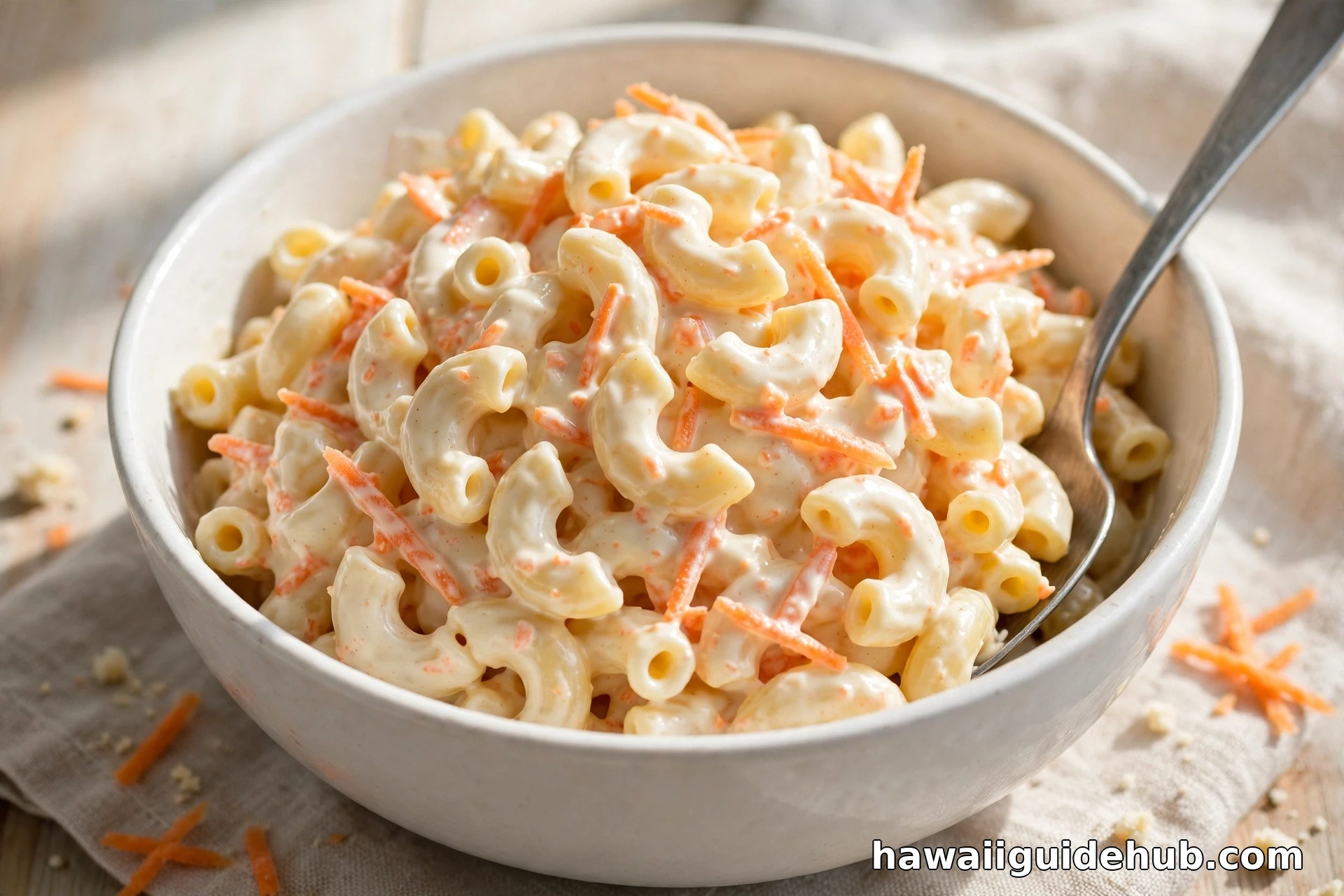
Hawaiian mac salad tastes like comfort given form. The pasta is soft, softer than any Italian-trained cook would allow, and coated in a dressing that is creamy, lightly tangy, and just barely sweet. There is no mustard bite, no sharp vinegar punch, no crunchy overload of vegetables. Grated carrot and onion melt into the background, adding subtle sweetness and moisture rather than crunch.
The overall effect is mild by design. Next to teriyaki beef, chicken katsu, or kalua pig, mac salad is the cool, creamy bite that resets your palate between mouthfuls of bold flavor. Eaten alone it might seem plain. Eaten as part of a plate lunch, it is irreplaceable. That context is everything.
Why Macaroni Salad Exists in Hawaii
Here is the honest truth: nobody knows exactly how macaroni salad got to Hawaii. Food writers who have dug into it, including local food author Arnold Hiura, find no single documented origin, only plausible theories. The responsible thing is to lay them out rather than pick a favorite.
One theory traces it through European-style potato salads served in hotels and restaurants in the early twentieth century, or prepared by plantation managers for their households. Local cooks, many of them immigrants from Japan, China, Korea, Portugal, and the Philippines, adapted these salads with what was available. Dried macaroni was cheaper than potatoes, did not spoil in the tropical heat, and was easy to cook in quantity. The swap from potato to macaroni may have been as practical as that.
Another thread ties it to the plantation lunch itself. Field workers in the late 1800s and early 1900s carried filling, inexpensive midday meals, and starchy salads stretched a lunch cheaply. Whatever the exact path, Hawaii adopted the dish and made it unmistakably local. The late actor Pat Morita, a Hawaii regular, was said to order a drink and a double order of mac salad at his favorite bar and eat the whole thing himself. That is the level of devotion we are talking about.
The Plate Lunch Formula: Where Mac Salad Lives
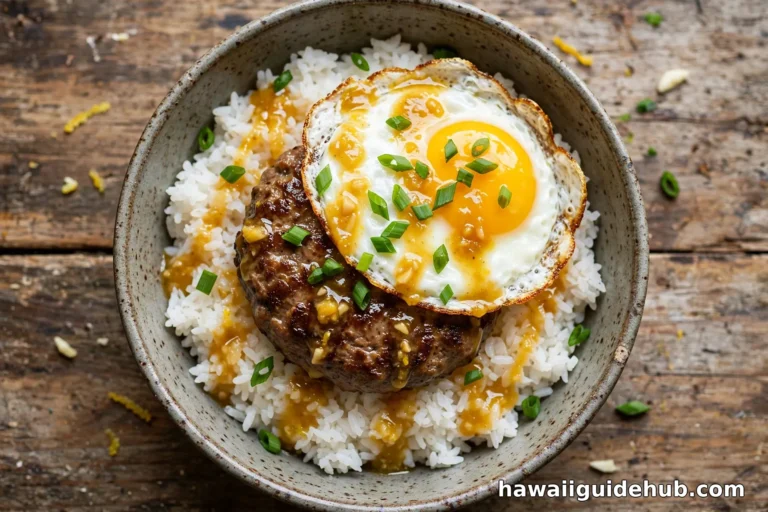
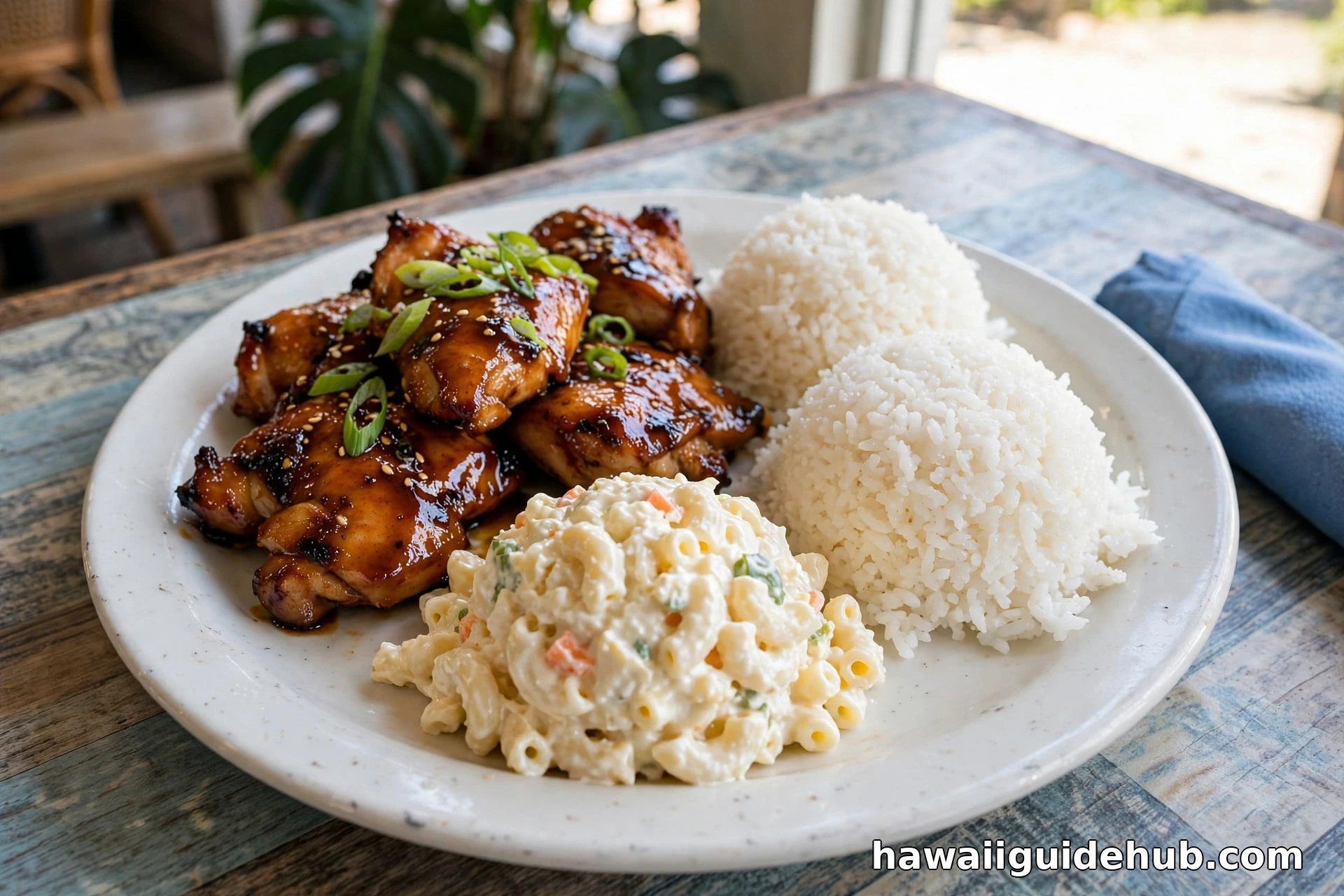
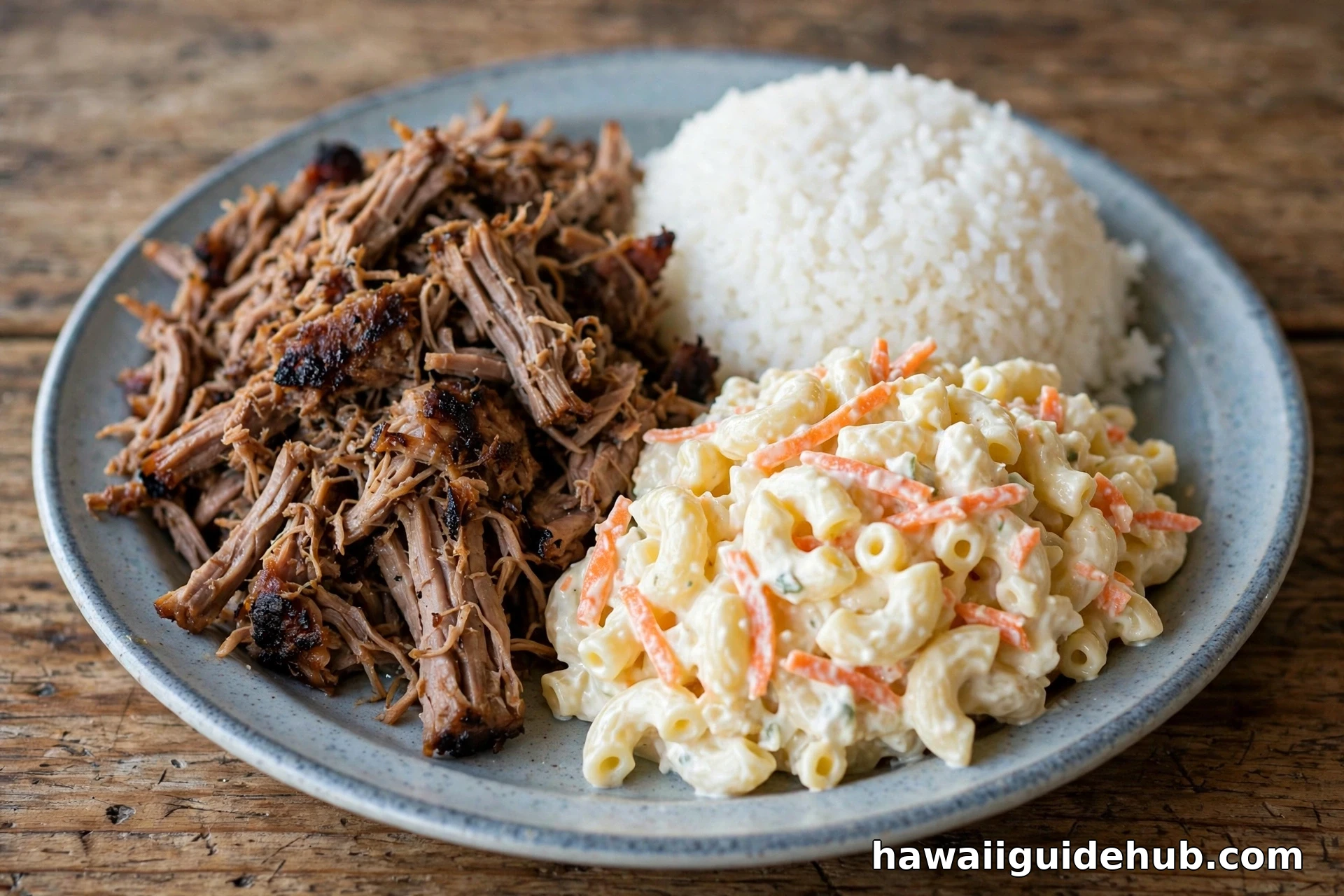
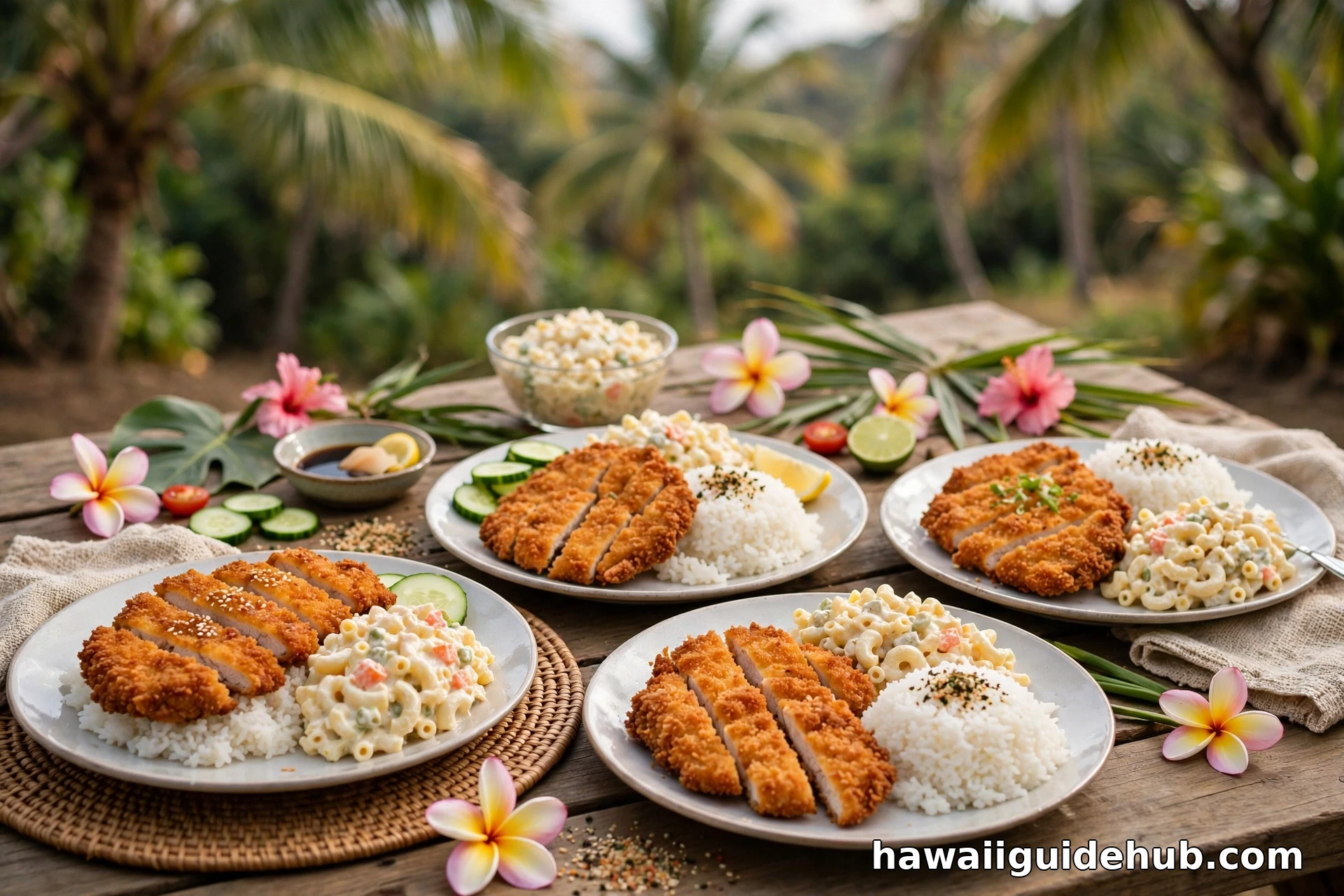
Mac salad’s true home is the plate lunch, Hawaii’s definitive casual meal: two scoops of white rice, one scoop of mac salad, and a generous entrée. The entrée might be chicken katsu, teriyaki beef, kalbi short ribs, shoyu chicken, hamburger steak, or kalua pig. The rice and mac salad are intentionally mild. They provide the neutral base that lets the entrée shine, and they soak up gravy, teriyaki sauce, and meat juices.
This is why mac salad is engineered the way it is. A strongly flavored side would fight the entrée. A crunchy side would distract. The soft, creamy scoop does its job quietly: cooling, filling, and carrying sauce. Chefs in Hawaii describe it as a palate moment, the calm bite between bold ones. Once you eat a plate lunch with this in mind, the whole meal makes sense.
Hawaii Mac Salad vs. Mainland Macaroni Salad
Put the two side by side and the differences are immediate. An expert would break them down like this.
| Hawaiian mac salad | Mainland deli macaroni salad | |
| Pasta texture | Cooked past al dente, soft enough to absorb dressing | Firm, al dente, sometimes chewy |
| Dressing base | Real mayonnaise, thinned with milk; generous amount | Mayo or Miracle Whip, often lighter |
| Acid | A little vinegar, absorbed into hot pasta; background tang | Vinegar and mustard forward; sharp and punchy |
| Sweetness | Barely sweet, sometimes a spoon of sugar | Often noticeably sweet |
| Vegetables | Grated carrot and onion, melted into the mix | Diced celery, peppers, relish; crunchy and visible |
| Eggs | Sometimes, but not required | Very common |
| Philosophy | Mild by design; a supporting actor | Bold standalone side dish |
| Verdict | Do not judge it alone; eat it with the plate lunch | Built to be eaten on its own |
The Rules of Real Hawaiian Mac Salad
Hawaiian cooks are particular about mac salad, and the rules are non-negotiable. First, overcook the pasta. Cook the elbows two to three minutes past the package directions for al dente. It feels wrong, but soft pasta absorbs the dressing instead of sitting in it, which is the entire textural point.
Second, use real mayonnaise. Best Foods, known as Hellmann’s on the mainland, is the island standard. Miracle Whip, with its sweet tang, produces a different salad entirely. Third, add the vinegar while the pasta is still hot. Toss the drained noodles with apple cider or rice vinegar immediately, and the thirsty pasta drinks it in, seasoning from within rather than sitting in acid.
Fourth, grate rather than dice. Carrot and onion should be grated fine so they vanish into the dressing, contributing moisture and sweetness without crunch. Fifth, chill it well. Mac salad needs at least a few hours in the refrigerator, and many cooks insist on overnight, for the flavors to meld. If it looks dry after chilling, stir in a splash of milk or a spoon of mayo before serving.
Variations: Tuna Mac, Potato Mac, and Family Versions
The base recipe is a template, and Hawaii’s families all have their version. Tuna mac folds in canned tuna for a protein-boosted salad that eats like a light meal. Potato mac blends cubed potato with the macaroni, a nod to the potato-salad ancestor. Some cooks add hard-boiled eggs, peas, or a little sugar. Potluck tables across the islands feature all of these at once, and everyone has opinions about whose is best.
What does not vary is the philosophy: creamy, mild, soft. A mac salad with big crunchy vegetables and sharp mustard is not a variation. It is a different dish.
Where Visitors Eat Mac Salad in Hawaii
You do not seek out mac salad in Hawaii. It finds you. Every plate lunch comes with it, from roadside stands and drive-ins to food trucks and local diners. Order chicken katsu, teriyaki beef, or kalua pig anywhere on the islands and the scoop arrives as part of the deal. It is also standard at potlucks, fundraisers, and family gatherings, where it sits next to the rice cooker in a big bowl.
For visitors building a food itinerary, the plate lunch is the essential first order, and mac salad is half the education. Our guide to must-try local dishes in Hawaii puts it in context, and huli huli chicken makes one of the great plate lunch entrées to pair it with.
Making It at Home: Tips That Matter
Mac salad is easy, but the details decide it. Salt the pasta water generously. Overcook deliberately. Vinegar the hot noodles. Use real mayo and thin it with a little milk so it coats rather than globs. Grate the carrot and onion fine. Season with salt and pepper, tasting as you go. Then refrigerate for at least four hours, or overnight, before serving.
Serve it cold, alongside something bold: teriyaki chicken, kalua pig, or even just good fried chicken. That is the whole trick. Hawaiian mac salad is not meant to impress on its own. It is meant to make everything around it taste better. For more sides and sweets from the islands, see late-night eats in Hawaii.
Mac Salad Beyond the Plate Lunch
Mac salad is not confined to the plate lunch. It is a fixture at Hawaii potlucks, where it appears in giant bowls next to the fried chicken and the rice cooker. It shows up at fundraisers, graduation parties, and beach barbecues. Some local delis sell it by the pound, and many families keep a batch in the refrigerator as an everyday side, the way mainland households keep coleslaw.
It has also traveled. Hawaiian restaurants on the mainland serve mac salad with their plate lunches, and it is often the dish that converts skeptics. People who grew up on sharp, mustardy deli salad try the Hawaiian version and realize what the dish was always supposed to be: soft, creamy, and comforting. In that sense mac salad is one of Hawaii’s great culinary ambassadors, carrying the islands’ food philosophy, bold entrée, calm sides, everything in balance, to every city with a Hawaiian restaurant.
Video: Hawaiian-Style Macaroni Salad
Watch the island method step by step: overcooked pasta, vinegar on hot noodles, and the creamy Best Foods dressing.
Frequently Asked Questions
Why is mac salad always served with plate lunch?
The plate lunch formula is two scoops of rice, one scoop of mac salad, and an entrée. The mild, creamy salad balances bold entrées and soaks up sauces and gravy. It has been part of the formula since the plate lunch took shape in plantation-era Hawaii.
What makes Hawaiian mac salad different?
Soft, overcooked pasta, real mayonnaise, vinegar absorbed into the hot noodles, and grated rather than diced vegetables. It is milder, creamier, and softer than mainland macaroni salad, by design.
Should you use Miracle Whip in Hawaiian mac salad?
No. Hawaiian cooks insist on real mayonnaise, with Best Foods or Hellmann’s as the standard. Miracle Whip’s sweetness and tang produce a noticeably different salad.
Why cook the pasta past al dente?
Soft pasta absorbs the dressing and vinegar instead of sitting in them, creating the signature creamy, unified texture. Firm pasta makes a drier, separated salad.
How long does mac salad keep?
Refrigerated in a sealed container, it keeps three to four days. It is best within the first two days. Do not leave it at room temperature for more than two hours, especially in Hawaii’s heat.
Can you make mac salad ahead?
Yes, and you should. The flavors meld and improve after at least four hours of chilling, and overnight is even better. Stir in a splash of milk or mayo before serving if it has thickened.
Is Hawaiian mac salad served warm or cold?
Cold. Mac salad is always served chilled, after at least a few hours in the refrigerator. Serving it warm would be a serious departure from the island standard, and the flavors need the chill time to meld properly.
Mac salad will never be the dish visitors photograph first. It is the dish they remember later, the cool creamy bite that made the whole plate lunch work. Respect the scoop. Overcook the pasta. Use real mayo. And when in Hawaii, never skip it, because the plate lunch without mac salad is not a plate lunch at all. It is just meat and rice, missing the quiet, creamy soul of the meal.