7-11 Crab Hawaii: The Seven-Eleven Crab Guide

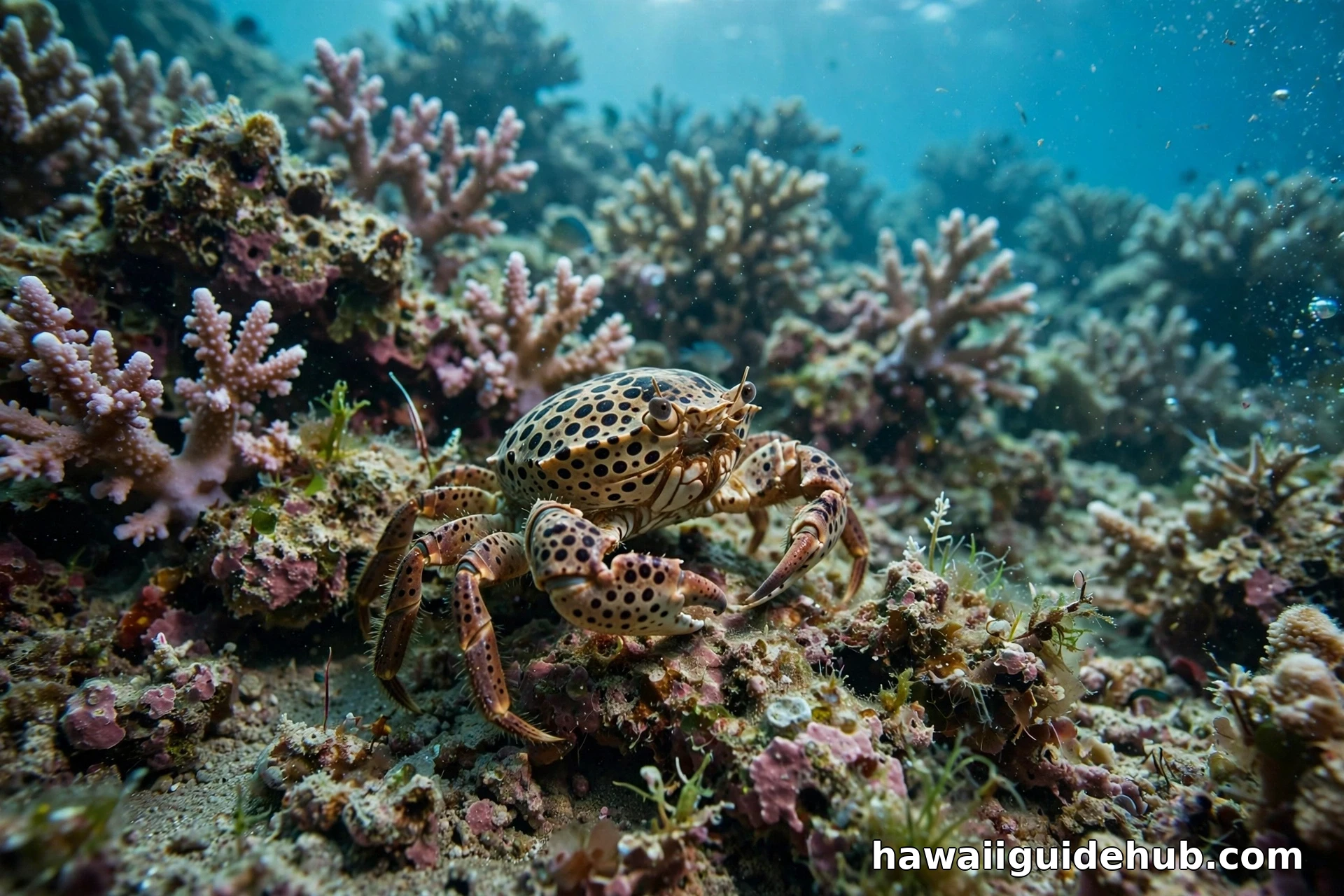
The 7-11 crab is not a convenience store snack: it is the seven-eleven crab (Carpilius maculatus), a spotted reef crab found in Hawaii’s waters. Named for the dark spots on its shell, this striking crab is one of the Indo-Pacific’s most recognizable reef dwellers: and it is eaten as food across its range. This guide covers identification, habitat, behavior, and the crab’s culinary side.
This page covers the seven-eleven crab’s identity, size, habitat, diet, how to spot one while diving, its role as food, and FAQs. Everything about the 7-11 crab Hawaii is on this one page.
The Short Answer
The seven-eleven crab (Carpilius maculatus), also called the spotted reef crab or blood-spotted crab, is a large reef crab reaching 7 inches (18 cm) across, found across the Indo-Pacific including Hawaii. Its cream shell with dark spots gives it the “7-11” nickname. It lives on coral reefs, feeds on snails and other invertebrates, and is harvested as food in parts of its range.
Seven-Eleven Crab at a Glance
| Fact | Detail (per reefguide.org) |
| Scientific name | Carpilius maculatus |
| Common names | Seven-eleven crab, spotted reef crab, blood-spotted crab |
| Size | Up to 7 in (18 cm) |
| Distribution | Indo-Pacific, including Hawaii |
| Habitat | Coral reefs |
| As food | Eaten across the Indo-Pacific |
Why “7-11”?
The nickname comes from the spots: the crab’s pale carapace carries dark spots that reminded someone of the convenience store’s branding. Common names are folk poetry: the “blood-spotted crab” refers to the reddish spots on some individuals. The scientific name Carpilius maculatus means “spotted”: the spots are the defining feature in every language. A crab named like a store: only in the age of convenience.
Habitat and Behavior
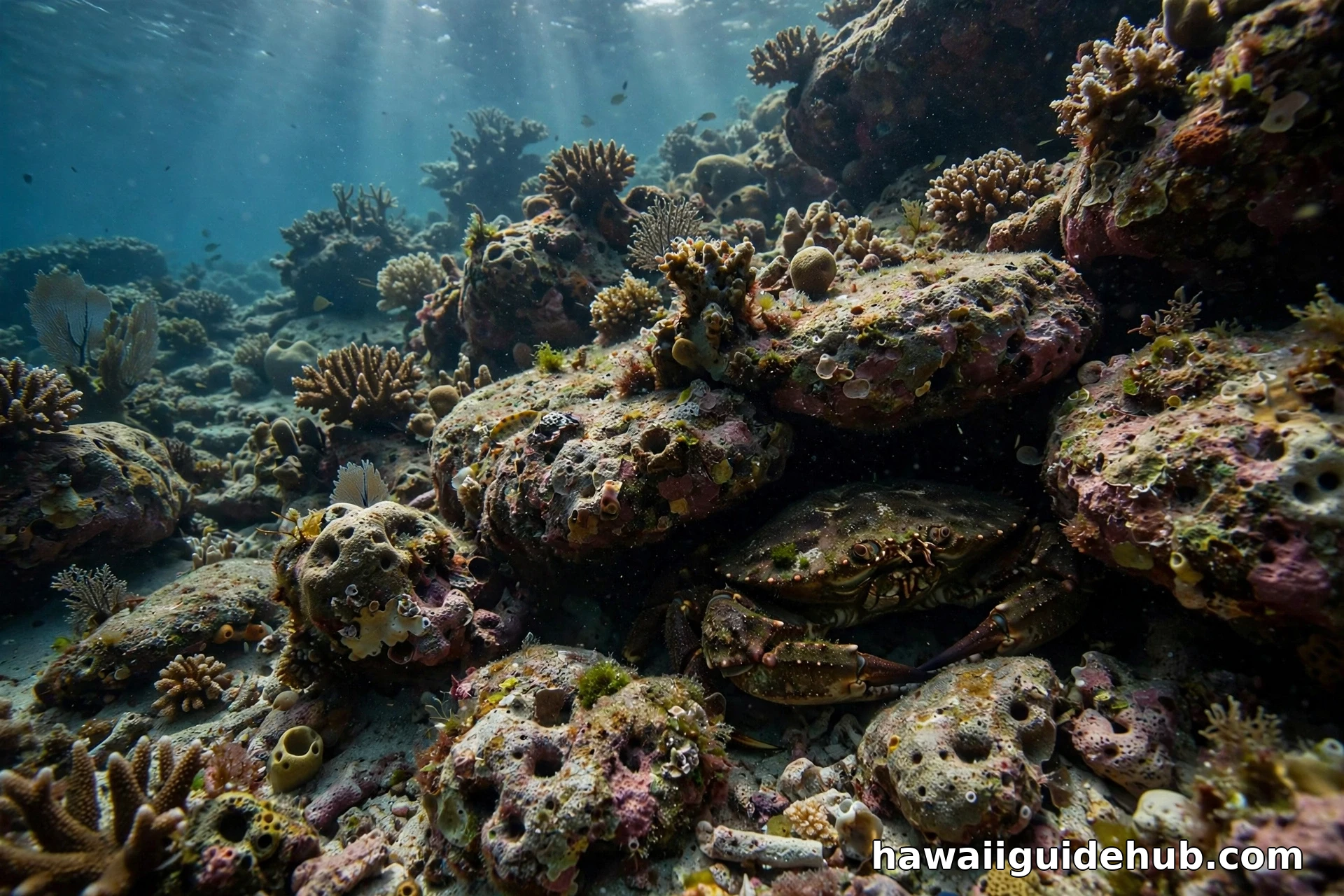
Seven-eleven crabs live on coral reefs: hiding under ledges and in crevices by day, foraging at night. They are powerful predators of snails: their heavy claws crush thick shells with ease. Despite their size, they are shy: divers spot them by the spotted shell gleaming in a crevice. The crab is a reef janitor and enforcer: keeping snail populations in check.
The Crab as Food
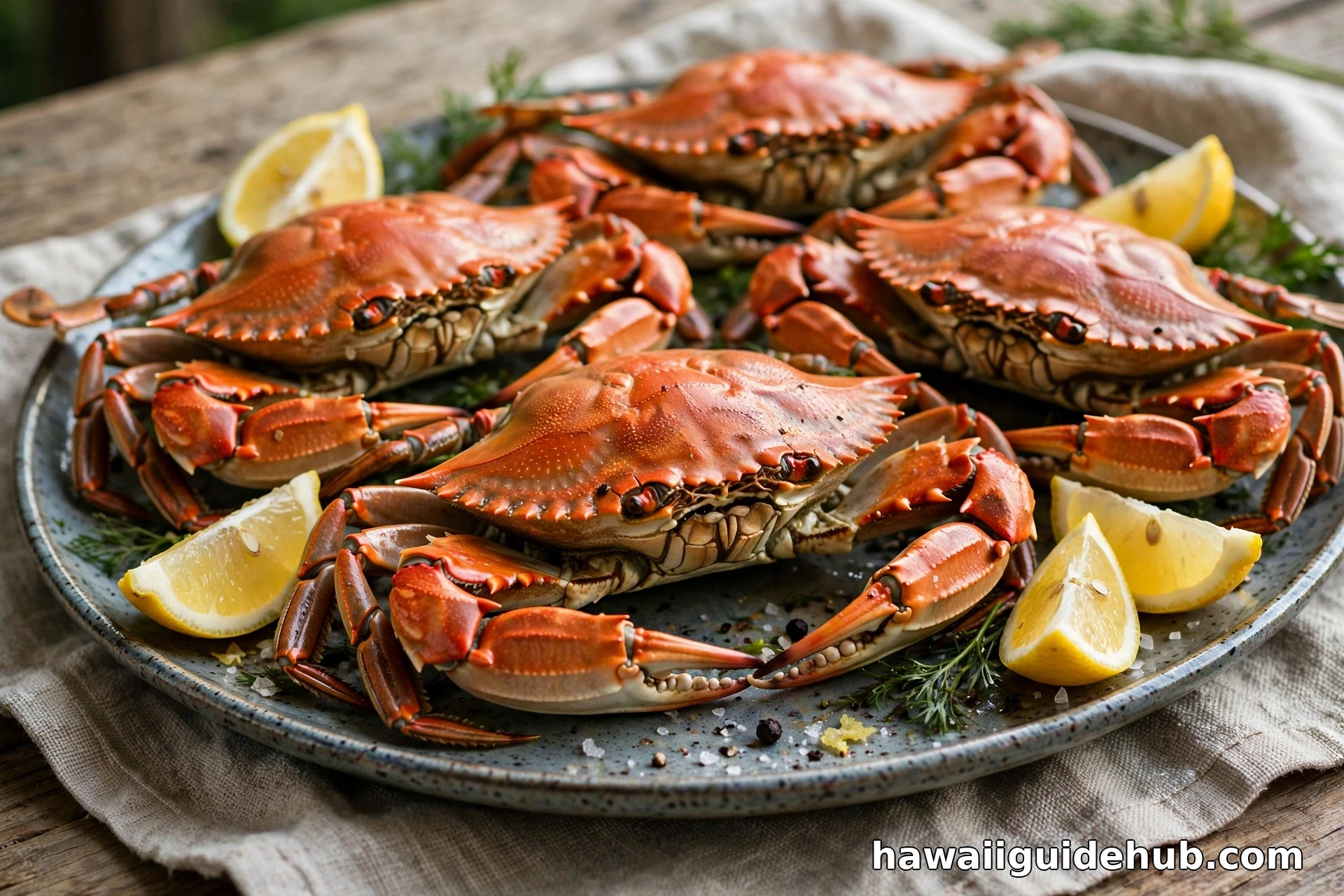
Across the Indo-Pacific, spotted reef crabs are eaten: the meat is sweet and the claws are substantial. In Hawaii, reef crabs are part of the subsistence tradition: gathered by hand, cooked simply. Regulations apply: check current DLNR rules on crab harvest (sizes, seasons, methods). The 7-11 crab is food and wildlife: respected as both. Eat sustainably: take only what the reef can spare.
Spotting One While Diving
Divers: look for the spots in shadow. The crab’s pale shell stands out against dark reef: scan ledges, overhangs, and coral heads. Night dives are best: the crabs emerge to hunt. Do not grab: the claws are powerful enough to crush snail shells (and fingers). Photograph, admire, and leave it: the reef needs its enforcers.
For Hawaiian food culture, see Hawaiian traditions: hula, chanting, and storytelling, the significance of ohana, and Hawaii’s history before the 50th star.
The Carpilius Family
Carpilius is a small genus of coral crabs: C. maculatus (spotted) and C. convexus (the similar, unspotted cousin). The family Carpiliidae are the coral crabs: heavy-bodied, strong-clawed, reef-dwelling. They are ancient: the body plan has worked for millions of years. The seven-eleven crab is the showiest of the clan: the spots make it famous.
The Claws: Shell Crushers
The seven-eleven crab’s claws are engineering marvels: massive, toothed, and strong enough to crush thick snail shells. The crusher claw does the work; the cutter handles the details. The force is extraordinary: among the strongest for the crab’s size. This is why you do not handle them: a defensive pinch can break skin. Admire the machinery from a distance.
Diet: The Snail Hunter
Snails are the main course: the crab cracks shells like nuts. Also taken: small crabs, sea urchins, and carrion. The hunting is methodical: find, position, crush, extract. The reef’s snail populations are shaped by this predation: the crab is a keystone. Without crushers like Carpilius, the snails would overrun the reef. The predator is the protector.
Reproduction and Life Cycle
Like most crabs: mating, egg-carrying females, planktonic larvae drifting for weeks, settlement on the reef, and growth through molting. The larvae travel far: explaining the Indo-Pacific distribution. The spotted pattern develops with age: juveniles are plainer. The life cycle is the ocean’s: most larvae perish; the survivors become the spotted giants of the reef.
The Crab in Hawaiian Waters
In Hawaii, seven-eleven crabs inhabit reefs across the archipelago: from the main islands to the Northwestern chain. They are part of the native reef community: not introduced, not invasive. Hawaiian reef gatherers know them: the big spotted crab of the ledges. The species connects Hawaii to the wider Indo-Pacific: the same crab lives from East Africa to Polynesia.
Reef Crab Harvesting Rules
Hawaii regulates reef crab harvest: check current DLNR rules for size limits, seasons, and permitted methods. General principles: take only large males, release females (especially egg-bearing), respect closed areas. The rules protect the breeding stock: the future of the fishery. Ignorance is no excuse: read the regulations before you gather. The reef’s bounty has limits.
Cooking Reef Crab
The classic: steamed or boiled whole, cracked at the table, dipped in butter or shoyu. The meat is sweet, the claws are the prize. Keep it simple: the crab is the flavor. In Okinawa (see the video), it is street food: grilled, seasoned, eaten on the spot. However you cook it: fresh is everything. The reef to the pot in hours: that is the standard.
Crab vs Crab: Hawaii’s Reef Crabs
Hawaii’s reefs host many crabs: the seven-eleven (spotted, large), the convexus (plain, similar), hermit crabs (shell-borrowers), and the tiny coral-dwelling species. The seven-eleven is the heavyweight: biggest, boldest, most spotted. Each has its niche: the reef is a crab metropolis. Learn them all: the reef rewards the observant.
The Spots: Camouflage or Warning?
Why the spots? Possibly disruptive camouflage: breaking up the outline against dappled reef. Possibly a warning: “I am big and my claws hurt.” Possibly both: nature multitasks. The spots are unique to individuals: like fingerprints. Researchers could identify crabs by spot pattern: the seven-eleven crab wears its ID. The spots are beauty and function: evolution’s design.
Night Dive Encounters
The night dive is the seven-eleven crab’s stage: emerging from the crevice, claws raised, spots glowing in the torchlight. The encounter is thrilling: a 7-inch crab is a lot of crab. Watch it hunt: the stalk, the crush, the feast. The night reef belongs to the predators: the crab is one of its kings. Bring a camera: the spots photograph beautifully.
The Aquarium Trade
Seven-eleven crabs appear in the aquarium trade: the spots are irresistible. But they are poor tank residents: large, predatory, and destructive to tankmates. Responsible aquarists avoid them: the reef is their home. The trade’s demand is small: the crab’s size limits its appeal. Leave them in the ocean: some animals are not pets.
Conservation Status
The seven-eleven crab is widespread and not currently threatened: the Indo-Pacific range is vast. Local pressures exist: harvest, habitat loss, reef degradation. The crab’s fate follows the reef’s: protect the coral, protect the crab. No species-specific conservation program: the best protection is reef protection. Healthy reefs, spotted crabs.
The Name Game
Seven-eleven crab, spotted reef crab, blood-spotted crab, Carpilius maculatus: four names, one crab. Common names vary by island and language; the scientific name is universal. The “7-11” is the memorable one: marketing by accident. Whatever you call it: the spots identify it. Names are human; the crab does not care.
The Molt
Crabs grow by molting: shedding the old shell and expanding the new. The seven-eleven crab molts in hiding: soft and vulnerable for hours. The new shell hardens; the spots reappear. Each molt is a risk: predators watch. The process repeats through life: growth in jumps. The discarded shell: a perfect spotted ghost.
Predators of the Crab
Even the crusher gets eaten: octopuses (the crab’s nemesis), large eels, and sharks take adults; everything takes juveniles. The octopus-crab arms race is legendary: intelligence vs armor. The crab’s defense: the crevice, the claws, the spots (maybe). The reef is dangerous at every size: the seven-eleven crab knows.
The Crab in Culture
Reef crabs feature in Pacific cultures: food, stories, and traditions. In Hawaii, crab gathering (with nets, by hand, at night) is a cherished practice: families, headlamps, and the shoreline. The seven-eleven crab is part of this: the big prize of the reef. The culture is sustainable when practiced traditionally: take some, leave most.
Ethical Harvesting
The ethical harvest: legal size, males only, no egg-bearing females, no overharvesting one reef. The tradition: share the catch, waste nothing. The future: the reef’s crabs depend on restraint. The seven-eleven crab is not endangered: keep it that way. Harvest like your grandchildren will: because they might.
The Reef at Night
The night reef is a different world: the day’s fish sleep, the predators emerge. The seven-eleven crab is a night creature: this is when it hunts, mates, and lives. Night divers see the reef’s true self: octopuses, eels, crabs, and sharks on patrol. The seven-eleven crab is a highlight: big, spotted, and active. The night dive is the reef’s second shift: do not miss it.
A Diver’s Checklist
To find a seven-eleven crab: dive a healthy reef, go at night, bring a good torch, scan ledges and crevices, look for the pale spotted shell, move slowly, and never reach into holes. The checklist works: patience finds crabs. The reward: a face-to-face with one of the reef’s great characters. The photo: spots, claws, and attitude.
The Crab’s Cousins
Beyond Carpilius: the reef’s crab diversity is staggering. Box crabs, sponge crabs, decorator crabs, and the tiny gall crabs that live in coral. Each has a strategy: armor, camouflage, symbiosis. The seven-eleven crab is the charismatic megafauna of this world: the one you remember. But the small ones matter too: the reef is built on diversity.
Why the Crab Matters
The seven-eleven crab matters because it is a window: into the reef’s food web, into Pacific food traditions, into the beauty of adaptation. A single species connects the diver, the cook, the scientist, and the storyteller. The spots are a reminder: the ocean invents what we cannot imagine. Protect the reef and the crab thrives; lose the reef and the spots fade. The crab is the reef’s ambassador: listen to it.
The Crab Watcher’s Code
The code: look but do not touch, photograph but do not harass, take only legal harvest and leave the rest. The seven-eleven crab has survived millions of years without our help: it needs only our restraint. The reef is not a supermarket or a zoo: it is a living community. Visit as a guest: the crab is the host. The spots will still be there tomorrow: if we let them be.
Video: 7-Eleven Crab Seafood
The seven-eleven crab as street food in Okinawa.
Frequently Asked Questions
What is the 7-11 crab?
The seven-eleven crab (Carpilius maculatus): a spotted reef crab of the Indo-Pacific.
Why is it called the 7-11 crab?
The dark spots on its shell: the nickname stuck.
How big do seven-eleven crabs get?
Up to 7 inches (18 cm) across: a substantial crab.
Are seven-eleven crabs edible?
Yes: eaten across the Indo-Pacific. Check local regulations before harvesting.
Where can I see one in Hawaii?
On coral reefs: look under ledges while diving or snorkeling, especially at night.
Are they dangerous?
The claws are powerful: look, do not touch.
The 7-11 crab is Hawaii’s reef in miniature: beautiful, spotted, powerful, and delicious. Whether you meet it on a night dive (a flash of spots in the torchlight) or on a platter (sweet meat, cold beer, good company), it is unforgettable. The convenience store did not name the crab: the crab’s spots named themselves. Hawaii’s reefs are full of such characters: the 7-11 crab is one of the very best. Look for them on night dives over sandy reef flats, where the spots catch the torchlight.