Sweet Potato in Japanese Curry: An Easy Kare Raisu Recipe

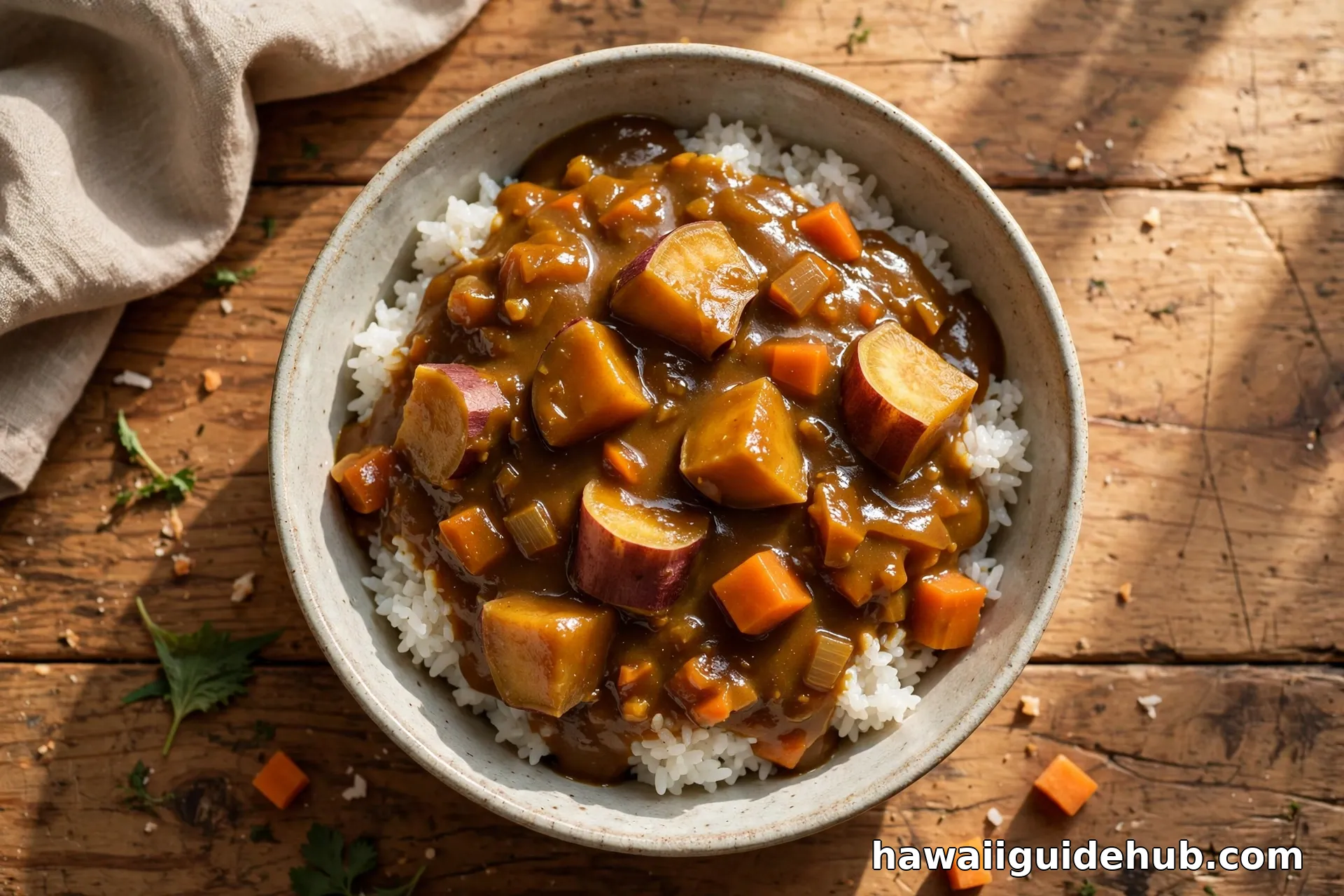
Sweet potato in Japanese curry is one of those upgrades that makes you wonder why you ever used regular potatoes. The sweet potato turns meltingly tender in the rich, mildly sweet curry sauce, and its natural sweetness deepens the flavor of the whole pot. This easy kare raisu recipe uses store-bought curry roux blocks, so dinner is on the table in about 45 minutes with minimal effort, and it feeds a family of five or six generously. In Hawaii, where Japanese curry is beloved comfort food and Okinawan sweet potatoes are a local staple, this version tastes right at home: familiar, hearty, and just a little bit island.
This is the single complete guide to sweet potato in Japanese curry. It covers why sweet potato works so well, the Hawaii connection, the full ingredient list, step-by-step instructions, recipe tips, variations, what to serve with it, storage and reheating, and answers to common questions. Everything about sweet potato in japanese curry is gathered on this one page, so you do not need to search anywhere else.
Recipe at a Glance
| The time math | 15 minutes prep plus 30 minutes cooking: 45 minutes, start to finish |
| Feeds | 5 to 6 servings |
| Difficulty | Easy |
| The short list | Sweet potato, onion, carrot, Japanese curry roux, rice |
| The payoff | Mild, savory, gently sweet; built for family dinners, meal prep, and comfort food nights |
Why Sweet Potato Belongs in Japanese Curry
Classic Japanese curry calls for potato, carrot, onion, and meat simmered in a thick, mild curry roux. Swap the potato for sweet potato and something wonderful happens: the sweet potato’s sugars caramelize into the sauce, the chunks hold their shape while turning creamy inside, and the whole curry gains a deeper, rounder sweetness that regular potatoes never deliver. Japanese curry is already on the sweet side compared to Indian or Thai curries: it was adapted in Japan with a mellow, thick, almost stew-like character, often with a touch of honey or apple in the roux. Sweet potato does not fight that flavor, it completes it. Nutritionally it is a strong trade too: sweet potatoes bring fiber, vitamin A, and a lower glycemic load than white potatoes, so the comfort food feels a little less heavy. If you love the local dishes of Hawaii, this is a home-cooking recipe that fits the islands’ flavors.
The Hawaii Connection
Japanese curry, or kare raisu, is one of Hawaii’s great adopted comfort foods, a legacy of Japanese immigration to the islands that began in the plantation era. It shows up at plate lunch counters, school cafeterias, curry houses, and home kitchens across the state, and for many local families it is as much a weeknight staple as it is in Japan. Hawaii also grows superb sweet potatoes, including the famous Okinawan sweet potato with its vivid purple flesh, which arrived with Okinawan immigrants and became a local icon found in everything from pies to haupia desserts. Using Okinawan sweet potato in your curry is the Hawaii move: the purple chunks turn the dish striking and add an earthy sweetness that is unforgettable, and the color alone will get everyone to the table. Even with ordinary orange sweet potatoes, this recipe channels the islands’ Japanese-Hawaiian kitchen, where two food traditions meet in one pot.
Ingredients
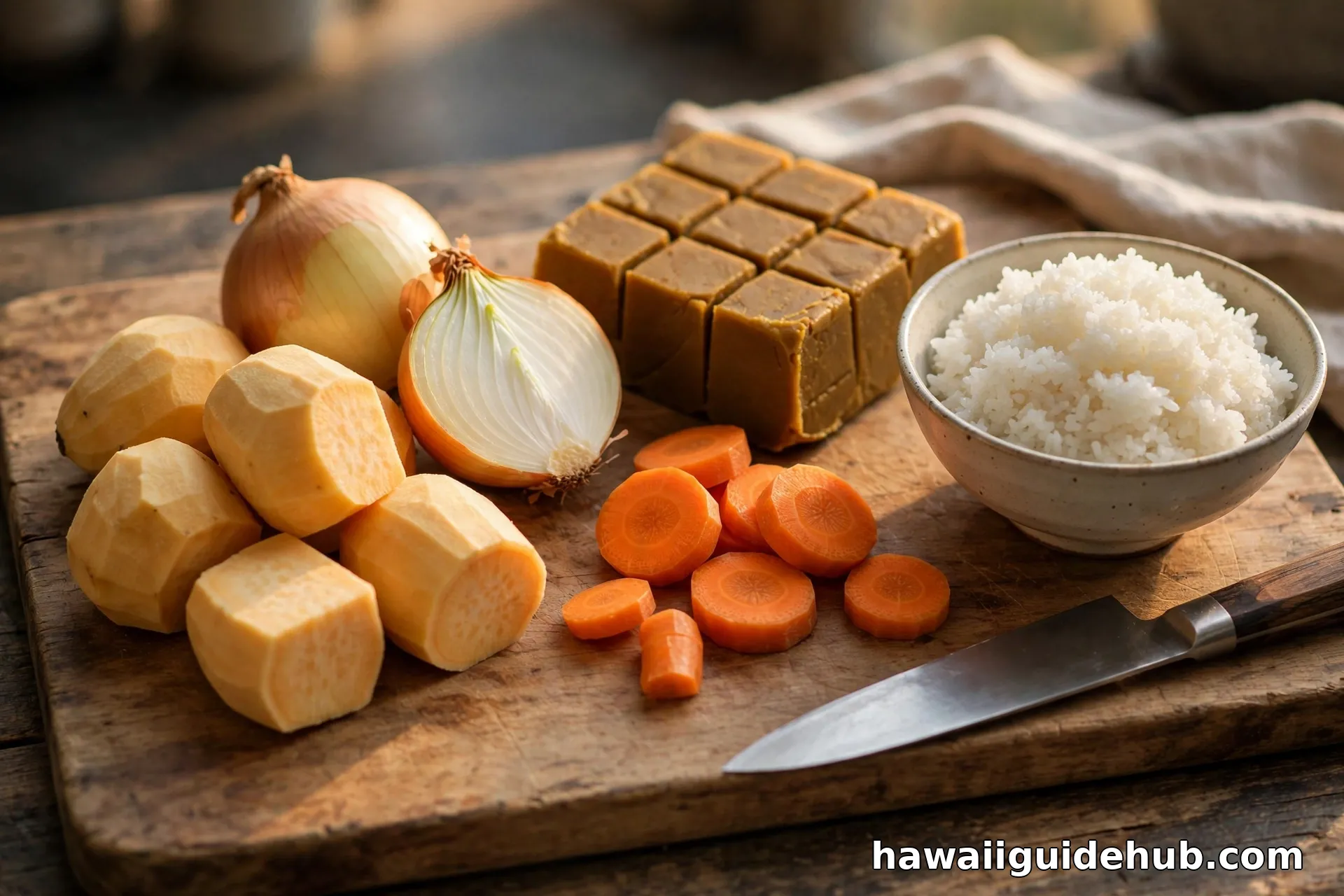
- 2 large sweet potatoes (about 1.5 pounds), peeled and cut into 1.5-inch chunks
- 2 medium onions, cut into wedges
- 2 medium carrots, cut into bite-size chunks
- 1 pound boneless chicken thighs or pork shoulder, cut into bite-size pieces (optional)
- 2 tablespoons cooking oil
- 4 cups water or chicken broth
- 1/2 box Japanese curry roux (about 3.5 ounces; S&B Golden Curry or House Vermont Curry, mild or medium)
- 1 tablespoon honey (optional, for extra shine and sweetness)
- Cooked short-grain white rice, for serving
- Fukujinzuke (Japanese pickled vegetables) or rakkyo, for serving (optional)
Use any sweet potato you like: orange-fleshed, white, or purple Okinawan. Cut the chunks large and uniform so they cook through without falling apart; uneven pieces mean some dissolve while others stay hard. Half a box of roux is the standard ratio for this amount of liquid; add more roux for a thicker curry, less for a lighter one. If you are cooking for kids, choose mild roux: it is barely spicy and the sweetness wins them over fast.
How to Make Sweet Potato Japanese Curry
- Brown the meat (if using). Heat the oil in a large heavy pot or Dutch oven over medium-high heat. Add the chicken or pork in a single layer and cook until lightly browned on the edges, about 5 minutes. Do not crowd the pot: brown in batches if needed. Remove to a plate.
- Sauté the vegetables. In the same pot, add the onions and cook until softened and lightly golden, about 5 minutes, scraping up the browned bits from the meat. Add the sweet potato and carrot chunks and stir to coat with oil, letting them pick up a little color.
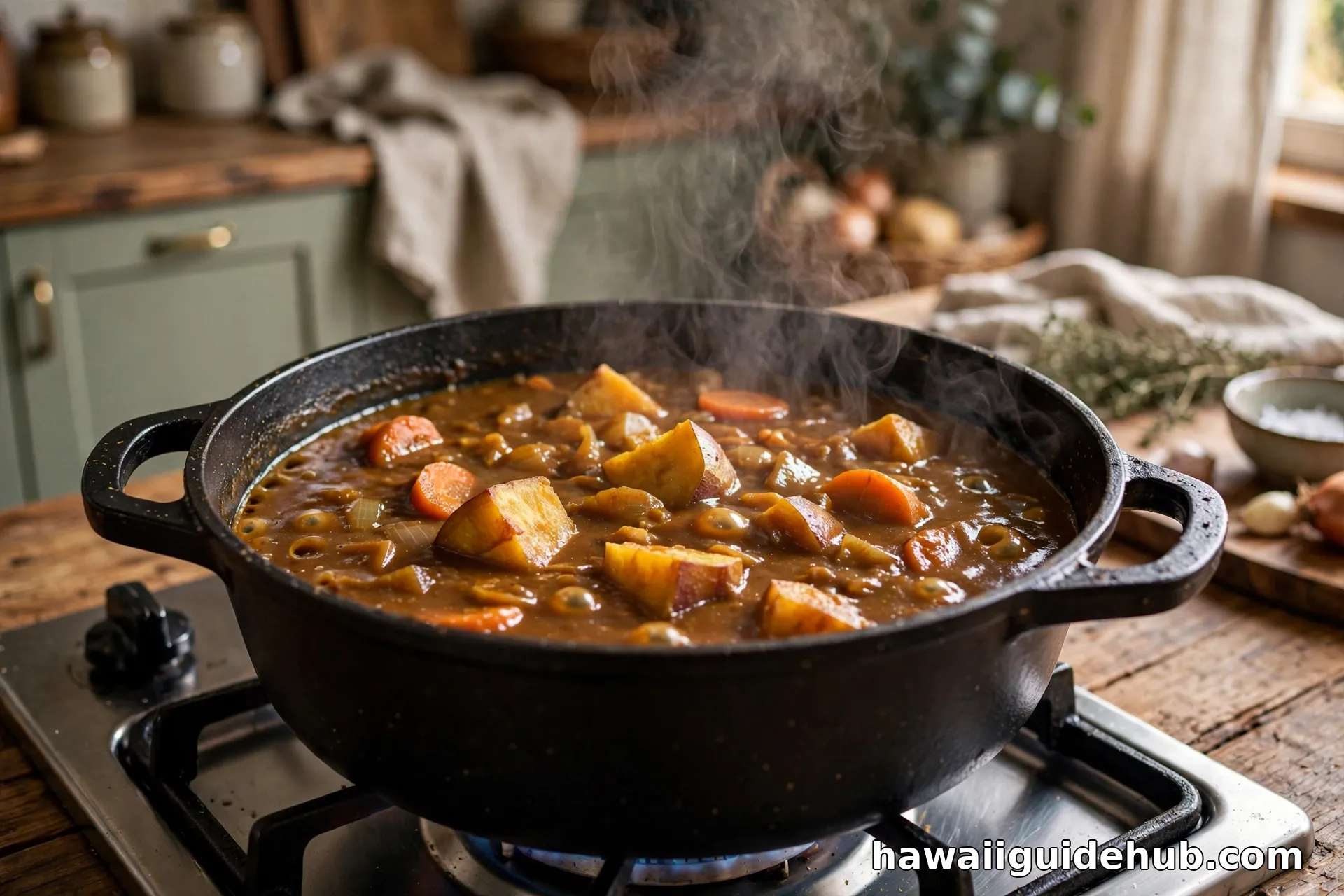
- Simmer. Return the meat to the pot, add the water or broth, and bring to a boil. Skim off any foam that rises, then reduce to low, cover, and simmer until the sweet potato is fork-tender, about 20 minutes. Test a chunk with a fork: it should slide in with no resistance. Do not use a lid if you want a slightly thicker result; either way works.
- Add the roux off the heat. Turn off the heat completely. Break the curry roux blocks into the pot and stir until they melt fully into the liquid. This is the key step: adding roux over active heat makes it clump instead of blending smoothly.
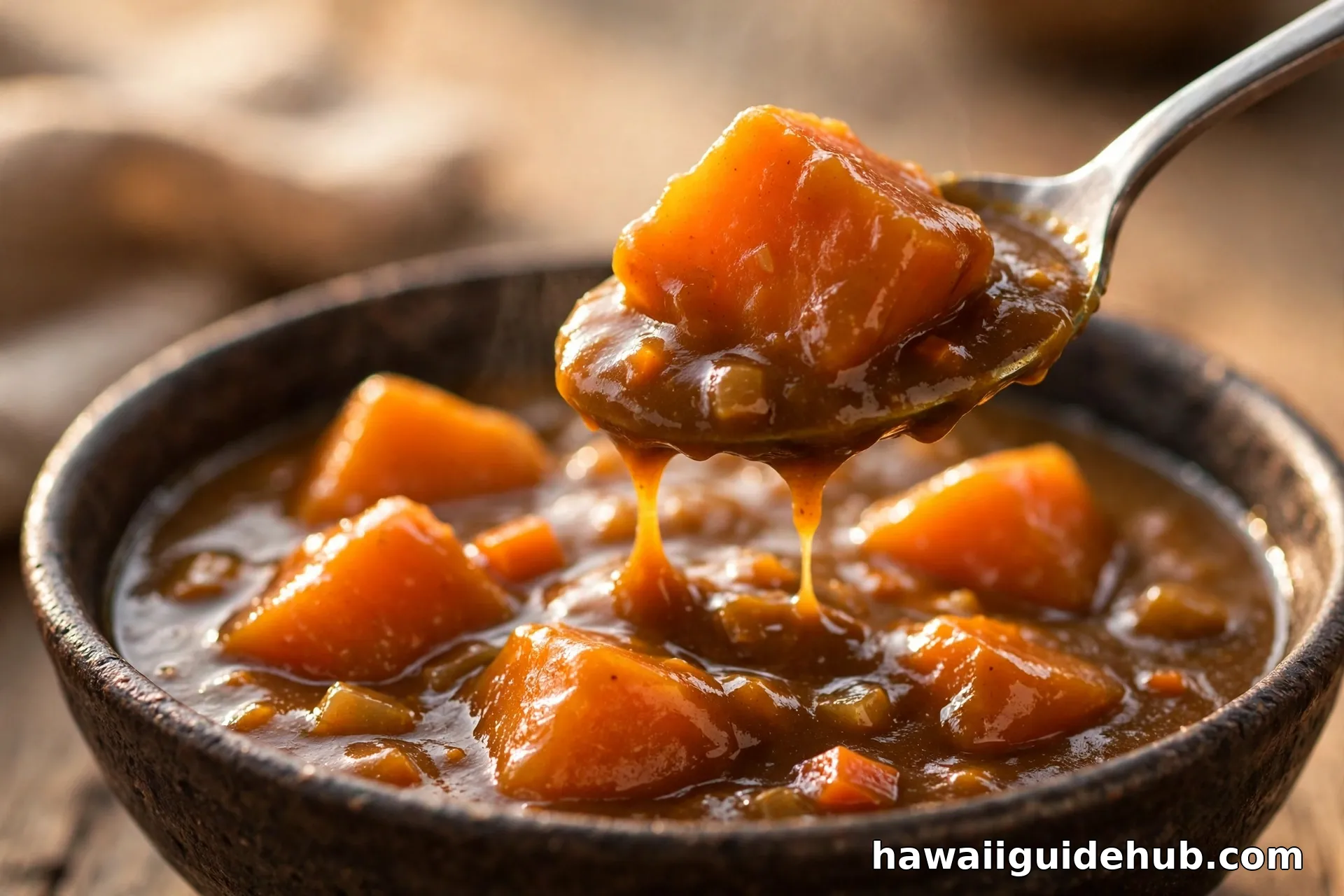
- Thicken. Return the pot to low heat and simmer gently for about 5 minutes, stirring often, until the curry thickens to a glossy, spoon-coating consistency. Stir in the honey if you like. Do not let it boil hard once the roux is in.
- Serve. Spoon hot cooked rice into bowls and ladle the curry over or alongside it. Add fukujinzuke or rakkyo on the side for the classic touch.
Recipe Tips
Always add roux off the heat. This is the single most important rule of Japanese curry. The blocks melt smoothly into hot but not boiling liquid; over active heat they seize into lumps that never fully dissolve. Turn the burner off, stir patiently for a minute or two, and only then bring it back to a gentle simmer.
Cut big, even chunks. Sweet potato cooks faster than regular potato and can dissolve if cut small. Large 1.5-inch pieces stay intact and creamy.
Second-day curry is real. Japanese home cooks swear curry tastes better the next day, and they are right: the flavors meld overnight as the sweet potato and spices get to know each other. Make a full pot on Sunday and enjoy it twice.
Adjust the thickness. Too thick? Stir in a splash of water. Too thin? Simmer a few minutes longer or add another half block of roux.
Choose your heat. Roux comes in mild, medium-hot, and hot. Mild is the classic family choice; the sweet potato keeps even the hot version balanced.
Variations
Okinawan purple sweet potato curry. The Hawaii signature. Purple chunks, same method, stunning color and a slightly earthier sweetness. It is the version to make when you want to impress.
Vegetarian. Skip the meat, use water or vegetable broth, and add mushrooms or kabocha squash for extra body. Check that your roux brand is vegetarian, since some contain beef extract.
Beef curry. Use stew beef and simmer 10 minutes longer before adding the roux.
Extra vegetables. Kabocha squash, daikon, bell peppers, and eggplant all work. Add quick-cooking vegetables in the last 10 minutes.
From scratch. If you cannot find roux blocks, make a simple roux: melt 4 tablespoons of butter, whisk in 3 tablespoons of flour, cook gently until golden, then stir in a tablespoon each of curry powder and garam masala. Whisk a ladle of hot cooking liquid into the roux to loosen it, then stir it into the pot. For more island food ideas, browse our late-night eats in Hawaii guide.
What to Serve With It
Short-grain white rice is non-negotiable: its sticky texture is the perfect vehicle for the thick sauce, and it is what makes the dish kare raisu rather than just curry. Fukujinzuke, the sweet red pickled vegetables, and rakkyo, pickled shallots, are the traditional accompaniments and cut the richness beautifully with their crunch and acidity. A simple green salad or a bowl of miso soup rounds out the meal without competing with it. For dessert, something light works best after such a hearty bowl: fresh fruit or a small scoop of ice cream. If you are exploring the islands’ food scene, our best restaurants in Oahu and Hawaii food and wine festivals guides are good next reads.
Storage and Reheating
Store leftover curry in a sealed container in the refrigerator for up to 3 days; the sweet potato holds its texture well and the flavor deepens. It will thicken as it sits: thin it with a splash of water when reheating on the stove over low heat, stirring often so nothing sticks. Freeze for up to a month, though the sweet potato softens slightly on thawing; thaw overnight in the refrigerator before reheating for the best texture. Keep the rice separate from the curry in storage, since rice stored in the sauce turns mushy.
Video: Foolproof Japanese Curry Rice
Watch a step-by-step Japanese curry rice recipe using store-bought roux blocks.
Frequently Asked Questions
Can you use sweet potato instead of potato in Japanese curry?
Yes, and it is delicious. Sweet potato turns tender and creamy in the curry sauce and its natural sweetness complements the mild, savory roux instead of overpowering it. Cut the chunks large, about 1.5 inches, so they hold their shape through the simmer.
Which sweet potato is best for Japanese curry?
Any variety works: orange, white, or Japanese satsumaimo, the yellow-fleshed sweet potato common in Japanese cooking. In Hawaii, Okinawan purple sweet potato is the standout choice for color and earthy sweetness, and it is easy to find at local markets.
Do I need curry roux blocks?
Roux blocks are the easy, traditional route: brands like S&B Golden Curry and House Vermont Curry are sold in most mainland supermarkets and all over Hawaii, where Japanese curry is a staple. They keep for months in the pantry. You can also make roux from scratch with butter, flour, and curry powder, though the blocks give the classic flavor most people expect.
Why did my curry turn out lumpy?
You probably added the roux over active heat. Always turn the heat off first, stir the blocks until fully melted, then return to low heat to thicken.
Is Japanese curry spicy?
Not very. Japanese curry is mild and slightly sweet by design, closer to a savory stew than to a fiery Indian or Thai curry. Roux comes in mild, medium, and hot versions, so choose the heat level your family likes: mild for kids, medium-hot if you want a gentle kick.
Can I make it ahead?
Absolutely. Japanese curry famously tastes better the next day as the flavors meld: many cooks deliberately make it a day ahead. Refrigerate up to 3 days or freeze up to a month, and thin with a splash of water when reheating over low heat.
Sweet potato in Japanese curry is weeknight cooking at its best: one pot, 45 minutes, humble ingredients, and a result that tastes like it took all day. Whether you use orange sweet potatoes or go full Hawaii with Okinawan purple, the creamy chunks in that glossy, mild curry sauce will earn a permanent spot in your rotation. Make a big pot, serve it over hot rice with pickles on the side, and enjoy it twice: tonight and even better tomorrow. Happy cooking.