Poke: Hawaii’s Iconic Raw Fish Dish

Poke is Hawaii’s most famous food export and its most misunderstood. In the islands, poke is cubed raw fish, seasoned simply and sold by the pound at grocery counters, fish markets, and poke shops. It is everyday food, pupu food, beach food. What the mainland calls a poke bowl, layered over rice with a dozen toppings, is a distant cousin of the real thing. This guide covers the original.
This is the single complete guide to poke in Hawaii. It covers what the word means, the dish’s origins with Hawaiian fishermen, how traditional poke differs from modern styles, the classic varieties you will see at island counters, how to judge quality, where visitors eat it, food safety basics, and how to make it at home. If you have been searching for anything about poke, the answers are all here on this one page.
Poke at a Glance
| What it is | Cubed raw fish tossed with seasonings, served cold |
| “Poke” means | “To slice” or “cut crosswise into pieces” in Hawaiian (pronounced poh-keh) |
| Origin | Ancient Hawaii; fishermen seasoned cut-offs from the catch |
| Traditional seasonings | Sea salt, limu (seaweed), ʻinamona (roasted crushed kukui nut) |
| Later additions | Shoyu and sesame oil from Chinese and Japanese immigrants; onions from the 1700s |
| Classic fish | Ahi (yellowfin tuna); also aku, tako (octopus), salmon, and more |
| How it is sold | By the pound at grocery and fish market counters across Hawaii |
| Serving temperature | Cold, often over warm rice or on its own |
| Mainland version | Poke bowls with rice, avocado, spicy mayo, and many toppings; tasty but different |
What Poke Tastes Like
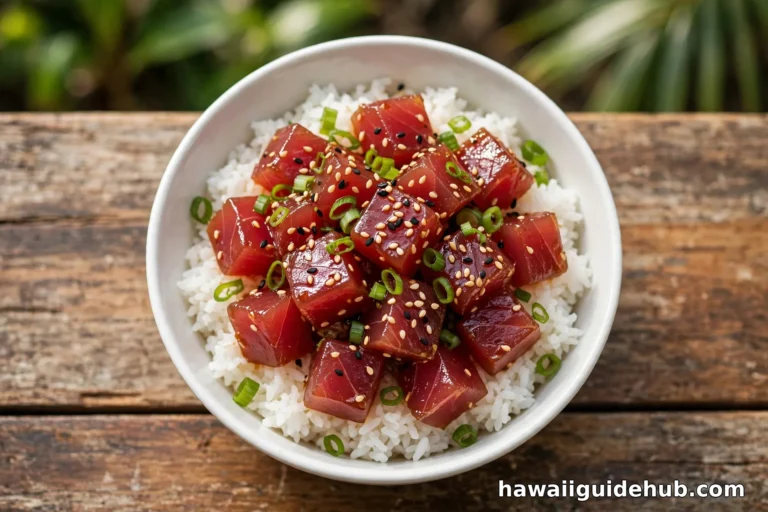
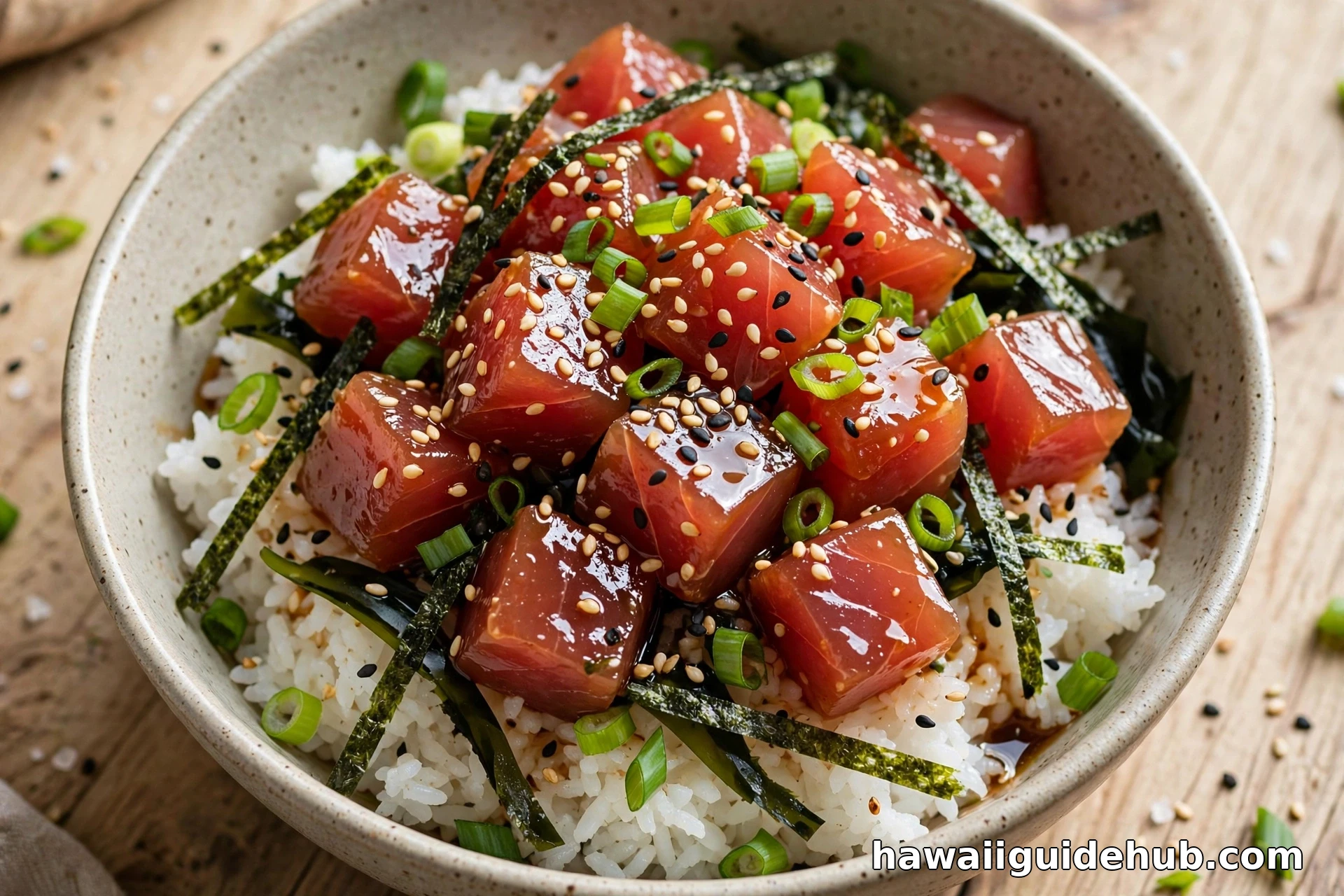
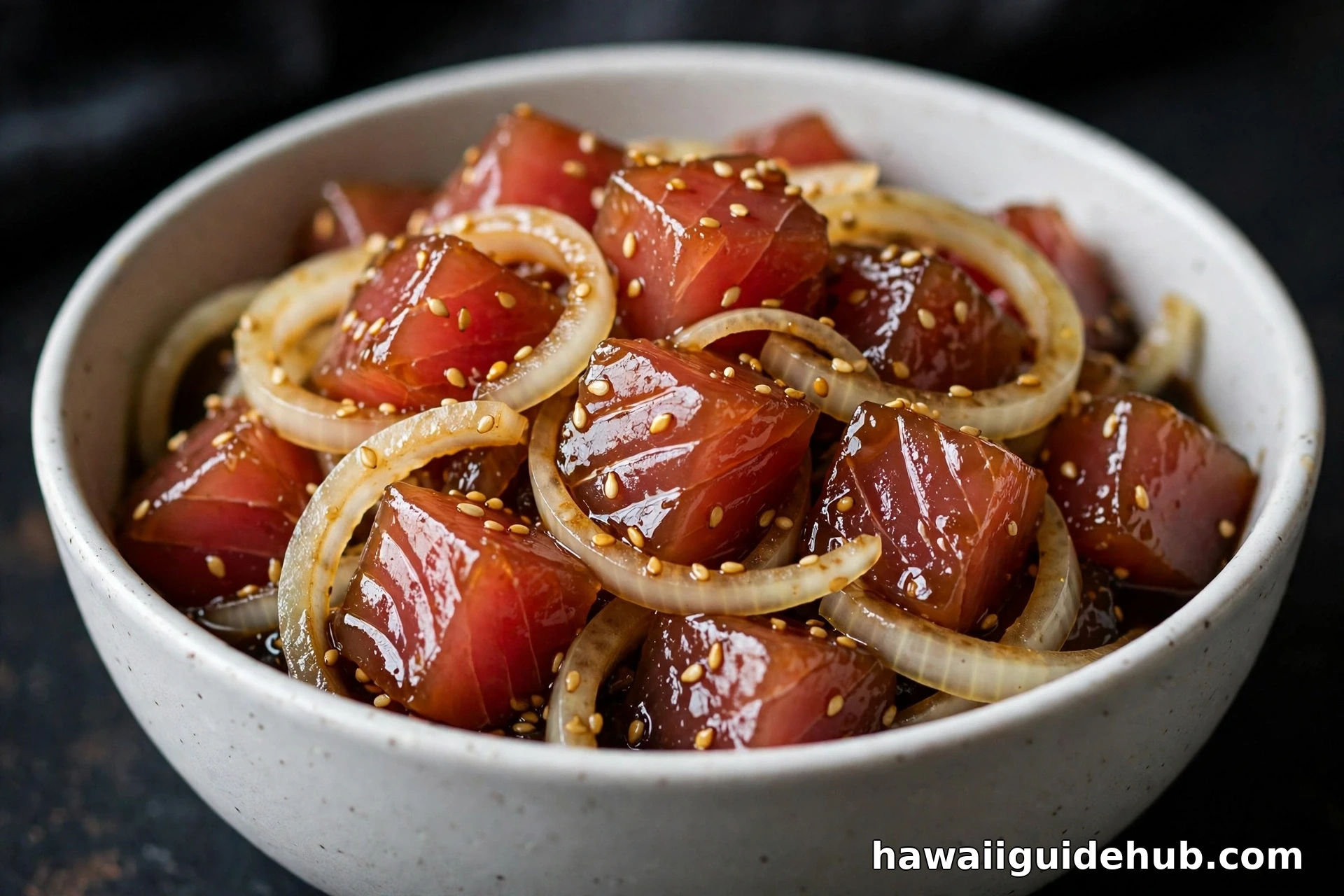
Good poke tastes first and foremost like excellent raw fish: clean, sweet, and oceanic. The seasonings are a frame, not the picture. In a classic shoyu ahi poke, you taste the tuna’s richness first, then the savory depth of soy sauce, the nuttiness of sesame oil, the crunch of sweet onion, and the briny chew of limu seaweed. Nothing is heavy. Nothing hides the fish.
Traditional limu poke is even more elemental: firm cubes of fish, mineral salt, slippery seaweed, and the earthy richness of ʻinamona. It tastes like the shoreline. Spicy ahi adds heat and creaminess for those who want it. The through line in every style is freshness. Poke has nowhere to hide poor fish, which is why the best poke in Hawaii starts at the fish auction, not the recipe.
What “Poke” Means and Where It Began
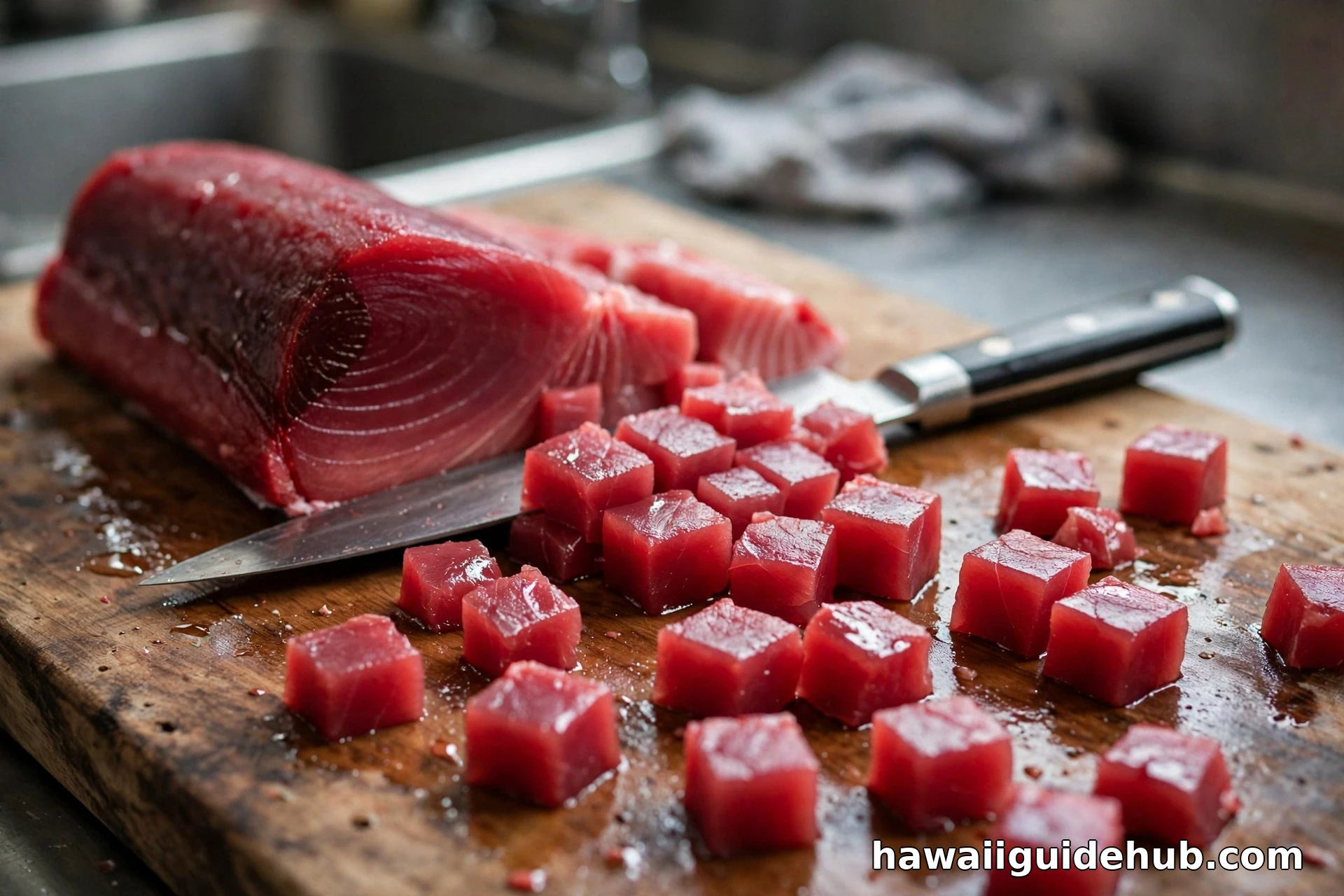
The word poke is a verb. In Hawaiian it means to slice or cut crosswise into pieces, which is exactly what fishermen did with their catch. The dish began as the cut-offs from the day’s fishing, cubed and eaten as a snack: raw reef fish massaged with sea salt, mixed with limu gathered from the shore, and tossed with ʻinamona, the roasted and crushed kukui nut that served as a rich condiment. It was often eaten with poi.
Fish carried deep cultural weight in old Hawaii. Under the kapu system, deep-sea fishing and certain prized catches were reserved for chiefs, while nearshore reef fish sustained daily life. Poke grew from the practical end of that world: using every part of the catch, seasoning it with what the islands provided, and eating it fresh.
The seasonings evolved with each wave of newcomers. When Captain Cook arrived in 1778, onion seeds came with the ships, eventually giving Hawaii the sweet onions now standard in poke. Chinese and Japanese immigrants later introduced shoyu, sesame oil, and rice vinegar, transforming poke into the umami-rich dish most people recognize today. By the 1970s and 1980s, poke counters in supermarkets and fish markets were an island institution. Then in the 2000s, the poke bowl conquered the mainland and the world, for better and worse.
Traditional Poke vs. Modern Poke: What Is in the Bowl
An expert sorts poke into two eras, and knowing which one you are eating changes what you should expect.
| Old-school poke | New-school poke | |
| Fish | Whatever was caught: reef fish, aku, ahi, heʻe (octopus) | Mostly ahi tuna and salmon, sushi-grade |
| Seasoning base | Sea salt, limu, ʻinamona | Shoyu, sesame oil, salt, chili |
| Additions | Almost none; the fish is the point | Onions, green onions, furikake, tobiko, avocado |
| Heat | None traditionally | Spicy ahi with chili and mayo is standard |
| How served | By itself, or with poi | Over rice as a bowl, or by the pound |
| Where found | Old-style counters, family gatherings | Poke shops, groceries, restaurants everywhere |
| Taste priority | Purity of the fish | Balance of fish and seasoning |
The Classic Styles You Will See at Hawaii Counters
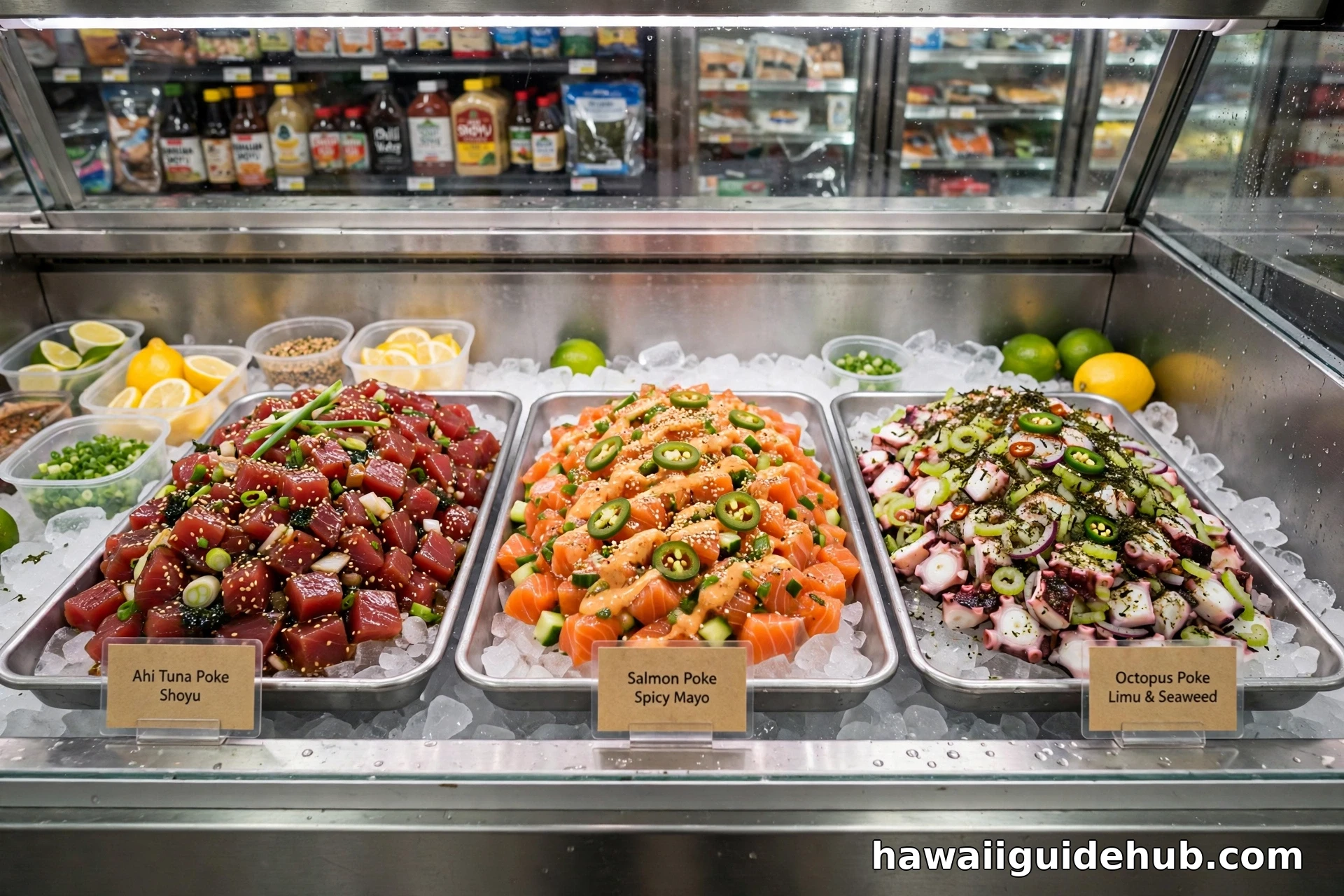
Walk up to a poke counter in Hawaii and the variety can be overwhelming. These are the foundational styles to know. Shoyu ahi is the default: cubed yellowfin tuna with soy sauce, sesame oil, onions, and salt. Limu poke goes old-school with seaweed as the star. Spicy ahi folds in chili heat and a touch of mayo. Inamona poke features the roasted kukui nut condiment for a nutty, earthy depth you will not find on the mainland.
Beyond those, counters rotate through tako (octopus) poke, salmon poke with miso or wasabi, and creative local inventions. The mark of a serious counter is variety and turnover: many styles, all fresh, selling through fast. If the case looks tired, walk to the next one.
How to Judge Good Poke
Quality poke announces itself. The fish cubes should look glossy and firm, with clean edges and vivid color, never dull, mushy, or weeping liquid. The seasoning should glisten lightly on the surface, not pool at the bottom of the container. It should smell like the ocean, fresh and clean, with no fishiness at all. Fishiness in raw fish is a flaw, not a feature.
Taste for balance. The salt should make the fish taste more like itself, not like salt. The sesame oil should be a background note. The onion should crunch. If any single seasoning dominates, the hand was heavy. Great poke tastes simple because every element is doing exactly its job.
Hawaii Poke vs. the Mainland Poke Bowl
The mainland poke bowl is a legitimate dish, but it is not Hawaii poke. The bowl format, fish over rice buried under avocado, edamame, cucumber, crispy onions, and drizzles of spicy mayo and eel sauce, was built for fast-casual restaurants and Instagram. It is delicious. It is also a salad with fish in it.
In Hawaii, poke is the main event, not a topping. It is bought by the pound, eaten with rice or alone, and judged on the fish. Visitors should try both, but do not leave the islands thinking the loaded bowl was the tradition. The tradition is a plastic tub of shoyu ahi eaten at the beach, and it needs no improvement.
Where Visitors Eat Poke in Hawaii
The great secret of Hawaii poke is that the best of it is sold in grocery stores. Supermarket fish counters across the islands, long famous with locals, offer a dozen styles by the pound at fair prices, and the turnover is so high the fish is impeccably fresh. Dedicated poke shops and fish markets are the next tier, often with house specialties worth seeking out.
Restaurants serve poke as appetizers and pupu, usually in more composed presentations. It is excellent, but the counter experience, pointing at the case and taking home a pound, is the authentic one. Buy it, grab some rice, find a beach, and eat it the local way. For the broader food landscape, see our guide to must-try local dishes in Hawaii.
Food Safety: Eating Raw Fish Wisely
Poke is raw fish, and raw fish demands respect. Buy only from reputable, high-turnover sources: established grocery counters, dedicated poke shops, and fish markets. The fish should be cold, the case should be clean, and the product should smell fresh. If anything seems off, skip it. There is always another counter.
Keep poke refrigerated and eat it the day you buy it. Do not leave it in a hot car while you sightsee. Pregnant travelers, young children, older adults, and anyone with a compromised immune system should talk to their doctor about raw fish, as official food safety guidance advises caution with raw seafood for these groups. For everyone else, fresh poke from a trusted counter is one of the safest and most rewarding ways to eat in Hawaii.
Making Poke at Home
Real poke is simple to make if you can source sushi-grade fish from a trusted fishmonger. Cut the fish into three-quarter-inch cubes and keep everything cold. Toss with shoyu, a little toasted sesame oil, thin-sliced sweet onion, chopped green onion, sea salt, and toasted sesame seeds. Add rehydrated ogo or limu if you can find it; it makes the dish taste like the islands. Mix gently, chill briefly, and serve over warm rice or on its own.
The two rules: buy the best fish you can find, and season lightly. You can always add more shoyu, but you cannot take it away. Start with less than you think you need, taste, and adjust. For more of the islands’ essential flavors, explore late-night eats in Hawaii, where poke often makes an appearance, and huli huli chicken, poke’s cooked counterpart at the gathering table.
Poke Etiquette: How Locals Buy and Eat It
Poke has its own quiet customs. At the counter, regulars ask for a taste before committing to a pound, and good counters expect it. Buying “one pound mixed” of two or three styles is the standard move for a beach picnic. Poke is pupu food as much as meal food: it appears at parties, potlucks, and pau hana (after-work) gatherings alongside beer and good conversation, eaten straight from the container with chopsticks or a fork.
Two pieces of etiquette matter. First, never double-dip at a shared container. Second, if someone offers you their homemade poke, accept it. Turning down food in Hawaii is a small social slight, and homemade poke, made from a friend’s catch or a family recipe, is offered with pride. The appropriate response is enthusiasm, not questions about the recipe.
Video: Making Ahi Poke the Hawaiian Way
Watch ahi poke made with ogo seaweed and sweet onion, Hawaii style, from cubing to serving.
Frequently Asked Questions
What does poke mean in Hawaiian?
Poke (poh-keh) is a Hawaiian verb meaning to slice or cut crosswise into pieces. It describes the preparation: fish cut into cubes. It is not pronounced “poh-kee.”
What is traditional Hawaiian poke made of?
The oldest version is cubed raw fish with sea salt, limu (seaweed), and ʻinamona (roasted crushed kukui nut). Shoyu, sesame oil, and onions arrived later through trade and immigration and are now standard.
What is the difference between poke and a poke bowl?
Poke is the seasoned raw fish itself, bought by the pound in Hawaii. A poke bowl is the mainland restaurant format: fish served over rice with many toppings. Both are good; only the first is the Hawaiian tradition.
Is poke safe to eat?
From reputable high-turnover counters, yes. Buy from established groceries, poke shops, or fish markets, keep it cold, and eat it the same day. Those who are pregnant or immunocompromised should consult a doctor about raw fish.
What is the best poke in Hawaii?
Locals judge by freshness and turnover rather than fame. High-volume grocery and fish market counters are consistently excellent. Look for glossy, firm fish, a clean-smelling case, and a crowd of local customers.
Can you make poke with salmon?
Yes. Salmon poke is common in Hawaii, often seasoned with shoyu or miso. Use sushi-grade fish from a trusted source and keep it cold throughout preparation.
Poke is Hawaii’s edible autobiography: ancient fishermen, immigrant seasonings, and an island that never stopped eating it for lunch. Skip the loaded mainland bowl at least once, buy a pound of shoyu ahi from a grocery counter, and taste the dish the way Hawaiians have eaten it for generations.