Hawaiian Tattoo History: The Story of Kakau

Kakau is Hawaii’s tattoo tradition: hand-tapped into skin with bone combs, marking genealogy, rank, and achievement for over a thousand years. Suppressed by missionaries, nearly lost, then revived by masters like Keone Nunes, kakau is now worn proudly by a new generation. This is the complete history of Hawaiian tattoo: the tools, the meanings, the revival, and the responsibility of wearing it.
This is the single complete guide to Hawaiian tattoo history and kakau. It covers the Polynesian roots, the hand-tap technique, the tools, what the patterns meant, kakau and social rank, the missionary suppression, Keone Nunes and the revival, modern kakau, getting one respectfully, and FAQs. Everything about Hawaiian tattoo lives on this one page.
What Kakau Is
Kakau (ka, to strike; kau, to place upon) is traditional Hawaiian tattooing: designs tapped into the skin with combs of bone or ivory, the pigment (kukui nut soot) driven in by a mallet. It arrived with the Polynesian voyagers and evolved into a distinctly Hawaiian art: geometric, bold, and deeply meaningful. Every mark told something: who you were, where you came from, what you’d done. The skin was the biography.
The Hand-Tap Technique
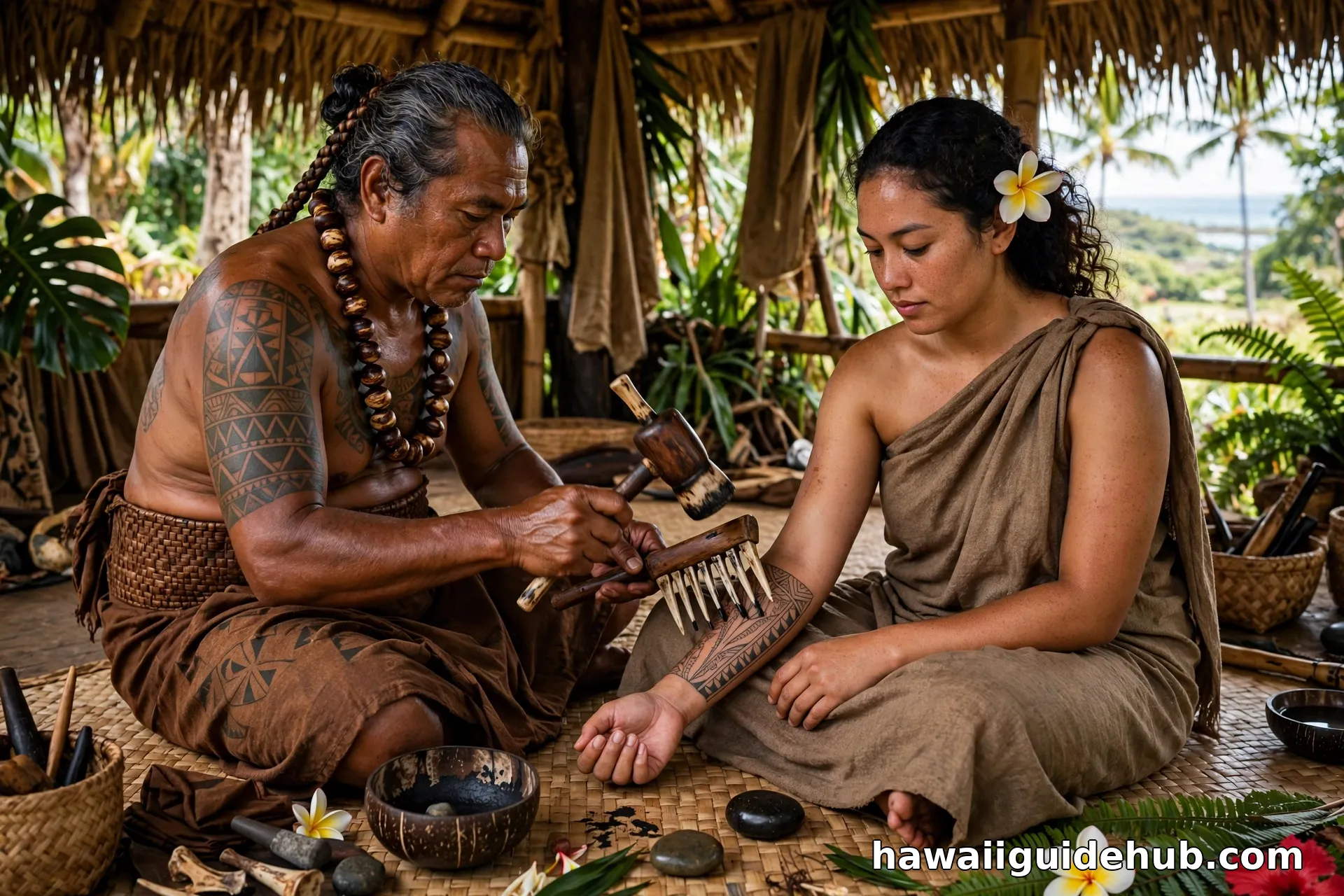
Kakau uhi is hand-tapped, not machined: the artist holds a bone comb dipped in pigment and strikes it with a mallet, driving the ink in line by line. It’s slower and more painful than modern tattooing, and deliberately so: the endurance is part of the meaning. The tapping sound, the rhythm, the ceremony around it: the process is as important as the result. Traditional practitioners maintain the full protocol: prayer, preparation, and respect.
What the Patterns Meant
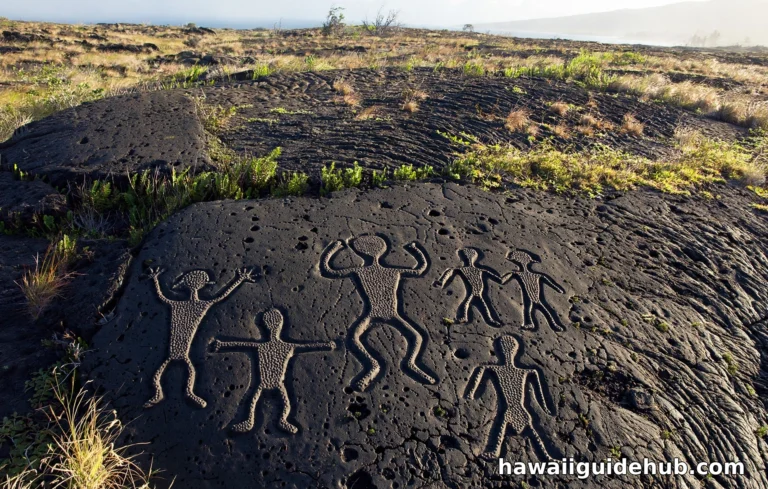
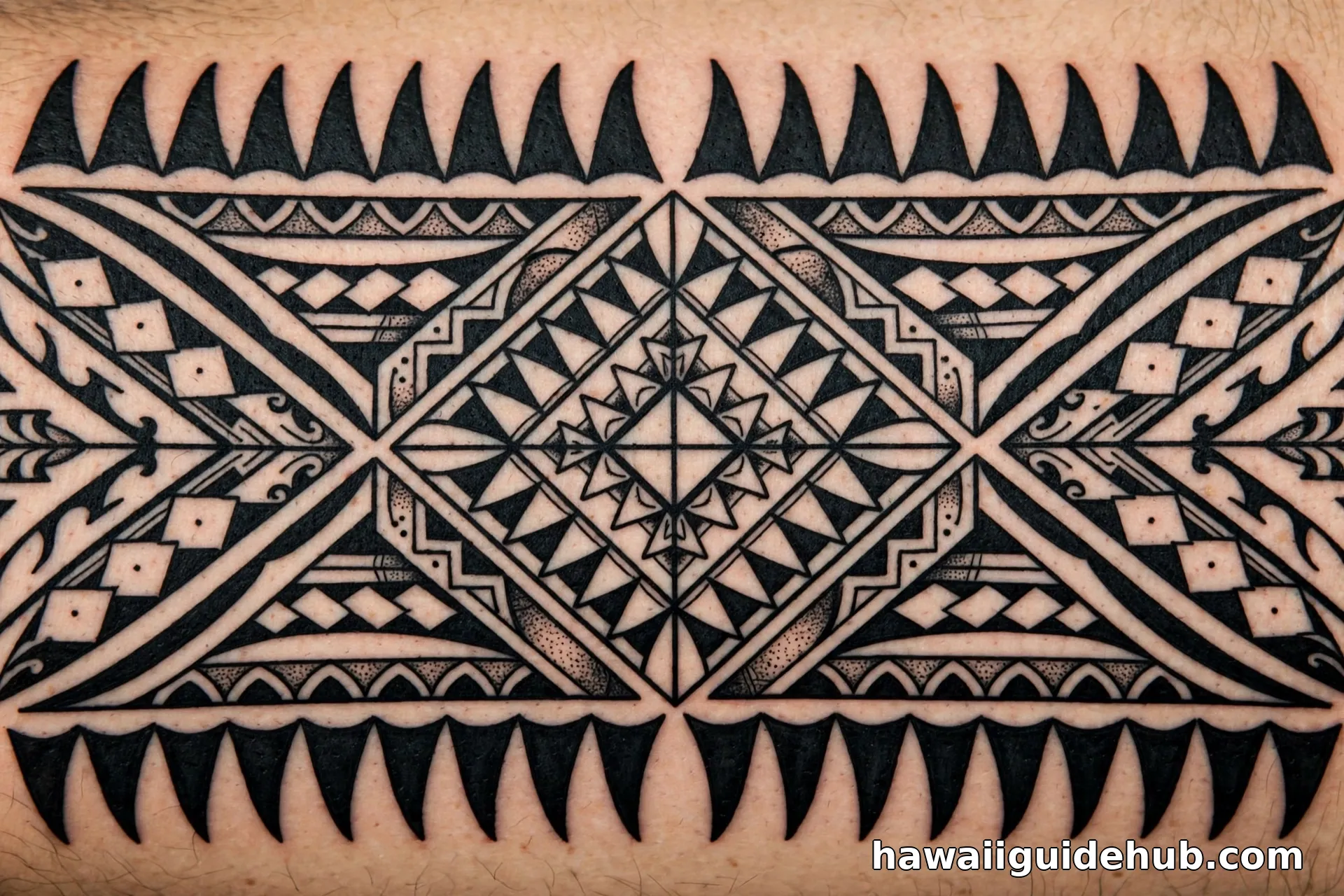
Kakau patterns are a language: triangles for shark teeth (protection), waves for the ocean, the ala niho and ala ma’i leg bands recording genealogy and homeland. Placement mattered: hands, face, and spine carried spiritual weight. A warrior’s marks recorded feats; a chief’s marked rank; everyone’s marked belonging. The designs weren’t chosen from a wall: they were earned, inherited, and bestowed. The tattooist was often a kahuna: a priest of the art.
Kakau and Social Rank
In old Hawaii, kakau marked the social order: the ali’i wore the most elaborate work, commoners simpler marks, and certain designs were kapu to rank. Facial tattoos proclaimed chiefly status unmistakably. The markings were public record: anyone could read your standing from your skin. This wasn’t vanity but order: the tattoos made the social world legible. To wear kakau was to wear your place in the universe.
The Suppression
The missionaries saw kakau as pagan and suppressed it: by the late 19th century, traditional tattooing had nearly vanished from Hawaii. The knowledge went underground or died with its keepers. For generations, Hawaiians wore their history invisibly: the skin went blank, but the memory persisted. The suppression was part of the broader cultural assault; the survival, part of the broader resistance.
Keone Nunes: The Revival
Keone Nunes brought kakau back: apprenticing with elders in Samoa and Tahiti (where the knowledge survived), he relearned the hand-tap technique and the cultural protocols, then taught them in Hawaii. His work was more than tattooing: it was cultural restoration, one person at a time. His passing in 2024 was a great loss, but his students carry the art: the revival he started is now a movement.
Kakau Then vs Now
| Aspect | Traditional kakau | Modern Hawaiian tattoo |
| Tools | Bone combs, mallet, hand-tap | Often machine; some hand-tap |
| Designs | Earned; genealogy and rank | Chosen; heritage and identity |
| Practitioner | Kahuna; ritual expert | Artist; cultural protocols kept |
| Meaning | Social record; spiritual protection | Identity; ancestral connection |
Getting Kakau Respectfully
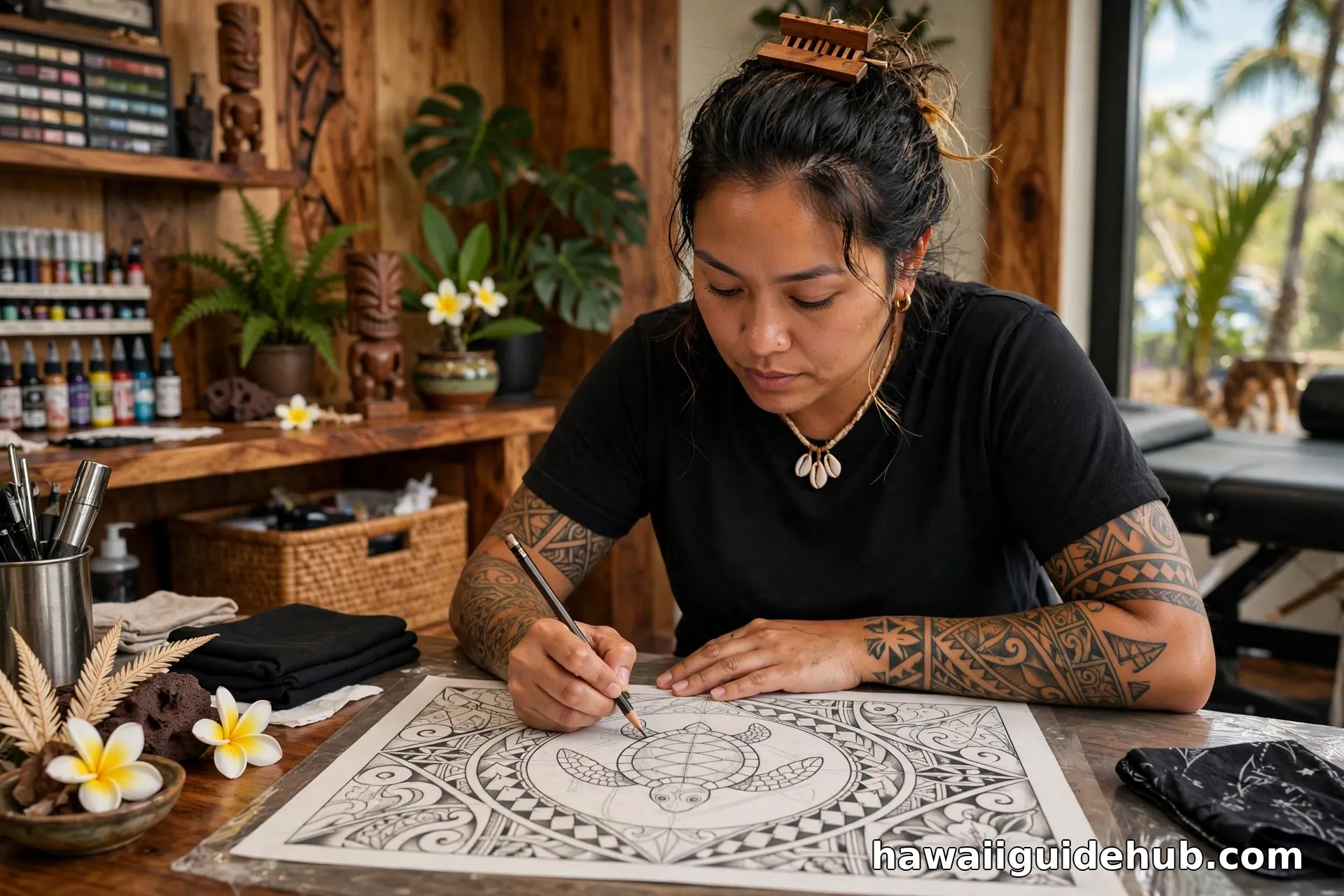
Thinking of getting Hawaiian-style tattoo work? Do it right: research the meanings, choose a practitioner who knows the culture (ideally Native Hawaiian), and understand that traditional kakau designs carry genealogy: they’re not clip art. Many artists will design work inspired by the tradition rather than copying sacred patterns. Ask, listen, and respect the protocols: the art comes with responsibility. A tattoo done right is a relationship, not a souvenir.
The Tools: Bone, Pigment, Mallet
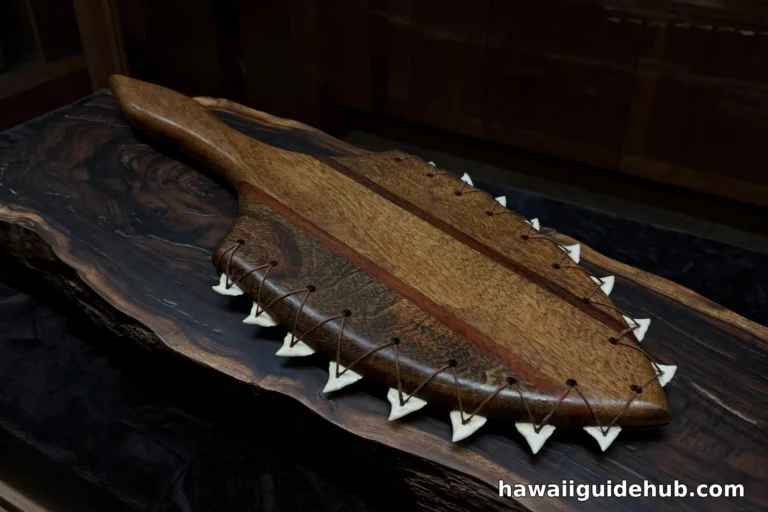
The traditional kit is simple and sacred: combs carved from bird bone or ivory, lashed to wooden handles; a wooden mallet to strike them; pigment from burned kukui nuts mixed with water. Each tool is made with prayer; each is cared for like a living thing. Modern traditionalists use the same materials: the bone, the soot, the wood. The tools connect the artist to every artist before: same materials, same rhythm, same purpose.
The Ceremony: More Than Skin
Traditional kakau is ceremony: prayer opens the session, the family may attend, chants accompany the tapping, and ‘awa may close it. The pain is offered, not merely endured: it’s part of the transformation the tattoo marks. The artist reads the person as they work: the designs emerge from conversation, genealogy, and spiritual guidance. A kakau session is closer to a rite of passage than an appointment: you enter one person and leave another.
Kakau and Hula: The Dancer’s Marks
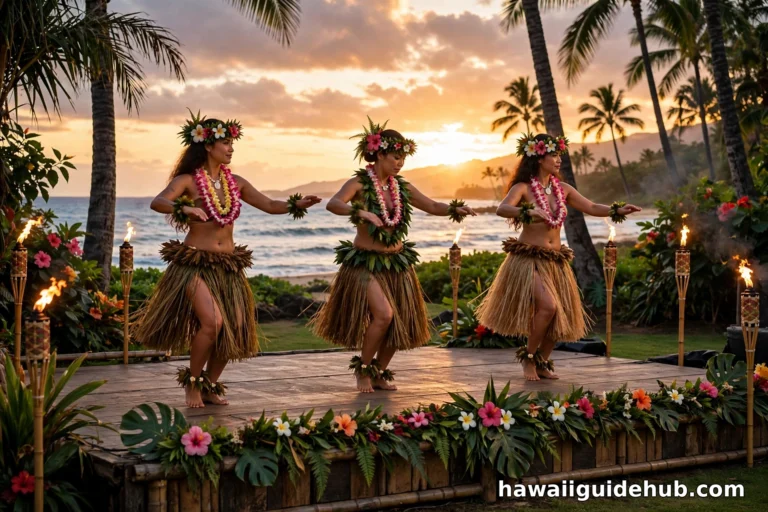
Hula dancers traditionally wore kakau: the marks moved with the dance, telling stories in motion. Certain dances required certain marks; the tattooed dancer embodied the story fully. The revival has brought this back: contemporary halau members wear traditional work, dancing their genealogy. The combination is powerful: moving art on moving bodies, history in motion.
Women’s Kakau
Women wore kakau too: the ala ma’i leg bands marked genealogy and womanhood, applied at life transitions. Women’s designs recorded family lines and homelands with the same precision as men’s. The revival honors this: women are prominent among both recipients and practitioners. The tradition was never men’s alone; the skin never discriminated.
The Sailor Era: A Different Ink
While kakau slept, sailors got inked: Honolulu’s tattoo parlors served whalers and Navy men with anchors, hula girls, and “Aloha.” This was a different tradition: commercial, mainland-style, souvenir ink. It kept tattooing visible in Hawaii while the traditional art hid. The sailor era’s legacy is the tourist tattoo: the quick, the generic, the regrettable. Kakau’s revival is partly a response: real ink, real meaning, real roots.
Kakau in the Military
Hawaii’s service members wear kakau proudly: the marks connect them to home during deployments and to heritage in uniform. Military kakau often blends traditional patterns with service symbols: a modern evolution of the warrior’s marks. The tradition’s warrior roots make this natural: the old fighters wore their feats; today’s wear their own. The skin still records service.
The Next Generation
The revival’s future is bright: young practitioners train in both technique and protocol, learning the culture alongside the craft. They teach, they innovate respectfully, and they guard the sacred: not everything is for everyone, and they say so. The next generation understands what the missionaries didn’t: kakau isn’t decoration, it’s identity. And identity, once reclaimed, isn’t given up.
Reading Old Kakau: What Survives
What do we know of pre-contact kakau? Early European drawings, missionary descriptions, a few preserved skin samples, and the living traditions of Samoa and Tahiti, Hawaii’s cousins. The revivalists pieced it together: studying the old images, learning from Pacific relatives, and listening to the few elders who remembered. The reconstruction is careful and honest: where knowledge is certain, it’s practiced; where it’s guessed, it’s labeled. The tradition is rebuilt on evidence, not fantasy.
Kakau and Identity Politics
Kakau is political: wearing traditional marks asserts Hawaiian identity in a colonized land. The revival coincided with the sovereignty movement; the tattooed body became a statement. Some debates are heated: who can wear what, who can practice, what counts as authentic. The practitioners navigate this with care: the protocols exist precisely to handle these questions. The ink is never just ink: it’s a position.
The Global Spread
Kakau has traveled: practitioners work worldwide, and Hawaiian designs appear on skin across the globe. The diaspora carries it: Hawaiians abroad wear their heritage visibly. But the spread raises questions: when does appreciation become appropriation? The traditionalists’ answer is protocol: learn the culture, respect the meanings, don’t take what isn’t offered. The art can travel; the respect must travel with it.
Aftercare: The Old Ways
Traditional aftercare used what the land provided: coconut oil, ti leaves, salt water, and time. The healing was part of the ritual: the body incorporating the marks, the marks becoming the body. Modern practitioners blend old and new: traditional respect with modern hygiene. The principle remains: care for the work, and the work will care for you. A kakau is a lifelong relationship: it starts with aftercare and never ends.
Watch: Keone Nunes: Ancestral Ink
Hawaiian Tattoo FAQs
What is kakau?
Traditional Hawaiian tattooing: hand-tapped designs recording genealogy, rank, and achievement. Ka (to strike) + kau (to place upon).
How is traditional kakau done?
With bone combs and a mallet: the artist taps pigment (kukui nut soot) into the skin line by line, in a ceremonial process.
What do Hawaiian tattoo patterns mean?
They’re a language: shark-tooth triangles for protection, waves for the ocean, leg bands for genealogy and homeland. Designs were earned, not chosen.
Who revived kakau?
Keone Nunes: he relearned the hand-tap art from Samoan and Tahitian elders and restored it in Hawaii. His students continue the work after his 2024 passing.
Can visitors get Hawaiian tattoos?
Yes, respectfully: choose a knowledgeable practitioner, learn the meanings, and don’t copy sacred genealogical designs. Inspired-by work honors the tradition without appropriating it.
Skin That Remembers
Kakau is Hawaii’s most personal art: history you wear, identity you carry, ancestors you embody. The revival proves what Hawaiians have always known: culture lives in the body, not just the books. The bone comb taps, the pigment sets, and the story continues: on skin, in ink, forever. To go deeper into the living culture behind the art, read our guide to cultural experiences in Hawaii and how Native Hawaiian spirituality shapes modern practice. Think about what Keone Nunes accomplished: a tradition the missionaries killed, brought back tap by tap, person by person. He didn’t just revive a technique; he restored a way of being Hawaiian in one’s own skin. Every person he tattooed became a carrier: walking proof that the culture survived. That’s the deepest meaning of kakau: it’s not about the past, it’s about the future. The marks say: we are still here, we remember who we are, and we will not be erased again. If you wear kakau, or hope to, understand the weight: you’re not decorating yourself, you’re joining a lineage. Treat it with the gravity it deserves. Learn the meanings. Honor the protocols. Respect the practitioners. And wear it proudly: the ancestors are watching, and they’re pleased. The skin remembers. Now, thanks to the revival, it always will. One last thought for the visitor: you don’t need kakau to honor kakau. You can honor it by learning its story, respecting its practitioners, and understanding what the marks mean to the people who wear them. Don’t ask strangers to explain their tattoos; don’t photograph them without permission; don’t treat sacred marks as exotic decoration. The respectful visitor’s role is witness, not consumer. And if the art calls to you deeply, approach it properly: with study, humility, and time. The bone comb is patient. The tradition has waited centuries; it can wait until you’re ready. When you are, it will be there: tap, pigment, and prayer, ready to write your story in the oldest ink of the Pacific. Mahalo nui for reading this history of kakau, Hawaii’s art of memory made visible on living skin. E ho’omau: perpetuate the art, honor the ancestors, respect the ink, and carry the story forward with pride and humility, from the very first tap of the bone comb to the very last line of sacred ink, now and for all the generations to come, world without end, amen and aloha nui loa indeed, forevermore and ever and evermore, truly and sincerely and with all our hearts, now and always and forevermore, world without end, amen and aloha nui loa indeed, forevermore and ever and evermore, truly and sincerely so. For more island culture, see our volcanoes guide and Kauai guide.