Luau in Hilo, Hawaii: Your Complete Guide to the East Side Options

Finding a luau in Hilo, Hawaii requires an honest conversation first: the east side of the Big Island has far fewer commercial luaus than Kona and the Kohala Coast. Hilo’s hotels host occasional luau nights, a cultural center runs an ahaʻaina dinner show, and the town’s biggest cultural event is not a luau at all but the Merrie Monarch hula festival. This guide tells you exactly what exists in Hilo, what it costs, when the Kona luaus are worth the drive, and how to choose.
This page covers the definition and origin of the luau, your actual Hilo options with prices, the Merrie Monarch Festival, what a luau evening includes, what to wear, etiquette, and FAQs. Everything about luaus in Hilo is on this one page.
The Short Answer
Hilo has no nightly big-stage commercial luau like the ones in Kona. Your east side options are hotel luau nights (seasonal), the Ahaʻaina luau dinner show at a Hilo cultural center, and annual events like the Rotary’s Hilo Huli Luau. Most visitors staying in Hilo who want the full luau experience day trip to Kona, where several major luaus run multiple nights a week at roughly $150 to $230 per person. If your trip falls in April, the Merrie Monarch Festival in Hilo is the deeper cultural experience anyway.
What a Luau Actually Is
The word lūʻau originally named the young taro leaves cooked in coconut milk, and by extension the feast where they were served. The Hawaiian feast tradition was transformed in 1819 when King Kamehameha II ended the ʻai kapu, the religious eating restrictions that had kept men and women from dining together. The first modern luau celebrated that liberation: men and women eating together openly. Today’s commercial luaus are dinner theater built on that foundation: a Hawaiian buffet, hula and Polynesian dance, music, and usually a fire knife finale. Knowing the history makes the evening richer than just a show.
Your Hilo Luau Options, Compared
| Option | What it is | When | Typical price | Best for |
| Cultural center ahaʻaina, Hilo | Dinner show with cultural demonstrations | Select evenings | ~$100-150 | Visitors who want culture over spectacle |
| Hotel luau nights, Hilo | Seasonal luau at Hilo hotels | Seasonal, check ahead | ~$100-180 | Staying in Hilo, minimal driving |
| Hilo Huli Luau | Annual Rotary fundraiser celebration | Once yearly | Ticketed fundraiser | Community atmosphere, supporting local nonprofits |
| Merrie Monarch week | World’s premier hula competition and festival | April | Competition tickets sell out; fairs are free | Hula lovers; the deepest cultural week in Hawaii |
| Kona luaus (day trip) | Full-scale commercial luaus | Multiple nights weekly | ~$150-230 per current listings | The classic big luau night |
Option 1: The Cultural Center Ahaʻaina
The Ahaʻaina luau dinner show in Hilo is the east side’s most consistent offering. Ahaʻaina means a gathering for a meal, and these shows lean into the cultural side: demonstrations, storytelling, taro planting, and a buffet dinner before the performance. Expect a smaller, more intimate evening than the Kona spectaculars, with more emphasis on Hawaiian heritage and less on fire knives. Prices run roughly $100 to $150 per person. Book ahead: small shows sell out, and schedules vary by season.
Option 2: Hotel Luau Nights in Hilo
Hilo’s hotels, including the Grand Naniloa, have hosted luau nights on seasonal schedules. These are convenient if you are staying in town: no driving across the island after dark. The trade-off is scale: hotel luaus are smaller productions, and schedules can be irregular outside peak season. Always confirm the current schedule directly with the hotel before planning your evening around it. Prices typically run $100 to $180 per person including dinner.
Option 3: The Hilo Huli Luau
The Rotary Club of South Hilo runs the annual Hilo Huli Luau, a community fundraiser supporting east Hawaii nonprofits. This is a different animal from a commercial luau: a local celebration with food, entertainment, and community spirit, where your ticket supports the town. If your visit coincides with it, go: you will experience a luau the way locals do, not the way tourists do. Check the Rotary Club of South Hilo’s announcements for the year’s date.
Option 4: Merrie Monarch Week (April)
If you are in Hilo in April, skip the luau search entirely. The Merrie Monarch Festival is the world’s most prestigious hula competition, held annually in Hilo, and the whole town becomes a celebration of Hawaiian culture: hula, music, craft fairs, and parades. Competition tickets at the Edith Kanakaʻole Stadium are famously hard to get, but the free events around town are open to all. For a culture lover, Merrie Monarch week beats any commercial luau on any island. Book hotels months ahead: Hilo fills up.
Option 5: Day Tripping to a Kona Luau
The honest recommendation for most Hilo visitors: if you want the full big-stage luau, drive to Kona. The cross-island drive via Saddle Road takes about 90 minutes, and Kona’s luaus run multiple nights a week with the full production: imu pig unearthing, open bar tiers, and fire knife finales. Current listings price them around $150 to $230 per person. Make an evening of it: arrive early, explore Kailua-Kona, and drive back after the show, or book a tour with transport so nobody drives. See the best things to do in Kona for the rest of your west side day.
What a Luau Evening Includes
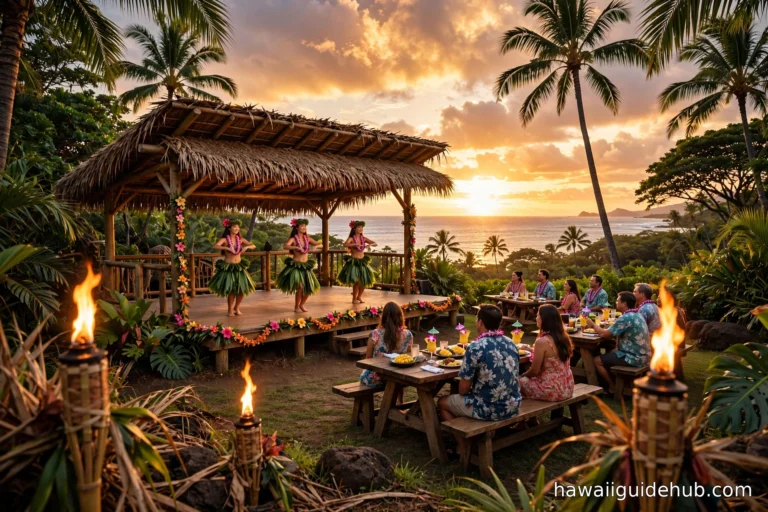
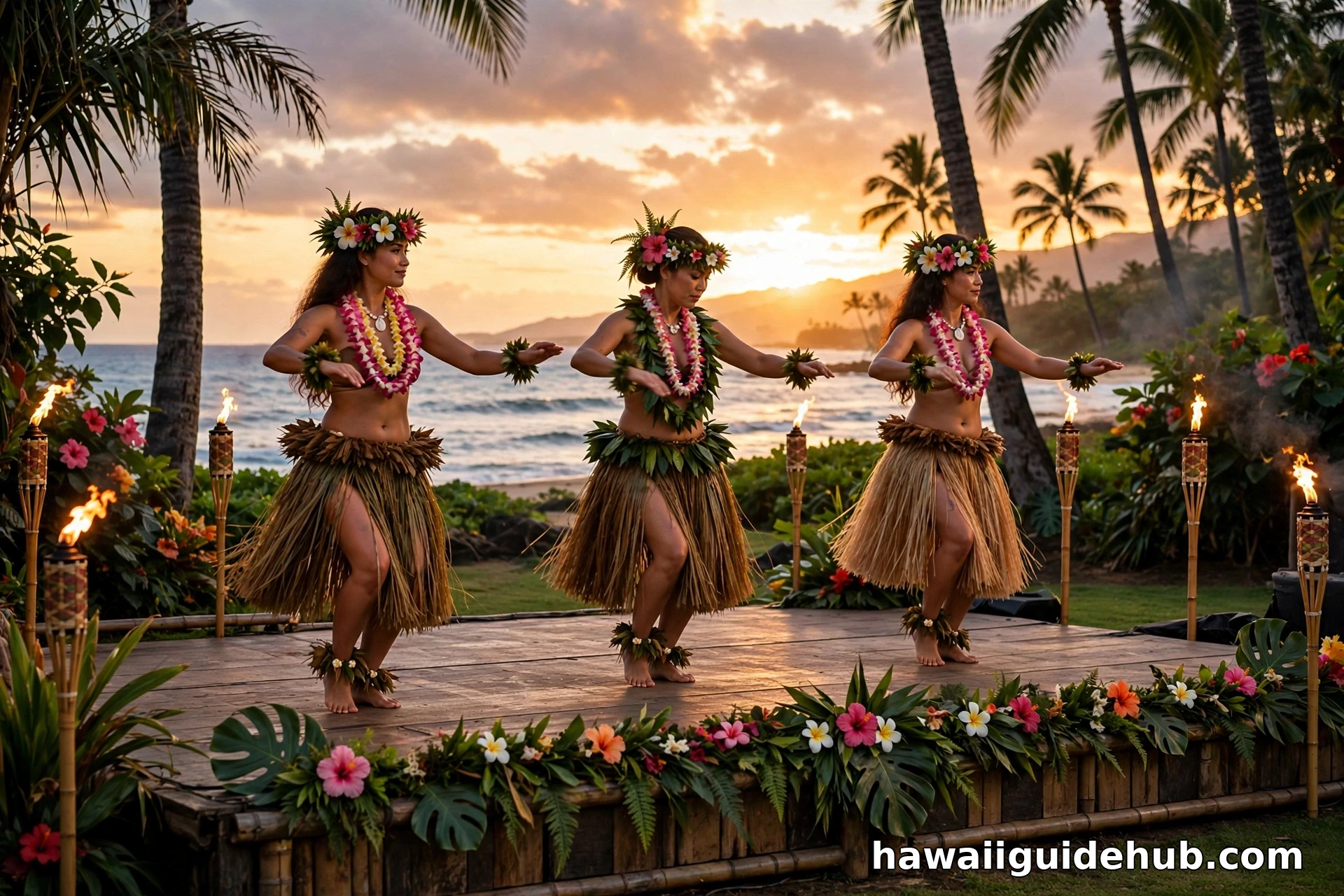
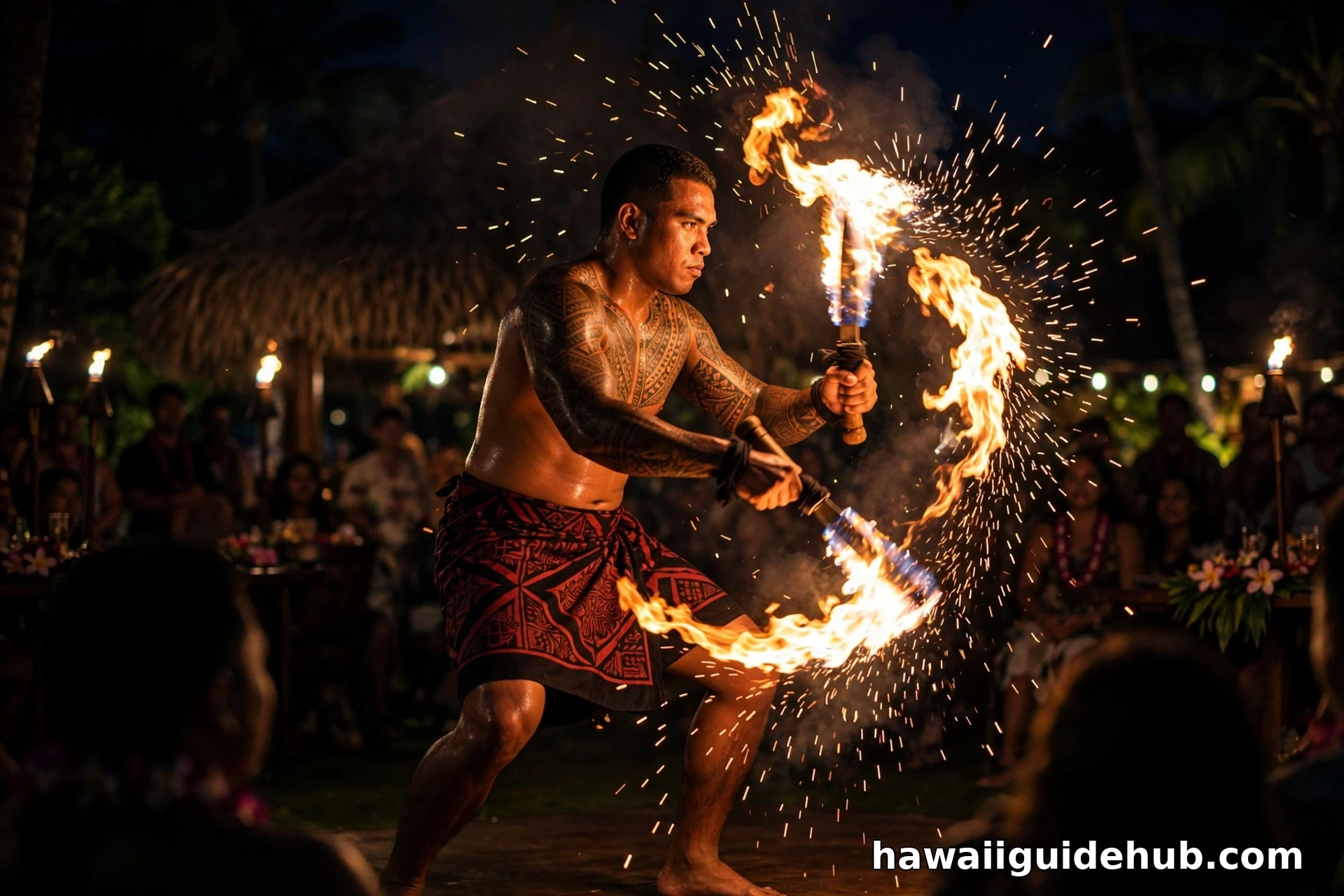
A standard commercial luau runs about three hours. The evening opens with a lei greeting and often a mai tai, followed by cultural demonstrations: lei making, coconut husking, hula lessons. The imu ceremony, the unearthing of the pig roasted in an underground oven, is the traditional centerpiece. Then the buffet: kalua pig, poi, lomi lomi salmon, poke, chicken long rice, haupia for dessert. The show follows dinner: hula kahiko (ancient) and hula ʻauana (modern), Tahitian and Samoan numbers, and the fire knife dance finale. Premium tiers add open bar and closer seating.
What to Wear and How to Behave
Dress is resort casual: an aloha shirt or sundress, comfortable shoes for grass. Bring a light layer: Hilo evenings can be cool and damp. On etiquette: the imu ceremony and hula kahiko are cultural expressions, not just entertainment, so give them the attention they deserve. Do not wander onto the stage, do not touch performers’ implements, and ask before photographing individuals up close. Tipping the performers is appreciated but not obligatory. For the full breakdown, see what to wear to a luau in Hawaii.
For the rest of your east side trip, see the best things to do on the Big Island.
Hilo’s Royal History With Feasting
Hilo is not a random backdrop for Hawaiian culture: it is one of its historic centers. The town was a favored residence of Hawaiian royalty, and its bayfront parks carry royal names. Liliʻuokalani Gardens, the Japanese garden on Hilo Bay, honors the last queen. The Merrie Monarch Festival is named for King David Kalākaua, the “Merrie Monarch” who revived hula publicly after missionary era suppression. When you attend a cultural event in Hilo, you are participating in a tradition the town has carried for generations, not a show invented for tourists. That lineage is Hilo’s quiet advantage over every resort luau on the island.
Hula in Hilo Beyond the Luau
Even outside festival season, Hilo offers hula. Local hālau (hula schools) perform at community events, shopping centers, and the Hilo Hawaiian Hotel’s lobby on select evenings. The Volcano Art Center runs Hula Kahiko in the Park at Hawaii Volcanoes National Park, free performances of ancient hula near the crater. UH Hilo’s hula hālau performs at university events. These are not dinner shows; they are the living practice of hula, often free, and often more moving than any stage production. Ask at your hotel or the visitor center what is on during your stay.
Luau Food: Dish by Dish
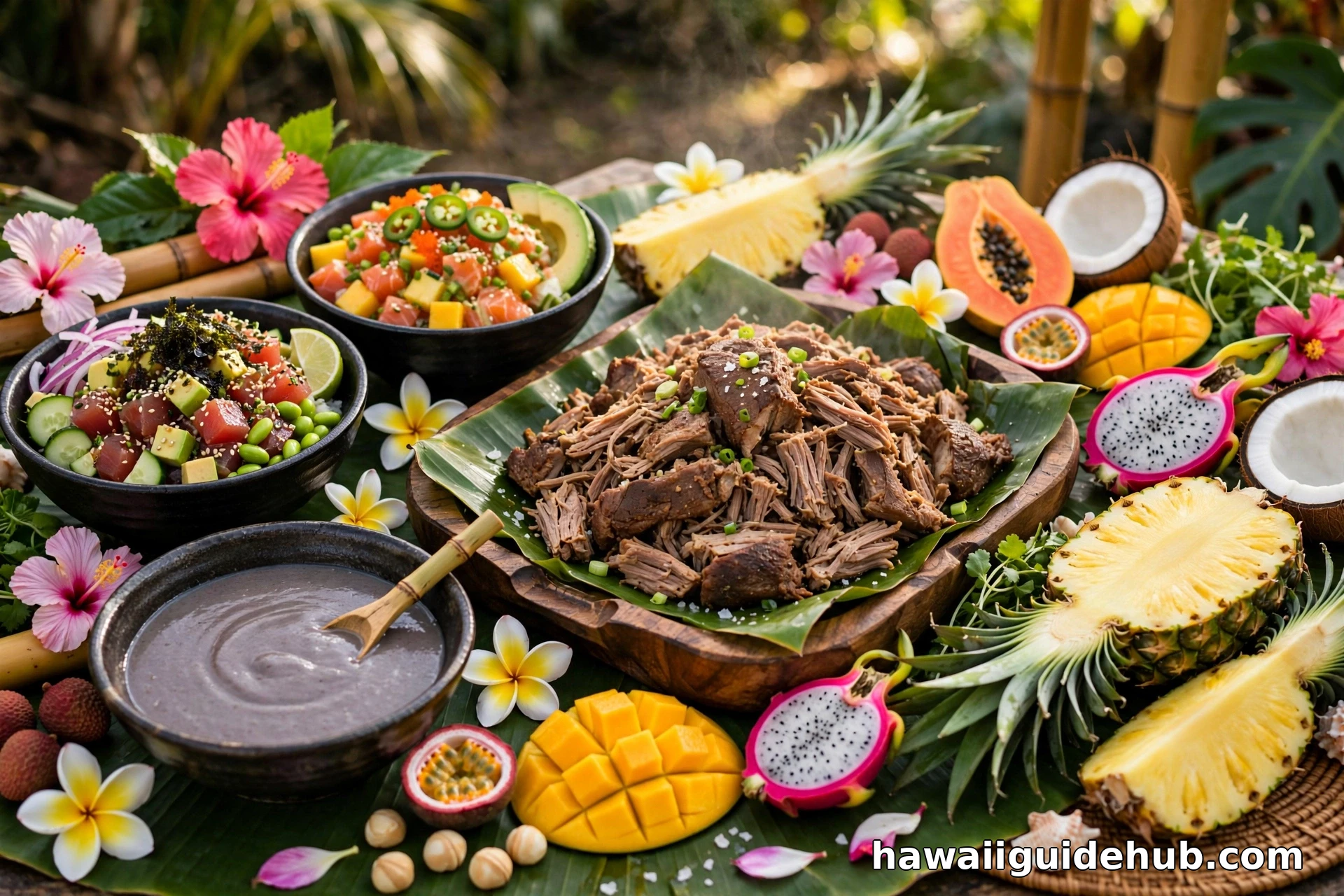
Know the buffet before you go. Kalua pig: pork slow roasted in the imu underground oven, smoky and shredded. Poi: pounded taro, the staple starch, mild and slightly tangy; try it. Lomi lomi salmon: diced salmon with tomato and onion, a celebration dish. Poke: raw fish seasoned, often ahi. Chicken long rice: clear noodle soup. Haupia: coconut pudding, the beloved dessert. Sweet potato and taro rolls round it out. Adventurous eaters: try everything. Cautious eaters: the buffet always includes familiar items like teriyaki chicken and salad. Nobody leaves hungry.
Taking Kids to a Luau
Luaus are excellent for kids: the music, dancing, and fire knives hold young attention better than most evening entertainment. Children typically pay reduced prices, and under a certain age are often free; check each operator. The evening runs about three hours, which suits school age kids; toddlers may fade before the finale. Bring a light jacket for Hilo’s evening chill and ear protection for very small children if the drums worry you. The cultural demonstrations before dinner are the best part for curious kids.
Booking Tips
Book Hilo luau nights and the cultural center ahaʻaina at least two weeks ahead in peak season; small venues sell out. For Merrie Monarch week in April, book hotels three to six months ahead and expect premium rates. Kona luaus can be booked closer in, but premium seating sells out first. Read recent reviews before booking any dinner show: quality varies year to year as casts and kitchens change. And confirm the night before: Hilo’s rain can move outdoor events, and schedules shift seasonally.
Vegetarians and Special Diets
Luau buffets are friendlier to special diets than you might expect. Poi, sweet potato, salads, fruit, and rice dishes are naturally vegetarian, and many operators prepare vegan or gluten free plates with 24 hours notice. The feast evolved from a plant-forward Hawaiian diet: taro, sweet potato, breadfruit, and coconut were the staples long before the pig. Tell the operator when booking, not when you arrive, and you will eat well.
Hilo Evenings Beyond the Luau
If no luau fits your dates, Hilo’s evenings have their own rewards. The Hilo Farmers Market runs daily with evening hours on some days. The town’s historic theaters host concerts and films. Stargazing from the Saddle Road pullouts, on the way up Mauna Kea, rivals any show: the east side’s dark skies are superb. And a sunset walk at Coconut Island or along the bayfront, with Hilo’s famous rain soft on the water, is the kind of free evening the resort zones cannot sell you.
Video: Hilo Huli Luau
Highlights from the Hilo Huli Luau, the Rotary Club of South Hilo’s annual community celebration.
Frequently Asked Questions
Are there luaus in Hilo?
Yes, but fewer than Kona: hotel luau nights, a cultural center ahaʻaina dinner show, and annual events like the Hilo Huli Luau. There is no nightly big-stage commercial luau in Hilo.
How much does a luau cost on the Big Island?
Hilo options run roughly $100 to $180 per person. Kona’s full-scale luaus run about $150 to $230 per current listings.
What is the Merrie Monarch Festival?
The world’s premier hula competition, held annually in Hilo in April, with a week of cultural events across the town.
Should I go to a luau in Hilo or Kona?
For the classic big-production luau night, Kona. For culture-first experiences and community events, Hilo, especially during Merrie Monarch week in April.
What does luau mean?
Lūʻau originally named the young taro leaves in the feast dish, and by extension the feast itself. The modern luau as a celebration feast dates to 1819.
What should I wear to a luau?
Resort casual: aloha shirt or sundress, comfortable shoes, and a light layer for Hilo’s cooler evenings.
Hilo’s luau scene is smaller than Kona’s, but it is arguably more Hawaiian: community fundraisers, cultural centers, and the Merrie Monarch Festival, the beating heart of hula itself. Choose the evening that matches your appetite, spectacle in Kona or culture in Hilo, and you will not go wrong. Either way, arrive hungry and stay for the fire knives.