Hawaii Birdwatching Guide

Hawaii is the birdwatching capital of heartbreak and wonder: more endemic birds have gone extinct here than anywhere else on earth, and the survivors are among the most spectacular, most endangered, and most urgent birds a birder can ever see. The honeycreepers, a radiation of finch-descendants into impossible forms, are the stars: scarlet ʻiʻiwi, golden ʻamakihi, the tool-beaked ʻakiapōlāʻau. To bird in Hawaii is to witness evolution’s creativity and extinction’s cruelty in the same forest.
This is the single complete Hawaii birdwatching guide. It covers the endemic bird target list, the best birding sites per island, the mosquito-malaria crisis honestly explained, guided vs. solo birding, fieldcraft for forest birds, and how birders can help. If you have been searching for anything about birdwatching in Hawaii, the answers are all here on this one page.
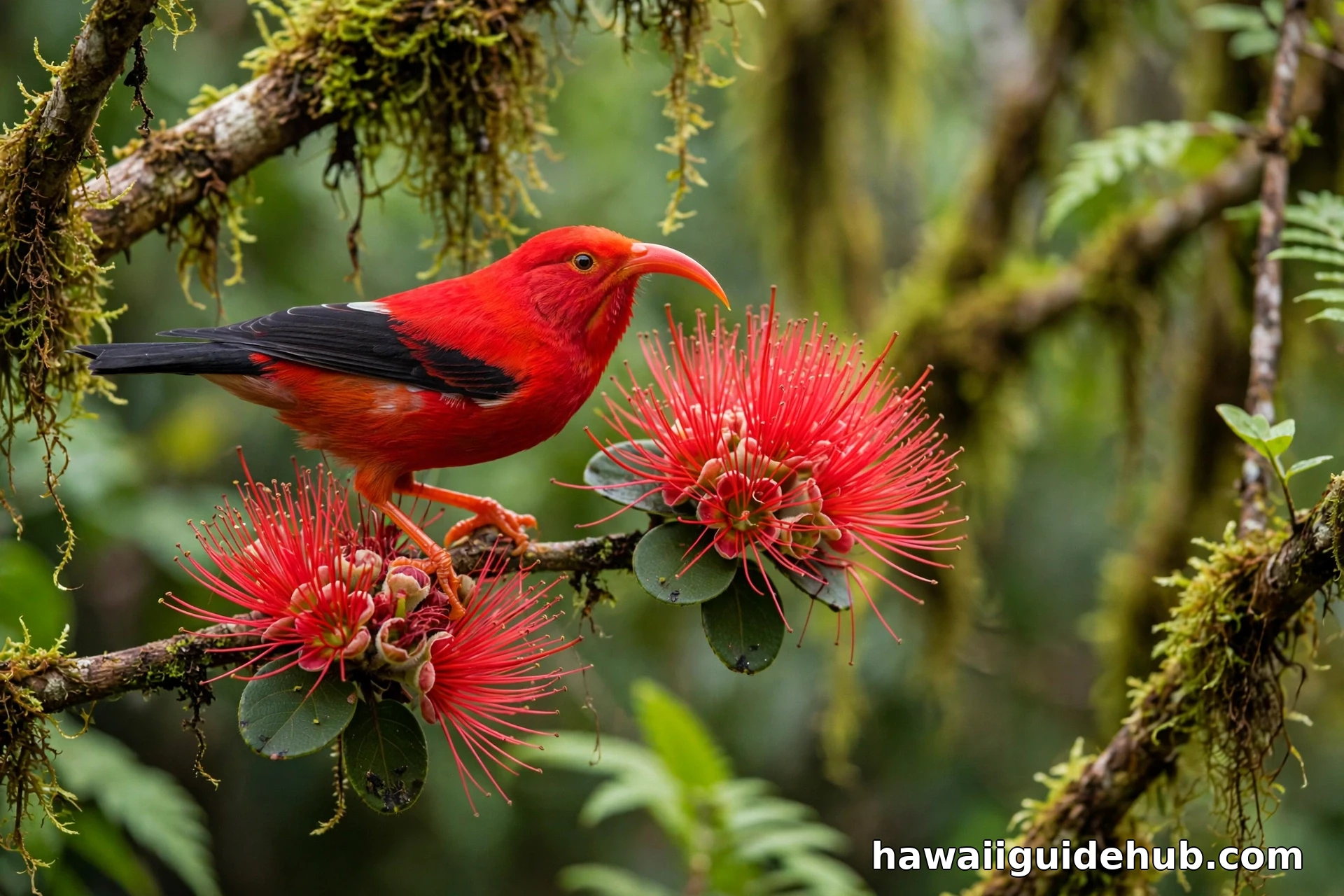
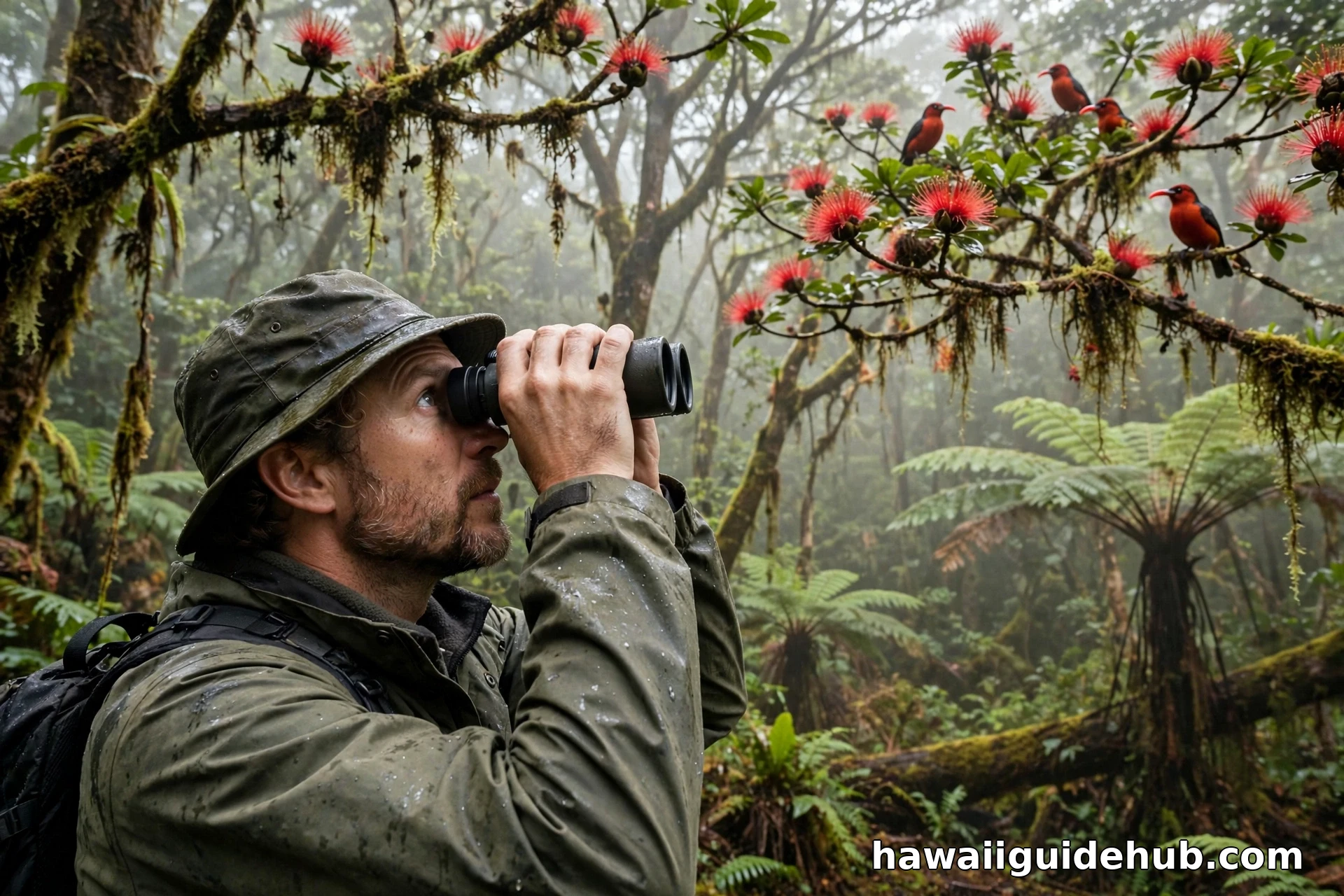
Scarlet fire in the blossoms: the ʻiʻiwi, Hawaii’s most iconic honeycreeper, perched on red ʻōhiʻa lehua flowers, its curved bill made for exactly this flower. This is the bird that defines Hawaiian birding: impossibly red, impossibly specialized, and hanging on in the high forests. See it once and you understand everything about why these birds matter.
The Honeycreeper Story: Evolution’s Masterpiece
The backstory that makes every sighting electric. A single finch ancestor reached Hawaii millions of years ago and radiated into more than 50 species: seed-crackers with massive bills, nectar-sippers with curved scimitars, insect-probers with the ʻakiapōlāʻau’s bizarre double bill, one for hammering and one for probing. No other bird family on earth diversified so wildly. Then humans arrived, and the great dying began: more than half the honeycreepers are gone. The survivors in the high forest are evolution’s masterpieces hanging by a thread, which is why birders treat every encounter as sacred.
Seabirds and Shorebirds
The other half of Hawaii birding. The islands host spectacular seabirds: wedge-tailed shearwaters, Laysan albatross on Kauaʻi, red-footed boobies, the white-tailed tropicbird streaming over the valleys. The northwestern atolls are among the world’s great seabird colonies, though most visitors see the species from the main islands’ coasts and cliffs. Shorebirds include the Pacific golden-plover, which migrates from Alaska every year, and the wandering tattler. The ocean birds are easier to see than the forest birds; the cliffs at Kīlauea Point are the classic vantage.
The Nēnē Comeback
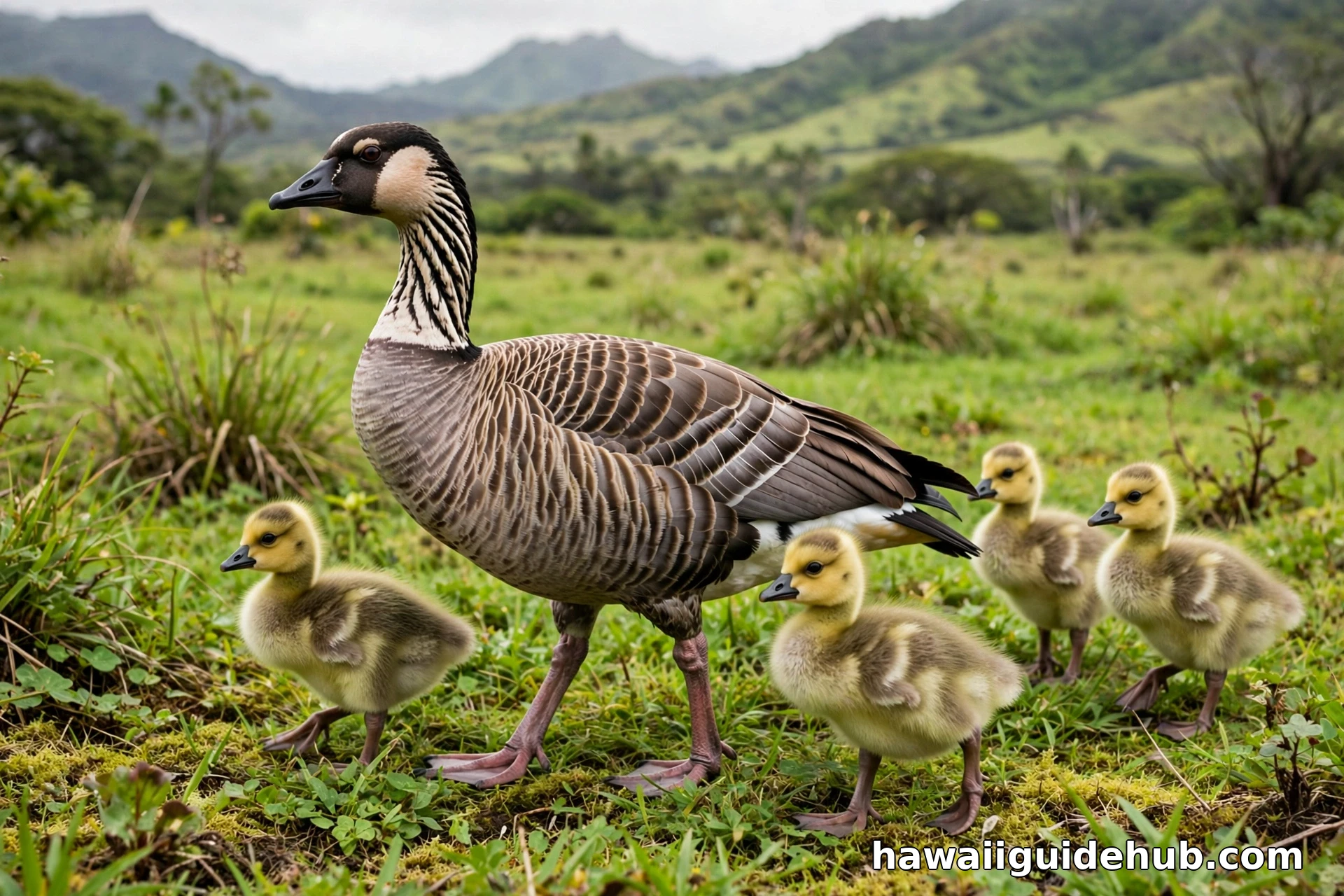
The hope story. The nēnē, the Hawaiian goose, fell to about 30 birds in the 1950s: hunted, predated, habitat lost. Captive breeding, predator control, and reintroduction brought it back to thousands, and it was downlisted from endangered to threatened. You can see nēnē now on Kauaʻi, Maui, and the Big Island, grazing like feathered lawnmowers, utterly unconcerned. The nēnē proves that extinction is not inevitable; it is a choice, and Hawaii chose to fight. Every nēnē sighting is a victory lap.
Birding Gear for Hawaii
The island kit: binoculars first, the best you can afford, because the forest is dim and the birds are small and fast. A field guide to Hawaiian birds or the Merlin app with the Hawaii pack. Rain gear, always; the bird forests are the wettest places in the state. Sturdy waterproof boots for the mud. Layers for the altitude; the high forest is cool. And a notebook: the lifers come fast in Hawaii, and you will want the record.
eBird and Citizen Science
Your sightings matter. Hawaiʻi’s bird data is thin in many areas, and every eBird checklist from the islands helps: managers use the data to track populations, target mosquito control, and prioritize habitat work. Submit complete checklists, note the effort, and be honest about the heard-only birds. The rarities should be documented carefully; the review process protects the data’s integrity. Birding in Hawaii is never just recreation; it is monitoring, and the birds need the monitors.
The Extinction Crisis: What Was Lost
The grief, honestly faced. Hawaii has lost more bird species than anywhere else: the giant flightless geese, the ibis-like apteribis, dozens of honeycreepers with bills like tools from a vanished workshop. The ʻōʻō, with its golden feathers prized by aliʻi; the mamo, gone for its cloak feathers; the poʻouli, discovered in 1973 and extinct by 2004 despite heroic rescue efforts. Knowing what was lost makes what remains infinitely precious. The birder in Hawaii walks through a museum of the living and a memorial to the gone, and the proper response is urgency.
The birder’s moment: binoculars up in the misty ʻōhiʻa forest, scarlet ʻiʻiwi glowing in the blossoms overhead. This is Hawaii birding at its best: wet, wild, and rewarded. The forest gives up its birds to the patient and the prepared; the birder who dresses for mud and learns the calls earns the sightings.
The Endemic Bird Target List
The expert’s target list: the must-see endemics, where to find them, how hard they are, and when to try. Honest difficulty ratings.
| Species | Where | Difficulty | Best season |
| ʻIʻiwi (scarlet honeycreeper) | Hakalau, Haleakalā, Kōkeʻe | Easy-moderate | Year-round; breeding spring |
| ʻApapane | High forests, all islands | Easy | Year-round |
| ʻAmakihi | Forests, all islands | Easy | Year-round |
| Nēnē (Hawaiian goose) | Haleakalā, Kauaʻi, Big Island | Easy | Year-round |
| ʻAkiapōlāʻau | Hakalau (guided) | Hard | Spring-summer |
| Kauaʻi ʻelepaio | Kōkeʻe trails | Moderate | Year-round |
The comeback family: a nēnē with four fluffy goslings in the green grassland, the state bird thriving. From about 30 birds in the 1950s to thousands today, the nēnē is conservation’s great Hawaiian success story. Every gosling is a small victory; every family a reminder that extinction is a choice, and Hawaii chose to fight.
The Best Birding Sites Per Island
The site guide, honestly ranked. Big Island: Hakalau Forest National Wildlife Refuge, the crown jewel, accessible by guided tour, with the richest remaining honeycreeper community; the Puʻu ʻŌʻō trail and Hosmer Grove on Maui are the alternatives. Maui: Hosmer Grove in Haleakalā National Park, the easiest high-elevation birding in the state. Kauaʻi: the Kōkeʻe and Alakaʻi trails, home to the island’s unique endemics. Oʻahu: the few remaining forest patches, for the Oʻahu ʻelepaio and ʻamakihi. Go high: the birds survive where the mosquitoes cannot.
The Mosquito-Malaria Crisis, Honestly
The hard truth every Hawaii birder must know: introduced mosquitoes carry avian malaria, to which native birds have no resistance, and warming temperatures are pushing mosquitoes higher into the last refuges. Species are blinking out; the Kauaʻi forest birds are in crisis. The hope: the incompatible-male mosquito technique, dropping sterile males from helicopters, is showing real promise. Birders help by supporting the refuges, donating to the conservation groups, and understanding that every sighting is precious because the birds are hanging on.
Guided vs. Solo Birding
The access reality: Hakalau, the best site, requires a guided tour; book well ahead. The national and state park trails are open to solo birders and excellent. Local guides multiply the sightings: they know the calls, the territories, the fruiting trees. For the serious birder chasing the rarities, a guide is not optional but essential. For the casual birder, the park trails with a field guide deliver the common endemics beautifully.
Fieldcraft for Forest Birds
The forest-bird technique: go early, when the birds are vocal and active. Learn the calls before you go; you will hear ten birds for every one you see. Move slowly and quietly; the ʻelepaio is curious and may approach. Watch the flowering ʻōhiʻa: where the blossoms are, the honeycreepers are. Bring binoculars, not just a camera; the forest is dim and the birds are small. And dress for mud: the best birding trails are wet.
How Birders Can Help
The birder’s contribution: visit the refuges (your fees fund conservation), donate to the forest bird recovery projects, volunteer for habitat restoration if you are local, and spread the word. Report your sightings on eBird; the data guides management. And practice impeccable field ethics: stay on trails, never play calls excessively, keep distance from nests. The birds are fighting for their existence; the least we can do is bird responsibly.
For more trip planning, the guide to Hawaiian cultural traditions adds the cultural layer, while responsible travel practices and the guide to Hawaii’s natural environments help you travel well.
Watch: Native Birds of Kōkeʻe, Kauaʻi
Frequently Asked Questions
What is the best island for birdwatching in Hawaii?
The Big Island, for Hakalau Forest’s unmatched honeycreeper diversity. Kauaʻi is second for its unique endemics.
Can you visit Hakalau Forest without a guide?
No. Hakalau requires a guided tour; book well in advance through authorized operators.
What is the easiest endemic bird to see in Hawaii?
The ʻamakihi and ʻapapane: common in high forests on all islands, often visible from park trails.
Why are Hawaii’s birds endangered?
Introduced mosquitoes carry avian malaria; warming pushes mosquitoes higher into the last refuges.
When is the best time for birding in Hawaii?
Year-round, with spring breeding season best for activity and song. Go early in the morning.
Seabirds and Shorebirds: The Other Half of Hawaii Birding
The forest gets the glory, but Hawaii’s coastlines hold the other half of the birding. Kīlauea Point National Wildlife Refuge on Kauaʻi is the premier seabird site: thousands of red-footed boobies, Laysan albatross, and great frigatebirds wheel over the cliffs and nest on the slopes, all visible from the overlook, per the refuge’s official site. Kaʻena Point on Oʻahu protects nesting albatross and wedge-tailed shearwaters behind a predator-proof fence. Offshore, the endangered Hawaiian petrel and Newell’s shearwater return to high mountain burrows at night after feeding hundreds of miles at sea. Along the shore, winter brings migrants from Alaska and Siberia: Pacific golden-plovers stake out lawns and parks, ruddy turnstones flip stones at the tideline, and wandering tattlers work the wave-washed rocks. Pelagic boat trips from Oʻahu and Kauaʻi add shearwaters, petrels, and storm-petrels to the list. The forest birds are endemic; the seabirds and shorebirds are the Pacific’s travelers, and together they make Hawaii a two-world birding destination.
What to Pack for Hawaii Birding
Hawaii birding rewards preparation. Bring binoculars, with 8×42 the sweet spot for dim forest light, plus a field guide or the Merlin app with the Hawaii pack downloaded, since forest trails often lack cell signal. A light rain jacket is non-negotiable: the high forests are wet year-round, often receiving well over 60 inches of rain annually. Wear boots or shoes that handle mud, and bring insect repellent for the lower trails, sunscreen for the exposed lookouts, and plenty of water and snacks, since refuges and trailheads have no services. Download eBird to log your sightings, and pack a power bank for your phone. One rule of etiquette matters most: use playback sparingly or not at all, since stressed endangered birds do not need extra pressure. Dress for mud, plan for rain, and the birds will do the rest.
Timing Your Birding: Hours and Seasons
The forest wakes early, and so should you. The dawn chorus peaks in the first two hours after sunrise, when honeycreepers sing and feed most actively, then quiets as the day warms; arriving at the trailhead by first light is the single biggest lever on your sightings. Midday is for seabirds and shorebirds, which ride thermals and tides all afternoon, and for the nēnē, which graze grasslands in the open. Late afternoon brings a second, softer wave of forest activity. Seasonally, Hawaii birding is year-round, but spring, roughly March through June, brings peak song as breeding begins, while winter, October through March, adds the migratory shorebirds from Alaska and Siberia. Avoid the muddiest weeks after heavy storms if you can, and always check trail conditions before heading up.
Birding in Hawaii is birding at the edge: the edge of evolution, where a single finch ancestor radiated into honeycreepers of every bill shape, and the edge of extinction, where avian malaria presses against the last refuges. Every scarlet bird in the blossoms is a small miracle, every goose on the grass a comeback story, every dawn chorus in the high forest a reason for hope. Go see them while you can, support the refuges and recovery projects that keep them alive, and carry their story home. The birds are counting on the birders.