Hawaii Volcano National Park Visitor Center: The Complete Guide

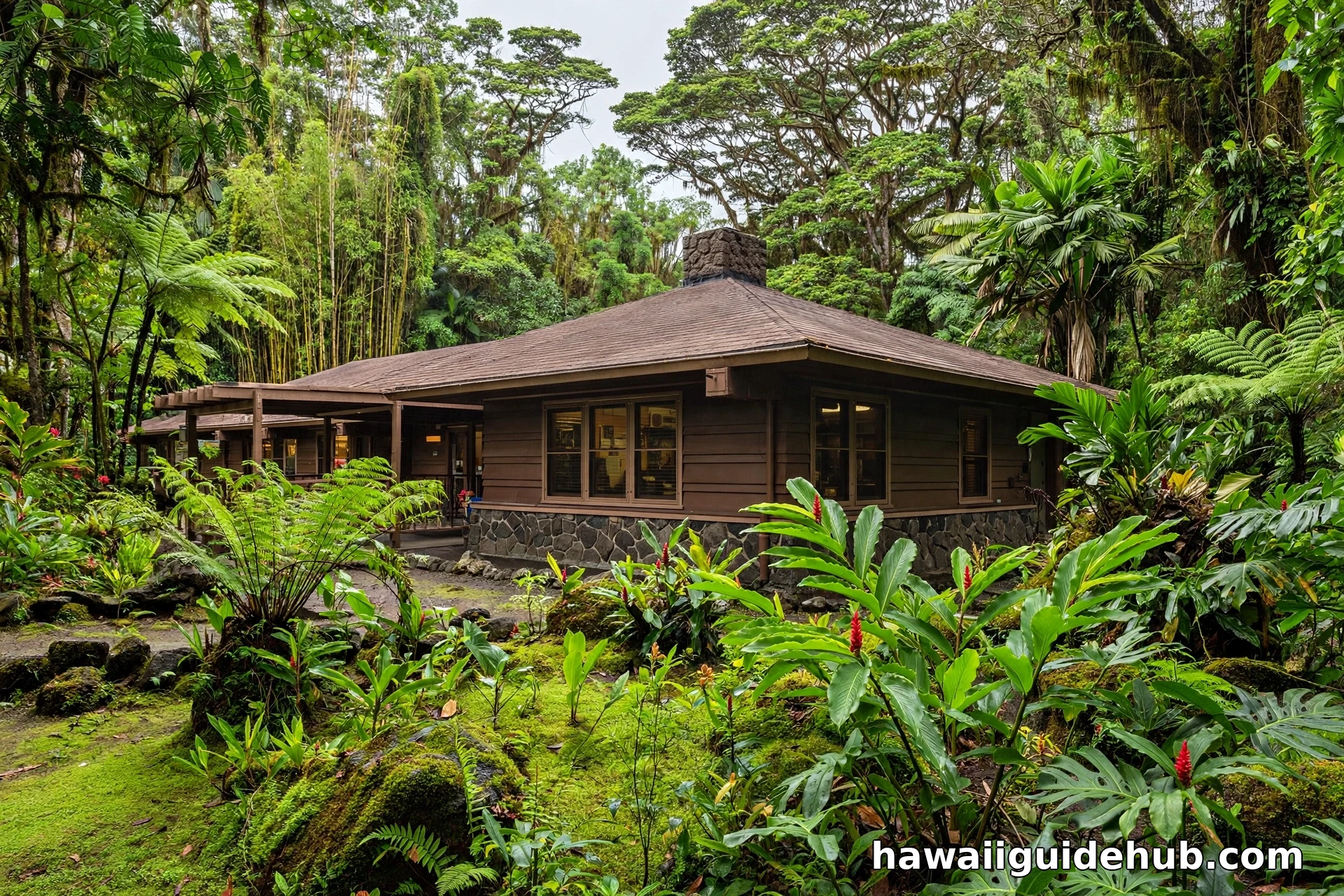
The Kilauea Visitor Center is the front door of Hawaii Volcanoes National Park: the first stop for maps, eruption updates, ranger advice, exhibits, and the park film. Every great park visit starts here. This guide covers the visitor center’s hours, what is inside, the ranger programs, and what to do next door. Note: a major renovation was reported starting in 2025: check nps.gov/havo for current hours and services before you go.
This page covers the visitor center hours, exhibits, film, ranger programs, nearby attractions, and FAQs. Everything about the Hawaii Volcano National Park visitor center is on this one page.
The Short Answer
The Kilauea Visitor Center sits at 1 Crater Rim Drive, just inside the park entrance. It offers exhibits on island formation and Hawaiian culture, the 25-minute film “Born of Fire, Born of the Sea” (shown hourly 9 AM-4 PM), ranger-led programs, trail maps, and current eruption updates. Hours are typically 9 AM-5 PM daily, but a renovation project was reported beginning in 2025: verify current status at nps.gov/havo. The park itself is open 24 hours.
What’s at the Visitor Center
| Service | Detail |
| Hours | Typically 9 AM-5 PM daily; verify at nps.gov |
| Film | “Born of Fire, Born of the Sea,” hourly 9 AM-4 PM |
| Rangers | Eruption updates, maps, guided walks, safety advice |
| Exhibits | Island formation, ecosystems, Hawaiian culture |
| Bookstore | Maps, guides, and souvenirs |
| Nearby | Volcano Art Center, Volcano House, steam vents |
The Film: Born of Fire, Born of the Sea
The 25-minute film “Born of Fire, Born of the Sea” plays on the hour from 9 AM to 4 PM in the auditorium. It is the best 25 minutes a first-time visitor can spend: the story of how the islands formed, how life arrived, and how volcanoes and ocean built Hawaii. Watch it before you explore: everything you see afterward will make more sense. It is free, and it is excellent.
Ranger Programs
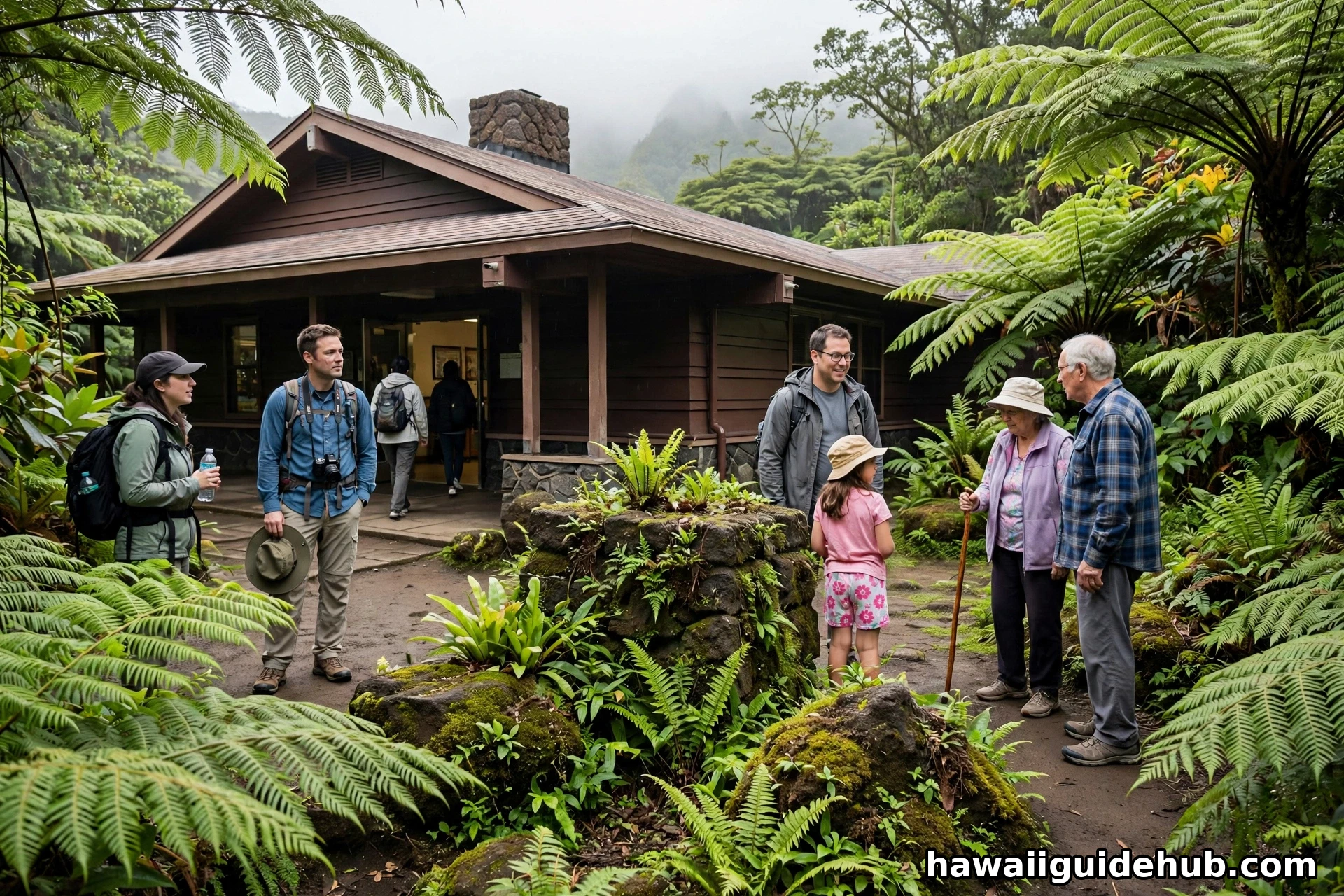
Ranger-led programs are the park’s hidden gem: guided walks, talks, and demonstrations that bring the volcano to life. The classic “Exploring the Summit” walk has run at 10:30 AM and 1:30 PM. Rangers know the current conditions: which trails are open, where the glow is visible, what the volcano did yesterday. Ask them everything: they love it. Programs are free and often the highlight of the visit.
What to Do After the Visitor Center
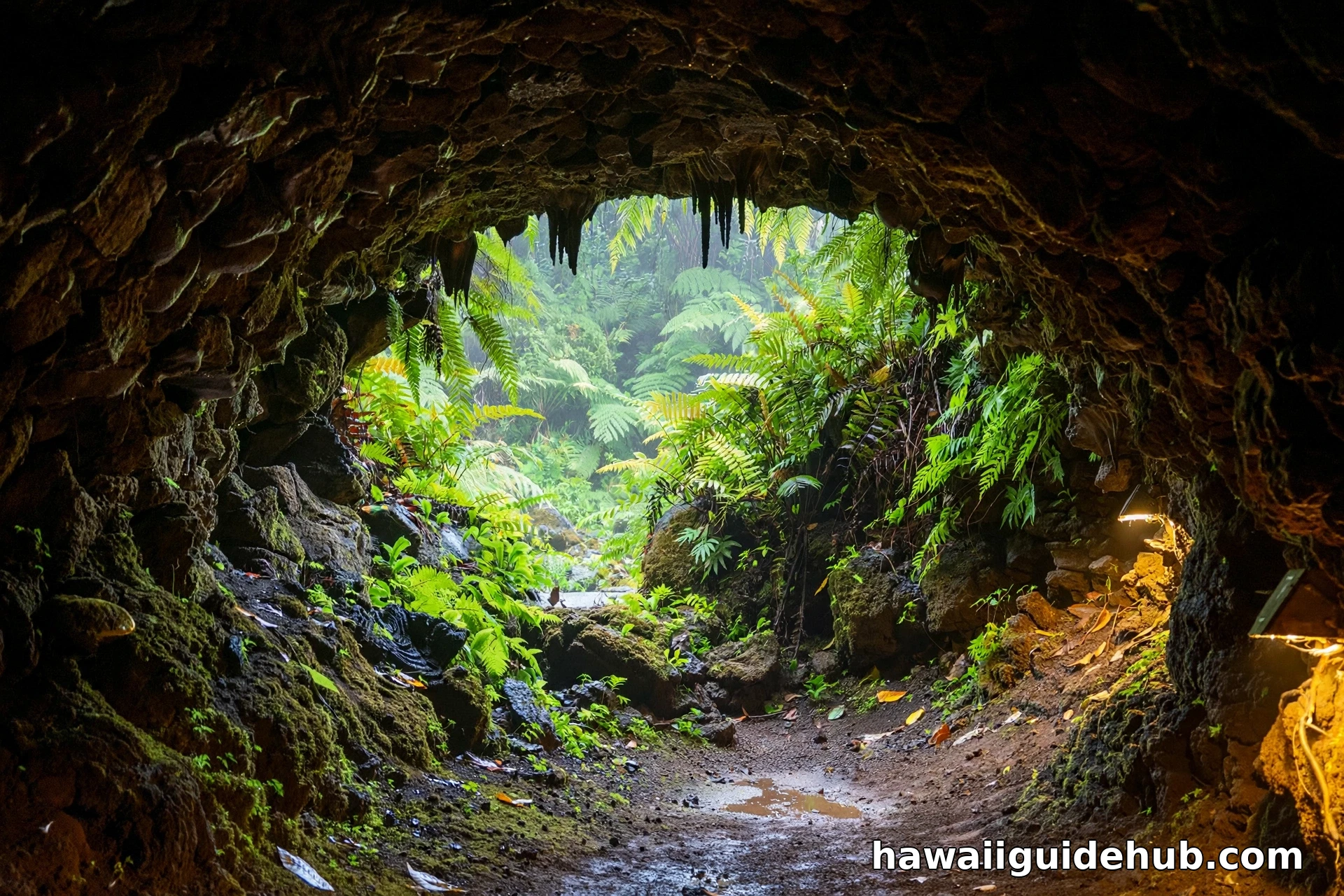
From the visitor center: drive Crater Rim Drive (the 11-mile summit loop), walk to the steam vents and Steaming Bluff, visit Nahuku (Thurston Lava Tube), and have lunch at Volcano House overlooking the caldera. With more time: drive Chain of Craters Road to the sea (allow 2+ hours round trip). The visitor center staff will help you plan based on your time and the current eruption: ask for the day’s recommendations.
The Renovation: Check Before You Go
Multiple 2025 reports indicated the Kilauea Visitor Center would close for a major renovation lasting about two years. During renovation, visitor services were expected to relocate within the park. This is exactly the kind of detail that changes: check nps.gov/havo for the current status before your visit. The park remains open 24 hours regardless: the volcano does not close for construction.
For the Big Island, see the best things to do on the Big Island, the best five things to do in Hawaii Volcanoes National Park, and the best things to do in Kona.
Getting There
The park entrance is at the end of Highway 11, about 45 minutes from Hilo and 2.5 hours from Kona. The Kilauea Visitor Center is just inside the entrance: follow the signs to the parking area. The drive from Kona crosses the island via the Saddle Road: scenic and straightforward. From Hilo, it is an easy drive through Volcano Village. Arrive early: the parking lot fills by mid-morning, and the morning light on the caldera is best.
The Exhibits: What You’ll Learn
The exhibits cover: how the islands formed (the hotspot story), how life arrived (by wing, wind, and wave), the ecosystems from sea to summit, the rain forest’s sights and sounds, invasive species, and the people protecting the park. Hawaiian wisdom (manaʻo) and stories (moʻolelo) are woven throughout: the science and the culture together. Allow 30-45 minutes: the exhibits are dense and well-designed.
The Bookstore
The bookstore (run by the Hawaii Pacific Parks Association) is the best place for trail maps, field guides, and volcano books. The staff recommendations are gold: ask what to read for your interests. Proceeds support the park. It is also the souvenir shop: the place for the sticker, the pin, the book you will actually read. Skip the generic gift shops: buy here.
Volcano Art Center
Across from the visitor center, the historic 1877 Volcano House building holds the Volcano Art Center: a nonprofit gallery of volcano-inspired art by Hawaii artists. Paintings, jewelry, ceramics, woodwork: all original, all local. Workshops and cultural demonstrations run regularly. It is the park’s creative soul: the volcano as muse. Even non-art-buyers should browse: the building itself is historic.
Volcano House: Lunch with a View
Volcano House sits on the caldera rim: the restaurant and lounge have the best lunch view in Hawaii. The historic hotel (reopened 2013 after renovation) offers rooms overlooking the crater: waking up to the caldera is unforgettable. Even if you do not stay, stop for coffee or lunch: the view is free with the meal. At night, the crater glow is visible from the windows: the dinner show is volcanic.
Steam Vents and Steaming Bluff
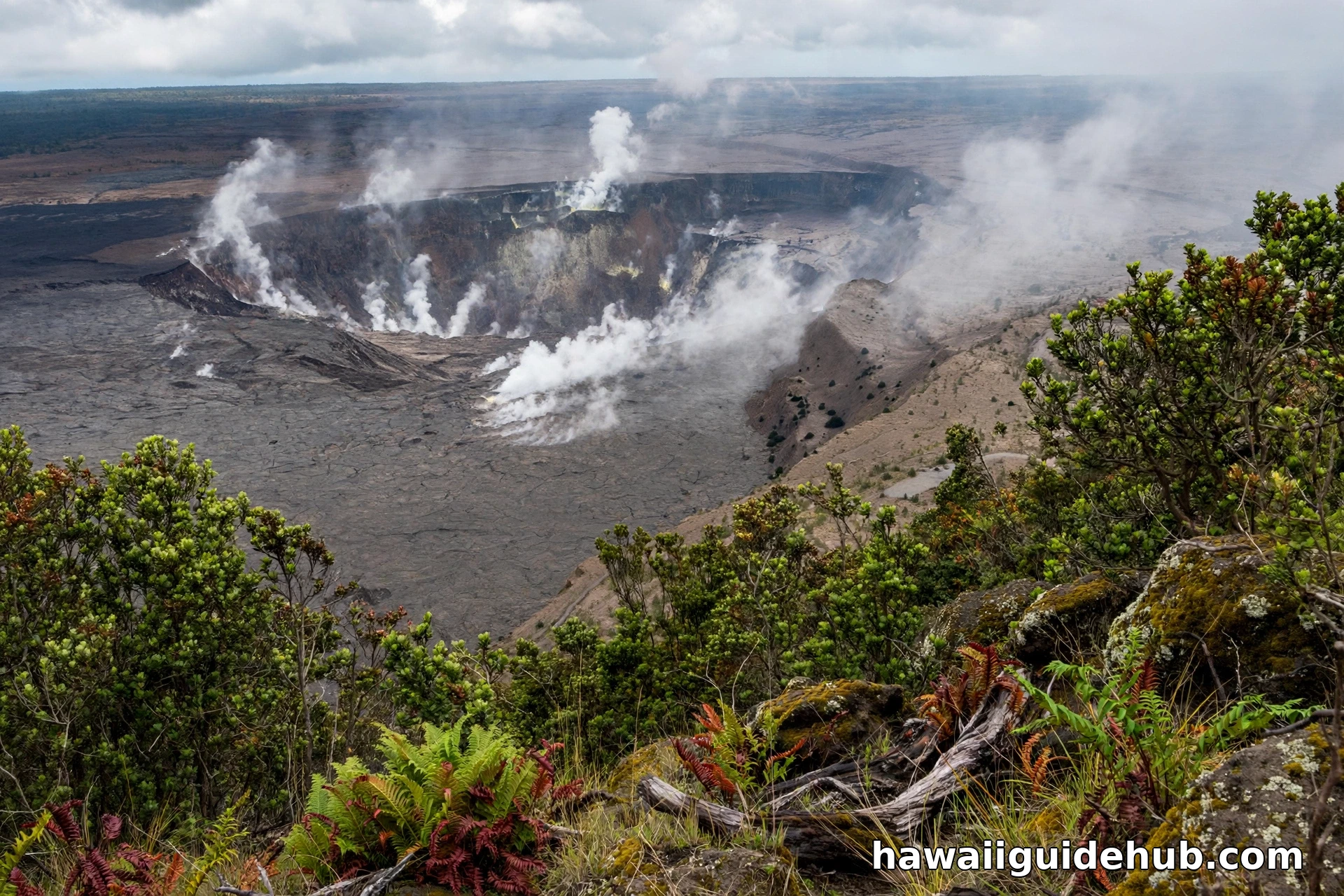
A short walk from the visitor center: the steam vents, where groundwater heated by the volcano escapes as steam. The Wahinekapu (Steaming Bluff) trail offers views into the caldera with steam rising around you. It is otherworldly and easy: a paved walk from the parking area. Go in the cool morning: the steam is most dramatic. This is the volcano breathing: you are standing on its exhale.
Planning Your Day
The ideal day: arrive 8-9 AM, visitor center (film + exhibits + ranger advice), Crater Rim Drive stops, steam vents walk, lunch at Volcano House, Nahuku lava tube, Chain of Craters Road in the afternoon, back for sunset and the crater glow at night. That is a full day: 8-10 hours. With less time, prioritize: visitor center, one caldera overlook, the lava tube. The rangers will help you triage: tell them your time, and they will plan it.
What to Bring
The summit is at 4,000 feet: it is cool, rainy, and windy. Bring: a rain jacket, warm layer, sturdy shoes, water, snacks, sunscreen, and a flashlight (for the lava tube and night viewing). The weather changes fast: sunshine to downpour in minutes. Dress in layers: the coast below may be 80°F while the summit is 60°F and raining. Prepared visitors are happy visitors.
Kids at the Visitor Center
The visitor center is great for kids: the exhibits are interactive, the film is engaging, and the Junior Ranger program gives kids activities and a badge. The steam vents walk is short enough for little legs; the lava tube is a guaranteed hit. The rangers are wonderful with children: ask about the Junior Ranger booklet at the desk. A volcano is the ultimate classroom: the kids will remember this.
Accessibility
The visitor center is wheelchair accessible, and several nearby attractions are: the steam vents area, parts of Crater Rim Drive overlooks, and the Volcano Art Center. The Earthquake Trail (a paved former road section) offers a wheelchair-friendly rainforest walk. Ask rangers about current accessibility: conditions change with construction and eruptions. The park works hard on access: everyone should meet the volcano.
The Night Visit
The park is open 24 hours, and the night visit is essential: the crater glow after dark is the volcano’s most dramatic show. The visitor center is closed at night, so get your information during the day, then return after dinner. Dress warmly: nights at 4,000 feet are cold. The stars are spectacular too: minimal light pollution. The volcano by day is geology; by night it is magic.
Entrance Fees
There is no separate fee for the visitor center, but the park charges an entrance fee (valid for 7 days). Fees change: check nps.gov/havo for current rates. The America the Beautiful pass covers it. The fee funds the park: trails, rangers, exhibits. It is the best value in Hawaii: a week of volcano for the price of a lunch.
Volcano Village: Before and After
Volcano Village, just outside the park entrance, is the base: restaurants, galleries, B&Bs, and the famous Volcano Winery. Stop before for breakfast and supplies; stop after for dinner and a glass of wine. The village has a misty, artsy vibe: galleries, gardens, and good food. It is the perfect complement to the park: civilization at the edge of the wilderness.
The Cultural Dimension
The park is sacred to Native Hawaiians: the home of Pele, the volcano goddess. The visitor center exhibits honor this: the geology and the spirituality together. Visitors should approach with respect: stay on trails, do not take rocks (Pele’s curse is legend, but the Leave No Trace ethic is real), and learn the stories. The volcano is not just a natural wonder: it is a temple. The visitor center teaches both.
Photography Tips
The caldera photographs best in morning light; the steam is most visible in cool air. For the night glow: a tripod and long exposure (the glow is subtle to the naked eye but spectacular on camera). The lava tube entrance with ferns is the classic shot. And the rainforest around the visitor center is lush: macro shots of moss and flowers. The volcano gives photographers everything: fire, steam, forest, and stars.
Common Mistakes
Skipping the visitor center (the biggest mistake: you will miss the film, the updates, and the plan). Underdressing (it is cold at the summit). Rushing (the park deserves a full day). Ignoring the night visit (the glow is the highlight). Not checking nps.gov (conditions change). The visitor center prevents all of these: stop, learn, plan, then explore. The volcano rewards the prepared.
The First-Timer’s Itinerary
First visit, half day: visitor center (film + exhibits, 1 hour), steam vents walk (30 minutes), one caldera overlook (30 minutes), Nahuku lava tube (1 hour). That is the essential volcano in 3 hours. Full day: add Crater Rim Drive, Volcano House lunch, Chain of Craters Road, and the night glow. The visitor center staff will customize: tell them your time and fitness, and they will build your day. Trust the rangers: they do this every day.
Video: Getting Close to Kilauea Volcano
From the visitor center to the caldera: a Kilauea adventure.
Frequently Asked Questions
Where is the Hawaii Volcanoes National Park visitor center?
The Kilauea Visitor Center at 1 Crater Rim Drive, just inside the park entrance on the Hilo side.
What are the visitor center hours?
Typically 9 AM-5 PM daily, but a renovation was reported starting 2025: check nps.gov/havo.
Is there a film at the visitor center?
Yes: “Born of Fire, Born of the Sea” (25 minutes), shown hourly 9 AM-4 PM.
Are there ranger programs?
Yes: guided walks and talks, free. Ask at the center for the current schedule.
Is the park open 24 hours?
Yes: Hawaii Volcanoes National Park is open 24 hours a day, year-round.
Is there food at the visitor center?
Volcano House (next door) has a restaurant; Volcano Village outside the park has more options.
The Hawaii Volcano National Park visitor center is more than a building: it is the key that unlocks the park. The film gives you the story, the rangers give you the day’s conditions, the exhibits give you the science, and the maps give you the plan. Start here, ask questions, and then go meet the volcano. The center is the beginning of the adventure: the caldera is the destination, and the glow at night is the reward.