Hawaii’s Tropical Beach Flowers: Plumeria, Hibiscus & More

Hawaii’s tropical beach flowers are the islands’ signature: plumeria drifting onto the sand, hibiscus blooming on every roadside, pikake perfuming the evening air. Some are native, some are visitors that made themselves at home, and all of them carry meaning in Hawaiian culture. This guide identifies the flowers you will see on Hawaii’s beaches, explains what they mean, and shows you each island’s official flower.
This page covers plumeria, hibiscus, the state flower, the island flowers, lei flowers, and FAQs. Everything about Hawaii’s tropical beach flowers is on this one page.
The Short Answer
Hawaii’s most iconic beach flowers: plumeria (melia, the fragrant lei flower), hibiscus (including the yellow hibiscus, the state flower), pikake (Hawaiian jasmine), orchids, and ginger. Plumeria is not native (introduced from tropical America in 1860); the yellow hibiscus (maʻo hau hele) is native and endangered. Each island has its own official flower, from the Big Island’s red ʻōhiʻa lehua to Kauai’s mokihana berry.
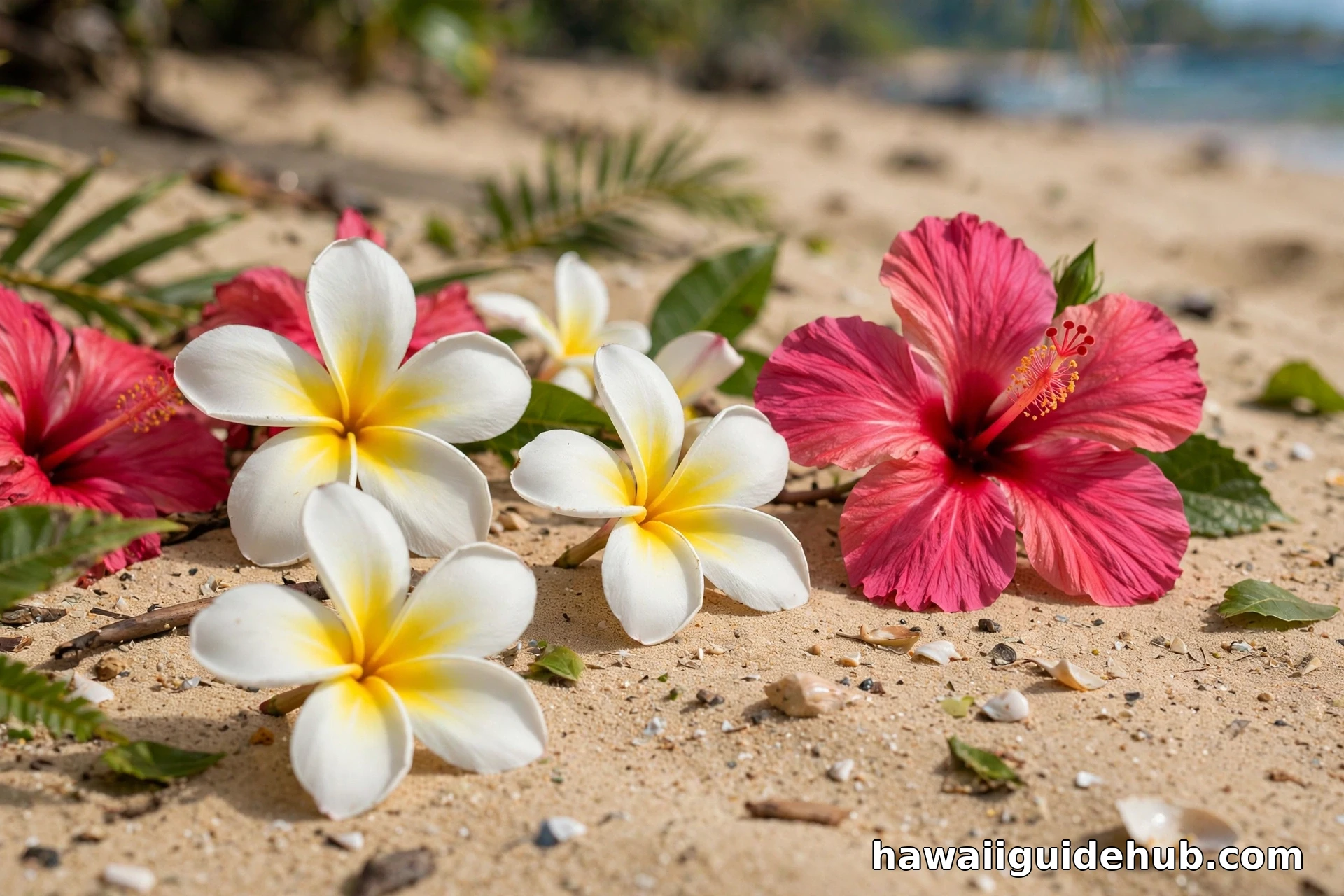
Each Island’s Official Flower
| Island | Flower | Notes |
| Big Island | ʻŌhiʻa lehua (red) | Native tree blossom |
| Maui | Lokelani (pink cottage rose) | Introduced ornamental |
| Oahu | ʻIlima | Native; once reserved for royalty |
| Kauai | Mokihana (green berry) | Native; technically a fruit |
| Molokai | White kukui blossom | Native tree flower |
| Lanai | Kaunaoa (orange dodder) | Native vine |
| Niʻihau | White pupu shell | Not a flower: a shell |
| Kahoʻolawe | Hinahina (beach heliotrope) | Native coastal plant |
Plumeria: The Flower of Aloha
Plumeria (pua melia) is the flower most visitors associate with Hawaii: white, pink, yellow, or red blossoms with an unforgettable sweet fragrance. Here is the twist: plumeria is not native. It came from tropical America and was introduced to the islands in 1860 by a German botanist, thriving in the volcanic soil. Today it is everywhere: in leis, behind ears, drifting onto beaches. The flower behind the ear is a signal: left (over the heart) means taken, right means single. Plumeria is Hawaii’s adopted child, and the adoption is complete.
Hibiscus: The State Flower
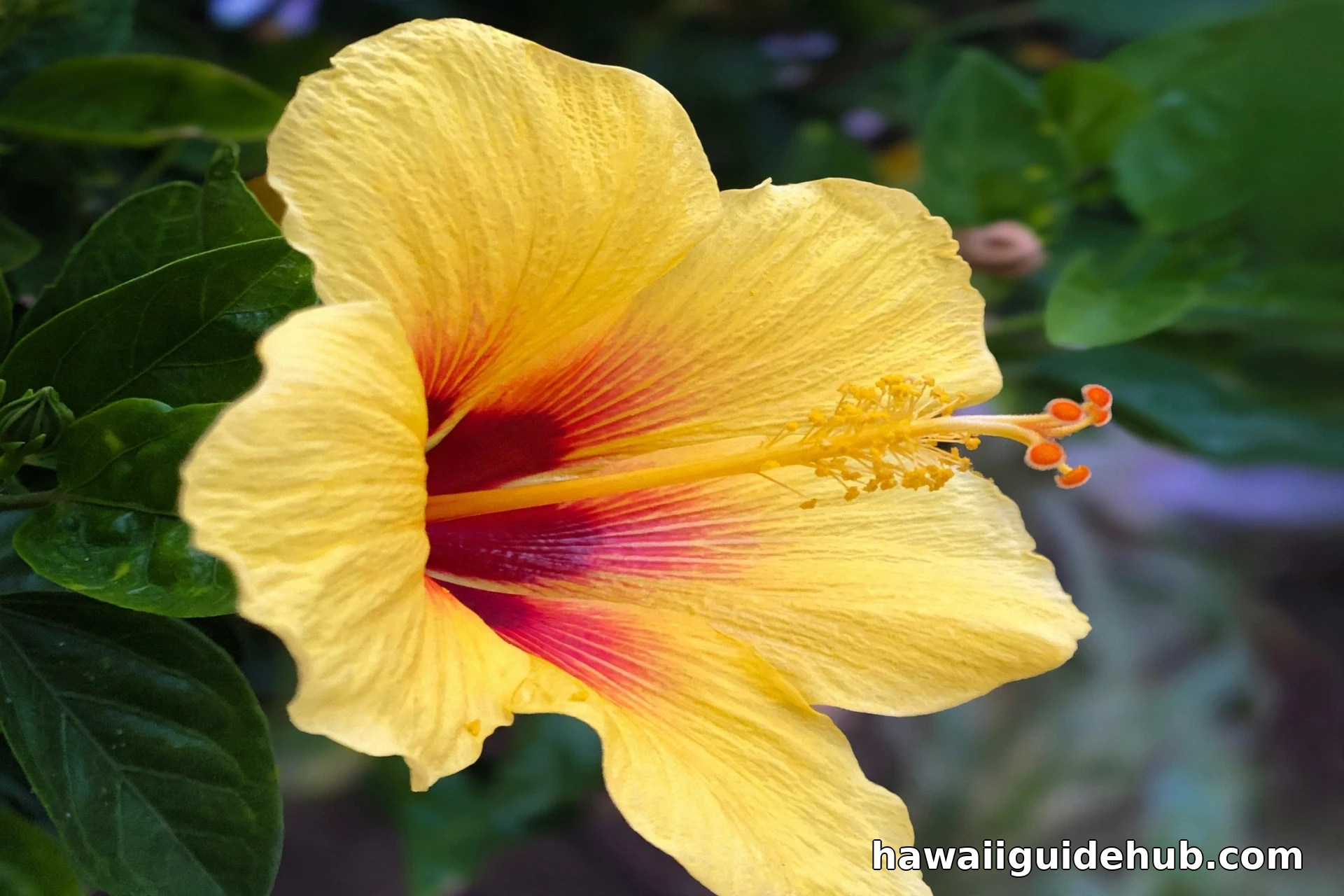
Hawaii’s state flower is the yellow hibiscus (maʻo hau hele, Hibiscus brackenridgei), designated in 1988. It is a native species and it is endangered: found in dry forests on most islands, its populations are small. The hibiscus you see everywhere else: the big red, pink, and white garden varieties: are mostly introduced ornamentals. The native hibiscuses include the white kokiʻo keʻokeʻo (Oahu only), the red kokiʻo ʻula, and the pink ʻakiohala. The garden hibiscus is the postcard; the yellow maʻo hau hele is the treasure.
Pikake, Orchids, and Ginger
Beyond the big two: pikake (Hawaiian jasmine), the tiny white flower with the powerful evening perfume, named for peacocks; orchids (dendrobium and epidendrum), the sturdy purple-and-white lei flowers; and ginger: red, pink, and white torch gingers whose “flower” is actually the small white buds on the colorful hive. Bird of paradise adds its architectural orange-and-blue drama. Awapuhi (shampoo ginger) squeezes a fragrant juice once used as shampoo. The supporting cast is as spectacular as the stars.
Lei Flowers and Their Meanings
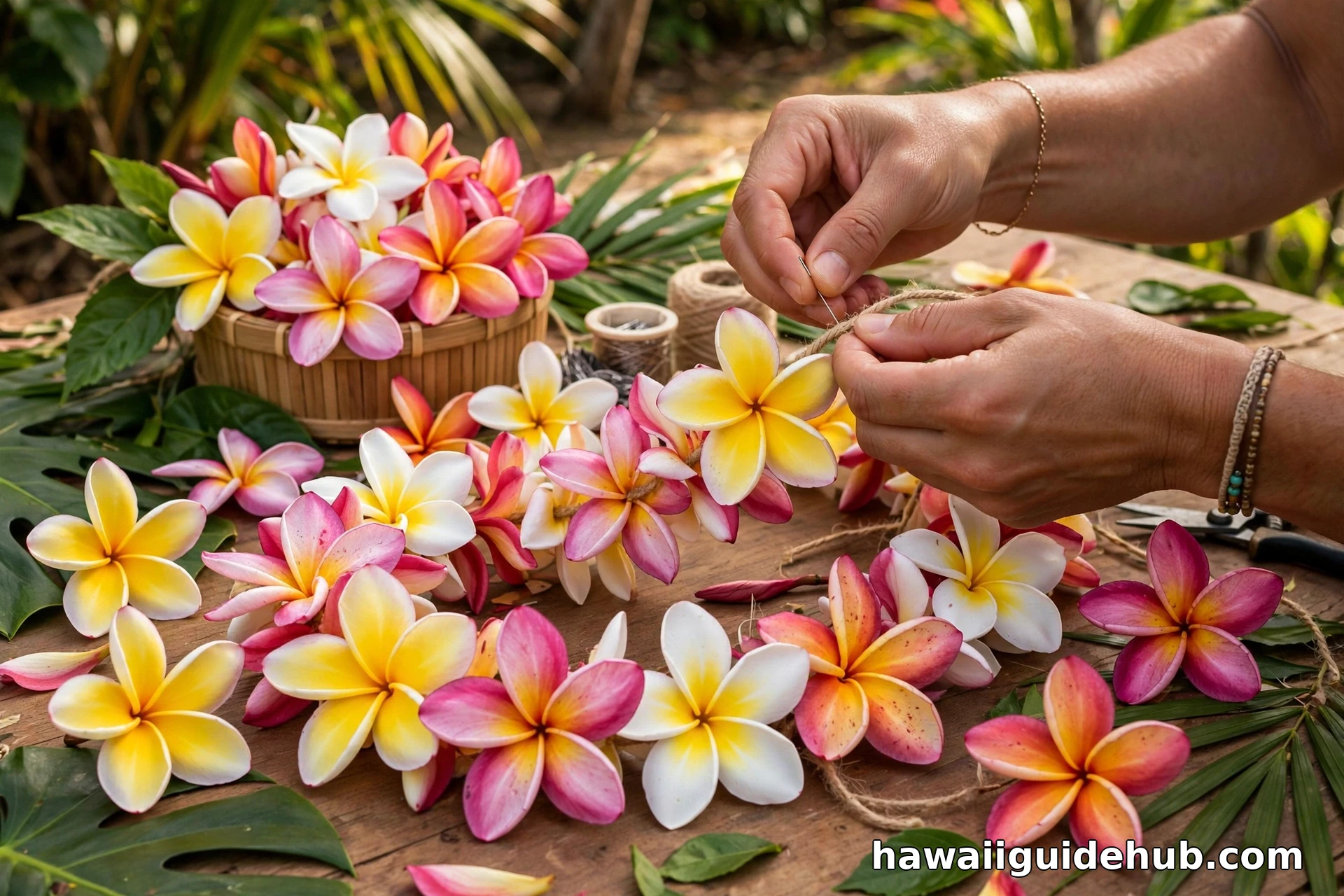
Different lei flowers carry different meanings. Plumeria leis are the classic welcome. ʻIlima leis were historically reserved for Hawaiian royalty: hundreds of tiny blossoms, hours of work. Maile (a fragrant vine, not a flower) is the lei of respect, given at graduations and weddings. Orchid leis are sturdy and long-lasting. Giving a lei is giving time: each one is handmade, flower by flower. Accept it graciously, wear it (never refuse), and when you leave, return it to the earth or the sea: never throw a lei in the trash.
Where to See the Flowers
Botanical gardens are the best flower viewing: the National Tropical Botanical Garden on Kauai, Foster Botanical Garden in Honolulu, the Hawaii Tropical Bioreserve Garden near Hilo. But the beaches have their own show: plumeria trees lean over the sand at countless beaches, and hau (sea hibiscus) forms thickets along the coast. Morning is the best time: the yellow hibiscus opens fresh each morning and closes by nightfall. Walk the beach at sunrise with the flowers: that is Hawaii.
For more island beauty, see Hanalei Beach: Kauai’s most beautiful beach, top 5 Kauai beaches for swimming, and Hawaii weather in December.
The ʻŌhiʻa Lehua: Flower of Pele
The ʻōhiʻa lehua is Hawaii’s most sacred flower: the brilliant red pom-pom blossom of the ʻōhiʻa tree, first to grow on fresh lava. Legend says the lehua is the embodiment of the lovers ʻŌhiʻa and Lehua, separated by the jealous Pele: pick the flower and it rains, the lovers’ tears. The tree is the backbone of the native forest, and it is under threat from Rapid ʻŌhiʻa Death, a fungal disease. Never move ʻōhiʻa wood between islands. The flower is beauty with a warning: love it, protect it, leave it on the tree.
Native vs Introduced: The Honest Story
Here is the honest botany: most of Hawaii’s famous flowers are not native. Plumeria (tropical America), hibiscus garden varieties (Asia and beyond), bird of paradise (South Africa), orchids (tropical worldwide): all introduced. The natives: the yellow maʻo hau hele, the white kokiʻo keʻokeʻo, ʻōhiʻa lehua, ʻilima, naupaka, and the silverswords. The introduced flowers are the postcard; the natives are the heritage. Both are beautiful; only one is irreplaceable. Learn the difference: it changes how you see the islands.
The Hau: The Beach Hibiscus
The hau (sea hibiscus) is the flower of the beach itself: yellow blossoms that open in the morning and turn orange-red by afternoon, growing in dense thickets along the coast. The Polynesians brought it in their canoes and used its light wood for outriggers and floats. You will see hau everywhere at the shoreline: it is the living frame of the tropical beach. Its color-changing flowers are a daily show: morning yellow, afternoon flame.
Naupaka: The Half Flower Legend
Naupaka is the flower that looks like half a blossom: its petals grow on only one side. Legend says two lovers were separated, one to the mountains and one to the sea, and the flower tore itself in half so each could keep part. There are mountain naupaka and beach naupaka: put the halves together and they match. It is Hawaii’s most romantic botanical story, told in petals. Find the beach naupaka on the dunes: the half-flower waiting for its other half.
Flowers in Hawaiian Medicine
Hawaiian lāʻau lapaʻau (herbal medicine) used native flowers and plants for healing: ʻōhiʻa lehua, naupaka, and others in traditional remedies. The kokiʻo (native red hibiscus) had medicinal uses. This knowledge was held by kahuna lapaʻau (healing priests) and passed down through families. Modern visitors should admire, not harvest: many native plants are protected, and traditional knowledge is not a souvenir. The pharmacy of the forest is for the Hawaiians who keep it.
Photographing the Flowers
Hawaii’s flowers are a photographer’s dream. Tips: shoot in the soft morning light (the yellow hibiscus is freshest then); get low for the beach-level perspective; use a wide aperture for the creamy background; include the ocean for context. Plumeria on sand is the classic shot. Do not pick flowers for photos: shoot them where they grow. The best flower photo is the one that leaves the flower for the next person.
Growing Hawaiian Flowers at Home
Can you grow them on the mainland? Plumeria grows in warm climates (zones 10-11) and as a potted plant elsewhere: bring it inside for winter. Hibiscus varieties are widely available at nurseries. Bird of paradise needs warmth and humidity. The natives (maʻo hau hele, silversword) are protected and not for home gardens. Start with plumeria: a cutting, sandy soil, full sun, and patience. In a few years, your patio will smell like the islands.
The Fragrance Trail
Follow your nose: pikake at dusk, plumeria in the morning, ginger after rain. Each flower has its hour. The old Hawaii hands know the fragrance trail: which corner of the garden perfumes at which time of day. Evening is the best: pikake and night-blooming jasmine take over as the sun drops. Walk a resort garden or a botanical garden at dusk: the flowers put on their evening show, and the audience is anyone who slows down enough to notice.
The Silversword: The Flower That Blooms Once
The Haleakalā silversword is Hawaii’s most dramatic flower: a silver rosette that grows for decades, then sends up a towering stalk of purple blossoms, sets seed, and dies. It blooms once and only once. Found only on the slopes of Haleakalā, it is the symbol of Hawaiian endemism: found nowhere else on Earth. See it on the Sliding Sands trail. The silversword is the flower as life’s work: decades of patience for one spectacular bloom.
Tuberose and the Night Garden
Tuberose is the lei flower of the evening: tall white spikes with a perfume so powerful it carries across the garden. A single tuberose lei can scent a whole room. It is a favorite for weddings and graduations: the fragrance is the memory. Plant it where you sit in the evening: the night garden is Hawaii’s secret room, and tuberose holds the key.
Flower Festivals
Hawaii celebrates its flowers: the Merrie Monarch Festival (hula, but the lei and adornments are floral art), the Lei Day celebrations on May 1st, and countless garden shows. Lei Day is the flower festival proper: lei-making contests, parades, and the crowning of the Lei Queen. If you love flowers, time a trip for May 1st: the islands wear their blossoms, and the competitions are serious art.
The Ethics of Picking
The rule: do not pick native flowers, ever. Many are endangered and all are protected in parks and reserves. Garden flowers (plumeria, hibiscus) on private property: ask first. Fallen blossoms on the beach: fair game, and the traditional way to gather. The Hawaiians gathered with protocol: permission, purpose, and thanks. A flower picked with respect is a gift; a flower stripped from a native plant is a loss. When in doubt, photograph.
The Morning Walk: A Flower Itinerary
The perfect flower morning: start at sunrise on the beach, where plumeria blossoms have fallen overnight onto the sand. Walk the shoreline as the hau flowers open yellow. By mid-morning, visit a botanical garden for the full collection: orchids, ginger, bird of paradise. End with a lei shop, where the morning’s flowers are being strung. It is a half-day itinerary that costs almost nothing and delivers the essence of the islands. The flowers are the tour; you just have to show up.
The Plumeria at Night
Plumeria’s perfume strengthens after dark: the flowers release their sweetest scent in the evening to attract their night moths. A plumeria tree outside your hotel window is nature’s aromatherapy, free with the room. Evening walks under blooming plumeria are one of Hawaii’s great free pleasures. The day belongs to the hibiscus; the night belongs to the plumeria.
Video: 25 Most Beautiful Flowers of Hawaii
Hawaii’s blooms: 25 of the islands’ most beautiful flowers.
Frequently Asked Questions
What is the Hawaii state flower?
The yellow hibiscus (maʻo hau hele), designated in 1988. It is native and endangered.
What is the most common flower in Hawaii?
Plumeria: the fragrant white, pink, and yellow blossom used in leis everywhere.
What does a flower behind the ear mean?
Left (over the heart): taken. Right: single. A charming tradition, widely observed.
Can I bring Hawaiian flowers to the mainland?
Most cut flowers and leis can, but they must pass USDA agricultural inspection at the airport.
Are plumeria native to Hawaii?
No. Plumeria came from tropical America and was introduced in 1860. It thrived.
What flowers are used in leis?
Plumeria, pikake, orchids, tuberose, ʻilima, and maile leaves are the most common.
Hawaii’s tropical beach flowers are the islands speaking in color and perfume: the plumeria’s welcome, the hibiscus’s fleeting beauty, the pikake’s evening song, the lehua’s sacred fire. Learn their names, wear them right, protect the natives, and give them with meaning. The flowers are not decoration: they are language, history, and ecology in bloom. In Hawaii, everyone is fluent, and every beach is a garden.