Waimea Falls Hike: Oahu’s Waterfall Walk Through Sacred Waimea Valley

Most waterfall hikes make you earn the view. You scramble over roots, slip on mud, and arrive sweating to a cascade you can look at but never touch. Waimea Falls works the other way around. The path is paved, the grade is gentle, and at the end of it you get to swim at the base of a 45-foot waterfall while a lifeguard watches from the rocks. It is the easiest waterfall swim on Oahu, and it sits inside one of the most culturally significant valleys in Hawaii.
That combination is exactly why Waimea Valley draws the crowds it does. This is not a hidden local secret. Tour buses roll in, families spread out on the grass, and the waterfall pool fills with orange life vests on sunny afternoons. Some travelers see the admission fee and the paved path and write the whole place off as a tourist trap. They are missing the point. Waimea Valley is a 1,875-acre ahupuaa, a traditional Hawaiian land division, that has been sacred ground for centuries. The waterfall is the headline, but the valley itself is the story.
What Waimea Valley Actually Is
Before it was a botanical garden, before it was an admission gate and a gift shop, Waimea Valley was one of the most important religious and agricultural centers on Oahu. Hawaiian ali’i, the chiefs, lived and worshipped here. The valley floor was terraced for taro and sweet potato, and stone heiau, temples, were built on the ridges above. When you walk the main path today, you are walking through a landscape that fed and sheltered generations of Hawaiians long before the first European ship arrived in 1778.
The modern garden grew out of that history in layers. The City and County of Honolulu managed the grounds for years, then the National Audubon Society took over in 2003, and in 2008 stewardship passed to Hi’ipaka LLC, a nonprofit created by the Office of Hawaiian Affairs. That last handoff matters. It returned the valley to Native Hawaiian management, and the cultural programming you see today, the hale building demonstrations, the kapa cloth makers, the farmers markets, comes directly from that mission.
Botanically, the place is staggering. Thirty-five themed collections hold some 5,000 plant taxa from around the world, including one of the finest assemblages of Polynesian plants anywhere and rare Hawaiian species you will not see growing wild. But you do not need to be a plant person to feel what the valley is. You feel it in the temperature drop as the canopy closes over the path, in the smell of wet earth and ginger, in the way the city noise of the North Shore highway fades behind you within minutes.
The Walk to the Falls
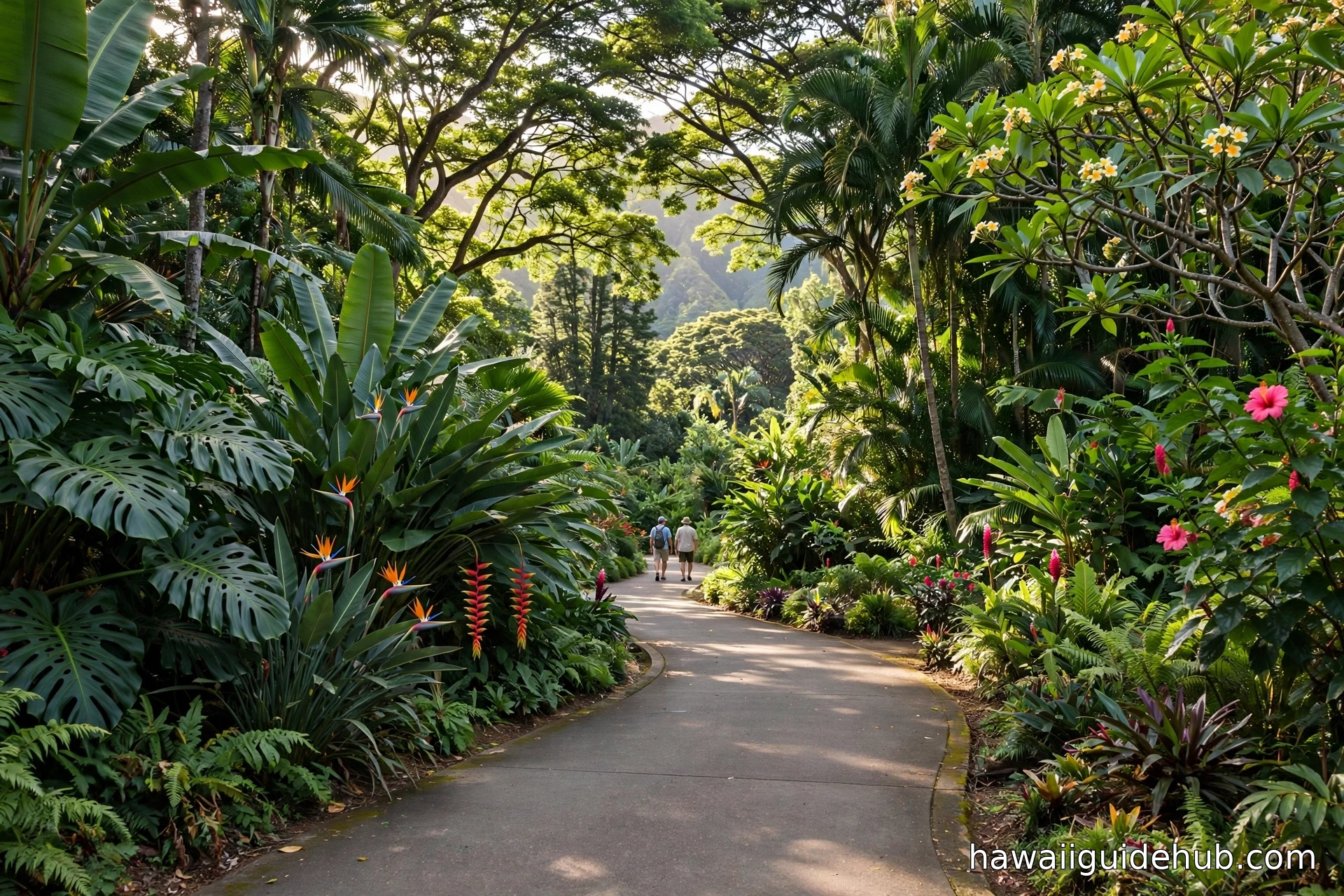
Here is the part that surprises first-timers: the “hike” is three-quarters of a mile each way on a fully paved path. Round trip, you are looking at 1.5 miles. Most people reach the falls in 20 to 30 minutes at a strolling pace, though you should budget two to three hours for the whole visit once you factor in the gardens, the cultural sites, and time at the pool.
The trail is genuinely accessible. Wheelchairs and strollers roll the full distance without trouble, which is rare for a waterfall destination and one of the main reasons families choose Waimea over the island’s wilder falls. If anyone in your group would rather not walk, a shuttle runs from the visitor area toward the falls for $10 each way per person.
Do not mistake easy for boring. The path follows the Waimea River upstream through those 35 garden collections, and the plantings change as you climb. You pass the canoe garden, the hibiscus collections, groves of towering trees with buttress roots, and quiet side trails that branch into the deeper gardens. Ancient stone walls edge the path in places, remnants of the agricultural terraces that once covered the valley floor. Interpretive signs explain what you are looking at, and the free map at admission marks every collection.
The Waterfall Itself
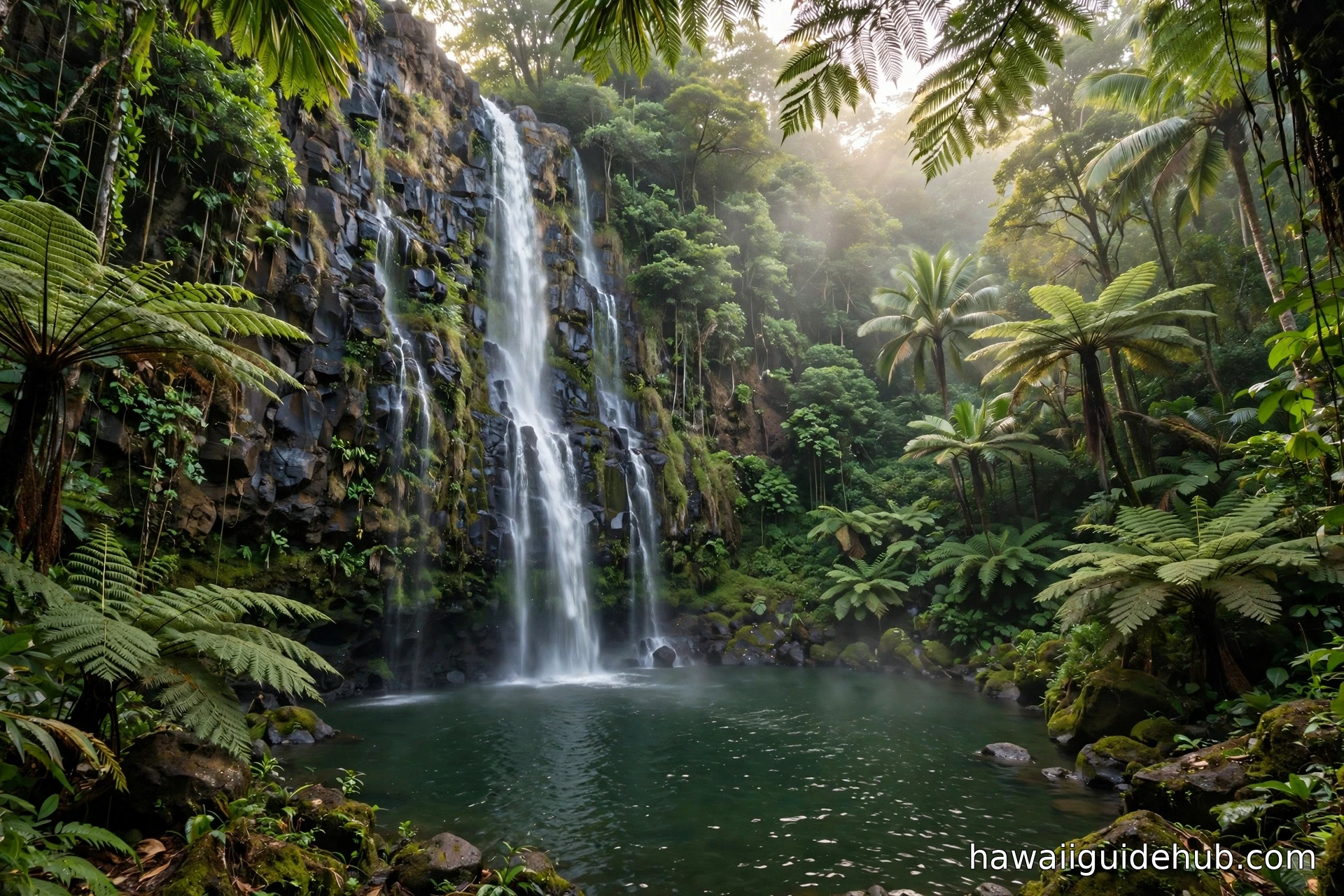
Waimea Falls, also called Waihi Falls in older accounts, drops 45 feet off a dark volcanic cliff into a pool that runs about 30 feet deep at its center. After heavy rain the falls run thick and brown and thunderous. In drier stretches they narrow to a silver ribbon. Either way, the setting does the heavy lifting: sheer green walls, hanging ferns, mist drifting across the water.
It is worth knowing that this waterfall spent a strange chapter as a roadside attraction. Decades ago, before the valley’s current stewardship, visitors could drive nearly to the falls, and the site hosted cliff divers and hula performances for tour groups. That era is long gone. What replaced it is something better: a protected cultural landscape where the falls are the natural climax of a walk through living Hawaiian history rather than a drive-up photo stop.
Swimming at Waimea Falls
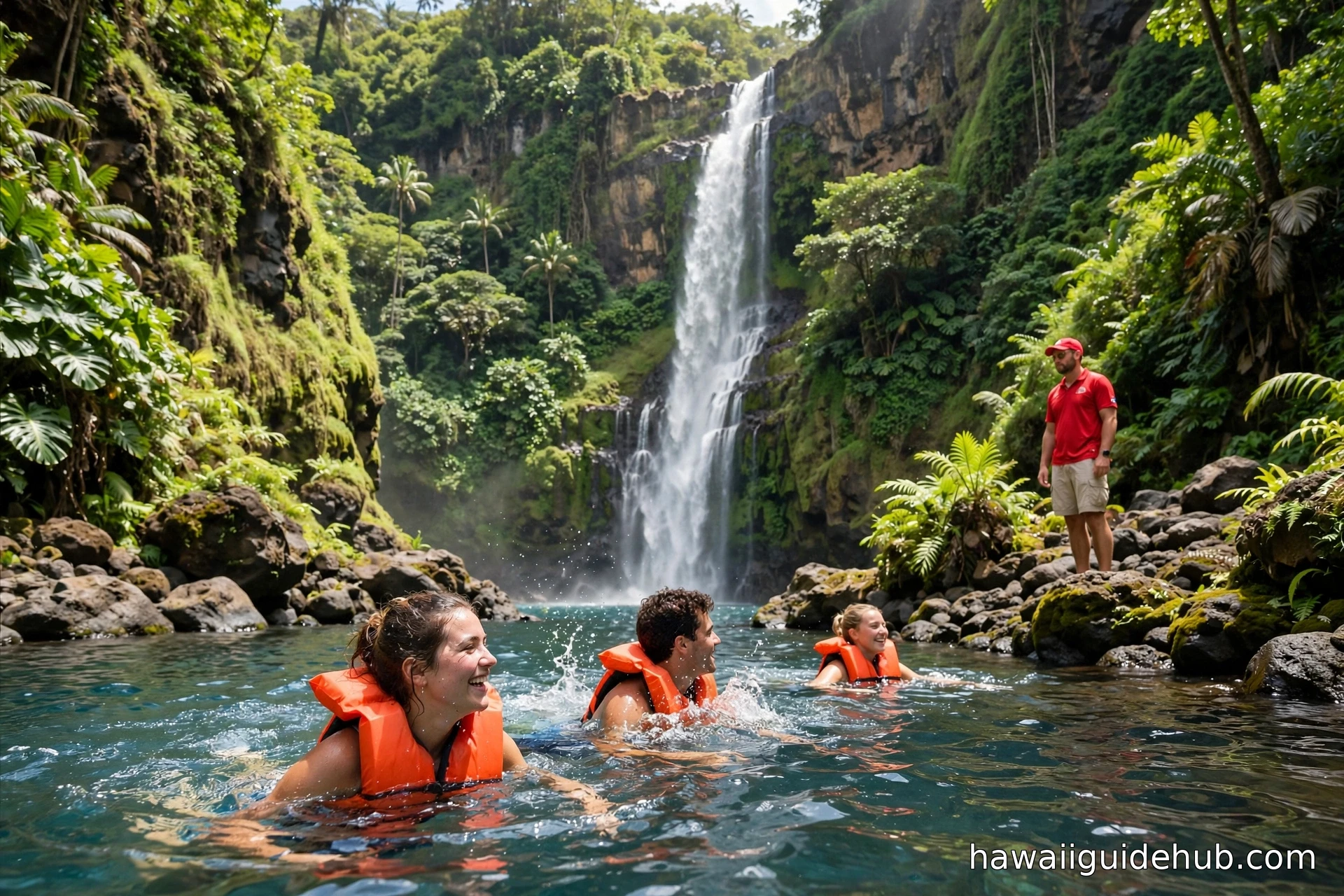
This is the question everyone asks, so here is the straight answer. Yes, you can swim at Waimea Falls, when conditions allow. The lifeguards make the call every morning around 9 a.m., and conditions can change through the day if rain swells the stream. There are three possible statuses: regular swim, limited swim, and no swimming.
When swimming is open, everyone in the water wears a life vest. No exceptions. The vests are provided free at the falls, and the lifeguards will check you in and explain the rules before you get in. The water is brisk, the bottom is rocky, and water shoes are a smart move. Jumping from the rocks is not allowed.
If you arrive on a no-swim day, you are not out of luck. The valley issues a voucher for free return admission good for ten days, so you can come back and try again. Before you drive out, you can check the swim status on the valley’s official site at waimeavalley.net or call (808) 638-7766.
The Cultural Heart of the Valley
Most visitors walk straight to the falls and straight back, which means most visitors miss the best part. Slow down on the return leg and look for the cultural sites.
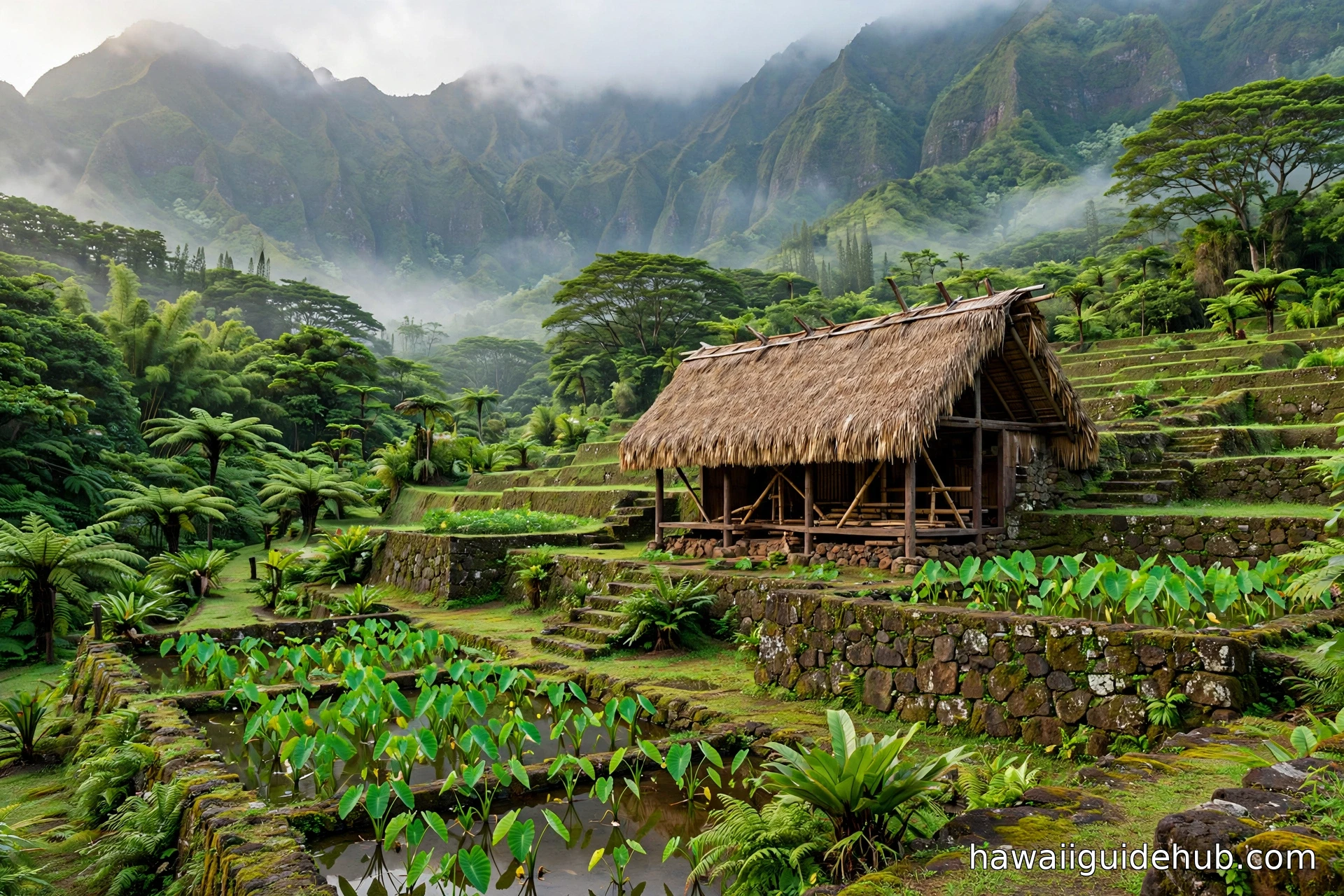
The Hale o Lono heiau sits on the valley’s slopes, a stone temple dedicated to Lono, the god of agriculture, peace, and fertility. Heiau are sacred places, so observe quietly and respectfully, stay on marked paths, and do not climb on the stonework. Nearby, the Kauhale Kahiko, a traditional living site, reconstructs how Hawaiians lived in the valley: thatched hale built from wood, pili grass, and coconut-fiber cordage, surrounded by the lo’i, the flooded taro terraces with their ancient stone walls, that once fed the community.
Cultural practitioners work in the valley regularly. Depending on the day, you might watch kapa cloth being beaten from bark, see traditional hale construction, or catch a hula performance. The valley also hosts a well-regarded luau in the evenings, plus full moon walks, concerts, and seasonal festivals like the Kalo and Awa Festival. Check the schedule at the entrance or on the official site before your visit.
The Botanical Gardens Deserve Your Time
It is easy to treat the gardens as scenery on the way to the waterfall. Do not. The collections are the reason the valley feels the way it does, and a few deserve deliberate stops.
The Polynesian plant collection is the standout for anyone interested in Hawaiian culture. These are the canoe plants, the species Polynesian voyagers carried across the Pacific in their double-hulled canoes: taro, sweet potato, breadfruit, sugarcane, ti. Seeing them growing together connects the dots between the voyaging history and the food on a Hawaiian plate. The endangered Hawaiian plant collections hold species that are rarer in the wild than pandas, kept alive here as a living seed bank.
Give the side trails a chance too. Some branch off the main paved path into shadier, wilder-feeling garden rooms with stairs and uneven footing. They are short, and they show you corners of the valley most visitors never see. For anyone who loves hiking in Hawaii, Waimea is the gentle bookend to the island’s rugged trails, proof that a walk does not need to be hard to be worth taking.
When to Go
Waimea Valley is a year-round destination, but the experience shifts with the seasons. The drier months from May through September bring the most reliable swimming conditions, since the stream runs lower and the lifeguards call fewer no-swim days. Winter, from November through March, is when the North Shore earns its reputation: bigger surf at nearby Waimea Bay, lusher gardens after the rains, and a fuller, more dramatic waterfall. The tradeoff is a higher chance of arriving to a red flag at the pool.
Time of day matters too. The valley opens at 9 a.m., and the first hour is the quietest you will find it. Tour buses tend to arrive late morning, so an early start buys you a calmer walk and first pick of the pool. Weekdays are gentler than weekends throughout the year. If you are visiting in December, the valley dresses for the season with holiday lights and events, and the cooler air makes the walk especially pleasant.
One more timing note: after heavy island-wide rain, the stream can run high for a day or two even when the sun is out at the coast. If swimming is the priority, check the valley’s swim status online the morning of your visit rather than assuming.
Planning Your Visit
Hours and Admission
Waimea Valley is open Tuesday through Sunday from 9 a.m. to 4 p.m., and closed on Mondays, Christmas and New Year’s Day. Admission is charged, and prices have risen over the years as stewardship costs have grown, so check waimeavalley.net for current rates before you go. Expect adult admission in the mid-twenty-dollar range, with reduced rates for seniors, students, and children, and free entry for the youngest keiki. Parking on site is paid, with a flat rate that covers up to four hours. Booking tickets online in advance is smart during peak season, since the valley can sell out.
What to Bring
Pack like you are going swimming, because you probably are. Swimsuit, towel, reef-safe sunscreen, and water shoes for the rocky pool bottom. Bring drinking water, though there is a snack bar near the entrance. A waterproof phone pouch earns its keep at the falls. If you visit in the wetter months from November through March, toss in a light rain jacket. The valley is shadier and cooler than the beach, but the sun still finds you at the pool.
Getting There
The valley sits at 59-864 Kamehameha Highway in Haleiwa, about an hour’s drive from Waikiki. It pairs naturally with a North Shore day: waterfall in the morning, shrimp trucks and surf watching in the afternoon. Waimea Bay beach park sits directly across the highway, so you can stack a waterfall swim and an ocean swim in the same outing. If you are building a wider trip, our Oahu must-see guide places the valley in context with the rest of the island.
Watch: Swimming at Waimea Falls
Is Waimea Falls Worth It
The honest answer depends on what you want from a waterfall. If you want a rugged backcountry trek to a falls no one else visits, this is not that, and Oahu has lesser-known spots for that kind of day. But if you want to stand at the base of a real Hawaiian waterfall, swim in its pool under a lifeguard’s watch, and walk out through a valley that Hawaiians have treated as sacred for centuries, there is nothing else on the island quite like it. The admission fee keeps the lights on for the cultural programs and the gardens. The paved path means your grandmother and your toddler can both make it to the falls. And the swim, on a hot North Shore afternoon with the mist coming off the cliff, is the kind of memory that outlasts the trip.