Rainbow Falls Hilo Hours: When to Visit for the Best Rainbow

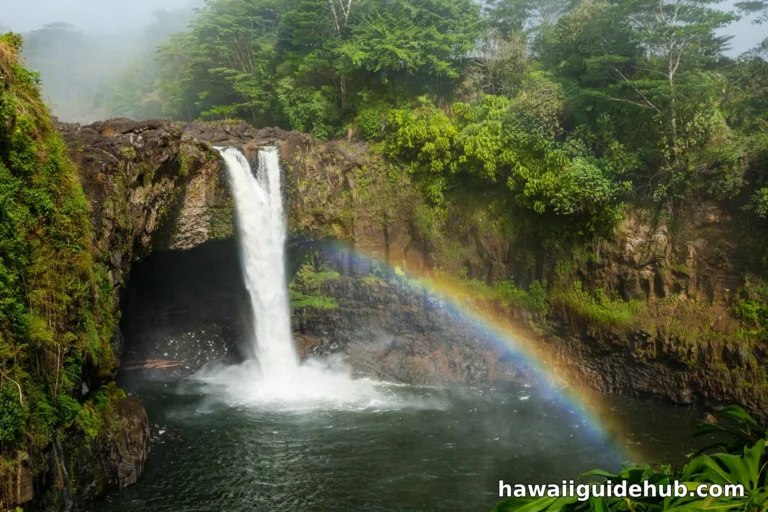
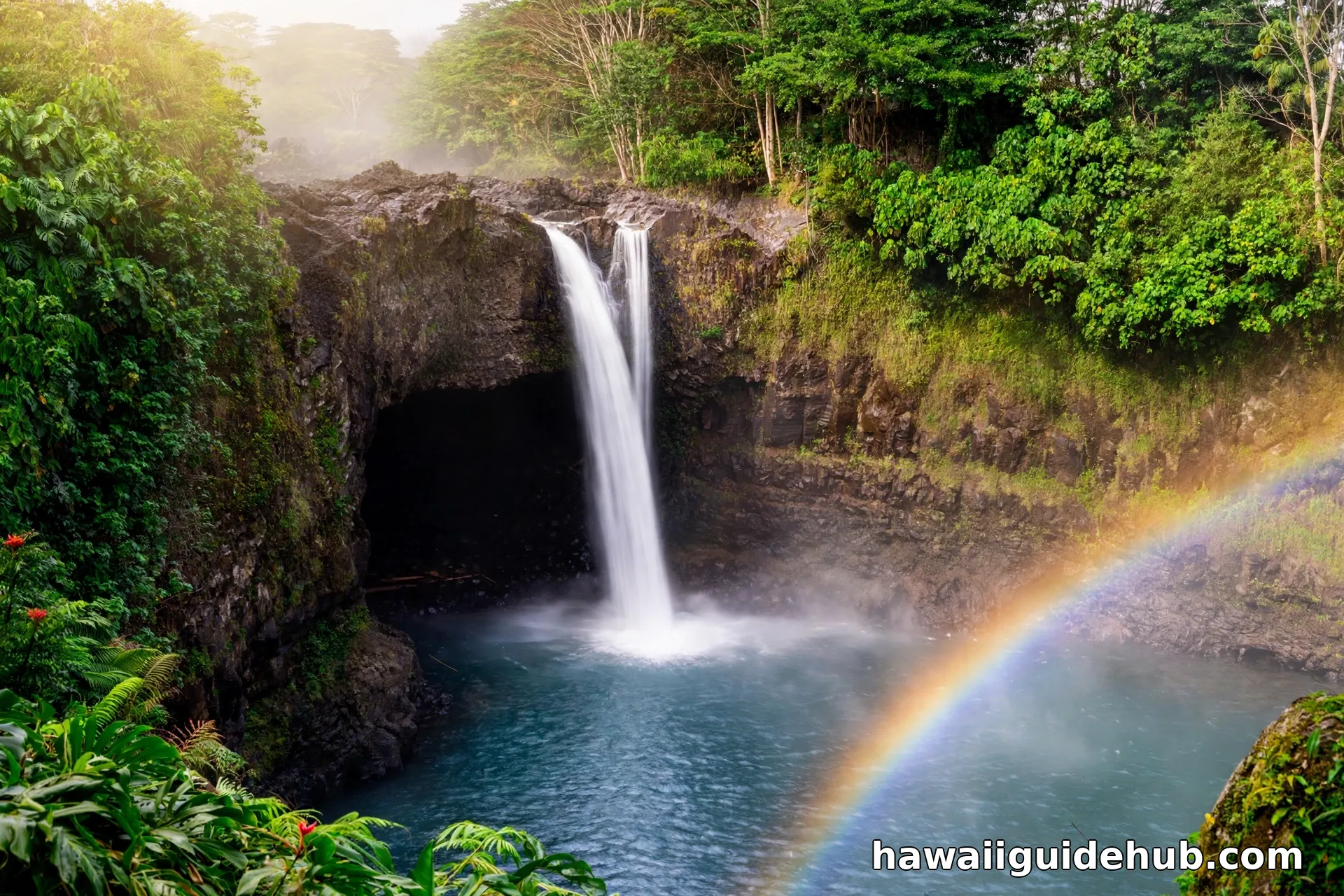
Rainbow Falls is Hilo’s signature waterfall: an 80-foot cascade in the middle of town that throws rainbows into its own mist on sunny mornings. It sits inside Wailuku River State Park, minutes from downtown Hilo, and it is one of the easiest great waterfalls in Hawaii to visit. No hike, no reservation, no fee listed by the state. You park, you walk a minute, and there it is.
This is the complete guide to Rainbow Falls in Hilo, with the hours question answered first. It covers the park’s hours and access, how to get there, the legend behind the falls, the best time to see the rainbows, the nearby Boiling Pots, what to bring, and practical tips. Everything about visiting Rainbow Falls lives on this one page.
Rainbow Falls Hours and Access at a Glance
| Plan this | The detail |
|---|---|
| When to go | Sunny mornings, roughly 9 to 11 a.m., for rainbows in the mist |
| How long | 20 to 45 minutes for the falls; longer with the Boiling Pots |
| How much walking | A minute or two from the parking lot to the overlook; stairs to the top viewpoint |
| Cost | No admission fee listed by Hawaii State Parks |
| Parking and facilities | Small parking lot; restrooms get crowded at peak times |
| Hours | Daylight hours daily; commonly listed as 8:00 a.m. to 5:00 p.m. (verify on the official DLNR page before going) |
| Getting there | Wailuku River State Park, 2-198 Rainbow Drive; about 5 to 10 minutes from downtown Hilo |
| The falls | About 80 feet tall |
Rainbow Falls Hours, Explained
Wailuku River State Park is open daily during daylight hours. Most visitor listings show 8:00 a.m. to 5:00 p.m., seven days a week, and that matches the experience of most visitors. The Hawaii Division of State Parks does not post fixed hours on the park’s official page, and hours can shift with conditions, maintenance, or events, so check the official DLNR park page or call the park office at (808) 961-9540 before making a special trip.
There is no admission fee listed for the park. Parking is in a small lot that fills quickly at midday; arriving early solves both the parking and the crowd problem. If the lot is full, be patient or come back; do not block the road or park illegally on the narrow streets around the park.
Where Rainbow Falls Is and How to Get There
Rainbow Falls is on the Wailuku River in Hilo, on the east side of the Big Island. From downtown Hilo, take Waianuenue Avenue uphill (mauka) and follow the signs for Rainbow Falls; the park entrance is on Rainbow Drive. The drive takes about five to ten minutes. From the Kona side, it is roughly a two-hour drive across the island via the Saddle Road or the Hamakua Coast.
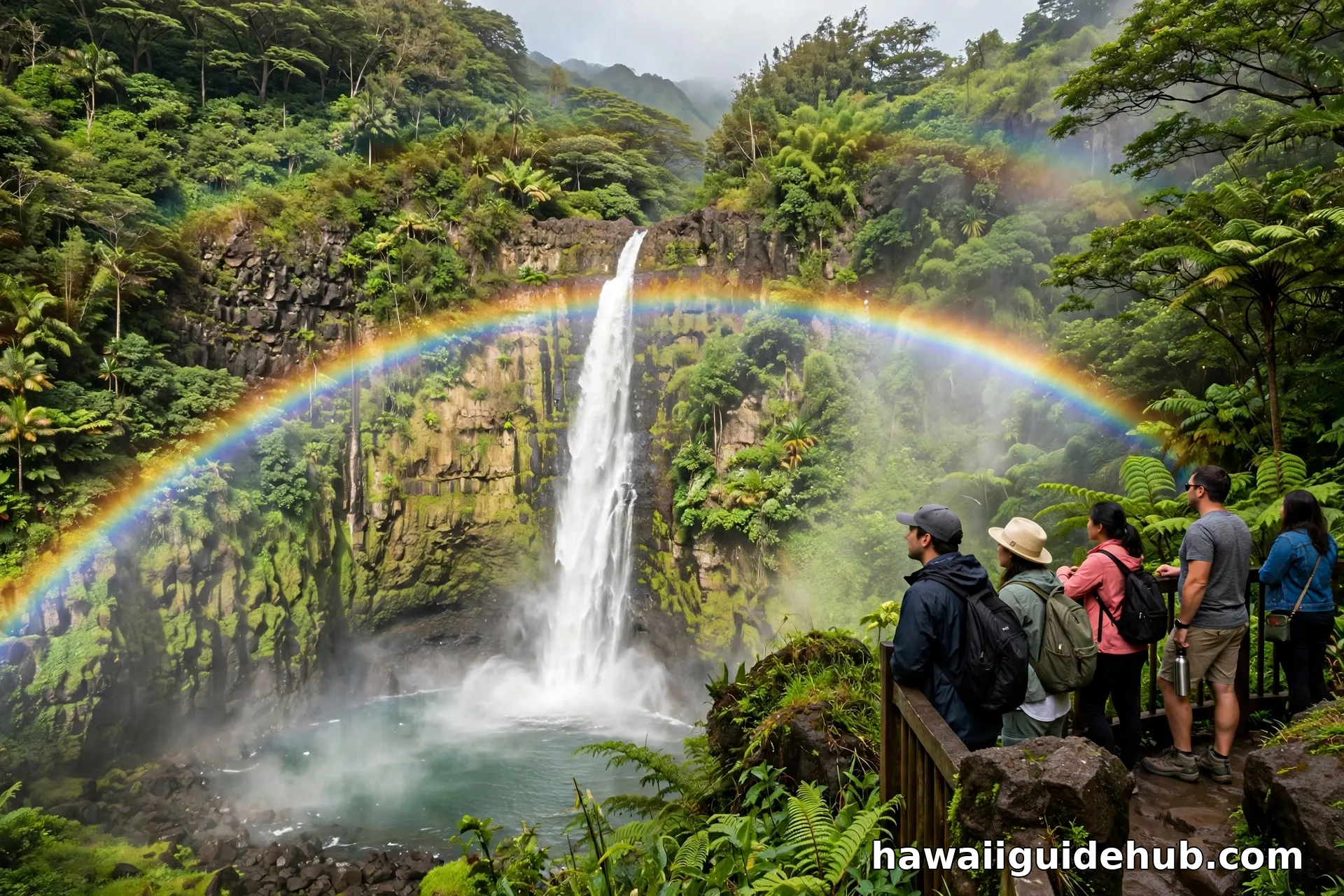
The falls are immediately accessible. From the parking lot, a paved path leads to the main overlook in a minute or two, with the 80-foot cascade framed by dense tropical vegetation. A staircase climbs to a viewpoint above the falls, looking down at the river and across to the bay. The upper trail continues along the river toward the Boiling Pots area.
The Legend of Rainbow Falls
Hawaiian legend holds that the cave behind Rainbow Falls was the home of Hina, the goddess of the moon. The falls’ Hawaiian name, Waianuenue, means “rainbow water,” a reference to the rainbows that form in the falls’ mist on sunny mornings. Standing at the overlook with a rainbow arched across the cascade, the name needs no further explanation.
Best Time to See the Rainbows
The rainbows are a morning phenomenon. You need direct sun hitting the mist, which happens on clear or partly cloudy mornings, typically between about 9 and 11 a.m. Afternoon visits can still be beautiful, but the rainbow odds drop as the sun moves. Hilo is famously rainy, so a morning with sun is worth prioritizing; if you wake to blue sky, go straight to the falls before the clouds build.
Flow varies with rain. After heavy rains the falls run powerful and brown; in drier spells they are a cleaner, more delicate cascade. Both have their beauty, but the classic postcard view comes with moderate flow and morning sun.
The Boiling Pots and Pepee Falls
Do not leave the park without seeing the Boiling Pots, a short drive or walk upstream. Here the Wailuku River tumbles through a series of deep, kettle-like pools connected by underground channels, and after rain the water churns as if boiling. Nearby Pepee Falls drops into the gorge in a wilder, less manicured setting. The two stops together make the park a half-day rather than a quick photo stop.
A word of caution: the river here is dangerous. The currents above and below the falls are powerful, the rocks are slippery, and people have died in the Wailuku River. Stay on the overlooks and marked paths, heed all warning signs, and never swim in the river near the falls. The beauty is for looking, not for entering.

What to Bring and Practical Tips
Rainbow Falls is an easy stop, so pack light: a camera, light rain gear (this is Hilo), mosquito repellent, and water. Wear shoes with grip if you plan to climb the stairs to the upper viewpoint; the steps can be slick. The small parking lot is the main constraint, so arrive before 10 a.m. or after 2 p.m. to avoid the tour bus peak. Restrooms are available but get crowded.
Pair the falls with a Hilo day: the downtown farmers market, the Lyman Museum, or a drive down the Hamakua Coast. Rainbow Falls plus the Boiling Pots plus lunch in Hilo makes an ideal half-day, and the whole outing costs nothing but gas and food.
Accessibility
The main overlook is a short, relatively flat walk from the parking lot and is accessible to most visitors. The staircase to the upper viewpoint and the river trails involve steps and uneven ground. Wheelchair-accessible parking and viewing areas are provided near the main overlook.
The Wailuku River: Waters of Destruction
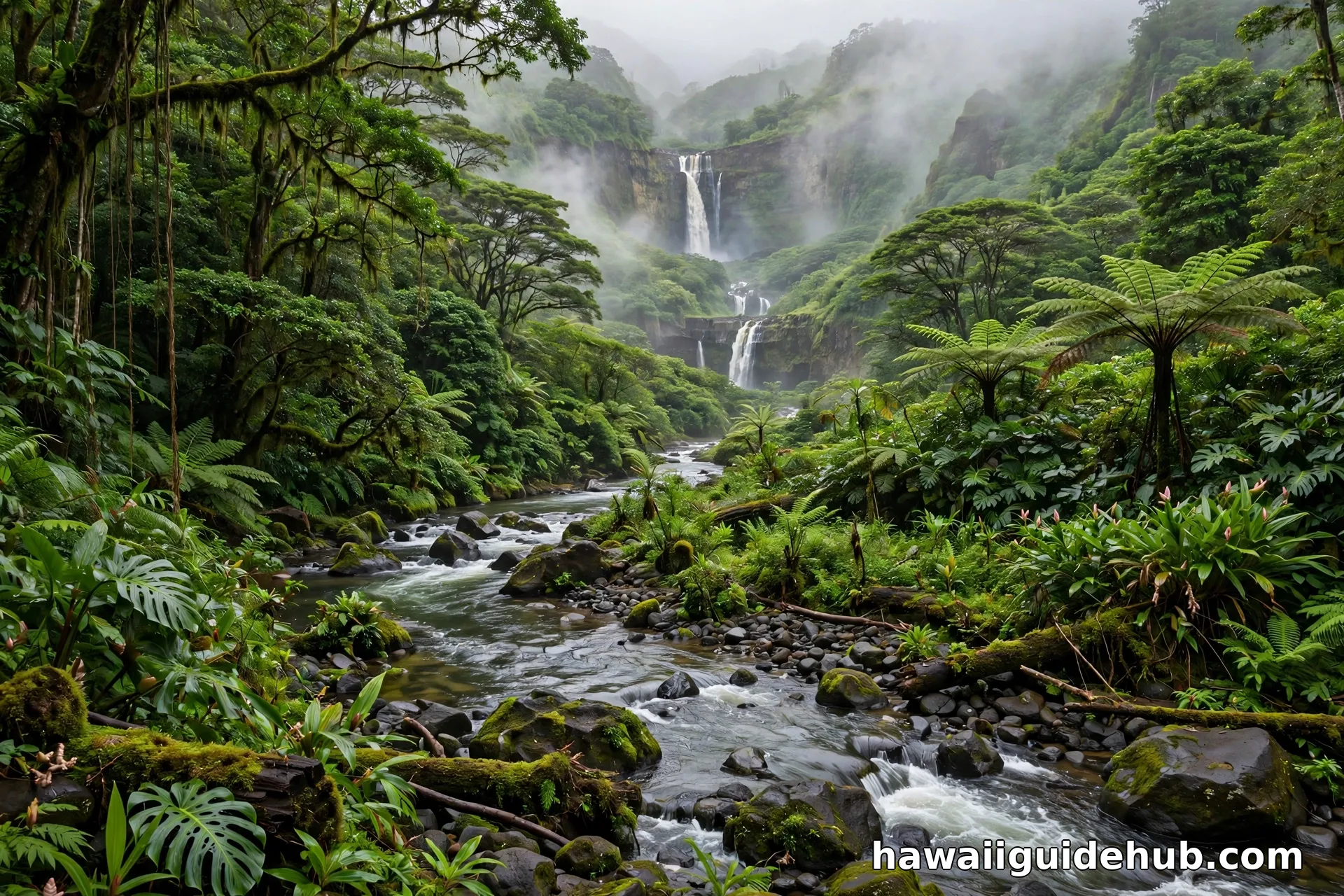
The Wailuku River, which feeds Rainbow Falls, carries a name that commands respect: Wailuku means “waters of destruction” in Hawaiian. It is the longest river in Hawaii, running about 28 miles from the slopes of Mauna Kea to Hilo Bay, and it has earned its name repeatedly. Flash floods can transform it from a scenic cascade into a raging torrent, and the river has claimed lives over the years. The name is not folklore; it is a warning written into the landscape.
This is why the park’s warning signs are so emphatic, and why you should treat them as law. Never enter the river near the falls, never climb the rocks at the water’s edge, and take heavy rain as a signal to leave. The falls are magnificent to look at and deadly to underestimate, and the river’s name tells you everything you need to know.
Making a Hilo Day of It
Rainbow Falls anchors an ideal Hilo day. Start at the falls in the morning for the rainbow light, then head to the Boiling Pots upstream. From there, downtown Hilo is minutes away: the Hilo Farmers Market runs daily with tropical fruit, flowers, and local crafts. The Lyman Museum covers the island’s natural and cultural history, and the Pacific Tsunami Museum tells the story of the waves that shaped modern Hilo. For lunch, downtown holds some of the Big Island’s best local food, from poke to Thai to classic plate lunch.
If you have a full day, continue up the Hamakua Coast: Akaka Falls State Park, about 30 minutes north, pairs beautifully with Rainbow Falls for a two-waterfall day. The Hawaii Tropical Bioreserve Garden in Onomea offers a stunning boardwalk through jungle to the ocean. Rainbow Falls in the morning, Akaka Falls in the afternoon, and dinner back in Hilo is one of the great Big Island days.
Photographing Rainbow Falls
The classic shot is from the main overlook, framing the full 80-foot cascade with the vegetation on both sides. Morning light is essential for the rainbow; position yourself so the sun is behind you and the mist is in front. A polarizing filter cuts the glare on the wet rocks and deepens the greens. The upper viewpoint offers a different composition, looking down the river toward the bay. After heavy rain the falls run muddy brown; for the turquoise-and-green postcard look, visit after a few dry days.
Rainbow Falls With Kids
Rainbow Falls is an excellent waterfall for families with young children. The walk from the parking lot to the overlook is short and paved, the viewing area is fenced, and the payoff is immediate, which matters with short attention spans. Kids love the rainbow effect and the legend of Hina’s cave. Keep children close to you at all times, well back from the water, and use the visit to teach why the river’s warning signs deserve respect. The stairs to the upper viewpoint are manageable for school-age kids with supervision.
What Grows Around the Falls
The vegetation framing Rainbow Falls is classic Hawaiian lowland rainforest: towering banyan and monkeypod trees, wild ginger, heliconia, and dense ferns. The park’s plantings include both native and introduced species, and the big trees around the parking area are worth a look on their own. Birders should listen for introduced songbirds and watch for the occasional native species along the river corridor. The lushness is no accident; Hilo’s rainfall, among the highest of any American city, keeps everything green year round.
Rainbow Falls in Different Weather
Hilo’s weather changes fast, and each version of the day gives you a different falls. On a clear morning, you get the rainbow and the classic view. On a misty, overcast day, the falls take on a moody, primeval character that photographers love, with saturated greens and soft light. In heavy rain, the falls roar and the river rises; watch from the overlook but do not linger near the water, and be ready to leave if conditions worsen. There is no bad time to see Rainbow Falls, only times that demand more caution.
Can You Visit Rainbow Falls at Night
The park is a daylight-hours destination, and there is no reason to visit after dark. The overlooks are unlit, the stairs and riverbanks are hazardous without visibility, and the rainbows that give the falls their name need sunlight. Plan your visit for the morning or early afternoon, and save your Hilo evenings for downtown’s restaurants and the night market scene.
Video: Rainbow Falls, Hilo Hawaii in 4K
A 4K tour of Rainbow Falls, from the Waiānuenue legend to the best morning light for the rainbow.
Frequently Asked Questions
What are the hours for Rainbow Falls in Hilo?
Wailuku River State Park, home to Rainbow Falls, is open daily during daylight hours, commonly listed as 8:00 a.m. to 5:00 p.m. The state does not post fixed hours on the park’s official page, so verify on the DLNR site or by calling (808) 961-9540 before visiting.
Is there an entrance fee for Rainbow Falls?
No admission fee is listed by Hawaii State Parks for Wailuku River State Park. It is one of the great free attractions on the Big Island.
When is the best time to see the rainbow at Rainbow Falls?
Sunny mornings, roughly 9 to 11 a.m., when sunlight hits the falls’ mist. Afternoon visits are still scenic but the rainbow effect is a morning phenomenon.
Can you swim at Rainbow Falls?
No. The Wailuku River at and around the falls is dangerous, with powerful currents and slippery rocks. Stay on the overlooks and marked paths, and never enter the water near the falls.
How long do you need at Rainbow Falls?
Most visitors spend 20 to 45 minutes at the falls overlook. Add the Boiling Pots and Pepee Falls upstream and it becomes a one to two hour outing.
Rainbow Falls is proof that the best Hawaii experiences are not always the hardest to reach. An 80-foot waterfall, a Hawaiian legend, morning rainbows, and no admission fee, all five minutes from downtown Hilo. Check the hours, go early, and let the morning sun do the rest. Pair it with the Boiling Pots and a Hilo town day, and you have one of the finest free outings on the Big Island.