Butter Mochi: Hawaii’s Chewy, Buttery Baked Treat

Crisp and golden on top, dense and chewy in the middle, buttery all the way through: butter mochi is the treat Hawaii cannot stop baking. It shows up at potlucks, bake sales, office parties, and family gatherings on every island, cut into squares and gone within minutes. It looks like a simple bar cookie. One bite tells you it is something else entirely.
This is the single complete guide to butter mochi in Hawaii. It covers what butter mochi is, where it came from, how it differs from Japanese mochi, what makes mochiko flour special, how it is made, the popular flavor variations, where visitors find it, and how to bake it at home. If you have been searching for anything about butter mochi, the answers are all here on this one page.
Butter Mochi at a Glance
| What it is | A baked bar made from sweet rice flour, butter, coconut milk, eggs, and sugar |
| Origin | Hawaii; a fusion of Japanese mochi tradition and American butter cake, born in plantation-era kitchens |
| Key ingredient | Mochiko, a flour milled from glutinous (sweet) rice; naturally gluten free |
| Signature texture | Chewy, dense center with a crisp, golden, slightly crackled top |
| How it is served | Baked in a 9×13 pan, cooled completely, cut into squares |
| Bake | About 1 hour at 350°F until the top is golden and the center is set |
| Cutting trick | A plastic knife slides through without sticking |
| Popular flavors | Classic, ube, lilikoi (passion fruit), chocolate, matcha |
| Keeps | Often better the next day, once the flavors deepen and the texture firms |
What Butter Mochi Tastes Like
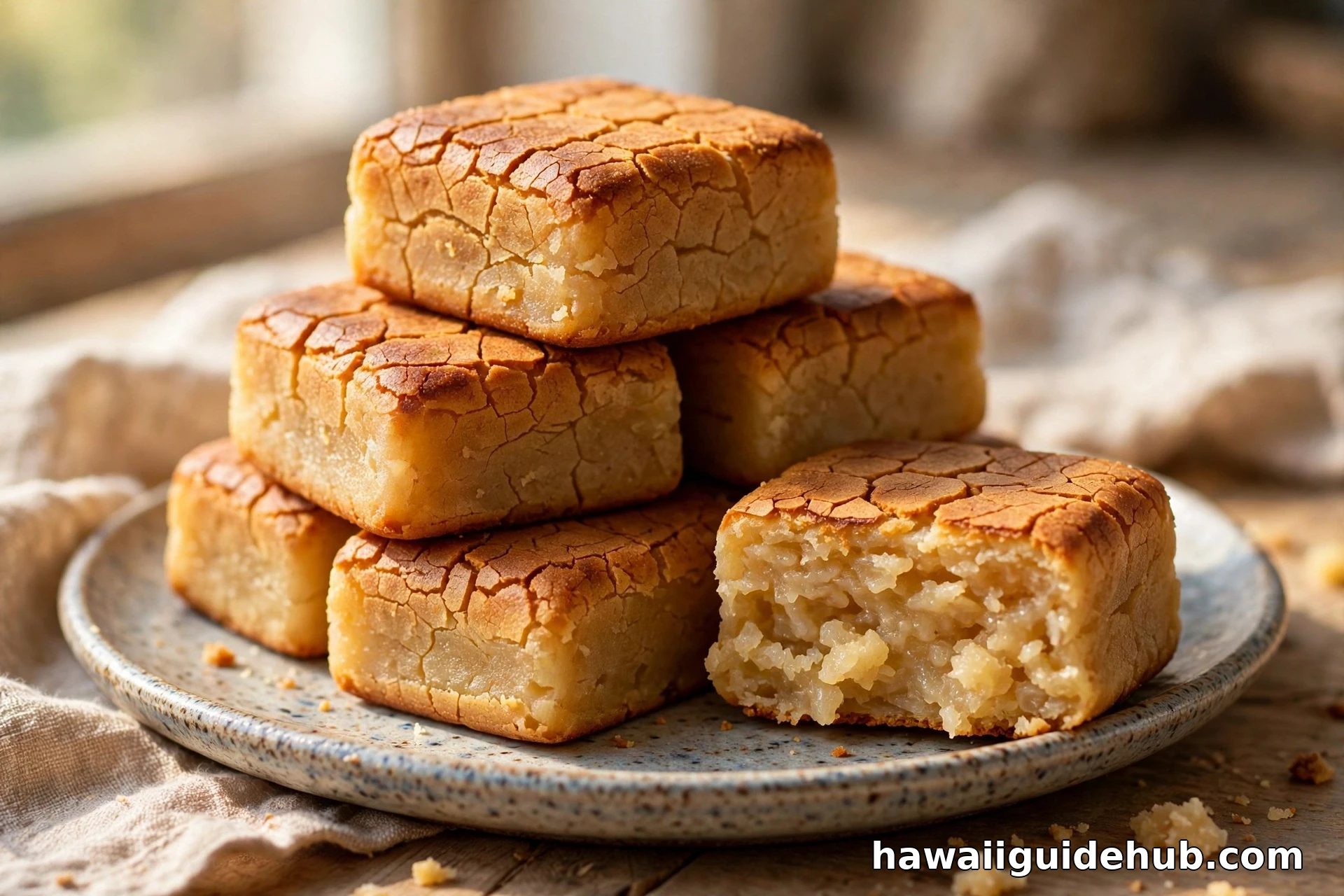
Butter mochi tastes like a coconut custard and a rice cake decided to become one dessert. The flavor is buttery and gently sweet, with coconut milk rounding everything out and vanilla adding warmth. But the texture is the real story. The top bakes up thin, crisp, and golden, almost like the crust of a good brownie, while the inside stays dense, springy, and chewy in a way no wheat-flour bar can imitate.
It is rich but not heavy, sweet but not cloying. Because mochiko has no gluten, there is none of the breadiness of a cake and none of the crumble of a cookie. Each square holds together firmly, then gives way with a satisfying chew. People who try it for the first time often pause mid-bite, surprised that something this simple tastes this good.
Where Butter Mochi Comes From
Butter mochi is a true Hawaii invention, born from the islands’ plantation era. Starting in the late 1800s, tens of thousands of Japanese immigrants arrived to work the sugar plantations, bringing their food traditions with them. Mochi, pounded glutinous rice, was central to Japanese celebrations, especially New Year. In Hawaii’s mixed plantation camps, Japanese home cooks encountered American butter cakes, Filipino rice cakes like bibingka, and the one-bowl baking style of their neighbors.
Somewhere in that cultural crossroads, someone had the idea to bake mochiko flour, the sweet rice flour sold in every Hawaii grocery store, with butter, sugar, eggs, and coconut milk. The result kept the beloved chew of mochi but baked up like an American bar cookie. No single inventor is documented, and food writers note that the exact origin story has never fully surfaced. That is fitting. Butter mochi was not created by a chef. It was created by a community.
The parallels are telling. The Filipino bibingka, a coconut rice cake baked in banana leaves, shares the same chewy-rich character, and similar baked rice cakes appear in southern Japan’s Akita prefecture. Butter mochi belongs to a whole Pacific family of treats. It just happens to be Hawaii’s most famous member.
Mochiko: The Flour That Makes It Work
Mochiko is flour milled from mochigome, glutinous or “sweet” rice. Despite the name, glutinous rice contains no gluten at all. The word refers to the sticky, glue-like texture the rice develops when cooked. That stickiness comes from the rice’s starch composition, which is almost entirely amylopectin, the branchy starch molecule that makes cooked rice cling together.
When baked, mochiko behaves nothing like wheat flour. It does not form gluten networks, so the crumb never gets bready. Instead it sets into a dense, elastic, chewy matrix that stays moist for days. This is why butter mochi is naturally gluten free, and why it is often better on the second day: the starches continue to firm and the flavors meld overnight. A box of mochiko is the one ingredient worth seeking out; everything else in the recipe is an ordinary pantry staple.
How Butter Mochi Is Made
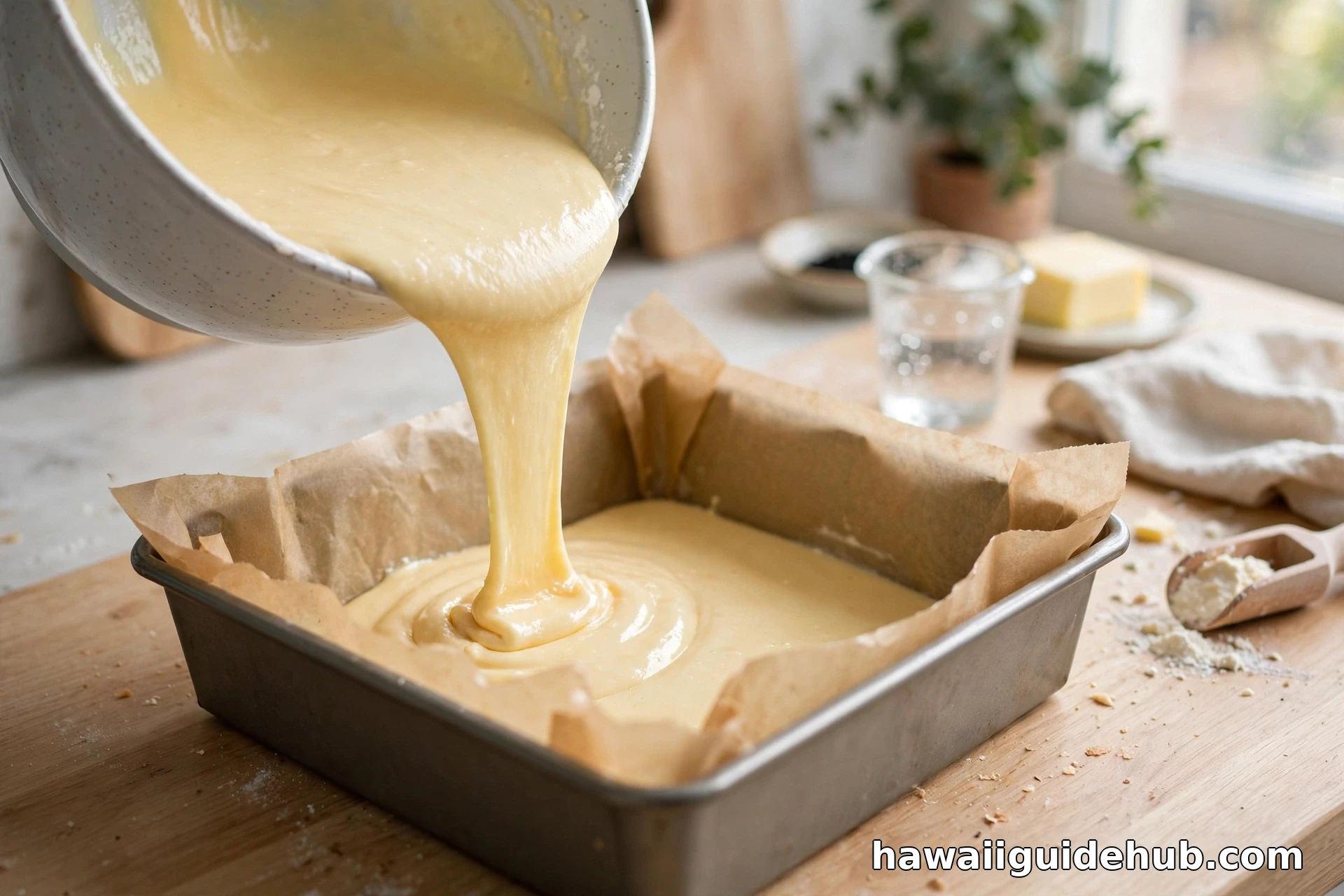
The classic recipe is famously forgiving. Dry ingredients, mochiko flour, sugar, and baking powder, are whisked in one bowl. Wet ingredients, eggs, milk, coconut milk, melted butter, and vanilla, are whisked in another. The two are combined into a smooth batter, poured into a greased 9×13 pan, and baked at 350°F for about an hour, until the top is deeply golden and the center is set.
The hardest part is the waiting. Butter mochi must cool completely before cutting, or the squares will smear rather than slice. Hawaiian cooks swear by the plastic knife trick: a cheap plastic knife glides through the chewy crumb without dragging or sticking, giving clean squares every time. Some recipes add shredded coconut for extra chew, or pour it into muffin tins for maximum crispy edges.
The Texture Test: What Perfect Butter Mochi Feels Like
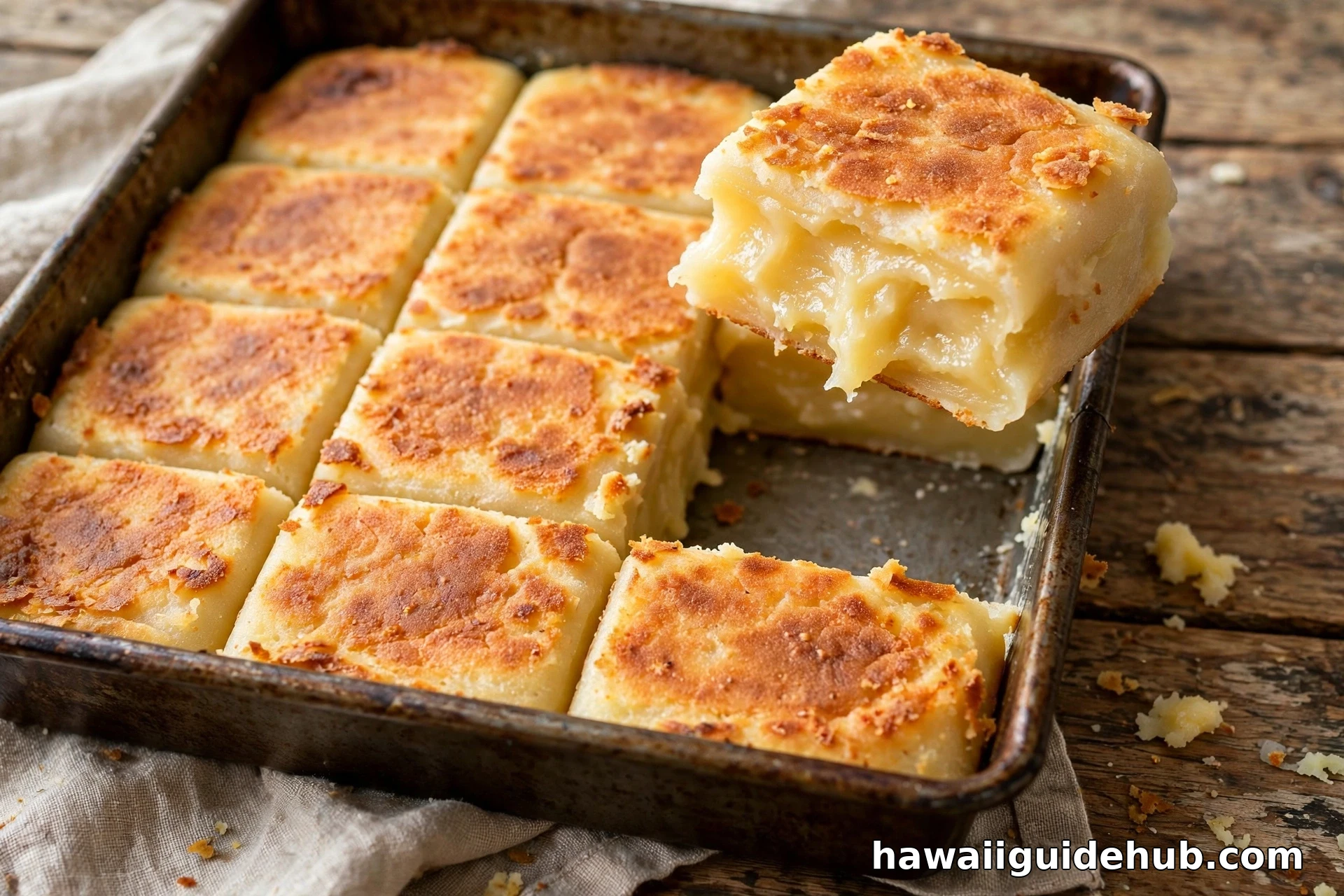
Judging butter mochi is a tactile skill. A perfect square has three zones. The top should be thin, golden, and lightly crisp, with a fine crackle. The edge pieces should be chewier and more caramelized than the center. The interior should be uniformly dense and springy, bouncing back slightly when pressed, with no gooey or underbaked streaks.
Common failures are easy to diagnose. A gummy, wet center means it needed more time in the oven. A dry, crumbly texture means too much baking or too little coconut milk. A pale, soft top means the oven ran cool. None of these ruin the batch, though. Even imperfect butter mochi disappears fast.
Butter Mochi vs. Japanese Mochi: Clearing Up the Confusion
The shared name causes constant confusion, especially now that Japanese-style mochi ice cream is sold everywhere. They are very different foods that happen to share a flour.
| Butter mochi (Hawaii) | Japanese mochi | |
| Form | Baked bar, cut into squares | Pounded rice dough, shaped by hand |
| Main flavors | Butter, coconut, vanilla, sugar | Plain rice, or filled with sweet red bean |
| Texture | Dense chew with a crisp baked top | Soft, stretchy, pillowy |
| Preparation | One-bowl batter, baked 1 hour | Rice steamed and pounded, labor intensive |
| Gluten | None, despite the chewy texture | None |
| Occasion | Everyday potlucks and bake sales | New Year and ceremonies |
| Bottom line | A baked good that borrows mochi’s chew | The original pounded rice cake |
Popular Variations Worth Knowing
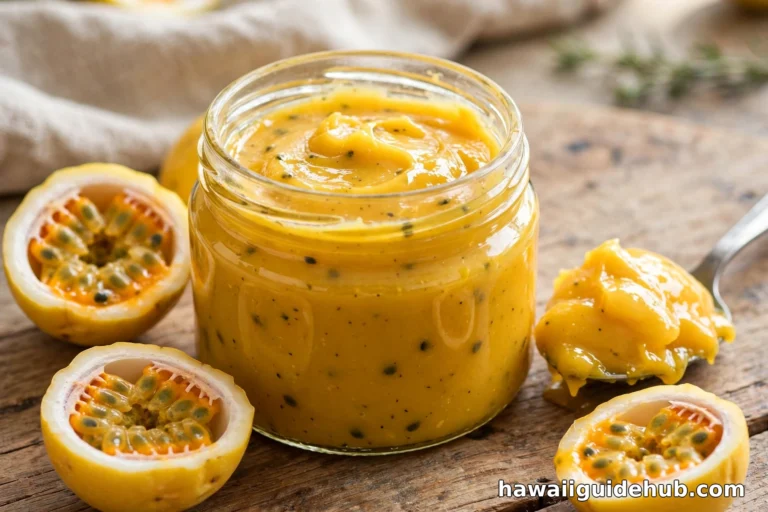
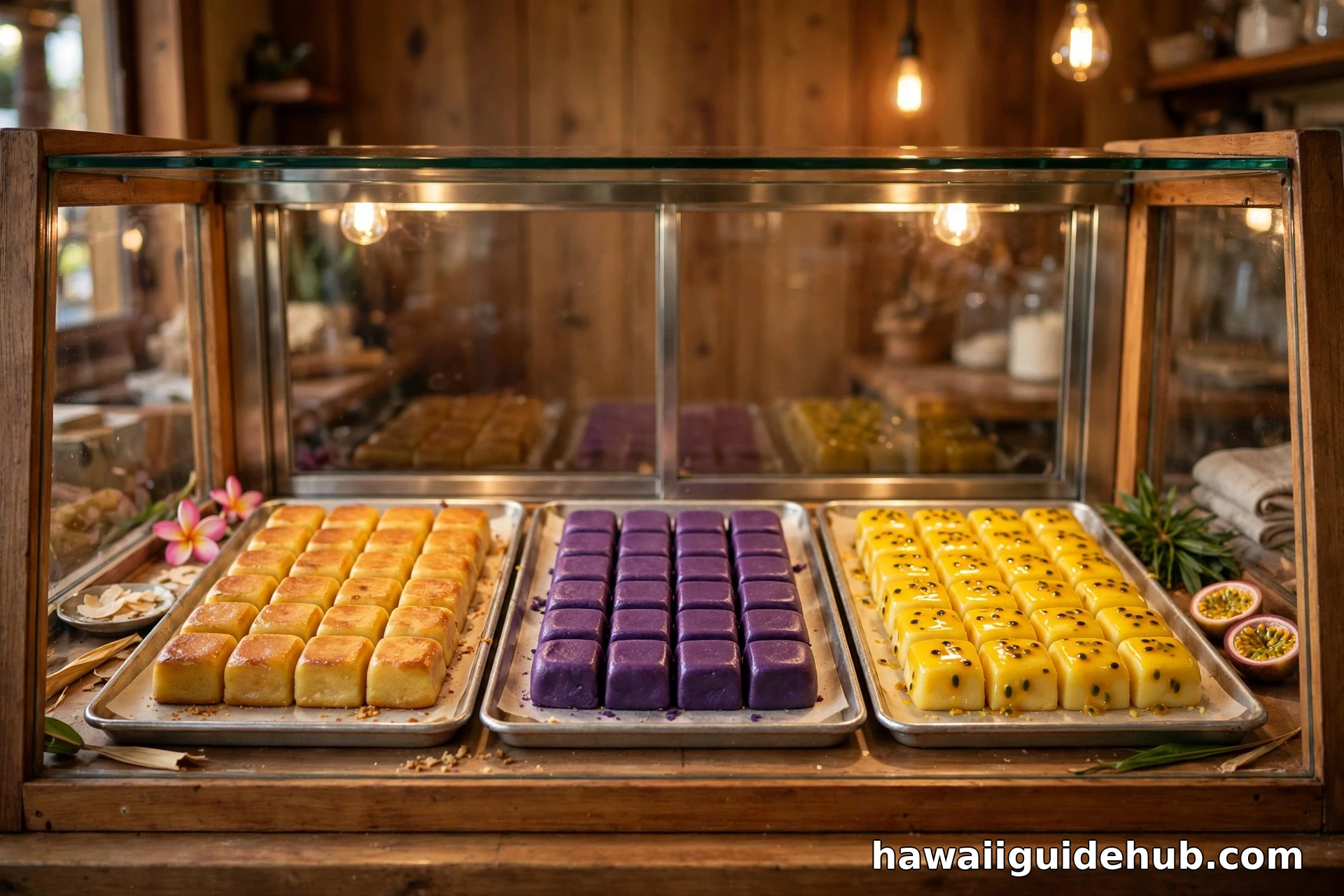
Once you master the classic, Hawaii’s flavor variations open up. Ube butter mochi, made vivid purple with ube extract, is the most eye-catching and one of the most beloved. Lilikoi butter mochi folds passion fruit puree into the batter, sometimes with a sweet-tart glaze on top. Chocolate butter mochi adds cocoa for a brownie-like depth, and matcha versions bring a gentle green-tea bitterness that balances the sweetness.
Bakeries and home cooks also play with form. Butter mochi muffins maximize the coveted crispy edges. Bite-size pieces make it party food. Some cooks layer it with haupia for a two-texture dessert. The base recipe is so sturdy that nearly any flavor addition works, which is why new variations keep appearing at every bake sale.
Where Visitors Find Butter Mochi in Hawaii
Butter mochi is sold in bakeries, grocery store bakeries, and farmers markets across the islands, usually by the piece or the pan. It is a staple of the potluck table rather than the restaurant dessert menu, so the most authentic way to encounter it is at a community gathering, a school fundraiser bake sale, or a local bakery case. Pre-made mixes are also sold in Hawaii grocery stores for visitors who want to bake it at home.
Because it travels well and keeps for days, butter mochi makes an excellent edible souvenir. A pan wrapped for the flight home will still be good when you land, and it is often better on day two anyway. Pair your tasting with the islands’ other sweets, like malasadas, for a full tour of Hawaii’s bakery case.
Baking It at Home: Tips That Matter
Butter mochi is one of the most mainland-friendly Hawaiian recipes. Mochiko flour is sold in the Asian foods aisle of most supermarkets and online. Use full-fat coconut milk for the richest result, and let the butter cool slightly before mixing so it does not cook the eggs. Sift or whisk the mochiko well to avoid lumps, and tap the pan on the counter before baking to release air bubbles.
Do not underbake. The top should be genuinely golden, not pale, and a toothpick in the center should come out with moist crumbs but no wet batter. Cool the pan completely, ideally for several hours, before cutting with a plastic knife. Store squares in an airtight container at room temperature for up to two days. For more island flavors to try alongside it, see our guide to must-try local dishes in Hawaii and native Hawaiian fruits like lilikoi, which makes a wonderful butter mochi variation.
Butter Mochi and Hawaii’s Potluck Culture
To understand butter mochi, you have to understand the Hawaii potluck. Island gatherings run on shared food, and the unwritten rule is to bring something that travels well, feeds many, and disappears fast. Butter mochi checks every box. A single 9×13 pan yields two dozen squares, it needs no reheating or refrigeration at the party, and it holds its texture for hours on the table. It is the rare dessert that is as practical as it is delicious.
Ask longtime residents about their butter mochi memories and you will hear about grandmothers who never measured, office coworkers famous for their ube version, and bake sales where the mochi table sold out first. The PBS Hawaiʻi series ʻONO! devoted an entire segment to the dessert, featuring island families who treat their recipes as heirlooms. In Hawaii, a butter mochi recipe is the kind of thing passed down like jewelry.
Video: Hawaii’s Love Affair With Butter Mochi
PBS Hawaiʻi explores why island families cannot get enough of butter mochi, with a home recipe included.
Frequently Asked Questions
Is butter mochi gluten free?
Yes. Mochiko is milled from glutinous rice, which contains no gluten despite its sticky texture. Butter mochi is naturally gluten free as long as the baking powder and other ingredients are certified gluten free.
What is the difference between butter mochi and mochi?
Japanese mochi is pounded steamed rice, soft and stretchy, often filled with sweet bean paste. Butter mochi is a baked bar made from mochiko rice flour with butter, coconut milk, and sugar, with a crisp top and dense chewy center. They share a flour, not a recipe.
Why cut butter mochi with a plastic knife?
The chewy, starchy crumb sticks to metal blades and drags, tearing the squares. A plastic knife has just enough flex and a nonstick surface to glide through cleanly, giving neat squares.
Can you make butter mochi ahead of time?
Yes, and you should. Butter mochi is often better the next day, once the texture firms and the flavors deepen. Store it in an airtight container at room temperature for up to two days.
What does mochiko flour taste like?
On its own it is neutral, like other rice flours. Its contribution is textural, not flavorful: it creates the dense, springy chew that defines butter mochi.
Is butter mochi Japanese or Hawaiian?
It is Hawaiian, created in Hawaii’s plantation-era kitchens from Japanese mochi tradition fused with American baking. No equivalent baked bar exists in Japan; it is an island invention.
Butter mochi is Hawaii’s food story in a single square: Japanese tradition, American technique, tropical ingredients, and a community that made it their own. Bake a pan, share it the way island families do, and you will understand why no potluck in Hawaii is complete without it.