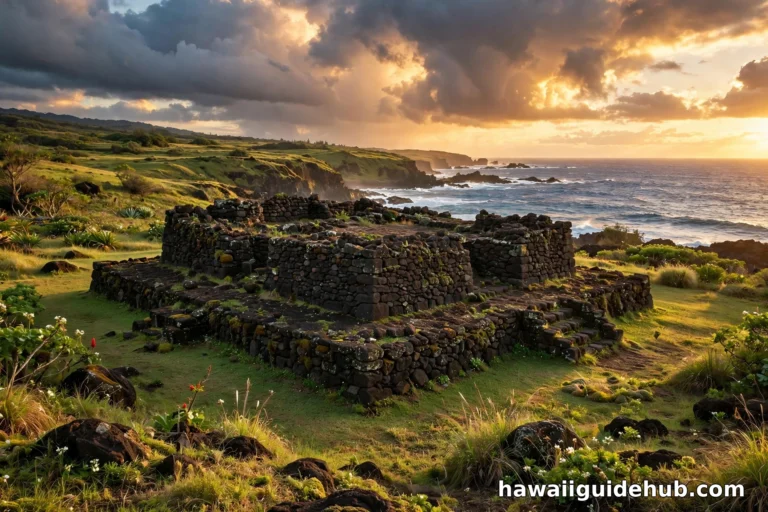
Paniolo: The Hawaiian Cowboys Who Beat the West

Hawaii had cowboys before the Wild West had a name for them. The paniolo, Hawaiian cowboys descended from Mexican vaqueros, were roping wild cattle on the slopes of Mauna Kea decades before the first Texas cattle drive. Their story runs from a British captain’s gift of five cows to the world’s roping championship, and it is still being written on the ranches of Waimea. This guide tells the full history of the paniolo.
This is the single complete guide to paniolo history in Hawaii. It covers where the word comes from, the cattle gift, the wild herds, the vaqueros, John Palmer Parker, Parker Ranch, Ikua Purdy’s championship, paniolo culture, the modern ranches, and FAQs. Everything about the paniolo lives on this one page.
Five Cows and a Kapu
In 1793, British Captain George Vancouver gave Kamehameha I a gift: five head of cattle. The king, recognizing their value, placed a kapu on them: no one could kill cattle for ten years. The cattle did what cattle do: they multiplied, roaming the forests and grasslands, growing wild and dangerous. By the mid-19th century, some 25,000 wild cattle ravaged the island’s ecosystems, trampling native forest and crops. Hawaii had a cattle problem before it had cowboys: the solution would come from Mexico.
Español Becomes Paniolo
In 1832, Kamehameha III invited three Mexican vaqueros from California, Kossuth, Ramon, and Louzeida, to teach Hawaiians to handle cattle from horseback. The Hawaiians called the vaqueros “español,” Spaniards, and the word softened in Hawaiian mouths into “paniolo.” The vaqueros taught roping, riding, and stockmanship; the Hawaiians made it their own, blending Mexican technique with Hawaiian culture. The paniolo was born: not an imitation cowboy but a new thing, Hawaiian to the core.
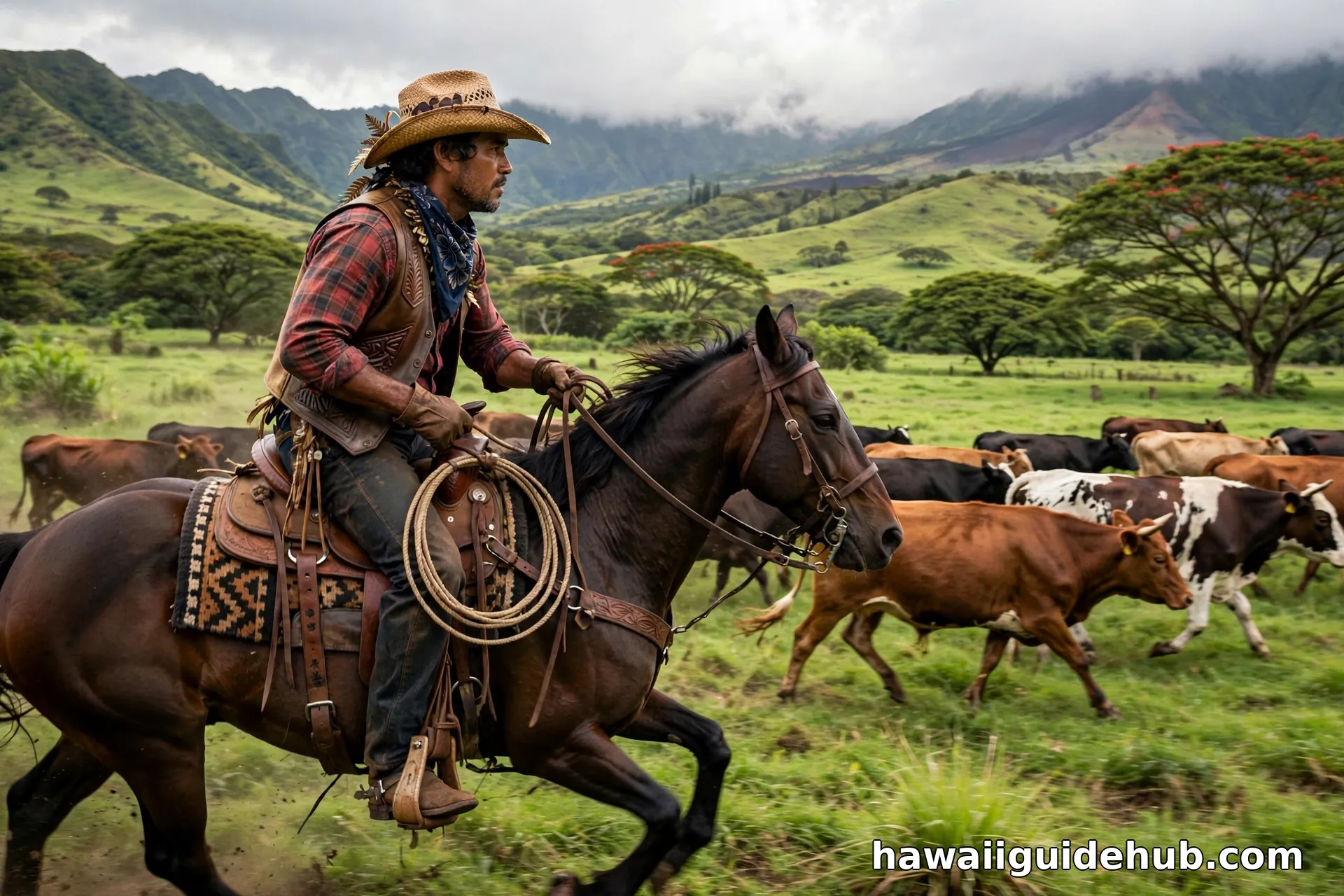
John Palmer Parker and the Ranch
John Palmer Parker, a sailor from Massachusetts, jumped ship in Hawaii around 1809 and found work for Kamehameha taming the wild herds. He married Kipikane, granddaughter of Kamehameha I, and in 1847 founded Parker Ranch at Waimea. The ranch grew into a colossus: at its peak covering hundreds of thousands of acres, tens of thousands of cattle, one of the largest ranches in the United States. Parker brought in the vaqueros, built the ranching infrastructure, and established a dynasty. Parker Ranch has operated continuously since 1847: through the monarchy’s overthrow, the World War II military leases, and into the present, still running cattle in Waimea.
Paniolo vs Mainland Cowboy
| Feature | Paniolo | Mainland cowboy |
| Roots | Mexican vaqueros, 1832 | Same vaquero roots, later |
| Hat | Lauhala (pandanus) hat, often lei-wrapped | Felt Stetson |
| Roping | Dally (wrap) style from vaqueros | Tie-down and team roping |
| Music | Ukulele and slack-key at camp | Guitar and harmonica |
| Terrain | Volcanic slopes, rainforest, lava | Plains and desert |
| Timeline | Roping cattle by the 1830s | Cattle drives from the 1860s |
Ikua Purdy: World Champion
On August 22, 1908, in Cheyenne, Wyoming, three Hawaiian cowboys rode into the most prestigious rodeo in America. The crowd laughed at the men in lauhala hats wrapped with flower leis. They stopped laughing when Ikua Purdy roped a full-grown steer in 56 seconds flat, on a borrowed horse, in the rain, and walked away as World Champion Steer Roper. Purdy and his fellow paniolo had beaten the best ropers in the world at their own game. The victory announced what Hawaiians knew: the paniolo tradition was older, and in that moment better, than anything the mainland could field.
The Work: Swimming Cattle and Pit Traps
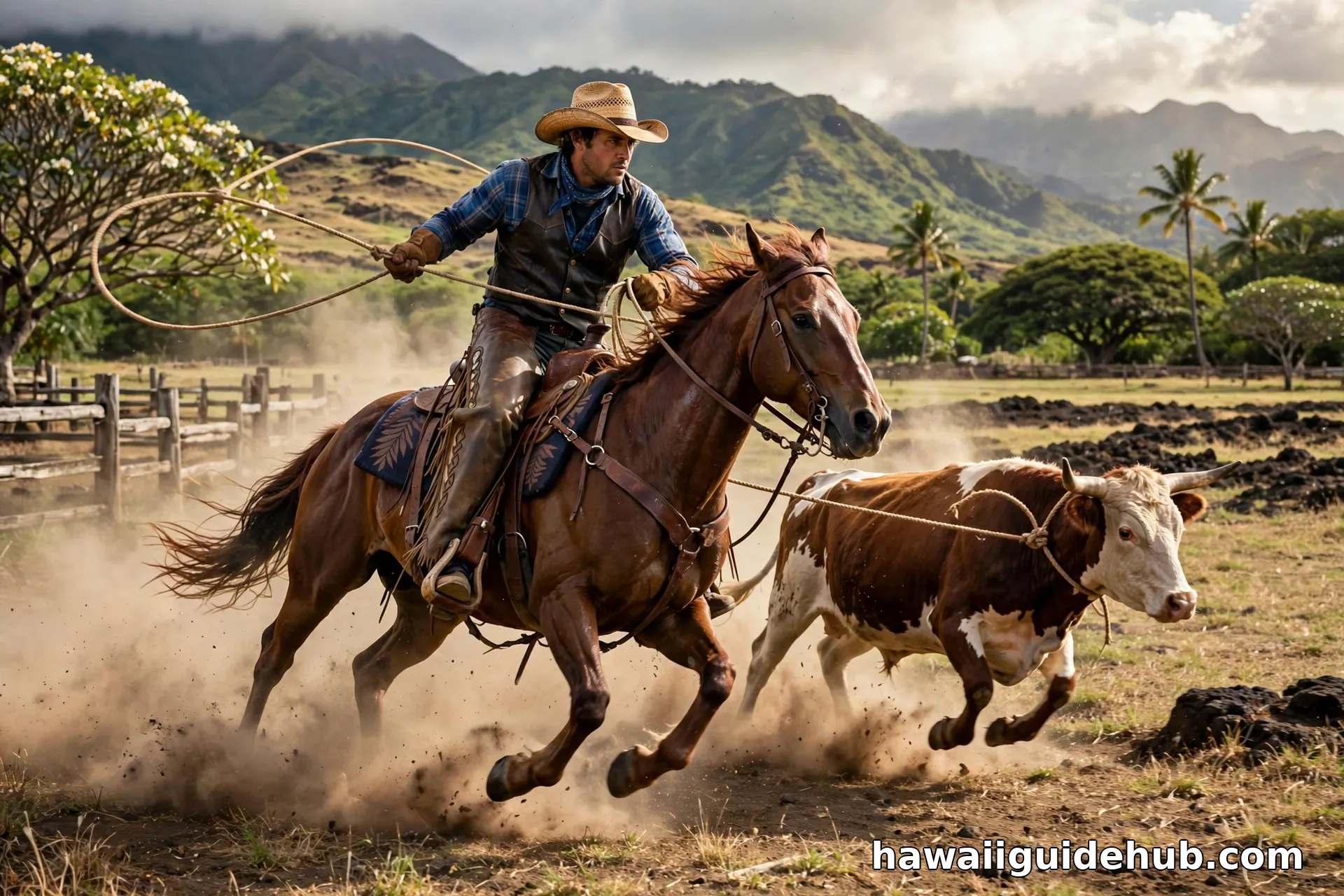
Paniolo work was uniquely Hawaiian. Wild cattle were driven into pits dug in the forest floor, tamed by hunger and thirst, then hauled up ramps and tied to domesticated steers. For shipping, cattle were herded into the surf and swum out to waiting steamships, then hoisted aboard: the Smithsonian’s 1937 footage shows paniolo working cattle in the ocean at Kawaihae. It was dangerous, skilled labor: wild bullocks in lava terrain, sharks in the surf, and a tradition that treated the work as craft. The paniolo’s roping and horsemanship were legendary because the conditions demanded it.
Paniolo Culture
The paniolo made cowboying Hawaiian. The lauhala hat, woven from pandanus, replaced the felt Stetson; flower leis wrapped the hatbands. Evenings at camp brought ukulele and slack-key guitar, not just harmonica: the paniolo were musicians, and the ranching songs are a genre of their own. The Paniolo Preservation Society and the Paniolo Hall of Fame honor the tradition’s keepers. Waimea’s rodeos and parades still celebrate it: the paniolo is not a historical costume but a living identity, passed from grandparents to grandchildren on working ranches.
The Ranches Today
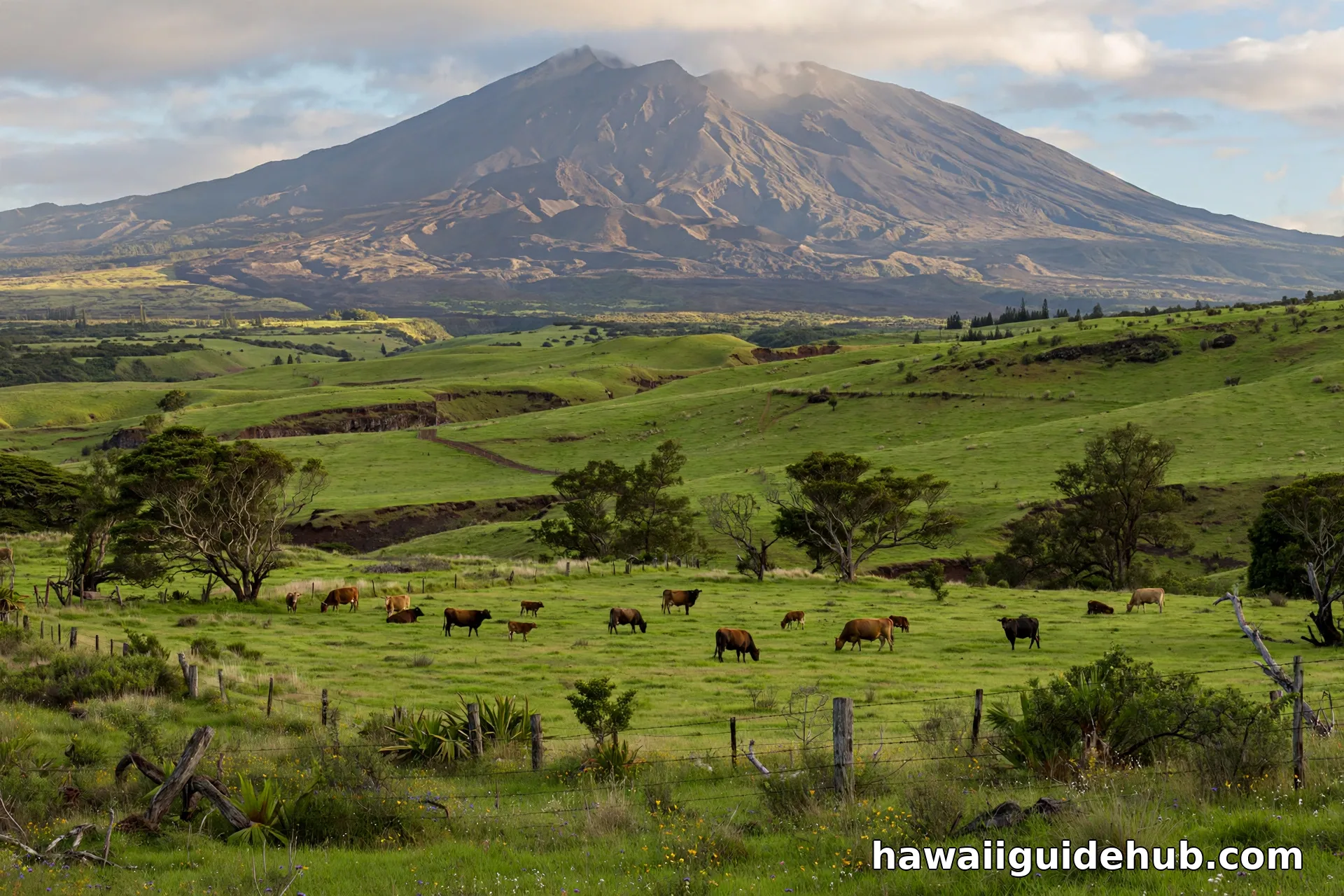
Parker Ranch still runs cattle in Waimea, one of the oldest and most renowned ranches in the United States. Around it, a constellation of Big Island ranches, Puuwaawaa, Kahua, Ponoholo, and others, keep the paniolo tradition working. Upcountry Maui and Molokai have their own ranching cultures. The industry has changed: smaller herds, diversified operations, agritourism. But the core remains: Hawaiians on horseback, working cattle on volcanic slopes, in a tradition now two centuries deep. The paniolo outlasted the wild herds, the sugar plantations, and the doubters.
The Beef Economy: Feeding the Whalers
Cattle were not just a problem to be solved but an economy to be built. Beef replaced sandalwood as a trade good: salted, barreled, and shipped to feed the whalers crowding Lahaina and Honolulu. Hides and tallow added revenue. In 1830, the Big Island’s governor ordered corrals built and the trail to Kawaihae improved: the infrastructure of a cattle economy. Waimea’s economy ran on beef for over a century, and the ranching wealth shaped the island’s politics and society. The wild herds that began as a royal gift became the foundation of an industry.
Camp Tarawa: The Marines and the Ranch
World War II wrote an unexpected chapter: in 1943, Parker Ranch leased vast lands to the U.S. military, becoming Camp Tarawa, training ground for Marines. The men who raised the flag on Iwo Jima trained on paniolo land, among the cattle and the cinder cones. The ranch’s story runs through American history in ways no Texas ranch can match: from Hawaiian kingdom to Marine training ground, the land kept serving. The military leases reshaped the ranch’s finances and footprint, effects still visible in the training areas at Pohakuloa.
The Paniolo Hall of Fame
The Paniolo Hall of Fame, maintained by the Hawaii Cattlemen’s Council, honors those who kept the heritage alive: John Palmer Parker I, ranch manager Alfred Wellington Carter, Richard Smart, the Broadway actor who inherited the ranch as an orphaned toddler and ran it for decades, and working paniolo like Robert “Lopaka” Keakealani, the horse trainer inducted in 2003. The hall is not a celebrity gallery but a working honor roll: inductees are chosen for contributions to the living tradition. It is the paniolo’s own record of who mattered, kept by the community itself.
Rodeo Culture: Hawaii’s Own Circuit
Hawaii has its own rodeo circuit, running on paniolo terms: local rodeos at Waimea and across the islands, events shaped by the vaquero tradition. The roping events reflect the dally style; the atmosphere reflects the culture: families, food, music, and a deep bench of local talent. Young riders learn from grandparents; the skills pass down like the songs. Visitors are welcome at many events: a Hawaii rodeo is a window into a community, not a tourist show, and the hospitality is genuine. Check local schedules for Waimea’s events and the smaller ranch rodeos across the islands; arrive hungry, stay for the music, and watch the kids’ events as closely as the open roping. The future of the tradition is in the children’s division, small riders on patient horses, learning the dally the way their great-grandparents did, on the same volcanic slopes, under the same wide Waimea sky. The tradition’s greatest strength was never the roping or the riding: it was the family, and the family is still in the arena, still roping, still singing, still Hawaiian, two centuries on and counting, with no sign of ever stopping.
The Vaquero Legacy in the Gear
Look closely at paniolo gear and the vaquero roots show: the braided rawhide reatas and hondos, the dally roping style, the stockman traditions. But the adaptations are Hawaiian: the lauhala hat for tropical sun and rain, the lei on the hatband, the ukulele in the bunkhouse. Even the saddles evolved: Hawaiian makers blended Mexican and American patterns into something suited to volcanic terrain. The gear is a material history of cultural fusion: every strap and braid tells where the tradition came from and what it became.
The Horses: From Gift to Herd
Horses arrived with the ships, and Hawaiians took to them with the same speed they took to roping. By the mid-19th century, Hawaii had a horse culture to match its cattle culture: the animals were essential to the ranching economy and beloved beyond it. Hawaiian horse breeding produced tough, sure-footed stock for the volcanic terrain. The horse’s place in the culture shows in the language, the songs, and the parades: the paniolo and the horse are inseparable, partners in a tradition that made both central to island life.
Women of the Paniolo Tradition
The paniolo story is often told as a men’s story, but women have always been part of it: ranching wives who ran households and businesses, women riders and ropers in the modern circuit, and cultural keepers like the Paniolo Preservation Society’s leaders who maintain the history. The tradition’s family character, grandparents teaching grandchildren, has always included daughters as well as sons. Today’s young women riders compete and win on the Hawaii circuit, carrying the tradition forward on their own terms.
Watch: How Hawaii Had a Cowboy Culture Before the Wild West
Paniolo History FAQs
What does paniolo mean?
From “español” (Spaniard): what Hawaiians called the Mexican vaqueros who taught them cattle work in 1832. The word softened into “paniolo,” now meaning Hawaiian cowboy.
When was Parker Ranch founded?
1847, by John Palmer Parker at Waimea on the Big Island. It has operated continuously since, growing into one of the largest cattle ranches in the United States.
Who was Ikua Purdy?
The paniolo who won the 1908 World Steer Roping Championship in Cheyenne, Wyoming, roping a steer in 56 seconds on a borrowed horse. A bronze statue honors him in Waimea.
Did Hawaii really have cowboys before Texas?
Yes: Hawaiians were working cattle from horseback by the 1830s, decades before the great Texas cattle drives of the 1860s-70s. The vaquero roots are shared, but Hawaii’s tradition is older.
Where can I see paniolo culture today?
Waimea on the Big Island: Parker Ranch, the Paniolo Preservation Society, rodeos, and the Ikua Purdy statue. Upcountry Maui and Molokai ranches keep their own traditions. For the wider story, see Hawaiʻi’s history before statehood and our guide to cultural experiences in Hawaii.
The Original Cowboys
The paniolo story inverts the Western: the cowboy tradition did not travel west to Hawaii but arrived from the south, took root in volcanic soil, and flowered into something uniquely Hawaiian. Five cows became 25,000 wild bullocks; three vaqueros became a two-century tradition; one roper from Waimea became world champion. The paniolo are still out there, on horseback under Mauna Kea, in lauhala hats with leis on the band. The West had its century; the paniolo had theirs first, and it has not ended. Drive through Waimea on a rodeo weekend and you will see it: horse trailers lined up, kids in lauhala hats, old-timers holding court by the chutes, the smell of dust and grilled beef in the air. It looks like a small town anywhere, until you notice the leis on the hatbands and hear the ukulele between events. That is the paniolo’s two centuries, still running: a cowboy culture that learned its trade from vaqueros, beat the world at Cheyenne, fed the whalers, trained the Marines, and never stopped being Hawaiian. For more Big Island heritage, see our volcanoes guide and Kauai guide.