
Waterfalls are among the most rewarding sights on Oʻahu, and they are also among the most misunderstood. Unlike the tall roadside cascades of Kauaʻi or the Big Island, most Oʻahu waterfalls hide at the ends of rainforest trails tucked into the island’s two volcanic mountain ranges. Reaching them takes planning, sturdy footwear, and respect for weather that can change in minutes. This guide maps every worthwhile waterfall on the island, explains how to reach each one safely, and covers the seasonal patterns, safety rules, and hiking know-how that turn a good waterfall day into a great one.
On This Page
Oʻahu Waterfalls at a Glance
Oʻahu was built by two separate shield volcanoes, and that geology explains nearly everything about where the island’s waterfalls are and why they flow. The older Waiʻanae Range forms the island’s dry western spine, while the younger Koʻolau Range rises in a long green wall along the east. Moisture-laden trade winds strike the Koʻolau first, dumping rain on the windward valleys, so the great majority of Oʻahu’s waterfalls lie on the eastern side of the island, in valleys like Mānoa, Nuʻuanu, Waimano, and Maunawili.
This windward and leeward split is the single most useful thing to understand before planning a waterfall day. The windward side receives many times more rainfall than the leeward coast, which is why lush cascades pour through the valleys behind Honolulu, Kāneʻohe, and Kailua while the sunny leeward coast from Kapolei to Mākaha has almost no permanent waterfalls at all. When Honolulu residents talk about “going to the waterfalls,” they almost always mean heading into one of the wet windward valleys.
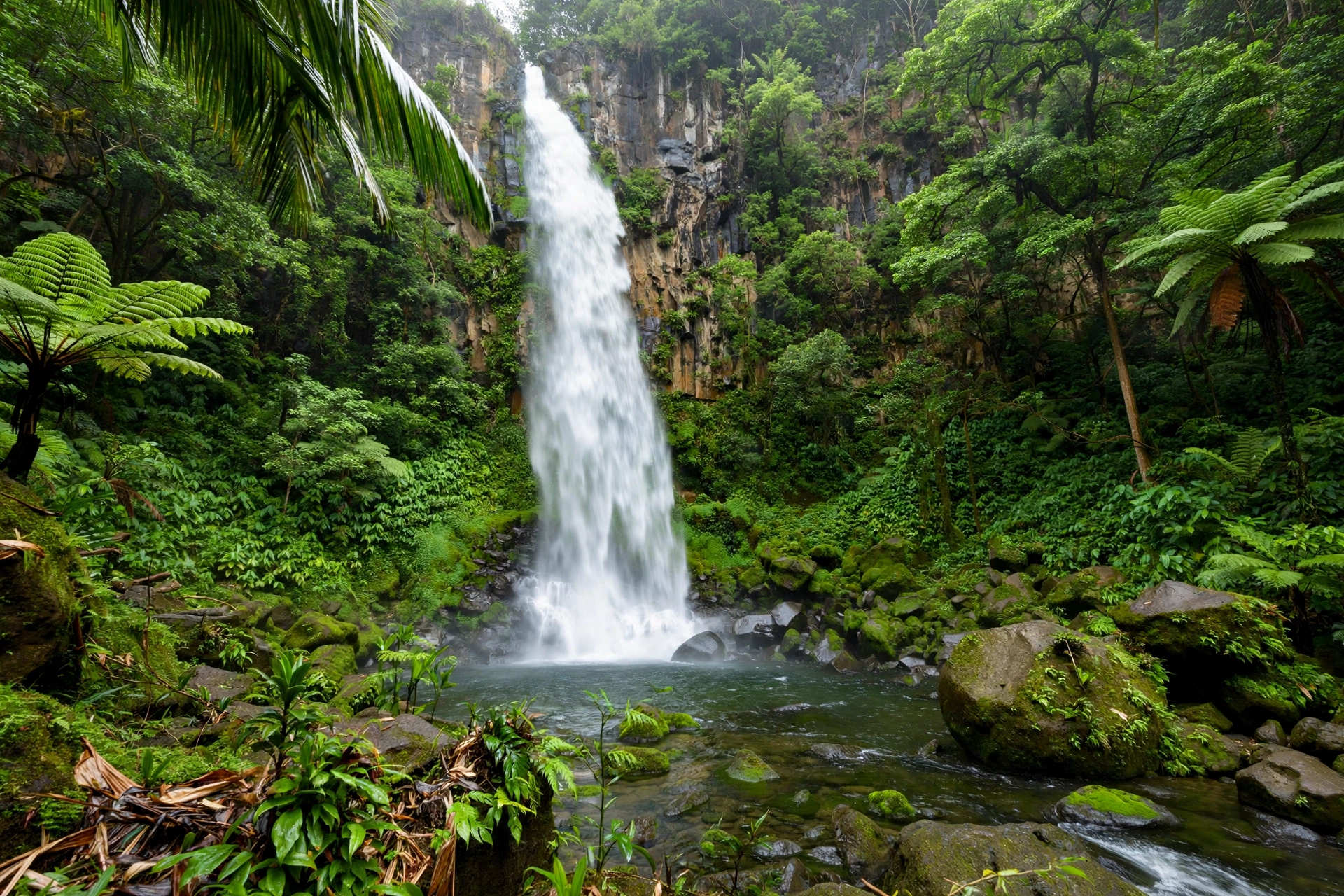
Most Oʻahu waterfalls flow year round, but their volume changes dramatically with the seasons. During the wet winter months from November through March, the falls run full and thunderous after storms. In the drier summer months from May through September, the same falls shrink to graceful ribbons, and a few of the smaller ones slow to a trickle. Neither season is strictly better. Winter brings the most impressive flows but also the highest flash flood risk, while summer offers safer hiking conditions with still-beautiful falls.
Access is the other defining feature of Oʻahu’s waterfall scene. With one major exception, reaching a waterfall here means hiking. Waimea Falls on the North Shore is the accessible outlier, reached by a paved path through a botanical garden. Every other notable fall sits at the end of a rainforest trail that ranges from an easy family walk to a strenuous muddy trek. None of the island’s best waterfalls are visible from a car window, which keeps the crowds thinner than at the beaches but means you should arrive prepared.
In Hawaiian tradition, waterfalls are known as wailele, and many are considered wahi pana, storied and sacred places. Some valleys carry kapu, or restrictions, and ancient sites near falls deserve the same quiet respect you would give any place of worship. Stay on marked trails, do not move or stack rocks, and leave everything as you found it. That respect is part of what keeps these places open and beautiful.
The Top Waterfalls on Oʻahu
Below are the waterfalls worth your time, ordered roughly from most to least visited. Each entry covers what makes the fall special, how to get there, and what to expect on the trail. Access rules and trail conditions change, so treat the Hawaiʻi Division of Forestry and Wildlife’s Na Ala Hele trail program as your final authority before heading out.
Mānoa Falls
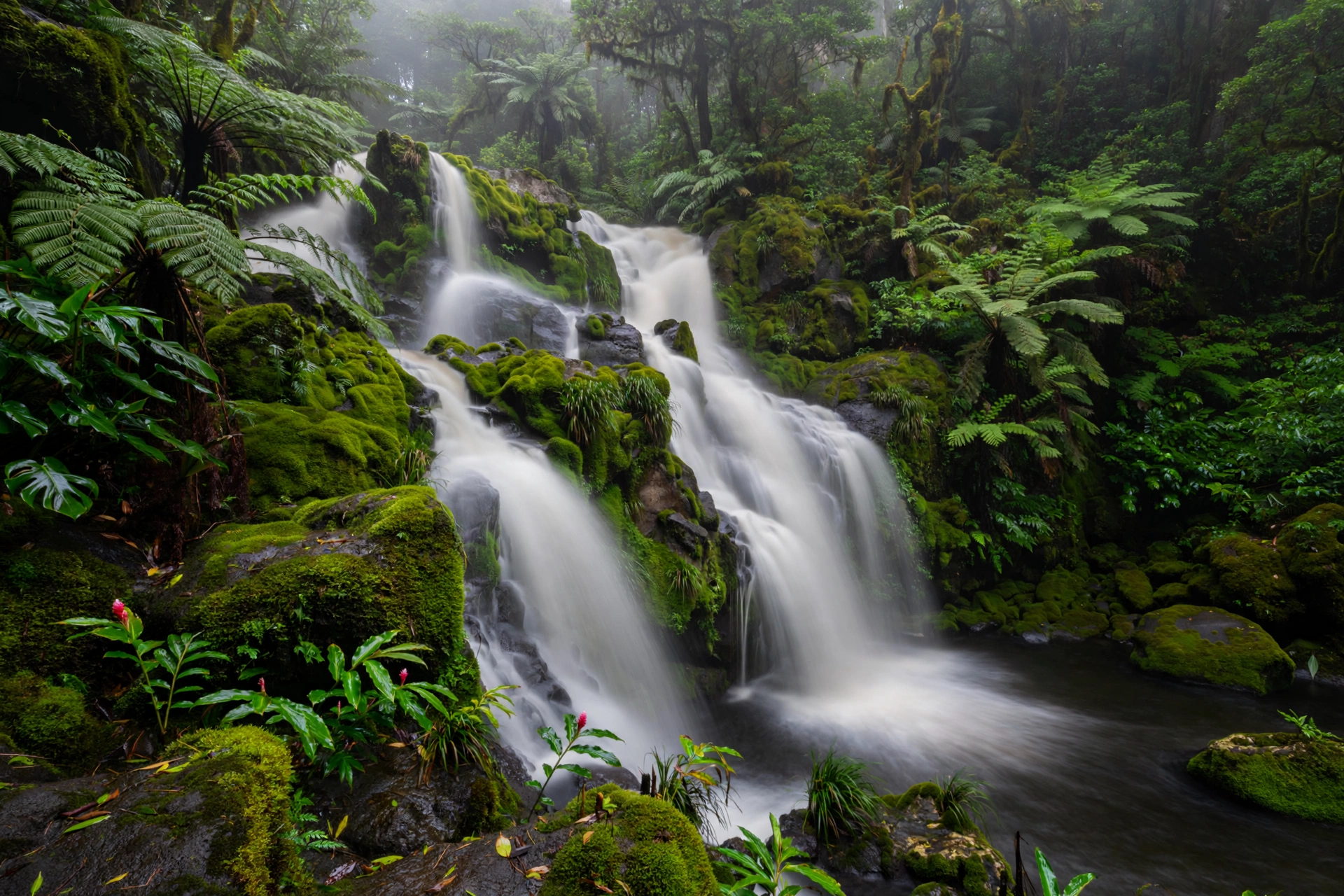
Mānoa Falls is the most visited waterfall on Oʻahu and the one most first-time visitors picture when they imagine a Hawaiian cascade. The falls drop about 150 feet down a mossy cliff face into a rock pool at the back of Mānoa Valley, one of the wettest and greenest valleys on the island. The setting feels prehistoric, with giant banyan trees, bamboo groves, and hanging vines crowding a trail that stays damp and fragrant year round.
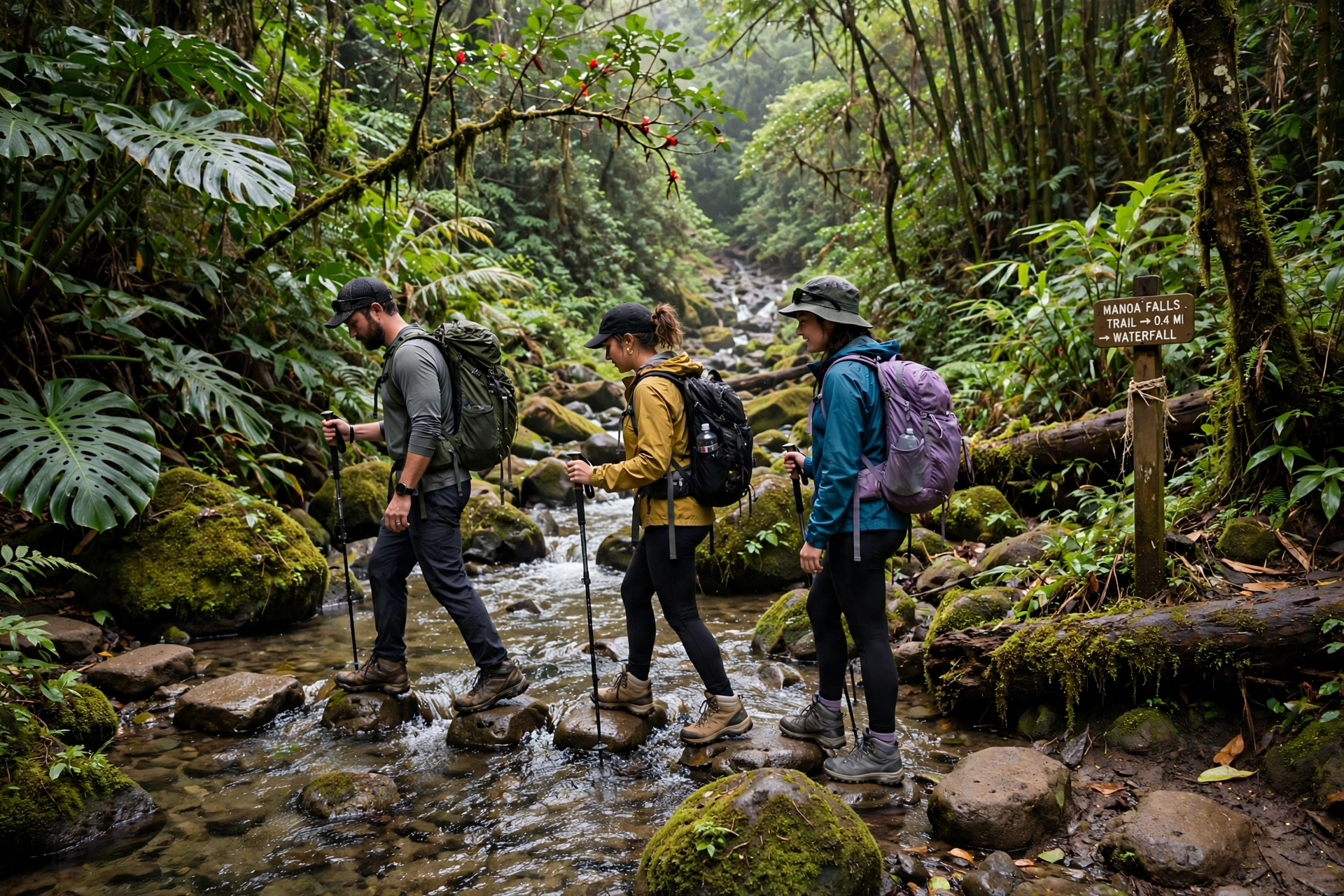
The hike is a 1.6-mile round trip on a well-traveled trail that begins at the end of Mānoa Road, near the Lyon Arboretum. Most hikers reach the falls in 30 to 45 minutes each way. The trail is rated easy to moderate: the elevation gain is gentle, but the path is often muddy and the rocks near the falls are extremely slippery. Wear shoes with real tread, not flip-flops, and expect to get your feet wet at the stream crossings.
Mānoa Falls is beautiful in every season, but it is most dramatic in winter after rain. On dry summer days the flow narrows considerably, though the rainforest setting remains gorgeous. Arrive early in the morning to beat both the crowds and the afternoon valley showers. Parking at the trailhead is limited and fills quickly on weekends. Swimming at the base is discouraged: the pool is shallow, rocks are slippery, and falling water can hide submerged hazards.
Waimea Falls (Waihi)
Waimea Falls, traditionally known as Waihi, is the only major Oʻahu waterfall you can reach without a rugged hike, and that makes it the island’s most accessible cascade by far. The 45-foot falls sit inside Waimea Valley on the North Shore, at the end of a paved 3/4-mile path that winds through one of the finest botanical gardens in Hawaiʻi. The walk itself is half the attraction, passing labeled plant collections, historic Hawaiian agricultural terraces, and cultural sites.
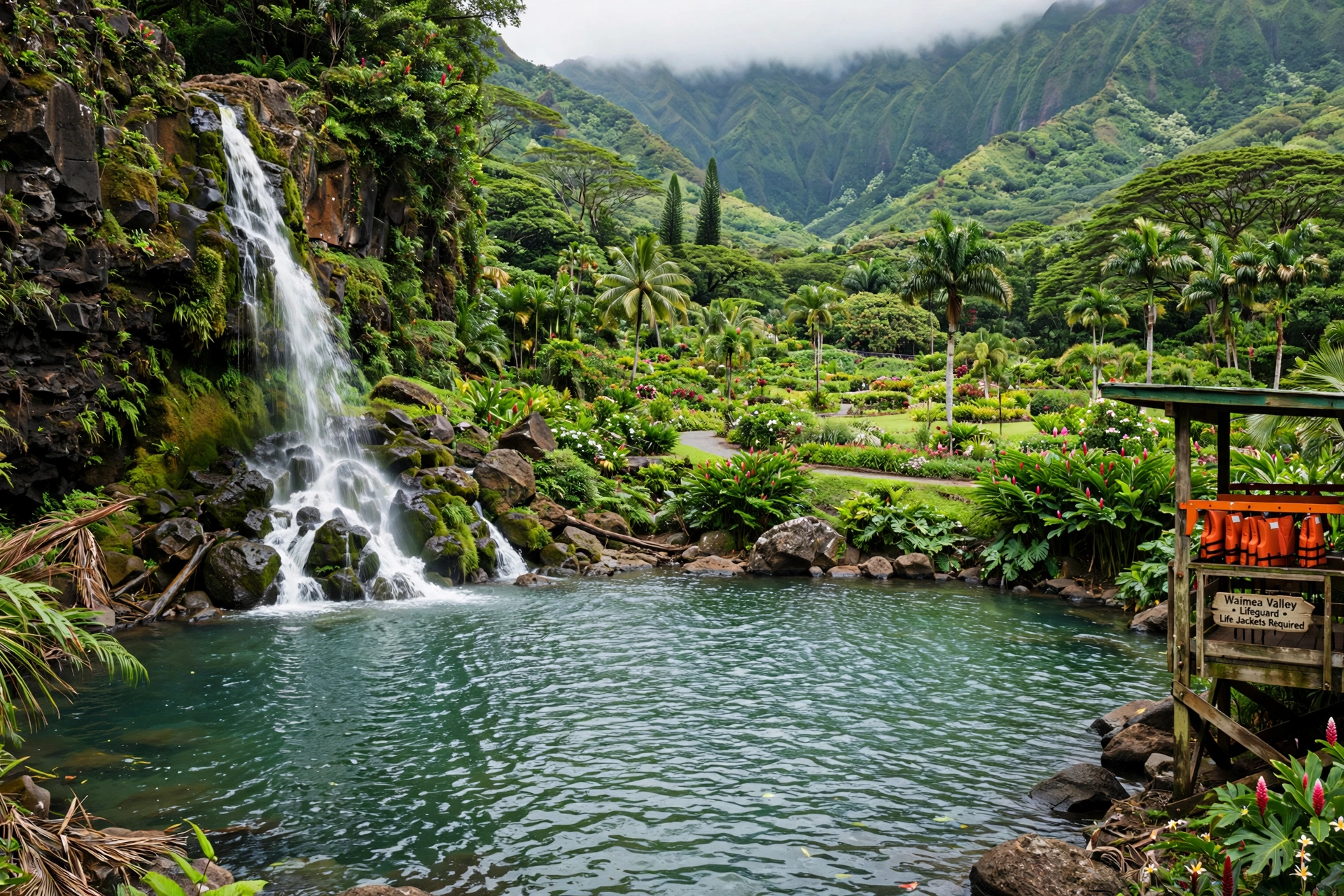
Waimea Valley is a privately managed cultural and botanical park, so unlike the island’s forest reserve trails, there is an admission fee. Check current pricing before visiting, and note that the valley also hosts cultural programs and demonstrations that add depth to the visit. The falls feed a large natural pool where swimming is permitted when lifeguards are on duty and conditions allow. Life jackets are provided and required for swimmers. When surf or stream conditions are unsafe, swimming is closed, so the falls are still worth seeing but plan accordingly.
Because the path is paved and mostly gentle, Waimea Falls suits visitors of nearly all ages and abilities, including families with small children and travelers who cannot manage muddy mountain trails. It is also the best bad-weather backup plan: when forest trails turn dangerously slick, the maintained valley path remains walkable.
Lulumahu Falls
Lulumahu Falls rewards hikers with one of the prettiest cascades on the windward side, a two-tiered fall tucked into the forest above the Pali. The trail follows an old service road and stream beds through dense rainforest, crossing the stream several times before reaching a falls that pours over a wide rock face into a clear pool. On a good day it is genuinely spectacular, and it sees a fraction of the crowds at Mānoa.
The catch is access. Lulumahu sits within a state forest reserve area where access rules have shifted over the years, and the route involves unmarked junctions and stream crossings that confuse first-timers. This is a hike for experienced, well-prepared walkers only. Before attempting it, check current access rules with the Division of Forestry and Wildlife, go with someone who knows the route if possible, and do not attempt it during or after heavy rain. The stream crossings that are trivial in dry weather become dangerous in flood.
Waimano Falls
Waimano Falls in the hills above Pearl City offers not one but two waterfall experiences on a single trail system. The upper falls and the lower falls each feed pools that locals have swum in for generations. The trail begins near the end of Waimano Home Road and descends through forest to the stream. The route to the lower falls is the more adventurous of the two, with steep sections that demand care, especially when wet.
Waimano is less polished than Mānoa and less managed than Waimea, which is exactly its appeal for confident hikers. The pools are inviting on hot days, but apply every freshwater safety rule here: never dive, check depth first, keep cuts covered because of leptospirosis risk, and skip swimming entirely after heavy rains when the stream runs brown and fast. Pack out everything you pack in. This is a neighborhood treasure, and respectful visitors keep it that way.
Kapena Falls
Kapena Falls is a small, charming cascade near Nuʻuanu, reached by a short and easy trail that makes it one of the quickest waterfall payoffs on the island. The falls themselves are modest, but the setting is lovely, with a deep green pool wrapped in forest. Because the hike is brief, Kapena pairs well with a morning exploring the Nuʻuanu area or as a low-commitment introduction to Oʻahu’s waterfall trails for families with young children.
As with every windward cascade, the pool here is freshwater, so the usual cautions about leptospirosis and water quality apply. The rocks around the falls are slick. Enjoy the view, take your photos, and keep a respectful distance from the falling water.
Likeke Falls
Likeke Falls hides just off the Pali Highway corridor, making it one of the most conveniently located wild waterfalls on Oʻahu. The short trail leads through rainforest to a delicate fall that is especially pretty after rain. Its proximity to the highway means you can combine it with the Nuʻuanu Pali Lookout, one of the island’s great viewpoints, for a half-day of windward scenery.
Likeke is a minor fall rather than a marquee attraction, so set expectations accordingly: come for a peaceful forest walk with a waterfall finale, not for a thundering cascade. The trail can be muddy, and parking near the trailhead is limited, so arrive early and be considerate of the surrounding neighborhood.
Maunawili Falls
Maunawili Falls was once among the most popular waterfall hikes on the windward side, famous for a picturesque fall and a beloved swimming hole at the end of a long, muddy trail through the Maunawili Valley. In recent years, however, access to this trail has been restricted and at times fully closed by the state because of safety incidents, overcrowding, and damage to the surrounding watershed.
Because the legal status of this trail has changed more than once, you must check the current official status with the Division of Forestry and Wildlife’s Na Ala Hele program before planning any visit. Do not follow outdated blog posts or social media pins to a closed trailhead. Entering closed areas is illegal, dangerous, and disrespectful to the surrounding community. If Maunawili is closed during your visit, Mānoa Falls and Waimano Falls offer similar rainforest waterfall experiences through legal, maintained access.
Kaipapaʻu Falls
Kaipapaʻu Falls lies deep in the windward Koʻolau mountains and belongs firmly in the category of waterfalls for serious, experienced hikers. Reaching it involves long, difficult, often unmarked routes through rugged terrain where navigation skills and excellent fitness are mandatory. This is not a casual day hike, and it is not appropriate for visitors unfamiliar with Hawaiian mountain conditions.
We include it here for completeness and as a reminder of how much wild waterfall country Oʻahu still holds beyond the famous names. For the vast majority of visitors, the falls listed above deliver every bit as much beauty with far less risk.
Ephemeral Falls of the Southeast
The dry southeastern corner of Oʻahu, around Koko Crater, Hanauma Bay, and Makapuʻu, has no permanent waterfalls worth seeking out. What it does have, after the heaviest winter storms, are spectacular temporary cascades that pour down the steep crater and cliff faces for a few hours before vanishing. Locals prize these fleeting falls precisely because they are so rare.
Do not plan a trip around them, since they cannot be predicted more than a day or two ahead, but if you are on the island during a major storm and the rain breaks, look toward the Koʻolau cliffs and Koko Crater. You may witness one of Oʻahu’s most ephemeral and beautiful sights. Needless to say, never hike toward these falls during the storm that creates them.
Waterfall Safety on Oʻahu
Oʻahu’s waterfalls are beautiful, and they demand respect. Nearly every serious incident at Hawaiian waterfalls shares a common cause: underestimating how fast conditions change. Read this section before you hike, not after.
Flash floods are the number one danger
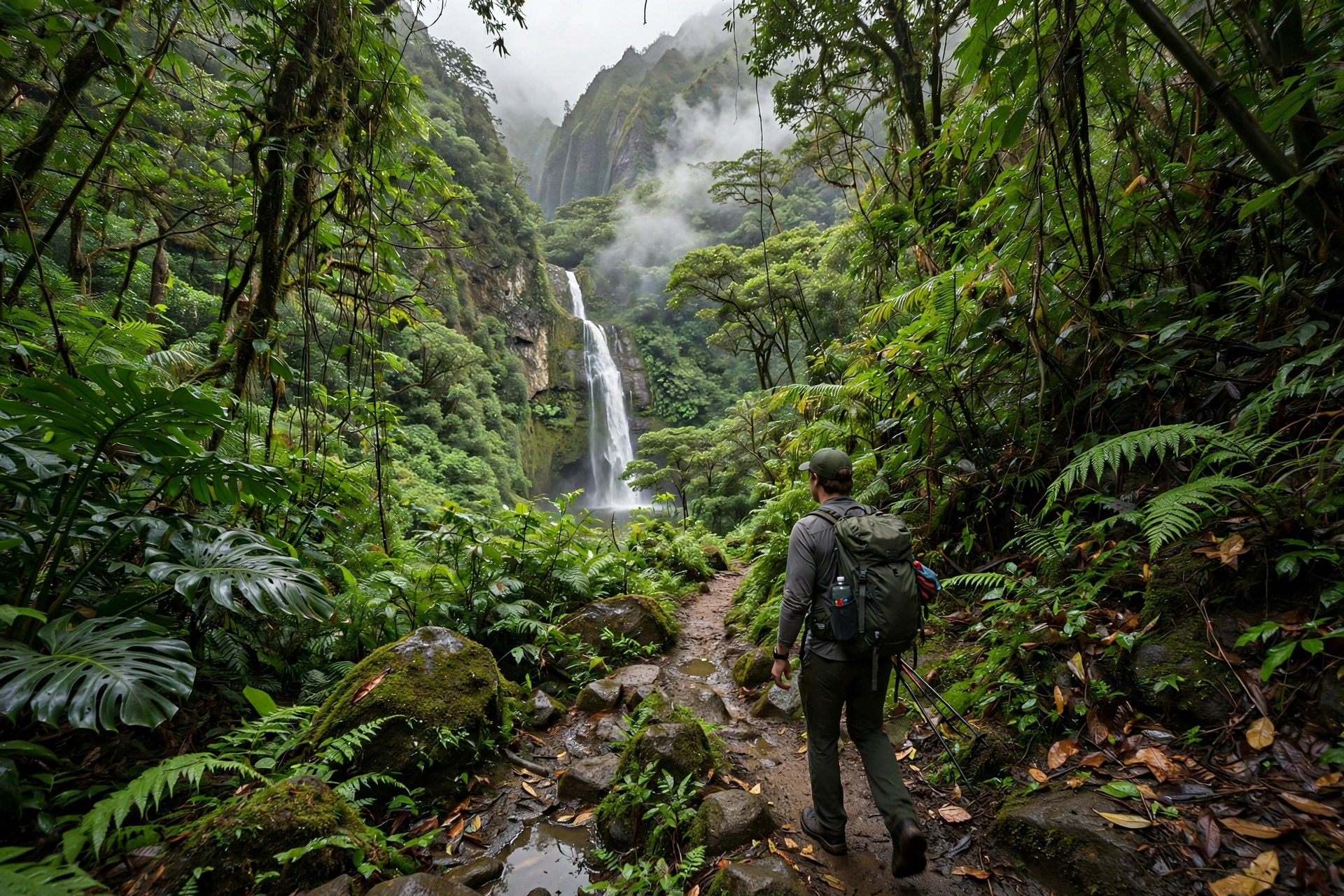
Flash flooding kills more waterfall visitors in Hawaiʻi than any other hazard. A stream that is ankle-deep and crystal clear in the morning can become a raging brown torrent by afternoon if rain falls on the mountain slopes above you, even if the sky over the trailhead stays blue. The National Weather Service office in Honolulu issues flash flood watches and warnings for Oʻahu, and you should check the forecast the morning of your hike and take any watch seriously.
Learn the warning signs: water turning brown or murky, a sudden rise in stream level, an increase in floating debris, or the sound of the stream growing noticeably louder. If you notice any of these, move immediately to high ground away from the stream channel and wait. Never try to cross a flooded stream, and never hike a waterfall trail during heavy rain or when a flash flood warning covers the area. The falls will still be there tomorrow.
Sacred Falls is closed and must stay that way
Sacred Falls, or Kaliuwaʻa, in Hauʻula was once the most famous waterfall on Oʻahu. On Mother’s Day in 1999, a massive rockfall swept through the narrow valley, killing eight hikers and injuring dozens more. The state closed Sacred Falls State Park immediately, and it has never reopened. Entering the closed valley is illegal, and the cliffs above remain dangerously unstable.
Every few years, another trespasser is injured or killed at Sacred Falls, and every incident was preventable. No photograph is worth your life. Admire Kaliuwaʻa from the highway overlook, respect the closure absolutely, and do not follow anyone past the barriers.
Leptospirosis and freshwater safety
The Hawaiʻi Department of Health warns that freshwater streams statewide can carry leptospirosis, a bacterial illness spread through the urine of wild animals. The guidance is straightforward: do not drink untreated stream water, keep cuts and scrapes covered and out of the water, avoid swallowing stream water while swimming, and skip freshwater swimming entirely if you have open wounds. Symptoms can resemble the flu and appear days after exposure, so seek medical care if you feel ill after freshwater contact.
Beyond leptospirosis, waterfall pools hide rocks, submerged logs, and sudden drop-offs. Never dive into a waterfall pool, never jump from cliffs or ledges, and always check depth before wading in. At Waimea Falls, swim only when lifeguards are present and have declared conditions safe.
Trail and terrain hazards
Oʻahu’s waterfall trails are muddy, root-tangled, and strewn with slippery rocks even in dry weather. Ankle injuries are the most common hiking mishap. Wear closed-toe shoes or boots with aggressive tread, use a walking stick or trekking poles on steep descents, and keep your hands free on scrambles rather than holding a phone. Stay on marked trails: shortcutting switchbacks accelerates erosion and has led to falls from cliffs.
Give waterfalls themselves a wide berth. Do not climb the rock faces beside or behind falls, which are slick with algae and prone to rockfall. Falling water can knock an adult off balance, and the force increases dramatically after rain. Enjoy the power of the falls from the designated viewing areas and pools.
Hiking to Oʻahu’s Waterfalls
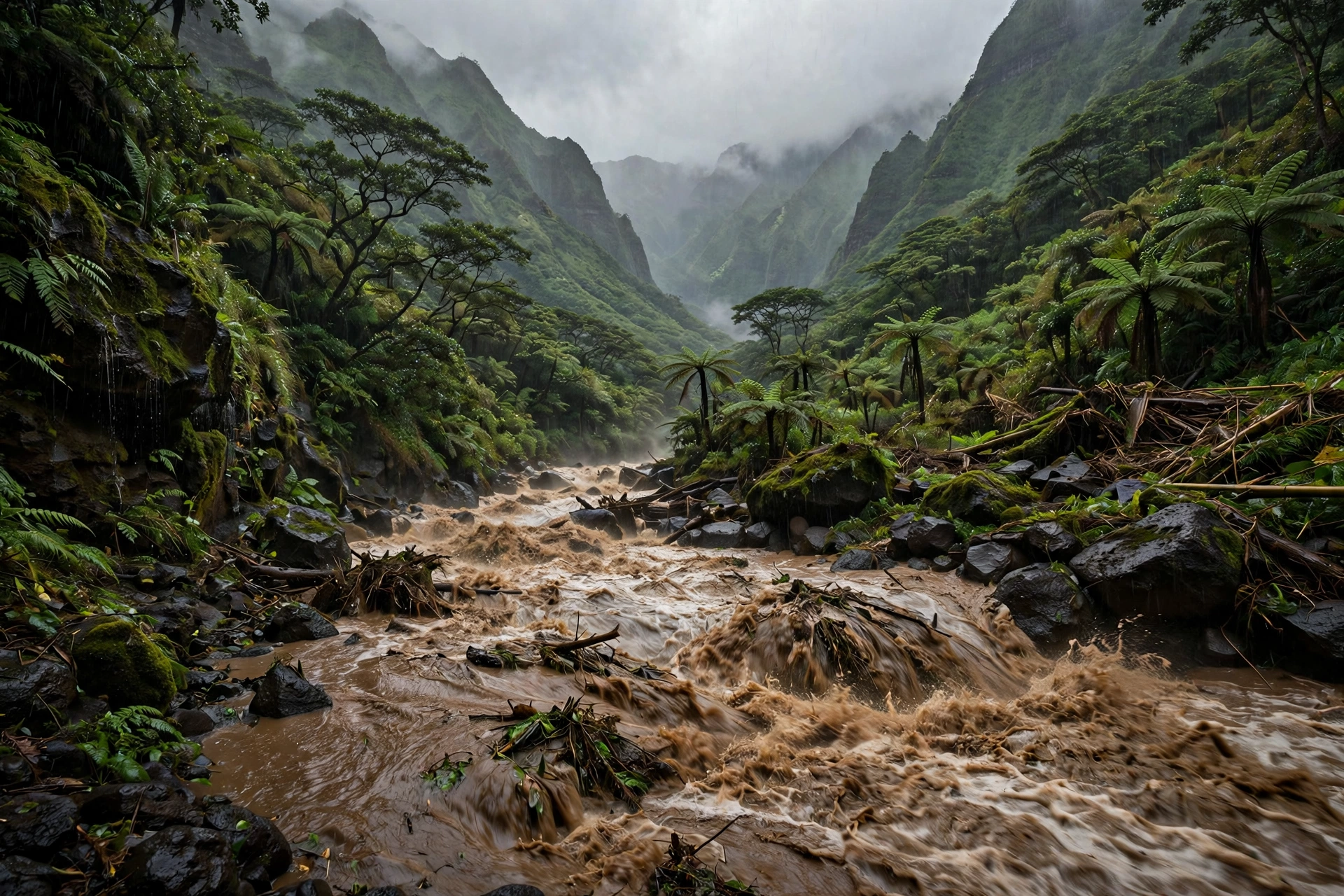
Reaching most Oʻahu waterfalls means hiking, so a little trail knowledge goes a long way. The table below summarizes the island’s main waterfall hikes at a glance.
| Waterfall | Round-trip distance | Difficulty | Access notes |
|---|---|---|---|
| Mānoa Falls | 1.6 miles | Easy to moderate | Well-marked trail; limited trailhead parking |
| Waimea Falls | 1.5 miles | Easy | Paved path; admission fee; most accessible |
| Lulumahu Falls | About 2.5 miles | Moderate to strenuous | Unmarked junctions; verify access rules first |
| Waimano Falls | About 2 to 3 miles | Moderate | Steep sections; upper and lower falls |
| Kapena Falls | Under 1 mile | Easy | Short trail; good for families |
| Likeke Falls | About 1 mile | Easy to moderate | Near Pali Highway; limited parking |
| Maunawili Falls | About 3 miles | Moderate | Access restricted; check official status first |
Permits and closures
Most of Oʻahu’s popular waterfall trails do not require hiking permits, which surprises visitors used to permit systems elsewhere. What they do require is attention to closures. The Division of Forestry and Wildlife can and does close trails for storm damage, hazardous conditions, or resource protection, and conditions after major storms can keep trails shut for weeks. The Na Ala Hele trail program website is the official source for Oʻahu trail status. Check it the day before and the morning of your hike.
Some waterfall routes cross or border private land, watershed reserves, or culturally sensitive areas. Where access rules are unclear, as at Lulumahu, verify the current legal route rather than following social media directions. Trespassing in watershed areas can bring fines and, more importantly, puts you in terrain managed for water supply rather than public safety.
What to bring
Pack for a tropical rainforest, not a beach walk. Essentials include at least one liter of water per person, a rain jacket or poncho even on sunny mornings, insect repellent, a basic first aid kit with blister care, and a fully charged phone in a waterproof pouch. Cell service is unreliable in the deeper valleys, so download offline maps before you go. A dry bag or zip-top bags protect electronics and snacks at stream crossings.
Footwear deserves special emphasis. The mud on Oʻahu’s trails is famously slick, a reddish clay that coats shoe soles and turns gentle slopes into slides. Trail runners or hiking shoes with deep lugs outperform sneakers, and many experienced local hikers add inexpensive traction devices in the wet season. Whatever you wear will get muddy. Bring a change of shoes for the car and a plastic bag for the dirty pair.
Guided versus self-guided
Confident hikers can manage Mānoa, Kapena, Likeke, and Waimea Falls independently with basic preparation. For Lulumahu, Waimano, and any remote valley route, going with an experienced companion or a reputable local guide service adds a real margin of safety through route-finding knowledge and familiarity with stream behavior. If you are new to tropical hiking, a guided walk is a genuinely wise choice rather than a luxury.
For Oʻahu’s broader trail network beyond waterfalls, including ridge hikes and summit trails, see our complete Oʻahu hikes guide, which covers difficulty ratings, permits, and safety across the island.
Best Time to See Oʻahu Waterfalls
There is no single best month for Oʻahu waterfalls, because the island’s two waterfall seasons offer opposite trade-offs. Understanding them lets you match your visit to your priorities.
Wet season: November through March
Winter is when Oʻahu’s waterfalls look their most powerful. Storm systems sweep through regularly, recharging the streams, and falls like Mānoa thunder at full volume. This is the season for the most dramatic photographs and the fullest pools. It is also the season of highest flash flood risk, muddiest trails, and most frequent trail closures. If you visit in winter, build flexibility into your plans, check the forecast obsessively, and be ready to swap a waterfall day for a beach day when warnings appear.
Dry season: May through September
Summer brings calmer streams, more stable trails, and far lower flood risk. The trade-off is flow: smaller falls may shrink to delicate threads, and some minor cascades dry up entirely in drought years. The major falls, Mānoa and Waimea, keep flowing all summer in normal years, fed by the valleys’ persistent moisture. For families and casual hikers, summer is arguably the better waterfall season, trading maximum drama for maximum safety and predictability.
Time of day
Morning is the best time to hike to any Oʻahu waterfall. Valley showers build through the afternoon as the trade winds push moisture against the mountains, so an early start means drier trails, better light for photography, and smaller crowds. Trailhead parking lots for Mānoa and other popular hikes often fill by mid-morning on weekends, which is another reason to arrive early.
One more timing note: the day after a moderate rainstorm, with skies clearing and no flood warnings in effect, is the sweet spot many local photographers wait for. The falls run high, the forest glistens, and the crowds that stayed home during the rain have not yet returned.
Photography Tips
Oʻahu’s waterfalls are generous photography subjects, and a few techniques separate snapshots from stunning images.
Chase overcast light. Bright midday sun creates harsh contrast in the valleys, blowing out the white water while the forest goes black. Overcast skies or open shade are ideal, softening the light across the whole scene. This is one subject where cloudy weather is your friend.
Slow the shutter. The classic silky-water effect comes from shutter speeds around one quarter to one full second, which requires a tripod or a very steady rock to rest the camera on. Bring a small tripod or a mini tripod that fits in a daypack. A polarizing filter cuts glare on wet rocks and foliage and deepens the greens of the rainforest.
Protect your gear. Waterfall mist, valley drizzle, and stream crossings threaten cameras and phones alike. A rain cover or even a simple plastic bag with a hole for the lens keeps a DSLR shooting in mist. Keep a microfiber cloth in your pocket for wiping droplets off the lens between shots.
Compose with context. Include the giant boulders, hanging vines, or a hiking companion in the frame to convey the scale of the falls. Wide-angle lenses capture the full amphitheater of a valley fall like Mānoa, while a moderate telephoto isolates the cascade’s textures. Shoot from the designated viewing areas rather than scrambling closer for a marginally better angle.
Know the drone rules. Drones are restricted or prohibited in Hawaiʻi state parks, forest reserves, and many other waterfall areas, and flying near other visitors is inconsiderate at best. Check current regulations for the specific location and skip the drone rather than risk a fine or an accident.
Frequently Asked Questions
What is the most popular waterfall on Oʻahu?
Mānoa Falls is by far the most visited waterfall on Oʻahu. Its combination of a dramatic 150-foot cascade, a lush rainforest trail, and a location just 15 to 20 minutes from Waikīkī makes it the default choice for first-time visitors. Arrive early in the morning to enjoy it with fewer crowds.
Can you swim in Oʻahu waterfalls?
Swimming is permitted at Waimea Falls when lifeguards are on duty and conditions allow, with life jackets required. At other waterfall pools, swimming is a personal judgment call that carries real risks: leptospirosis in freshwater, hidden rocks, sudden currents, and flash flood danger. Never dive or jump, never swim alone, and skip it entirely after heavy rain.
Are Oʻahu waterfalls free to visit?
Most waterfall hikes on forest reserve trails are free, including Mānoa, Waimano, Kapena, and Likeke Falls. Waimea Falls is the exception: it sits inside the privately managed Waimea Valley park, which charges an admission fee that includes the botanical garden and cultural programs.
What is the tallest waterfall on Oʻahu?
Among easily visited waterfalls, Mānoa Falls at about 150 feet is one of the tallest. Remote valleys in the Koʻolau Range hold taller cascades, but they require serious backcountry experience to reach safely. Oʻahu is not known for giant waterfalls the way Kauaʻi is; its charm lies in accessible rainforest cascades rather than record heights.
Why is Sacred Falls closed?
Sacred Falls, or Kaliuwaʻa, has been closed since Mother’s Day 1999, when a rockfall in the narrow valley killed eight hikers and injured dozens. The cliffs remain unstable, and entering the closed state park is illegal and extremely dangerous. Several trespassers have been injured or killed since the closure.
Do I need a permit to hike to waterfalls on Oʻahu?
Generally no. The popular waterfall trails do not require permits, but you must check for closures through the Division of Forestry and Wildlife’s Na Ala Hele program before going. Access rules for less-developed routes like Lulumahu can change, so verify the current legal access rather than relying on old trip reports.
Are there waterfalls near Waikīkī?
Yes. Mānoa Falls is only about 15 to 20 minutes by car from Waikīkī, in the valley behind Honolulu. Kapena Falls near Nuʻuanu is similarly close. Both make easy half-day trips from a Waikīkī base, and you can be back at the beach by lunch.
What should I do if it starts raining during a waterfall hike?
Turn back promptly and move away from the stream channel to higher ground. Do not attempt to cross streams that are rising or turning brown, and do not shelter under cliffs or in narrow gorges where rockfall and flash floods concentrate. Wait for conditions to stabilize, and remember that water levels can keep rising even after the rain stops.
Related Guides
Waterfalls are just one part of Oʻahu’s outdoor story. Continue exploring with these guides:
- Oʻahu Hikes: the island’s complete hiking guide, from ridge trails to summit climbs
- Oʻahu Map: regional reference map with towns, driving routes, and attractions
- Oʻahu Beaches: the island’s best beaches by coast, with seasonal safety
- Hawaiʻi Hikes: the best hiking trails across all the Hawaiian Islands
- Waikīkī Walking Map: walkable routes through Honolulu’s beach district
- Hawaiʻi Map: the complete statewide reference map and island guide
Reading the Island Through Its Waterfalls
Oʻahu’s waterfalls tell the story of the island better than almost any other feature. They trace the path of the trade winds, mark the boundary between the wet and dry sides, and pool in valleys that have sustained Hawaiian communities for centuries. A waterfall day here is never just a walk to a pretty cascade. It is a walk into the island’s weather, its geology, and its living culture, all of which ask the same thing of visitors: pay attention, tread lightly, and respect the water. Do that, and Oʻahu’s falls will give you some of the finest hours of your trip.