Malaekahana Beach: Oahu’s Northeast Coast Beach Guide

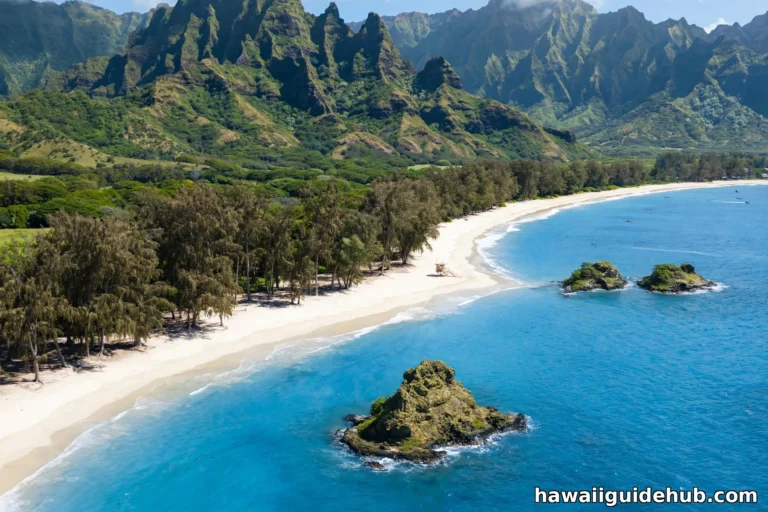
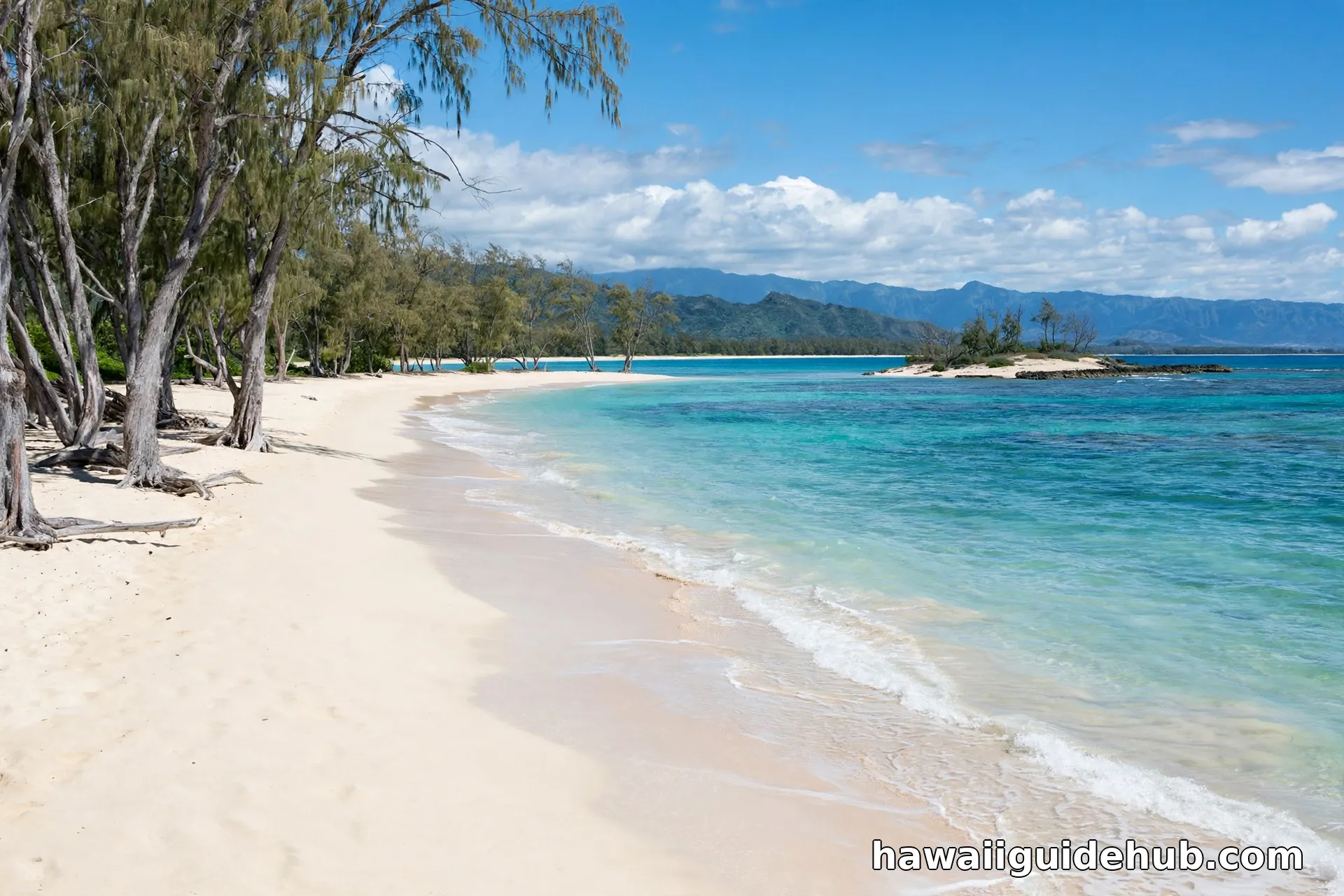
Malaekahana Beach, the shoreline of Malaekahana State Recreation Area, is Oahu’s great escape beach: a long stretch of white sand on the island’s northeast coast where the crowds thin out, the water glows turquoise, and Goat Island sits offshore like a postcard. Locals have camped, fished, and bodysurfed here for generations, and visitors who make the drive from Waikiki find one of the most unspoiled beaches on the island.
This is the single complete guide to Malaekahana Beach. It covers where the beach is and how to get there, the two sections of the park, swimming and ocean conditions, camping rules and fees, Goat Island and the seabird sanctuary, facilities and hours, what to bring, nearby attractions, safety, and answers to common questions. Everything about Malaekahana Beach is answered on this one page.
Malaekahana Beach at a Glance
| THE BEACH | |
| Location | 56-020 Kamehameha Highway, Laie, Oʻahu’s northeast coast |
| The two sections | Kalanai Point (south) and Kahuku (north) |
| The landmark | Goat Island (Moku’auia), seabird sanctuary offshore |
| Activities | Swimming, bodysurfing, shore fishing, beach camping |
| Best for | Beach campers, bodysurfers, families wanting space, sunrise watchers |
| THE LOGISTICS | |
| The park | Malaekahana State Recreation Area (Hawaii State Parks) |
| Entrance fee | None |
| Hours | Summer 7:00 a.m. to 7:45 p.m.; winter 7:00 a.m. to 6:45 p.m. |
| THE CAMPING ANGLE | |
| Camping | By permit, Friday to Wednesday nights; $20 residents / $30 non-residents per night |
Where Malaekahana Is and How to Get There
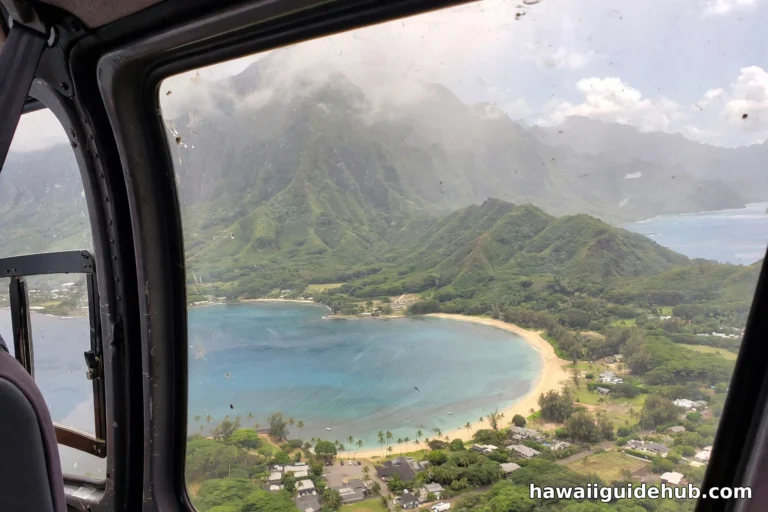
Malaekahana sits on Oahu’s northeast coast near the town of Laie, about an hour’s drive from Waikiki via the H-3 and Kamehameha Highway, or a scenic 90 minutes around the windward coast. If this side of the island is new to you, our guide to Oahu’s windward side explains the weather, beaches, and towns you will pass along the way. The park entrance is right off Kamehameha Highway, well signed and easy to find. Cell service is generally fine along this coast, but download an offline map anyway, since you will lose signal in the dips of the H-3. There is no public transportation that serves the park conveniently, so a rental car is essentially required.
The drive itself is part of the experience. Coming from Honolulu, the H-3 cuts through the Ko’olau mountains in one of the most dramatic highway stretches in America, then Kamehameha Highway traces the coast past Kualoa, Kahana Bay, and the Polynesian Cultural Center in Laie. Plan to arrive before 10 a.m. on weekends for the easiest parking.
The Two Sections: Kalanai Point and Kahuku
The recreation area has two distinct sections. Kalanai Point, the southern section, is the main day-use and camping area most visitors use, with the classic long beach, shade trees, and facilities. The Kahuku section to the north is wilder and less developed. Note that the Kahuku section has been the subject of state improvement plans, including a 2026 state process to develop a commercial campground and day-use beach park there, so check the Hawaii DLNR State Parks page for the latest status before planning a trip around the northern section.
Swimming and Ocean Conditions
Malaekahana’s ocean is beautiful and demands respect. The beach faces northeast, so it catches trade-wind swells and occasional bigger surf, especially in winter. Summer generally brings the calmest conditions for swimming. The beach is good for bodysurfing when the waves are up, and shore fishing is popular along the rocks. There are no lifeguards posted at all times, so swim conservatively: stay in shallow water if you are unsure, never turn your back on the ocean, and ask locals about current conditions.
Snorkeling is possible on calm days near the rocky areas, but this is not a premier snorkel spot like Hanauma Bay. The real water draw here is the classic beach experience: swimming, bodysurfing, and long walks on uncrowded sand.
Malaekahana for Families
Families love Malaekahana for a simple reason: space. Unlike the packed sands of Waikiki, this beach gives kids room to run, build, and play without crowding neighbors. The long, gentle slope of the beach creates wide shallow areas where small children can splash at the water’s edge under close supervision. The ironwood trees behind the beach provide natural shade for nap time and picnics. There are no vendors, no crowds, and no distractions, which is either the whole point or a reason to bring extra snacks and toys. Bring everything your family needs for the day, keep children within arm’s reach near the water, and you will have the kind of beach day that becomes a family legend.
Bodysurfing and Shore Fishing
Malaekahana’s shore break makes it a beloved bodysurfing beach when the swell is up. The waves break close to shore over sand, which is the classic bodysurfing setup: no board required, just swim fins if you have them and a sense of timing. Watch the locals first to read the break, start on smaller days, and never bodysurf alone. As with any shore break, protect your neck: keep an arm extended when riding and do not dive headfirst into shallow water.
Shore fishing is the other traditional pastime here. Local anglers work the rocky points and deeper channels for reef fish, and dawn and dusk are the productive hours. If you want to try it, a basic spinning setup from a tackle shop in nearby Kahuku or Laie is enough to start. Observe all state fishing regulations, respect other beachgoers’ space, and clean up all line and tackle: loose fishing line kills seabirds and turtles.
Sunrise at Malaekahana
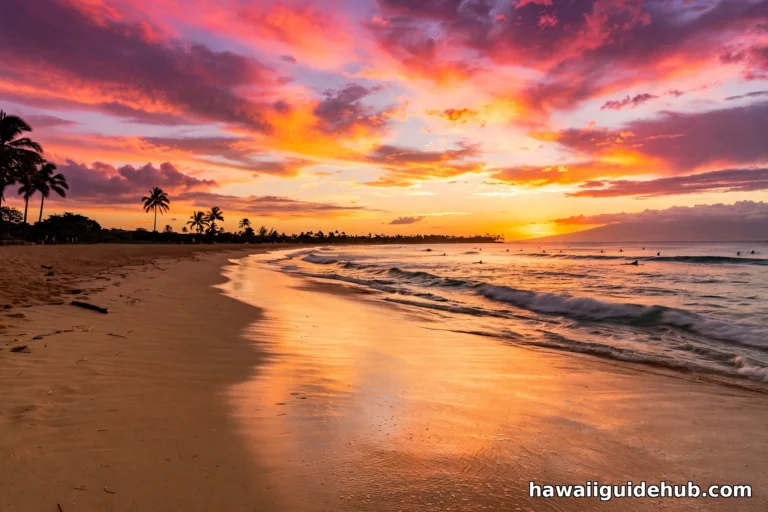
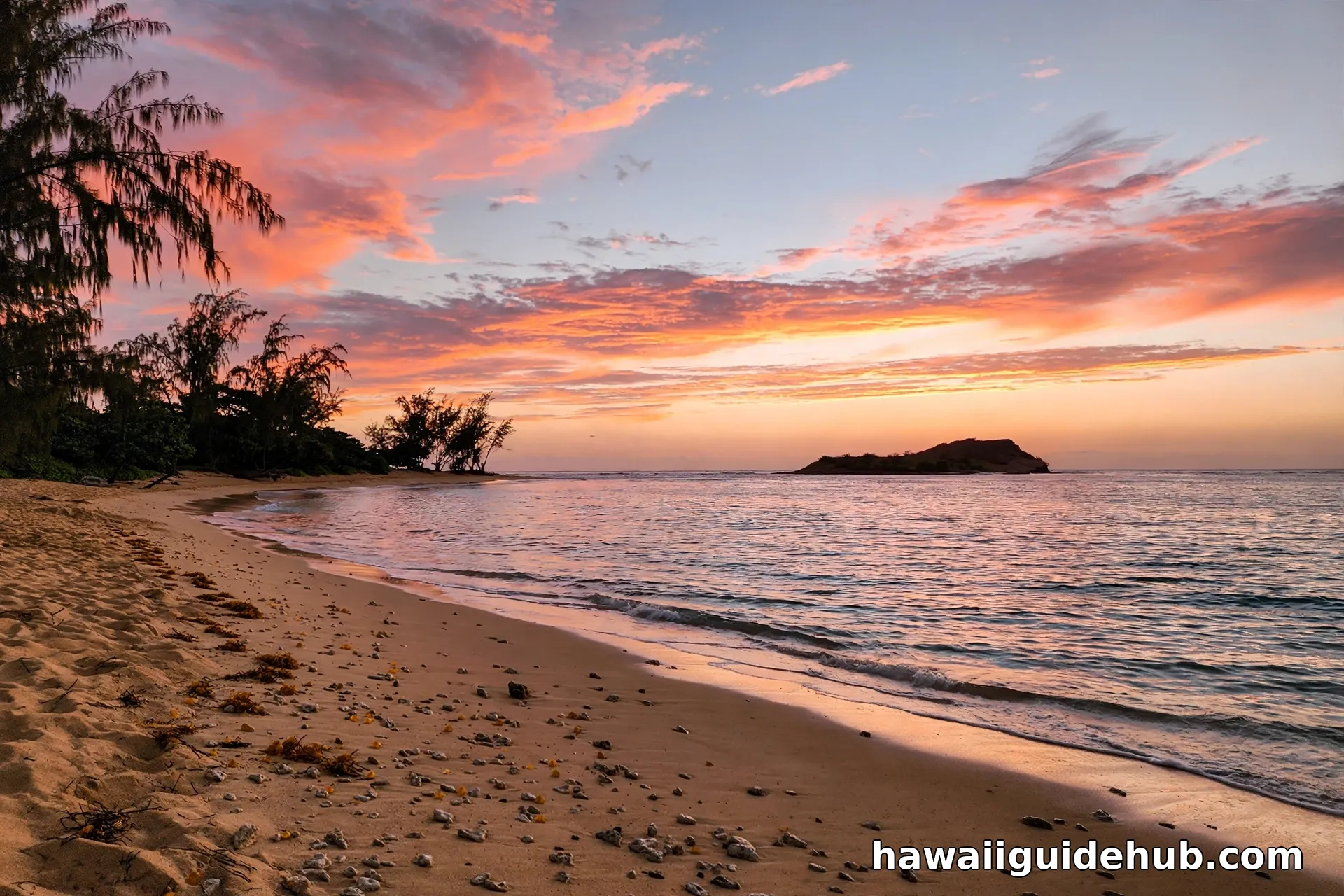
This east-facing beach is one of Oahu’s great sunrise spots, and it is worth setting an alarm for. The sun rises directly over the ocean, with Goat Island silhouetted in the early light and the ironwood trees framing the scene. Arrive 30 minutes before sunrise to watch the sky change color. Campers get this effortlessly: unzip the tent and the show begins. Day visitors should check sunrise time and allow for the drive from Honolulu in the dark. Bring a light jacket; the pre-dawn breeze off the water can be cool even in summer. Photographers should arrive even earlier to catch the blue hour, when the island is a dark silhouette against a glowing sky.
Camping at Malaekahana
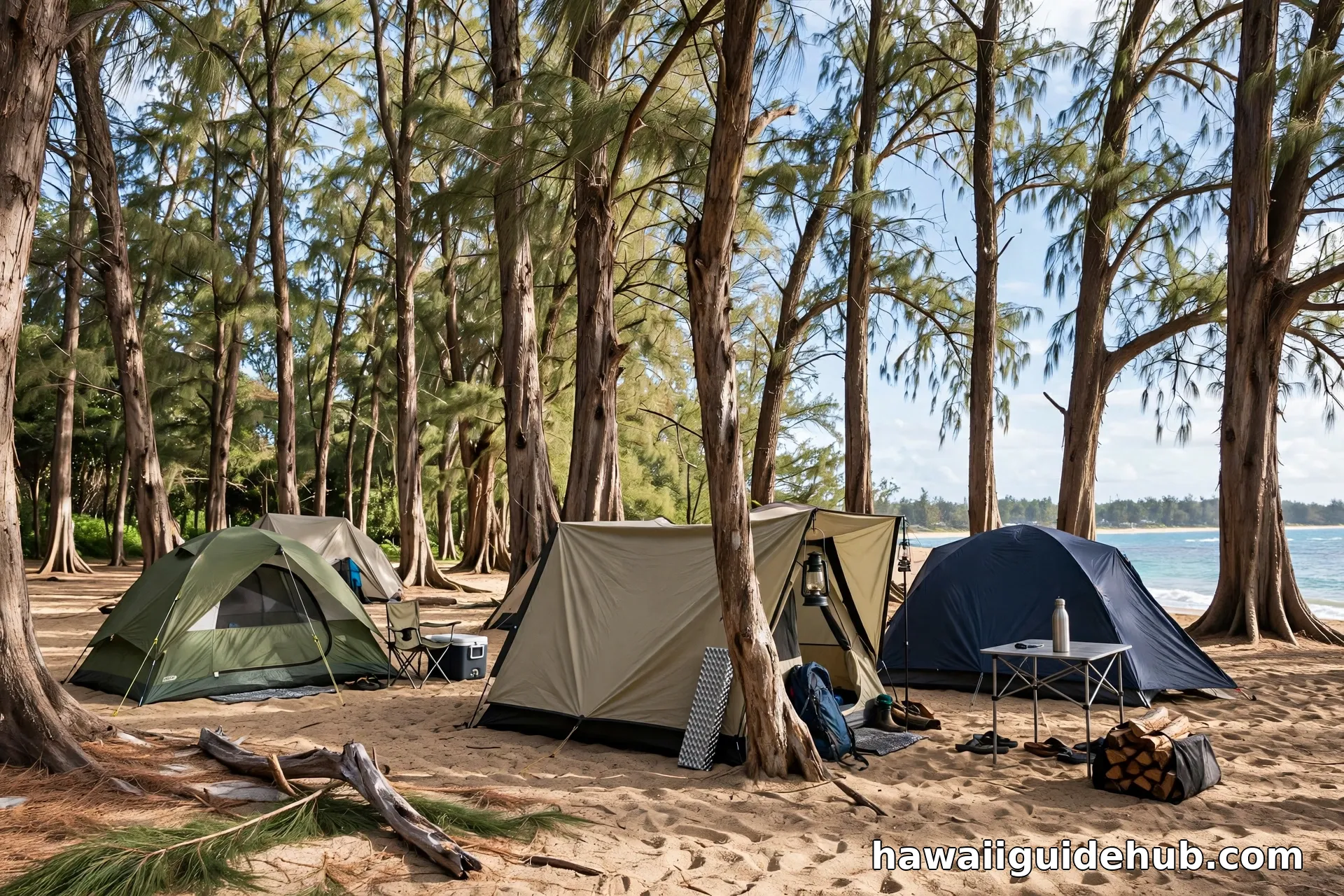
Beach camping is Malaekahana’s signature experience, and it is one of the most affordable sleeps on Oahu. Camping is by permit only, available Friday through Wednesday nights (no camping Thursday nights). Permits cost $20 per night for Hawaii residents and $30 per night for non-residents, booked through the state’s Explore Outdoor Hawaii system. Book as early as you can: oceanfront sites are popular and availability is limited.
Come prepared. This is real beach camping: bring your own tent, sleeping gear, food, water, and supplies. There are restrooms, but this is not a full-service campground. Pack out all trash, secure food from animals, and follow all permit conditions. Check the DLNR page before your trip for any closures or rule changes, since management of the park’s sections has been evolving.
Goat Island: The Seabird Sanctuary Offshore
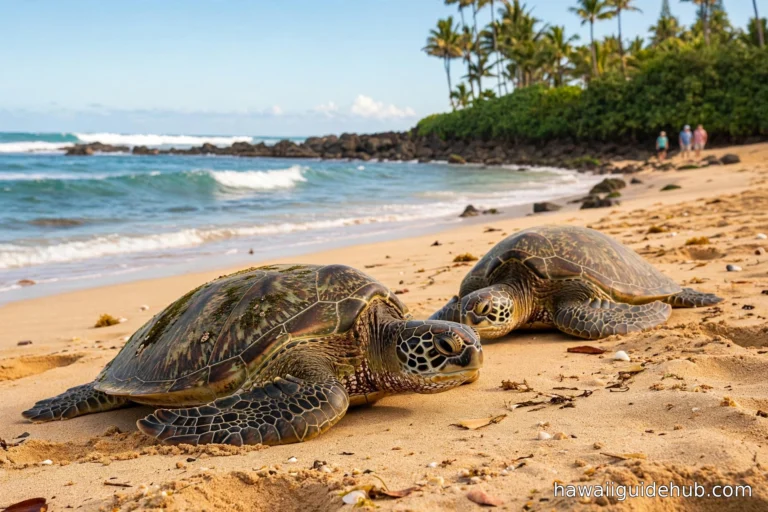
The small island offshore is Goat Island, known in Hawaiian as Moku’auia. It is a state seabird sanctuary, an important nesting site for native seabirds. At low tide, experienced visitors sometimes wade or swim across, but the island is protected habitat: landing is restricted to protect nesting birds, and you should never disturb wildlife or leave the shoreline areas. The best way to enjoy Goat Island is as a view: it anchors the seascape and makes Malaekahana one of Oahu’s most photographed beaches. Observe the federal wildlife distance rules for any marine animals you encounter: at least 10 feet from sea turtles and 50 feet from Hawaiian monk seals.
Facilities and Park Hours
The park provides restrooms, outdoor showers, picnic areas, and shade from ironwood trees. There is no entrance fee and no fee for day use. Park hours run 7:00 a.m. to 7:45 p.m. in summer and 7:00 a.m. to 6:45 p.m. in winter. There are no concessions inside the park, so bring all food, water, and beach supplies with you. The nearest stores, gas stations, and restaurants are in Laie and Kahuku, a few minutes’ drive away.
What to Bring
Reef-safe sunscreen, hats, and shade: the beach is long and exposed. Plenty of drinking water, since there are no concessions. Snorkel gear and bodysurfing boards if you have them. Water shoes for rocky entries. A cooler with food for the day. Insect repellent for the tree-lined areas at dusk. And a camera: sunrise over Goat Island is spectacular, and this east-facing beach is one of Oahu’s great sunrise spots.
Nearby Attractions
Malaekahana pairs well with the northeast coast’s other draws. The Polynesian Cultural Center in Laie is minutes away and makes a full-day cultural experience. Kahuku’s famous shrimp trucks are a short drive north and the classic post-beach lunch. Kualoa Regional Park and Chinaman’s Hat (Mokoli’i) lie to the south along Kamehameha Highway. Turtle Bay Resort’s beaches are a few minutes north for a change of scenery. For more island beaches, see our complete Oahu adventure guide.
Sample Day Trip Itinerary
Morning: Leave Waikiki by 7:30 a.m. via the H-3, arriving at Malaekahana around 8:30. Claim a shady spot under the ironwoods, swim, and walk the beach. Midday: Picnic lunch on the sand, then a rest in the shade during the strongest sun. Afternoon: Bodysurfing or shore fishing, another swim, and beachcombing toward the Kahuku section. Late afternoon: Drive to the Kahuku shrimp trucks for an early dinner, a local tradition. Alternative: Start the day at the Polynesian Cultural Center in Laie, then finish with a sunset walk at Malaekahana before driving back. Either way, you will be home with sand in the car and salt in your hair. Few day trips on Oahu pack this much variety into so few miles.
Safety Tips
Check ocean conditions before swimming; northeast-facing beaches can have strong currents and shore break. Never camp without a permit. Lock your car and keep valuables out of sight, as with any Oahu beach. Respect the seabird sanctuary: do not chase, feed, or approach nesting birds. Give sea turtles and monk seals their legal distance. And remember the sun: this beach has limited shade on the sand itself, so reapply sunscreen often.
Watch: Malaekahana State Recreation Area and Goat Island
Frequently Asked Questions
Is Malaekahana Beach free?
Yes. There is no entrance fee and day use is free. Camping requires a paid permit: $20 per night for residents, $30 for non-residents.
Can you swim at Malaekahana Beach?
Yes, and bodysurfing is popular, but conditions vary. Summer is calmest. There are no guaranteed lifeguards, so swim conservatively and check conditions first.
How do you get a camping permit for Malaekahana?
Book through the state’s Explore Outdoor Hawaii reservation system. Camping is permitted Friday through Wednesday nights only. Reserve early, since sites are limited.
Can you walk to Goat Island?
At very low tide some people wade across, but Goat Island is a protected seabird sanctuary with landing restrictions. Enjoy it as a view and never disturb nesting birds.
Is Malaekahana good for beginners?
For beachgoing, yes: it is uncrowded and straightforward. For ocean activities, beginners should stick to calm summer days and shallow water, and take a lesson before attempting bodysurfing.
Are there lifeguards at Malaekahana?
Do not count on it. Swim conservatively, stay in shallow water if unsure, and never swim alone. This is a wild-feeling beach, which is its charm and its warning.
What are the park hours?
Summer: 7:00 a.m. to 7:45 p.m. Winter: 7:00 a.m. to 6:45 p.m. Hours are set by Hawaii State Parks and can change, so confirm on the DLNR page before visiting.
Malaekahana Beach is Oahu as it used to be: long sand, clear water, ironwood shade, and room to breathe. Whether you come for a day of bodysurfing, a sunrise over Goat Island, or a night in a tent with the waves as your soundtrack, it delivers the uncrowded Hawaii that the famous beaches lost long ago. Pack well, respect the sanctuary, and enjoy one of the island’s true gems. For more North Shore adventures, see our North Shore guide.