
Kauaʻi Waterfalls
Kauaʻi is the waterfall capital of Hawaiʻi. No other island packs so many cascades into so small an area: roadside plunges you can see without leaving your car, canyon falls reached by red-dirt trails, a 300-foot giant at the end of the Kalalau Trail, and hundreds of unnamed ribbons pouring down the Nāpali sea cliffs where no road will ever go. The reason is rainfall. Kauaʻi is the oldest of the main Hawaiian Islands, and its central peak, Mount Waiʻaleʻale, is one of the wettest places on Earth, averaging more than 450 inches of rain a year. All that water has to go somewhere, and on Kauaʻi it goes downhill in spectacular fashion. This guide covers the falls worth your time, how to reach each one, and how to visit them safely.
On this page
Kauaʻi Waterfalls at a Glance
Kauaʻi’s waterfalls begin with geology and end with weather. The island formed around five million years ago, making it the oldest of the main Hawaiian Islands, and five million years of rain have carved it deeply. The center of the island holds the Alakaʻi Plateau, a high boggy wilderness, and Mount Waiʻaleʻale, whose summit averages more than 450 inches of rain annually, among the highest totals recorded anywhere on the planet. Streams radiate outward from this sodden heart in every direction, dropping off the edges of Waimea Canyon, pouring down the Nāpali cliffs, and threading through the wet valleys of the east and north shores. Kauaʻi does not have a dry side the way the younger islands do; it has a wet side and a wetter side.
This abundance shapes the waterfall experience in a specific way. On Kauaʻi, waterfalls are not rare prizes hidden at the end of brutal hikes. Many of the island’s best-known falls are roadside: Wailua Falls and ʻOpaekaʻa Falls both have paved overlooks where you can stand with your rental car idling behind you. Waipoʻo Falls hangs in Waimea Canyon where canyon overlooks frame it from across the gorge. This accessibility is a gift, and it means a visitor with limited mobility or limited time can still see world-class waterfalls. It also means the famous falls draw crowds, especially midday, and the experience rewards early starts.
Flow on Kauaʻi is more reliable than on the younger islands because the watersheds are so wet, but it still varies. The wet season, roughly November through March, brings the heaviest flows, and the great falls thunder after winter storms. In the drier summer months the roadside falls keep flowing, thinner but still photogenic, while some of the smaller seasonal cascades fade. Kauaʻi’s streams can also rise with terrifying speed: a sunny morning at the trailhead means nothing about conditions in the mountains above, where rain may be falling hard. Flash flooding is the island’s signature hazard, and every waterfall plan on Kauaʻi should be built around it.
Access falls into four tiers. Roadside falls need nothing but a car and a parking spot. Trail falls, like Hoʻopiʻi and Hanakāpīʻai, require real hiking on muddy paths with stream crossings. River falls, like Secret Falls on the Wailua River, are reached by kayak plus a hike. And the great wilderness falls, the hundreds of cascades along the Nāpali Coast and in the island’s roadless interior valleys, can only be seen from the water or the air. Knowing which tier each fall belongs to keeps expectations honest and plans safe.
A word on culture before you set out. In Hawaiian tradition, wai, fresh water, was sacred, and waterfalls and their pools carry deep cultural meaning. Many falls on Kauaʻi are associated with moʻolelo, traditional stories, and some pools were historically kapu, restricted. Treat every waterfall site the way you would a place of worship: stay on marked trails, never carve into rocks or trees, pack out everything you carry in, and leave stones and plants untouched. Respect is not just good manners here; it is the minimum the place asks of you.
The Top Waterfalls on Kauaʻi
The falls below are the ones that consistently reward the effort, from roadside classics to backcountry giants. Heights are approximate, since few Hawaiian waterfalls have been surveyed precisely, and access details reflect public roads and legal trails. Private land is private land; the falls sitting on it are described honestly, including when you cannot legally walk to them.
Waipoʻo Falls: The Canyon Giant
Waipoʻo Falls pours some 800 feet down the far wall of Waimea Canyon, and it is the single most impressive waterfall on Kauaʻi that you can reach on foot. The falls are visible from several canyon overlooks along Waimea Canyon Drive, where they hang as a thin white thread against the red and green gorge walls, but the real experience is the Canyon Trail, a roughly 1.8-mile round-trip hike from the Puʻu Hinahina trailhead that descends to the top of the falls and the pools above them.
The trail itself is half the reward. It drops through dry forest and along the canyon rim before descending to the stream above the falls, crossing terrain that shifts from dusty red dirt to lush vegetation in the space of a mile. At the top of the falls, a series of terraced pools invites careful wading, with the canyon spreading out below. Do not approach the lip of the falls. The drop is sheer, the rock at the edge is often wet and crumbly, and the view from a few safe steps back is just as good. People have died stepping too close to waterfall lips in Hawaiʻi; Waipoʻo is no place to test the odds.
Waipoʻo flows year round but runs fullest in the wet season. The Canyon Trail can be extremely muddy after rain, and the stream crossings near the falls become hazardous when water is high. Go early for the best light in the canyon and the fewest people on the trail, carry more water than the short distance suggests, and check conditions at the Kōkeʻe Museum or with State Parks before you go.
Wailua Falls: The Roadside Icon
Wailua Falls, twin cascades dropping about 170 feet into a deep pool near Līhuʻe, is the most famous waterfall on Kauaʻi and one of the most photographed in all of Hawaiʻi. It gained mainland fame as the waterfall in the opening credits of the television show Fantasy Island, and it has been drawing visitors ever since. A paved road leads to a dedicated overlook a short drive north of Līhuʻe, where the falls pour side by side into a misty pool framed by tropical vegetation.
The viewing is entirely from the overlook; the trail down to the pool is steep, unofficial, and dangerous, and it should not be attempted. The falls are most photogenic in the morning, when the sun lights the cascade and rainbows form in the mist, and least crowded early or late in the day. After heavy rain the two streams merge into a single thundering curtain, which is spectacular from the overlook and a reminder of why the pool below is no place to swim.
A note for travelers who have also visited Maui: a waterfall of the same name pours beside the Hāna Highway there. When Kauaʻi locals say Wailua Falls, they mean this one, the twin falls above the Wailua River, and it pairs naturally with the other east-side sights along Kuamoʻo Road.
ʻOpaekaʻa Falls: The Easy Overlook
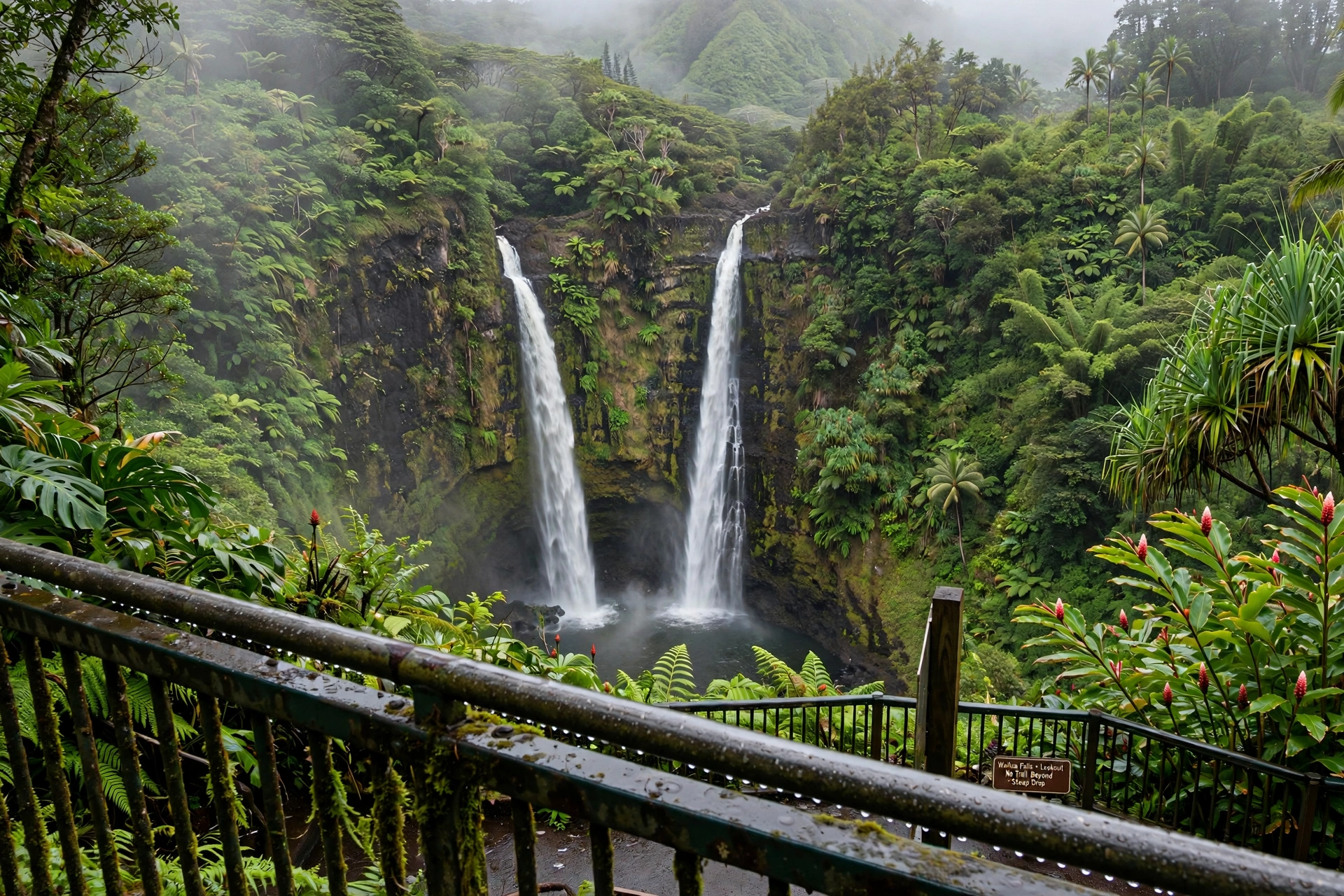
Just up Kuamoʻo Road from Wailua Falls, ʻOpaekaʻa Falls drops about 150 feet in a wide, lacy cascade that is visible from a paved roadside overlook. The name means rolling shrimp, a reference to the native ʻōpae shrimp once abundant in the stream. The overlook also frames the Wailua River valley below, making this one of the best effort-to-reward ratios of any waterfall on the island: park, walk a few steps, and there it is.
ʻOpaekaʻa is at its best after rain, when the full width of the falls fills in, and in morning light. The overlook can be busy with tour buses midday, so fold it into an early east-side loop with Wailua Falls and the nearby Kamokila Hawaiian Village area. As with Wailua Falls, there is no safe public trail to the base; enjoy it from the overlook.
Hanakāpīʻai Falls: The Kalalau Trail Reward
Hanakāpīʻai Falls drops 300 feet at the end of a demanding 8-mile round-trip hike, and it is the finest waterfall on Kauaʻi that most visitors can legally reach on foot. The journey starts on the Kalalau Trail at Keʻe Beach: two miles along the Nāpali cliffs to Hanakāpīʻai Beach, then two more miles up the Hanakāpīʻai Valley along the stream to the falls. The final two miles are the hard part, a muddy, root-tangled, stream-crossing climb through deep valley jungle.
The falls themselves pour in a single tall ribbon into a large pool walled by dripping green cliffs, and on a quiet day the only sounds are the water and the wind. The pool is tempting and dangerous in equal measure. Flash floods can arrive with no warning from rain far up the valley, rocks fall from the cliffs, and the water is cold enough to cramp muscles. Wade at the edges if conditions are calm and the sky upstream is clear, but never swim across the pool, never climb the falls, and leave immediately if the water starts rising or turning brown.
This hike requires a reservation for Hāʻena State Park, where the trailhead sits, either a parking reservation or a shuttle reservation booked in advance through the state system. Day hikers may go as far as Hanakāpīʻai Falls; travel beyond requires a Kalalau overnight permit. Start at dawn, carry two liters of water per person minimum, wear shoes with real grip, and treat the Hanakāpīʻai Stream crossings with full respect. If the stream is running high and brown at the beach crossing, turn back. The falls will be there another day.
Secret Falls (Uluwehi): The Kayak Adventure
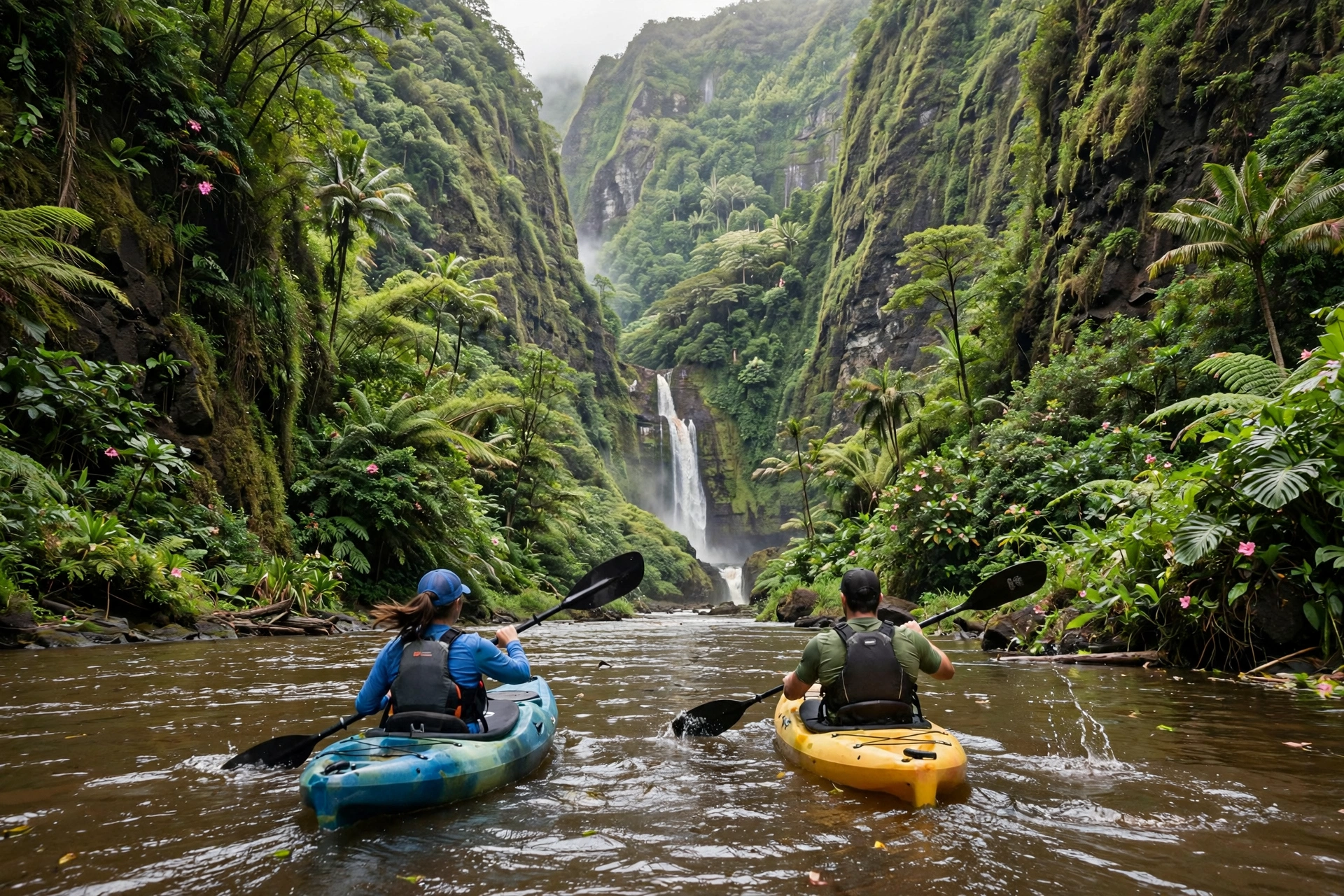
Uluwehi Falls, universally known as Secret Falls, drops about 120 feet at the end of a journey that is half paddle and half hike. Reaching it means kayaking up the Wailua River, Hawaiʻi’s only navigable river, then hiking roughly a mile through muddy forest to the falls. The combination makes it one of the most popular waterfall adventures on Kauaʻi, and on a busy day the secret is out: expect company on both the river and the trail.
The falls pour into a wading pool in a walled amphitheater of ferns and moss, and the setting earns its fame. The hike crosses the stream several times on slippery rocks, and the mud on this trail is legendary, deep, slick, and staining. Wear shoes you can get filthy, bring a dry bag for everything you want to keep dry, and go with a clear weather window. The Wailua River valley funnels rain efficiently, and the trail becomes genuinely hazardous when the stream rises.
Most visitors reach Secret Falls with a kayak tour out of the Wailua River marina area, which handles the boats, the route, and the local knowledge. Independent paddlers can rent kayaks, but the river’s far reaches and the trail beyond reward local guidance. Either way, this is a half-day commitment and one of the most satisfying waterfall outings on the island.
Hoʻopiʻi Falls: The Local Favorite
Near Kapaʻa on the east side, the Hoʻopiʻi Falls trail is a short, roughly one-mile round-trip hike to a pair of small waterfalls on Kapaʻa Stream. The lower falls drop into a popular swimming hole, and the trail passes through ironwood forest and bamboo groves to get there. It is the kind of hike locals do on a weekend morning, unpretentious and lovely, and it makes an excellent low-commitment waterfall outing.
Low commitment does not mean no risk. The trail follows a stream that floods, the rocks around the falls are slick, and the swimming hole has a submerged rock shelf that has injured jumpers. Swim only if you can see the bottom clearly, never jump without checking depth, and skip the water entirely after rain. The trailhead sits in a residential neighborhood, so park considerately, keep noise down, and respect the neighbors who live with this trail in their backyard.
Manawaiopuna Falls: The Jurassic Falls
Manawaiopuna Falls, a 400-foot cascade deep in Hanapepe Valley, is famous worldwide as the waterfall from a certain dinosaur film, and it sits entirely on private land with no public trail access. The only legal way to see it is from the air, on a helicopter flight that includes the valley. This is worth stating plainly because the falls’ fame inspires trespassing, and the landowners have dealt with intruders for decades.
If a helicopter tour is in your plans, Manawaiopuna is often the emotional highlight, the moment the film location reveals itself in a hidden amphitheater. If flying is not in your plans, appreciate it in photographs and spend your ground time on the many falls you can reach legally. No viewpoint, road, or trail on Kauaʻi offers a glimpse of Manawaiopuna, and attempting to reach it on foot means trespassing on private property in steep, dangerous terrain.
Nāpali Coast Waterfalls: The Ones You See From the Water
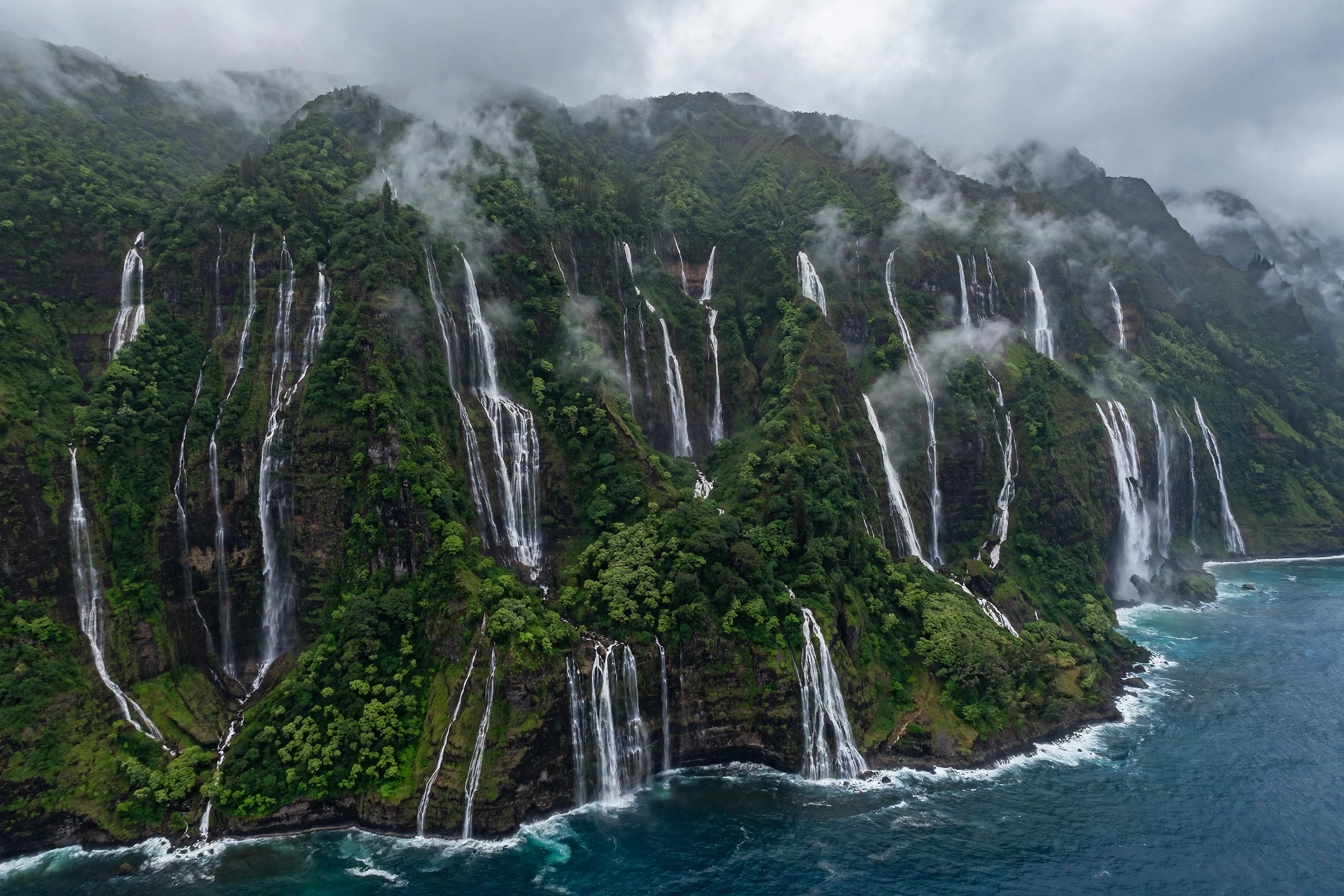
The Nāpali Coast holds the greatest concentration of waterfalls on Kauaʻi, hundreds of cascades pouring off 4,000-foot sea cliffs, and almost none of them are reachable on foot. After heavy rain, every fold in the cliffs weeps water, and the coast becomes a wall of waterfalls visible only from boats or helicopters. This is not a consolation prize; a Nāpali Coast boat trip in the wet season, with waterfalls streaming down every ridge, is one of the great scenic experiences in Hawaiʻi.
Hanakāpīʻai Falls, described above, is the one major Nāpali waterfall reachable by trail. Everything else along the coast belongs to the water and the air. Winter swells can make boat trips rough and some operators pause service in the roughest months, so the calmest seas and the fullest waterfalls do not always coincide. Check seasonal conditions when planning, and choose your vantage point accordingly.
How to See Kauaʻi’s Waterfalls
Kauaʻi’s waterfalls divide neatly by how you reach them, and matching the fall to your fitness, time, and comfort with risk is the key to a good day. The roadside tier needs nothing but a car: Wailua Falls, ʻOpaekaʻa Falls, and the Waimea Canyon overlooks for Waipoʻo Falls all deliver with minimal walking. These are ideal for travelers with limited mobility, tight schedules, or small children, and there is no shame in a roadside waterfall. Some of the island’s best cascades ask nothing of you but attention.
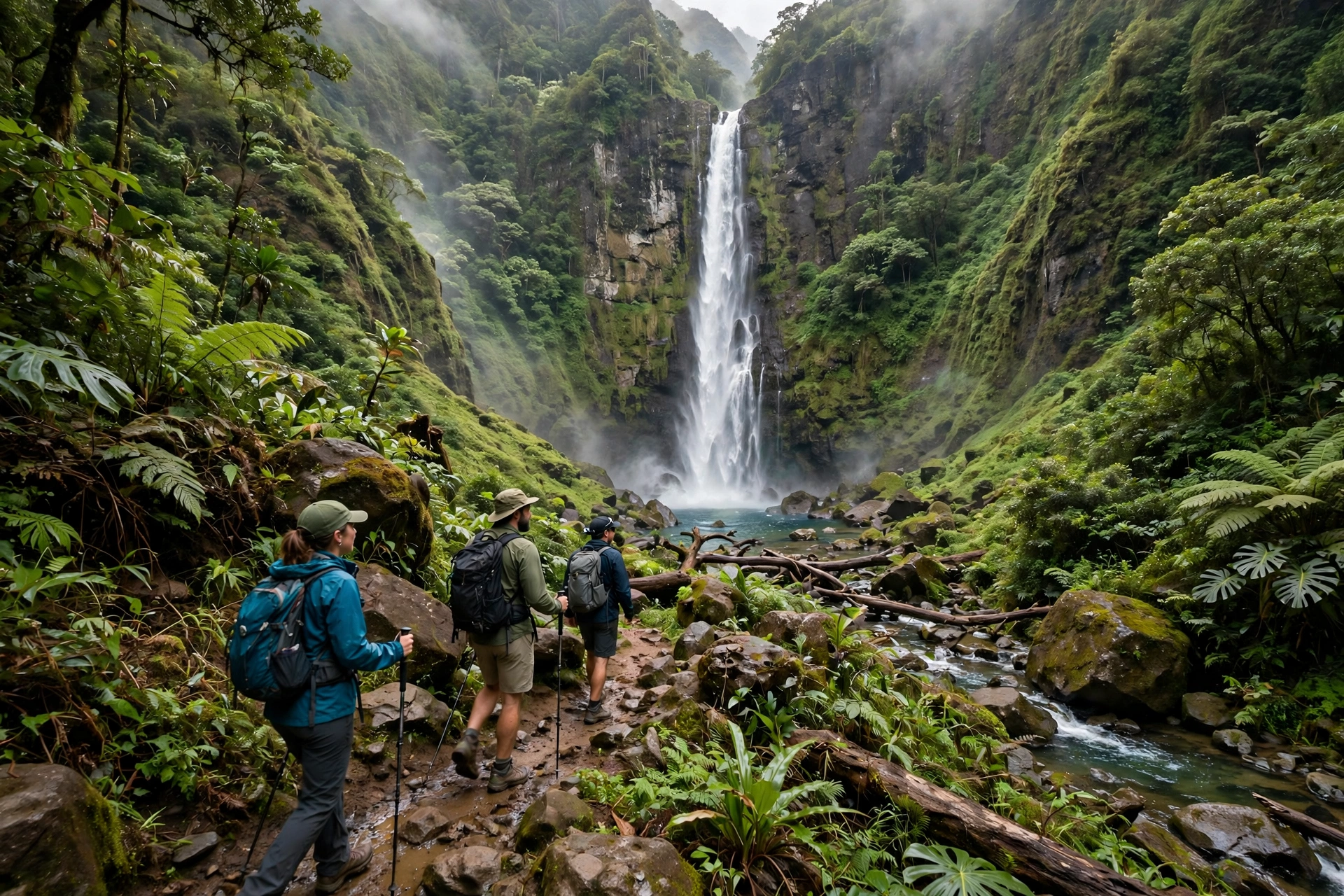
The hiking tier ranges from easy to serious. Hoʻopiʻi Falls is a casual hour. The Canyon Trail to Waipoʻo Falls is a moderate half day with real elevation and mud. Hanakāpīʻai Falls is a strenuous full day that demands fitness, preparation, and a park reservation. All Kauaʻi trails share the island’s signature conditions: mud, roots, stream crossings, and weather that changes by the hour. The Nā Ala Hele trail system maintains the public trails, and its guidance on closures and conditions is worth checking before any hike.
The river tier belongs to the Wailua River. Secret Falls is the headline, but the river itself, with its valley walls and swimming spots, is part of the experience. Kayak tours handle logistics and add interpretation; independent paddlers should be confident in their skills and their weather reading. The river is calm but not trivial, and the far landing plus the muddy trail beyond make this a genuine half-day adventure.
The air and water tier covers everything you cannot walk to: Manawaiopuna Falls, the Nāpali Coast cascades, and the interior valley falls. Helicopter flights and boat tours are the standard ways to see them, and both are weather dependent. This guide takes no position on which operator to choose; it notes only that these views exist, that they are weather dependent, and that they are the only legal way to see the island’s most remote falls. Book the weather window, not just the seat: a flight on a clear morning after rain shows you ten times the waterfalls of a flight on a dry hazy afternoon.
Waterfall Safety on Kauaʻi
Kauaʻi’s waterfalls injure and kill visitors every year, and the causes repeat with grim consistency: flash floods, falls from heights, and infections from stream water. None of these are freak accidents. All of them are foreseeable, and all of them are avoidable with the right knowledge. Read this section as the most important part of the guide.
Flash floods are the primary killer. Kauaʻi’s watersheds are steep and short: rain falling on Mount Waiʻaleʻale can reach a lowland stream in under an hour, and it arrives as a wall of brown water carrying logs and boulders. The cruel part is that the rain may be falling miles away while your trailhead sits in sunshine. Never hike a stream valley during or immediately after heavy rain, watch the water continuously while you are in it, and memorize the escape route to high ground at every crossing. If the water starts rising, turns brown, or carries debris, get out of the stream corridor immediately and stay out. Your hike is over; the falls will wait.
Never swim at the base of a tall waterfall. The plunge pool below a major fall hides violent currents, aerated water that cannot support a swimmer’s weight, and rocks that shift with every flood. Hanakāpīʻai’s pool, Wailua’s pool, and the pools below Waipoʻo and Manawaiopuna have all taken lives. Wade at the edges where you can see the bottom and keep your footing, and treat any pool you cannot see into as off limits.
Stay back from waterfall lips and cliff edges. The rock at the top of a falls is perpetually wet, often undercut, and sometimes crumbly volcanic soil rather than solid stone. The view from three safe steps back is identical to the view from the edge, minus the risk. This applies equally to canyon rims above Waipoʻo and the overlook rails at the roadside falls, which exist because the drops are real.
Respect private property absolutely. Several of Kauaʻi’s most famous falls sit on or are reached across private land, and trespassing has created lasting conflict between landowners and visitors. If a fall has no legal public access, admire it from the legal vantage point or not at all. Locked gates, no trespassing signs, and local warnings are not suggestions.
Take leptospirosis seriously. This bacterial infection spreads through water contaminated with animal urine, which on Kauaʻi means essentially every freshwater stream. It enters through cuts, scrapes, and mucous membranes, and it can cause serious illness. Do not swim with open wounds, do not dunk your head in stream water, do not drink from streams, and see a doctor promptly if you develop fever, headache, or muscle aches after freshwater exposure. The risk is manageable with basic precautions, but it is not imaginary.
The golden rule: if the water is high, brown, or rising, or if rain is falling anywhere in the watershed above you, stay out of the stream. Every waterfall tragedy on Kauaʻi involves someone who underestimated the water. Do not be that person.
Photography Tips
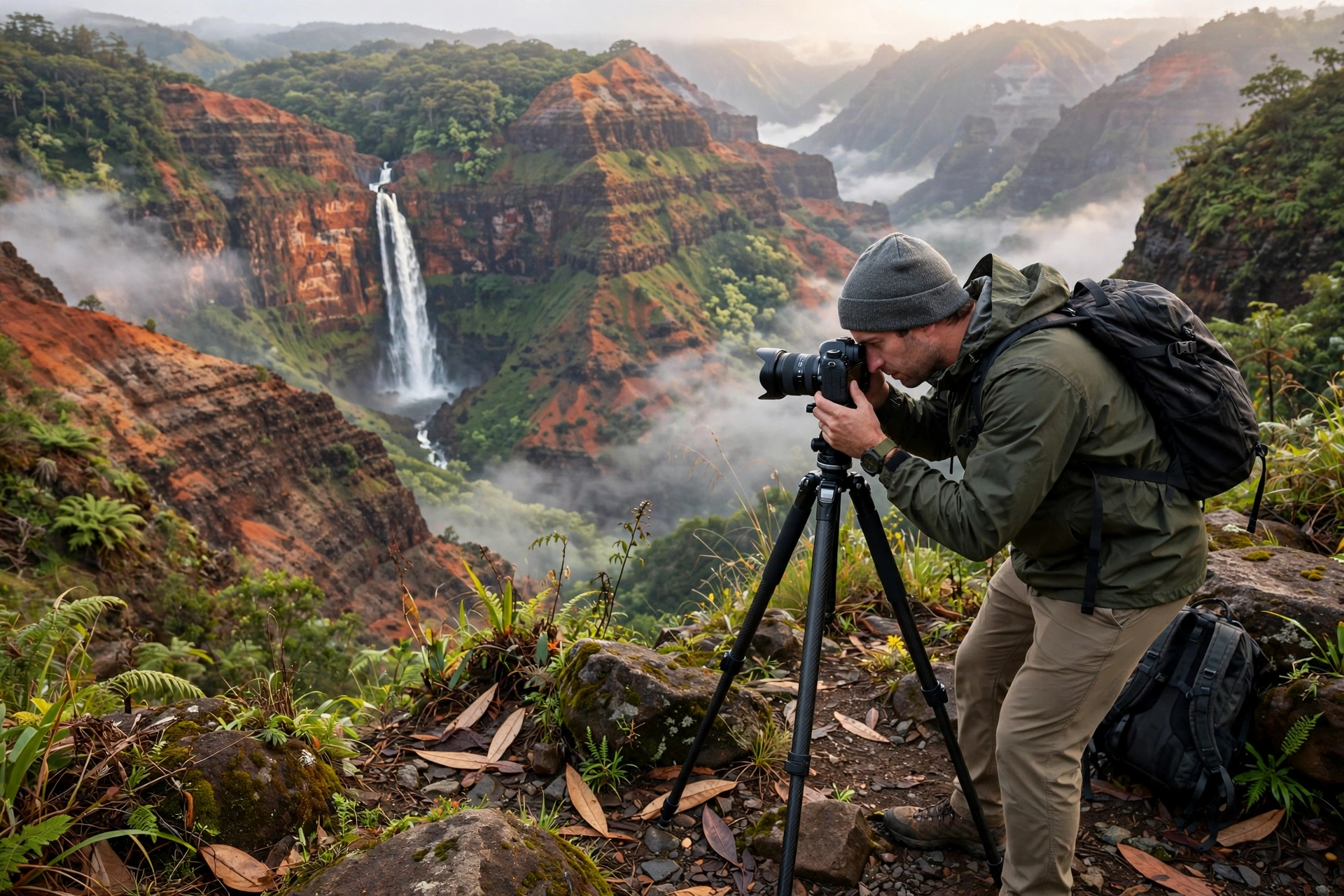
Kauaʻi’s waterfalls photograph best in soft light. The island’s deep valleys and narrow canyons mean harsh midday sun creates blown highlights and black shadows, while morning and late afternoon light wraps the falls in a gentler glow. Overcast days, common in the wet valleys, are actually ideal: the clouds act as a giant softbox, saturating the greens and letting you shoot long exposures without filters.
For the classic silky-water effect, use a tripod and a shutter speed between a quarter second and two seconds. Even a small travel tripod transforms waterfall photography; handheld shots at slow speeds blur the whole scene, not just the water. A circular polarizer cuts glare on wet rocks and foliage and deepens the greens, and it is the single most useful filter for Hawaiian waterfall work. Bring a microfiber cloth and a rain sleeve: waterfall mist coats lenses in seconds, and Kauaʻi’s valleys can rain on you with no warning.
Compose with the landscape, not just the falls. The great Kauaʻi waterfall photographs, Waipoʻo hanging in Waimea Canyon, the Nāpali ribbons from a boat, Wailua Falls framed by its amphitheater, work because the setting carries the image. Include foreground vegetation for depth, watch for rainbows in the mist at Wailua Falls on sunny mornings, and resist the urge to shoot every fall from the same centered position. Move along the overlook, try vertical compositions for tall falls like Hanakāpīʻai, and give the water room to breathe in the frame.
Drones are heavily restricted in Hawaiʻi’s state parks, including Hāʻena and Waimea Canyon areas, and prohibited in wilderness areas. Check current regulations before flying anywhere on Kauaʻi; the fines are substantial and the restrictions exist to protect wildlife and other visitors’ experience.
Best Time to See Kauaʻi Waterfalls
The wet season, roughly November through March, delivers the fullest waterfalls. Winter storms soak the island’s watersheds, and the great falls run at their most powerful. This is when Waipoʻo thunders, when the Nāpali cliffs weep from every fold, and when a helicopter flight or boat trip shows the island at its most dramatic. It is also when trails are muddiest, streams most dangerous, and flash flood risk highest. The reward and the risk rise together.
The drier season, roughly April through October, offers thinner but still beautiful falls, safer trails, and calmer seas for Nāpali boat trips. Wailua Falls and ʻOpaekaʻa Falls flow year round and photograph beautifully in summer light. Hanakāpīʻai Falls keeps pouring, fed by one of the wettest valleys on Earth, though at reduced volume. For most visitors, the shoulder months of April, May, September, and October hit the sweet spot: decent flows, manageable mud, and fewer crowds than peak winter or summer.
Time of day matters as much as season. Go early for the best light, the fewest people, and the safest stream conditions, since afternoon heating often builds the clouds that become afternoon rain in the mountains. A waterfall visited at 8 a.m. and the same waterfall at 2 p.m. can feel like different places. Plan waterfall outings for the morning, keep afternoons flexible, and always check the National Weather Service Honolulu forecast for the specific watershed you are entering, not just the beach town where you are staying.
Frequently Asked Questions
What is the most beautiful waterfall on Kauaʻi?
There is no single answer, but the short list is Waipoʻo Falls for canyon drama, Hanakāpīʻai Falls for backcountry grandeur, Wailua Falls for easy-access beauty, and the Nāpali Coast cascades seen from the water for sheer abundance. Each rewards a different kind of trip, which is why Kauaʻi earns its waterfall reputation.
Can you swim in Kauaʻi waterfalls?
Sometimes, with caution. Shallow wading pools like those at Hoʻopiʻi Falls are commonly used, but never swim at the base of a tall waterfall, never swim when water is high or brown, never swim with open cuts because of leptospirosis risk, and never swim alone. Many of the island’s pools have taken lives; treat every one with respect.
Do you need a permit to hike to Hanakāpīʻai Falls?
You need a Hāʻena State Park reservation to access the Kalalau Trail trailhead, either a parking reservation or a shuttle reservation, booked in advance. Day hikers can go as far as Hanakāpīʻai Falls on the standard reservation; continuing past the falls toward Kalalau requires an overnight camping permit.
What is Secret Falls and how do you get there?
Secret Falls, properly Uluwehi Falls, is a 120-foot cascade reached by kayaking up the Wailua River and hiking about a mile through muddy forest. Most visitors go with a kayak tour. It is a half-day commitment and one of the island’s most popular waterfall outings.
Can you visit the Jurassic Park waterfall on Kauaʻi?
Manawaiopuna Falls sits on private land in Hanapepe Valley with no public trail access. The only legal way to see it is from the air on a helicopter flight. Do not attempt to reach it on foot; that means trespassing in steep, dangerous terrain.
Are Kauaʻi waterfalls flowing year round?
The major falls flow year round, fed by one of the wettest watersheds on Earth, but volumes vary enormously. Wet season flows from November through March are dramatically fuller than late-summer flows. Smaller seasonal cascades may disappear entirely in dry months.
Is it safe to hike to waterfalls after rain?
Generally no. Trails become extremely muddy and slippery, stream crossings become dangerous, and flash flood risk spikes. Wait at least a day after heavy rain before hiking stream valleys, check trail conditions, and turn back if water is high or rising.
Which Kauaʻi waterfalls can you see without hiking?
Wailua Falls and ʻOpaekaʻa Falls both have paved roadside overlooks. Waipoʻo Falls is visible from Waimea Canyon overlooks along the drive. The Nāpali Coast waterfalls are visible from boat tours with no hiking required. These four options cover the island’s waterfall highlights for visitors who cannot or prefer not to hike.
Related Guides
- Kauaʻi Hikes: the island’s best trails, including the Kalalau Trail and Canyon Trail details behind several falls in this guide.
- Kauaʻi Map: orient yourself with the island’s regions, roads, and park locations.
- Maui Waterfalls: compare with Maui’s cascades, from Waimoku Falls to the roadside falls of the Hāna Highway.
- Oʻahu Waterfalls: waterfall hiking on Oʻahu, from Mānoa Falls to the island’s windward cascades.
- Hawaiʻi Beaches: pair your waterfall days with the island’s best shorelines.
- Hawaiʻi Map: the full island chain overview for trip planning.
Kauaʻi’s waterfalls are the product of deep time and heavy rain, five million years of water carving an old island into a green maze of valleys and cliffs. They range from roadside overlooks to backcountry epics, and the island offers a waterfall for every level of ambition. Go in the morning, watch the water and the sky, stay on legal trails, and give the falls the respect their age and power deserve. The rain that feeds them has been falling for millions of years; it will still be falling long after your visit, and the falls will be waiting.