Koko Crater Trail: Conquering Oʻahu’s 1,048 Stair Climb

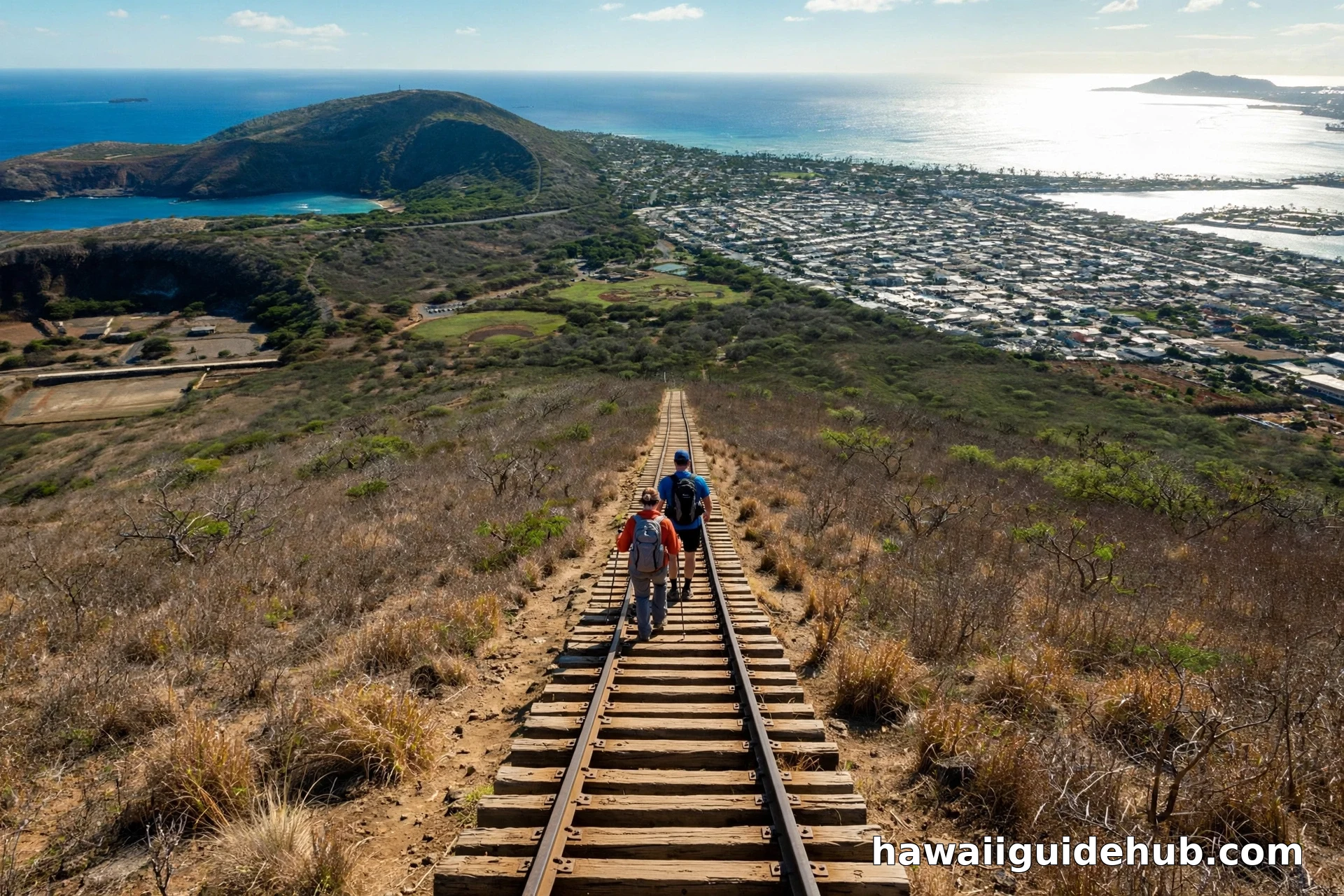
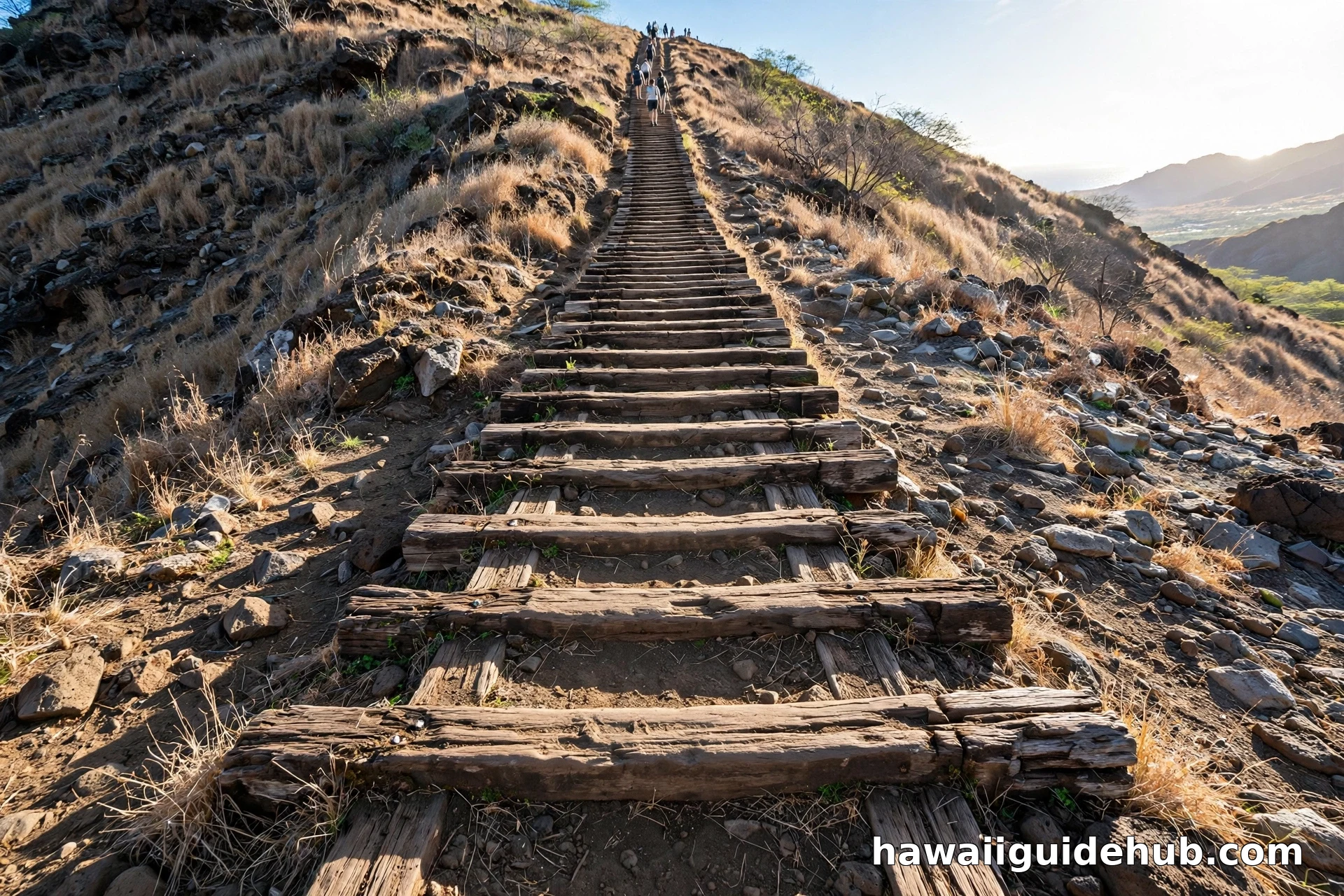
The first time you see the Koko Crater Trail, your brain tries to convince you that it is a trick of perspective. A perfectly straight line of wooden railroad ties climbs straight up the side of a volcanic crater, so steep that it looks more like a ladder than a trail. Hikers on it look like ants scaling a wall. Then someone tells you the number, 1,048, and you understand why locals call this place Nature’s StairMaster.
Climbing the Koko Crater Trail is one of the most popular workouts and bucket list hikes on Oʻahu. It is short, brutally steep, completely free, and it rewards everyone who reaches the top with some of the finest views on the island. This guide covers everything you need to know before you lace up: the history of the old railroad, what each section of the climb feels like, how to get there, where to park, and how to stay safe on the way up.
What Is the Koko Crater Trail?
The Koko Crater Trail, also known as the Koko Head Stairs or the Koko Head Tramway, is a hiking trail that climbs straight up the side of Koko Crater (Puʻu Mai) in Hawaii Kai, on the southeast corner of Oʻahu. What makes it unique is the surface under your feet: the trail is made of 1,048 wooden railroad ties, the remains of a military tramway built during World War II.
Unlike most trails that wind back and forth up a slope, this one goes directly up the fall line of the crater. There are no switchbacks to give your legs a break. The grade is relentless from the first step to the last, which is why a hike of less than two miles round trip can leave even fit people shaking at the top.
The trail sits inside Koko Head District Park and is managed by the City and County of Honolulu Department of Parks and Recreation. It is open to everyone and costs nothing, which makes it a favorite training ground for local athletes. On any given morning you will share the stairs with sunrise hikers, trail runners doing laps, and visitors taking on the climb for the first time.
Koko Crater Trail Fast Facts
Before the details, here are the numbers that matter most:
Keep these figures in mind as you read the rest of the guide. The distance sounds easy. The elevation gain tells the real story.
The History Behind the Railroad Ties
Those weathered wooden ties under your feet have a story. During World War II, the United States military needed a way to supply a radar station and lookout bunkers at the top of Koko Crater. The solution was a tramway: a cable hauled tram that ran straight up the crater slope carrying equipment and personnel to the summit.
After the war ended, the site continued as an Air Force station for a time, then was decommissioned in 1966. The tracks, rails and tram cars were removed, but the wooden ties were left behind. Hikers started using the abandoned line as a staircase, and over the decades it became one of the most famous unofficial trails in Hawaiʻi.
The trail has not always been in great shape. Years of weather and thousands of boots wore many of the old ties down. A volunteer group called the Kokonut Koalition formed to preserve and repair the stairs, and much of the trail you climb today has been rebuilt or reinforced thanks to their work. It is worth remembering that you are climbing a piece of history, and staying on the ties helps protect it.
Getting to the Trailhead
The trailhead is easy to find. From Waikiki, take the H1 east until it becomes Highway 72, the Kalanianaole Highway, hugging the coast. Continue past Hawaii Kai until you reach the Hawaii Kai Shopping Center, then turn left onto Lunalilo Home Road. Turn right onto Anapalau Street, then left into Koko Head District Park.
Park in the lot and walk behind the baseball fields toward the crater. You will see the stairs ahead of you almost immediately. The bottom of the trail is unmistakable: a wall of wooden ties climbing straight into the sky.
If you are new to Oʻahu and still building your island itinerary, our Oʻahu island guide will help you fit this hike into a wider trip, and our guide for first-time visitors covers the basics of getting around the island.
Parking and Hours
Parking is free in the Koko Head District Park lot, but it fills up fast on weekends and holidays, and even on weekdays the early morning rush of sunrise hikers can take most of the spaces. If the lot is full, some hikers park on nearby residential streets, but read the signs carefully and respect the neighborhood.
The park itself is generally open from early morning to late evening, and sunrise hikes are the norm here. Restrooms are available near the parking area and baseball complex. Use them before you start, because there are no facilities anywhere on the trail or at the summit.
One important note: there are no entrance fees and no reservations for the Koko Crater Trail. This sets it apart from Diamond Head, which now requires advance reservations and charges nonresidents. Koko Head is free for everyone, every day.
Climbing the Stairs: What the Hike Is Really Like
The best way to understand this hike is in three sections. Each one feels different, and knowing what is coming helps you pace yourself.
The Lower Section
The first stretch of stairs is the gentlest part of the climb, and even so it will get your heart rate up quickly. The ties here are fairly even and close together, so you can find a rhythm. This is where most people settle into their pace. Resist the urge to sprint. The hikers who burn out halfway up are almost always the ones who attacked the bottom.
Take short breaks whenever you need them. Nobody on this trail will judge you for stopping. Step to the side so faster climbers can pass, drink some water, and watch the view improve with every step.
The Trestle Bridge
About two thirds of the way up, you reach the most talked about feature of the trail: the old railway trestle bridge. Here the tracks span a deep ravine on wooden supports, with gaps between some of the ties and a long drop visible below. For anyone with a fear of heights, this section can be genuinely scary.
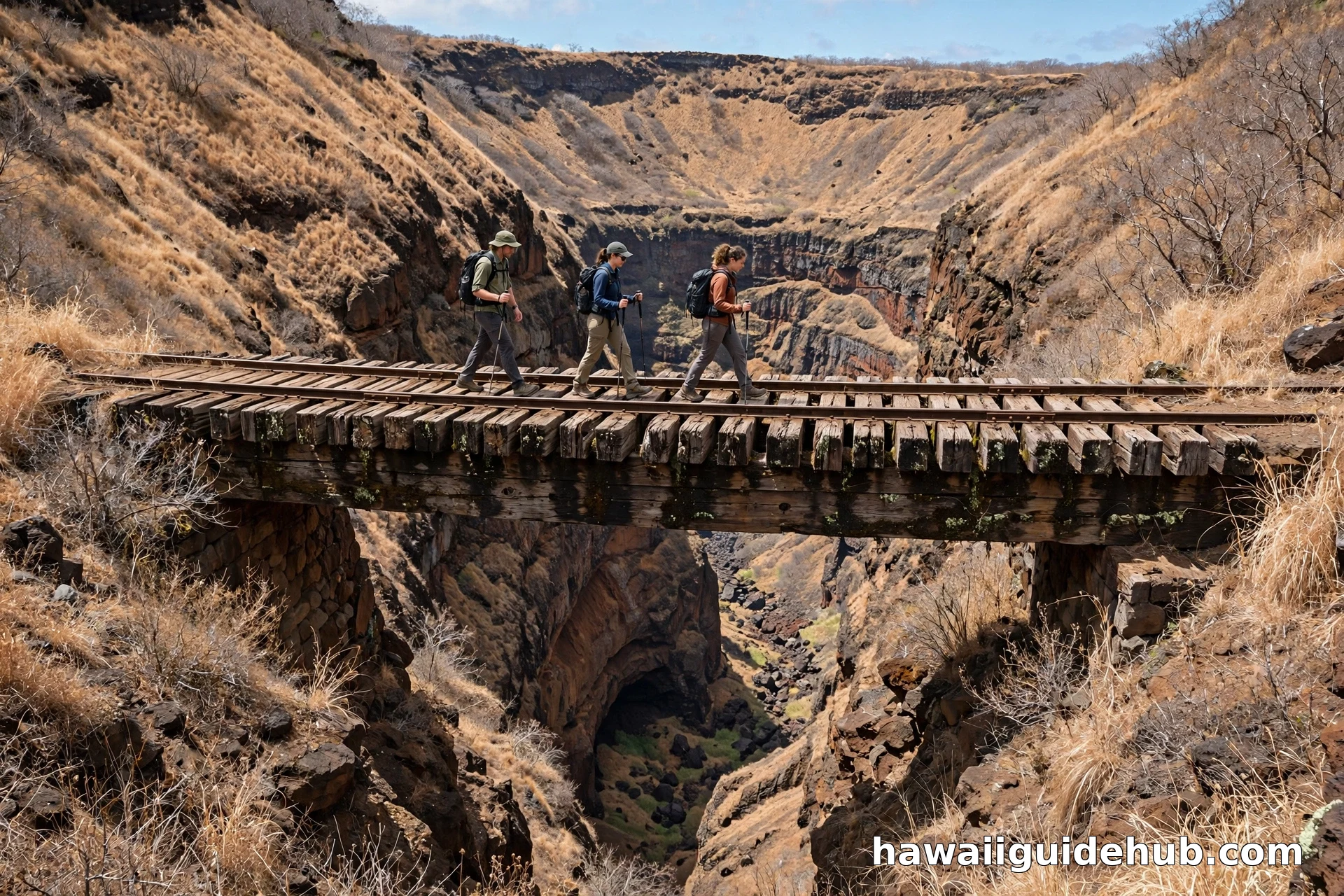
The good news is that there is a bypass trail. Before the bridge begins, a dirt path branches off to the side and rejoins the stairs above the trestle. It is a little rougher underfoot, but it keeps you on solid ground. If heights bother you, take the bypass without hesitation. The views are waiting either way, and no view is worth a panic attack on a wobbly bridge.
The Final Push to the Summit
Above the bridge, the stairs get steeper. The last section is the hardest part of the climb, with tall, uneven steps that demand your full attention. Your legs will burn. Your breathing will be ragged. Keep going one step at a time.
Then, suddenly, the stairs end. You step off the last tie and onto the summit, and the whole windward side of Oʻahu opens up in front of you.
The View From the Top
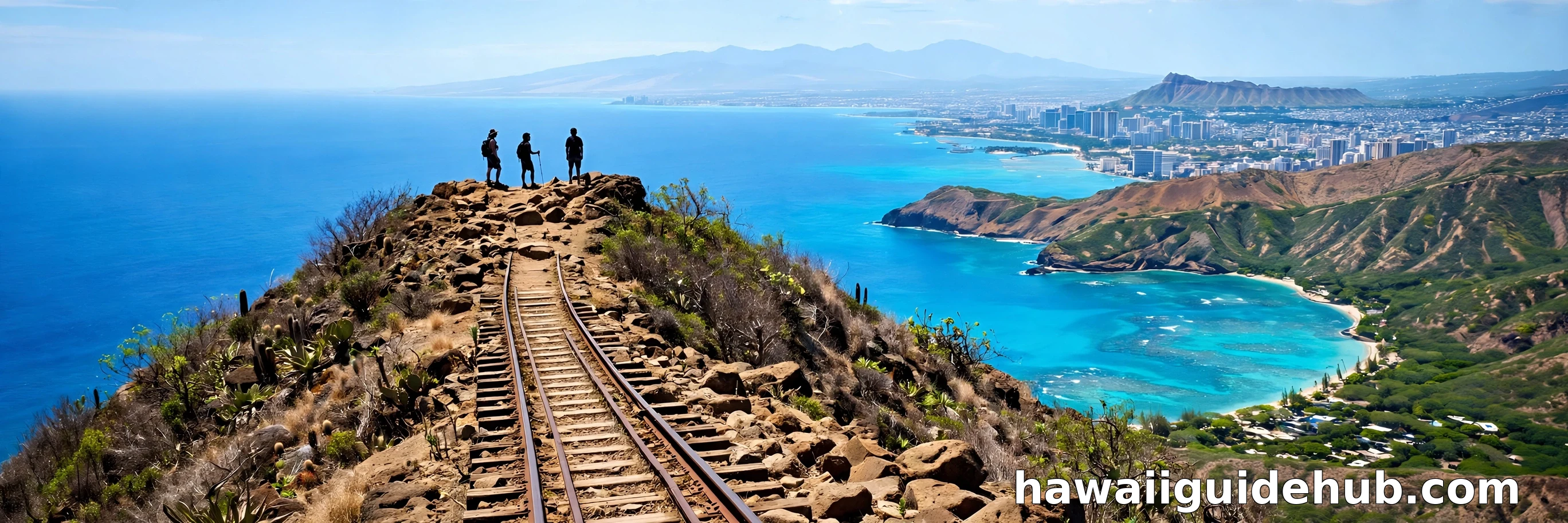
The summit of Koko Crater sits about 1,200 feet above sea level, and the panorama is one of the best on the island. Directly below you lies Hanauma Bay, its turquoise water curving into the shore. To the west you can see the Hawaii Kai marina, the Port Lock peninsula, and on a clear day the Honolulu skyline with Diamond Head rising behind it.
Look inside the crater and you will see the old military bunkers and pillboxes left over from the tramway days. Stay on the established areas and respect the structures.
Most hikers spend 15 to 30 minutes at the top resting, taking photos, and eating a snack. Bring something to eat. After 1,048 steps, you will have earned it.
How Hard Is the Koko Crater Trail?
Honest answer: it is hard. The average hiker needs 45 to 90 minutes to reach the top, and the climb is consistently rated as difficult. Fit trail runners can do it in under 30 minutes and often run it multiple times in one session, but that says more about them than about the trail.
The difficulty comes from the grade, not the distance. There is no flat section, no shade, and the steps are uneven, with some ties missing or tilted. Heat and humidity multiply the challenge. If you are deciding between this and Diamond Head, know that Koko Crater is roughly twice the elevation gain in about the same round trip distance, and it is much steeper the whole way.
That said, the trail is achievable for most reasonably active people who pace themselves, rest often, and bring enough water. People of all ages hike these stairs. The key is humility: go at your own speed and turn around if you feel dizzy, nauseous, or overheated. The stairs will be there tomorrow.
What to Bring and How to Prepare
This is not a hike to improvise. Bring at least two liters of water per person. There is no water anywhere on the trail, and the combination of climbing and tropical heat drains you fast. Wear shoes with real grip. The wooden ties can be dusty and slippery, and flip flops have no business on this trail.
Sun protection is essential. There is zero shade on the stairs, so bring a hat, sunglasses, and sunscreen. A light snack for the summit helps with recovery. If you are hiking for sunrise, bring a headlamp or flashlight for the pre dawn walk to the trailhead.
Fitness preparation helps too. If you can comfortably climb several flights of stairs without stopping, you have the base fitness for this hike. If stairs are a struggle at home, consider building up with shorter hikes first. Our guide to outdoor adventures in Hawaii has plenty of easier options to start with.
Best Time to Hike Koko Crater
Early morning is the best time, and it is not close. Start at or before sunrise to beat the heat and the crowds. The sun rises over the ocean as you climb, and the views get more dramatic with every step. By 10 in the morning the stairs are already hot and exposed, and midday in summer can be punishing.
Sunset is the second best option. The light on Hanauma Bay and the Koʻolau mountains is beautiful, and the temperature drops as the sun goes down. Bring a headlamp for the descent, because the trail gets dark quickly after sunset.
After rain, the ties can be slick, so give the trail time to dry. Trade winds usually keep the summit breezy, which is welcome after the climb but can be gusty at the top, so hold onto your hat.
Koko Head vs Diamond Head
Visitors often ask which crater hike to choose. Here is the honest comparison. Diamond Head is shorter in elevation gain (560 feet), has a paved trail with switchbacks, requires advance reservations, and charges nonresidents an entry fee plus parking. It is the more accessible, more crowded, and more tourist friendly option.
Koko Crater is free, needs no reservation, gains about 1,200 feet, and is significantly steeper and harder. The views from Koko Head include Hanauma Bay and the wild southeast coast, while Diamond Head looks back over Waikiki and Honolulu. If you want a workout and bragging rights, do Koko Head. If you want an easier morning walk with great views, do Diamond Head. Ambitious hikers do both.
Safety Tips for the Stairs
A few safety rules will keep this hike fun instead of miserable. Never hike the stairs in a thunderstorm. The trail is fully exposed and the ties get slippery when wet. Stay hydrated before you even start, and drink regularly on the way up, not just when you feel thirsty.
Watch your step on the descent. Most injuries on this trail happen going down, when tired legs meet uneven, dusty ties. Going down sideways or in a slight zigzag can spare your knees. Take the bypass around the trestle if you are at all nervous about heights.
Respect the trail and the other hikers. Stay on the ties rather than cutting switchbacks through the vegetation. Keep noise down in the early morning out of respect for the nearby neighborhood. And pack out everything you bring up, including snack wrappers.
If you are exploring more of the island’s coastline after the hike, the North Shore makes a great change of pace, and our Big Island highlights are worth a look if your trip includes more than one island.
See the Climb on Video
Want a preview of what the stairs look like before you commit? This 4K drone video tours the full trail from base to summit:
Koko Crater Trail FAQs
How many steps is the Koko Crater Trail?
The trail has 1,048 railroad ties, each one acting as a step. The count is the trail’s most famous statistic and the reason for its StairMaster reputation.
How long does it take to hike Koko Crater?
Most hikers take 45 to 90 minutes to reach the top and 30 to 45 minutes to come down. Fit runners can finish the round trip in under an hour, while first timers should allow up to two hours total.
Is the Koko Crater Trail free?
Yes. There is no entrance fee, no parking fee, and no reservation requirement. It is one of the best free activities on Oʻahu.
Can beginners hike Koko Crater?
Active beginners can, if they pace themselves, rest often, and bring plenty of water. The trail is steep and exposed, so it is not ideal for small children, anyone with knee problems, or anyone with heart or respiratory conditions. When in doubt, try an easier hike first.
Is the trestle bridge safe?
The bridge is old and has gaps between some ties with a long drop below. Many hikers cross it carefully without issue, but if heights bother you, take the dirt bypass trail around it. There is no shame in the bypass.
Do I need reservations like Diamond Head?
No. The Koko Crater Trail requires no reservations and charges no fees, unlike Diamond Head State Monument, where nonresidents must book ahead.
The Koko Crater Trail is one of those rare hikes where the effort and the reward are perfectly matched. Every burning step on the way up makes the summit view a little sweeter. Go early, bring water, respect the old railroad ties, and you will understand why this strange, steep staircase has become one of Oʻahu’s most beloved trails.