Hawaiian-Style Beef Tomato

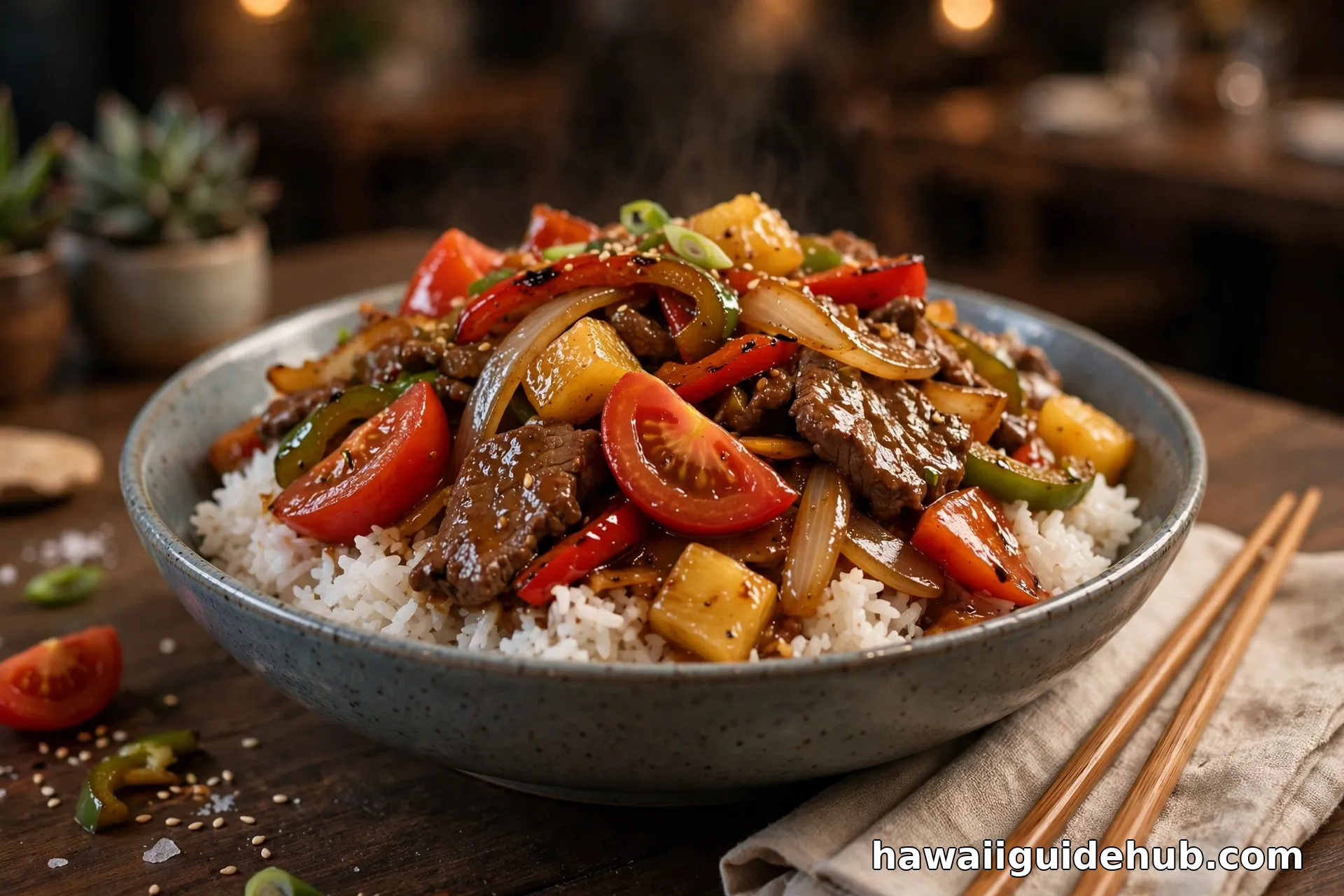
Beef tomato is the kind of dish that tastes like somebody’s childhood in Hawaii. Tender strips of beef, wedges of tomato that have just started to slump, crisp-tender peppers and onions, all glossed with a savory garlic-ginger sauce and piled over hot white rice. It shows up on plate lunch menus, in family kitchens, and at potlucks across the islands, and it takes about 35 minutes from cutting board to table.
This is the single complete guide to beef tomato Hawaii style. It covers the dish’s Chinese origins and plantation-era history, what makes the Hawaiian version distinct, the full easy recipe with measurements, step-by-step cooking instructions, smart substitutions, where visitors encounter it, and answers to common questions. Everything about beef tomato in Hawaii is answered on this one page.
Beef Tomato at a Glance
| The basics | Detail | Cook’s note |
|---|---|---|
| What it is | Hawaiian-style beef and tomato stir-fry over rice | Plate lunch canon, not a restaurant invention |
| Origin | Chinese, adapted in Hawaii during the plantation era | That history is why it tastes like home cooking here |
| Main ingredients | Flank steak, tomatoes, onion, bell pepper, celery | Everything stays crisp; nothing overcooks |
| Signature flavors | Garlic, ginger, shoyu, oyster sauce | The pantry behind half of local cooking |
| Total time | About 35 minutes, plus 15 minutes marinating | A genuine weeknight stir-fry |
| Difficulty | Easy, one wok or large skillet | One pan, minimal cleanup |
| Serves | 4 | Doubles cleanly for a crowd |
| Serve with | Hot steamed white rice | Non-negotiable |
What Beef Tomato Is
At its core, beef tomato is a stir-fry: thin slices of beef quickly seared, then tossed with tomatoes, onions, bell peppers, and celery in a savory sauce. The Hawaiian version leans on shoyu (soy sauce), oyster sauce, garlic, and ginger, which gives the sauce a deep umami character that sets it apart from mainland beef-and-tomato dishes. The vegetables stay bright and slightly crisp, the tomatoes release just enough juice to marry with the sauce, and everything gets spooned over rice so none of the gravy goes to waste.
It is weeknight food, not restaurant theater. Most Hawaii families have their own version, and the differences between them are the point: some add ketchup for sweetness, some add chili pepper for heat, some keep it to the classic five vegetables. The recipe below is the middle-of-the-road local style that most island cooks would recognize.
Choosing the Right Cut of Beef
Flank steak is the classic choice for beef tomato, and for good reason. It has a bold beefy flavor, a loose grain that soaks up marinade, and a price that keeps this an everyday dish rather than a splurge. The critical technique is slicing thinly against the grain: look for the long lines running through the meat and cut across them, not along them. Slices about a quarter inch thick are ideal. Cut with the grain and even the best marinade cannot save the chew.
Skirt steak works just as well and is often cheaper. Sirloin is a fine substitute if it is what your store carries, though it is leaner and less forgiving of overcooking. Ribeye makes a luxurious version for a special occasion. Whatever cut you buy, partially freezing the beef for 30 to 45 minutes firms it up and makes thin, even slicing much easier. And always let the sliced beef come back toward room temperature before it hits the wok; cold beef drops the pan temperature and steams instead of searing.
Chinese Roots, Hawaii Identity
Beef tomato began as a Chinese dish. Chinese immigrants came to Hawaii in large numbers during the plantation era of the 1800s, working the sugar and pineapple fields, and they cooked the food they knew with the ingredients they could find. Over generations, the dish got Hawaii-ized: local tomatoes, local beef, shoyu in place of some traditional seasonings, and the all-important serving over a scoop of rice.
That pattern repeats across Hawaii’s food culture. The plate lunch itself grew out of plantation workers’ mixed lunches, combining Japanese, Chinese, Portuguese, Filipino, and Korean influences on one plate. Beef tomato earned its place in that canon because it is fast, filling, and endlessly adaptable. Today you will find it at plate lunch counters, okazuya delis, and family gatherings from Hilo to Hanalei, a quiet staple rather than a tourist attraction. For more on the dishes that define the islands, see our culinary journey through Hawaii’s must-try local dishes.
Ingredients
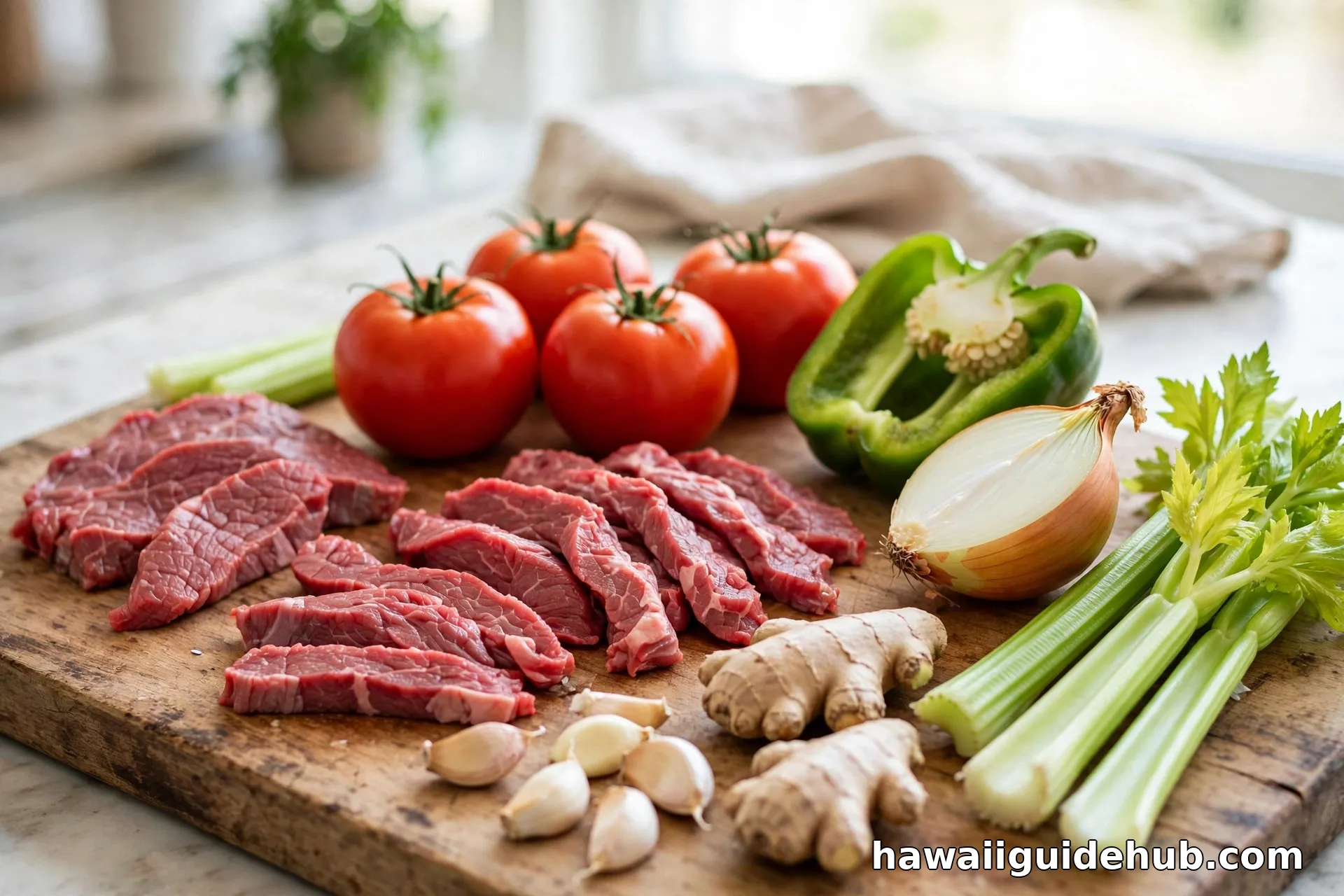
This easy beef tomato recipe serves four. Slice everything before you turn on the heat, because stir-frying moves fast.
For the Beef and Marinade
- 1 pound flank steak, thinly sliced against the grain
- 2 tablespoons shoyu (soy sauce)
- 1 teaspoon sugar
- 1 teaspoon cornstarch
- 1 teaspoon sesame oil
For the Stir-Fry
- 3 to 4 ripe tomatoes, cut into wedges
- 1 medium onion, sliced
- 1 green bell pepper, sliced
- 2 stalks celery, sliced diagonally
- 3 cloves garlic, minced
- 1 tablespoon fresh ginger, minced
- 2 green onions, cut into 1-inch pieces
- 2 tablespoons cooking oil, divided
For the Sauce
- 1 cup beef broth or water
- 2 tablespoons shoyu
- 1 tablespoon oyster sauce
- 1 teaspoon sugar
- 1 tablespoon cornstarch mixed with 2 tablespoons cold water
How to Make Beef Tomato: Step by Step
Step 1: Marinate the Beef (15 Minutes)
Toss the sliced beef with the shoyu, sugar, cornstarch, and sesame oil. The cornstarch is the key: it forms a light coating that keeps the beef tender and helps the sauce cling later, a classic Chinese stir-fry technique. Let it sit at room temperature for 15 minutes while you slice the vegetables. Do not skip the marinating time; it makes a noticeable difference in texture.
Step 2: Sear the Beef Hot and Fast
Heat 1 tablespoon of oil in a wok or large skillet over high heat until it shimmers. Add the beef in a single layer and sear without moving for about a minute, then toss and cook just until the pink disappears, another minute or two. Transfer the beef to a plate. The goal is browning, not cooking through; the beef will finish in the sauce.
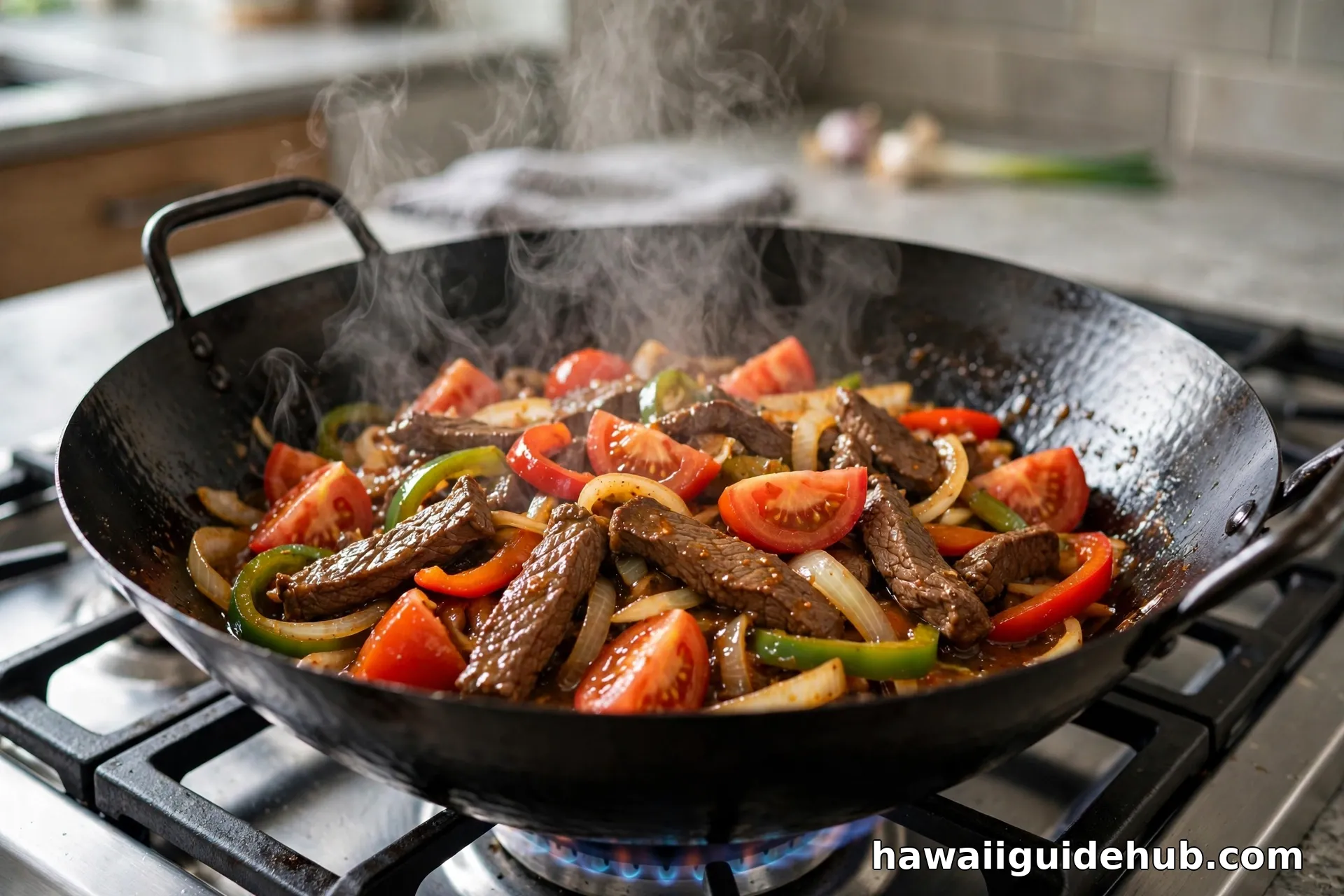
Step 3: Stir-Fry the Vegetables
Add the remaining oil to the same wok. Stir-fry the garlic and ginger for 30 seconds until fragrant, then add the onion, bell pepper, and celery. Cook for 2 to 3 minutes, tossing constantly. The vegetables should stay crisp and bright. Add the tomato wedges last and toss for just one minute; they should soften at the edges but hold their shape. Mushy tomatoes mean you went too long.
Step 4: Build the Sauce
Pour in the beef broth, shoyu, oyster sauce, and sugar, scraping up any browned bits from the wok. Bring to a simmer, then stir in the cornstarch slurry and cook for about a minute until the sauce turns glossy and thick enough to coat a spoon. Taste and adjust: more shoyu for salt, a pinch more sugar if the tomatoes are tart.
Step 5: Combine and Serve
Return the beef and any accumulated juices to the wok. Toss everything together for one minute, just until the beef is heated through. Shower with the green onions, remove from the heat, and serve immediately over hot steamed rice. The rice is not optional in Hawaii; it is the delivery system for the sauce.
Tip: The most common mistake is overcrowding the wok, which steams the beef instead of searing it. If your wok is small, sear the beef in two batches. The second most common mistake is overcooking the tomatoes. They should look like tomatoes when the dish hits the table, not like sauce.
What It Tastes Like
Beef tomato hits every note at once: savory from the shoyu and oyster sauce, sweet-acidic from the tomatoes, aromatic from the garlic and ginger, with the clean crunch of peppers and celery cutting through the richness. The sauce is glossy and light, never heavy, and the whole dish eats as comfort food. It is the kind of meal that tastes better the next day, when the sauce has soaked into everything overnight.
Easy Variations and Substitutions
Swap the flank steak for sirloin, ribeye, or even ground beef in a pinch; just adjust the searing time. Out of oyster sauce? Use an extra tablespoon of shoyu plus a teaspoon of sugar. For heat, add sliced Hawaiian chili peppers or a spoonful of chili garlic sauce with the aromatics. Some families stir in a squirt of ketchup for a sweeter, kid-friendly sauce, a legitimate local variation. Bell peppers can be any color, and zucchini or mushrooms can stand in for celery. To keep it gluten-free, use tamari instead of shoyu and check that your oyster sauce is gluten-free.
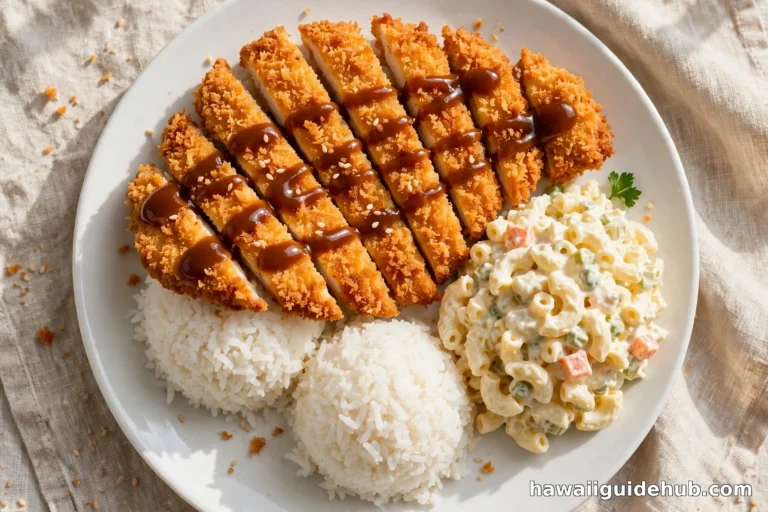
For a plate lunch experience at home, serve the beef tomato with two scoops of rice and a scoop of mac salad, the classic trio. If you love Hawaii’s Chinese-influenced dishes, our guide to huli-huli chicken covers another island favorite with deep local roots.
Storage and Leftovers
Refrigerate leftovers in a sealed container for up to 4 days. Reheat gently in a skillet over medium heat with a splash of water to loosen the sauce; the microwave works but softens the vegetables further. Beef tomato also freezes well for up to 3 months, though the peppers lose some crunch. Thaw overnight in the refrigerator before reheating.
Beef Tomato and the Plate Lunch Tradition
To understand where beef tomato belongs, understand the plate lunch. The standard plate is two scoops of white rice, a scoop of macaroni salad, and an entree, served in a takeout container for a working person’s price. It grew out of plantation-era lunches, when workers of different backgrounds shared and traded food, and it survived the plantations to become Hawaii’s defining casual meal. Beef tomato fits the plate lunch formula perfectly: a saucy protein that soaks into rice, vegetables for color and crunch, and a flavor profile that bridges Chinese, local, and American tastes.
That is why the dish rarely appears on tourist menus but is everywhere in local life. It is food made for the people who live in Hawaii, not for visitors, which is precisely why visitors who seek it out get a more honest taste of the islands. Order it at a plate lunch counter, eat it at a plastic table, and you are participating in a food culture that has fed Hawaii for over a century. Few dishes earn that as authentically as a scoop of beef tomato over rice.
Where Visitors Encounter Beef Tomato in Hawaii
You will not find beef tomato on fine-dining menus; you will find it where local people eat. Plate lunch shops, okazuya delis, and drive-ins across the islands serve it as a rotating or permanent special, usually over rice with mac salad. Grocery store hot-food counters in Hawaii often carry it too. If you want to taste the dish in its natural habitat before cooking it at home, order it at a neighborhood plate lunch spot rather than a resort restaurant. For the sweeter side of local food culture, read about malasadas and Hawaii’s Portuguese baking traditions.
Watch: Hawaiian Local Beef Tomato
Frequently Asked Questions
What is the difference between beef tomato and beef stew?
Beef tomato is a quick stir-fry with crisp vegetables and a light glossy sauce, ready in about 35 minutes. Hawaiian beef stew is a slow-simmered dish with potatoes, carrots, and a thick tomato gravy. They share tomatoes and beef but are completely different meals.
Can I make beef tomato with ground beef?
Yes. Brown the ground beef, drain the fat, and proceed with the recipe. The texture is different from sliced steak but the flavor is right, and it is even faster on a weeknight.
Why is my beef tough?
Three likely causes: the beef was sliced with the grain instead of against it, the wok was not hot enough to sear, or it cooked too long. Slice thin, sear fast, and return the beef to the sauce only at the very end.
Is beef tomato spicy?
Not by default. The classic version has no heat. Add Hawaiian chili peppers or chili garlic sauce if you want spice.
Can I make it ahead for meal prep?
Yes. Cook it fully, cool quickly, and refrigerate for up to 4 days. Portion over rice for easy lunches. The flavor deepens overnight.
Beef tomato is Hawaii’s food story in a single pan: Chinese technique, plantation history, local ingredients, and rice underneath it all. It is fast enough for a Tuesday, comforting enough for a Sunday, and flexible enough to survive whatever is in your refrigerator. Master the sear, respect the tomatoes, and you will have a dish that tastes like the islands no matter where your kitchen is.