Hawaii Departure Day Tips for a Smooth Last Day

The last day in Hawaii has a particular ache to it. You wake up to the same trade winds and the same ocean light, but your suitcase is open on the bed and the clock is running. Departure day does not have to be a scramble, though. With a little planning, it can be one of the most pleasant days of your trip: a slow morning, a final swim, smart packing, and a smooth run through the one airport step that surprises every first timer.
This is the single complete guide to Hawaii departure day tips. It covers the USDA agricultural inspection every checked bag must pass, how early to reach the airport, what you can and cannot bring home, how to handle hotel checkout and luggage, returning your rental car, and how to squeeze real enjoyment out of your final hours. If you have been searching for anything about leaving Hawaii or your last day in the islands, the answers are all here on this one page.
Hawaii Departure Day at a Glance
| The night before | Do not tape boxes shut until after USDA inspection |
| Checkout morning | Typical checkout 11:00 AM to noon; late checkout sometimes available |
| At the airport | Arrive 2.5 to 3 hours before mainland flights; USDA scan first, then airline check-in, then TSA |
| The inspection | Required for all checked bags to the mainland, Alaska, and Guam |
| The two mistakes that cost people flights | Arriving too late for the inspection line; trying to carry fresh produce (most is confiscated, so eat it in Hawaii) |
| Spend the last dollars on | Kona coffee, macadamia nuts, packaged snacks, apparel |
The USDA Inspection: The Step Nobody Warns You About
Here is the thing that catches first-time visitors off guard: before you can check your bags for a flight from Hawaii to the U.S. mainland, Alaska, or Guam, every checked bag must pass through a U.S. Department of Agriculture inspection station. These stations sit in the terminal before the airline counters, and you cannot skip them. Your airline will not accept your bag until it carries the USDA clearance.
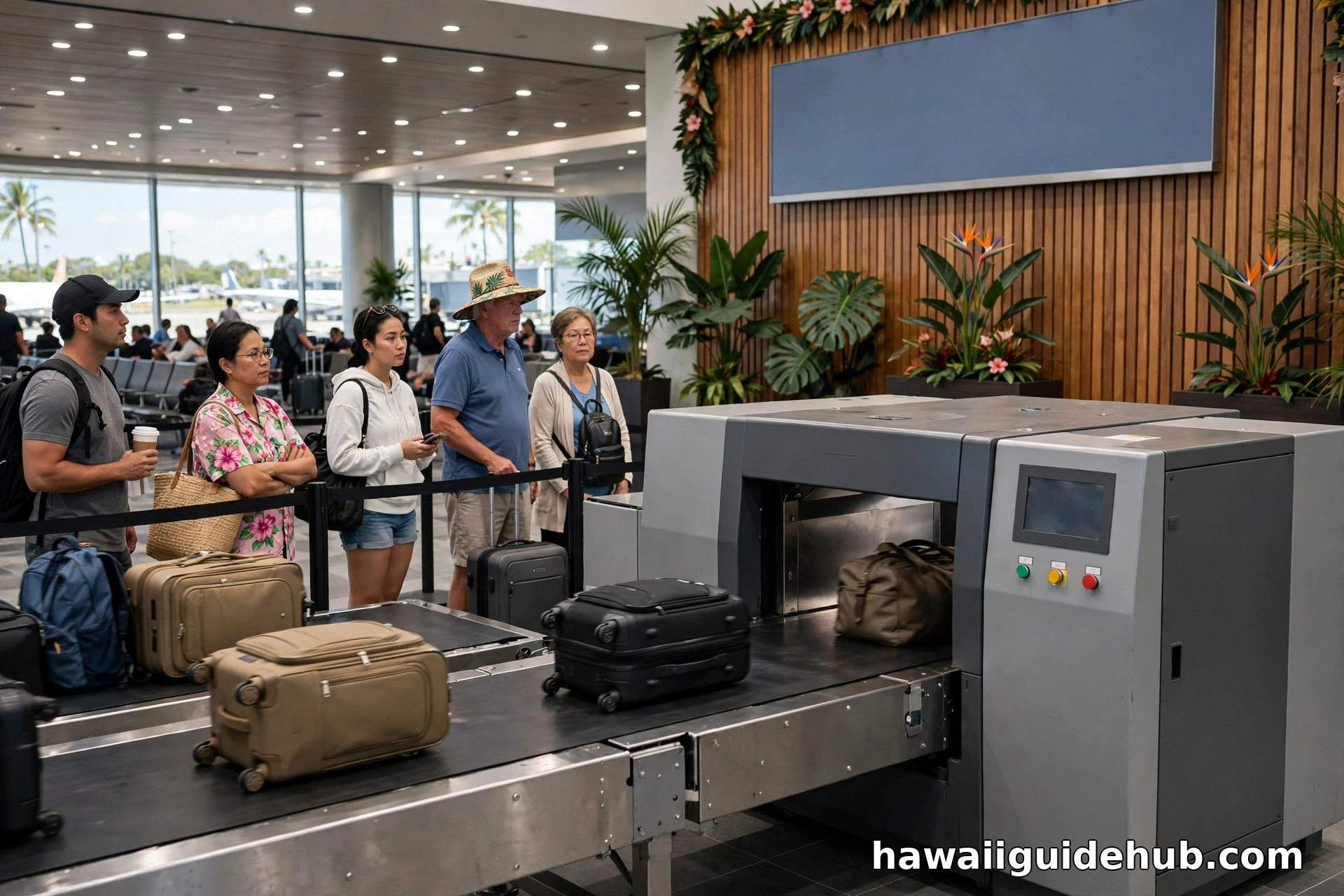
The inspection exists for a serious reason. Hawaii’s farms and forests host pests and plant diseases that could devastate mainland agriculture if they hitch a ride in a suitcase. Inspectors run every bag through an x-ray scanner and open anything suspicious. Be prepared to open and close your own bags, and do not tape coolers or boxes shut until after they have been inspected. Carry-on bags get inspected too, usually at a checkpoint near your gate or at the terminal entrance, depending on the airport and staffing that day.
Lines at the inspection stations can be long, especially during morning departure banks when several mainland flights leave within the same hour. The Hawaii Department of Transportation has publicly advised travelers to allow extra time when stations are short-staffed. This is the single biggest reason the old “two hours is plenty” advice fails in Hawaii: the USDA line comes before everything else, and it does not care about your boarding time.
What You Can and Cannot Bring Home
Pack with the inspection in mind and you will sail through. The general principle is simple: processed and packaged goods are fine, while fresh plants, fresh produce, and soil are not. Beach sand in small amounts, coconuts, commercially canned foods, dried seeds, fresh flowers and leis, and prepared foods like poke or deli meals are all allowed after inspection. What gets confiscated is whole fresh fruit, vegetables, plants with soil, and anything that could harbor pests.
The practical takeaway: eat the mangoes, papayas, and pineapples in Hawaii. Do not buy a bag of fresh fruit at a farmers market on your last morning expecting to carry it home. If you want to bring flavors back, buy them processed: Kona coffee, macadamia nuts, chocolate-covered everything, packaged cookies, and sealed sauces all pass without drama. Cut flowers and leis usually pass inspection, though a few made with certain seed pods may get a closer look. When in doubt, ask the inspector before you pack, not after you are standing in line.
How Early to Get to the Airport
For mainland-bound flights, plan to arrive at the airport 2.5 to 3 hours before departure. That sounds like a lot, but the sequence eats time: USDA inspection first, then airline check-in and bag drop, then TSA security, then the walk to your gate. During busy periods, each of those steps can take 20 to 30 minutes. Travelers with tight connections or evening flights should lean toward three hours, because missing the USDA window means missing the flight, no matter how fast you run afterward.
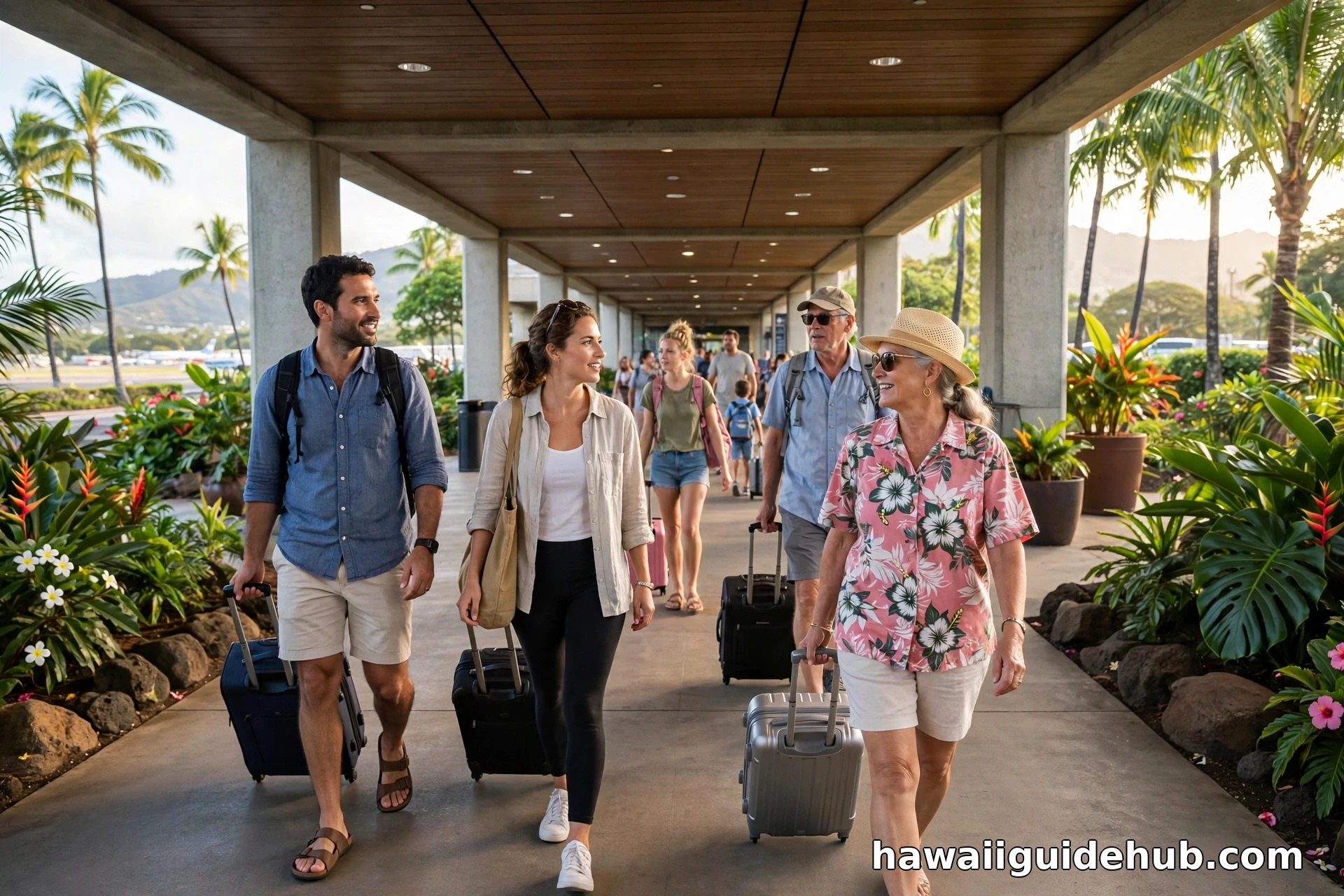
For inter-island flights, 90 minutes is the standard recommendation, since the USDA inspection does not apply. Still, give yourself a buffer on departure day: returning a rental car, riding the shuttle, and navigating an unfamiliar terminal all take longer than you expect. An unhurried departure beats a sprinting one every time. If you are unsure about ID requirements, our guide to whether you need a passport to fly to Hawaii clears it up.
Hotel Checkout and Luggage Logistics
Most Hawaii hotels check out between 11:00 AM and noon. If your flight is in the evening, you have two good options. First, ask about late checkout when you arrive, not on departure morning: hotels can often extend to 1:00 or 2:00 PM for a fee or for free when occupancy allows. Second, use the bell desk. Every hotel in Hawaii will store your luggage for free after checkout, which frees you for a full final day without dragging bags around.
Pack the night before departure, not the morning of. Lay out your travel clothes, charge every device, and put your ID and boarding passes somewhere you cannot forget them. Keep one swimsuit, sunscreen, and a change of clothes in a separate day bag so you can enjoy the beach or pool after checkout. There is nothing sadder than sitting in a hotel lobby for six hours when you could have been swimming.
Returning the Rental Car
Fill the gas tank before you return the car, because the stations near airports charge the island’s highest prices and the prepaid fuel option is almost never a good deal. Photograph the fuel gauge and the car’s condition at return, just as you did at pickup. At Honolulu’s airport, the rental car center is connected by shuttle; at the neighbor island airports, follow the return signs as you approach the terminal. Build 30 minutes into your plan for the return and shuttle ride, more if you need to refuel.
Double-check the car for everything you brought: phone chargers in the USB ports, sunglasses in the visor, reef-safe sunscreen in the door pocket, and anything that slid under the seats. Rental companies find a remarkable number of left-behind items, and recovering them after you have flown home is a miserable process.
Making Your Last Full Day Count
If your flight leaves late in the day, treat departure day as a bonus vacation day, not a travel day. Sleep in a little, have a real breakfast, and pick one last experience: a morning snorkel, a final hike, or a return to your favorite beach. Keep it close to your hotel and keep it relaxed. The goal is to board the plane pleasantly tired, not stressed and sweaty.

Use the last afternoon for souvenirs, not the last morning. Shops near the airport and in Waikiki stay open late, and buying early in the trip means carrying things around for days. Good last-day buys are things that pack easily and pass inspection: coffee, nuts, packaged snacks, apparel, and jewelry. Skip anything fresh, anything in soil, and anything you would cry about losing to an inspector. For a first-timer classic, our guide to visiting Pearl Harbor on your own makes a meaningful final morning on Oahu.

End the trip the way it deserves: with one last sunset. Time your airport run so you catch it, or watch it from the beach nearest your hotel before heading in. However many islands you visited, that final sunset is the memory you will carry home. Our full Hawaii bucket list is worth a last look too, in case anything you meant to do slipped through the cracks.
Common Departure Day Mistakes
The number one mistake is underestimating the airport. Travelers who breezed through security on arrival assume departure works the same way, then discover the USDA line with forty minutes to boarding. The number two mistake is packing fresh produce, which gets confiscated and holds up the line while inspectors dig through your bag. The number three mistake is taping boxes shut before inspection, which guarantees they will be opened anyway, more slowly.
The number four mistake is financial: waiting until the airport to buy souvenirs. Airport shops charge the highest prices on the island for the same coffee and chocolate you could have bought in town. And the number five mistake is skipping the final sunset in favor of getting to the airport absurdly early. Two and a half to three hours is plenty. Four hours is just sitting in a terminal watching other people board. If you are already thinking about your next trip, our guide to the cheapest time of year to visit Hawaii will help you plan the return.
Video: A Last Full Day in Hawaii
Follow a full final day in Hawaii, from a Diamond Head sunrise hike through Waikiki to one last evening at the resort.
Frequently Asked Questions
What is the USDA inspection at Hawaii airports?
Every checked bag on flights from Hawaii to the U.S. mainland, Alaska, or Guam must pass through a U.S. Department of Agriculture inspection station before airline check-in. Inspectors x-ray bags to stop pests and plant diseases from reaching the mainland. You must complete this step before your airline will accept your bag.
How early should I arrive at the airport when leaving Hawaii?
Arrive 2.5 to 3 hours before mainland-bound flights, because the USDA inspection comes before check-in and security. For inter-island flights, 90 minutes is the standard guidance since the agricultural inspection does not apply.
Can I bring fruit home from Hawaii?
Most whole fresh fruit will be confiscated at USDA inspection, so eat it in Hawaii. Processed goods are fine: coffee, macadamia nuts, canned and packaged foods, and prepared meals all pass. Fresh flowers and leis are generally allowed after inspection.
What should I do with my luggage after hotel checkout?
Leave it with the hotel bell desk, which stores bags for free after checkout. Keep a day bag with your swimsuit, sunscreen, and a change of clothes so you can enjoy the beach or pool until it is time to head to the airport.
Can I get a late checkout in Hawaii?
Sometimes. Ask at check-in rather than on departure morning, because availability depends on occupancy. Many hotels can extend checkout to 1:00 or 2:00 PM, sometimes free and sometimes for a fee. During busy seasons, assume the answer is no and plan around the bell desk instead.
Is there anything special about returning a rental car in Hawaii?
Refuel before returning, photograph the gauge and the car’s condition, and allow 30 minutes for the return plus the shuttle to the terminal. Check every compartment for chargers, sunglasses, and sunscreen. The rental return is the most common place travelers lose track of time on departure day.
Leaving Hawaii well is a skill, and now you have it. Pack the night before, respect the USDA line, keep your last day relaxed, and end with a sunset instead of a sprint. The islands will still be here when you come back, and travelers who leave calmly are the ones who start planning their return before the plane even lands.