Christmas in Hawaii: How the Islands Celebrate Mele Kalikimaka

There is a particular kind of magic in hearing Christmas carols while the trade winds move through palm trees. In Hawaii, December arrives without a single snowflake, yet the islands celebrate the holiday with a sincerity that would surprise anyone who assumes Christmas needs cold weather. The season here has its own name, its own song, its own Santa, and a month of events that turn the islands into something you will not find anywhere else on earth.
This is the complete guide to Christmas in Hawaii: how the islands celebrate, the events worth planning around, what December weather really feels like, and what to expect if you visit during the holidays.
What Christmas Looks Like in Hawaii
Forget everything you know about the holiday season and rebuild it with sunshine. In Hawaii, December daytime temperatures sit comfortably in the high 70s, the ocean stays warm enough for swimming, and Christmas lights go up on palm trees instead of pines. Office workers wear aloha shirts to holiday parties. Santa hats appear on surfers. It sounds like a novelty, but for the people who live here, this is simply how Christmas has always looked.
The season runs through the whole month of December, with the biggest public celebrations concentrated on Oahu. Honolulu becomes the center of island holiday life, but every island has its own traditions, from Kauai’s Festival of Lights to Maui’s resort celebrations and the Big Island’s community events. If you are visiting, plan on the holiday season feeling busy but joyful, with a warmth that has nothing to do with the temperature.
Mele Kalikimaka: The Story Behind Hawaii’s Christmas
Long before Hawaii was a state, Christmas was already an official holiday here. King Kamehameha IV declared it so in 1862, during the era of the Hawaiian Kingdom, and the holiday has been part of island life ever since. That royal proclamation is one reason Christmas in Hawaii carries a sense of tradition that goes deeper than tourism. It is not an imported celebration. It belongs here.
The phrase you will hear everywhere is “Mele Kalikimaka,” which is simply “Merry Christmas” translated into Hawaiian. The transformation happened because the Hawaiian language does not have the “r” or “s” sounds of English, and its syllable structure reshapes foreign words. So “Merry Christmas” became “Mele Kalikimaka,” and the phrase stuck so firmly that it became the title of one of the most beloved Hawaiian songs ever written. Robert Alex Anderson composed “Mele Kalikimaka” in 1949, and it has been covered by artists from Bing Crosby to the Beach Boys. You will hear it in every grocery store, hotel lobby, and radio station from late November onward.
That blend of royal history, language, and music is the foundation of the season. Everything else, the parades, the lights, the canoe arrivals, is built on top of it. Understanding the aloha spirit that shapes Hawaiian culture helps explain why the holidays here feel less commercial and more communal than on the mainland.
Honolulu City Lights: The Heart of the Season
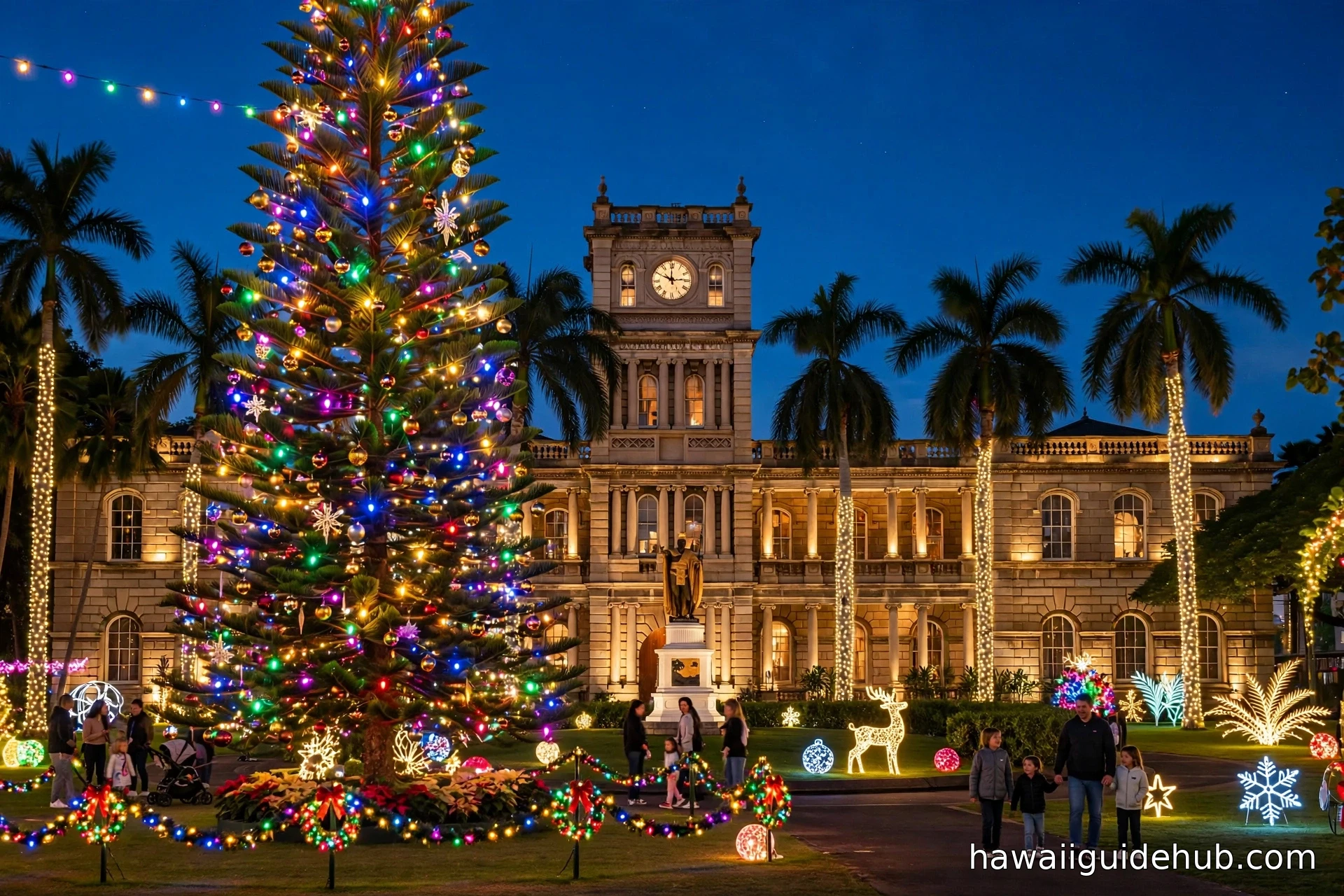
If you do one holiday thing in Hawaii, make it this. Honolulu City Lights has been the islands’ official Christmas celebration since 1985, and it remains the single most beloved event of the season. The centerpiece is a 50-foot Norfolk Island pine, grown in Hawaii, standing on the grounds of Honolulu Hale, the city’s historic city hall at 650 South King Street. Each year the tree gets a new decorative theme, and its ornaments quickly become collectors’ items among locals.
But the tree is only the beginning. The grounds fill with elaborate light displays, a corridor of wreaths, food vendors selling local treats, and free concerts by some of Hawaii’s best performers. The displays light up nightly from early evening until dawn, and admission is free.
Then there is Shaka Santa. Towering 21 feet tall beside the tree, this is Santa Claus reimagined as a local: board shorts, an aloha shirt, and one hand raised in the famous shaka sign. Beside him stands Tutu Mele, Mrs. Claus with a red hibiscus in her hair. They have become icons in their own right, and a photo with them is practically a requirement for a Honolulu December.
One caution: exact dates shift slightly every year. Always confirm the current year’s schedule on the official event websites before building your trip around a specific event.
Santa Arrives by Outrigger Canoe
There is no sleigh in the islands, so Santa trades it for something better. Each December, Santa Claus paddles ashore in a traditional outrigger canoe at the OUTRIGGER Waikiki Beach Resort, trading his reindeer for a crew of local paddlers and gliding across the turquoise water of Waikiki Beach to greet waiting families. It is one of the most beloved traditions of the season, and the 2025 arrival marked its 20th year on O’ahu.
The morning usually includes a keiki hula performance and free photos with Santa afterward in the resort’s open-air lobby, where he appears in a tropical version of his red suit cut short to suit the Hawaiian sun. Recent years have also folded a beach cleanup into the celebration, a fitting island expression of the spirit of giving. The tradition has even begun expanding to Maui, where the OUTRIGGER Kā’anapali Beach Resort hosted its first canoe arrival.
The arrival typically happens in early December, but the exact date changes from year to year, so check the resort’s events page before you go, and arrive early for a good viewing spot on the sand.
The Waikiki Holiday Parade: A November Kickoff
Honolulu’s holiday season actually starts before December. The Waikiki Holiday Parade takes place every year on the Friday after Thanksgiving, which falls on November 27 in 2026, and it has been a Waikiki institution since 1998.
This is not your typical holiday parade. It was founded to commemorate the anniversary of the attack on Pearl Harbor and honor its survivors and veterans, and that mission still shapes the event today. Mainland and local marching bands, military units, service bands, local officials, and entertainers march the roughly 1.5-mile route from Fort DeRussy Park down torch-lit Kalakaua Avenue to Queen Kapiolani Park, with participating groups also taking part in remembrance activities at Pearl Harbor during their time on O’ahu.
It is the official kickoff to Waikiki’s holiday season. If your trip covers Thanksgiving week, this is the event to plan your Friday evening around. Check the organizer’s site close to your trip for the step-off time and street closure details, since those are confirmed closer to the date.
One more O’ahu tradition worth knowing: Kapolei City Lights brings the season to Leeward O’ahu at Kapolei Hale, with a luminous 50-foot tree, community tree displays, and live entertainment. The 2026 edition runs from November 28, 2026 through January 3, 2027 under the theme of paniolo holiday culture, and it has been a West Side tradition since 2001.
Christmas Day, Island Style
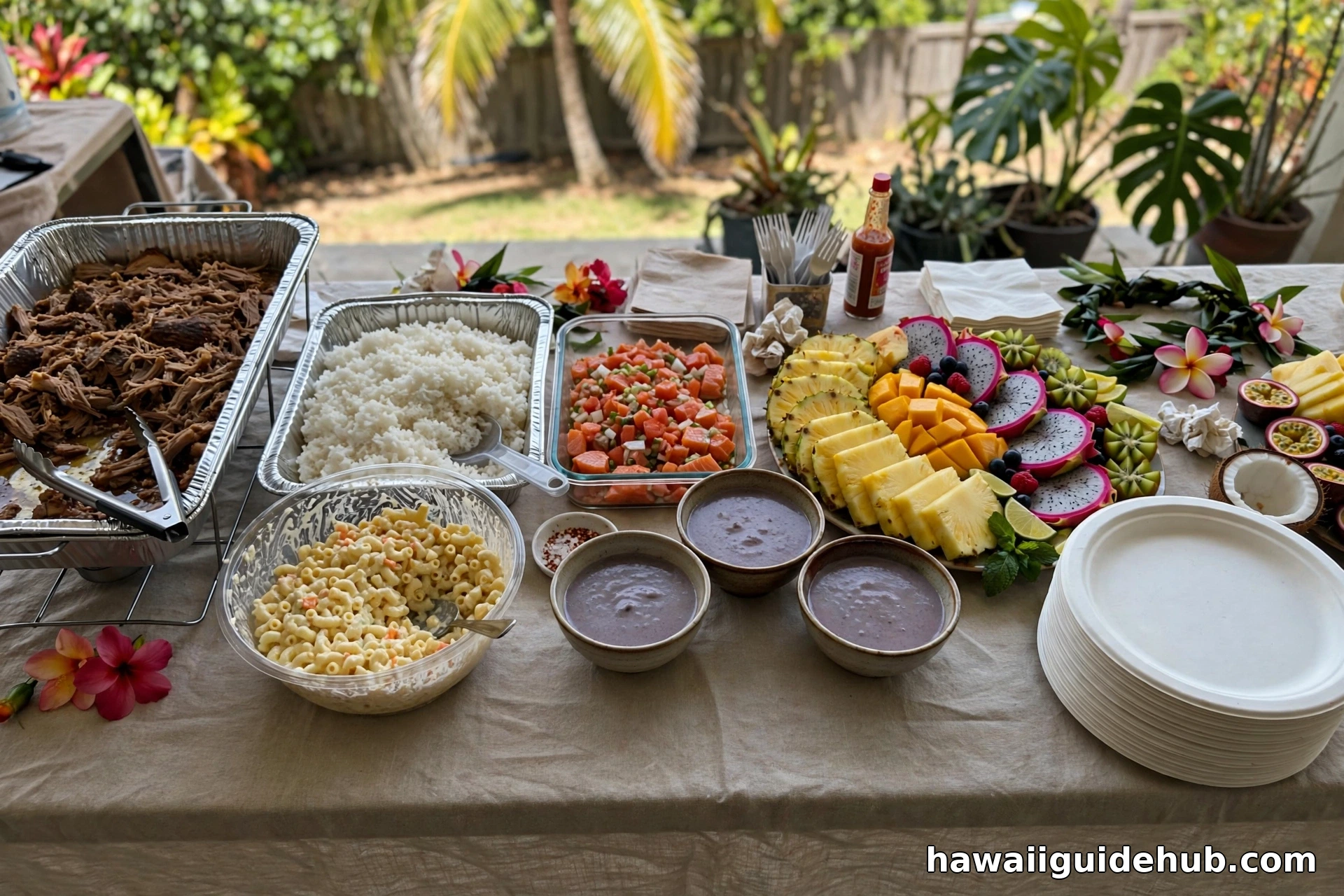
Christmas morning in Hawaii looks nothing like the mainland version, and that is the point. Many local families start the day with a dawn surf session or a swim. By midday, the beaches fill with groups sharing food, and the smell of barbecue drifts across the sand. Christmas dinner here often means a table that mixes traditions: holiday ham and turkey alongside kalua pig, lomi salmon, poke, and rice. The ohana gathering around the table matters more than what is on it.
Resorts across the islands host Christmas luaus, blending holiday dishes with Hawaiian favorites, with hula performances and live Hawaiian music playing both Christmas songs and traditional mele. The Royal Hawaiian and Moana Surfrider on Waikiki Beach are known for going all out, with Christmas lights strung alongside tiki torches. These luaus book up early, so reserve well ahead if you want a seat.
For visitors, Christmas Day itself is quiet in terms of organized events. Most public celebrations happen in the weeks before. Plan Christmas Day as a beach day, a resort day, or a quiet exploration day, and make your dinner reservation early. Many restaurants offer special Christmas menus and fill up weeks in advance.
How the Islands Decorate
Hawaiian Christmas decor is a style unto itself. The classic island Christmas tree wears garlands of orchids, hibiscus, and plumeria instead of tinsel. Poinsettias, which grow easily in Hawaii’s climate, appear everywhere, from hotel lobbies to front yards. Wreaths get woven with tropical flowers and foliage. Even the most traditional-looking tree in a Hawaii home will usually have at least one lei draped over it.
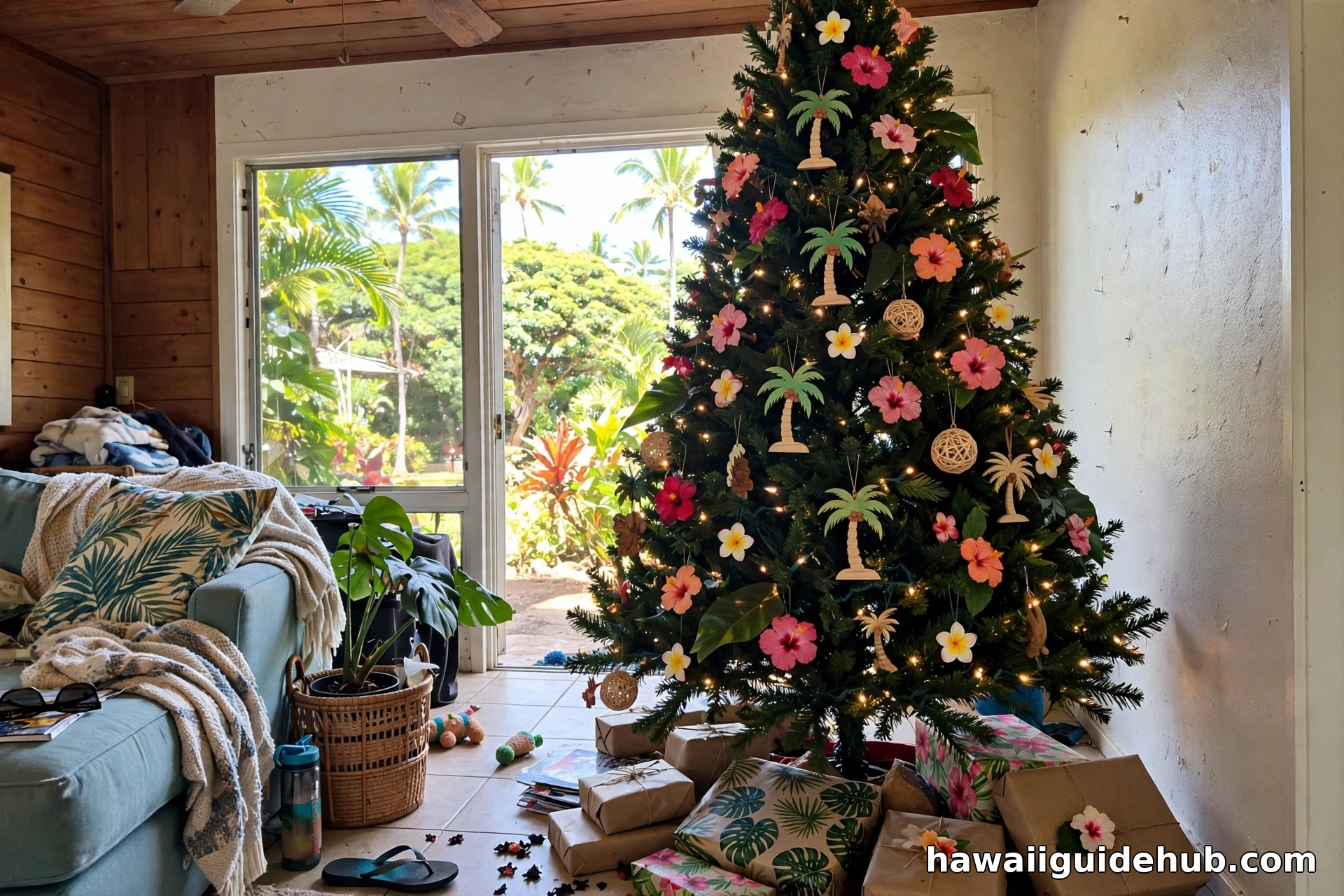
This is also why Hawaii’s Christmas feels authentic rather than forced. The decorations are not trying to imitate a mainland winter. They are an expression of the islands’ own plants, flowers, and craft traditions dressed for the season. To understand how deeply these traditions run, it helps to know the history of Hawaii before statehood, when Christmas first took root as a Kingdom holiday.
Beyond O’ahu: Holiday Events on the Neighbor Islands
On Kaua’i, the centerpiece is the Festival of Lights at the Historic County Building in Līhu’e. The festival grew out of the legendary “Christmas House” of Auntie Josie Chansky, a local artist whose homemade decorations drew crowds for decades. In 1996 her collection was donated to the County of Kaua’i, and the festival became the public home for her creations, many crafted from recycled soda cans, bottle caps, and other found objects. The displays open to the public in early December, typically around the first Friday of the month, and viewing is free.
That same evening usually brings the Lights on Rice Parade, organized by the Rotary Club of Kaua’i. Dozens of lighted floats, marching groups, and decorated vehicles roll down Rice Street from Vidinha Stadium to the Historic County Building, drawing thousands of spectators to downtown Līhu’e. It is Kaua’i’s biggest holiday night of the year.
Maui and the Big Island take a quieter, community-driven approach. Expect resort luaus with holiday menus, local Christmas craft fairs in towns like Hilo and Kailua-Kona, and community parades that lean local rather than touristy. These events are often organized by community groups rather than large venues, so exact schedules can shift from year to year. Check local visitor bureau listings as your trip approaches.
December on the Water: Ocean Conditions and Whale Season
December changes the ocean as much as it changes the land. Winter brings the biggest surf of the year to north-facing shores. O’ahu’s North Shore becomes the surf capital of the world in December, with swells that can be enormous, which is a thrill to watch but means swimming at north shore beaches is often unsafe. South-facing beaches, including most of Waikiki, stay comparatively calm and are usually the better choice for a December swim.
Water temperatures sit in the mid-70s, comfortable for most swimmers, though a rash guard or light wetsuit top makes longer snorkel sessions more enjoyable. Trade winds still blow, so conditions can vary day to day. Always check local surf and ocean reports before swimming, especially on the north and west shores.
December also marks the beginning of humpback whale season in Hawaiian waters. The whales arrive from Alaska in early winter and stay through spring, and by late December you can often spot them spouting or breaching from the shore on Maui, Kaua’i, and O’ahu. Dedicated whale watching cruises run from most major harbors throughout the season.
What to Expect as a Visitor
Weather. December is one of Hawaii’s cooler months, which still means daytime highs in the high 70s and ocean temperatures warm enough for swimming. Evenings can dip into the mid-60s, so bring a light jacket for nighttime events like Honolulu City Lights. For an island-by-island breakdown, see our guide to Hawaii weather in December. Rain is more likely than in summer, particularly on the windward sides of the islands, but long stretches of sunshine are still the norm.
Crowds and prices. The Christmas to New Year period is one of the busiest and most expensive times to visit Hawaii. Flights and hotels book up months ahead and command peak prices. If you are set on a holiday trip, book as early as possible. The weeks just before Christmas are slightly less crowded than the week between Christmas and New Year’s.
What to wear. Aloha shirts, dresses, and slippers are perfectly appropriate for holiday events, including nice dinners. The only adjustment for December is a light layer for the evening. Leave the winter coat at home.
Booking luaus and dinners. Christmas luaus and Christmas Day restaurant seatings are among the first things to sell out. If these matter to you, book them before you book anything else. For broader trip planning, the islands’ cultural experiences and traditions are worth building into any December itinerary.
Booking, Packing, and Event Tips for December
A few practical notes that save December visitors trouble. First, inter-island flights fill up fast during the holidays. If you are island hopping, book those short hops as early as your main flights. The Christmas to New Year window is the peak of the year for neighbor island travel too.
Second, holiday shopping here has its own flavor. The Mele Kalikimaka Marketplace at Honolulu’s Blaisdell Center typically runs in mid-December with hundreds of local vendors selling crafts, food, and island art. It is the best place to buy gifts that actually feel like Hawai’i.
Third, treat event days like parade days anywhere: arrive early, expect road closures around downtown Honolulu, Rice Street in Līhu’e, and Kalakaua Avenue, and wear comfortable shoes. Public transit is a smart choice on opening night at Honolulu City Lights.
Finally, expect Christmas Day itself to be quiet. Most organized events pause, many small shops and businesses close for the holiday, and the best plan is the local one: a beach morning, a leisurely dinner, and nowhere urgent to be.
Watch: The Honolulu City Lights Parade
To get a feel for the Electric Light Parade before you go, this video captures the spectacle as it rolls through downtown Honolulu:
The Season the Islands Do Best
Christmas in Hawaii works because the islands never try to be something they are not. There is no fake snow, no forced winter wonderland. Instead there is a 50-foot pine glowing in the middle of downtown Honolulu, a Santa who arrives by canoe, a language that turned “Merry Christmas” into a song, and a whole month of celebrations that belong entirely to this place. Whether you come for the events or simply find yourself here in December, the islands will show you a Christmas you did not know you were missing.