Char Siu Recipe Hawaii Style: How to Make Sweet BBQ Pork at Home

Char siu is the glossy, ruby-red barbecue pork that shows up all over Hawaii: sliced over rice at plate lunch spots, tucked into fluffy manapua buns, tossed through fried rice, and hanging in the windows of Chinatown roast shops. This char siu recipe brings the Hawaii-style version home, with the sweet-savory marinade, the honey glaze, and the caramelized edges that make it impossible to eat just one slice.
Hawaii did not invent char siu, but it made the dish its own. Chinese immigrants brought Cantonese barbecue traditions to the islands in the 1800s, and over generations the local version grew a little sweeter, a little juicier, and deeply woven into everyday island eating. This guide covers the history, the ingredients, and a reliable home recipe.
Char Siu at a Glance
| Step | The char siu way | Don’t skip this |
|---|---|---|
| What it is | Cantonese barbecue pork, literally “fork roasted” | The name tells you the method |
| Best cut | Pork butt or shoulder, well marbled | Fat is flavor here; lean cuts dry out |
| Key flavors | Honey, hoisin, soy sauce, five-spice | Sweet, savory, and aromatic in balance |
| Marinate | Overnight for best results | The overnight rest builds the deep color |
| Roast | 375°F, about 50 minutes with basting | Basting builds the lacquered crust |
| Rest before slicing | 10 minutes | Slice too soon and the juices run |
What Is Char Siu?
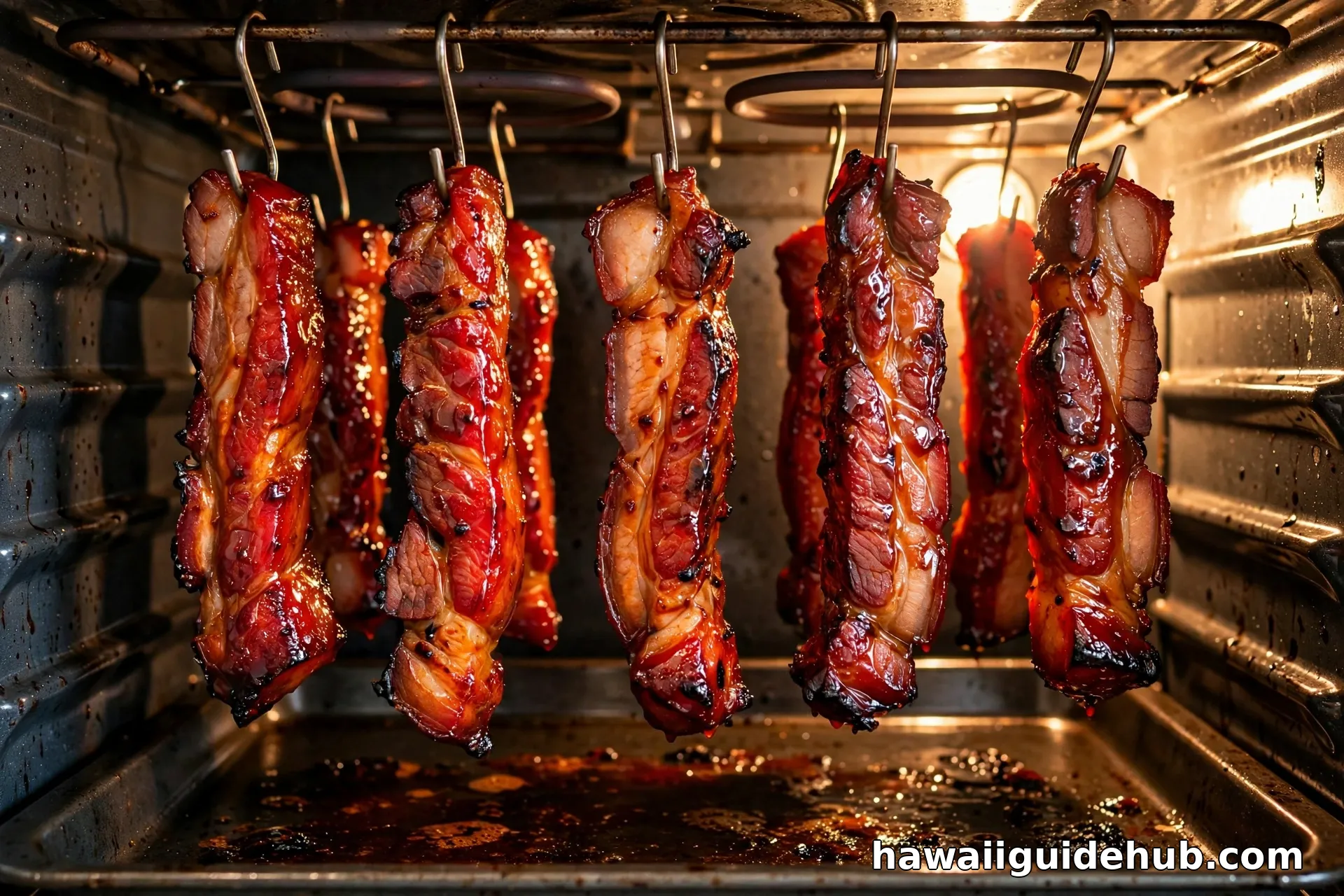
Char siu (叉燒) is Cantonese barbecue pork, one of the most famous dishes of southern Chinese cooking. The name translates roughly to “fork roasted,” a reference to the traditional method of skewering long strips of marinated pork on forks and roasting them in a hot oven until the edges caramelize. The signature deep red color comes from the marinade, traditionally colored with red fermented bean curd, and the shine comes from repeated basting with honey or maltose during roasting.
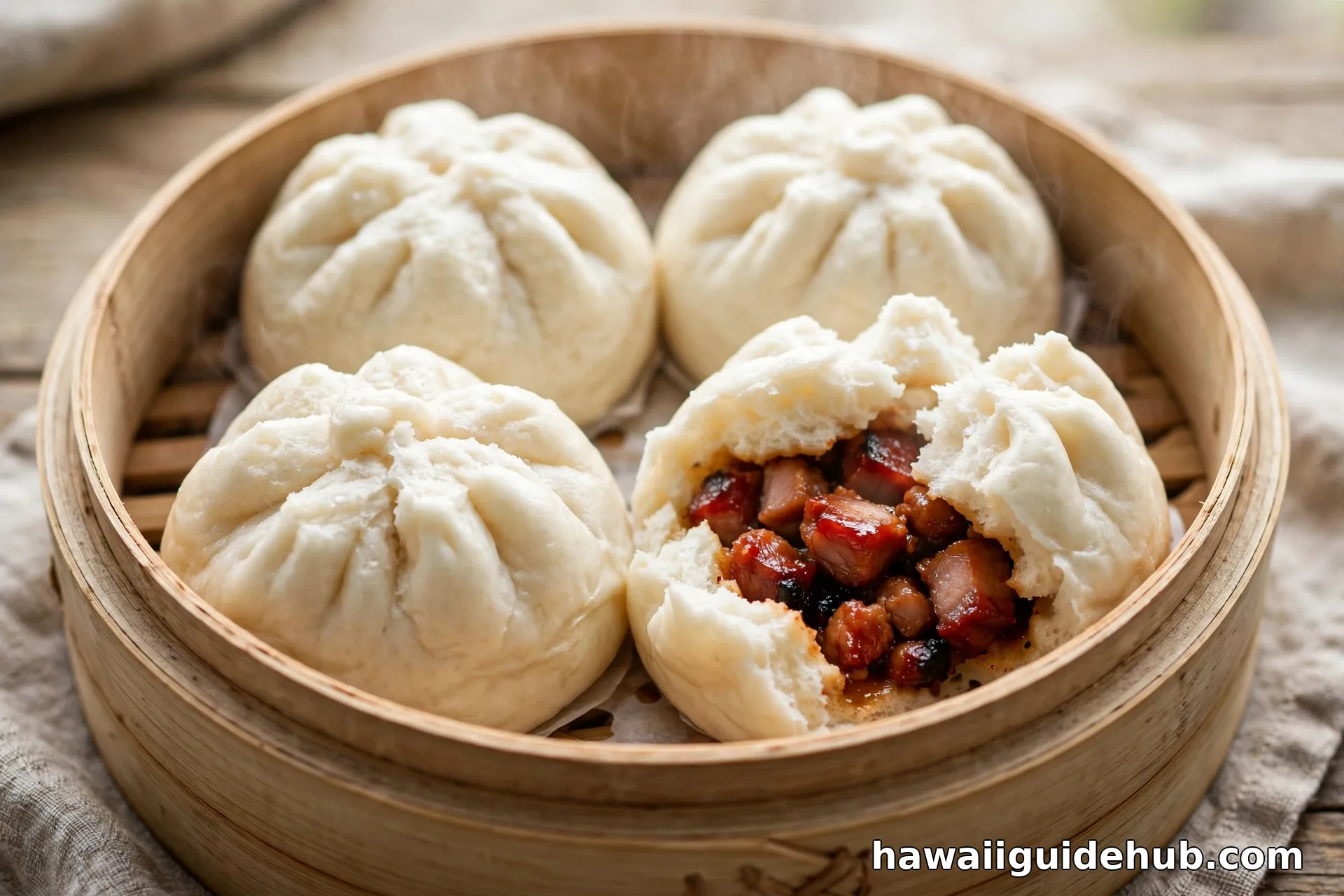
The dish traveled to Hawaii with Chinese immigrants who arrived to work on sugar plantations starting in the mid-1800s. They brought baozi, the filled steamed buns of their homeland, and the char siu pork that filled them. Peddlers known as “manapua men” sold the buns around plantation camps and neighborhoods, and over time the Hawaiian version grew larger and sweeter than its dim sum ancestor. In the 1940s, Bat Moi Kam Mau is credited with popularizing the oversized manapua at her Honolulu shop Char Hung Sut, and the big, fluffy bun became an island icon.
How Hawaiian Char Siu Differs
Classic Cantonese char siu balances sweet and savory with a firm, meaty chew. The Hawaii-style version leans sweeter and juicier, reflecting local tastes shaped by generations of island cooking. You will find it sliced thick over steamed rice, chopped into fried rice and chow fun, layered into plate lunches next to macaroni salad, and stuffed into manapua, the local name for the char siu-filled bun that may come from the Hawaiian phrase mea ʻono puaʻa, roughly “pork pastry.”
Visitors encounter char siu almost immediately in Hawaii: in the roast meat windows of Honolulu’s Chinatown, at okazuya delis, in convenience store manapua warmers, and at family gatherings where a platter of red-edged pork disappears in minutes. Making it at home is the best way to understand why the islands adopted it so completely.
Hawaii-Style Char Siu Recipe
This recipe makes about 2 pounds of char siu, enough for 6 to 8 servings. Start it the day before you plan to serve it: the overnight marinade is what builds the deep flavor and color. Active hands-on time is under 30 minutes; the oven and the refrigerator do the rest.
Ingredients
For the pork: 2 pounds pork butt (pork shoulder), cut into long strips about 2 inches thick. For the marinade: 1/3 cup honey, 1/4 cup hoisin sauce, 1/4 cup soy sauce, 3 tablespoons sugar, 1 tablespoon Shaoxing wine or dry sherry, 1 teaspoon five-spice powder, 1 teaspoon sesame oil, 2 cloves garlic (minced), and 2 cubes red fermented bean curd mashed with a spoonful of its brine, or 1/2 teaspoon red food coloring for the classic color. For the glaze: 3 tablespoons honey mixed with 1 tablespoon warm water.
Step 1: Marinate Overnight
Whisk all the marinade ingredients together until smooth. Place the pork strips in a zip-top bag or shallow dish, pour over the marinade, and turn to coat every surface. Seal and refrigerate at least 8 hours or overnight. The long soak is what carries the sweet-savory flavor deep into the meat and gives the finished pork its red ring just under the surface.
Step 2: Roast Low and Slow, Then Hot
Heat the oven to 375°F. Line a rimmed baking sheet with foil and set a wire rack on top. Lift the pork from the marinade, letting the excess drip off, and arrange the strips on the rack without crowding. Reserve the marinade. Roast for 20 minutes, then flip the strips and brush generously with the reserved marinade. Roast 20 minutes more, flip and brush again, then brush with the honey glaze and roast a final 10 minutes until the edges char in spots and the pork is cooked through.
Step 3: Rest and Slice
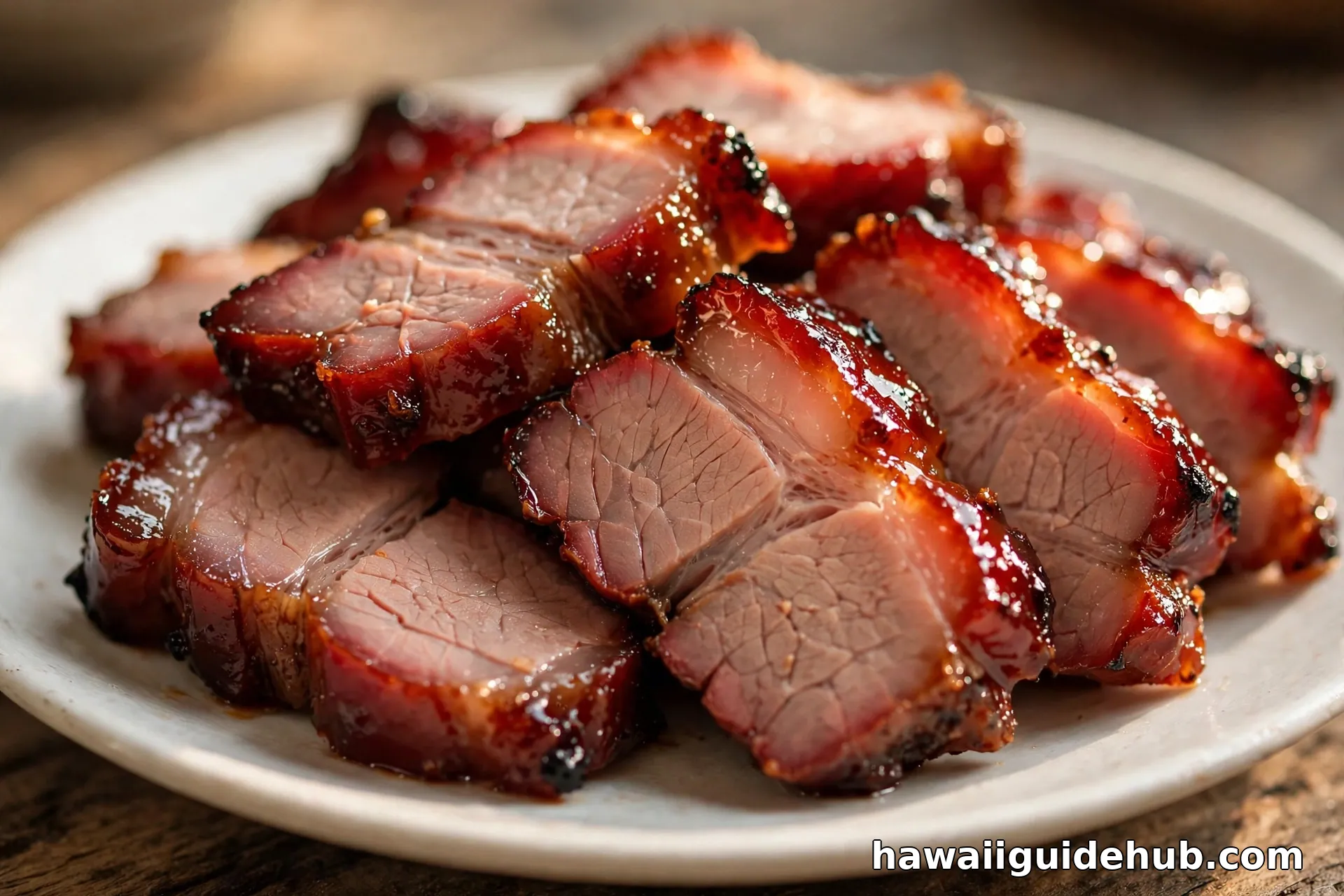
Transfer the pork to a cutting board and rest for 10 minutes so the juices settle. Slice across the grain into pieces about 1/4 inch thick. Pour any juices from the pan over the slices and serve warm. Properly cooked char siu should be juicy with a sticky, caramelized exterior and a blush of pink-red at the edges.
One important safety note: the marinade that touched raw pork must be boiled before it can be used as a sauce. If you want extra sauce for serving, set aside a portion of the fresh marinade before the pork goes in, or simmer the reserved marinade in a saucepan for at least 5 minutes until it thickens slightly. Never brush cooked pork with unboiled used marinade.
Ways to Serve Char Siu
Sliced over steamed white rice with a drizzle of the pan juices is the purest way to eat it, and the foundation of countless Hawaii plate lunches. Chop it into fried rice with egg and green onion, toss it through chow fun noodles, or pile it into steamed bao buns for homemade manapua. Leftover char siu also makes an outstanding sandwich filling and a rich addition to wonton or saimin-style noodle soup.
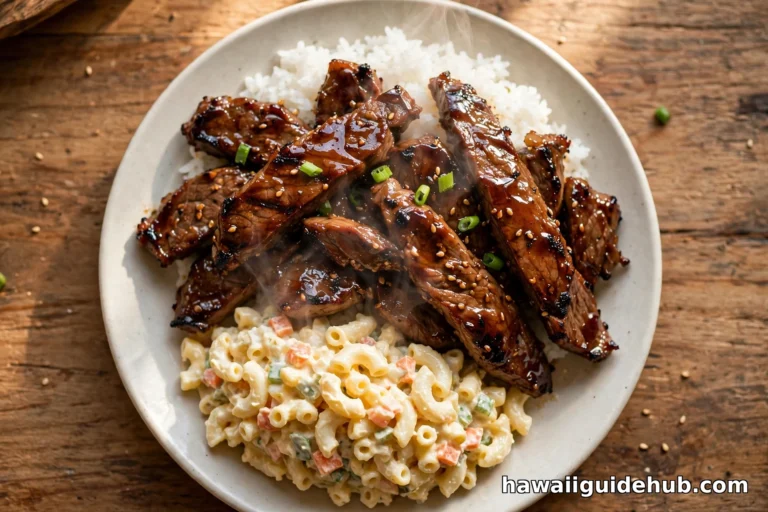
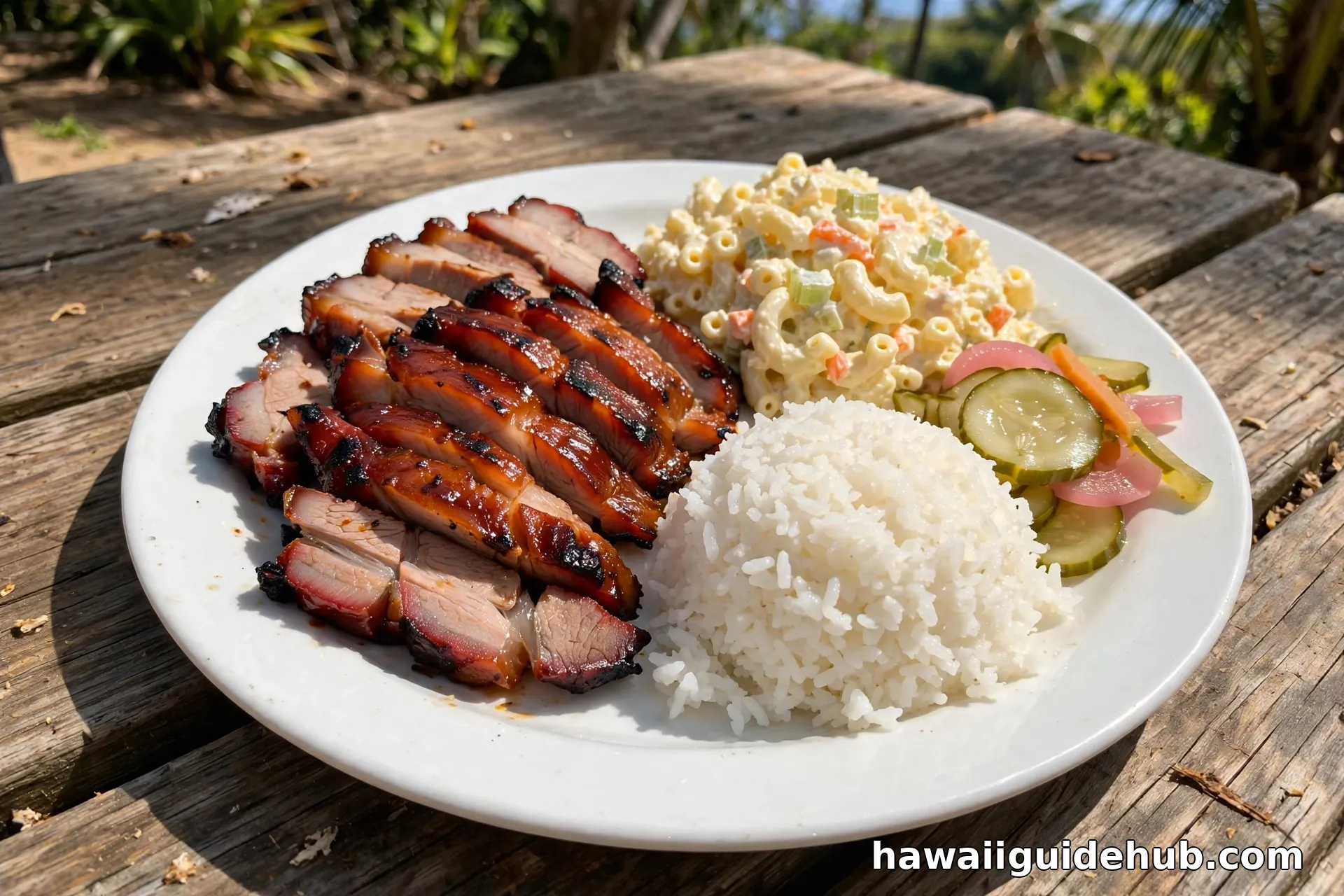
For a true island-style spread, serve char siu plate lunch style: sliced pork, two scoops of rice, macaroni salad, and pickled vegetables on one plate. It is casual, generous, and exactly how Hawaii eats this dish.
Tips for Perfect Char Siu
Choose pork butt over tenderloin. The marbling in shoulder meat keeps the pork juicy through the long roast; lean cuts dry out and turn tough. Cut the strips thick, about 2 inches, so the interior stays moist while the outside caramelizes.
Do not skip the resting time. Cutting too early lets the juices run out onto the board instead of staying in the meat. And watch the final minutes of roasting closely: the honey glaze goes from beautifully charred to burnt quickly, so check the pork rather than the clock at the end.
For the red color, red fermented bean curd gives the most authentic flavor and hue, and it is worth seeking out at an Asian grocery. Red food coloring works purely for appearance if you prefer. Either way, the color should be a deep appetizing red, not neon.
Storing and Reheating Char Siu
Cooked char siu keeps well, which is one reason Hawaii families make big batches. Refrigerate sliced pork in an airtight container for up to 4 days, or freeze it for up to 3 months with the slices separated by parchment paper so you can thaw only what you need. To reheat, warm the slices in a covered skillet over medium-low heat with a spoonful of water, or in a 300°F oven wrapped in foil. Avoid the microwave if you can: it toughens the meat and dulls the glaze. Cold char siu straight from the fridge, chopped into fried rice or tucked into a sandwich, is also excellent.
Common Char Siu Mistakes to Avoid
The most common mistake is using pork tenderloin. It sounds premium, but its leanness means it dries out long before the glaze caramelizes. Pork butt is the traditional and better choice every time. The second mistake is skipping the marinade time. Two hours gives you surface flavor; overnight gives you the deep, rosy, sweet-savory pork that defines the dish.
The third mistake is roasting at too high a temperature from the start. Blast-furnace heat burns the honey before the inside cooks through. The moderate 375°F roast with regular basting builds the lacquered exterior gradually. Finally, do not slice the pork the moment it leaves the oven. Those 10 minutes of resting make the difference between juicy slices and a cutting board full of lost juices.
Where to Try Char Siu in Hawaii
If your Hawaii trip spans more than one island, each has its own beloved manapua shops and okazuya counters; our guide to reasons to visit Maui can help plan the island-hopping part of the journey. If you want to taste the benchmark before cooking, Honolulu’s Chinatown is the place. The roast shops along Maunakea Street hang whole char siu in their windows and sell it by the pound, chopped to order. Manapua trucks and bakeries across the islands sell the steamed and baked buns warm, and nearly every okazuya and plate lunch counter offers char siu as a standard choice.
Char siu is also a natural fit for Hawaii’s outdoor eating culture. The islands get remarkably steady daylight all year, which is one reason plate lunches, beach picnics, and food truck gatherings thrive in every season. If you are planning a food-focused trip, our guides to the best island for first time visitors and the cheapest time of year to visit Hawaii can help you plan around both appetite and budget.
Video: Cantonese BBQ Pork at Home
Watch the marinating, roasting, and honey-glazing steps for juicy homemade char siu.
Frequently Asked Questions
What is char siu made of?
Char siu is pork, usually pork butt or shoulder, marinated in a sweet-savory mixture of honey, hoisin sauce, soy sauce, sugar, five-spice powder, and wine, then roasted and basted until caramelized. The red color comes from red fermented bean curd or food coloring.
What is the difference between char siu and manapua?
Char siu is the barbecue pork itself. Manapua is Hawaii’s local name for the steamed or baked bun filled with char siu pork, adapted from Chinese char siu bao and made larger and sweeter in the islands.
How long should you marinate char siu?
Marinate at least 8 hours or overnight in the refrigerator. The long soak builds the deep flavor and red color. Do not marinate at room temperature for food safety.
What temperature do you cook char siu?
Roast at 375°F for about 50 minutes total, flipping and basting every 20 minutes and finishing with a honey glaze. The pork is done when the edges char and the interior is cooked through.
Why is char siu red?
The red color comes from the marinade, traditionally red fermented bean curd, a preserved tofu product. Many home recipes use a small amount of red food coloring instead. The color is cosmetic; the flavor comes from the sweet-savory marinade.
Can you make char siu without a smoker?
Yes. Char siu is oven-roasted, not smoked. A regular home oven at 375°F with a wire rack produces the classic caramelized result; no special equipment is needed.
Char siu is one of those dishes that tastes like Hawaii even when you make it thousands of miles away: sweet, savory, sticky, and generous. Make a batch, slice it thick over rice, and save some for manapua-style buns or fried rice the next day. Once you have tasted the homemade version, the store-bought kind will never quite satisfy again. And every time you brush on that honey glaze, you are taking part in a tradition that crossed about 5,500 miles of Pacific Ocean and became one of the defining flavors of Hawaii.